Isabel Leads to Debate on Spending by Utilities

By New York Times


Protective Relay Training - Basic

Our customized live online or in‑person group training can be delivered to your staff at your location.

  • Live Online
  • 12 hours Instructor-led
  • Group Training Available
Regular Price:
$699
Coupon Price:
$599
Reserve Your Seat Today
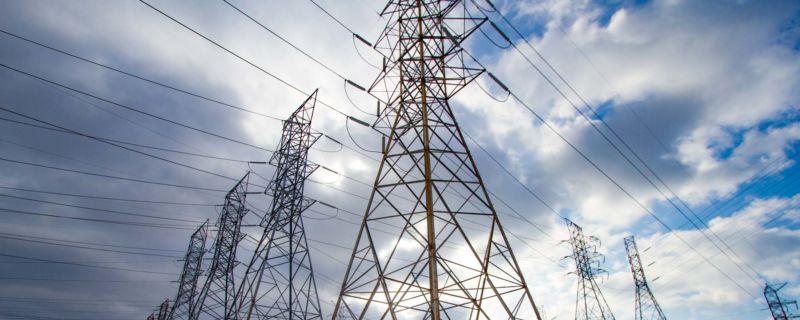
With nearly 600,000 customers still without power in Virginia and Maryland, many critics of the utility industry contend that the companies have cut spending on vital operations in search of profits.

As a result, the critics say, power lines are more vulnerable to falling trees, and repair crews are shorthanded. The real villain, they argue, is deregulation, which has increased pressure on utilities to cut costs and, perhaps, cut corners on maintenance.

"They have cut back significantly on front line or direct services personnel," said David Hughes, executive director of Citizen Power, a watchdog group in Pittsburgh. "We saw it on the turnpike here, where 100 Detroit Edison trucks were heading down to help on Isabel."

But many experts say the true picture is far more complex. Records indicate that most utilities have kept maintenance spending level in recent years. Dominion Virginia Power and Potomac Electric Power have increased the number of their frontline repair crews since deregulation.

A survey of recent storms shows that many utilities are on pace to restore power almost as quickly as in past hurricanes — even though Isabel knocked out power to more homes than any storm in memory.

"No two storms are the same," said Tim Pettit of Duke Power, which spent three weeks restoring power to 696,000 customers that lost power in September 1989 after Hurricane Hugo, a Category 4 storm. "You have got variables that come into play with all of them."

In coming weeks, public service commissions in Maryland and Virginia will begin preliminary reviews of the utilities' preparations for and responses to the hurricane, officials in both states said. If shortcomings are found, the commissions will order in-depth investigations that could take months and involve detailed examinations of spending, personnel and policies. Such investigations could become forums for complaints about deregulation, experts said.

"We'll want to see what they did right and whether there are lessons to be learned," said Sandra Guthorn, acting people's counsel in Maryland, the state's consumer advocate on utility problems.

The maintenance budgets of the two biggest Maryland utilities appear to have held mostly steady since they began reorganizing in the late 90's. Pepco spent $34 million last year on maintaining power lines, more than the $31 million that it spent in 1997 but less than its $40 million in 1999, according to the Maryland Public Service Commission. Baltimore Gas and Electric spent $36 million in 1997, then almost $48 million in 1999 and about $39 million last year.

Dominion Virginia spent far less on maintaining its distribution system last year than 2001, $47 million compared with more than $86 million. It explained the difference as a result of an accounting change. The State Corporation Commission has asked it to restate as soon as possible the distribution maintenance costs under the old system, as the first step to what the state says would be an inquiry into the preparedness for the storm last week.

Most of the distribution maintenance budget of a utility goes to tree trimming, a seemingly mundane procedure that nonetheless summons intensely emotional reactions from consumers.

After an ice storm in January 2000, Virginia regulators pushed Dominion to be more aggressive in tree trimming because "it had placed too much emphasis on aesthetics and the wishes of property owners at the expense of reliability," according to a report by the State Corporation Commission.

Dominion has complied, shearing parts of trees near power line rights of way. But even that was not enough to prevent nearly two million customers from losing power last week.

"I've never seen the breadth of damage that we have out there," M. Stuart Bolton Jr., senior vice president of financial management for Dominion, said. "We're talking 100-foot trees, 40 inches in diameter, that toppled. No tree-trimming program would have mitigated these outages."

Some experts also say the utilities cannot be faulted for some of the problems that made the storm particularly destructive and that have complicated the cleanup. One factor, they said, was that the hurricane last week knocked down more trees than any storm in memory. That was not because of high winds as much as sodden soils caused by record rainfalls.

The weather loosened tree roots across the East Coast, making them vulnerable even to moderate winds, experts said. As a result, Isabel toppled far more trees than Hurricane Floyd in 1999, even though their winds were comparable.

"The trees weren't as strong," Bernie Rayno, a senior meteorologist with AccuWeather in State College, Pa., said. "You factor wind in, and you have a lot of downed trees."

Second, many counties and cities in the region have fallen behind in pruning or cutting down sick and dead trees, many of which tumbled on to power lines. Officials in Washington and Montgomery County, Md., said today that they would push to add spending for tree removal.

"Our backlog is staggering," Councilman Adrian M. Fenty of Washington said. "The district may be at fault for letting trees get enormous and old."

Third, many utilities were unable to send out-of-state crews into the region right away because utilities all along the Eastern Seaboard wanted to wait to see whether the hurricane hit their areas.

Moreover, because of the wide swath, utilities in Maryland and Virginia had to reach as far as Arizona, Michigan and Texas to recruit emergency crews, some of which did not arrive until well after the storm had arrived.

Still, power company officials say they had as many out-of-state workers in place before the storm as they could handle.

For all the complaints, the utilities are on a pace to match their performances after past hurricanes, provided that they meet their own goals of restoring power by this weekend.

When, for instance, Hurricane Floyd — like Isabel, a Category 2 storm with winds of 100 miles an hour at landfall — struck North Carolina, Virginia and Maryland in 1999, Dominion needed 10 days to restore power for 700,000 customers. Baltimore Gas and Electric took eight days to return electricity to 320,000 homeowners and businesses.

Both utilities had more than twice as many customers lose power this year than in 1999.

Related News
Can the Electricity Industry Seize Its Resilience Moment?

Hurricane Grid Resilience examines how utilities manage outages with renewables, microgrids, and robust transmission and distribution systems, balancing solar, wind, and batteries to restore service, harden infrastructure, and improve storm response and recovery.


Key Points

Hurricane grid resilience is a utility approach to withstand storms, reduce outages, and speed safe power restoration.

✅ Focus on T&D hardening, vegetation management, remote switching

✅ Balance generation mix; integrate solar, wind, batteries, microgrids

✅ Plan 12-hour shifts; automate forecasting and outage restoration


When operators of Duke Energy's control room in Raleigh, North Carolina wait for a hurricane, the mood is often calm in the hours leading up to the storm.

“Things are usually fairly quiet before the activity starts,” said Mark Goettsch, the systems operations manager at Duke. “We’re anxiously awaiting the first operation and the first event. Once that begins, you get into storm mode.”

Then begins a “frenzied pace” that can last for days — like when Hurricane Florence parked over Duke’s service territory in September.

When an event like Florence hits, all eyes are on transmission and distribution. Where it’s available, Duke uses remote switching to reconnect customers quickly. As outages mount, the utility forecasts and balances its generation with electricity demand.

The control center’s four to six operators work 12-hour shifts, while nearby staff members field thousands of calls and alarms on the system. After it’s over, “we still hold our breath a little bit to make sure we’ve operated everything correctly,” said Goettsch. Damage assessment and rebuilding can only begin once a storm passes.

That cycle is becoming increasingly common in utility service areas like Duke's.

A slate of natural disasters that reads like a roll call — Willa, Michael, Harvey, Irma, Maria, Florence and Thomas — has forced a serious conversation about resiliency. And though Goettsch has heard a lot about resiliency as a “hot topic” at industry events and meetings, those conversations are only now entering Duke’s control room.

Resilience discussions come and go in the energy industry. Storms like Hurricane Sandy and Matthew can spur a nationwide focus on resiliency, but change is largely concentrated in local areas that experienced the disaster. After a few news cycles, the topic fades into the background.

However, experts agree that resilience is becoming much more important to year-round utility planning and operations as utilities pursue decarbonization goals across their fleets. It's not a fad.

“If you look at the whole ecosystem of utilities and vendors, there’s a sense that there needs to be a more resilient grid,” said Miki Deric, Accenture’s managing director of utilities, transmission and distribution for North America. “Even if they don’t necessarily agree on everything, they are all working with the same objective.”

Can renewables meet the challenge?

After Hurricane Florence, The Intercept reported on coal ash basins washed out by the storm’s overwhelming waters. In advance of that storm, Duke shut down one nuclear plant to protect it from high winds. The Washington Post also recently reported on a slowly leaking oil spill, which could surpass Deepwater Horizon in size, caused by Hurricane Ivan in 2004.

Clean energy boosters have seized on those vulnerabilities.They say solar and wind, which don’t rely on access to fuel and can often generate power immediately after a storm, provide resilience that other electricity sources do not.

“Clearly, logistics becomes a big issue on fossil plants, much more than renewable,” said Bruce Levy, CEO and president at BMR Energy, which owns and operates clean energy projects in the Caribbean and Latin America. “The ancillaries around it — the fuel delivery, fuel storage, water in, water out — are all as susceptible to damage as a renewable plant.”

Duke, however, dismissed the notion that one generation type could beat out another in a serious storm.

“I don’t think any generation source is immune,” said Duke spokesperson Randy Wheeless. “We’ve always been a big supporter of a balanced energy mix, reflecting why the grid isn't 100% renewable in practice today. That’s going to include nuclear and natural gas and solar and renewables as well. We do that because not every day is a good day for each generation source.”

In regard to performance, Wade Schauer, director of Americas Power & Renewables Research at Wood Mackenzie, said the situation is “complex.” According to him, output of solar and wind during a storm depends heavily on the event and its location.

While comprehensive data on generation performance is sparse, Schauer said coal and gas generators could experience outages at 25 percent while stormy weather might cut 95 percent of output from renewables, underscoring clean energy's dirty secret about variability under stress. Ahead of last year’s “bomb cyclone” in New England, WoodMac data shows that wind dropped to less than 1 percent of the supply mix.

“When it comes to resiliency, ‘average performance’ doesn't cut it,” said Schauer.

In the future, he said high winds could impact all U.S. offshore wind farms, since projects are slated for a small geographic area in the Northeast. He also pointed to anecdotal instances of solar arrays in New England taken out by feet of snow. During Florence, North Carolina’s wind farms escaped the highest winds and continued producing electricity throughout. Cloud cover, on the other hand, pushed solar production below average levels.

After Florence passed, Duke reported that most of its solar came online quickly, although four of its utility-owned facilities remained offline for weeks afterward. Only one was because of damage; the other three remained offline due to substation interconnection issues.

“Solar performed pretty well,” said Wheeless. “But did it come out unscathed? No.”

According to installer reports, solar systems fared relatively well in recent storms, even as the Covid-19 impact on renewables constrained projects worldwide. But the industry has also highlighted potential improvements. Following Hurricanes Maria and Irma, the Federal Emergency Management Agency published guidelines for installing and maintaining storm-resistant solar arrays. The document recommended steps such as annual checks for bolt tightness and using microinverters rather than string inverters.

Rocky Mountain Institute (RMI) also assembled a guide for retrofitting and constructing new installations. It described attributes of solar systems that survived storms, like lateral racking supports, and those that failed, like undersized and under-torqued bolts.

“The hurricanes, as much as no one liked them, [were] a real learning experience for folks in our industry,” said BMR’s Levy. “We saw what worked, and what didn’t.”          

Facing the "800-pound gorilla" on the grid

Advocates believe wind, solar, batteries and microgrids offer the most promise because they often rely less on transmitting electricity long distances and could support peer-to-peer energy models within communities.

Most extreme weather outages arise from transmission and distribution problems, not generation issues. Schauer at WoodMac called storm damage to T&D the “800-pound gorilla.”

“I'd be surprised if a single customer power outage was due to generators being offline, especially since loads where so low due to mild temperatures and people leaving the area ahead of the storm,” he said of Hurricane Florence. “Instead, it was wind [and] tree damage to power lines and blown transformers.”


Related News

View more

ABL Secures Contract for UK Subsea Power

ABL has secured a contract for the UK Subsea Power Link, highlighting ABL Group’s marine warranty role in Eastern Green Link 2, a 2 GW offshore electricity superhighway connecting Scotland and England to enhance grid reliability and renewable energy transmission.


Key Points: ABL Group’s contract for the UK Subsea Power Link

ABL Group has been appointed to provide marine warranty survey services for the 2 GW Eastern Green Link 2 subsea interconnector between Scotland and England.

✅ Manages vessel suitability checks, installation oversight, and DP assurance

✅ Strengthens UK grid reliability and advances the clean energy transition

✅ Sizeable contract valued between USD 1 million and 3 million


Energy and marine consultancy ABL, a subsidiary of ABL Group, has been awarded a contract by Eastern Green Link 2 (EGL2) to provide marine warranty survey (MWS) services for the installation of a new 2 GW subsea power connection between Scotland and England.

EGL2 is one of the United Kingdom’s most significant energy-infrastructure projects, involving the creation of a 505-kilometre “electricity superhighway” that will enable simultaneous power transfer between Peterhead in Aberdeenshire and Drax in North Yorkshire, mirroring a renewable power link announced for the same corridor recently. The project is designed to strengthen grid resilience, integrate renewable energy from Scotland’s offshore resources, and advance the UK’s broader energy transition goals.

Under the terms of the contract, ABL will be responsible for the technical review and approval of the project and procedural documentation, as well as conducting suitability surveys of the proposed fleet for marine transportation and installation operations. The company will also provide dynamic positioning (DP) assurance where required and will review and approve all warranted operations through on-site attendances, reflecting practices used on projects like the Great Northern Transmission Line in North America.

Cable-laying operations for the link are scheduled to take place between January and September 2028, amid wider efforts to fast-track grid connections across the UK. According to ABL, the engagement represents a “sizeable” contract, valued between USD 1 million and 3 million.

“This appointment reflects ABL's reputation as a trusted MWS partner for major power transmission infrastructure development and reinforces our position at the forefront of supporting the UK's energy transition,” said Hege Norheim, CEO of ABL Group. “We look forward to contributing to this strategic initiative.”

The subsea interconnector, known as Eastern Green Link 2, will transmit up to 2 gigawatts of electricity—enough to power approximately 2 million homes. It forms part of the Great Grid Upgrade, National Grid’s nationwide program to modernize and expand the transmission network in preparation for a low-carbon future, alongside a recent 2 GW substation milestone.

By linking renewable-rich northern Scotland with high-demand regions in England, EGL2 is expected to reduce congestion on the existing grid by leveraging HVDC technology to improve transfer efficiency, enhance security of supply, and facilitate the more efficient flow of surplus renewable energy south. The connection will also support the UK government’s target of decarbonizing the electricity system by 2035.

ABL’s appointment follows a period of intensive marine and geotechnical surveys along the proposed cable route to assess seabed conditions and environmental sensitivities. The company’s marine warranty oversight will ensure that transportation and installation operations meet strict safety, technical, and environmental standards demanded by insurers and project partners, as seen in a recent cross-border transmission approval in North America.

For ABL Group, which provides engineering and risk services to the offshore energy and marine industries worldwide, the contract marks another milestone in its expanding portfolio of subsea power and transmission projects across Europe. With operations set to begin in 2028, the Eastern Green Link 2 initiative represents both a major engineering challenge and a key enabler of the UK’s offshore energy ambitions, echoing a recent offshore wind power milestone in the U.S.


Related Articles


View more

Poland’s largest power group opts to back wind over nuclear

Poland Offshore Wind Energy accelerates as PGE exits nuclear leadership, PKN Orlen steps in, and Baltic Sea projects expand to cut coal reliance, meet EU emissions goals, attract investors, and bridge the power capacity gap.


Key Points

A shift from coal and nuclear to Baltic offshore wind to add capacity, cut EU emissions, and attract investment.

✅ PGE drops lead in nuclear; pivots $10bn to offshore wind.

✅ PKN Orlen may assume nuclear role; projects await approval.

✅ 6 GW offshore could add 60b zlotys and 77k jobs by 2030.


PGE, Poland’s biggest power group has decided to abandon a role in building the country’s first nuclear power plant and will instead focus investment on offshore wind energy.

Reuters reports state-run refiner PKN Orlen (PKN.WA) could take on PGE’s role, while the latter announces a $10bn offshore wind power project.

Both moves into renewables and nuclear represent a major change in Polish energy policy, diversifying away from the country’s traditional coal-fired power base, as regional efforts like the North Sea wind farms initiative expand, in a bid to fill an electricity shortfall and meet EU emission standards.

An unnamed source told the news agency, PGE could not fund both projects and cheap technology had swung the decision in favour of wind, with offshore wind competing with gas in some markets. PGE could still play a smaller role in the nuclear project which has been delayed and still needs government approval.

#google#

A proposed law is currently before the Polish parliament aiming at facilitating easy construction of wind turbines, mindful of Germany’s grid expansion challenges that have hindered rollout.

If the law is passed, as expected, several other wind farm projects could also proceed.

Polenergia has said it would like to build a wind farm in the Baltic by 2022. PKN Orlen is also considering building one.

PGE said in March that it wants to build offshore windfarms with a capacity of 2.5 gigawatts (GW) by 2030.

Analysts and investors say that offshore wind farms are the easiest and fastest way for Poland to fill the expected capacity gap from coal, with examples like the largest UK offshore wind farm coming online underscoring momentum, and reduce CO2 emissions in line with EU’s 2030 targets as Poland seeks improved ties with Brussels.

The decision to open up the offshore power industry could also draw in investors, as shown by Japanese utilities’ UK offshore investment attracting cross-border capital. Statoil said in April it would join Polenergia’s offshore project which has drawn interest from other international wind companies. “

The Polish Wind Energy Association (PWEA) estimates that offshore windfarms with a total capacity of 6 GW would help create around 77,000 new jobs and add around 60 billion zlotys to economic growth.


Related News

View more

Blackout-Prone California Is Exporting Its Energy Policies To Western States, Electricity Will Become More Costly And Unreliable

California Blackouts expose grid reliability risks as PG&E deenergizes lines during high winds. Mandated solar and wind displace dispatchable natural gas, straining ISO load balancing, transmission maintenance, and battery storage planning amid escalating wildfire liability.


Key Points

California grid shutoffs stem from wildfire risk, renewables, and deferred transmission maintenance under mandates.

✅ PG&E deenergizes lines to reduce wildfire ignition during high winds.

✅ Mandated solar and wind displace dispatchable gas, raising balancing costs.

✅ Storage, reliability pricing, and grid upgrades are needed to stabilize supply.


California is again facing widespread blackouts this season. Politicians are scrambling to assign blame to Pacific Gas & Electric (PG&E) a heavily regulated utility that can only do what the politically appointed regulators say it can do. In recent years this has meant building a bunch of solar and wind projects, while decommissioning reliable sources of power and scrimping on power line maintenance and upgrades.

The blackouts are connected with the legal liability from old and improperly maintained power lines being blamed for sparking fires—in hopes that deenergizing the grid during high winds reduces the likelihood of fires. 

How did the land of Silicon Valley and Hollywood come to have developing world electricity?

California’s Democratic majority, from Gov. Gavin Newsom to the solidly progressive legislature, to the regulators they appoint, have demanded huge increases in renewable energy. Renewable electricity targets have been pushed up, and policymakers are weighing a revamp of electricity rates to clean the grid, with the state expected to reach a goal of 33% of its power from renewable sources, mostly solar and wind, by next year, and 60% of its electricity from renewables by 2030.

In 2018, 31% of the electricity Californians purchased at the retail level came from approved renewables. But when rooftop solar is added to the mix, about 34% of California’s electricity came from renewables in 2018. Solar photovoltaic (PV) systems installed “behind-the-meter” (BTM) displace utility-supplied generation, but still affect the grid at large, as electricity must be generated at the moment it is consumed. PV installations in California grew 20% from 2017 to 2018, benefiting from the state’s Self-Generation Incentive Program that offers hefty rebates through 2025, as well as a 30% federal tax credit.

Increasingly large amounts of periodic, renewable power comes at a price—the more there is, the more difficult it is to keep the power grid stable and energized. Since electricity must be consumed the instant it is generated, and because wind and solar produce what they will whenever they do, the rest of the grid’s power producers—mostly natural gas plants—have to make up any differences between supply and immediate demand. This load balancing is vital, because without it, the grid will crash and widespread blackouts will ensue.

California often produces a surplus of mandated solar and wind power, generated for 5 to 8 cents per kilowatt hour. This power displaces dispatchable power from natural gas, coal and nuclear plants, resulting in reliable power plants spending less time online and driving up electricity prices as the plants operate for fewer hours of the day. Subsidized and mandated solar power, along with a law passed in California in 2006 (SB 1638) that bans the renewal of coal-fired power contracts, has placed enormous economic pressure on the Western region’s coal power plants—among them, the nation’s largest, Navajo Generating Station. As these plants go off line, the Western power grid will become increasingly unstable. Eventually, the states that share their electric power in the Western Interconnect may have to act to either subsidize dispatchable power or place a value on reliability—something that was taken for granted in the growth of the America’s electrical system and its regulatory scheme.

California law regarding electricity explicitly states that “a violation of the Public Utilities Act is a crime” and that it is “…the intent of the Legislature to provide for the evolution of the ISO (California’s Independent System Operator—the entity that manages California’s grid) into a regional organization to promote the development of regional electricity transmission markets in the western states.” In other words, California expects to dictate how the Western grid operates.

One last note as to what drives much of California’s energy policy: politics. California State Senator Kevin de León (the author served with him in the State Assembly) drafted SB 350, the Clean Energy and Pollution Reduction Act. It became law in 2015. Sen. de León followed up with SB 100 in 2018, signed into law weeks before the 2018 election. SB 100 increased California’s renewable portfolio standard to 60% by 2030 and further requires all the state’s electricity to come from carbon-free sources by 2045, a capstone of the state’s climate policies that factor into the blackout debate.  

Sen. de León used his environmental credentials to burnish his run for the U.S. Senate against Sen. Dianne Feinstein, eventually capturing the endorsements of the California Democratic Party and billionaire environmentalist Tom Steyer, now running for president. Feinstein and de León advanced to the general in California’s jungle primary, where Feinstein won reelection 54.2% to 45.8%.

De León may have lost his race for the U.S. Senate, but his legacy will live on in increasingly unaffordable electricity and blackouts, not only in California, but in the rest of the Western United States—unless federal or state regulators begin to place a value on reliability. This could be done by requiring utility scale renewable power providers to guarantee dispatchable power, as policymakers try to avert a looming shortage of firm capacity, either through purchase agreements with thermal power plants or through the installation of giant and costly battery farms or other energy storage means.


Related News

View more

Stop the Shock campaign seeks to bring back Canadian coal power

Alberta Electricity Price Hikes spotlight grid reliability, renewable transition, coal phase-out, and energy poverty, as policy shifts and investor reports warn of rate increases, biomass trade-offs, and sustainability challenges impacting households and businesses.


Key Points

Projected power bill hikes from market reforms, renewables, coal phase-out, and reliability costs in Alberta.

✅ Investor report projects 3x-7x bills and $50B market transition costs

✅ Policy missteps cited in Ontario, Germany, Australia price spikes

✅ Debate: retain coal vs. speed renewables, storage, and grid upgrades


Since when did electricity become a scarce resource?

I thought all the talk about greening the grid was about having renewable, sustainable, less polluting options to fulfill our growing need for power. Yet, increasingly, we are faced with news stories that indicate using power is bad in and of itself, even as flat electricity demand worries utilities.

The implication, I guess, is that we should be using less of it. But, I don’t want to use less electricity. I want to be able to watch TV, turn my lights on when the sun sets at 4 p.m. in the winter, keep my food cold and power my devices.

We once had a consensus that a reliable supply of power was essential to a growing economy and a high quality of life, a point underscored by brownout risks in U.S. markets.

I’m beginning to wonder if we still have that consensus.

And more importantly, if our decision makers have determined electricity is a vice as opposed to an essential of life – as debates over Alberta electricity policy suggest – you know what is going to happen next. Prices are going to rise, forcing all of us to use less.

How much would it hurt your bottom line if your electricity bill went up three-fold? How about seven-fold? That is the grim picture that Todd Beasley painted for us on Tuesday’s show.

Last week, he launched a campaign on behalf of Albertans for Sustainable Electricity, called Stop the Shock. He shared the results of an internal investor report that concluded Alberta’s power market overhaul would cost an estimated $50 billion to implement and could result in a three to seven-fold increase in electricity bills.

Now, my typical power bill averages $70 a month. That would be like having it grow to $210 a month, or just over $2,500 a year. If it’s a seven-fold increase that would be more like $5,000 a year. That may be manageable for some families, but I can think of a lot of things I’d rather do with $5,000 than pay more to keep my fridge running so my food doesn’t spoil.

For low-income families that would be a real hardship.

Beasley said Ontario’s inept handling of its electricity market and the phase-out of coal power resulted in price spikes that left more than 70,000 individuals facing energy poverty.

Germany and Australia realized they made the same mistake and are returning some electricity to coal.

Beasley shared a long list of Canadian firms – including our own Canadian Pension Plan – that are investing in coal development around the world. Meanwhile, Canadian governments remain in a mad rush to phase it out here. That’s not the only hypocrisy.

Rupert Darwall, author of Green Tyranny: Exposing the Totalitarian Roots of the Climate Industrial Complex, revealed in a recent column what he calls “the scandal at the heart of the EU’s renewable policies.”

Turns out most of their expansion in renewable energy has come from biomass in the form of wood. Not only does burning wood produce more CO2, it also eliminates carbon sinks.

To meet the EU’s 2030 target would require cutting down trees equivalent to the combined harvest in Canada and the United States. As he puts it, “Whichever way you look at it, burning the world’s carbon sinks to meet the EU’s arbitrary renewable energy targets is environmentally insane.”

Beasley’s group is trying to bring some sanity back to the discussion. The goal should be to move to a greener grid while maintaining abundant, reliable and cheap power, and examples like Texas grid improvements show practical steps. He thinks to achieve all these goals, coal should remain part of the mix. What do you think?


Related News

View more

B.C. ordered to pay $10M for denying Squamish power project

Greengen Misfeasance Ruling details a B.C. Supreme Court decision awarding $10.125 million over wrongfully denied Crown land and water licence permits for a Fries Creek run-of-river hydro project under a BC Hydro contract.


Key Points

A B.C. Supreme Court ruling awarding $10.125M for wrongful denial of Crown land and water licences on Greengen's project.

✅ $10.125M damages for misfeasance in public office

✅ Denial of Crown land tenure and water licence permits

✅ Tied to Fries Creek run-of-river and BC Hydro EPA


A B.C. Supreme Court judge has ordered the provincial government to pay $10.125 million after it denied permits to a company that wanted to build a run-of-the river independent power project near Squamish.

In his Oct. 10 decision, Justice Kevin Loo said the plaintiff, Greengen Holdings Ltd., “lost an opportunity to achieve a completed and profitable hydro-electric project” after government representatives wrongfully exercised their legal authority, a transgression described in the ruling as “misfeasance,” with separate concerns reflected in an Ontario market gaming investigation reported elsewhere.

Between 2003 and 2009, the company sought to develop a hydro-electric project on and around Fries Creek, which sits opposite the Brackendale neighbourhood on the other side of the Squamish River. To do so, Greengen Holdings Ltd. required a water licence from the Minister of the Environment and tenure over Crown land from the Minister of Agriculture.

After a lengthy process involving extensive communications between Greengen and various provincial and other ministries and regulatory agencies, the permits were denied, according to Loo. Both decisions cited impacts on Squamish Nation cultural sites that could not be mitigated.

Elsewhere, an Indigenous-owned project in James Bay proceeded despite repeated denials, underscoring varied approaches to community participation.

40-year electricity plan relied on Crown land
The case dates back to December 2005, when BC Hydro issued an open call for power with Greengen. The company submitted a tender several months later.

On July 26, 2006, BC Hydro awarded Greengen an energy purchase agreement, amid evolving LNG electricity demand across the province, under which Greengen would be entitled to supply electricity at a fixed price for 40 years.

Unlike conventional hydroelectric projects, such as new BC generating stations recently commissioned, which store large volumes of water in reservoirs, and in so doing flood large tracts of land, a run of the river project often requires little or no water storage. Instead, from a high elevation, they divert water from a stream or river channel.

Water is then sent into a pressured pipeline known as a penstock, and later passed through turbines to generate electricity, Loo explained, as utilities pursue long-term plans like the Hydro-Québec strategy to reduce fossil fuel reliance. The system returns water to the original stream or river, or into another body of water. 

The project called for most of that infrastructure to be built on Crown land, according to the ruling.

All sides seemed to support the project
In early 2005, company principle Terry Sonderhoff discussed the Fries Creek project in a preliminary meeting with Squamish Nation Chief Ian Campbell.

“Mr. Sonderhoff testified that Chief Campbell seemed supportive of the project at the time,” Loo said.


Related News

View more

Sign Up for Electricity Forum’s Newsletter

Stay informed with our FREE Newsletter — get the latest news, breakthrough technologies, and expert insights, delivered straight to your inbox.

Electricity Today T&D Magazine Subscribe for FREE

Stay informed with the latest T&D policies and technologies.
  • Timely insights from industry experts
  • Practical solutions T&D engineers
  • Free access to every issue

Download the 2025 Electrical Training Catalog

Explore 50+ live, expert-led electrical training courses –

  • Interactive
  • Flexible
  • CEU-cerified