Smog From U.S. Plants Will Not Hurt Canada

By Canadian Press


Protective Relay Training - Basic

Our customized live online or in‑person group training can be delivered to your staff at your location.

  • Live Online
  • 12 hours Instructor-led
  • Group Training Available
Regular Price:
$699
Coupon Price:
$599
Reserve Your Seat Today
Environment Minister David Anderson says a rollback of US regulations on coal-fired power plants will not cause increased smog in Canada, but skeptics are worried.

Anderson said he had been told by Christie Whitman, head of the US Environmental Protection Agency, that Canadian air quality won't be damaged by the new, less stringent rules.

"She gave me the assurance that (the rollback) will not reduce protection for Canada," Anderson said in a teleconference from Victoria.

He made the comments following a joint announcement with Whitman that the Canada and the United States have agreed to increase co-operation on air-quality issues.

Anderson said the two countries will invest in a number of pilot projects to improve air quality, but gave no specifics.

It's estimated that about half the smog in southern Canadian cities including Toronto, Montreal and Vancouver comes from the United States.

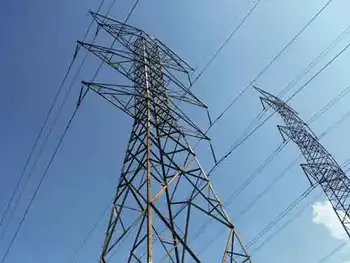
Coal-fired plants in the US Midwest are a major source of smog in Eastern Canada.

A group of nine New England and mid-Atlantic states have sued the US government over the new regulations, introduced by George W. Bush's administration, claiming the rollback will result in higher levels of pollution.

Quentin Chiotti of Pollution Probe said he welcomes any increased co-operation on transboundary pollution but is not satisfied by Whitman's assurances.

"It's not clear to us whether those coal-fired plants in the U.S., which produce a lot of nasty, toxic pollutants, are not going to continue to produce a lot of problems," he said.

"The fact that the eastern states have launched a lawsuit demonstrates that on the US side of the border there's a lot of concern over Bush's position."

Under previous US regulations, industrial plants that undertook expansion were required to install state-of-the-art pollution-control equipment.

Under the revised rules, plants will be allowed undertake extensive changes without triggering requirements that they install new equipment.

The coal industry had long pressed for the rollback, arguing that previous rules tied them up in paperwork and deterred investment in new power plants needed to provide electricity to consumers.

Whitman has said repeatedly that the rule changes won't result in higher emissions.

Carol Browner, who held Whitman's job when Bill Clinton was US president, has said the rule changes are "nothing but a special deal for the special interests" and come "at the expense of all who breathe, and most particularly our children."

Related News
Court reinstates constitutional challenge to Ontario's hefty ‘global adjustment’ electricity charge

Ontario Global Adjustment Charge faces constitutional scrutiny as a regulatory charge vs tax; Court of Appeal revives case over electricity pricing, feed-in tariff contracts, IESO policy, and hydro rate impacts on consumers and industry.


Key Points

A provincial electricity fee funding generator contracts, now central to a court fight over tax versus regulatory charge.

✅ Funds gap between market price and contracted generator rates

✅ At issue: regulatory charge vs tax under constitutional law

✅ Linked to feed-in tariff, IESO policy, and hydro rate hikes


Ontario’s court of appeal has decided that a constitutional challenge of a steep provincial electricity charge should get its day in court, overturning a lower-court judgment that had dismissed the legal bid.

Hamilton, Ont.-based National Steel Car Ltd. launched the challenge in 2017, saying Ontario’s so-called global adjustment charge was unconstitutional because it is a tax — not a valid regulatory charge — that was not passed by the legislature.

The global adjustment funds the difference between the province’s hourly electricity price and the price guaranteed under contracts to power generators. It is “the component that covers the cost of building new electricity infrastructure in the province, maintaining existing resources, as well as providing conservation and demand management programs,” the province’s Independent Electricity System Operator says.

However, the global adjustment now makes up most of the commodity portion of a household electricity bill, and its costs have ballooned, as regulators elsewhere consider a proposed 14% rate hike in Nova Scotia.

Ontario’s auditor general said in 2015 that global adjustment fees had increased from $650 million in 2006 to more than $7 billion in 2014. She added that consumers would pay $133 billion in global adjustment fees from 2015 to 2032, after having already paid $37 billion from 2006 to 2014.

National Steel Car, which manufactures steel rail cars and faces high electricity rates that hurt Ontario factories, said its global adjustment costs went from $207,260 in 2008 to almost $3.4 million in 2016, according to an Ontario Court of Appeal decision released on Wednesday.

The company claimed the global adjustment was a tax because one of its components funds electricity procurement contracts under a “feed-in tariff” program, or FIT, which National Steel Car called “the main culprit behind the dramatic price increases for electricity,” the decision said.

Ontario’s auditor general said the FIT program “paid excessive prices to renewable energy generators.” The program has been ended, but contracts awarded under it remain in place.


National Steel Car claimed the FIT program “was actually designed to accomplish social goals unrelated to the generation of electricity,” such as helping rural and indigenous communities, and was therefore a tax trying to help with policy goals.

“The appellant submits that the Policy Goals can be achieved by Ontario in several ways, just not through the electricity pricing formula,” the decision said.

National Steel Car also argued the global adjustment violated a provincial law that requires the government to hold a referendum for new taxes.

“The appellant’s principal claim is that the Global Adjustment was a ‘colourable attempt to disguise a tax as a regulatory charge with the purpose of funding the costs of the Policy Goals,’” the decision said. “The appellant pressed this argument before the motion judge and before this court. The motion judge did not directly or adequately address it.”

The Ontario government applied to have the challenge thrown out for having “no reasonable cause of action,” and a Superior Court judge did so in 2018, saying the global adjustment is not a tax.

National Steel Car appealed the decision, and the decision published Wednesday allowed the appeal, set aside the lower-court judgment, and will send the case back to Superior Court, where it could get a full hearing.

“The appellant’s claim is sufficiently plausible on the evidentiary record it put forward that the applications should not have been dismissed on a pleadings motion before the development of a full record,” wrote Justice Peter D. Lauwers. “It is not plain, obvious and beyond doubt that the Global Adjustment, and particularly the challenged component, is properly characterized as a valid regulatory charge and not as an impermissible tax.”

Jerome Morse of Morse Shannon LLP, one of National Steel Car’s lawyers, said the Ontario government would now have 60 days to decide whether to seek permission to appeal to the Supreme Court of Canada.

“What the court has basically said is, ‘this is a plausible argument, here are the reasons why it’s plausible, there was no answer to this,’” Morse told the Financial Post.

Ontario and the IESO had supported the lower-court decision, but there has been a change in government since the challenge was first launched, with Progressive Conservative Premier Doug Ford replacing the Liberals and Kathleen Wynne in power. The Liberals had launched a plan aimed at addressing hydro costs before losing in a 2018 election, the main thrust of which had been to refinance global adjustment costs.

Wednesday’s decision states that “Ontario’s counsel advised the court that the current Ontario government ‘does not agree with the former government’s electricity procurement policy (since-repealed).’

“The government’s view is that: ‘The solution does not lie with the courts, but instead in the political arena with political actors,’” it adds.

A spokesperson for Ontario Energy Minister Greg Rickford said in an email that they are reviewing the decision but “as this matter is in the appeal period, it would be inappropriate to comment.” 

Ontario had also requested to stay the matter so a regulator, the Ontario Energy Board, could weigh in, while the Nova Scotia regulator approved a 14% hike in a separate case.

“However, Ontario only sought this relief from the motion judge in the alternative, and given the motion judge’s ultimate decision, she did not rule on the stay,” Thursday’s decision said. “It would be premature for this court to rule on the issue, although it seems incongruous for Ontario to argue that the Superior Court is the convenient forum in which to seek to dismiss the applications as meritless, but that it is not the convenient forum for assessing the merits of the applications.”

National Steel Car’s challenge bears a resemblance to the constitutional challenges launched by Ontario and other provinces over the federal government’s carbon tax, but Justice Lauwers wrote “that the federal legislative scheme under consideration in those cases is distinctly different from the legislation at issue in this appeal.”

“Nothing in those decisions impacts this appeal,” the judge added.


Related News

View more

Is Ontario embracing clean power?

Ontario Clean Energy Expansion signals IESO-backed renewables, energy storage, and low-CO2 power to meet EV-driven demand, offset Pickering nuclear retirement, and balance interim gas-fired generation while advancing grid reliability, decarbonization, and net-zero targets.


Key Points

Ontario Clean Energy Expansion plans to grow renewables and storage, manage short-term gas, and meet rising demand.

✅ IESO long-term procurements for renewables and storage

✅ Interim reliance on gas to replace Pickering capacity

✅ Targets align with net-zero grid reliability goals


After cancelling hundreds of renewable power projects four years ago, the Doug Ford government appears set to expand clean energy to meet a looming electricity shortfall across the province.

Recent announcements from Ontario Energy Minister Todd Smith and the province’s electric grid management agency suggest the province plans to expand low-CO2 electricity with new wind and solar plans in the long-term, even as it ramps up gas-fired power over the next five years.

The moves are in response to an impending electricity shortfall as climate-conscious drivers switch to electric vehicles, farmers replace field crops with greenhouses and companies like ArcelorMittal Dofasco in Hamilton switch from CO2-heavy manufacturing to electricity-based production. Forecasters predict Canada will need to double its power supply by 2050.

While Ontario has a relatively low-CO2 power system, the province’s electricity supply will be reduced in 2025 when Ontario Power Generation closes the 50-year-old Pickering nuclear station, now near the end of its operating life. This will remove 3,100 megawatts of low-CO2 generation, about eight per cent of the province’s 40,000-megawatt total.

The impending closure has created a difficult situation for the Independent Electricity System Operator (IESO), the provincial agency managing Ontario’s grid. Last year, it forecasted it would need to sharply increase CO2-polluting natural gas-fired power to avoid widespread blackouts.

This would mean drivers switching to electric vehicles or companies like Dofasco cutting CO2 through electrification would end up causing higher power system emissions.

It would also fly in the face of the federal government’s ambition to create a net-zero national electricity system by 2035, a critical part of Canada’s pledge to reduce CO2 emissions to zero by 2050.

Yet the Ford government has appeared reluctant to expand clean energy. In the 2018 election, clean electricity was a key issue as it appealed to anti-turbine voters in rural Ontario and cancelled more than 700 renewable energy contracts shortly after taking office, taking 400 megawatts out of the system.

But there are signs the government is having a change of heart. IESO recently released a list of 55 companies approved to submit bids for 3,500 megawatts of long-term electricity contracts starting between 2025 and 2027, and the energy minister has outlined a plan to address growing energy needs as well.

The companies include a variety of potential producers, ranging from Canadian and global renewable companies to local utilities and small startups. Most are renewable power or energy storage companies specializing in low- or zero-emission power. IESO plans additional long-term bid offerings in the future.

This doesn’t mean gas generation will be turned off. IESO will contract yearly production from existing gas plants until 2028 (the annual contract in 2023 will be for about 2,000 megawatts). As well, IESO has issued contracts to four gas-fired producers, a small wind company and a storage company to begin production of about 700 megawatts to boost gas plant output starting between 2024 and 2026.

While this represents an expansion of existing gas-fired generation, Smith has asked IESO to report on a gas moratorium, saying he doesn’t believe new gas plants will be needed over the long term.

The NDP and Greens criticized the government for relying on gas in the near term. But clean energy advocates greeted the long-term plans positively.

The IESO process “will contribute to a clean, reliable and affordable grid,” said the Canadian Renewable Energy Association.

Rachel Doran, director of policy and strategy at Clean Energy Canada, said in an email the potential gas generation moratorium “is an encouraging step forward,” although she criticized the “unfortunate decision to replace near-term nuclear power capacity with climate-change-causing natural gas.”

There will have to be a massive clean energy expansion to green Ontario’s grid well beyond what has been announced in recent days for Ontario to meet its future energy needs (think a doubling of Ontario’s current 40,000-megawatt capacity by 2050).

But these first steps hold promise that Ontario is at least starting on the path to that goal, rather than scrambling to keep the lights on with CO2-polluting natural gas.


Related News

View more

California Halts Energy Rebate Program Amid Trump Freeze

California energy rebate freeze disrupts heat pump incentives, HVAC upgrades, and climate funding, as federal uncertainty stalls Inflation Reduction Act support, delaying home electrification, energy efficiency gains, and greenhouse gas emissions reductions statewide.


Key Points

A statewide pause on $290M incentives for heat pumps and HVAC upgrades due to federal climate funding uncertainty.

✅ $290M program paused amid federal funding freeze

✅ Heat pump, HVAC, electrification upgrades delayed

✅ Previously approved rebates honored; new apps halted


California’s push for a more energy-efficient future has hit a significant roadblock as the state pauses a $290 million rebate program aimed at helping homeowners replace inefficient heating and cooling systems with more energy-efficient alternatives. The California Energy Commission announced the suspension of the program, citing uncertainty stemming from President Donald Trump’s decision to freeze funding for various climate-related initiatives.

The Halted Program

The energy rebate program, which utilizes federal funding to encourage the use of energy-efficient appliances such as heat pumps, was a crucial part of California’s efforts to reduce energy consumption and greenhouse gas emissions. By providing financial incentives for homeowners to upgrade to more efficient heating and cooling systems, the program aimed to make green energy solutions more accessible and affordable to residents. The rebate program had been popular, with many homeowners eager to participate in the initiative to lower their energy costs and improve the sustainability of their homes.

However, due to the uncertainty surrounding federal funding, the California Energy Commission announced on Monday that it would no longer be accepting new applications for the program. The agency did clarify that it would continue to honor rebates for applications that had already been approved. The pause will remain in effect until the Trump administration provides more clarity regarding the program's future funding.

The Trump Administration’s Role

This move highlights a broader issue regarding access to federal funding for state-level energy programs. The Trump administration’s decision to freeze funding for climate-related initiatives has left many states in limbo, as previously approved federal money has not been distributed as expected. Despite federal court rulings directing the Trump administration to restore these funds, states like California are still struggling to navigate the uncertainty of climate-related financial support from the federal government.

California’s decision to pause the rebate program comes after similar actions by other states. Arizona paused a similar program just a week prior, and Rhode Island had already paused new applications earlier this year. These states are all recipients of funding from a larger $4.3 billion initiative under the Inflation Reduction Act, which is designed to help homeowners purchase energy-efficient appliances like heat pumps, water heaters, and electric cooktops.

Impact of the Freeze

The pause of California's rebate program has serious implications for both consumers and the state’s energy goals. For residents, the halt means delays in the ability to upgrade to more energy-efficient home systems, which could lead to higher energy costs in the short term, a concern amid soaring electricity prices across the state.

The $290 million program was a significant step in encouraging homeowners to invest in energy efficiency, and its suspension leaves a gap in the availability of resources for those who were hoping to make energy-saving upgrades. Many of these upgrades are not just beneficial to homeowners, but they also contribute to the state’s overall energy efficiency goals, helping to reduce reliance on non-renewable energy sources, even as California's dependence on fossil fuels persists, and decrease greenhouse gas emissions.

Federal and State Tensions

The freeze in funding is just one of many points of tension between the Trump administration and states like California, which have pursued aggressive environmental policies aimed at reducing emissions and combating climate change. California has often found itself at odds with the federal government on environmental issues, especially under the leadership of President Trump. The state’s ambitious environmental policies have sometimes clashed with the federal government's approach, including efforts to wind down its fossil fuel industry in line with climate goals.

In this case, the freeze on climate-related funding appears to be part of a broader strategy by the Trump administration to limit federal spending on environmental programs, and as regulators weigh whether the state may need more power plants, planning remains complex. While the freeze impacts states that are working to transition to clean energy, critics argue that such moves undermine efforts to tackle climate change and could slow down progress toward a greener future.

The Path Forward

For California, the next steps will depend heavily on the actions of the federal government. While the state can continue to push for climate funding in the courts, the lack of clarity around the release of federal funds creates uncertainty for state programs that rely on these resources. As California continues to navigate this funding freeze, it will need to explore alternative solutions to keep its energy efficiency programs on track, such as efforts to revamp electricity rates to clean the grid, even in the face of federal challenges.

In the meantime, California residents and homeowners who were hoping to take advantage of the rebate program may have to wait until further clarification from the federal government is provided, even as officials warn of a looming electricity shortage in coming years. Whether the program can be restored or expanded in the future remains to be seen, but for now, the pause serves as a reminder of the ongoing struggles that states face when dealing with shifting federal priorities.

As the issue unfolds, other states facing similar challenges may take cues from California’s actions, and with California exporting energy policies to Western states, broader conversations about how federal and state governments can collaborate to ensure that energy efficiency initiatives and climate goals are not sidelined due to political or budgetary differences.

California’s decision to pause its $290 million energy rebate program is a significant development in the ongoing struggle between state and federal governments over climate-related funding. The uncertainty created by the Trump administration’s freeze on energy efficiency programs has led to disruptions in state-level efforts to promote sustainability and reduce emissions. As the situation continues to evolve, both California and other states will need to consider how to move forward without relying on federal funding that may or may not be available in the future.


Related News

View more

Toronto Power Outages Persist for Hundreds After Spring Storm

Toronto Hydro Storm Outages continue after strong winds and heavy rain, with crews restoring power, clearing debris and downed lines. Safety alerts and real-time updates guide affected neighborhoods via website and social media.


Key Points

Toronto Hydro Storm Outages are weather-related power cuts; crews restore service safely and share public updates.

✅ Crews prioritize areas with severe damage and limited access

✅ Report downed power lines; keep a safe distance

✅ Check website and social media for restoration updates


In the aftermath of a powerful spring storm that swept through Toronto on Tuesday, approximately 400 customers remain without power as of Sunday. The storm, which brought strong winds and heavy rain that caused severe flooding in some areas, led to significant damage across the city, including downed trees and power lines. Toronto Hydro crews have been working tirelessly to restore service, similar to efforts by Sudbury Hydro crews in Northern Ontario, focusing on areas with the most severe damage. While many customers have had their power restored, the remaining outages are concentrated in neighborhoods where access is challenging due to debris and fallen infrastructure.

Toronto Hydro has assured residents that restoration efforts are ongoing and that they are prioritizing safety and efficiency, in step with recovery from damaging storms in Ontario across the province. The utility company has urged residents to report any downed power lines and to avoid approaching them, as they may still be live and dangerous, and notes that utilities sometimes rely on mutual aid deployments to speed restoration in large-scale events. Additionally, Toronto Hydro has been providing updates through their website and social media channels, keeping the public informed about the status of power restoration in affected areas.

The storm's impact has also led to disruptions in other services, and power outages in London disrupted morning routines for thousands earlier in the week. Some public transportation routes experienced delays due to debris on tracks, and several schools in the affected areas were temporarily closed. City officials are coordinating with various agencies to address these issues and ensure that services return to normal as quickly as possible, even as Quebec contends with widespread power outages after severe windstorms.

Residents are advised to stay updated on the situation through official channels and to exercise caution when traveling in storm-affected areas. Toronto Hydro continues to work diligently to restore power to all customers and appreciates the public's patience during this challenging time, a challenge echoed when Texas utilities struggled to restore power during Hurricane Harvey.


Related News

View more

Can the Electricity Industry Seize Its Resilience Moment?

Hurricane Grid Resilience examines how utilities manage outages with renewables, microgrids, and robust transmission and distribution systems, balancing solar, wind, and batteries to restore service, harden infrastructure, and improve storm response and recovery.


Key Points

Hurricane grid resilience is a utility approach to withstand storms, reduce outages, and speed safe power restoration.

✅ Focus on T&D hardening, vegetation management, remote switching

✅ Balance generation mix; integrate solar, wind, batteries, microgrids

✅ Plan 12-hour shifts; automate forecasting and outage restoration


When operators of Duke Energy's control room in Raleigh, North Carolina wait for a hurricane, the mood is often calm in the hours leading up to the storm.

“Things are usually fairly quiet before the activity starts,” said Mark Goettsch, the systems operations manager at Duke. “We’re anxiously awaiting the first operation and the first event. Once that begins, you get into storm mode.”

Then begins a “frenzied pace” that can last for days — like when Hurricane Florence parked over Duke’s service territory in September.

When an event like Florence hits, all eyes are on transmission and distribution. Where it’s available, Duke uses remote switching to reconnect customers quickly. As outages mount, the utility forecasts and balances its generation with electricity demand.

The control center’s four to six operators work 12-hour shifts, while nearby staff members field thousands of calls and alarms on the system. After it’s over, “we still hold our breath a little bit to make sure we’ve operated everything correctly,” said Goettsch. Damage assessment and rebuilding can only begin once a storm passes.

That cycle is becoming increasingly common in utility service areas like Duke's.

A slate of natural disasters that reads like a roll call — Willa, Michael, Harvey, Irma, Maria, Florence and Thomas — has forced a serious conversation about resiliency. And though Goettsch has heard a lot about resiliency as a “hot topic” at industry events and meetings, those conversations are only now entering Duke’s control room.

Resilience discussions come and go in the energy industry. Storms like Hurricane Sandy and Matthew can spur a nationwide focus on resiliency, but change is largely concentrated in local areas that experienced the disaster. After a few news cycles, the topic fades into the background.

However, experts agree that resilience is becoming much more important to year-round utility planning and operations as utilities pursue decarbonization goals across their fleets. It's not a fad.

“If you look at the whole ecosystem of utilities and vendors, there’s a sense that there needs to be a more resilient grid,” said Miki Deric, Accenture’s managing director of utilities, transmission and distribution for North America. “Even if they don’t necessarily agree on everything, they are all working with the same objective.”

Can renewables meet the challenge?

After Hurricane Florence, The Intercept reported on coal ash basins washed out by the storm’s overwhelming waters. In advance of that storm, Duke shut down one nuclear plant to protect it from high winds. The Washington Post also recently reported on a slowly leaking oil spill, which could surpass Deepwater Horizon in size, caused by Hurricane Ivan in 2004.

Clean energy boosters have seized on those vulnerabilities.They say solar and wind, which don’t rely on access to fuel and can often generate power immediately after a storm, provide resilience that other electricity sources do not.

“Clearly, logistics becomes a big issue on fossil plants, much more than renewable,” said Bruce Levy, CEO and president at BMR Energy, which owns and operates clean energy projects in the Caribbean and Latin America. “The ancillaries around it — the fuel delivery, fuel storage, water in, water out — are all as susceptible to damage as a renewable plant.”

Duke, however, dismissed the notion that one generation type could beat out another in a serious storm.

“I don’t think any generation source is immune,” said Duke spokesperson Randy Wheeless. “We’ve always been a big supporter of a balanced energy mix, reflecting why the grid isn't 100% renewable in practice today. That’s going to include nuclear and natural gas and solar and renewables as well. We do that because not every day is a good day for each generation source.”

In regard to performance, Wade Schauer, director of Americas Power & Renewables Research at Wood Mackenzie, said the situation is “complex.” According to him, output of solar and wind during a storm depends heavily on the event and its location.

While comprehensive data on generation performance is sparse, Schauer said coal and gas generators could experience outages at 25 percent while stormy weather might cut 95 percent of output from renewables, underscoring clean energy's dirty secret about variability under stress. Ahead of last year’s “bomb cyclone” in New England, WoodMac data shows that wind dropped to less than 1 percent of the supply mix.

“When it comes to resiliency, ‘average performance’ doesn't cut it,” said Schauer.

In the future, he said high winds could impact all U.S. offshore wind farms, since projects are slated for a small geographic area in the Northeast. He also pointed to anecdotal instances of solar arrays in New England taken out by feet of snow. During Florence, North Carolina’s wind farms escaped the highest winds and continued producing electricity throughout. Cloud cover, on the other hand, pushed solar production below average levels.

After Florence passed, Duke reported that most of its solar came online quickly, although four of its utility-owned facilities remained offline for weeks afterward. Only one was because of damage; the other three remained offline due to substation interconnection issues.

“Solar performed pretty well,” said Wheeless. “But did it come out unscathed? No.”

According to installer reports, solar systems fared relatively well in recent storms, even as the Covid-19 impact on renewables constrained projects worldwide. But the industry has also highlighted potential improvements. Following Hurricanes Maria and Irma, the Federal Emergency Management Agency published guidelines for installing and maintaining storm-resistant solar arrays. The document recommended steps such as annual checks for bolt tightness and using microinverters rather than string inverters.

Rocky Mountain Institute (RMI) also assembled a guide for retrofitting and constructing new installations. It described attributes of solar systems that survived storms, like lateral racking supports, and those that failed, like undersized and under-torqued bolts.

“The hurricanes, as much as no one liked them, [were] a real learning experience for folks in our industry,” said BMR’s Levy. “We saw what worked, and what didn’t.”          

Facing the "800-pound gorilla" on the grid

Advocates believe wind, solar, batteries and microgrids offer the most promise because they often rely less on transmitting electricity long distances and could support peer-to-peer energy models within communities.

Most extreme weather outages arise from transmission and distribution problems, not generation issues. Schauer at WoodMac called storm damage to T&D the “800-pound gorilla.”

“I'd be surprised if a single customer power outage was due to generators being offline, especially since loads where so low due to mild temperatures and people leaving the area ahead of the storm,” he said of Hurricane Florence. “Instead, it was wind [and] tree damage to power lines and blown transformers.”


Related News

View more

Germany should stop lecturing France on nuclear power, says Eon boss

EU Nuclear Power Dispute strains electricity market reform as Germany resists state aid for French reactors, while Eon urges cooperation to meet the energy transition, low-carbon goals, renewables integration, and cross-border power trade.


Key Points

A policy standoff between Germany and France over nuclear energy's role, state aid, and electricity market reforms.

✅ Germany opposes state aid for existing French nuclear plants.

✅ Eon CEO urges compromise to advance market reform and decarbonization.

✅ Cross-border trade shows reliance on French nuclear amid renewables push.


Germany should stop trying to impose its views on nuclear power on the rest of the EU, the head of one of Europe’s largest utilities has warned, as he stressed its importance in the region’s clean energy transition.

Leonhard Birnbaum, chief executive of German energy provider Eon, said Berlin should accept differences of opinion as he signalled his desire for a compromise with France to break a deadlock amid a nuclear power dispute over energy reforms.

Germany this year shut down its final three nuclear power plants as it followed through on a long-held promise to drop the use of the energy source, effectively turning its back on nuclear for now, while France has made it a priority to modernise its nuclear power plants.

The differences are delaying reforms to the region’s electricity market and legislation designed to meet greenhouse gas emissions targets.

One sticking point is Germany’s refusal to back French moves to allow governments to provide state aid to existing power plants, which could enable Paris to support the French nuclear fleet.

The Eon chief, whose company has 48mn customers across Europe, said it would be “better for everyone” if the two countries could approach the dispute with the mindset that “everyone does their part”, even as Germany has at times weighed a U-turn on the nuclear phaseout in recent debates.

“Neither the French will be able to persuade us to use nuclear power, nor we will be able to persuade them not to. That’s why I think we should take a different approach to the discussion,” he added.

Birnbaum said Germany “would do well to be a bit cautious about trying to impose our way on everyone else”. This approach was unlikely to be “crowned with success”.

“The better solution will not come from opposing each other, but from working together.”

Birnbaum made the comments at a press conference announcing Eon’s second-quarter results.

The company raised its profit outlook, predicting adjusted net income of €2.7bn to €2.9bn, and promised to reduce bills for customers as it hailed “diminishing headwinds” following the energy crisis caused by the war in Ukraine.

Birnbaum, whose company owned one of the three German nuclear plants shut down this year, pointed out that French nuclear energy was helping the conversion to a system of renewable energy in Germany at a time when Europe is losing nuclear power just when it needs energy.

This was a reference to Europe’s shared power market that allows countries to buy and sell electricity from one another. 

Germany has been a net importer of French electricity since shutting down its own nuclear plants, which last month prompted the French energy minister Agnès Pannier-Runacher to accuse Berlin of hypocrisy. 

“It’s a contradiction to massively import French nuclear energy while rejecting every piece of EU legislation that recognises the value of nuclear as a low-carbon energy source,” Pannier-Runacher told the German business daily Handelsblatt.

She also criticised Berlin’s drive to use new gas-fired power plants as a “bridge” to its target of being carbon neutral by 2045, even as some German officials contend that nuclear won’t solve the gas issue in the near term, arguing that it created a “credibility problem” for Germany: “Gas is a fossil fuel.”

Berlin officials responded by pointing out that Germany was a net exporter of electricity to France over the winter when its nuclear power stations were struggling to produce because of maintenance problems. 

They added that the country only imported French power because it was cheaper, not because their country was suffering shortages.

Berlin argues that renewable energy is cleaner and safer than nuclear, despite renewable rollout challenges linked to cheap Russian gas and grid expansion, and accuses France of seeking to protect the interests of its nuclear industry.

In Paris, officials see Germany’s resistance to nuclear energy as wrong-headed given the need to fight climate change effectively, and worry it is an attempt to undercut a key aspect of French industrial competitiveness.


Related News

View more

Sign Up for Electricity Forum’s Newsletter

Stay informed with our FREE Newsletter — get the latest news, breakthrough technologies, and expert insights, delivered straight to your inbox.

Electricity Today T&D Magazine Subscribe for FREE

Stay informed with the latest T&D policies and technologies.
  • Timely insights from industry experts
  • Practical solutions T&D engineers
  • Free access to every issue

Download the 2025 Electrical Training Catalog

Explore 50+ live, expert-led electrical training courses –

  • Interactive
  • Flexible
  • CEU-cerified