New Report Focuses on Satisfaction

By PR Newswire


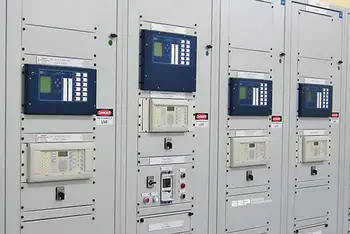
Substation Relay Protection Training

Our customized live online or in‑person group training can be delivered to your staff at your location.
  • Live Online
  • 12 hours Instructor-led
  • Group Training Available
Regular Price:
$699
Coupon Price:
$599
Reserve Your Seat Today
From very public customer satisfaction surveys to internal customer service measures, utilities face increased pressure to please the consumer.

In its latest industry report, Chartwell reveals the common threads between energy providers that are highly regarded by their customers and covers the issues surrounding customer satisfaction in the utility industry.

Customer Satisfaction in the Utility Industry" offers an industry analysis and six case studies on companies such as PPL Electric Utilities and Omaha Public Power District. Chartwell also interviewed several industry experts, including Al Destribats, the director of J.D. Power and Associates' noted utility customer satisfaction studies, to present valuable advice and opinion on customer satisfaction measures and what they mean to utility companies in a volatile and ever-changing energy market.

"Customer satisfaction is very important to utility executives right now," says Dennis Smith, director of editorial and research for Chartwell Inc. "It appears most utility distribution companies were able to distinguish themselves from the corporate disrepute plaguing the unregulated side of the industry, but regulatory commissions and consumer watchdogs will continue to hold utilities' feet to the fire when it comes to maintaining quality customer service."

Chartwell's latest interviews with utility executives show that customer satisfaction and/or customer service measures are top of mind for many. "Customer Satisfaction in the Utility Industry" offers advice and lessons learned from utilities that have either improved their customer satisfaction measures or are at the top.

Related News
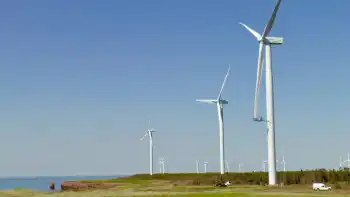
Covid-19 puts brake on Turkey’s solar sector

Turkey Net Metering Suspension freezes regulator reviews, stalling rooftop solar permits and grid interconnections amid COVID-19, pausing licensing workflows, EPC pipelines, and electricity bill credits that drive commercial and household prosumer adoption.


Key Points

A pause on technical reviews freezing net metering applications and slowing rooftop solar deployment in Turkey.

✅ Monthly technical committee meetings suspended indefinitely

✅ Rooftop solar permits and grid interconnections on hold

✅ EPC firms urge remote evaluations for transparency


The decision by the Turkish Energy Market Regulatory Authority to halt part of the system of processing net metering applications risks bringing the only vibrant segment of the nation’s solar industry to a grinding halt, a risk amplified as global renewables face Covid-19 disruptions across markets.

The regulator has suspended monthly meetings of the committee which makes technical evaluations of net metering applications, citing concerns about the spread of Covid-19, which has already seen U.S. utility-scale solar face delays this year.

The availability of electricity bill credits for net-metering-approved households which inject surplus power into the grid, similar to how British households can sell power back to energy firms, has seen the rooftop projects the scheme is typically associated with remain the only source of new solar generation capacity in Turkey of late.

However the energy regulator’s decision to suspend technical evaluation committee meetings until further notice has seen the largely online licensing process for new solar systems practically cease; by contrast, Berlin is being urged to remove PV barriers to keep projects moving.

The Turkish solar industry has claimed the move is unnecessary, with solar engineering, procurement and construction services businesses pointing out the committee could meet to evaluate projects remotely. It has been argued such a move would streamline the application process and make it more transparent, regardless of the current public health crisis.


Net metering 

Turkey introduced net metering for rooftop installations last May and pv magazine has reported the specifics of the scheme, amid debates like New England's grid upgrade costs over who pays.

National grid operator Teias confirmed recently the country added 109 MW of new solar capacity in the first quarter, most of it net-metered rooftop systems, even as Australian distributors warn excess solar can strain local networks.

Net metering has been particularly attractive to commercial electricity users because the owners of small and medium-sized businesses pay more for power, as solar reshapes electricity prices in Northern Europe, than either households or large scale industrial consumers.

Until the recent technical committee decision by the regulator, the chief obstacle to net metering adoption had been the nation’s economic travails. The Turkish lira has lost 14% of its value since January and around 36% over the last two years. The central bank has been using its foreign reserves to support state lenders and the lira but the national currency slipped near an all-time low on Friday and foreign analysts predict the central bank reserves could run dry in July.

The level of exports shipped last month was down 41% on April last year and imports fell 28% by the same comparison, further depressing the willingness of companies to make capital investments such as rooftop solar.


Related News

View more

ABL Secures Contract for UK Subsea Power

ABL has secured a contract for the UK Subsea Power Link, highlighting ABL Group’s marine warranty role in Eastern Green Link 2, a 2 GW offshore electricity superhighway connecting Scotland and England to enhance grid reliability and renewable energy transmission.


Key Points: ABL Group’s contract for the UK Subsea Power Link

ABL Group has been appointed to provide marine warranty survey services for the 2 GW Eastern Green Link 2 subsea interconnector between Scotland and England.

✅ Manages vessel suitability checks, installation oversight, and DP assurance

✅ Strengthens UK grid reliability and advances the clean energy transition

✅ Sizeable contract valued between USD 1 million and 3 million


Energy and marine consultancy ABL, a subsidiary of ABL Group, has been awarded a contract by Eastern Green Link 2 (EGL2) to provide marine warranty survey (MWS) services for the installation of a new 2 GW subsea power connection between Scotland and England.

EGL2 is one of the United Kingdom’s most significant energy-infrastructure projects, involving the creation of a 505-kilometre “electricity superhighway” that will enable simultaneous power transfer between Peterhead in Aberdeenshire and Drax in North Yorkshire, mirroring a renewable power link announced for the same corridor recently. The project is designed to strengthen grid resilience, integrate renewable energy from Scotland’s offshore resources, and advance the UK’s broader energy transition goals.

Under the terms of the contract, ABL will be responsible for the technical review and approval of the project and procedural documentation, as well as conducting suitability surveys of the proposed fleet for marine transportation and installation operations. The company will also provide dynamic positioning (DP) assurance where required and will review and approve all warranted operations through on-site attendances, reflecting practices used on projects like the Great Northern Transmission Line in North America.

Cable-laying operations for the link are scheduled to take place between January and September 2028, amid wider efforts to fast-track grid connections across the UK. According to ABL, the engagement represents a “sizeable” contract, valued between USD 1 million and 3 million.

“This appointment reflects ABL's reputation as a trusted MWS partner for major power transmission infrastructure development and reinforces our position at the forefront of supporting the UK's energy transition,” said Hege Norheim, CEO of ABL Group. “We look forward to contributing to this strategic initiative.”

The subsea interconnector, known as Eastern Green Link 2, will transmit up to 2 gigawatts of electricity—enough to power approximately 2 million homes. It forms part of the Great Grid Upgrade, National Grid’s nationwide program to modernize and expand the transmission network in preparation for a low-carbon future, alongside a recent 2 GW substation milestone.

By linking renewable-rich northern Scotland with high-demand regions in England, EGL2 is expected to reduce congestion on the existing grid by leveraging HVDC technology to improve transfer efficiency, enhance security of supply, and facilitate the more efficient flow of surplus renewable energy south. The connection will also support the UK government’s target of decarbonizing the electricity system by 2035.

ABL’s appointment follows a period of intensive marine and geotechnical surveys along the proposed cable route to assess seabed conditions and environmental sensitivities. The company’s marine warranty oversight will ensure that transportation and installation operations meet strict safety, technical, and environmental standards demanded by insurers and project partners, as seen in a recent cross-border transmission approval in North America.

For ABL Group, which provides engineering and risk services to the offshore energy and marine industries worldwide, the contract marks another milestone in its expanding portfolio of subsea power and transmission projects across Europe. With operations set to begin in 2028, the Eastern Green Link 2 initiative represents both a major engineering challenge and a key enabler of the UK’s offshore energy ambitions, echoing a recent offshore wind power milestone in the U.S.


Related Articles


View more

Covid-19 crisis hits solar and wind energy industry

COVID-19 Impact on US Renewable Energy disrupts solar and wind projects, dries up tax equity financing, strains supply chains, delays construction, and slows jobs growth amid limited federal stimulus and uncertain investor appetite.


Key Points

COVID-19 has slowed US clean energy growth by curbing tax equity, disrupting supply chains, and delaying projects.

✅ Tax equity dries up as investor profits fall

✅ Supply chain and construction face pandemic delays

✅ Policy aid and credit extensions sought by industry


Swinerton Renewable Energy had everything it needed to build a promising new solar farm in Texas. It lined up more than 2,000 acres for the $109 million project estimated to generate 400 jobs while under construction. By its completion date, the solar farm was expected to produce 200 megawatts of energy — enough to power about 25,000 homes — and generate big tax breaks for its investors as part of a government program to incentivize clean energy.

But the coronavirus pandemic put everything on hold. The solar farm’s backers aren’t sure they will make enough money from other investments during the pandemic-fueled downturn for those tax breaks to be worth it. So the project has been delayed at least six months.

“This is not a shortage of materials. It is not a pricing issue,” said George Hershman, president of Swinerton Renewable Energy. “Everything was pointing to successful projects.”

The coronavirus crisis is not only battering the oil and gas industry. It’s drying up capital and disrupting supply chains for businesses trying to move the country toward cleaner sources of energy.

While President Trump has promised lifelines for airlines and oil companies struggling with a drastic decrease in demand as Americans remain under stay-at-home orders, there is little focus in Washington on economic relief for this sector, despite a power coalition's call for action to address the pandemic — unlike during the Great Recession a decade ago, when Congress and the Obama administration earmarked an unprecedented sum for renewable energy and more efficient automobiles in a stimulus bill.

“We don’t want to lose our great oil companies,” Trump said during an April 1 news briefing. He so far has not made a similar promise to help wind and solar firms, and none of the four economic rescue and stimulus packages that Congress has passed to respond to the coronavirus crisis set aside any money for renewable energy specifically.

Sign up for our Coronavirus Updates newsletter to track the outbreak. All stories linked in the newsletter are free to access.

The impact of the crisis is already clear: About 106,000 clean-energy workers have already filed for unemployment in March alone, according to an analysis of Bureau of Labor Statistics data by Environmental Entrepreneurs, an advocacy group.

The layoffs are a blow to a sector that has prided itself on official projections that solar installers and wind turbine technicians would be the two fastest growing occupations over the next decade.

The job losses include not just wind and solar construction workers, but also those assembling electric cars and installing energy-efficient appliances, lighting, heating and air conditioning.

“These aren’t left-wing coastal hippies,” said Bob Keefe, executive director of Environmental Entrepreneurs. “These are construction workers who get up every day and lace up their boots and pull on their gloves and go to work putting insulation in our attics.”

Despite the economic turmoil, climate experts say the coronavirus pandemic could be an opportunity to make drastic shifts in the energy landscape, with green investments potentially driving a robust recovery. They say governments around the world should help fund renewable energy and use the turmoil in energy markets to remake the industry and slash carbon dioxide emissions, which will tumble 8 percent this year, according to the International Energy Agency.

The agency said that while global energy demand fell 3.8 percent in the first quarter, renewables were the only source to post an increase in demand, rising 1.5 percent thanks to new renewable power plants, low operating costs and priority on some electricity grids.

But many investors, who rely on a broad mix of investments, are spooked. “Everything is quiet because people want to see where we land with the current crisis, and people are holding on to cash,” said Daniel Klier, the global head of sustainable finance at HSBC bank. “As soon as people have a bit of confidence that the market is recovering, they can get projects going.”

Social distancing and the country’s stay-at-home orders are also having a deep effect on daily operations. The areas hardest hit are installing solar panels on rooftops and adding energy-efficiency measures inside homes — work that often requires face-to-face interactions. Sungevity, once one of the nation’s leading solar-installation companies, laid off 377 workers, most of its workforce, in late March, according to filings with California’s Employment Development Department. The company, which had emerged from a 2017 bankruptcy, cited economic conditions.

The push to promote a more fuel-efficient automobile fleet has also veered off track. The electric car maker Tesla was forced to shut down its factory in Fremont, Calif., just as it was turning up production on its new crossover vehicle, the Model Y.

Lockdown orders across the country led Tesla’s outspoken chief executive, Elon Musk, to launch into an expletive-laden rant during an earnings call last week in which Tesla posted a lukewarm profit of $16 million.

“To say that they cannot leave their house and they will be arrested if they do,” Musk said, “this is fascist.”

Sungevity and Tesla represent only a sliver of the economic pain in this sector across the country. The Solar Energy Industries Association had anticipated a growth in solar jobs, from 250,000 to 300,000, over the course of the year, said the group’s president, Abigail Ross Hopper. Now, she said, half the workforce is at risk.

“Shelter in place puts limitations on how people can work,” she said. “Literally, people don’t want other people inside their houses to fix electrical boxes. And there are no door-to-door sales.”

Bigger projects are also grappling with the pandemic economy, though not as severely. Hopper said the industry was geared up to increase the number of new solar farms, in part to take advantage of federal tax credits. “We were on track to do almost 20 gigawatts, which would have been the highest year yet,” Hopper said. That would have been enough to power about 3.7 million homes. Now she expects new projects will come closer to last year’s 13.27 gigawatts’ worth of new construction, after a report on utility-scale solar delays warned of widespread slowdowns, enough to run approximately 2.5 million homes.

Wind energy companies, too, are bracing for lost progress unless the federal government steps in. The American Wind Energy Association said projects that would add 25 gigawatts of wind power to the U.S. grid are at risk of being scaled back or canceled outright over the next two years because of the pandemic. Altogether, that work represents about 35,000 jobs.

“2019 was a good year for the wind industry,” said Tom Kiernan, the association’s chief executive. “We were expecting 2020 to be an even stronger year.”

One project put on the back burner: an enormous 9 gigawatt offshore wind venture led by the New York State Energy Research and Development Authority set to be completed by 2035.

With New York City besieged by coronavirus cases, the authority said it would comply with an executive order from Gov. Andrew M. Cuomo (D), “pausing” all on-site work on clean-energy projects until at least May 15. Michigan, New Jersey and Pennsylvania also delayed wind turbine projects by deeming construction on them nonessential.

The Danish offshore wind firm Orsted said that plans for offshore U.S. wind installations would move “at a slower pace than originally expected due to a combination of the Bureau of Ocean Energy Management’s prolonged analysis of the cumulative impacts from the build-out of US offshore wind projects, and now also COVID-19 effects.” The company told investors it expects delays on projects off the coasts of New York, New Jersey and Rhode Island totaling almost 3 gigawatts.

The supply chains have also taken a hit during the pandemic: Even if contractors can get the money to erect wind turbines or lay solar arrays, that doesn’t mean they will have the parts. At least two factories that make wind turbine parts — one in North Dakota and another in Iowa — were forced to pause production because of coronavirus outbreaks. Factory shutdowns in China have constrained solar supplies, too.

The key reason for delaying most big solar and wind projects is the use of tax credits known as “tax equity.” These allow investors, such as banks, to use the credits to directly offset their overall tax burdens. But if an investor doesn’t have enough profit to offset the credits, the tax equity could become worthless.

“If your profitability is going down, you don’t have the same appetite,” Hopper said.

Solar and wind industry leaders are pressing Congress and the Trump administration to extend the eligibility period for tax credits that are due to expire, with senators urging support for clean energy in relief packages, and to make the tax credits refundable, meaning the government would issue a check to investors who do not have enough profit to justify their investments.

Currently, big wind turbines get a 1.5 cents per kilowatt hour tax credit if construction begins before the end of this year. Tax credits for residential renewable energy — solar panels and small wind — phase out by the end of 2021, and debate over a potential solar ITC extension continues to shape expectations in the wind market.

The lack of attention to renewables in Congress’s relief efforts so far is in stark contrast to 2009, when the United States spent $112 billion to boost “green” energy, according to the World Resources Institute. The government’s package then provided a mixture of grants and loans for a variety of renewable energy ventures — including a $465 million loan Tesla used to get its Fremont factory off the ground.

This year, a handful of clean-energy firms, including a Connecticut-based manufacturer of fuel cells and an Ohio-based maker of energy-efficient lighting systems, took money from a federal small-business lending program, before funds ran dry in the middle of last month. Broadwind Energy, a maker of steel wind energy towers based outside Chicago, received $9.5 million in small-business loans, one of the biggest totals in the program.

So far, the Trump administration has shown far more eagerness to help American petroleum producers that the president said were “ravaged” by a sharp drop in energy demand. Last month, Trump met with oil executives at the White House, and Energy Secretary Dan Brouillette has floated the idea of bridge loans for struggling oil firms.

During negotiations for the last relief package, congressional Democrats tried to strike a deal to refill the nation’s Strategic Petroleum Reserve in exchange for extending the clean-energy incentives, but Senate Majority Leader Mitch McConnell (R-Ky.) rebuffed those calls.

“Democrats won’t let us fund hospitals or save small businesses unless they get to dust off the Green New Deal,” McConnell said in March.

Already, Democrats are signaling they will make a push again in the next round of stimulus spending.

“Relief and recovery legislation will shape our society for years to come,” said Rep. A. Donald McEachin (D-Va.), vice chair of the House Sustainable Energy and Environment Coalition, a caucus that supports renewable energy resources. “We must use these bills to build in a climate-smart way.”

But it remains unclear how much appetite the GOP will have for a deal. “I just don’t know how to handicap that at this point,” said Grant Carlisle, an analyst at the Natural Resources Defense Council, a major environmental group.

Kiernan, the head of the American Wind Energy Association, said his group has “gotten a very good reception with the administration and with the Hill” when it comes to coronavirus relief, but he declined to go into specifics.

In other parts of the world, governments have been providing support for renewables. The European Union has its own Green New Deal, and China is expected to support wind and solar to get the economy moving more quickly.

Some energy analysts note that big oil companies don’t have to wait for government stimulus. The price of oil is so low that they would be better off investing in wind and solar, they say.

“For all these oil companies, the returns on these renewable projects are better than what they can do in the oil and gas industry,” said Sarah Ladislaw, director of the energy program at the Center for Strategic and International Studies. “Now is a good time to do that and tell their investors.”

This fits in with their broader goals, analysts contend. After all, Royal Dutch Shell recently matched BP’s earlier promise to aim to be net-zero for carbon emissions by 2050.

Shell’s chief executive Ben van Beurden has said the company would try to protect its low-carbon Integrated Gas and New Energies division from the largest spending cuts as it sought to weather the pandemic. “We must maintain focus on the long term,” he said in a video message. “Society expects nothing less.”


Related News

View more

Ontario's electricity operator kept quiet about phantom demand that cost customers millions

IESO Fictitious Demand Error inflated HOEP in the Ontario electricity market, after embedded generation was mis-modeled; the OEB says double-counted load lifted wholesale prices and shifted costs via the Global Adjustment.


Key Points

An IESO modeling flaw that double-counted load, inflating HOEP and charges in Ontario's wholesale market.

✅ Double-counted unmetered load from embedded generation

✅ Inflated HOEP; shifted costs via Global Adjustment

✅ OEB flagged transparency; exporters paid more


For almost a year, the operator of Ontario’s electricity system erroneously counted enough phantom demand to power a small city, causing prices to spike and hundreds of millions of dollars in extra charges to consumers, according to the provincial energy regulator.

The Independent Electricity System Operator (IESO) also failed to tell anyone about the error once it noticed and fixed it.

The error likely added between $450 million and $560 million to hourly rates and other charges before it was fixed in April 2017, according to a report released this month by the Ontario Energy Board’s Market Surveillance Panel.

It did this by adding as much as 220 MW of “fictitious demand” to the market starting in May 2016, when the IESO started paying consumers who reduced their demand for power during peak periods. This involved the integration of small-scale embedded generation (largely made up of solar) into its wholesale model for the first time.

The mistake assumed maximum consumption at such sites without meters, and double-counted that consumption.

The OEB said the mistake particularly hurt exporters and some end-users, who did not benefit from a related reduction of a global adjustment rate applicable to other customers.

“The most direct impact of the increase in HOEP (Hourly Ontario Energy Price) was felt by Ontario consumers and exporters of electricity, who paid an artificially high HOEP, to the benefit of generators and importers,” the OEB said.

The mix-up did not result in an equivalent increase in total system costs, because changes to the HOEP are offset by inverse changes to a electricity cost allocation mechanism such as the Global Adjustment rate, the OEB noted.


A chart from the OEB's report shows the time of day when fictitious demand was added to the system, and its influence on hourly rates.

Peak time spikes
The OEB said that the fictitious demand “regularly inflated” the hourly price of energy and other costs calculated as a direct function of it.

For almost a year, Ontario's electricity system operator @IESO_Tweets erroneously counted enough phantom demand to power a small city, causing price spikes and hundreds of millions in charges to consumers, @OntEnergyBoard says. @5thEstate reports.

It estimated the average increase to the HOEP was as much as $4.50/MWh, but that price spikes, compounded by scheduled OEB rate changes, would have been much higher during busier times, such as the mid-morning and early evening.

“In times of tight supply, the addition of fictitious demand often had a dramatic inflationary impact on the HOEP,” the report said.

That meant on one summer evening in 2016 the hourly rate jumped to $1,619/MWh, it said, which was the fourth highest in the history of the Ontario wholesale electricity market.

“Additional demand is met by scheduling increasingly expensive supply, thus increasing the market price. In instances where supply is tight and the supply stack is steep, small increases in demand can cause significant increases in the market price.

The OEB questioned why, as of September this year, the IESO had failed to notify its customers or the broader public, amid a broader auditor-regulator dispute that drew political attention, about the mistake and its effect on prices.

“It's time for greater transparency on where electricity costs are really coming from,” said Sarah Buchanan, clean energy program manager at Environmental Defence.

“Ontario will be making big decisions in the coming years about whether to keep our electricity grid clean, or burn more fossil fuels to keep the lights on,” she added. “These decisions need to be informed by the best possible evidence, and that can't happen if critical information is hidden.”

In a response to the OEB report on Monday, the IESO said its own initial analysis found that the error likely pushed wholesale electricity payments up by $225 million. That calculation assumed that the higher prices would have changed consumer behaviour, while upcoming electricity auctions were cited as a way to lower costs, it said.

In response to questions, a spokesperson said residential and small commercial consumers would have saved $11 million in electricity costs over the 11-month period, even as a typical bill increase loomed province-wide, while larger consumers would have paid an extra $14 million.

That is because residential and small commercial customers pay some costs via time-of-use rates, including a temporary recovery rate framework, the IESO said, while larger customers pay them in a way that reflects their share of overall electricity use during the five highest demand hours of the year.

The IESO said it could not compensate those that had paid too much, given the complexity of the system, and that the modelling error did not have a significant impact on ratepayers.

While acknowledging the effects of the mistake would vary among its customers, the IESO said the net market impact was less than $10 million, amid ongoing legislation to lower electricity rates in Ontario.

It said it would improve testing of its processes prior to deployment and agreed to publicly disclose errors that significantly affect the wholesale market in the future.


Related News

View more

London's Newest Electricity Tunnel Goes Live

London Electricity Tunnel strengthens grid modernization with high-voltage cabling from major substations, increasing redundancy, efficiency, and resilience while enabling renewable integration, optimized power distribution, and a stable, low-loss electricity supply across the capital.


Key Points

A high-voltage tunnel upgrading London's grid, with capacity, redundancy, and renewable integration for reliable power.

✅ High-voltage cabling from key substations boosts capacity

✅ Redundancy improves reliability during grid faults

✅ Enables renewable integration and lower transmission losses


London’s energy infrastructure has recently taken a significant leap forward with the commissioning of its newest electricity tunnel, and related upgrades like the 2GW substation that bolster transmission capacity, a project that promises to enhance the reliability and efficiency of the city's power distribution. This cutting-edge tunnel is a key component in London’s ongoing efforts to modernize its energy infrastructure, support its growing energy demands, and contribute to its long-term sustainability goals.

The newly activated tunnel is part of a broader initiative to upgrade London's aging power grid, which has faced increasing pressure from the city’s expanding population and its evolving energy needs, paralleling Toronto's electricity planning to accommodate growth. The tunnel is designed to carry high-voltage electricity from major substations to various parts of the city, improving the distribution network's capacity and reliability.

The construction of the tunnel was a major engineering feat, involving the excavation of a vast underground passage that stretches several kilometers beneath the city. The tunnel is equipped with advanced technology and materials to ensure its resilience and efficiency, and is informed by advances such as HVDC technology being explored across Europe for stronger grids. It features state-of-the-art cabling and insulation to handle high-voltage electricity safely and efficiently, minimizing energy losses and improving overall grid performance.

One of the key benefits of the new tunnel is its ability to enhance the reliability of London’s power supply. As the city continues to grow and demand for electricity increases, maintaining a stable and uninterrupted power supply is critical. The tunnel helps address this need by providing additional capacity and creating redundancy in the power distribution network, aligning with national efforts to fast-track grid connections that unlock capacity across the UK.

The tunnel also supports London’s sustainability goals by facilitating the integration of renewable energy sources into the grid. With the increasing use of solar, wind, and other clean energy technologies, including the Scotland-to-England subsea link that will carry renewable power, the power grid needs to be able to accommodate and distribute this energy effectively. The new tunnel is designed to handle the variable nature of renewable energy, allowing for a more flexible and adaptive grid that can better manage fluctuations in supply and demand.

In addition to its technical benefits, the tunnel represents a significant investment in London’s future energy infrastructure, echoing calls to invest in smarter electricity infrastructure across North America and beyond. The project has created jobs and stimulated economic activity during its construction phase, and it will continue to provide long-term benefits by supporting a more efficient and resilient power system. The upgrade is part of a broader strategy to modernize the city’s infrastructure and prepare it for future energy challenges.

The completion of the tunnel also reflects a commitment to addressing the challenges of urban infrastructure development. Building such a major piece of infrastructure in a densely populated city like London requires careful planning and coordination to minimize disruption and ensure safety. The project team worked closely with local communities and businesses to manage the construction process and mitigate any potential impacts.

As London moves forward, the new electricity tunnel will play a crucial role in supporting the city’s energy needs. It will help ensure that power is delivered efficiently and reliably to homes, businesses, and essential services. The tunnel also sets a precedent for future infrastructure projects, demonstrating how advanced engineering and technology can address the demands of modern urban environments.

The successful activation of the tunnel marks a significant milestone in London’s efforts to build a more sustainable and resilient energy system. It represents a forward-thinking approach to managing the city’s energy infrastructure and addressing the challenges posed by population growth, increasing energy demands, and the need for cleaner energy sources.

Looking ahead, London will continue to invest in and upgrade its energy infrastructure to support its ambitious climate goals and ensure a reliable power supply for its residents, a trend mirrored by Toronto's preparations for surging demand as that city continues to grow. The new electricity tunnel is just one example of the city’s commitment to innovation and sustainability in its approach to energy management.

In summary, London’s newest electricity tunnel is a major advancement in the city’s power distribution network. By enhancing reliability, supporting the integration of renewable energy, and investing in long-term infrastructure, the tunnel plays a critical role in addressing the city’s energy needs and sustainability goals. As London continues to evolve, such infrastructure projects will be essential in meeting the demands of a growing metropolis and creating a more resilient and efficient energy system for the future.


Related News

View more

Tariff Threats Boost Support for Canadian Energy Projects

Canadian Energy Infrastructure Tariffs are reshaping pipelines, deregulation, and energy independence, as U.S. trade tensions accelerate approvals for Alberta oil sands, Trans Mountain expansion, and CAPP proposals amid regulatory reform and market diversification.


Key Points

U.S. tariff threats drive approvals, infrastructure, and diversification to strengthen Canada energy security.

✅ Tariff risk boosts support for pipelines and export routes

✅ Faster project approvals and deregulation gain political backing

✅ Diversifying markets reduces reliance on U.S. buyers


In recent months, the Canadian energy sector has experienced a shift in public and political attitudes toward infrastructure projects, particularly those related to oil and gas production. This shift has been largely influenced by the threat of tariffs from the United States, as well as growing concerns about energy independence and U.S.-Canada trade tensions more broadly.

Scott Burrows, the CEO of Pembina Pipeline Corp., noted in a conference call that the potential for U.S. tariffs on Canadian energy imports has spurred a renewed sense of urgency and receptiveness toward energy infrastructure projects in Canada. With U.S. President Donald Trump’s proposed tariffs Trump tariff threat on Canadian imports, particularly a 10% tariff on energy products, there is increasing recognition within Canada that these projects are essential for the country’s long-term economic and energy security.

While the direct impact of the tariffs is not immediate, industry leaders are optimistic about the long-term benefits of deregulation and faster project approvals, even as some see Biden as better for Canada’s energy sector overall. Burrows highlighted that while it will take time for the full effects to materialize, there are significant "tailwinds" in favor of faster energy infrastructure development. This includes the possibility of more streamlined regulatory processes and a shift toward more efficient project timelines, which could significantly benefit the Canadian energy sector.

This changing landscape is particularly important for Alberta’s oil production, which is one of the largest contributors to Canada’s energy output. The Canadian Association of Petroleum Producers (CAPP) has responded to the growing tariff threat by releasing an “energy platform,” outlining recommendations for Ottawa to help mitigate the risks posed by the evolving trade situation. The platform includes calls for improved infrastructure, such as pipelines and transportation systems, and priorities like clean grids and batteries, to ensure that Canadian energy can reach global markets more effectively.

The tariff threat has also sparked a wider conversation about the need for Canada to strengthen its energy infrastructure and reduce its dependency on the U.S. for energy exports. With the potential for escalating trade tensions, there is a growing push for Canadian energy resources to be processed and utilized more domestically, though cutting Quebec’s energy exports during a tariff war. This has led to increased political support for projects like the Trans Mountain pipeline expansion, which aims to connect Alberta’s oil sands to new markets in Asia via the west coast.

However, the energy sector’s push for deregulation and quicker approvals has raised concerns among environmental groups and Indigenous communities. Critics argue that fast-tracking energy projects could lead to inadequate environmental assessments and greater risks to local ecosystems. These concerns underscore the tension between economic development and environmental protection in the energy sector.

Despite these concerns, there is a clear consensus that Canada’s energy industry needs to evolve to meet the challenges posed by shifting trade dynamics, even as polls show support for energy and mineral tariffs in the current dispute. The proposed U.S. tariffs have made it increasingly clear that the country’s energy infrastructure needs significant investment and modernization to ensure that Canada can maintain its status as a reliable and competitive energy supplier on the global stage.

As the deadline for the tariff decision approaches, and as Ford threatens to cut U.S. electricity exports, Canada’s energy sector is bracing for the potential fallout, while also preparing to capitalize on any opportunities that may arise from the changing trade environment. The next few months will be critical in determining how Canadian policymakers, businesses, and environmental groups navigate the complex intersection of energy, trade, and regulatory reform.

While the threat of U.S. tariffs may be unsettling, it is also serving as a catalyst for much-needed changes in Canada’s energy policy. The push for faster approvals and deregulation may help address some of the immediate concerns facing the sector, but it will be crucial for the government to balance economic interests with environmental and social considerations as the country moves forward in its energy transition.


Related News

View more

Sign Up for Electricity Forum’s Newsletter

Stay informed with our FREE Newsletter — get the latest news, breakthrough technologies, and expert insights, delivered straight to your inbox.

Electricity Today T&D Magazine Subscribe for FREE

Stay informed with the latest T&D policies and technologies.
  • Timely insights from industry experts
  • Practical solutions T&D engineers
  • Free access to every issue

Live Online & In-person Group Training

Advantages To Instructor-Led Training – Instructor-Led Course, Customized Training, Multiple Locations, Economical, CEU Credits, Course Discounts.

Request For Quotation

Whether you would prefer Live Online or In-Person instruction, our electrical training courses can be tailored to meet your company's specific requirements and delivered to your employees in one location or at various locations.