Sale of Ontario Hydro Scrapped

By The Toronto Star


Substation Relay Protection Training

Our customized live online or in‑person group training can be delivered to your staff at your location.

  • Live Online
  • 12 hours Instructor-led
  • Group Training Available
Regular Price:
$699
Coupon Price:
$599
Reserve Your Seat Today
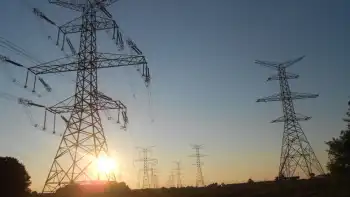
The province has now backed off plans to sell even a minority interest in transmission giant Hydro One.

It was said that it was because the people didn't want it.

We did hear loud and clear from the people of Ontario that they did not want us to part with control," Premier Ernie Eves told reporters at Queen's Park. "The government will be retaining 100 per cent of Hydro One."

This decision brings the government full circle — it had originally planned to sell all of Hydro One to the private sector in what would have been the largest privatization in Canadian history.

After a court decision and a public outcry, it scaled that back to a plan to sell a minority 49 per cent stake in the firm that owns the wires that deliver Ontario's electricity.

On Nov. 11 — only months after hydro rates started to rise when the market was opened to competition — the government capped electricity charges for most consumers at 4.3 cents per kilowatt hour.

Eves suggested consortiums interested in buying into Hydro One wanted more control than the government was willing to part with.

The Premier also emphasized the government does not need the $2 billion to $2.5 billion from a partial sale to bring in a balanced budget in March.

"We did say at the outset that we would not sell Hydro One just for the sake of selling it," Eves said. "The issue really, basically in our mind, came down to one of retaining enough control to protect consumers."

Critics say indecision on this and other electricity-related matters has turned off investors.

Eves often said a "private sector discipline" was vital to the operation of Hydro One.

He pointed to the furor that erupted last summer over the huge pay packages of the corporation's senior management that ultimately led to the dismissal of its board and top executive.

"We have a new board that's in place, we have a new (chair), we have reduced management of the company by some 21 per cent, we have reduced payroll by some $16 million," Eves said. "So I think it is a new and different approach to business at Hydro One than it was before."

In light of the decision by cabinet yesterday, critics are calling Eves the king of flip-flops.

"Ernie has had 11 different positions on our electricity transmission highway. He has enraged both Main Street and Bay Street equally such that nobody can trust this government when it comes to electricity transmission policy," Liberal MPP Michael Bryant (St. Paul's) said.

"This government has taken us on a journey of incompetence and it has cost taxpayers tens of millions of dollars in legal, brokerage and other fees," he said.

John Williamson, Ontario director of the Canadian Taxpayers' Federation, said between deciding not to sell off Hydro One and capping electricity prices, the investment community has now turned its back on Ontario.

"They have gummed up this whole hydro business so badly that they can't even find investors to come into the province of Ontario and spend money. Investors see that it is so politicized that they are prepared to take a pass on the province," Williamson said.

The Conservative government's plan to sell off Hydro One — announced by then-premier Mike Harris in December, 2001 — was derailed April 19 when Mr. Justice Arthur Gans agreed with a union challenge that the government did not have the authority to sell the transmission company.

The Tories later passed legislation giving the government the right to do just that, but backed off under public pressure to take the position in August that only 49 per cent would be sold.

NDP Leader Howard Hampton said the flip-flop is a cheap ploy by the government on the eve of a provincial election, expected this spring.

"This is just a desperate government trying to find a way to get re-elected," he charged.

Hampton said he suspects the Tories will follow through with the sale after an election, if they still form the government, noting the law that allows for the privatization of Hydro One is still on the books.

"If Ernie Eves announced that he was recalling the Legislature to tear up ... the Electricity Competition Act, then I would say the people of Ontario had a full victory," he said.

Jan Carr, managing director of consulting firm Barker, Dunn & Rossi, said efforts to sell the minority stake probably fell apart over what rights and powers the minority owner would enjoy.

A 49 per cent owner is being asked to invest a significant amount of money without gaining real control, Carr noted. That makes it harder to sell than a controlling stake.

He said the government's willingness to override the Ontario Energy Board, which has regulatory oversight of natural gas and electricity matters, also discouraged potential investors.

"The authority of the board has been severely undermined due to recent price freezes and things like that," he said.

Carr noted Hydro One's rates are supposed to be closely regulated by the energy board, according to clear guidelines, whether it's publicly or privately owned. But the province overrode that process and froze Hydro One's rates along with consumer rates when it backtracked on its electricity policy in November.

"The success of your entire business depends on a credible regulatory process, and that has been damaged by the announced freeze of delivery rates," Carr said.

Potential bidders for Hydro One including SNC-Lavalin Group and the Ontario Municipal Employees Retirement System pension fund declined to comment on Eves' announcement. The Ontario Teachers' Pension Fund Board issued a brief statement saying it will continue to look for opportunities to invest in infrastructure.

Related News

Zapping elderly brains with electricity improves short-term memory — for almost an hour

Transcranial electrical stimulation synchronizes brain waves to bolster working memory, aligning neural oscillations across the prefrontal and temporal cortex. This noninvasive brain stimulation may counter cognitive aging by restoring network coupling and improving short-term recall.


Key Points

Transcranial electrical stimulation applies scalp currents to synchronize brain waves, briefly enhancing working memory.

✅ Synchronizes prefrontal-temporal networks to restore coupling

✅ Noninvasive tES/tACS protocols show rapid, reversible gains

✅ Effects lasted under an hour; durability remains to be tested


To read this sentence, you hold the words in your mind for a few seconds until you reach the period. As you do, neurons in your brain fire in coordinated bursts, generating electrical waves that let you hold information for as long as it is needed, much as novel devices can generate electricity from falling snow under specific conditions. But as we age, these brain waves start to get out of sync, causing short-term memory to falter. A new study finds that jolting specific brain areas with a periodic burst of electricity might reverse the deficit—temporarily, at least.

The work makes “a strong case” for the idea that out-of-sync brain waves in specific regions can drive cognitive aging, says Vincent Clark, a neuroscientist at the University of New Mexico in Albuquerque, who was not involved in the research. He adds that the brain stimulation approach in the study may result in a new electrical therapy for age-related deficits in working memory.

Working memory is “the sketchpad of the mind,” allowing us to hold information in our minds over a period of seconds. This short-term memory is critical to accomplishing everyday tasks such as planning and counting, says Robert Reinhart, a neuroscientist at Boston University who led the study. Scientists think that when we use this type of memory, millions of neurons in different brain areas communicate through coupled bursts of activity, a form of electrical conduction that coordinates timing across networks. “Cells that fire together, wire together,” Reinhart says.

But despite its critical role, working memory is a fragile cognitive resource that declines with age, Reinhart says. Previous studies had suggested that reduced working-memory performance in the elderly is linked to uncoupled activity in different brain areas. So Reinhart and his team set out to test whether recoupling brain waves in older adults could boost the brain’s ability to temporarily store information, a systems-level coordination challenge akin to efforts to use AI for energy savings on modern power grids.

To do so, the researchers used jolts of weak electrical current to synchronize waves in the prefrontal and temporal cortex—two brain areas critical for cognition, a targeted approach not unlike how grids use batteries to stabilize power during strain—and applied the current to the scalps of 42 healthy people in their 60s and 70s who showed no signs of decline in mental ability. Before their brains were zapped, participants looked at a series of images: an everyday object, followed briefly by a blank screen, and then either an identical or a modified version of the same object. The goal was to spot whether the two images were different.

Then the participants took the test again, while their brains were stimulated with a current. After about 25 minutes of applying electricity, participants were on average more accurate at identifying changes in the images than they were before the stimulation. Following stimulation, their performance in the test was indistinguishable from that of a group of 42 people in their 20s. And the waves in the prefrontal and temporal cortex, which had previously been out of sync in most of the participants, started to fire in sync, the researchers report today in Nature Neuroscience, a synchronization imperative reminiscent of safeguards that prevent power blackouts on threatened grids. No such effects occurred in a second group of older people who received jolts of current that didn’t synchronize waves in the prefrontal and temporal cortex.

By using bursts of current to knock brain waves out of sync, the researchers also modulated the brain chatter in healthy people in their 20s, making them slower and less accurate at spotting differences in the image test.

“This is a very nice and clear demonstration of how functional connections underlie memory in younger adults and how alterations … can lead to memory reductions in older adults,” says Cheryl Grady, a cognitive neuroscientist at the Rotman Research Institute at Baycrest in Toronto, Canada. It’s also the first time that transcranial stimulation has been shown to restore working memory in older people, says Michael O’Sullivan, a neuroscientist at the University of Queensland in Brisbane, Australia, though electricity in medicine extends far beyond neurostimulation.

But whether brain zapping could turbocharge the cognitive abilities of seniors or help improve the memories of people with diseases like Alzheimer’s is still unclear: In the study, the positive effects on working memory lasted for just under an hour—though Reinhart says that’s as far as they recorded in the experiment. The team didn’t see the improvements decline toward the end, so he suspects that the cognitive boost may last for longer. Still, researchers say much more work has to be done to better understand how the stimulation works.

Clark is optimistic. “No pill yet developed can produce these sorts of effects safely and reliably,” he says. “Helping people is the ultimate goal of all of our research, and it’s encouraging to see that progress is being made.”


Related News

View more

U.S. Electricity and natural gas prices explained

Energy Pricing Factors span electricity generation, transmission, and distribution costs, plus natural gas supply-demand, renewables, seasonal peaks, and wholesale pricing effects across residential, commercial, and industrial customers, usage patterns, weather, and grid constraints.


Key Points

They are the costs and market forces driving electricity and natural gas prices, from generation to delivery and demand.

✅ Generation, transmission, distribution shape electricity rates

✅ Gas prices hinge on supply, storage, imports/exports

✅ Demand shifts: weather, economy, and fuel alternatives


There are a lot of factors that affect energy prices globally. What’s included in the price to heat homes and supply them with electricity may be a lot more than some people may think.

Electricity
Generating electricity is the largest component of its price, according to the U.S. Energy Information Administration (EIA). Generation accounts for 56% of the price of electricity, while distribution and transmission account for 31% and 13% respectively.

Homeowners and businesses pay more for electricity than industrial companies, and U.S. electricity prices have recently surged, highlighting broader inflationary pressures. This is because industrial companies can take electricity at higher voltages, reducing transmission costs for energy companies.

“Industrial consumers use more electricity and can receive it at higher voltages, so supplying electricity to these customers is more efficient and less expensive. The price of electricity to industrial customers is generally close to the wholesale price of electricity,” EIA explains.

NYSEG said based on the average use of 600 kilowatt-hours per month, its customers spent the most money on delivery and transition charges in 2020, 57% or about $42, and residential electricity bills increased 5% in 2022 after inflation, according to national data. They also spent on average 35% (~$26) on supply charges and 8% (~$6) on surcharges.

Electricity prices are usually higher in the summer. Why? Because energy companies use sources of electricity that cost more money. It used to be that renewable sources, like solar and wind, were the most expensive sources of energy but increased technological advances have changed this, according to the International Energy Agency’s 2021 World Energy Outlook.

“In most markets, solar PV or wind now represents the cheapest available source of new electricity generation. Clean energy technology is becoming a major new area for investment and employment – and a dynamic arena for international collaboration and competition,” the report said.

Natural gas
The price of natural gas is driven by supply and demand. If there is more supply, prices are generally lower. If there is not as much supply, prices are generally higher the EIA explains. On the other side of the equation, more demand can also increase the price and less demand can decrease the price.

High natural gas prices mean people turn their home thermostats down a few degrees to save money, so the EIA said reduced demand can encourage companies to produce more natural gas, which would in turn help lower the cost. Lower prices will sometimes cause companies to reduce their production, therefore causing the price to rise.

The three major supply factors that affect prices: the amount of natural gas produced, how much is stored, and the volume of gas imported and exported. The three major demand factors that affect price are: changes in winter/summer weather, economic growth, and the broader energy crisis dynamics, as well as how much other fuels are available and their price, said EIA.

To think the price of natural gas is higher when the economy is thriving may sound counterintuitive but that’s exactly what happens. The EIA said this is because of increases in demand.


Related News

View more

How the 787 uses electricity to maximise efficiency

Boeing 787 More-Electric Architecture replaces pneumatics with bleedless pressurization, VFSG starter-generators, electric brakes, and heated wing anti-ice, leveraging APU, RAT, batteries, and airport ground power for efficient, redundant electrical power distribution.


Key Points

An integrated, bleedless electrical system powering start, pressurization, brakes, and anti-ice via VFSGs, APU and RAT.

✅ VFSGs start engines, then generate 235Vac variable-frequency power

✅ Bleedless pressurization, electric anti-ice improve fuel efficiency

✅ Electric brakes cut hydraulic weight and simplify maintenance


The 787 Dreamliner is different to most commercial aircraft flying the skies today. On the surface it may seem pretty similar to the likes of the 777 and A350, but get under the skin and it’s a whole different aircraft.

When Boeing designed the 787, in order to make it as fuel efficient as possible, it had to completely shake up the way some of the normal aircraft systems operated. Traditionally, systems such as the pressurization, engine start and wing anti-ice were powered by pneumatics. The wheel brakes were powered by the hydraulics. These essential systems required a lot of physical architecture and with that comes weight and maintenance. This got engineers thinking.

What if the brakes didn’t need the hydraulics? What if the engines could be started without the pneumatic system? What if the pressurisation system didn’t need bleed air from the engines? Imagine if all these systems could be powered electrically… so that’s what they did.


Power sources

The 787 uses a lot of electricity. Therefore, to keep up with the demand, it has a number of sources of power, much as grid operators track supply on the GB energy dashboard to balance loads. Depending on whether the aircraft is on the ground with its engines off or in the air with both engines running, different combinations of the power sources are used.


Engine starter/generators

The main source of power comes from four 235Vac variable frequency engine starter/generators (VFSGs). There are two of these in each engine. These function as electrically powered starter motors for the engine start, and once the engine is running, then act as engine driven generators.

The generators in the left engine are designated as L1 and L2, the two in the right engine are R1 and R2. They are connected to their respective engine gearbox to generate electrical power directly proportional to the engine speed. With the engines running, the generators provide electrical power to all the aircraft systems.


APU starter/generators

In the tail of most commercial aircraft sits a small engine, the Auxiliary Power Unit (APU). While this does not provide any power for aircraft propulsion, it does provide electrics for when the engines are not running.

The APU of the 787 has the same generators as each of the engines — two 235Vac VFSGs, designated L and R. They act as starter motors to get the APU going and once running, then act as generators. The power generated is once again directly proportional to the APU speed.

The APU not only provides power to the aircraft on the ground when the engines are switched off, but it can also provide power in flight should there be a problem with one of the engine generators.


Battery power

The aircraft has one main battery and one APU battery. The latter is quite basic, providing power to start the APU and for some of the external aircraft lighting.

The main battery is there to power the aircraft up when everything has been switched off and also in cases of extreme electrical failure in flight, and in the grid context, alternatives such as gravity power storage are being explored for long-duration resilience. It provides power to start the APU, acts as a back-up for the brakes and also feeds the captain’s flight instruments until the Ram Air Turbine deploys.


Ram air turbine (RAT) generator

When you need this, you’re really not having a great day. The RAT is a small propeller which automatically drops out of the underside of the aircraft in the event of a double engine failure (or when all three hydraulics system pressures are low). It can also be deployed manually by pressing a switch in the flight deck.

Once deployed into the airflow, the RAT spins up and turns the RAT generator. This provides enough electrical power to operate the captain’s flight instruments and other essentials items for communication, navigation and flight controls.


External power

Using the APU on the ground for electrics is fine, but they do tend to be quite noisy. Not great for airports wishing to keep their noise footprint down. To enable aircraft to be powered without the APU, most big airports will have a ground power system drawing from national grids, including output from facilities such as Barakah Unit 1 as part of the mix. Large cables from the airport power supply connect 115Vac to the aircraft and allow pilots to shut down the APU. This not only keeps the noise down but also saves on the fuel which the APU would use.

The 787 has three external power inputs — two at the front and one at the rear. The forward system is used to power systems required for ground operations such as lighting, cargo door operation and some cabin systems. If only one forward power source is connected, only very limited functions will be available.

The aft external power is only used when the ground power is required for engine start.


Circuit breakers

Most flight decks you visit will have the back wall covered in circuit breakers — CBs. If there is a problem with a system, the circuit breaker may “pop” to preserve the aircraft electrical system. If a particular system is not working, part of the engineers procedure may require them to pull and “collar” a CB — placing a small ring around the CB to stop it from being pushed back in. However, on the 787 there are no physical circuit breakers. You’ve guessed it, they’re electric.

Within the Multi Function Display screen is the Circuit Breaker Indication and Control (CBIC). From here, engineers and pilots are able to access all the “CBs” which would normally be on the back wall of the flight deck. If an operational procedure requires it, engineers are able to electrically pull and collar a CB giving the same result as a conventional CB.

Not only does this mean that the there are no physical CBs which may need replacing, it also creates space behind the flight deck which can be utilised for the galley area and cabin.


A normal flight

While it’s useful to have all these systems, they are never all used at the same time, and, as the power sector’s COVID-19 mitigation strategies showed, resilience planning matters across operations. Depending on the stage of the flight, different power sources will be used, sometimes in conjunction with others, to supply the required power.


On the ground

When we arrive at the aircraft, more often than not the aircraft is plugged into the external power with the APU off. Electricity is the blood of the 787 and it doesn’t like to be without a good supply constantly pumping through its system, and, as seen in NYC electric rhythms during COVID-19, demand patterns can shift quickly. Ground staff will connect two forward external power sources, as this enables us to operate the maximum number of systems as we prepare the aircraft for departure.

Whilst connected to the external source, there is not enough power to run the air conditioning system. As a result, whilst the APU is off, air conditioning is provided by Preconditioned Air (PCA) units on the ground. These connect to the aircraft by a pipe and pump cool air into the cabin to keep the temperature at a comfortable level.


APU start

As we near departure time, we need to start making some changes to the configuration of the electrical system. Before we can push back , the external power needs to be disconnected — the airports don’t take too kindly to us taking their cables with us — and since that supply ultimately comes from the grid, projects like the Bruce Power upgrade increase available capacity during peaks, but we need to generate our own power before we start the engines so to do this, we use the APU.

The APU, like any engine, takes a little time to start up, around 90 seconds or so. If you remember from before, the external power only supplies 115Vac whereas the two VFSGs in the APU each provide 235Vac. As a result, as soon as the APU is running, it automatically takes over the running of the electrical systems. The ground staff are then clear to disconnect the ground power.

If you read my article on how the 787 is pressurised, you’ll know that it’s powered by the electrical system. As soon as the APU is supplying the electricity, there is enough power to run the aircraft air conditioning. The PCA can then be removed.


Engine start

Once all doors and hatches are closed, external cables and pipes have been removed and the APU is running, we’re ready to push back from the gate and start our engines. Both engines are normally started at the same time, unless the outside air temperature is  below 5°C.

On other aircraft types, the engines require high pressure air from the APU to turn the starter in the engine. This requires a lot of power from the APU and is also quite noisy. On the 787, the engine start is entirely electrical.

Power is drawn from the APU and feeds the VFSGs in the engines. If you remember from earlier, these fist act as starter motors. The starter motor starts the turn the turbines in the middle of the engine. These in turn start to turn the forward stages of the engine. Once there is enough airflow through the engine, and the fuel is igniting, there is enough energy to continue running itself.


After start

Once the engine is running, the VFSGs stop acting as starter motors and revert to acting as generators. As these generators are the preferred power source, they automatically take over the running of the electrical systems from the APU, which can then be switched off. The aircraft is now in the desired configuration for flight, with the 4 VFSGs in both engines providing all the power the aircraft needs.

As the aircraft moves away towards the runway, another electrically powered system is used — the brakes. On other aircraft types, the brakes are powered by the hydraulics system. This requires extra pipe work and the associated weight that goes with that. Hydraulically powered brake units can also be time consuming to replace.

By having electric brakes, the 787 is able to reduce the weight of the hydraulics system and it also makes it easier to change brake units. “Plug in and play” brakes are far quicker to change, keeping maintenance costs down and reducing flight delays.


In-flight

Another system which is powered electrically on the 787 is the anti-ice system. As aircraft fly though clouds in cold temperatures, ice can build up along the leading edge of the wing. As this reduces the efficiency of the the wing, we need to get rid of this.

Other aircraft types use hot air from the engines to melt it. On the 787, we have electrically powered pads along the leading edge which heat up to melt the ice.

Not only does this keep more power in the engines, but it also reduces the drag created as the hot air leaves the structure of the wing. A double win for fuel savings.

Once on the ground at the destination, it’s time to start thinking about the electrical configuration again. As we make our way to the gate, we start the APU in preparation for the engine shut down. However, because the engine generators have a high priority than the APU generators, the APU does not automatically take over. Instead, an indication on the EICAS shows APU RUNNING, to inform us that the APU is ready to take the electrical load.


Shutdown

With the park brake set, it’s time to shut the engines down. A final check that the APU is indeed running is made before moving the engine control switches to shut off. Plunging the cabin into darkness isn’t a smooth move. As the engines are shut down, the APU automatically takes over the power supply for the aircraft. Once the ground staff have connected the external power, we then have the option to also shut down the APU.

However, before doing this, we consider the cabin environment. If there is no PCA available and it’s hot outside, without the APU the cabin temperature will rise pretty quickly. In situations like this we’ll wait until all the passengers are off the aircraft until we shut down the APU.

Once on external power, the full flight cycle is complete. The aircraft can now be cleaned and catered, ready for the next crew to take over.


Bottom line

Electricity is a fundamental part of operating the 787. Even when there are no passengers on board, some power is required to keep the systems running, ready for the arrival of the next crew. As we prepare the aircraft for departure and start the engines, various methods of powering the aircraft are used.

The aircraft has six electrical generators, of which only four are used in normal flights. Should one fail, there are back-ups available. Should these back-ups fail, there are back-ups for the back-ups in the form of the battery. Should this back-up fail, there is yet another layer of contingency in the form of the RAT. A highly unlikely event.

The 787 was built around improving efficiency and lowering carbon emissions whilst ensuring unrivalled levels safety, and, in the wider energy landscape, perspectives like nuclear beyond electricity highlight complementary paths to decarbonization — a mission it’s able to achieve on hundreds of flights every single day.


Related News

View more

Trump unveils landmark rewrite of NEPA rules

Trump NEPA Overhaul streamlines environmental reviews, tightening 'reasonably foreseeable' effects, curbing cumulative impacts, codifying CEQ greenhouse gas guidance, expediting permits for pipelines, highways, and wind projects with two-year EIS limits and one lead agency.


Key Points

Trump NEPA Overhaul streamlines reviews, trims cumulative impacts, keeps GHG analysis for foreseeable effects.

✅ Limits cumulative and indirect impacts; emphasizes foreseeable effects

✅ Caps EIS at two years; one-year environmental assessments

✅ One lead agency; narrower NEPA triggers for low federal funding


President Trump has announced plans for overhauling rules surrounding the nation’s bedrock environmental law, and administration officials refuted claims they were downplaying greenhouse gas emissions, as the administration also pursues replacement power plant rules in related areas.

The president, during remarks at the White House with supporters and Cabinet officials, said he wanted to fix the nation’s “regulatory nightmare” through new guidelines for implementing the National Environmental Policy Act.

“America is a nation of builders,” he said. But it takes too long to get a permit, and that’s “big government at its absolute worst.”

The president said, “We’re maintaining America’s world-class standards of environmental protection.” He added, “We’re going to have very strong regulation, but it’s going to go very quickly.”

NEPA says the federal government must consider alternatives to major projects like oil pipelines, highways and bridges that could inflict environmental harm. The law also gives communities input.

The Council on Environmental Quality has not updated the implementing rules in decades, and both energy companies and environmentalists want them reworked, even as some industry groups warned against rushing electricity pricing changes under related policy debates.

But they patently disagree on how to change the rules.

A central fight surrounds whether the government considers climate change concerns when analyzing a project.

Environmentalists want agencies to look more at “cumulative” or “indirect” impacts of projects. The Trump plan shuts the door on that.

“Analysis of cumulative effects is not required,” the plan states, adding that CEQ “proposes to make amendments to simplify the definition of effects by consolidating the definition into a single paragraph.”

CEQ Chairwoman Mary Neumayr told reporters during a conference call that definitions in the current rules were the “subject of confusion.”

The proposed changes, she said, do in fact eliminate the terms “cumulative” and “indirect,” in favor of more simplified language.

Effects must be “reasonably foreseeable” and require a “reasonably close causal relationship” to the proposed action, she added. “It does not exclude considerations of greenhouse gas emissions,” she said, pointing to parallel EPA proposals for new pollution limits on coal and gas power plants as context.

Last summer, CEQ issued proposed guidance on greenhouse gas reviews in project permitting. The nonbinding document gave agencies broad authority when considering emissions (Greenwire, June 21, 2019).

Environmentalists scoffed and said the proposed guidance failed to incorporate the latest climate science and look at how projects could be more resilient in the face of severe weather and sea-level rise.

The proposed NEPA rules released today include provisions to codify the proposed guidance, which has also been years in the making.

Other provisions

Senior administration officials sought to downplay the effect of the proposed NEPA rules by noting the underlying statute will remain the same.

“If it required NEPA yesterday, it will require NEPA under the new proposal,” an official said when asked how the changes might apply to pipelines like Keystone XL.

And yet the proposed changes could alter the “threshold consideration” that triggers NEPA review. The proposal would exclude projects with minimal federal funding or “participation.”

The Trump plan also proposes restricting an environmental impact statement to two years and an environmental assessment to one.

Neumayr said the average EIS takes 4 ½ years and in some cases longer. Democrats have disputed those timelines. Further, just 1% of all federal actions require an EIS, they argue.

The proposal would also require one agency to take the lead on permitting and require agency officials to “timely resolve disputes that may result in delays.”

In general, the plan calls for environmental documents to be “concise” and “serve their purpose of informing decision makers.”

Both Interior Secretary David Bernhardt and EPA Administrator Andrew Wheeler, whose agency moved to rewrite coal power plant wastewater limits in separate actions, were at the White House for the announcement.

Reaction

An onslaught of critics have said changes to NEPA rules could be the administration’s most far-reaching environmental rollback, and state attorneys general have mounted a legal challenge to related energy actions as well.

The League of Conservation Voters declared the administration was again trying to “sell out the health and well-being of our children and families to corporate polluters.”

On Capitol Hill, House Speaker Nancy Pelosi (D-Calif.) said during a news conference the administration would “no longer enforce NEPA.”

“This means more polluters will be right there, next to the water supply of our children,” she said. “That’s a public health issue. Their denial of climate, they are going to not use the climate issue as anything to do with environmental decisionmaking.”

Sen. Sheldon Whitehouse (D-R.I.) echoed the sentiment, saying he didn’t need any more proof that the fossil fuel industry had hardwired the Trump administration “but we got it anyway.”

Energy companies, including firms focused on renewable energy development, are welcoming the “clarity” of the proposed NEPA rules, even as debates continue over a clean electricity standard in federal climate policy.

“The lack of clarity in the existing NEPA regulations has led courts to fill the gaps, spurring costly litigation across the sector, and has led to unclear expectations, which has caused significant and unnecessary delays for infrastructure projects across the country,” the Interstate Natural Gas Association of America said in a statement.

Last night, the American Wind Energy Association said NEPA rules have caused “unreasonable and unnecessary costs and long project delays” for land-based and offshore wind energy and transmission development.

Trump has famously attacked the wind energy industry for decades, dating back to his opposition to a Scottish wind turbine near his golf course.

The president today said he won’t stop until “gleaming new infrastructure has made America the envy of the world again.”

When asked whether he thought climate change was a “hoax,” as he once tweeted, he said no. “Nothing’s a hoax about that,” he said.

The president said there’s a book about climate he’s planning to read. He said, “It’s a very serious subject.”


Related News

View more

Canadian nuclear projects bring economic benefits

Ontario Nuclear Refurbishment Economic Impact powers growth as Bruce Power's MCR and OPG's Darlington unit 2 refurbishment drive jobs, supply-chain spending, medical isotopes, clean baseload power, and lower GHG emissions across Ontario and Canada.


Key Points

It is the measured gains from Bruce Power's MCR and OPG's Darlington refurbishment in jobs, taxes, and clean energy.

✅ CAD7.6B-10.6B impact in Ontario; CAD8.1B-11.6B nationwide.

✅ Supports 60% nuclear supply, jobs, and medical isotopes.

✅ MCR and Darlington cut GHGs, drive innovation and supply chains.


The 13-year Major Component Replacement (MCR) project being undertaken as part of Bruce Power's life-extension programme, which officially began with a reactor taken offline earlier this year, will inject billions of dollars into Ontario's economy, a new report has found. Meanwhile, the major project to refurbish Darlington unit 2 remains on track for completion in 2020, Ontario Power Generation (OPG) has announced.

The Ontario Chamber of Commerce (OCC) said its report, Major Component Replacement Project Economic Impact Analysis, outlines an impartial assessment of the MCR programme and related manufacturing contracts across the supply chain. The report was commissioned by Bruce Power.

"Our analysis shows that Bruce Power's MCR project is a fundamental contributor to the Ontario economy. More broadly, the life-extension of the Bruce Power facility will provide quality jobs for Ontarians, produce a stable supply of medical isotopes for the world's healthcare system, and deliver economic benefit through direct and indirect spending," OCC President and CEO Rocco Rossi said."As Ontario's energy demand grows, nuclear truly is the best option to meet those demands with reduced GHG [greenhouse gas] emissions. The Bruce Power MCR Project will not only drive economic growth in the region, it will position Ontario as a global leader in nuclear innovation and expertise."

According to the OCC's economic analysis, the MCR's economic impact on Ontario is estimated to be between CAD7.6 billion (USD5.6 billion) and CAD10.6 billion. Nationally, its economic impact is estimated to be between CAD8.1 billion and CAD11.6 billion. It estimates that the federal government will receive CAD144 million in excise tax and CAD1.2 billion in income tax, while the provincial government will receive CAD300 million and CAD437 million. Ontario’s municipal governments are estimated to receive a collective CAD192 million in tax.

The nuclear industry currently provides 60% of Ontario’s daily energy supply needs, with Pickering life extension plans bolstering system reliability, and is made up of over 200 companies and more than 60,000 jobs across a diversity of sectors such as operations, manufacturing, skilled trades, healthcare, and research and innovation, the report notes.

Greg Rickford, Ontario's minister of Energy, Northern Development and Mines, and minister of Indigenous Affairs, said continued use of the Bruce generating station which recently set an operating record would create jobs and advance Ontario’s nuclear industrial sector. "It is great to see projects like the MCR that help make Ontario the best place to invest, do business and find a job," he said.

The MCR is part of Bruce Power's overall life-extension programme, which started in January 2016. Bruce 6 will be the first of the six Candu units to undergo an MCR which will take 46 months to complete and give the unit a further 30-35 years of operational life. The total cost of refurbishing Bruce units 3-8 is estimated at about CAD8 billion, in addition to CAD5 billion on other activities under the life-extension programme, which is scheduled for completion by 2053.


Darlington milestones

OPG's long-term refurbishment programme at Darlington, alongside SMR plans for the site announced by the province, began with unit 2 in 2016 after years of detailed planning and preparation. Reassembly of the reactor, which was disassembled last year, is scheduled for completion this spring, and the unit 2 refurbishment project remains on track for completion in early 2020. At the same time, final preparations are under way for the start of the refurbishment of unit 3.

"We've entered a critical phase on the project," Senior Vice President of Nuclear Refurbishment Mike Allen said. "OPG and our project partners continue to work as an integrated team to meet our commitments on Unit 2 and our other three reactors at Darlington Nuclear Generating Station."

A 350-tonne generator stator manufactured by GE in Poland is currently in transit to Canada, where it will be installed in Darlington 3's turbine hall as the province also breaks ground on its first SMR this year.

The 10-year Darlington refurbishment is due to be completed in 2026, while the province plans to refurbish Pickering B to extend output beyond that date.


Related News

View more

U.S. residential electricity bills increased 5% in 2022, after adjusting for inflation

U.S. Residential Electricity Bills rose on stronger demand, inflation, and fuel costs, with higher retail prices, kWh consumption, and extreme weather driving 2022 spikes; forecasts point to stable summer usage and slight price increases.


Key Points

They are average household power costs shaped by prices, kWh use, weather, and upstream fuel costs.

✅ 2022 bills up 13% nominal, 5% real vs. 2021

✅ Retail price rose 11%; consumption up 2% to 907 kWh

✅ Fuel costs to plants up 34%, pressuring rates


In nominal terms, the average monthly electricity bill for residential customers in the United States increased 13% from 2021 to 2022, rising from $121 a month to $137 a month. After adjusting for inflation—which reached 8% in 2022, a 40-year high—electricity bills increased 5%. Last year had the largest annual increase in average residential electricity spending since we began calculating it in 1984. The increase was driven by a combination of more extreme temperatures, which increased U.S. consumption of electricity for both heating and cooling, and higher fuel costs for power plants, which drove up retail electricity prices nationwide.

Residential electricity customers’ monthly electricity bills are based on the amount of electricity consumed and the retail electricity price. Average U.S. monthly electricity consumption per residential customer increased from 886 kilowatthours (kWh) in 2021 to 907 kWh in 2022, even as U.S. electricity sales have declined over the past seven years. Both a colder winter and a hotter summer contributed to the 2% increase in average monthly electricity consumption per residential customer in 2022 because customers used more space heating during the winter and more air conditioning during the summer, with some states, such as Pennsylvania, facing sharp winter rate increases.

Although we don’t directly collect retail electricity prices, we do collect revenues from electricity providers that allow us to determine prices by dividing by consumption, and industry reports show major utilities spending more on electricity delivery than on power production. In 2022, the average U.S. residential retail electricity price was 15.12 cents/kWh, an 11% increase from 13.66 cents/kWh in 2021. After adjusting for inflation, U.S. residential electricity prices went up by 2.5%.

Higher fuel costs for power plants drove the increase in residential retail electricity prices. The cost of fossil fuels—including natural gas prices, coal, and petroleum—delivered to U.S. power plants increased 34%, from $3.82 per million British thermal units (MMBtu) in 2021 to $5.13/MMBtu in 2022. The higher fuel costs were passed along to residential customers and contributed to higher retail electricity prices, and Germany power prices nearly doubled over a year in a related trend.

In the first three months of 2023, the average U.S. residential monthly electricity bill was $133, or 5% higher than for the same time last year, according to data from our Electric Power Monthly. The increase was driven by a 13% increase in the average U.S. residential retail electricity price, which was partly offset by a 7% decrease in average monthly electricity consumption per residential customer, and industry outlooks also see U.S. power demand sliding 1% on milder weather. This summer, we expect that typical household electricity bills will be similar to last year’s, with customers paying about 2% more on average. The slight increase in electricity costs forecast for this summer stems from higher retail electricity prices but similar consumption levels as last summer.


Related News

View more

Sign Up for Electricity Forum’s Newsletter

Stay informed with our FREE Newsletter — get the latest news, breakthrough technologies, and expert insights, delivered straight to your inbox.

Electricity Today T&D Magazine Subscribe for FREE

Stay informed with the latest T&D policies and technologies.
  • Timely insights from industry experts
  • Practical solutions T&D engineers
  • Free access to every issue

Download the 2025 Electrical Training Catalog

Explore 50+ live, expert-led electrical training courses –

  • Interactive
  • Flexible
  • CEU-cerified