Japan to raise renewable-power goal

By International Herald Tribune


High Voltage Maintenance Training Online

Our customized live online or in‑person group training can be delivered to your staff at your location.

  • Live Online
  • 12 hours Instructor-led
  • Group Training Available
Regular Price:
$599
Coupon Price:
$499
Reserve Your Seat Today
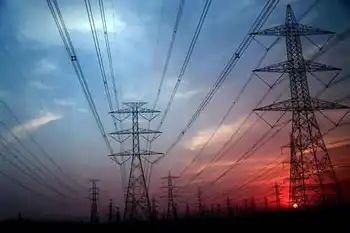
The government said that it wanted to expand the amount of electricity that Tokyo Electric Power and other utilities were required to generate from solar power and other renewable energy sources.

The Trade Ministry said it had drawn up a plan requiring Japanese power producers to generate 16 billion kilowatt-hours of energy from renewable sources by March 2015. This would be an increase of 31 percent from the target of 12.2 billion kilowatt-hours, equal to 1.35 percent of total output, set for March 2010.

Japan, a signatory of the Kyoto Protocol on cutting the production of greenhouse gases, wants to expand generation from clean energy sources, particularly solar panels, to help the nation meet emissions targets.

"The proposed target is very tough, and it isn't acceptable," said Mamoru Muramatsu, general manager for planning at the Federation of Electric Power Companies of Japan. "We don't even know whether we can meet the requirement" for 2010.

To reach the 2010 target, utilities need to invest about 100 billion, or $820 million, he said.

Related News

COVID-19: Daily electricity demand dips 15% globally, says report

COVID-19 Impact on Electricity Demand, per IEA data, shows 15% global load drop from lockdowns, with residential use up, industrial and service sectors down; fossil fuel generation fell as renewables and photovoltaics gained share.


Key Points

An overview of how lockdowns cut global power demand, boosted residential use, and increased the renewable share.

✅ IEA review shows at least 15% dip in daily global electricity load

✅ Lockdowns cut commercial and industrial demand; homes used more

✅ Fossil fuels fell as renewables and PV generation gained share


The daily demand for electricity dipped at least 15 per cent across the globe, according to Global Energy Review 2020: The impacts of the COVID-19 crisis on global energy demand and CO2 emissions, a report published by the International Energy Agency (IEA) in April 2020, even as global power demand surged above pre-pandemic levels.

The report collated data from 30 countries, including India and China, that showed partial and full lockdown measures adopted by them were responsible for this decrease.

Full lockdowns in countries — including France, Italy, India, Spain, the United Kingdom where daily demand fell about 10% and the midwest region of the United States (US) — reduced this demand for electricity.


Reduction in electricity demand after lockdown measures (weather corrected)


Source: Global Energy Review 2020: The impacts of the COVID-19 crisis on global energy demand and CO2 emissions, IEA


Drivers of the fall

There was, however, a spike in residential demand for electricity as a result of people staying and working from home. This increase in residential demand, though, was not enough to compensate for reduced demand from industrial and commercial operations.

The extent of reduction depended not only on the duration and stringency of the lockdown, but also on the nature of the economy of the countries — predominantly service- or industry-based — the IEA report said.

A higher decline in electricity demand was noted in countries where the service sector — including retail, hospitality, education, tourism — was dominant, compared to countries that had industrial economies.

The US, for example — where industry forms only 20 per cent of the economy — saw larger reductions in electricity demand, compared to China, where power demand dropped as the industry accounts for more than 60 per cent of the economy.

Italy — the worst-affected country from COVID-19 — saw a decline greater than 25 per cent when compared to figures from last year, even as power demand held firm in parts of Europe during later lockdowns.

The report said the shutting down of the hospitality and tourism sectors in the country — major components of the Italian economy — were said to have had a higher impact, than any other factor, for this fall.


Reduced fossil fuel dependency

Almost all of the reduction in demand was reportedly because of the shutting down of fossil fuel-based power generation, according to the report. Instead, the share of electricity supply from renewables in the entire portfolio of energy sources, increased during the pandemic, reflecting low-carbon electricity lessons observed during COVID-19.

This was due to a natural increase in wind and photovoltaic power generation compared to 2019 along with a drop in overall electricity demand that forced electricity producers from non-renewable sources to decrease their supplies, before surging electricity demand began to strain power systems worldwide.

The Power System Operation Corporation of India also reported that electricity production from coal — India’s primary source of electricity — fell by 32.2 per cent to 1.91 billion units (kilowatt-hours) per day, in line with India's electricity demand decline reported during the pandemic, compared to the 2019 levels.


Related News

View more

Ontario's electricity 'recovery rate' could lead to higher hydro bills

Ontario Hydro Flat Rate sets a single electricity rate at 12.8 cents per kWh, replacing time-of-use pricing for Ontario ratepayers, affecting hydro bills this summer, alongside COVID-19 Energy Assistance Program support.


Key Points

A fixed 12.8 cents per kWh electricity price replacing time-of-use rates across Ontario from June to November.

✅ Single rate applies 24/7, replacing time-of-use pricing

✅ May slightly raise bills versus pre-pandemic usage patterns

✅ COVID-19 aid offers one-time credits for households, small firms


A new provincial COVID-19 measure, including a fixed COVID-19 hydro rate designed to give Ontario ratepayers "stability" on their hydro bills this summer, could result in slightly higher hydro costs over the next four months.

Ontario Premier Doug Ford's government announced over the weekend that consumers would be charged a single around-the-clock electricity rate between June and November, before a Nov. 1 rate increase takes effect, replacing the much-derided time-of-use model ratepayers have complained about for years.

Instead of being charged between 10 to 20 cents per kilowatt hour, depending on the time of day electricity is used, including ultra-low TOU rates during off-peak hours, hydro users will be charged a blanket rate of 12.8 cents per kWh.

"The new rate will simply show up on your bill," Premier Doug Ford said at a Monday afternoon news conference.

While the government said the new fixed rate would give customers "greater flexibility" to use their home appliances without having to wait for the cheapest rate -- and has tabled legislation to lower rates as part of its broader plan -- the new policy also effectively erases a pandemic-related hydro discount for millions of consumers.

For example, a pre-pandemic bill of $59.90 with time-of-use rates, will now cost $60.28 with the government's new recovery rate, as fixed pricing ends across the province, before delivery charges, rebates and taxes.

That same bill would have been much cheaper -- $47.57 -- if the government continued applying the lowest tier of time-of-use 24/7 under an off-peak price freeze as it had been doing since March 24.

The government also introduced support for electric bills with two new assistance programs to help customers struggling to pay their bills.

The COVID-19 Energy Assistance Program will provide a one-time payment consumers to help pay off electricity debt incurred during the pandemic -- which will cost the government $9 million.

The government will spend another $8 million to provide similar assistance to small businesses hit hard by the pandemic.


Related News

View more

California Regulators Face Calls for Action as Electricity Bills Soar

California Electricity Rate Hikes strain households as CPUC weighs fixed charges, utility profit caps, and stricter oversight. Wildfire mitigation, transmission upgrades, and aging grid costs push bills higher amid renewable integration and consumer protection debates.


Key Points

California power rates are rising from wildfire mitigation, transmission costs, and grid upgrades under CPUC review.

✅ CPUC mulls fixed charges to stabilize bills and rate design.

✅ Advocates push profit caps; utilities cite investment needs.

✅ Stronger oversight sought to curb waste and boost transparency.


California residents and consumer groups are demanding relief as their electricity bills continue to climb, putting increasing pressure on state regulators to intervene.  A recent op-ed in the San Francisco Chronicle highlights the growing frustration, emphasizing that California already has some of the highest electricity rates in the country, as coverage on why prices are soaring underscores, and these costs are only getting more burdensome.


Factors Driving High Bills

The rising electricity bills are attributed to several factors:

  • Wildfire Mitigation and Liability: Utility companies are investing heavily in wildfire prevention measures, such as vegetation management and infrastructure hardening. The costs of these initiatives, along with the increasing financial liabilities associated with wildfire risk, are being passed on to consumers.
  • Transmission Costs: California's vast geography and move towards renewable energy sources necessitate significant investments in transmission lines to deliver electricity from remote locations. These infrastructure costs also contribute to higher bills.
  • Aging Infrastructure: California's electricity grid is aging and requires upgrades and maintenance, and the expenses associated with these efforts are reflected in consumer rates.


Proposed Solutions and Debates

Consumer advocates and some lawmakers are calling for various actions to address the issue, including a potential revamp of electricity rates to clean the grid:

  • Fixed Charge Proposal: The California Public Utilities Commission (CPUC) is considering a proposal to introduce an income-based fixed charge on electricity bills. This change aims to make rates more predictable and encourage investment in renewable energy sources. However, opponents argue that it could disproportionately impact low-income households and discourage conservation.
  • Utility Profit Caps: Some advocate for capping utility companies' profits. They believe excessive profits should be returned to customers in the form of lower rates. However, utility companies counter that they need a certain level of profit to invest in infrastructure and maintain a reliable grid.
  • Increased Oversight: Consumer groups are calling for stricter oversight of utility company spending, and legislators are preparing to crack down on utility spending through upcoming votes as well. They demand transparency and want to ensure that funds collected from customers are being used for necessary investments and not for lobbying or excessive executive compensation.


Comparisons and National Implications

Similar concerns about rising utility bills are emerging in other parts of the country as more states transition to renewable energy and invest in infrastructure upgrades.

A report by the Energy Information Administration (EIA) shows that average residential electricity rates across the country have been on the rise for the past decade. While California currently ranks amongst the highest, major changes to electric bills are being debated, and other states are following suit, demonstrating the nationwide challenge of balancing affordability with necessary investments.


Uncertain Future

The California Public Utilities Commission is reviewing the fixed charge proposal and is expected to make a decision later this year, with income-based flat-fee utility bills moving closer in the process. The outcome of this decision and potential additional regulatory changes will have significant ramifications for California residents, and some lawmakers plan to overturn income-based charges if adopted, which could set a precedent for how other states handle the rising costs associated with the energy transition.


Related News

View more

BC Hydro: 2021 was a record-breaking year for electricity demand

BC Hydro 2021 Peak Load Records highlight record-breaking electricity demand, peak load spikes, heat dome impacts, extreme cold, and shifting work-from-home patterns managed by a flexible hydroelectric system and climate-driven load trends.


Key Points

Record-breaking electricity demand peaks from extreme heat and cold that reshaped daily load patterns across BC in 2021.

✅ Heat dome and deep freeze drove sustained peak electricity demand

✅ Peak load built gradually, reflecting work-from-home behavior

✅ Flexible hydroelectric system adapts quickly to demand spikes


From June’s heat dome to December’s extreme cold, 2021 was a record-setting year, according to BC Hydro, and similar spikes were noted as Calgary's electricity use surged in frigid weather.

On Friday, the energy company released a new report on electricity demand, and how extreme temperatures over extended periods of time, along with growing scrutiny of crypto mining electricity use, led to record peak loads.

“We use peak loads to describe the electricity demand in the province during the highest load hour of each day,” Kyle Donaldson, BC Hydro spokesperson, said in a media release.

“With the heat dome in the summer and the sustained cold temperatures in December, we saw more record-breaking hours on more days last year than any other single year.”

According to BC Hydro, during summer, the Crown corporation recorded 19 of its top 25 all-time summer daily peak records — including breaking its all-time summer peak hourly demand record.

In December, which saw extremely cold temperatures and heavy snowfall, BC Hydro said its system experienced the highest and longest sustained load levels ever, as it activated its winter payment plan to assist customers.

Overall, BC Hydro says it has experienced 11 of its top 25 all-time daily peak records this winter, adding that Dec. 27 broke its all-time high peak hourly demand record.

“BC Hydro’s hydroelectric system is directly impacted by variations in weather, including drought conditions that require adaptation, and in 2021 more electricity demand records were broken than any other year prior, largely because of the back-to-back extreme temperatures lasting for days and weeks on end,” reads the report.

The energy company expects this trend to continue, noting that it has broken the peak record five times in the past five years, and other jurisdictions such as Quebec consumption record have also shattered consumption records.

It also noted that peak demand patterns have also changed since the first year of the COVID-19 pandemic, with trends seen during Earth Hour usage offering context.

“When the previous peak hourly load record was broken in January 2020, load displayed sharper increases and decreases throughout the day, suggesting more typical weather and behaviour,” said the report.

“In contrast, the 2021 peak load built up more gradually throughout the day, suggesting more British Columbians were likely working from home, or home for the holidays – waking up later and home earlier in the evening – as well as colder weather than average.”

BC Hydro also said “current climate models suggest a warming trend continuing in years to come which could increase demand year-round,” but noted that its flexible hydroelectric system can meet changes in demand quickly.


Related News

View more

Reliability of power winter supply puts Newfoundland 'at mercy of weather': report

Labrador Island Link Reliability faces scrutiny as Nalcor Energy and General Electric address software issues; Liberty Consulting warns of Holyrood risks, winter outages, grid stability concerns, and PUB oversight for Newfoundland and Labrador.


Key Points

It is the expected dependability of the link this winter, currently uncertain due to GE software and Holyrood risks.

✅ GE software delays may hinder reliable in-service by mid-November.

✅ Holyrood performance issues increase winter outage risk.

✅ PUB directs Hydro to plan contingencies and improve assets.


An independent consultant is questioning if the brand new Labrador Island link can be counted on to supply power to Newfoundland this coming winter.

In June, Nalcor Energy confirmed it had successfully sent power from Churchill Falls to the Avalon Peninsula through its more than 1500-kilometre link, but now the Liberty Consulting Group says it doesn't expect the link will be up and running consistently this winter.

"What we have learned supports a conclusion that the Labrador Island Link is unlikely to be reliably in commercial operation at the start of the winter," says the report dated Aug. 30, 2018.

The link relies on software provided by General Electric but Liberty says there are lingering questions about GE's ability to ensure the necessary software will be in place this fall.

"At an August meeting, company representatives did not express confidence in GE's ability to meet an in-service date for the Labrador Island Link of mid-November," says the report.

Liberty also says testing the link for a brief period this spring and fall doesn't demonstrate long-term reliability.

"The link will remain prone to the uncertainties any new major facility faces early in its operating life, especially one involving technology new to the operating company," according to the report.

Holyrood trouble

The report goes on to say island residents should also be worried about the reliability of the troubled Holyrood facility — a facility that's important when demand for energy is high during winter months.

Liberty says "poor performance at the Holyrood thermal generating station increases the risk of outages considerably."

The group's report concludes the deteriorating condition of Holyrood is a major threat to the island's power supply and Liberty says that threat "could produce very severe consequences when the Labrador Island Link is unavailable."

The consultant says questions about the Labrador Island Link's readiness combined with concerns about the reliability of Holyrood may mean power outages, and for vulnerable customers, debates over hydro disconnections policies often intensify during winter.

"This all suggests that, for at least part of this winter, the island interconnected system may be at the mercy of the weather, where severe events can test utilities' storm response efforts further."

The consultant's report also includes five recommendations to the PUB, reflecting the kind of focused nuclear alert investigation follow-up seen elsewhere.

In essence, Liberty is calling for the board to direct Newfoundland and Labrador Hydro to make plans for the possibility that the link won't be available this winter. It's also calling on hydro to do more to improve the reliability of its other assets, such as Holyrood, as some operators have even contemplated locking down key staff to maintain operations during crises.

Response to Liberty's report

Nalcor CEO Stan Marshall defended the Crown corporation's winter preparedness in an email statement to CBC.

"The right level of planning and investment has been made for our existing equipment so we can continue to meet all of our customer electricity needs for this coming winter season," he wrote.

Regarding the Labrador Island Link, Marshall called for patience.

"This is new technology for our province and integrating the new transmission assets into our current electricity system is complex work that takes time," he said.

There is also a more detailed response from Newfoundland and Labrador Hydro which was sent to the province's Public Utiltiies Board.

Hydro says it will keep testing the Labrador Island Link and increasing the megawatts that are wheeled through it. It also says in October it will begin to give the PUB regular reports on the link's anticipated in-service date.


Related News

View more

KHNP is being considered for Bulgarian Nuclear Power Plant Project

KHNP Shortlisted for Belene Nuclear Power Plant, named by the Bulgarian Energy Ministry alongside Rosatom and CNNC; highlights APR1400 reactor expertise, EPC credentials, and expansion into the European nuclear energy market.


Key Points

KHNP is a strategic investor candidate for Bulgaria's Belene NPP, leveraging APR1400 and European market entry.

✅ Selected with Rosatom and CNNC by Bulgarian Energy Ministry

✅ Builds on APR1400 reactor design and EPC track record

✅ Positions KHNP for EU nuclear projects and O&M services


Korea Hydro & Nuclear Power (KHNP) has been selected as one of the three strategic investor candidates for a Bulgarian nuclear power plant project amid global nuclear project milestones worldwide.

The Bulgarian Energy Ministry selected KHNP of Korea, RosAtom of Russia and CNNC of China as strategic investor candidates for the construction of the Belene Nuclear Power Plant, KHNP said on Dec. 20. The Belene Nuclear Power Plant is the second nuclear power plant that Bulgaria plans to build following the 2,000-megawatt Kozloduy Nuclear Power Plant built in 1991 during the Soviet Union era. The project budget is estimated at 10 billion euros.

By being included in the shortlist for the Bulgarian project, KHNP has boosted the possibility of making a foray into the European nuclear power plant market, as India takes steps to get nuclear back on track worldwide. KHNP began to export nuclear power plants in 2009 by winning the UAE Barakah Nuclear Power Plant Project, with Barakah Unit 1 reaching 100% power as it moves toward commercial operations. The UAE plant will be based on the APR1400, a next-generation Korean nuclear reactor that is used in Shin Kori Units 3 and 4 in Korea.

The ARP1400 is a Korean nuclear reactor developed by KHNP with investment of about 230 billion won for 10 years from 1992. The nuclear reactor became the first non-U.S. type reactor to receive a design certificate (DC) from the U.S. Nuclear Regulatory Commission (NRC), as China's nuclear energy program continues on a steady development track globally. By receiving the DC, its safety was internationally recognized. In June, the company also won the maintenance project for the Barakah Nuclear Power Plant, completing the entire cycle from the construction of the nuclear power plant to its design, operation and maintenance. However, U.S. and U.K. companies took part of the maintenance project for the nuclear power plant.

In July, KHNP officials visited Turkey and contacted local energy officials to prepare for nuclear power plant projects to be launched in that country, as Bangladesh develops nuclear power with IAEA assistance in the region. Earlier in May, the company also submitted a proposal to participate in the construction of a new nuclear power plant in Kazakhstan, while Kenya moves forward with plans for a $5 billion plant.


Related News

View more

Sign Up for Electricity Forum’s Newsletter

Stay informed with our FREE Newsletter — get the latest news, breakthrough technologies, and expert insights, delivered straight to your inbox.

Electricity Today T&D Magazine Subscribe for FREE

Stay informed with the latest T&D policies and technologies.
  • Timely insights from industry experts
  • Practical solutions T&D engineers
  • Free access to every issue

Download the 2025 Electrical Training Catalog

Explore 50+ live, expert-led electrical training courses –

  • Interactive
  • Flexible
  • CEU-cerified