



By VERSAILLES, KENTUCKY and MONZINGEN, GERMANY-- Kuhlman Electric Corporation, a leading designer and manufacturer of electrical transformers for utilities and other users of electric energy since 1894, and Renzmann & Gruenewald (R&G) GmbH, a subsidiary


High Voltage Maintenance Training Online

Our customized live online or in‑person group training can be delivered to your staff at your location.

  • Live Online
  • 12 hours Instructor-led
  • Group Training Available
Regular Price:
$599
Coupon Price:
$499
Reserve Your Seat Today
-- Kuhlman Electric Corporation, a leading designer and manufacturer of electrical transformers for utilities and other users of electric energy since 1894, and Renzmann & Gruenewald (R&G) GmbH, a subsidiary of GEA, a global manufacturer of transformer cooling packages (water oil coolers, air oil coolers and pumps) used on power transformers rated 100 MVA and larger, announced today that they have successfully concluded a joint marketing agreement allowing Kuhlman to exclusive rights to sell, market, install and service R&G transformer cooling packages in the North American marketplace including Mexico. All equipment to be sold in this market will bear the joint Kuhlman Electric/R&G nameplate in order to provide North American customers with a single point of access for products and services through the Kuhlman Electric sales channel. The Kuhlman-R&G transformer cooling packages will be provided on new transformers by OEM manufacturers and are also used in the refurbishment and retrofitting of older, in-service transformers to provide similarly rated but smaller, easier to maintain cooling packages, to provide more cooling and easier maintenance in the existing space, to replace defective coolers due to corrosion, cleaning damage and other environmental exposure, and to replace defective pump systems. R&G enjoys a worldwide reputation as a quality provider of transformer cooling packages and heat exchangers for all major transformer producers. “The Kuhlman – R&G partnership provides a logical extension to the growing responsiveness of Kuhlman Field Engineering Services to its utility and OEM customers’ transformer service outsourcing needs,” said Brian O’Leary, Vice President of Sales and marketing for Kuhlman Electric Corporation, Versailles, Kentucky. Kuhlman’s Field Engineering Services Division will be responsible for management of all sales and marketing related matters for these new products including installation and servicing of the equipment located throughout North America. Wolfgang Siffring, Vice President Sales & marketing of GEA Renzmann & Gruenewald GmbH, Monzingen, Germany, expressed his appreciation of the new business relationship by saying, “Kuhlman will be the supporting pillar in the NAFTA transformer market, which supplies a most valuable service and benefit to our mutual customers. We are pleased to have started a long-term relationship which will bring many positive effects for the performance of these products and installations in the power delivery markets.” About Kuhlman Electric Corporation Kuhlman Electric Corporation, founded in 1894, is a leading manufacturer and designer of medium power, distribution, and instrument transformers for electrical distribution systems serving residential, commercial, and industrial customers throughout North America and around the world. The company, headquartered in Versailles, Kentucky, is a wholly- owned subsidiary of The Carlyle Group, a premier, global private equity firm headquartered in Washington, D.C. Kuhlman employs approximately 700 people in its two manufacturing facilities located in Crystal Springs, Mississippi and Versailles, Kentucky. Kuhlman Electric Corporation has built a solid professional reputation with over 100 years of providing quality transformer products and services to North American electrical utility and industrial customers. For more information, please contact Michael E. Dickerson, Field Sales Director, at miked@kuhlman.com or visit the company’s Web site at www.kuhlman.com About GEA - Renzmann & Gruenewald GmbH Renzmann & Gruenewald GmbH, founded in 1948 is a leading manufacturer of transformer oil coolers and pumps employing 135 people at two facilities in Germany and within their worldwide sales and distribution system. R&G is a subsidiary company of GEA AG, headquartered in Bochum, Germany, which develops and supplies technically sophisticated and often highly customized machinery, components, systems and process lines. With annual sales of around €2.9 billion (fiscal 2000/2001), GEA is the largest company in mg technologies AG’s mg engineering subgroup and is also the market and technological leader in its field. GEA is represented throughout the world and generates more than 80 percent of its revenues outside Germany. The Process Engineering division includes Refrigeration, Mechanical Separation, Powder Technology, Liquid Processing and Dairy Farm Systems. The Thermal Engineering division includes Thermal Technology, Energy Technology and Air Treatment.

Related News

Senate Democrats push for passage of energy-related tax incentives

Senate Renewable Energy Tax Credits face Finance Committee scrutiny, with Democrats urging action on tax extenders, clean energy incentives, and climate policy, while Republicans cite prior wins in wind, biodiesel, and EV credits.


Key Points

Legislative incentives debated in the Senate Finance Committee to extend and align clean energy tax benefits.

✅ Democrats press hearings and action on energy tax policy

✅ Focus on clean energy, EVs, wind, biodiesel, and resilience

✅ Grassley cites prior extenders; disputes push for bigger subsidies


A group of 27 Democratic senators is calling for action in the Senate Finance Committee on extending energy-related tax credits and examining new tax proposals, especially those that incentivize renewable energy projects and align with FERC action on aggregated DERs across the grid.

Sen. Ron Wyden, D-Ore., the ranking Democrat on the Senate Finance Committee, who recently introduced a wildfire-resilient grid bill with Sen. Merkley, led the group of Democrats in writing a letter Tuesday to Sen. Charles Grassley, R-Iowa, who chairs the committee.

“Despite numerous opportunities, including in the recent tax extenders package, the Finance Committee has failed to take action on the dozens of energy tax proposals pending before it,” they wrote. “It is critical that the Committee move to address these issues in a timely manner, along with much needed policy changes that heed warnings on regulatory rollbacks to combat the damage and growing dangers caused by global climate change.”

The number of Americans ages 65 and over is projected to nearly double by 2060. And most would prefer to age in place and hiresenior caregivers if needed.

They pointed out that the Senate Finance Committee hasn’t held a single hearing on energy tax policy during the previous congressional term, and has yet to hold one in the current one.

“The sole energy tax-related recommendation of the Committee’s temporary policy task forces was ignored in the tax extender legislation passed in December 2019, along with nearly all proposals put forward in members’ legislation this Congress,” they wrote. “This Committee must fulfill its role in examining members’ energy tax proposals and in bolstering our nation’s efforts to combat climate change, including a clean electricity standard approach that sets firm targets.”

They noted that In 2019, the global average temperature was the second highest ever recorded and the past decade was the hottest ever. The lawmakers pointed to raging wildfires and increased flooding in the western part of the U.S., as well as challenges in California’s power system during the transition, causing unprecedented destruction over the past several years. They called for tax incentives for renewable energy to help combat climate change.

“Gaps in the tax code have disadvantaged complementary technologies that could improve climate resiliency and provide additional emissions reductions,” they wrote. “While power sector emissions continue to decrease, emissions from transportation, heavy industry and agriculture have stayed level or increased over the past 10 years, even amid $5 gas not spurring a green shift in consumer behavior. The United States is not on pace to meet its international climate commitments, to say nothing of the reductions necessary to stave off the worst potential outcomes of global warming.”

Grassley reacted to the letter, noting that he had worked to get tax extenders legislation passed, even as some states consider bans on clean energy use by utilities. "I begged Democrats for a year to help me get an extenders package passed, about half of which were green energy policies, so this rings hollow," he said in a statement Tuesday. "We wouldn’t have a wind energy credit or a biodiesel credit but for me, let alone an extension of either. Democrats were holding up these green energy provisions in an attempt to get a big expansion of taxpayer subsidies for rich Tesla owners."


Related News

View more

Why Atomic Energy Is Heating Up Again

Nuclear Power Revival drives decarbonization, climate change mitigation, and energy security with SMRs, Generation IV designs, baseload reliability, and policy support, complementing renewables to meet net-zero targets and growing global electricity demand.


Key Points

A global shift back to nuclear energy, leveraging SMRs and advanced reactors to cut emissions and enhance energy security.

✅ SMRs offer safer, modular, and cost-effective deployment.

✅ Provides baseload power to complement intermittent renewables.

✅ Policy support and investments accelerate advanced designs.


In recent years, nuclear power has experienced a remarkable revival in public interest, policy discussions, and energy investment. Once overshadowed by controversies surrounding safety, waste management, and high costs, nuclear energy is now being reexamined as a vital component of the global energy transition, despite recurring questions such as whether it is in decline from some commentators. Here's why nuclear power is "so hot" right now:

1. Climate Change Urgency

One of the most compelling reasons for the renewed interest in nuclear energy is the urgent need to address climate change. Unlike fossil fuels, nuclear power generates electricity with zero greenhouse gas emissions during operation. As countries rush to meet net-zero carbon targets, evidence that net-zero may require nuclear is gaining traction, and nuclear offers a reliable, large-scale alternative to complement renewable energy sources like wind and solar.

2. Energy Security and Independence

Geopolitical tensions and supply chain disruptions have exposed vulnerabilities in relying on imported fossil fuels, and Europe's shrinking nuclear capacity has sharpened concerns over resilience. Nuclear power provides a domestic, stable energy source that can operate independently of volatile global markets. For many nations, this has become a strategic priority, reducing dependence on politically sensitive energy imports.

3. Advances in Technology

Modern innovations in nuclear technology are transforming the industry. Small Modular Reactors (SMRs) are leading the way as part of next-gen nuclear innovation, offering safer, more affordable, and flexible options for nuclear deployment. Unlike traditional large-scale reactors, SMRs can be built faster, scaled to specific energy needs, and deployed in remote or smaller markets.

Additionally, advances in reactor designs, such as Generation IV reactors and fusion research, promise to address longstanding concerns like waste management and safety. For example, some new designs can recycle spent fuel or run on alternative fuels, significantly reducing radioactive waste.

4. Public Perception Is Shifting

Public opinion on nuclear power is also changing. While the industry faced backlash after high-profile incidents like Chernobyl and Fukushima, increasing awareness of climate change and energy security is prompting many to reconsider, including renewed debates such as Germany's potential nuclear return in policy circles. A younger, climate-conscious generation views nuclear energy not as a relic of the past, but as an essential tool for a sustainable future.

5. Renewables Alone Are Not Enough

While renewable energy sources like solar and wind have grown exponentially, their intermittent nature remains a challenge. Energy storage technologies, such as batteries, have not yet matured enough to fully bridge the gap. Nuclear power, with its ability to provide constant, "baseload" energy, as France's fleet demonstrates in practice, serves as an ideal complement to variable renewables in a decarbonized energy mix.

6. Government Support and Investment

Policymakers are taking action to bolster the nuclear sector. Many countries are including nuclear energy in their clean energy plans, offering subsidies, grants, and streamlined regulations to accelerate its deployment. For instance, the United States has allocated billions of dollars to support advanced nuclear projects, the UK's green industrial revolution outlines support for upcoming reactor waves, while Europe has classified nuclear power as "sustainable" under its green taxonomy.

7. Global Energy Demand Is Growing

As populations and economies grow, so does the demand for electricity. Developing nations, in particular, are seeking energy solutions that can support industrialization while limiting environmental impact. Nuclear energy is being embraced as a way to meet these dual objectives, especially in regions with limited access to consistent renewable energy resources.

Challenges Ahead

Despite its potential, nuclear energy is not without its challenges. High upfront costs, lengthy construction timelines, and public concerns over safety and waste remain significant hurdles. The industry will need to address these issues while continuing to innovate and build public trust.

Nuclear power's resurgence is driven by its unique ability to tackle some of the most pressing challenges of our time: climate change, energy security, and the growing demand for electricity. With advances in technology, changing perceptions, and robust policy support, nuclear energy is poised to play a critical role in the global transition to a sustainable and secure energy future.

In a world increasingly shaped by the need for clean and reliable power, nuclear energy has once again become a hot topic—and for good reason.


Related News

View more

Brenmiller Energy and New York Power Authority Showcase Thermal Storage Success

bGen Thermal Energy Storage stores high-temperature heat in crushed rocks, enabling on-demand steam, hot water, or hot air; integrates renewables, shifts load with off-peak electricity, and decarbonizes campus heating at SUNY Purchase with NYPA.


Key Points

A rock-based TES system storing heat to deliver steam, hot water, or hot air using renewables or off-peak power.

✅ Uses crushed rocks to store high-temperature heat

✅ Cuts about 550 metric tons CO2 annually at SUNY Purchase

✅ Integrates renewables and off-peak electricity with NYPA


Brenmiller Energy Ltd. (NASDAQ: BNRG), in collaboration with the New York Power Authority (NYPA), a utility pursuing grid software modernization to improve reliability, has successfully deployed its first bGen™ thermal energy storage (TES) system in the United States at the State University of New York (SUNY) Purchase College. This milestone project, valued at $2.5 million, underscores the growing role of TES in advancing sustainable energy solutions.

Innovative TES Technology

The bGen™ system utilizes crushed rocks to store high-temperature heat, which can be harnessed to generate steam, hot air, or hot water on demand. This approach allows for the efficient use of excess renewable energy or off-peak electricity, and parallels microreactor storage advances that broaden thermal options, providing a reliable and cost-effective means of meeting heating needs. At SUNY Purchase College, the bGen™ system is designed to supply nearly 100% of the heating requirements for the Physical Education Building.

Environmental Impact

The implementation of the bGen™ system is expected to eliminate approximately 550 metric tons of greenhouse gas emissions annually. This reduction aligns with New York State's ambitious climate goals, including a 40% reduction in greenhouse gas emissions by 2030, even as transmission constraints can limit cross-border imports. The project also demonstrates the potential of TES to support the state's transition to a cleaner and more resilient energy system.

Collaborative Effort

The successful deployment of the bGen™ system at SUNY Purchase College is the result of a collaborative effort between Brenmiller Energy and NYPA. The project was partially funded by a grant from the Israel-U.S. Binational Industrial Research and Development (BIRD) Foundation. This partnership highlights the importance of international cooperation in advancing innovative energy technologies, as seen in OPG-TVA nuclear collaboration efforts across North America.

Future Prospects

The successful installation and operation of the bGen™ system at SUNY Purchase College serve as a model for broader adoption of TES technology in institutional settings, as OPG's SMR commitment signals parallel low-carbon investment across the region. Brenmiller Energy and NYPA plan to share the project's findings through a webinar hosted by the Renewable Thermal Collaborative on May 19, 2025. This initiative aims to promote the scalability and replicability of TES solutions across New York State and beyond.

As the demand for sustainable energy solutions continues to grow, the successful deployment of the bGen™ system at SUNY Purchase College marks a significant step forward in the integration of TES technology into the U.S. energy landscape, while projects like Pickering B refurbishment underscore parallel clean power investments. The project not only demonstrates the feasibility of TES but also sets a precedent for future initiatives aimed at reducing carbon emissions and enhancing energy efficiency.

Brenmiller Energy's commitment to innovation and sustainability positions the company as a key player in the evolving energy sector. With continued support from partners like NYPA and the BIRD Foundation, and as jurisdictions advance first SMR deployments in North America, Brenmiller Energy is poised to expand the reach of its TES solutions, contributing to a more sustainable and resilient energy future.


Related News

View more

B.C. politicians must focus more on phasing out fossil fuels, report says

BC Fossil Fuel Phase-Out outlines a just transition to a green economy, meeting climate targets by mid-century through carbon budgets, ending subsidies for fracking, capping production, and investing in renewable energy, remediation, and resilient infrastructure.


Key Points

A strategic plan to wind down oil and gas, end subsidies, and achieve climate targets with a just transition in BC.

✅ End new leases, phase out subsidies, cap fossil production

✅ Carbon budgets and timelines to meet mid-century climate targets

✅ Just transition: income supports, retraining, site remediation jobs


Politicians in British Columbia aren't focused enough on phasing out fossil fuel industries, a new report says.

The report, authored by the left-leaning Canadian Centre for Policy Alternatives, says the province must move away from fossil fuel industries by mid-century in order to meet its climate targets, with B.C. projected to fall short of 2050 targets according to recent analysis, but adds that the B.C. government is ill prepared to transition to a green economy.

"We are totally moving in the wrong direction," said economist Marc Lee, one of the authors of the report, on The Early Edition Wednesday. 

He said most of the emphasis of B.C. government policy has been on slowing reductions in emissions from transportation or emissions from buildings, even though Canada will need more electricity to hit net-zero according to the IEA, while still subsidizing fossil fuel extraction, such as fracking projects, that Lee said should be phased out.

"What we are putting on the table is politically unthinkable right now," said Lee, adding that last month's provincial budget called for a 26 per cent increased gas production over the next three years, even though electrified LNG facilities could boost demand for clean power.

B.C.'s $830M in fossil fuel subsidies undermines efforts to fight climate crisis, report says
He said B.C. needs to start thinking instead about how its going to wind down its dependence on fossil fuel industries.


'Greener' job transition needed
The report said the provincial government's continued interest in expanding production and exporting fossil fuels, even as Canada's race to net-zero intensifies across the energy sector, suggests little political will to think about a plan to move away from them.

It suggests the threat of major job losses in those industries is contributing to the political inaction, but cited several examples of ways governments can help move workers into greener jobs, as many fossil-fuel workers are ready to support the transition according to recent commentary. 

Lee said early retirement provisions or income replacement for transitioning workers are options to consider.

"We actually have seen a lot of real-world policy around transition starting to happen, including in Alberta, which brought in a whole transition package for coal workers producing coal for electricity generation, and regional cooperation like bridging the electricity gap between Alberta and B.C. could further support reliability," Lee said.

Give cities the power to move more quickly on the environment, say Metro Van politicians
Make it easier for small businesses to go green, B.C. Chamber of Commerce urges government
Lee also said well-paying jobs could be created by, for example, remediating old coal mines and gas wells and building green infrastructure and renewable electricity projects in affected areas.

The report also calls for a moratorium on new fossil fuel leases and ending fossil fuel subsidies, as well as creating carbon budgets and fossil fuel production limits.

"Change is coming," said Lee. "We need to get out ahead of it."


Related News

View more

It's CHEAP but not necessarily easy: Crosbie introduces PCs' Newfoundland electricity rate reduction strategy

Crosbie Hydro Energy Action Plan outlines rate mitigation for Muskrat Falls, leveraging Nalcor oil revenues, export sales, Holyrood savings, and potential Hydro-Quebec taxation to keep Newfoundland and Labrador electricity rates near 14.67 cents/kWh.


Key Points

PC plan to cap post-Muskrat rates by using Nalcor revenues, exports, and savings, with optional Accord funds.

✅ $575.4M yearly to hold rates near 14.67 cents/kWh

✅ Sources: Nalcor oil $231M, Holyrood $150M, rates/dividends $123.4M

✅ Options: export sales, restructuring, Atlantic Accord, HQ tax


Newfoundland and Labrador PC Leader Ches Crosbie says Muskrat Falls won't drive up electricity rates, a goal consistent with an agreement to shield ratepayers from cost overruns, if he's elected premier.

According to Crosbie, who presented the party's Crosbie Hydro Energy Action Plan — acronym CHEAP — at a press conference Monday, $575.4 million is needed per year in order to keep rates from ballooning past 14.67 cents per kilowatt hour.

Here's where he thinks the money could come from:

  • Hydro rates and dividends — $123.4 million
  • Export sales — $40.1 million
  • Nalcor restructuring — $30 million
  • Holyrood savings — $150  million
  • Nalcor oil revenue — $231 million

The oil money, Crosbie said, isn't going into government coffers but being invested into the offshore which, he said, is a good place for it.

"But the plan from the beginning around Muskrat Falls was that if there was need for it — for mitigation for rates — that those revenues and operating cash flows from Nalcor oil and gas would be available to be recycled into rate mitigation, as reflected in a recent financial update on the pandemic's impact. and that's what we're going to have to do," he said.

According to Crosbie, his numbers come from the preliminary stage of the Public Utilities Board process, even as rate mitigation talks have lacked public details.

This is a recent aerial view of the Muskrat Falls project in central Labrador. The project is more than 90 per cent complete, with first power forecast for late 2019, alongside Ottawa's $5.2B support for the project. (Nalcor)

"I'm telling you this is the best information available to anyone outside of government," he said. "We're working on what we can."

The PUB estimated Nalcor restructuring could save between $10 million and $15 million, according to Crosbie, but he figures there's "enough duplication and overpayment involved in the way things are now set up that we can find $30 million there."

Currently, provincial ratepayers pay about 12 cents per kilowatt hour as electricity users have started paying for Muskrat Falls costs.

Crosbie's $575.4-million figure would put rates at 14.67 cents per kilowatt-hour in 2021, where his plan pledges to keep them.

A recent Public Utilities Board Report says there's a potential $10 million to $15 million in savings from Nalcor, but Crosbie says he can find $30 million. (CBC)

"The promise is that Muskrat Falls, when it comes online — comes in service — will not increase your rates. Between now and when that happens there are rate increases already in the pipeline up to that level of [14.67 cents per kilowatt-hour] … so that is the baseline target rate at which rates will be kept.

"In other words, Muskrat will not drive up prices for electricity to consumers beyond that point."

In addition to those savings, Crosbie's plan outlined two further steps.

"We think it could be done out of the resources that I've just identified now, but if there's a problem with that, and as a temporary measure, we can use a modest amount of the Atlantic Accord review, fiscal review, revenues," he said.


Plan 'nothing new'

Premier Dwight Ball slammed the plan at the House of Assembly on Monday, saying it lacked insight.

"It was a copy and paste exercise," he told reporters. "There's nothing new in that plan. Not at all."

"We're not leaving any stone unturned of where the opportunity would be to actually generate revenue," he said.  "We are genuinely concerned about rate mitigation and we've got to get a plan in place."


Potential to tax Hydro-Québec

Crosbie also said there's potential to tax Hydro-Québec.

According to Crosbie, tax exemptions that expired in 2016 allow the province to tax exports from the Upper Churchill, which, he said, could result in "hundreds of millions or billions" in revenue.

"It's not my philosophy to immediately go and do that because that would generate litigation — who needs more of that? — but we do need to let Quebec know that we're very aware of that, and aware of that opportunity, and invite them to come talk about a whole host of issues," Crosbie said.

Crosbie said the tax would also have to be applied to domestic consumption.

"But so massive is the potential revenue from the Upper Churchill export that there would be ways to mitigate that and negate the effect of that on consumers in the province."

Crosbie said with the Atlantic Accord revenue, he could still present a balanced budget by 2022.


Related News

View more

China's electric power woes cast clouds on U.S. solar's near-term future

China Power Rationing disrupts the solar supply chain as coal shortages, price controls, and dual-control emissions policy curb electricity, squeezing polysilicon, aluminum, and module production and raising equipment costs amid surging post-Covid industrial demand.


Key Points

China's electricity curbs from coal shortages, price caps, and emissions targets disrupt solar output and materials.

✅ Polysilicon and aluminum output cut by power rationing

✅ Coal price spikes and power price caps squeeze generators

✅ Dual-control emissions policy triggers provincial curbs


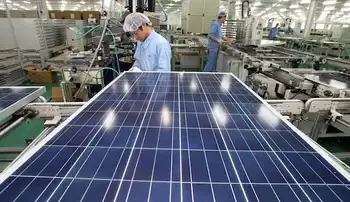
The solar manufacturing supply chain is among the industries being affected by a combination of soaring power demand, coal shortages, and carbon emission reduction measures which have seen widespread power cuts in China.

In Yunnan province, in southwest China, producers of the silicon metal which feeds polysilicon have been operating at 10% of the output they achieved in August. They are expected to continue to do so for the rest of the year as provincial authorities try to control electricity demand with a measure that is also affecting the phosphorus industry.

Fellow solar supply chain members from the aluminum industry in Guangxi province, in the south, have been forced to operate just two days per week, alongside peers in the concrete, steel, lime, and ceramics segments. Manufacturers in neighboring Guangdong have access to normal power supplies only on Fridays and Saturdays with electricity rationed to a 15% grid security load for the rest of the time.

pv magazine USA reported that a Tier 1 solar module manufacturer warned customers in an email that energy shortages in China have forced it to reduce or stop production at its Chinese manufacturing sites. The company warned the event will also affect output from its downstream cell and module production facilities in Southeast Asia.

The memo said that in order to recover from the effects of the “potential Force Majeure event,” it may delay or stop equipment delivery or seek to renegotiate contracts to pass through higher prices.

Raw material sourcing
With reports of drastic power shortages emerging from China in recent days, the country has actually been experiencing problems since late June, and similar pressures have seen India ration coal supplies this year, but rationing is not unusual during the peak summer hours.

What has changed this time is that the outages have continued and prompted rationing measures across 19 of the nation’s provinces for the rest of the year. The problems have been caused by a combination of rising post-Covid electricity demand at a time when the politically-motivated ban on imports of Australian coal has tightened supply; and the manner in which Beijing controls power prices, with the situation further exacerbated by carbon emissions reduction policy.

Demand
Electricity demand from industry, underscoring China’s electricity appetite, was 13.5 percentage points higher in the first eight months of the year than in the same period of 2020, at 3,585 TWh. That reflected a 13.8% year-on-year rise in total consumption, following earlier power demand drops when coronavirus shuttered plants, to 5.47 PWh, according to data from state energy industry trade body the China Electricity Council.

Figures produced by the China General Administration of Customs tell the same story: a rebound driven by the global recovery from the pandemic, as global power demand surges above pre-pandemic levels, with China recording import and export trade worth RMB2.48 trillion ($385 billion) in January-to-August. That was up 23.7% on the same period of last year and 22.8% higher than in the first eight months of 2019.

With Beijing having enforced an unofficial ban on imports of Australian coal for the last year or so – as the result of an ongoing diplomatic spat with Australia – rising demand for coal (which provided around 73% of Chinese electricity in the first half of the year) has further raised prices for the fossil fuel.

The problem for Chinese coal-fired power generators is that Beijing maintains strict controls on the price of electricity. As a result, input costs cannot be passed on to consumers. The mismatch between a liberalized coal market and centrally controlled end-user prices is illustrated by the current situation in Guangdong. There, a coal price of RMB1,560 per ton ($242) has pushed the cost of coal-fired electricity up to RMB0.472 per kilowatt-hour ($0.073). With coal power companies facing an electricity price ceiling of around RMB0.463/kWh ($0.071), generators are losing around RMB0.12 for every kilowatt-hour they generate. In that situation, rationing electricity supplies is an obvious remedy.

The crisis has been worsened by the introduction of China’s “dual control” energy policy, which aims to help meet President Xi Jinping’s climate change pledge of hitting peak carbon emissions this decade and a net zero economy by 2060, and to reduce coal power production over time. Dual control refers to attempts to wind down greenhouse gas emissions at both a national level and in more local areas, such as provinces and cities.

Red status
With the finer details of the carbon reduction policy yet to be ironed out, government departments and provincial and city authorities have started to set their own emission-reduction targets. In mid-August, state planning body the China National Development and Reform Commission (NDRC) published a table of the energy control situation across the nation. With nine provinces marked red for their energy consumption, and a further 10 highlighted as yellow, officials received another motivation to introduce power rationing.

China’s solar industry is being impacted by coal shortages for electric power generation. In this 2014 photo, a thermal generating plant’s cooling towers loom over a street in Henan Province.
Image: flickr/V.T. Polywoda

The current approach of rolling blackouts seems unlikely to be a sustainable solution, as surging electricity demand strains power systems worldwide, given the damage it could inflict on industry and the resentment it would cause in parts of the nation already preparing for winter.

The choice facing China’s policymakers is whether to ramp up coal supplies to force prices down by using decommissioned domestic supplies and halting the ban on Australian imports, or to raise electricity prices to prompt generators to get the lights back on. While the drawbacks of raising household electricity bills seem obvious, the first approach of using more coal could endanger the nation’s climate change commitments on the even of the COP26 meeting in Glasgow, Scotland, in November. Sources close to the NDRC have suggested the electricity price may be set to rise soon.

GDP
What is clear is the effect the energy crisis is having on the Chinese economy and on the solar supply chain. Leading up to a  national day holiday in China, the coal price in northern China rose to around RMB2,000 per ton ($310), three times higher than at the beginning of the year.

Investment bank China International Capital Corp. blamed the dual control emission reduction policy for the electricity shortages. It predicted a 0.1-0.15 percentage point impact on economic growth in the last quarter of 2021.  Morgan Stanley has put that figure at 1% in the current quarter, if industrial output restrictions continue. And Japan’s Nomura Securities revised down its annual forecast on Chinese growth from 8.2% to 7.7%. It now expects GDP gains in the third and fourth quarters to cool from 5.1% to 4.7%, and from 4.4% to 3%, respectively.


Related News

View more

Sign Up for Electricity Forum’s Newsletter

Stay informed with our FREE Newsletter — get the latest news, breakthrough technologies, and expert insights, delivered straight to your inbox.

Electricity Today T&D Magazine Subscribe for FREE

Stay informed with the latest T&D policies and technologies.
  • Timely insights from industry experts
  • Practical solutions T&D engineers
  • Free access to every issue

Download the 2025 Electrical Training Catalog

Explore 50+ live, expert-led electrical training courses –

  • Interactive
  • Flexible
  • CEU-cerified