By Edmonton-based utility Epcor had no reaction to Kyoto ratification.


NFPA 70e Training - Arc Flash

Our customized live online or in‑person group training can be delivered to your staff at your location.
  • Live Online
  • 6 hours Instructor-led
  • Group Training Available
Regular Price:
$199
Coupon Price:
$149
Reserve Your Seat Today
-- Ratification of the Kyoto accord will be a boon to Alberta wind and hydro power producers, while dampening the outlook for coal companies.

As for utilities, it figures to be a double-edged sword, increasing costs but creating opportunity for new revenues.

For Calgary-based Canadian Hydro Developers Inc., which has a dozen wind and hydro plants in Alberta, British Columbia and Ontario, ratification of Kyoto would mean financial opportunity.

"The ratification of Kyoto is not going to affect us immediately," said Canadian Hydro CEO John Keating.

"It will, when the rules to achieve those objectives are put in place and we actually have real emissions trading taking place, where there's not just a feel-good demand for emissions credits. If there's a legal requirement, then you'll have a real market," said Keating.

He hopes that won't take more than a couple of years.

With a couple of major wood chip and hydroelectric power projects in the works near Grande Prairie, the company will increase its staff.

But Keating, who is also vice-chairman of the Independent Power Producers Society of Alberta, sees ratification as more than just a matter of dollars.

"It's also positive that emissions and the health-care aspect are high on the political agenda. It's pretty well accepted that emissions are going to have to be managed throughout this century, whether it's through the Kyoto protocol process or some other process."

On the other hand, Luscar Ltd. of Edmonton, the leading coal producer in Canada, figures to suffer at the hands of Kyoto. It just doesn't know by how much.

"We've very concerned and support the province of Alberta's position," said Joanne Miller, Luscar director of public relations.

"Here in Alberta, our largest customers are the coal-fired electric utilities. To the extent that the government's policy affects them, it will have an effect on our own domestic operation."

Of Luscar's $635 million in revenues during 2001, 80 per cent came from domestic markets, largely electricity utilities.

But Luscar exports coal to a dozen nations including Japan, and Luscar's significant coal-producing competitors, the United States and Australia, have both declined to go along with Kyoto.

For a utility like Calgary-based TransAlta Corp., Kyoto will mean increased costs particularly in areas of research and development, but will open doors to supply power from renewable sources.

"In 1994, we made a commitment to reduce our greenhouse gases to 1990 levels, which is a facet of the Kyoto agreement," said TransAlta spokeswoman Nadine Walz. "By year 2001 we were close to five million tonnes below our 1990 level."

TransAlta is dealing with climate change with short, medium and long-term approaches. The short-term approach includes offset credits, emissions trading, research and development. The medium term involves investment in renewable resources such as wind power, through Vision Quest Windelectric Inc. Long term means clean coal technology, which contains emissions, and manufacturing.

TransAlta belongs to the Canadian Clean Power Coalition of seven companies, which hopes to produce and test a clean coal plan in 2007.

"We feel the answer for climate change is in the long-term technology, but we have to take action now, which is why we're doing the offset credits and emissions trading," said Walz.

Related News
California electricity pricing changes pose an existential threat to residential rooftop solar

California Rooftop Solar Rate Reforms propose shifting net metering to fixed access fees, peak-demand charges, and time-of-use pricing, aligning grid costs, distributed generation incentives, and retail rates for efficient, least-cost electricity and fair cost recovery.


Key Points

Policies replacing net metering with fixed fees, demand charges, and time-of-use rates to align costs and incentives.

✅ Large fixed access charge funds grid infrastructure

✅ Peak-demand pricing reflects capacity costs at system peak

✅ Time-varying rates align marginal costs and emissions


The California Public Service Commission has proposed revamping electricity rates for residential customers who produce electricity through their rooftop solar panels. In a recent New York Times op‐​ed, former Governor Arnold Schwarzenegger argued the changes pose an existential threat to residential rooftop solar. Interest groups favoring rooftop solar portray the current pricing system, often called net metering, in populist terms: “Net metering is the one opportunity for the little guy to get relief, and they want to put the kibosh on it.” And conventional news coverage suggests that because rooftop solar is an obvious good development and nefarious interests, incumbent utilities and their unionized employees, support the reform, well‐​meaning people should oppose it. A more thoughtful analysis would inquire about the characteristics and prices of a system that supplies electricity at least cost.

Currently, under net metering customers are billed for their net electricity use plus a minimum fixed charge each month. When their consumption exceeds their home production, they are billed for their net use from the electricity distribution system (the grid) at retail rates. When their production exceeds their consumption and the excess is supplied to the grid, residential consumers also are reimbursed at retail rates. During a billing period, if a consumer’s production equaled their consumption their electric bill would only be the monthly fixed charge.

Net metering would be fine if all the fixed costs of the electric distribution and transmission systems were included in the fixed monthly charge, but they are not. Between 66 and 77 percent of the expenses of California private utilities do not change when a customer increases or decreases consumption, but those expenses are recovered largely through charges per kWh of use rather than a large monthly fixed charge. Said differently, for every kWh that a PG&E solar household exported into the grid in 2019, it saved more than 26 cents, on average, while the utility’s costs only declined by about 8 cents or less including an estimate of the pollution costs of the system’s fossil fuel generators. The 18‐​cent difference pays for costs that don’t change with variation in a household’s consumptions, like much of the transmission and distribution system, energy efficiency programs, subsidies for low‐​income customers, and other fixed costs. Rooftop solar is so popular in California because its installation under a net metering system avoids the 18 cents, creating a solar cost shift onto non-solar customers. Rooftop solar is not the answer to all our environmental needs. It is simply a form of arbitrage around paying for the grid’s fixed costs.

What should electricity tariffs look like? This article in Regulation argues that efficient charges for electricity would consist of three components: a large fixed charge for the distribution and transmission lines, meter reading, vegetation trimming, etc.; a peak‐​demand charge related to your demand when the system’s peak demand occurs to pay for fixed capacity costs associated with peak use; and a charge for electricity use that reflects the time‐ and location‐​varying cost of additional electricity supply.

Actual utility tariffs do not reflect this ideal because of political concerns about the effects of large fixed monthly charges on low‐​income customers and the optics of explaining to customers that they must pay 50 or 60 dollars a month for access even if their use is zero. Instead, the current pricing system “taxes” electricity use to pay for fixed costs. And solar net metering is simply a way to avoid the tax. The proposed California rate reforms would explicitly impose a fixed monthly charge on rooftop solar systems that are also connected to the grid, a change that could bring major changes to your electric bill statewide, and would thus end the fixed‐​cost avoidance. Any distributional concerns that arise because of the effect of much larger fixed charges on lower‐​income customers could be managed through explicit tax deductions that are proportional to income.

The current rooftop solar subsidies in California also should end because they have perverse incentive effects on fossil fuel generators, even as the state exports its energy policies to neighbors. Solar output has increased so much in California that when it ends with every sunset, natural gas generated electricity has to increase very rapidly. But the natural gas generators whose output can be increased rapidly have more pollution and higher marginal costs than those natural gas plants (so called combined cycle plants) whose output is steadier. The rapid increase in California solar capacity has had the perverse effect of changing the composition of natural gas generators toward more costly and polluting units.

The reforms would not end the role of solar power. They would just shift production from high‐​cost rooftop to lower‐​cost centralized solar production, a transition cited in analyses of why electricity prices are soaring in California, whose average costs are comparable with electricity production in natural gas generators. And they would end the excessive subsidies to solar that have negatively altered the composition of natural gas generators.

Getting prices right does not generate citizen interest as much as the misguided notion that rooftop solar will save the world, and recent efforts to overturn income-based utility charges show how politicized the debate remains. But getting prices right would allow the decentralized choices of consumers and investors to achieve their goals at least cost.


Related News

View more

Energy freedom and solar’s strategy for the South

South Carolina Energy Freedom Act lifts net metering caps, reforms PURPA, and overhauls utility planning to boost solar competition, grid resiliency, and consumer choice across the Southeast amid Santee Cooper debt and utility monopoly pressure.


Key Points

A bipartisan reform lifting net metering caps, modernizing PURPA, and updating utility planning to expand solar.

✅ Lifts net metering cap to accelerate rooftop and community solar.

✅ Reforms PURPA contracts to enable fair pricing and transparent procurement.

✅ Modernizes utility IRP and opens markets to competition and customer choice.


The South Carolina House has approved the latest version of the Energy Freedom Act, a bill that overhauls the state’s electricity policies, including lifting the net metering caps and reforming PURPA implementation and utility planning processes in a way that advocates say levels the playing field for solar at all scales.

With Governor Henry McMaster (R) expected to sign the bill shortly, this is a major coup not just for solar in the state, but the region. This is particularly notable given the struggle that solar has had just to gain footing in many parts of the South, which is dominated by powerful utility monopolies and conservative politicians.

Two days ago when the bill passed the Senate we covered the details of the policy, but today we’re going to take a look at the politics of getting the Energy Freedom Act passed, and what this means for other Southern states and “red” states.


Opportunity amid crisis

The first thing to note about this bill is that it comes within a crisis in South Carolina’s electricity sector. This was the first legislative session following state-run utility Santee Cooper’s formal abandonment of a project to build two new reactors at the Virgil C. Sumner nuclear power plant, on which work stopped nearly two years ago.

Santee Cooper still holds $4 billion in construction debt related to the nuclear projects. According to an article in The State, this is costing its customers $5 per month toward the current debt, and this will rise to $13 per month for the next 40 years.

Such costs are particularly unwelcome in South Carolina, which has the highest annual electricity bills in the nation due to a combination of very high electricity usage driven by widespread air conditioning during the hot summers and higher prices per unit of power than other Southern states.

Following this fiasco, Santee Cooper’s CEO has stepped down, and the state government is currently considering selling the utility to a private entity. According to Maggie Clark, southeast state affairs senior manager for Solar Energy Industries Association, all of this set the stage for the bill that passed today.

“South Carolina is in a really ripe state for transformational energy policy in the wake of the VC Sumner nuclear plant cancellation,” Clark told pv magazine. “They were looking for a way forward, and I think this bill really provided them something to champion.”


Renewable energy policy for red states

This major win for solar policy comes in a state where the Republican Party holds majorities in both houses of the state’s legislature and sends bills to a Republican governor.

Broadly speaking, Republican politicians seldom show the level of interest in supporting renewable energy that Democrats do either at the state or national level, and show even less inclination to act to address greenhouse gas emissions. In fact, the 100% clean energy mandates that are being implemented in four states and Washington D.C. have only passed with Democratic trifectas, in other words with Republicans controlling neither house of the state legislature nor the governor’s office. (Note: This does not apply to Puerto Rico, which has a different party structure to the rest of the United States)

However, South Carolina shows there are Republican politicians who will support pro-renewable energy policies, and circumstances under which Republican majorities will vote for legislation that aids the adoption of solar. And these specific circumstances speak to both different priorities and ideological differences between the two parties.

SEIA’s Maggie Clark emphasizes that the Energy Freedom Act was about reforming market rules. “This was a way to provide a program that did not provide subsidies or incentives in any way, but to really open the market to competition,” explains Clark. “I think that appealing to conservatives in the South about energy independence and resiliency and ultimately cost savings is the winning message on this issue.”

Such messaging in South Carolina is not an accident. Not only has such messaging been successful in the past, but coalition partner Vote Solar paid for polling to find what messages resounded with the state’s voters, and found that choice and competition were likely to resound.

And all of this happened in the context of what Clark describes as an “extremely well-resourced effort”, with SEIA in particular dedicating national attention and resources to the state – as part of an effort by President and CEO Abigail Hopper to shift attention more towards state-level policy. Maggie Clark is one of two new regional staff who Hopper has hired, and SEIA’s first staff member focused on Southern states.

“Absolutely the South is a prioritized region,” Hopper told pv magazine, noting that three Southern states – the Carolinas and Florida – are among the 12 states that the organization has identified to work on this year. “It became clear that as a region it needed more attention.”

SEIA is not expecting fly-by-night victories, and Hopper attributes the success in South Carolina not only to a broad coalition, but to years of work on the ground in the state.

Nor is SEIA the only organization to grow its presence in the region. Vote Solar now has two full time staff located in the South, whereas two years ago its sole staff member dedicated to the region was located in Washington D.C.


Ideology versus reality in the South

The Energy Freedom Act aligns with conservative ideas about small government and competition, but the American right is not monolithic, nor do political ideas and actions always line up neatly, as other successful policies in other states in the region show

By far the largest deployment of renewable energy in the nation has been in Texas, aside from in California which leads overall. Here a system of renewable energy zones in the sparsely populated but windy and sunny west, north and center of the state feed cities to the east with power from wind and more recently solar.

This was enabled by transmission lines whose cost was socialized among the state’s ratepayers – a tremendous irony given that the state’s politicians would be some of the last in the nation to want to be identified with socializing anything.

Another example is Louisiana, which saw a healthy residential solar market over the last decade due to a 50% state rebate. The policy has expired, but when operating it was exactly the sort of outright subsidy that right-wing media and politicians rail against.

Of course there is also North Carolina, which built the 2nd-largest solar market in the nation on the back of successful state-level implementation of PURPA, a federal law. Finally there is Virginia, where large-scale projects are booming following a 2018 law that found that 5 GW of solar is in the public interest.

Furthermore, while conservatives continually expound the virtues of the free market, the reality of the electricity sector in the “deep red” South is anything but that. The region missed out on the wave of deregulation in the 1990s, and remains dominated by monopoly utilities regulated by the state: a union of big business and big government where competition is non-existent.

This has also meant that the solar which has been deployed in the South is mostly not the kind of rooftop solar that many think of as embodying energy independence, but rather large-scale solar built in farms, fields and forests.


Where to from here?

With such contradictions between stated ideology and practice, it is less clear what makes for successful renewable energy policy in the South. However, opening up markets appears to be working not only in South Carolina, but also in Florida, where third-party solar companies are making inroads after the state’s voters rejected a well-funded and duplicitous utilities’ campaign to kill distributed solar.

SEIA’s Hopper says that she is “aggressively optimistic” about solar in Florida. As utilities have dominated large-solar deployment in the state, even as the state declined federal solar incentives earlier this year, she says that she sees opening up the state’s booming utility-scale solar market to competition as a priority.

Some parts of the region may be harder than others, and it is notable that SEIA has not had as much to say about Alabama, Mississippi or Louisiana, which are largely controlled by utility giants Southern Company and Entergy, or the area under the thumb of the Tennessee Valley Authority, one of the most anti-solar entities in the power sector.

Abby Hopper says ultimately, demand from customers – both individuals and corporations – is the key to transforming policy. “You replicate these victories by customer demand,” Hopper told pv magazine. “That combination of voices from the customer are what’s going to drive change.”


Related News

View more

US looks to decommission Alaskan military reactor

SM-1A Nuclear Plant Decommissioning details the US Army Corps of Engineers' removal of the Fort Greely reactor, Cold War facility dismantling, environmental monitoring, remote-site power history, and timeline to 2026 under a deactivated nuclear program.


Key Points

Army Corps plan to dismantle Fort Greely's SM-1A reactor and complete decommissioning of remaining systems by 2026.

✅ Built for remote Arctic radar support during the Cold War

✅ High costs beat diesel; program later deemed impractical

✅ Reactor parts removed; residuals monitored; removal by 2026


The US Army Corps of Engineers has begun decommissioning Alaska’s only nuclear power plant, SM-1A, which is located at Fort Greely, even as new US reactors continue to take shape nationwide. The $17m plant closed in 1972 after ten years of sporadic operation. It was out of commission from 1967 to 1969 for extensive repairs. Much of has already been dismantled and sent for disposal, and the rest, which is encased in concrete, is now to be removed.

The plant was built as part of an experimental programme to determine whether nuclear facilities, akin to next-generation nuclear concepts, could be built and operated at remote sites more cheaply than diesel-fuelled plants.

"The main approach was to reduce significant fuel-transportation costs by having a nuclear reactor that could operate for long terms, a concept echoed in the NuScale SMR safety evaluation process, with just one nuclear core," Brian Hearty said. Hearty manages the Army Corps of Engineers’ Deactivated Nuclear Power Plant Program.

#google#

He said the Army built SM-1A in 1962 hoping to provide power reliably at remote Arctic radar sites, where in similarly isolated regions today new US coal plants may still be considered, intended to detect incoming missiles from the Soviet Union at the height of the Cold War. He added that the programme worked but not as well as Pentagon officials had hoped. While SM-1A could be built and operated in a cold and remote location, its upfront costs were much higher than anticipated, and it costs more to maintain than a diesel power plant. Moreover, the programme became irrelevant because of advances in Soviet rocket science and the development of intercontinental ballistic missiles.

Hearty said the reactor was partially dismantled soon after it was shut down. “All of the fuel in the reactor core was removed and shipped back to the Atomic Energy Commission (AEC) for them to either reprocess or dispose of,” he noted. “The highly activated control and absorber rods were also removed and shipped back to the AEC.”

The SM-1A plant produced 1.8MWe and 20MWt, including steam, which was used to heat the post. Because that part of the system was still needed, Army officials removed most of the nuclear-power system and linked the heat and steam components to a diesel-fired boiler. However, several parts of the nuclear system remained, including the reactor pressure vessel and reactor coolant pumps. “Those were either kept in place, or they were cut off and laid down in the tall vapour-containment building there,” Hearty said. “And then they were grouted and concreted in place.” The Corps of Engineers wants to remove all that remains of the plant, but it is as yet unclear whether that will be feasible.

Meanwhile, monitoring for radioactivity around the facility shows that it remains at acceptable levels. “It would be safe to say there’s no threat to human health in the environment,” said Brenda Barber, project manager for the decommissioning. Work is still in its early stages and is due to be completed in 2026 at the earliest. Barber said the Corps awarded the $4.6m contract in December to a Virginia-based firm to develop a long-range plan for the project, similar in scope to large reactor refurbishment efforts elsewhere. Among other things, this will help officials determine how much of the SM-1A will remain after it’s decommissioned. “There will still be buildings there,” she said. “There will still be components of some of the old structure there that may likely remain.”


Related News

View more

Romania moves to terminate talks with Chinese partner in nuke project

Romania Ends CGN Cernavoda Nuclear Deal, as Nuclearelectrica moves to terminate negotiations on reactors 3 and 4, citing the EU Green Deal, US partnership, NATO, and a shift to alternative nuclear capacity options.


Key Points

Romania orders Nuclearelectrica to end CGN talks on Cernavoda units 3-4 and pursue alternative nuclear options.

✅ Negotiations on Cernavoda units 3-4 to be formally terminated

✅ EU Green Deal and US partnership cited over security concerns

✅ Board to draft strategies for new domestic nuclear capacity


Romania's government has mandated the managing board of local nuclear power producer Nuclearelectrica to initiate procedures for terminating negotiations with China General Nuclear Power Group (CGN) on building two new reactors at the Cernavoda nuclear power plant, where IAEA safety reports continue to shape operations.

The government also mandated the managing board to analyse and draw up strategic options on the construction of new electricity generation capacities from nuclear sources, as other countries such as India take steps to get nuclear back on track in response to demand.

The company will negotiate the termination of the agreement signed in 2015 for developing and operating units 3 and 4 at Cernavoda, even as Germany turns away from nuclear within the European landscape. 

At the end of last month, Economy Minister Virgil Popescu said that the collaboration with the Chinese company couldn't continue as it has yielded no results in seven years, despite China's nuclear program expanding steadily elsewhere.

"We have a strategic partnership with the US, and we hold on to it, we respect our partners. We are members of the EU and Nato, even as Germany's final reactor closures unfold in Europe. Aside from that, I think that seven years since this collaboration with the Chinese company began is enough to realise that we can't move on," Popescu said at that time.

Liberal Prime Minister Ludovic Orban announced in January that the government would exit the deal with its Chinese partner. He invoked the European Union's Green Deal rather than security issues or cost concerns circulated previously as the main reason behind a potential end of the deal with CGN to expand Romania's only nuclear power plant, amid concerns that Europe is losing nuclear power when it needs energy.

In August last year, the US included CGN on a blacklist for allegedly trying to get nuclear technology from the US to be used for military purposes in China, even as nuclear cooperation with Cambodia expands in the region.


Related News

View more

Looming Coal and Nuclear Plant Closures Put ‘Just Transition’ Concept to the Test

Just Transition for Coal and Nuclear Workers explains policy frameworks, compensation packages, retraining, and community support during decarbonization, plant closures, and energy shifts across Europe and the U.S., including Diablo Canyon and Uniper strategies.


Key Points

A policy approach to protect and retrain legacy power workers as coal and nuclear plants retire during decarbonization.

✅ Germany and Spain fund closures with compensation and retraining.

✅ U.S. lacks federal support; Diablo Canyon is a notable exception.

✅ Firms like Uniper convert coal sites to gas and clean energy roles.


The coronavirus pandemic has not changed the grim reality facing workers at coal and nuclear power plants in the U.S. and Europe. How those workers will fare in the years ahead will vary greatly based on where they live and the prevailing political winds.

In Europe, the retirement of aging plants is increasingly seen as a matter of national concern. Germany this year agreed to a €40 billion ($45 billion) compensation package for workers affected by the country's planned phaseout of coal generation by 2038, amid its broader exit from nuclear power as part of its energy transition. Last month the Spanish authorities agreed on a just transition plan affecting 2,300 workers across 12 thermal power plants that are due to close this year.

In contrast, there is no federal support plan for such workers in the U.S., said Tim Judson, executive director at the Maryland-based Nuclear Information and Resource Service, which lobbies for an end to nuclear and fossil-fuel power.

For all of President Donald Trump’s professed love of blue-collar workers in sectors such as coal, “where there are economic transitions going on, we’re terrible at supporting workers and communities,” Judson said of the U.S. Even at the state level, support for such workers is "almost nonexistent,” he said, “although there are a lot of efforts going on right now to start putting in place just transition programs, especially for the energy sector.”

One example that stands out in the U.S. is the support package secured for workers at utility PG&E's Diablo Canyon Power Plant, California's last operating nuclear power plant that is scheduled for permanent closure in 2025. “There was a settlement between the utility, environmental groups and labor unions to phase out that plant that included a very robust just transition package for the workers and the local community,” Judson said.

Are there enough clean energy jobs to replace those being lost?
Governments are more likely to step in with "just transition" plans where they have been responsible for plant closures in the first place. This is the case for California, Germany and Spain, all moving aggressively to decarbonize their energy sectors and pursue net-zero emissions policy goals.

Some companies are beginning to take a more proactive approach to helping their workers with the transition. German energy giant Uniper, for example, is working with authorities to save jobs by seeking to turn coal plants into lower-emissions gas-fired units.

Germany’s coal phaseout will force Uniper to shut down 1.5 gigawatts of hard-coal capacity by 2022, but the company has said it is looking at "forward-looking" options for its plants that "will be geared toward tomorrow's energy world and offer long-term employment prospects."

Christine Bossak, Uniper’s manager of external communications, told GTM this approach would be adopted in all the countries where Uniper operates coal plants.

Job losses are usually inevitable when a plant is closed, Bossak acknowledged. “But the extent of the reduction depends on the alternative possibilities that can be created at the site or other locations. We will take care of every single employee, should he or she be affected by a closure. We work with the works council and our local partners to find sustainable solutions.”

Diana Junquera Curiel, energy industry director for the global union federation IndustriALL, said such corporate commitments looked good on paper — but the level of practical support depends on the prevailing political sentiment in a country, as seen in Germany's nuclear debate over climate strategy.

Even in Spain, where the closure of coal plants was being discussed 15 years ago, a final agreement had to be rushed through at the last minute upon the arrival of a socialist government, Junquera Curiel said. An earlier right-wing administration had sat on the plan for eight years, she added.

The hope is that heel-dragging over just transition programs will diminish as the scale of legacy plant closures grows.

Nuclear industry facing a similar challenge as coal
One reason why government support is so important is there's no guarantee a burgeoning clean energy economy will be able to absorb all the workers losing legacy generation jobs. Although the construction of renewable energy projects requires large crews, it often takes no more than a handful of people to operate and maintain a wind or solar plant once it's up and running, Junquera Curiel observed.

Meanwhile, the job losses are unlikely to slow. In Europe, Austria and Sweden both closed their last coal-fired units recently, even as Europe loses nuclear capacity in key markets.

In the U.S., the Energy Information Administration's base-case prediction is that coal's share of power generation will fall from 24 percent in 2019 to 13 percent in 2050, while nuclear's will fall from 20 percent to 12 percent over that time horizon. The EIA has long underestimated the growth trajectory of renewables in the mix; only in 2020 did it concede that renewables will eventually overtake natural gas as the country's largest source of power.

The Institute for Energy Economics and Financial Analysis has predicted that even a coronavirus-inspired halt to renewables is unlikely to stop a calamitous drop in coal’s contribution to U.S. generation.

The nuclear sector faces a similar challenge as coal, albeit over a longer timeline. Last year saw the nuclear industry starting to lose capacity worldwide in what could be the beginning of a terminal decline, highlighted by Germany's shutdown of its last three reactors in 2023. Last week, the Indian Point Energy Center closed permanently after nearly half a century of cranking out power for New York City.*

“Amid ongoing debates over whether to keep struggling reactors online in certain markets, the industry position would be that governments should support continued operation of existing reactors and new build as part of an overall policy to transition to a sustainable clean energy system,” said Jonathan Cobb, senior communication manager at the World Nuclear Association.

If this doesn’t happen, plant workers will be hoping they can at least get a Diablo Canyon treatment. Based on the progress of just transition plans so far, that may depend on how they vote just as much as who they work for.


Related News

View more

FPL stages massive response to Irma but power may not be back for days or weeks

FPL Power Restoration mobilizes Florida linemen and mutual-aid utility crews to repair the grid, track outages with smart meters, prioritize hospitals and essential services, and accelerate hurricane recovery across the state.


Key Points

FPL Power Restoration is the utility's hurricane effort to rebuild the grid and quickly restore service across Florida.

✅ 18,000 mutual-aid utility workers deployed from 28 states

✅ Smart meters pinpoint outages and accelerate repairs

✅ Critical facilities prioritized before neighborhood restorations


Teams of Florida Power & Light linemen, assisted by thousands of out-of-state utility workers and 200 Ontario workers who joined the effort, scrambled across Florida Monday to tackle the Herculean task of turning the lights back on in the Sunshine State.

The job is quite simply mind-boggling as Irma caused extensive damages to the power grid and the outages have broken previous records, and in other storms Louisiana's grid needed a complete rebuild after Hurricane Laura to restore service.

By 3 p.m. Monday, some 3.47 million of the company's 4.9 million customers in Florida were without power. This breaks the record of 3.24 million knocked off the grid during Hurricane Wilma in 2005, according to FPL spokesman Bill Orlove.

Prepared to face massive outages, FPL brought some 18,000 utility workers from 28 states here to join FPL crews, including Canadian power crews arriving to help restore service, to enable them to act more quickly.

“That’s the thing about the utility industry,” said  Alys Daly, an FPL spokeswoman. “It’s truly a family.”

Even with what is believed to be the largest assembly of utility workers ever assembled for a single storm in the United States, power restoration is expected to take weeks, not days in some areas.

FPL vowed to work as quickly as possible as they assess the damage and send out crews to restore power.

"We understand that people need to have power right away to get their lives back to normal," Daly said.

The priority, she said, were medical and emergency management facilities and then essential service providers like gas stations and grocery stores.

After that, FPL will endeavor to repair the problems that will restore power to the maximum number of people possible. Then it's individual neighborhoods.

As of 3 p.m. Monday, 219,040 of FPL's 307,600 customers on the Space Coast had no power. That's an improvement over the 260,600 earlier in the day.

Daly was unable to say Monday how many crews FPL had working in Brevard County. In some areas, power came back relatively swiftly, much quicker than expected.

" I was definitely surprised at how quickly they got our power back on here in NE Palm Bay," said Kelli Coats. "We lost power last night around 9 p.m Sunday and regained power around 8:30 a.m. today."

Others, many of them beachside, were looking at a full 24 hours without power and it's possible it could extend into Tuesday or longer.

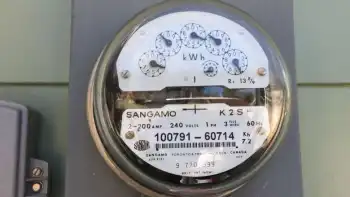
One reason for improved response times since 2005, Daly said, is the installation of nearly 5 million "Smart Meters" at residences. These new devices, which replaced older analog models, allows FPL crews to track a neighborhood's power status via handheld computers, pinpointing the cause of an outage so it can be repaired.

Quick restoration is key as stores and restaurants struggle to re-open, and Gulf Power crews restored power in the early push. Without electricity many of them just can't re-start operations and get goods and services to consumers.

At the Atlanta-based Waffle House, which Federal Emergency Management Administration use to gauge the severity of damage and service to an area, restaurant executives are reviewing its operations in Florida and should have a better handle Monday afternoon how quickly restaurants will re-open.

"Right now, we're in an assessment phase," said Pat Warner, spokesman for Waffle House. "We're looking at which stores have power and which ones have damage."

FEMA's color-coded Waffle House Index started after the hurricanes in the early 2000s. It works like this: When an official phones a Waffle House to see if it is open,  the next stop is to assess it's level of service. If it's open and serving a full menu, the index is green. When the restaurant is open but serving a limited menu, it's yellow. When it's closed, it's red.


Related News

View more

Sign Up for Electricity Forum’s Newsletter

Stay informed with our FREE Newsletter — get the latest news, breakthrough technologies, and expert insights, delivered straight to your inbox.

Electricity Today T&D Magazine Subscribe for FREE

Stay informed with the latest T&D policies and technologies.
  • Timely insights from industry experts
  • Practical solutions T&D engineers
  • Free access to every issue

Download the 2025 Electrical Training Catalog

Explore 50+ live, expert-led electrical training courses –

  • Interactive
  • Flexible
  • CEU-cerified