Nuclear teams could soon start Libya inspections

By Independent-London


CSA Z463 Electrical Maintenance -

Our customized live online or in‑person group training can be delivered to your staff at your location.
  • Live Online
  • 6 hours Instructor-led
  • Group Training Available
Regular Price:
$249
Coupon Price:
$199
Reserve Your Seat Today
Inspections of Libyan nuclear sites could start as early as next week, as moves intensified recently to bring the north African state back into the international fold.

Mohamed ElBaradei, head of the International Atomic Energy Agency (IAEA), said he would visit Tripoli next week for initial talks on the state of the Libyan nuclear programme.

He said the meeting would "kickstart a process of verification" of Libya's arms, adding: "Inspections will follow, shortly after Christmas."

He said the visit was a positive step by Libya to "rid itself of all programmes or activities that are relevant or could lead to the production of weapons of mass destruction".

Mr. ElBaradei said he would brief the IAEA's governing board about Libya's illicit nuclear activities, including a uranium enrichment programme to produce bomb- grade material.

Downing Street has said that the Libyan leader, Colonel Muammar Gaddafi, had not "acquired a nuclear weapons capability, though it was close to developing one".

Talks with the IAEA were hastily organised in Vienna on Saturday, after Libya announced it was abandoning its weapons of mass destruction programme. Libya was already a signatory of the Nuclear Non-Proliferation Treaty but a new protocol allows for tougher, "snap" visits to nuclear sites by IAEA inspectors.

Mr. ElBaradei's arrival will trigger a protracted process, starting with Libya accounting for its nuclear programme. The IAEA will then carry out inspections to verify the accuracy of the information, followed by the dismantling process, probably by Libyans. The IAEA will carry out continuous monitoring to ensure no new nuclear programmes are set up.

Welcoming the move, Mike O'Brien, a Foreign Office minister, paid tribute to Col Gaddafi for his "statesmanlike and courageous" conduct in December.

Britain expected Tripoli to "co-operate fully" with the UN nuclear watchdog and with the Organisation for the Prohibition of Chemical Weapons (OPCW).

Mr. O'Brien told BBC Radio 4's PM programme: "In the case of biological weapons ... Libya has indicated it is prepared to accept, following some negotiations and discussions, ways of verifying, monitoring and inspecting them. We are happy that process is one we think could ensure Libya is fully compliant."

The Libyan Prime Minister, Shokri Ghanem, recently underlined his country's willingness to co-operate with the UN weapons inspections team.

"We are pleased with the commitment we are making to the IAEA and we are willing to abide by its rules and honour our commitments," he told the BBC. "It is the IAEA rules and procedures that will decide how much we are applying what we said and that we mean what we say and honour our commitments." But he called on Israel to abandon its nuclear weapons programme. He said: "The Middle East ... should be free from weapons of mass destruction and that is what Israel should be."

Mr. Ghanem denied Libya had supported terrorists, maintaining it was "participating in the fight against terrorism".

His government's priority was to improve the country's economy and the living standards of Libyans," he said.

Related News
The Evolution of Electric Vehicle Charging Infrastructure in the US

US EV Charging Infrastructure is evolving with interoperable NACS and CCS standards, Tesla Supercharger access, federal funding, ultra-fast charging, mobile apps, and battery advances that reduce range anxiety and expand reliable, nationwide fast-charging access.


Key Points

Nationwide network, standards, and funding enabling fast, interoperable EV charging access for drivers across the US.

✅ NACS and CCS interoperability expands cross-network access

✅ Tesla Superchargers opening to more brands accelerate adoption

✅ Federal funding builds fast chargers along highways and communities


The landscape of electric vehicle (EV) charging infrastructure in the United States is rapidly evolving, driven by technological advancements, collaborative efforts between automakers and charging networks across the country, and government initiatives to support sustainable transportation.

Interoperability and Collaboration

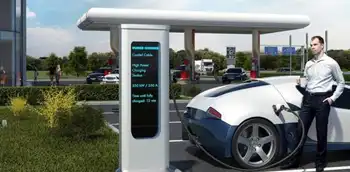
Recent developments highlight a shift towards interoperability among charging networks, even as control over charging continues to be contested across the market today. The introduction of the North American Charging Standard (NACS) and the adoption of the Combined Charging System (CCS) by major automakers underscore efforts to standardize charging protocols. This move aims to enhance convenience for EV drivers by allowing them to use multiple charging networks seamlessly.

Tesla's Role and Expansion

Tesla, a trailblazer in the EV industry, has expanded its Supercharger network to accommodate other EV brands. This initiative represents a significant step towards inclusivity, addressing range anxiety and supporting the broader adoption of electric vehicles. Tesla's expansive network of fast-charging stations across the US continues to play a pivotal role in shaping the EV charging landscape.

Government Support and Infrastructure Investment

The federal government's commitment to infrastructure development is crucial in advancing EV adoption. The Bipartisan Infrastructure Law allocates substantial funding for EV charging station deployment along highways and in underserved communities, while automakers plan 30,000 chargers to complement public investment today. These investments aim to expand access to charging infrastructure, promote economic growth, and reduce greenhouse gas emissions associated with transportation.

Technological Advancements and User Experience

Technological innovations in EV charging, including energy storage and mobile charging solutions, continue to improve user experience and efficiency. Ultra-fast charging capabilities, coupled with user-friendly interfaces and mobile apps, simplify the charging process for consumers. Advancements in battery technology also contribute to faster charging times and increased vehicle range, enhancing the practicality and appeal of electric vehicles.

Challenges and Future Outlook

Despite progress, challenges remain in scaling EV charging infrastructure to meet growing demand. Issues such as grid capacity constraints are coming into sharp focus, alongside permitting processes and funding barriers that necessitate continued collaboration between stakeholders. Addressing these challenges is crucial in supporting the transition to sustainable transportation and achieving national climate goals.

Conclusion

The evolution of EV charging infrastructure in the United States reflects a transformative shift towards sustainable mobility solutions. Through interoperability, government support, technological innovation, and industry collaboration, stakeholders are paving the way for a robust and accessible charging ecosystem. As investments and innovations continue to shape the landscape, and amid surging U.S. EV sales across 2024, the trajectory of EV infrastructure development promises to accelerate, ensuring reliable and widespread access to charging solutions that support a cleaner and greener future.


Related News

View more

China aims to reduce coal power production

China Coal-Fired Power Consolidation targets capacity cuts through mergers, SASAC-led restructuring, debt reduction, asset optimization, and retiring inefficient plants across state-owned utilities to improve efficiency, stabilize liabilities, and align with energy transition policies.


Key Points

A SASAC-driven plan merging utility assets to cut coal capacity, reduce debt, and retire outdated, loss-making plants.

✅ Merge five central utilities' coal assets to streamline operations

✅ Target 25-33% capacity cuts and >50% loss reduction by 2021

✅ Prioritize debt-ridden regions: Gansu, Shaanxi, Xinjiang, Qinghai, Ningxia


China plans to slash coal-fired power capacity at its five biggest utilities by as much as a third in two years by merging their assets, amid broader power-sector strains that reverberate globally, according to a document seen by Reuters and four sources with knowledge of the matter.

The move to shed older and less-efficient capacity is being driven by pressure to cut heavy debt levels at the utilities. China, is, however, building more coal-fired power plants and approving dozens of new mines to bolster a slowing economy, even as recent power cuts highlight grid imbalances.

The five utilities, which are controlled by the central government, accounted for around 44% of China’s total coal-fired power capacity at the end of 2018, a share likely to be tested by rising electrification goals, with electricity to meet 60% by 2060 according to industry forecasts.

“(The utilities) will strive to reduce coal-fired power capacity by one quarter to one third ...cutting total losses by more than 50% from the current level to achieve a significant decline in debt-to-asset ratios by the end of 2021,” the document said.

The plan, initiated and overseen by the State-owned Assets Supervision and Administration Commission of the State Council (SASAC), follows heavy losses at some of the utilities, amid a pandemic-era demand drop that hit industrial consumption.

Some of their coal-fired power stations have filed for bankruptcy in recent years as Beijing promotes the use of renewable energy and advances its nuclear program while opening up the state-controlled power market.

The SASAC did not immediately respond to a fax seeking comment and the sources declined to be identified as they were not authorised to speak to the media.

The utilities - China Huaneng Group Co, China Datang Corp, China Huadian Corp, State Power Investment Corp and China Energy Group - did not respond to faxes requesting comment.

Together, they had 474 coal-fired power plants with combined power generation capacity of 520 gigawatts (GW) at the end of last year.

Their coal-fired power assets came to 1.5 trillion yuan ($213 billion) while total coal-fired power liabilities were 1.1 trillion yuan, the document said.

The document was seen by two people at two of the utilities and was also verified by a source at SASAC and a government researcher.

It was not clear when the document was published but it said the merging and elimination of outdated capacity would start from 2019 and be achieved within three years, aiming to improve the efficiency and operations at the companies, reflecting a broader electricity sector mystery that policymakers are trying to resolve.

Utilities with debt-ridden operations in the northwestern regions of Gansu, Shaanxi, Xinjiang, Qinghai and Ningxia would be the first to carry out the plan, it said, even as India ration coal supplies during demand surges.

The government researcher said the SASAC has been researching possible consolidation in the coal-fired power sector since 2017, but added: “It’s easier said than done.”

“No one is willing to hand in their high quality assets and there is no point in merging the bad assets,” the government researcher said.


Related News

View more

Ontario sending 200 workers to help restore power in Florida

Ontario Utilities Hurricane Irma Aid mobilizes Hydro One and Toronto Hydro crews to Tampa Bay, Florida, restoring power outages with bucket trucks, lineworkers, and mutual aid alongside Florida Power & Light after catastrophic damage.


Key Points

Mutual aid sending Hydro One and Toronto Hydro crews to Florida to restore power after Hurricane Irma.

✅ 205 workers, 52 bucket trucks, 30 support vehicles deployed

✅ Crews assist Tampa Bay under FPL mutual aid agreements

✅ Weeks-long restoration projected after catastrophic outages


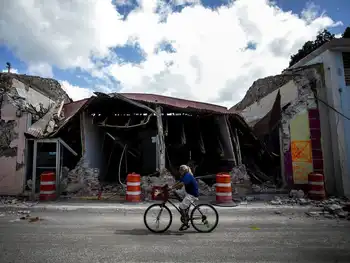
Hurricane Irma has left nearly 7 million homes in the southern United States without power and two Ontario hydro utility companies are sending teams to help out as part of Canadian power crews responding to the disaster.

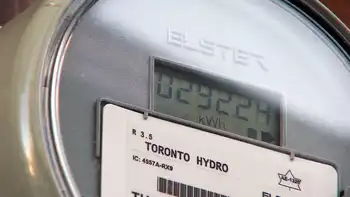
Toronto Hydro is sending 30 staffers to aid in the restoration efforts in Tampa Bay while Hydro One said Sunday night that it would send 175 employees after receiving a request from Florida Power and Light.

“I've been on other storms down in the states and they are pretty happy to see you especially when they find out you're from Canada,” Dean Edwards, one of the Hydro One employees heading to Florida, told CTV Toronto.

Most of the employees are expected to cross the border on Monday afternoon and arrive Wednesday.

Among the crews, Hydro One says it will send 150 lines and forestry staff, as well as 25 supporting resources, including mechanics, to help. Crews will bring 52 bucket trucks to Florida, as well as 30 other vehicles, reflecting their Ontario storm restoration experience with large-scale deployments, and pieces of equipment to transport and replace poles.

Hurricane Irma has claimed at least 45 lives in the Caribbean and United States thus far. Officials estimate that restoring power to Florida will take weeks to bring power back online.

“I’m sure a lot of people wish they could go down and help, fortunately our job is geared towards that so we're going to go down there to do our best and represent Canada,” said Blair Clarke, who’s making his first trip over the border.

Hydro One has reciprocal arrangements with other North American utilities to help with significant power outages, and its employees have provided COVID-19 support in Ontario as part of broader emergency efforts. All the costs are covered by the utility receiving the help.

In the past, the utility has sent crews to Massachusetts, Michigan, Florida, Ohio, Vermont, Washington, DC, and the Carolinas, while Sudbury Hydro crews have worked to reconnect service after storms at home as well. In 2012, 225 Hydro One employees travelled to Long Island, N.Y., to help out with Hurricane Sandy.

“This is what our guys and gals do,” Natalie Poole-Moffat, vice president of Corporate Affairs for Hydro One, told CP24. “They’re fabulous at it and we’re really proud of the work they do.”


Related News

View more

"Kill the viability": big batteries to lose out from electricity grid rule change

AEMC Storage Charging Rules spark industry backlash as Tesla, Snowy Hydro, and investors warn transmission charges on batteries and pumped hydro could deter grid-scale storage, distort the National Electricity Market, and slow decarbonisation.


Key Points

AEMC Storage Charging Rules are proposals to bill grid storage for network use, shaping costs and investment.

✅ Charges apply when batteries draw power; double-charging concerns.

✅ Tesla and Snowy Hydro warn of reduced viability and delays.

✅ AEMO recommends exemptions; investors seek certainty.


Tesla, Snowy Hydro and other big suppliers of storage capacity on Australia’s main electricity grid warn proposed rule changes amount to a tax on their operations that will deter investors and slow the decarbonisation of the industry.

The Australian Energy Market Commission (AEMC) will release its final decision this Thursday on new rules for integrating batteries, pumped hydro and other forms of storage.

The AEMC’s draft decision, released in July, angered many firms because it proposed charging storage providers for drawing power, ignoring a recommendation by the Australian Electricity Market Operator (AEMO) that they be exempt.

Battery maker Tesla, which has supplied some of the largest storage to the National Electricity Market, said in a submission that the charges would “kill the commercial viability of all grid storage projects, causing inefficient investment in alternative network”, with consumers paying higher costs.

Snowy Hydro, which is building the giant Snowy 2 pumped storage project and already operates a smaller one, said in its submission the proposed changes if implemented would jeopardise investment.

“This is a major policy change, amounting to a tax on infrastructure critical to achieving a renewable future,” Snowy Hydro said.

AEMO itself argued it was important storage providers were not “disincentivised from connecting to the transmission network, as they generally provide a net benefit to the power system by charging at periods of low demand”.

Australia’s electricity grid faces economic and engineering challenges, similar to Ontario's storage push as it adjusts to the arrival of lower cost and also lower carbon alternatives to fossil fuels.

While rule changes are necessary to account for operators that can both draw from and supply power, how they are implemented can have long-lasting effects on the technologies that get encouraged or repelled, including control of EV charging issues, independent experts say.

“It doesn’t have to be this way,” said Bruce Mountain, director of the Victoria Energy Policy Centre. “In Britain, where the UK grid transformation is underway, the regulator dealing with the same issues has said that storage devices don’t pay the system charges when they withdraw electricity from the grid,” he said.

The prospect that storage operators will have to pay transmission charges could “drastically” affect their profitability since their business models rely on the difference between the price their pay for power and how much they can sell it for. Gas generators and network monopolies would benefit from the change, Mountain said.

Sign up to receive an email with the top stories from Guardian Australia every morning

An AEMC spokesperson said the commission had consulted widely, including from those who objected to the payment for transmission access.

“The market is moving towards a future that will be increasingly reliant on energy storage to firm up the growing volume of renewable energy and deliver on the increasing need for critical system security services, with examples such as EVs supporting grid stability in California as the ageing fleet of thermal generators retire,” the spokesperson said, declining to elaborate on the final ruling before it is published.

“The regulatory framework needs to facilitate this transition as the energy sector continues to decarbonise,” the official said.

AusNet, which operates the Victorian energy transmission grid, said that while “technological neutrality is paramount for battery and hybrid unit connections to both the distribution and transmission networks,” it did not back charging storage access to networks in all cases.

“[Ausnet] supports a clear exemptions framework for energy storage providers,” a spokesperson said. “We recommend that batteries and other hybrid facilities should have transmission use of system charges waived if they provide a net benefit to network customers.”

We are not aware of anyone that supports the charging storage access to networks in all circumstances.

“Batteries and hybrid facilities that consume energy from the network should be provided no preferential treatment relative to other customers and generators.”

Jonathan Upson, a principal at Strategic Renewable Consulting, though, said the AEMC wants electricity flowing through batteries to be taxed twice to pay network charges – once when the electricity charges the battery and then again when the same electricity is sent out by the battery an hour or two later but this time with customers paying.

“The AEMC’s draft decision has the identical rationale for eliminating franking credits on all dividends, resulting in double taxing of company profits,” he said.

Christiaan Zuur, director of energy transformation at the Clean Energy Council, said that while much of AEMC’s draft proposal was constructive, “those benefits are either nullified or maybe even outweighed” by uncertainty over charges.

“Risk perception” will be important since potential newcomers won’t be sure of what charges they will pay to connect to the grid and existing operators could have their connection agreements reopened, Zuur said.

“Investors focus on the potential risk. It does factor through to the integral costs for projects,” he said.

The outcome of new charges may prompt more people to put batteries on their premises and draw power from their own solar panels, Mountain said, with rising EV adoption introducing new grid challenges, cutting their reliance on a centralised network.

“Ironically, it encourages customers to depend less and less on the grid,” he said. “It’s almost like the capture of the dominant interests playing out over time at their own expense.”

Separately, the latest edition of the Clean Energy Council Confidence Index shows leadership by state governments is helping to shore up investor appetite for investing in renewable energy amid 2021 electricity lessons even with higher 2030 emissions reduction goals from the federal government.

Overall, investor confidence increased by a point in the last six months – from 6.3 to 7.3 out of 10 – following strong commitments and policy development from state governments, particularly on the east coast, the council said.

“The results of this latest survey illustrate the economic value in policy that lowers the emissions footprint of our electricity generation, supporting regional centres and creating jobs. Investors recognise the opportunities created by limiting global temperature rise to 1.5 degrees,” said council chief executive Kane Thornton.

Among the states, NSW, Victoria and Queensland led in terms of positive investor sentiment.

Correction: this article was amended on 30 November. An earlier version stated Ausnet supported charging storage for network access. A spokesperson said it backed a waiver on charges if certain conditions are met.        


Related News

View more

As California enters a brave new energy world, can it keep the lights on?

California Grid Transition drives decarbonization with renewable energy, EV charging, microgrids, and energy storage, while tackling wildfire risk, aging infrastructure, and cybersecurity threats to build grid resilience and reliability across a rapidly electrifying economy.


Key Points

California Grid Transition is the statewide shift to renewables, storage, EVs, and resilient, secure infrastructure.

✅ Integrates solar, wind, storage, and demand response at scale

✅ Expands microgrids and DERs to enhance reliability and resilience

✅ Addresses wildfire, aging assets, and cybersecurity risks


Gretchen Bakke thinks a lot about power—the kind that sizzles through a complex grid of electrical stations, poles, lines and transformers, keeping the lights on for tens of millions of Californians who mostly take it for granted.

They shouldn’t, says Bakke, who grew up in a rural California town regularly darkened by outages. A cultural anthropologist who studies the consequences of institutional failures, she says it’s unclear whether the state’s aging electricity network and its managers can handle what’s about to hit it, as U.S. blackout risks continue to mount.

California is casting off fossil fuels to become something that doesn’t yet exist: a fully electrified state of 40 million people. Policies are in place requiring a rush of energy from renewable sources such as the sun and wind and calling for millions of electric cars that will need charging—changes that will tax a system already fragile, unstable and increasingly vulnerable to outside forces.

“There is so much happening, so fast—the grid and nearly everything about energy is in real transition, and there’s so much at stake,” said Bakke, who explores these issues in a book titled simply, “The Grid.”

The state’s task grew more complicated with this week’s announcement that Pacific Gas and Electric, which provides electricity for more than 5 million customer accounts, intends to file for bankruptcy in the face of potentially crippling liabilities from wildfires. But the reshaping of California’s energy future goes far beyond the woes of a single company.

The 19th-century model of one-way power delivery from utility companies to customers is being reimagined. Major utilities—and the grid itself—are being disrupted by rooftops paved with solar panels and the rise of self-sufficient neighborhood mini-grids. Whole cities and counties are abandoning big utilities and buying power from wholesalers and others of their choosing.

With California at the forefront of a new energy landscape, officials are racing to design a future that will not just reshape power production and delivery but also dictate how we get around and how our goods are made. They’re debating how to manage grid defectors, weighing the feasibility of an energy network that would expand to connect and serve much of the West and pondering how to appropriately regulate small power producers.

“We are in the depths of the conversation,” said Michael Picker, president of the state Public Utilities Commission, who cautions that even as the system is being rebooted, like repairing a car while driving in practice, there’s no real plan for making it all work.

Such transformation is exceedingly risky and potentially costly. California still bears the scars of having dropped its regulatory reins some 20 years ago, leaving power companies to bilk the state of billions of dollars it has yet to completely recover. And utility companies will undoubtedly pass on to their customers the costs of grid upgrades to defend against natural and man-made threats.

Some weaknesses are well known—rodents and tree limbs, for example, are common culprits in power outages, even as longer, more frequent outages afflict other parts of the U.S. A gnawing squirrel squeezed into a transformer on Thanksgiving Day three years ago, shutting off power to parts of Los Angeles International Airport. The airport plans to spend $120 million to upgrade its power plant.

But the harsh effects of climate change expose new vulnerabilities. Rising seas imperil coastal power plants. Electricity infrastructure is both threatened by and implicated in wildfires. Picker estimates that utility operations are related to one in 10 wildland fires in California, which can be sparked by aging equipment and winds that send tree branches crashing into power lines, showering flammable landscapes with sparks.

California utilities have been ordered to make their lines and equipment more fire-resistant as they’re increasingly held accountable for blazes they cause. Pacific Gas and Electric reported problems with some of its equipment at a starting point of California’s deadliest wildfire, which killed at least 86 people in November in the town of Paradise. The cause of the fire is under investigation.

New and complex cyber threats are more difficult to anticipate and even more dangerous. Computer hackers, operating a world away, can—and have—shut down electricity systems, toggling power on and off at will, and even hijacked the computers of special teams dispatched to restore control.

Thomas Fanning, CEO of Southern Co., one of the country’s largest utilities, recently disclosed that his teams have fended off multiple attempts to hack a nuclear power plant the firm operates. He called grid hacking “the most important under-reported war in American history.”

However, if you’ve got what seems like an insoluble problem requiring a to-the-studs teardown and innovative rebuild, California is a good place to start. After all, the first electricity grid was built in San Francisco in 1879, three years before Thomas Edison’s power station in New York City. (Edison’s plant burned to the ground a decade later.)

California’s energy-efficiency regulations have helped reduce statewide energy use, which peaked a decade ago and is on the decline, somewhat easing pressure on the grid. The major utilities are ahead of schedule in meeting their obligation to obtain power from renewable sources.

California’s universities are teaming with national research labs to develop cutting-edge solutions for storing energy produced by clean sources. California is fortunate in the diversity of its energy choices: hydroelectric dams in the north, large-scale solar operations in the Mojave Desert to the east, sprawling windmill farms in mountain passes and heat bubbling in the Geysers, the world’s largest geothermal field north of San Francisco. A single nuclear-power plant clings to the coast near San Luis Obispo, but it will be shuttered in 2025.

But more renewable energy, accessible at the whims of weather, can throw the grid off balance. Renewables lack the characteristic that power planners most prize: dispatchability, ready when called on and turned off when not immediately needed. Wind and sun don’t behave that way; their power is often available in great hunks—or not at all, as when clouds cover solar panels or winds drop.

In the case of solar power, it is plentiful in the middle of the day, at a time of low demand. There’s so much in California that most days the state pays its neighbors to siphon some off,  lest the excess impede the grid’s constant need for balance—for a supply that consistently equals demand.

So getting to California’s new goals of operating on 100 percent clean energy by 2045 and having 5 million electric vehicles within 12 years will require a shift in how power is acquired and managed. Consumers will rely more heavily on battery storage, whose efficiency must improve to meet that demand.


Related News

View more

Solar power growth, jobs decline during pandemic

COVID-19 Solar Job Losses are erasing five years of workforce growth, SEIA reports, with U.S. installations and capacity down, layoffs accelerating, 3 GW expected in Q2, and policy support key for economic recovery.


Key Points

COVID-19 Solar Job Losses describe the pandemic-driven decline in U.S. solar employment, installations, and capacity.

✅ SEIA reports a 38% national drop in solar jobs

✅ Q2 installs projected at 3 GW, below forecasts

✅ Layoffs outpace U.S. economy without swift policy aid


Job losses associated with the COVID-19 crisis have wiped out the past five years of workforce growth in the solar energy field, according to a new industry analysis.

The expected June 2020 solar workforce of 188,000 people across the United States is 114,000 below the pre-pandemic forecast of 302,000 workers, a shortfall tied to the solar construction slowdown according to the Solar Energy Industries Association, which said in a statement Monday that the solar industry is now losing jobs at a faster rate than the U.S. economy.

In Massachusetts, the loss of 4,284 solar jobs represents a 52 percent decline from previous projections, according to the association’s analysis.

The national 38 percent drop in solar jobs coincides with a 37 percent decrease in expected solar installations in the second quarter of 2020, and similar pressures have put wind investments at risk across the sector, the association stated. The U.S. is now on track to install 3 gigawatts of new capacity this quarter, though subsequent forecasts anticipated solar and storage growth as investments returned, and the association said the decrease from the expected capacity is equivalent to the electricity needed to power 288,000 homes.

“Thousands of solar workers are being laid off each week, but with swift action from Congress, we know that solar can be a crucial part of our economic recovery,” with proposals such as the Biden solar plan offering a potential policy path, SEIA President and CEO Abigail Ross Hopper said in a statement, as recent analyses point to US solar and wind growth under supportive policies.

Subsequent data showed record U.S. panel shipments as the market rebounded.


Related News

View more

Sign Up for Electricity Forum’s Newsletter

Stay informed with our FREE Newsletter — get the latest news, breakthrough technologies, and expert insights, delivered straight to your inbox.

Electricity Today T&D Magazine Subscribe for FREE

Stay informed with the latest T&D policies and technologies.
  • Timely insights from industry experts
  • Practical solutions T&D engineers
  • Free access to every issue

Live Online & In-person Group Training

Advantages To Instructor-Led Training – Instructor-Led Course, Customized Training, Multiple Locations, Economical, CEU Credits, Course Discounts.

Request For Quotation

Whether you would prefer Live Online or In-Person instruction, our electrical training courses can be tailored to meet your company's specific requirements and delivered to your employees in one location or at various locations.