By


Protective Relay Training - Basic

Our customized live online or in‑person group training can be delivered to your staff at your location.
  • Live Online
  • 12 hours Instructor-led
  • Group Training Available
Regular Price:
$699
Coupon Price:
$599
Reserve Your Seat Today
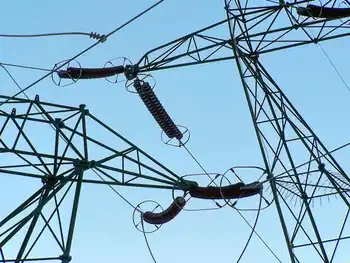
-- The Long Island Power Authority (LIPA), fearing soaring energy demand could trigger blackouts, urged the federal government to lift restrictions blocking use of a new undersea cable to bring in much-needed electricity.

The line has not been cleared for use because its owner, Cross Sound Cable Co., says the contractor did not trench it deeply enough across the bottom of Connecticut's New Haven Harbor, across Long Island Sound.

LIPA Chairman Richard Kessel said in a statement the group has asked the Department of Energy to intervene to force the company to immediately transmit energy over the line.

"The Cross Sound Cable, which has been improperly prevented from operating, could mean the difference between continued service and blackouts on Long Island, Southwestern Connecticut and the entire region," Kessel warned.

The company in charge of building the line, Canadian transmission company TransEnergie, said the contractor it hired to lay the cable did not trench it deeply enough to avoid damage from ships dragging their anchors in New Haven Harbor.

The cable is supposed to be six feet below the seabed.

Power supplies in the New York City suburbs of Long Island and Connecticut are some of the tightest in the nation because construction of power plants and transmission lines has not kept up with the region's economic and population growth.

Temperatures in and around New York City have broken the 90 degree Fahrenheit mark every day since Sunday and are expected to continue breaking 90 degrees through Monday.

LIPA, in its request to the DOE, asked that the Cross Sound Cable Co. operate the line and accept schedules on a day-ahead basis when LIPA forecasts that its generation reserves will be less than 600 megawatts.

The 600 MW margin, still less than the statewide required reserve of 18 percent of forecast load, is equal to the capacity of one of the existing transmission cables between Long Island and mainland New York.

LIPA is asking Energy Secretary Spencer Abraham to exercise his emergency powers to order the line opened or face blackouts that could "jeopardize the health and safety of members of the public," the statement said.

LIPA, a state-owned utility, provides electricity to nearly 1.1 million customers in Nassau and Suffolk counties on Long Island and the Rockaway Peninsula in Queens.

The Cross-Sound cable, which was delayed by a four-year, two-state legal battle, was previously expected to be available in time for peak summer demand.

TransEnergie is a subsidiary of energy firm Hydro-Quebec.

Source: Reuters

Related News
TagEnergy Launches France’s Largest Battery Storage Platform

TagEnergy France Battery Storage Platform enables grid flexibility, stability, and resilience across France, storing wind and solar power, balancing supply and demand, reducing curtailment, and supporting carbon neutrality with fast-response, utility-scale capacity.


Key Points

A utility-scale BESS in France that stores renewable energy to stabilize the grid, boost flexibility, and cut emissions.

✅ Several hundred MW utility-scale capacity for peak shaving.

✅ Fast-response frequency regulation and voltage support.

✅ Reduces fossil peaker use and renewable curtailment.


In a significant leap toward enhancing France’s renewable energy infrastructure, TagEnergy has officially launched the country's largest battery storage platform. This cutting-edge project is set to revolutionize the way France manages its electricity grid by providing much-needed flexibility, stability, and resilience, particularly as the country ramps up its use of renewable energy sources and experiences negative prices in France during periods of oversupply,

The new battery storage platform, with a total capacity of several hundred megawatts, will play a crucial role in facilitating the country's transition to a greener, more sustainable energy future. It marks a significant step forward in addressing one of the most pressing challenges of renewable energy: how to store and dispatch power generated from intermittent sources such as wind and solar energy.

The Role of Battery Storage in Renewable Energy

Battery storage systems are key to unlocking the full potential of renewable energy sources. While wind and solar power are increasingly important in reducing reliance on fossil fuels, their intermittent nature—dependent on weather conditions and time of day—presents a challenge for grid operators. Without an efficient way to store surplus energy produced during peak generation periods, when negative electricity prices can emerge, the grid can become unstable, leading to waste or even blackouts.

This is where TagEnergy’s new platform comes into play. The state-of-the-art battery storage system will capture excess energy when production is high, and then release it back into the grid during periods of high demand, supporting peak demand strategies or when renewable generation dips. This capability will smooth out the fluctuations in renewable energy production and ensure a constant, reliable supply of power to consumers. By doing so, the platform will not only stabilize the grid but also increase the overall efficiency and utilization of renewable energy sources.

The Scale and Scope of the Platform

TagEnergy's battery storage platform is one of the largest in France, with a capacity capable of supporting a wide range of energy storage needs across the country. The platform’s size is designed to handle significant energy loads, making it a critical piece of infrastructure for grid stability. The project will primarily focus on large-scale energy storage, but it will also incorporate cutting-edge technologies to ensure fast response times and high efficiency in energy release.

France’s energy mix is undergoing a transformation as the country aims to achieve carbon neutrality by 2050. With ambitious plans to expand renewable energy production, particularly from offshore wind such as North Sea wind potential, solar, and hydropower, energy storage becomes essential for managing supply and demand. The new battery platform is poised to provide the necessary storage capabilities to keep up with this shift toward greener, more sustainable energy production.

Economic and Environmental Impact

The launch of the battery storage platform is a major boon for the French economy, creating jobs and attracting investment in the clean energy sector. The project is expected to generate hundreds of construction and operational jobs, providing a boost to local economies, particularly in the areas where the storage facilities are located.

From an environmental perspective, the platform’s ability to store and release renewable energy will greatly reduce the country’s reliance on fossil fuels, decreasing greenhouse gas emissions. The efficient storage of solar and wind energy will mean that more clean electricity can be used, with solar-plus-storage cheaper than conventional power in Germany underscoring cost competitiveness, even during times when these renewable sources are not producing at full capacity. This will help France meet its energy and climate goals, including reducing carbon emissions by 40% by 2030 and achieving carbon neutrality by 2050.

The development also aligns with broader European Union goals to increase the share of renewables in the energy mix. As EU nations work toward their collective climate commitments, energy storage projects like TagEnergy’s platform will be vital in helping the continent achieve a greener, more sustainable future.

A Step Toward Energy Independence

The new battery storage platform also has the potential to enhance France’s energy independence. By increasing the storage capacity for renewable energy, France will be able to rely less on imported fossil fuels and energy from neighboring countries, particularly during periods of high demand. Energy independence is a key strategic goal for many nations, as it reduces vulnerability to geopolitical tensions and fluctuating energy prices.

In addition to bolstering national security, the platform supports France’s energy transition by facilitating the deployment of more renewable energy. As storage capacity increases, grid operators will be able to integrate larger quantities of intermittent renewable energy without sacrificing reliability. This will enable France to meet its long-term energy goals while also supporting the EU’s ambitious climate targets.

Future of Battery Storage in France and Beyond

TagEnergy’s launch of France’s largest battery storage platform is a monumental achievement in the country’s energy transition. However, it is unlikely to be the last of its kind. The success of this project could pave the way for similar initiatives across France and the wider European market. As battery storage technology advances, and affordable solar batteries scale up, the capacity for storing and utilizing renewable energy will only grow, unlocking new possibilities for clean, affordable power.

Looking ahead, TagEnergy plans to expand its operations and further invest in renewable energy solutions. The French market, along with growing demand for storage solutions across Europe, presents significant opportunities for further development in the energy storage sector. With the continued integration of renewable energy into the grid, large-scale storage platforms will play an increasingly critical role in shaping a low-carbon future.

The launch of TagEnergy’s battery storage platform marks a pivotal moment for France’s renewable energy landscape. By providing critical storage capacity and ensuring the reliable delivery of clean electricity, the platform will help the country meet its ambitious climate and energy goals. As technology advances and the global transition to renewables accelerates, with over 30% of global electricity now coming from renewables, projects like this one will play an essential role in creating a sustainable, low-carbon energy future.


Related News

View more

London's Newest Electricity Tunnel Goes Live

London Electricity Tunnel strengthens grid modernization with high-voltage cabling from major substations, increasing redundancy, efficiency, and resilience while enabling renewable integration, optimized power distribution, and a stable, low-loss electricity supply across the capital.


Key Points

A high-voltage tunnel upgrading London's grid, with capacity, redundancy, and renewable integration for reliable power.

✅ High-voltage cabling from key substations boosts capacity

✅ Redundancy improves reliability during grid faults

✅ Enables renewable integration and lower transmission losses


London’s energy infrastructure has recently taken a significant leap forward with the commissioning of its newest electricity tunnel, and related upgrades like the 2GW substation that bolster transmission capacity, a project that promises to enhance the reliability and efficiency of the city's power distribution. This cutting-edge tunnel is a key component in London’s ongoing efforts to modernize its energy infrastructure, support its growing energy demands, and contribute to its long-term sustainability goals.

The newly activated tunnel is part of a broader initiative to upgrade London's aging power grid, which has faced increasing pressure from the city’s expanding population and its evolving energy needs, paralleling Toronto's electricity planning to accommodate growth. The tunnel is designed to carry high-voltage electricity from major substations to various parts of the city, improving the distribution network's capacity and reliability.

The construction of the tunnel was a major engineering feat, involving the excavation of a vast underground passage that stretches several kilometers beneath the city. The tunnel is equipped with advanced technology and materials to ensure its resilience and efficiency, and is informed by advances such as HVDC technology being explored across Europe for stronger grids. It features state-of-the-art cabling and insulation to handle high-voltage electricity safely and efficiently, minimizing energy losses and improving overall grid performance.

One of the key benefits of the new tunnel is its ability to enhance the reliability of London’s power supply. As the city continues to grow and demand for electricity increases, maintaining a stable and uninterrupted power supply is critical. The tunnel helps address this need by providing additional capacity and creating redundancy in the power distribution network, aligning with national efforts to fast-track grid connections that unlock capacity across the UK.

The tunnel also supports London’s sustainability goals by facilitating the integration of renewable energy sources into the grid. With the increasing use of solar, wind, and other clean energy technologies, including the Scotland-to-England subsea link that will carry renewable power, the power grid needs to be able to accommodate and distribute this energy effectively. The new tunnel is designed to handle the variable nature of renewable energy, allowing for a more flexible and adaptive grid that can better manage fluctuations in supply and demand.

In addition to its technical benefits, the tunnel represents a significant investment in London’s future energy infrastructure, echoing calls to invest in smarter electricity infrastructure across North America and beyond. The project has created jobs and stimulated economic activity during its construction phase, and it will continue to provide long-term benefits by supporting a more efficient and resilient power system. The upgrade is part of a broader strategy to modernize the city’s infrastructure and prepare it for future energy challenges.

The completion of the tunnel also reflects a commitment to addressing the challenges of urban infrastructure development. Building such a major piece of infrastructure in a densely populated city like London requires careful planning and coordination to minimize disruption and ensure safety. The project team worked closely with local communities and businesses to manage the construction process and mitigate any potential impacts.

As London moves forward, the new electricity tunnel will play a crucial role in supporting the city’s energy needs. It will help ensure that power is delivered efficiently and reliably to homes, businesses, and essential services. The tunnel also sets a precedent for future infrastructure projects, demonstrating how advanced engineering and technology can address the demands of modern urban environments.

The successful activation of the tunnel marks a significant milestone in London’s efforts to build a more sustainable and resilient energy system. It represents a forward-thinking approach to managing the city’s energy infrastructure and addressing the challenges posed by population growth, increasing energy demands, and the need for cleaner energy sources.

Looking ahead, London will continue to invest in and upgrade its energy infrastructure to support its ambitious climate goals and ensure a reliable power supply for its residents, a trend mirrored by Toronto's preparations for surging demand as that city continues to grow. The new electricity tunnel is just one example of the city’s commitment to innovation and sustainability in its approach to energy management.

In summary, London’s newest electricity tunnel is a major advancement in the city’s power distribution network. By enhancing reliability, supporting the integration of renewable energy, and investing in long-term infrastructure, the tunnel plays a critical role in addressing the city’s energy needs and sustainability goals. As London continues to evolve, such infrastructure projects will be essential in meeting the demands of a growing metropolis and creating a more resilient and efficient energy system for the future.


Related News

View more

Gulf Power to Provide One-Time Bill Decrease of 40%

Gulf Power 40% One-Time Bill Decrease approved by the Florida Public Service Commission delivers a May fuel credit and COVID-19 relief, cutting residential and business costs across rate classes while supporting budgeting and energy savings.


Key Points

PSC-approved fuel credit cutting May electric bills about 40% for homes and 40-55% for businesses as COVID-19 relief.

✅ One-time May fuel credit on customer bills

✅ Residential cut ~40%; business savings 40-55% by rate class

✅ Online tools show daily usage and projected bill


Gulf Power announced that the Florida Public Service Commission unanimously approved its request to issue a one-time decrease of approximately 40% for the typical residential customer bill beginning May 1, similar to recent Georgia Power bill reductions seen elsewhere. Business customers will also see a significant one-time decrease of approximately 40-55% in May, depending on usage and rate class.

"We are pleased that the Florida Public Service Commission has approved our request to deliver this savings to our customers when they need it most. We felt that this was the right thing to do, especially during times like these," said Gulf Power President Marlene Santos. "Our customers and communities now more than ever count on the reliable and affordable energy we deliver, and we are pleased that May bills will reflect this additional, significant savings for our customers."

In Florida, fuel savings are typically refunded to customers over the remainder of the year to provide level, predictable bills. However, given the emergent and significant financial challenges facing many customers due to COVID-19, Gulf Power instead sought approval to give customers the total annual savings in their May bill, similar to a lump-sum electricity credit approach, which will be reflected as a line-item fuel credit on their May statement.

New tools to help save energy and money

Many customers are working from home and, in general, staying at home more. More time and extra people in the home will likely increase power usage, which could lead to higher monthly bills.

Gulf Power recently added new tools to our customers' online account portal to help them better understand and manage their energy usage, including their monthly projected bill amount and a breakdown of daily energy usage, which is available for most residential customers*. Customers can now see their previous day's energy usage using their online account portal to help them more easily understand how their previous day's activities impacted energy usage, allowing them to quickly make adjustments to keep bills low. The new projected bill feature is a valuable tool to assist customers in budgeting for their next month's energy bill.

Additional energy-saving tips that can be implemented with no additional cost or equipment are also available. As always, Gulf Power's free online Energy Checkup tool will provide customers with a customized report based on their home's actual energy use.

Helping customers pay their bills

Gulf Power has a long history of working with its customers during difficult times, including periods of pandemic-related energy insecurity, and will continue to do so. Gulf Power encourages customers that are having difficulty paying their energy bill to visit GulfPower.com/help to view available resources that can provide assistance to qualifying customers.

Customers are encouraged to pay their electric bill balance each month to avoid building up a large balance, which they will continue to bear responsibility for. Gulf Power will work with the customer's personal situation and assist with a solution, similar to how utilities in Texas have waived fees during this period, to help customers fulfill their personal responsibility for their Gulf Power balance.

Those who can afford or want to help others who may need assistance with their energy bill can make a donation to Project SHARE in your online customer portal. Project SHARE donations are added to a customer's monthly bill and all contributions are distributed to local offices of The Salvation Army. Customers in need of utility bill assistance can apply for Project SHARE assistance at The Salvation Army office in their county.

Supporting our communities

The Gulf Power Foundation gave $500,000 to United Way organizations across Northwest Florida to assist those most vulnerable during this time, which has helped support food, housing and other essential needs throughout the region. In addition, the Foundation recently made a $10,000 donation to Feeding the Gulf Coast and launched an employee donation campaign to provide food for our neighbors in need, while Entergy emergency relief fund offers a similar example of industry support. In total, Gulf Power and its fellow NextEra Energy companies and employees have so far committed more than $4 million in COVID-19 emergency assistance funds that will be distributed directly to those in need and to partner organizations working on the frontlines of the crisis to provide critical support to the most vulnerable members of the community.

Lower fuel costs are enabling Gulf Power to issue a one-time decrease of approximately 40% for the typical residential customer bill in May, even as FPL faces a hurricane surcharge controversy in the state
- a significant savings amid the ongoing COVID-19 pandemic

Gulf Power will deliver savings to customers through a one-time bill decrease, rather than the standard practice of spreading out savings over the remainder of the year, even as FPL proposes multi-year rate hikes elsewhere


Related News

View more

Electricity is civilization": Winter looms over Ukraine battlefront

Ukraine Power Grid Restoration accelerates across liberated Kharkiv, restoring electricity, heat, and water amid missile and drone strikes, demining operations, blackouts, and winterization efforts, showcasing resilience, emergency repairs, and critical infrastructure recovery.


Key Points

Ukraine's rapid push to repair war-damaged grids, restore heat and water, and stabilize key services before winter.

✅ Priority repairs restore electricity and water in liberated Kharkiv.

✅ Crews de-mine lines and work under shelling, drones, and missiles.

✅ Winterization adds generators, mobile stoves, and large firewood supplies.


On the freshly liberated battlefields of northeast Ukraine, a pile of smashed glass windows outside one Soviet-era block of apartments attests to the violence of six months of Russian occupation, and of Ukraine’s sweeping recent military advances.

Indoors, in cramped apartments, residents lived in the dark for weeks on end.

Now, with a hard winter looming, they marvel at the speed and urgency with which Ukrainian officials have restored another key ingredient to their survival: electric power, a critical effort to keep the lights on this winter across communities.

Among those things governments strive to provide are security, opportunity, and minimal comfort. With winter approaching, and Russia targeting Ukraine’s infrastructure, add to that list heat and light, even as Russia hammers power plants nationwide. It’s requiring a concerted effort.

“Thank God it works! Electricity is civilization – it is everything,” says Antonina Krasnokutska, a retired medical worker, looking affectionately at the lightbulb that came on the day before, and now burns again in her tiny spotless kitchen.

“Without electricity there is no TV, no news, no clothes washing, no charging the phone,” says Ms. Krasnokutska, her gray hair pulled back and a small crucifix around her neck.

“Before, it was like living in the Stone Age,” says her grown son, Serhii Krasnokutskyi, who is more than a head taller. “As soon as it got dark, everyone would go to sleep.”

He shows a picture on his phone from a few days earlier, of a tangle of phone and computer charging cables – including his – plugged in at a local shop with a generator.

“We are very grateful for the people who repaired this electricity, even with shelling continuing,” he says. “They have a very complicated job.”

Indeed, although a lack of power might have been a novel inconvenience during the warm summer season, it increasingly has become a matter of great urgency for Ukrainian citizens and officials.

Coping through Ukraine’s winter with dignity and any degree of security will require courage and perseverance, as the severity and suffering that the season can bring here are being weaponized by Russia, as it seeks to compensate for a string of battlefield losses.

In recent days, Russian attacks have specifically targeted Ukraine’s electrical and other civilian infrastructure – all with the apparent aim of making this winter as hard as possible for Ukrainians, even as Moscow employs other measures to spread the hardship across Europe, while Ukraine helps Spain amid blackouts through grid support.

Ukrainian President Volodymyr Zelenskyy said Monday that Russian barrages across the country with missiles and Iran-supplied kamikaze drones had destroyed 30% of Ukraine’s power stations in the previous eight days, including strikes on western Ukraine that caused outages. Thousands of towns have been left without electricity.

Kharkiv’s challenges
Emblematic of the national challenge is the one facing officials in the northeast Kharkiv region, where Ukraine recaptured more than 3,000 square miles in a September counteroffensive. Ukrainian forces are still making gains on that front, as well as in the south toward Kherson, where Wednesday Russia started evacuating civilians from the first major city it occupied, after launching its three-pronged invasion last February.

Across the Kharkiv region, Ukrainians are stockpiling as much wood, fuel, and food as possible while they still can, and adopting new energy solutions as they prepare, from sources as diverse as the floorboards of destroyed schools and the pine forests in Izium, which are pockmarked with abandoned Russian trenches adjacent to a mass burial site.

“Of course, we have this race against time,” says Serhii Mahdysyuk, the Kharkiv regional director in charge of housing, services, fuel, and energy. “Unfortunately, we probably stand in front of the biggest challenge in Ukraine.”

That is not only because of the scale of liberated territory, he says, but also because the Kharkiv region shares a long border with Russia, as well as with the Russian-controlled areas of the eastern Donbas.

“It’s a great mixture of all threats, and we are sure that shelling and bombings will continue, but we are ready for this,” says Mr. Mahdysyuk. “We know our weak spots that Russia can destroy, but we are prepared for what to do in these situations.”

Ukraine’s battlefield gains have meant a surging need to pick up the pieces after Russian occupation, even as electricity reserves are holding if no new strikes occur, to ensure habitable conditions as more and more surviving residents require services, and as others return to scenes of devastation.

Restoring electricity is the top priority, amid shifting international assistance such as the end of U.S. grid support, because that often restarts running water, too, says Mr. Mahdysyuk. But before that, the area beneath broken power lines must be de-mined.

Indeed, members of an electricity team reconnecting cables on the outskirts of Balakliia – one of the first towns to see power restored, at the end of September – say they lost two fellow workers in the previous two weeks. One died after stepping on an anti-personnel mine, another when his vehicle hit an anti-tank device.

Ukrainian electricity workers restore power lines damaged during six months of Russian military occupation in Balakliia, Ukraine, Sept. 29, 2022. Ukrainians in liberated territory say the restoration of the electrical grid, and with it often the water supply, is a return to civilization.
“For now, our biggest problem is mines,” says the team leader, who gave the name Andrii. “It’s fine within the cities, but in the fields it’s a disaster because it’s very difficult to see them. There is a lot of [them] around here – it will take years and years to get rid of.”

Yet officials only have a few weeks to execute plans to provide for hundreds of thousands of residents in this region, in their various states of need and distress. Some 50 field kitchens capable of feeding 200 to 300 people each have been ordered. Another 1,000 mobile stoves are on their way.

And authorities will provide nearly 200,000 cubic yards of firewood for those who have no access to it, and may have no other means of keeping warm – or where shelling continues to disrupt repairs, says Mr. Mahdysyuk.

“The level of opportunity and resources we have is not the same as the level of destruction,” he says. People in districts and buildings too destroyed to have services restored soon, such as in Saltivka in Kharkiv city, may be moved.


Related News

View more

Announces Completion of $16 Million Project to Install Smart Energy-Saving Streetlights in Syracuse

Smart Street Lighting NY delivers Syracuse-wide LED retrofits with smart controls, Wi-Fi, and sensors, saving $3.3 million annually and cutting nearly 8,500 tons of greenhouse gases, improving energy efficiency, safety, and maintenance.


Key Points

A NYPA-backed program replacing streetlights with LED and controls to cut costs and emissions across New York by 2025.

✅ Syracuse replaced 17,500 fixtures with LED and smart controls.

✅ Saves $3.3M yearly; cuts 8,500 tons CO2e; improves safety.

✅ NYPA financing and maintenance support enable Smart City sensors.


Governor Andrew M. Cuomo today announced the completed installation of energy-efficient LED streetlights throughout the City of Syracuse as part of the Governor's Smart Street Lighting NY program. Syracuse, through a partnership with the New York Power Authority, replaced all of its streetlights with the most comprehensive set of innovative Smart City technologies in the state, saving the city $3.3 million annually and reducing greenhouse gas emissions by nearly 8,500 tons a year--the equivalent of taking more than 1,660 cars off the road. New York has now replaced more than 100,000 of its streetlights with LED fixtures, reflecting broader state renewable ambitions across the country, a significant milestone in the Governor's goal to replace at least 500,000 streetlights with LED technology by 2025 under Smart Street Lighting NY.

Today's announcement directly supports the goals of the Climate Leadership and Community Protection Act, the most aggressive climate change law in the nation, through the increased use of energy efficiency, exemplified by Seattle City Light's program that helps customers reduce bills, to annually reduce electricity demand by three percent--equivalent to 1.8 million New York households--by 2025.

"As we move further into the 21st century, it's critical we make the investments necessary for building smarter, more sustainable communities and that's exactly what we are doing in Syracuse," Governor Cuomo said. "Not only is the Smart Street Lighting NY program reducing the city's carbon footprint, but millions of taxpayer dollars will be saved thanks to a reduction in utility costs. Climate change is not going away and it is these types of smart, forward-thinking programs which will help communities build towards the future."

The more than $16 million cutting-edge initiative, implemented by NYPA, includes the replacement of approximately 17,500 streetlights throughout the city with SMART, LED fixtures, improving lighting quality and neighborhood safety while saving energy and maintenance costs. The city's streetlights are now outfitted with SMART controls that provide programmed dimming ability, energy metering, fault monitoring, and additional tools for emergency services through on-demand lighting levels.

"The completion of the replacement of LED streetlights in Syracuse is part of our overall efforts to upgrade more than 100,000 streetlights across the state," Lieutenant Governor Kathy Hochul said. "The new lights will save the city $3.3 million annually, helping to reduce cost for energy and maintenance and reducing greenhouse gas emissions. These new light fixtures will also help to improve safety and provide additional tools for emergency services. The conversion of streetlights statewide to high-tech LED fixtures will help local governments and taxpayers save money, while increasing efficiency and safety as we work to build back better and stronger for the future."

NYPA provided Syracuse with a $500,000 Smart Cities grant for the project. The city utilized the additional funding to support special features on the streetlights that demonstrate the latest in Smart City technologies, focused on digital connectivity, environmental monitoring and public safety. These features are expected to be fully implemented in early 2021.

Connectivity: The city is planning to deploy exterior Wi-Fi at community centers and public spaces, including in neighborhoods in need of expanded digital network services.

Environmental Monitoring: Ice and snow detection systems that assist city officials in pinpointing streets covered in ice or snow and require attention to prevent accidents and improve safety. The sensors provide data that can tell the city where salt trucks and plows are most needed instead of directing trucks to drive pre-determined routes. Flood reporting and monitoring systems will also be installed.

Public Safety and Property Protection: Illegal dumping and vandalism detection sensors will be installed at strategic locations to help mitigate these disturbances. Vacant house monitoring will also be deployed by the city. The system can monitor for potential fires, detect motion and provide temperature and humidity readings of vacant homes. Trash bin sensors will be installed at various locations throughout the city that will detect when a trash bin is full and alert local officials for pick-up.

NYPA President and CEO Gil C. Quiniones said, "Syracuse is truly a pioneer in its exploration of using SMART technologies to improve public services and the Power Authority was thrilled to partner with the city on this innovative initiative. Helping our customers bring their streetlights into the future further advances NYPA's reputation as a first-mover in the energy-sector."

New York State Public Service Commission Chair John B. Rhodes said, "Governor Cuomo signed legislation making it easier for municipalities to purchase and upgrade their street lighting systems. With smart projects like these, cities such as Syracuse can install state-of-the-art, energy efficient lights and take control over their energy use, lower costs to taxpayers and protect the environment."

Mayor Ben Walsh said, "Governor Cuomo and the New York Power Authority have helped power Syracuse to the front of the pack of cities in the U.S., leveraging SMART LED lighting to save money and make life better for our residents. Because of our progress, even in the midst of a global pandemic, the Syracuse Surge, our strategy for inclusive growth in the New Economy, continues to move forward. Syracuse and all of New York State are well positioned to lead the nation and the world because of NYPA's support and the Governor's leadership."

To date, NYPA has installed more than 50,000 LED streetlights statewide, with more than 115,000 lighting replacements currently implemented. Some of the cities and towns that have already converted to LED lights, in collaboration with NYPA, include Albany, Rochester, and White Plains. In addition, the Public Service Commission, whose ongoing retail energy markets review informs consumer protections, in conjunction with investor-owned utilities around the state, has facilitated the installation of more than 50,000 additional LED lights.

The NYPA Board of Trustees, in support of the Smart Street Lighting NY program, authorized at its September meeting the expenditure of $150 million over the next five years to secure the services of Candela Systems in Hawthorne, D&M Contracting in Elmsford and E-J Electric T&D in Wallingford, Connecticut, while in other regions, city officials take a clean energy message to Georgia Power and the PSC to spur utility action. All three firms will work on behalf of NYPA to continue to implement LED lighting replacements throughout New York State to meet the Governor's goal of 500,000 LED streetlights installed by 2025.

Smart Street Lighting NY: Energy Efficient and Economically Advantageous

NYPA is working with cities, towns, villages and counties throughout New York to fully manage and implement a customer's transition to LED streetlight technology. NYPA provides upfront financing for the project, and during emergencies, New York's utility disconnection moratorium helps protect customers while payments to NYPA are made in the years following from the cost-savings created by the reduced energy use of the LED streetlights, which are 50 to 65 percent more efficient than alternative street lighting options.

Through this statewide street lighting program, NYPA's government customers are provided a wide-array of lighting options to help meet their individual needs, including specifications on the lights to incorporate SMART technology, which can be used for dozens of other functions, such as cameras and other safety features, weather sensors, Wi-Fi and energy meters.

To further advance the Governor's effort to replace existing New York street lighting, in 2019, NYPA launched a new maintenance service to provide routine and on-call maintenance services for LED street lighting fixtures installed by NYPA throughout the state, and during the COVID-19 response, New York and New Jersey suspended utility shut-offs to protect customers and maintain essential services. The new service is available to municipalities that have engaged NYPA to implement a LED street lighting conversion and have elected to install an asset management controls system on their street lighting system, reducing the number of failures and repairs needed after installation is complete.

To learn more about the Smart Street Lighting NY program, visit the program webpage on NYPA's website.


New York State's Nation-Leading Climate Plan

Governor Cuomo's nation-leading climate plan is the most aggressive climate and clean energy initiative in the nation, calling for an orderly and just transition to clean energy that creates jobs and continues fostering a green economy as New York State builds back better as it recovers from the COVID-19 pandemic. Enshrined into law through the CLCPA, New York is on a path to reach its mandated goals of economy wide carbon neutrality and achieving a zero-carbon emissions electricity sector by 2040, similar to Ontario's clean electricity regulations that advance decarbonization, faster than any other state. It builds on New York's unprecedented ramp-up of clean energy including a $3.9 billion investment in 67 large-scale renewable projects across the state, the creation of more than 150,000 jobs in New York's clean energy sector, a commitment to develop over 9,000 megawatts of offshore wind by 2035, and 1,800 percent growth in the distributed solar sector since 2011. New York's Climate Action Council is working on a scoping plan to build on this progress and reduce greenhouse gas emissions by 85 percent from 1990 levels by 2050, while ensuring that at least 40 percent of the benefits of clean energy investments benefit disadvantaged communities, and advancing progress towards the state's 2025 energy efficiency target of reducing on-site energy consumption by 185 TBtus.


Related News

View more

Opponent of Site C dam sharing concerns with northerners

Site C Dam Controversy highlights Peace River risks, BC Hydro claims, Indigenous rights under Treaty 8, environmental assessment findings, and potential impacts to agriculture and the Peace-Athabasca Delta across Alberta and the Northwest Territories.


Key Points

Debate over BC Hydro's Site C dam: clean energy vs Indigenous rights, Peace-Athabasca Delta impacts, and agriculture.

✅ Potential drying of Peace-Athabasca Delta and wildlife habitat

✅ Treaty 8 rights and First Nations legal challenges

✅ Loss of prime Peace Valley farmland; alternatives in renewables


One of the leading opponents of the Site C dam in northeastern B.C. is sharing her concerns with northerners this week.

Proponents of the Site C dam say it will be a cost-effective source of clean electricity, even as a major Alberta wind farm was scrapped elsewhere in Canada, and that it will be able to produce enough energy to power the equivalent of 450,000 homes per year in B.C. But a number of Indigenous groups and environmentalists are against the project.

Wendy Holm is an economist and agronomist who did an environmental assessment of the dam focusing on its potential impacts on agriculture.

On Tuesday she spoke at a town hall presentation in Fort Smith, N.W.T., organized by the Slave River Coalition. She is also speaking at an event in Yellowknife on Friday, as small modular reactors in Yukon receive study as a potential long-term option.


Worried about downstream impacts, Northern leaders urge action on Site C dam

"I learned that people outside of British Columbia are as concerned with this dam as we are," Holm said.

"There's just a lot of concern with what's happening on the Peace River and this dam and the implications for Alberta, where hydro's share has diminished in recent decades, and the Northwest Territories."

If completed, BC Hydro's Site C energy project will be the third dam on the Peace River in northeast B.C. and the largest public works project in B.C. history. The $10.7-billion project was approved by both the provincial and federal governments as B.C. moves to streamline clean energy permitting for future projects.

Amy Lusk, co-ordinator of the Slave River Coalition, said many issues were discussed at the town hall, but she also left with a sense of hope.

"I think sometimes in our little corner of the world, we are up against so much when it comes to industrial development and threats to our water," she said.

"To kind of take away that message of, this is not a done deal, and that we do have a few options in place to try and stop this and not to lose hope, I think was a very important message for the community."


Drying of the Peace-Athabasca Delta

Holm said her main concern for the Northwest Territories is how it could affect the Peace-Athabasca Delta. She said the two dams already on the river are responsible for two-thirds of the drying that's happening in the delta.

"These are very real issues and very present in the minds of northerners who want to stay connected to a traditional lifestyle, want to have access to those wild foods," she said.

Lusk said northerners are fed up with defending waters "time after time after time."

BC Hydro, however, said studies commissioned during the environmental assessment of Site C show the project will have no measurable effect on the delta, which is located 1,100 kilometres away.

Holm said the fight against the Site C dam is also important when it comes to First Nations treaty rights.

The West Moberly and Prophet River First Nations applied for an injunction to halt construction on Site C, as well as a treaty infringement lawsuit against the B.C. government. They argue the dam would cause irreparable harm to their territories and way of life, which are rights protected under Treaty 8.


Agricultural land

While the project is located in B.C., Holm said its impacts on prime horticulture land would also affect northerners, something that's important given issues of food security and nutrition.

"This is some of the best agriculture land in all of Canada," she said of the Peace Valley.

According to BC Hydro, around 2.6 million hectares of land in the Peace agricultural region would remain available for agricultural production while 3,800 hectares would be unavailable. It has also proposed a number of mitigation efforts, including a $20-million agricultural compensation fund.

Holm said renewable energy, including tidal energy for remote communities, will be cheaper and less destructive than the dam, and there's a connection between the dams on the Peace River and water sharing with the U.S.

"When you run out of water there's nothing else you can use. You can't use orange juice to irrigate your fields or to run your industries or to power your homes," she said.


Related News

View more

Sign Up for Electricity Forum’s Newsletter

Stay informed with our FREE Newsletter — get the latest news, breakthrough technologies, and expert insights, delivered straight to your inbox.

Electricity Today T&D Magazine Subscribe for FREE

Stay informed with the latest T&D policies and technologies.
  • Timely insights from industry experts
  • Practical solutions T&D engineers
  • Free access to every issue

Live Online & In-person Group Training

Advantages To Instructor-Led Training – Instructor-Led Course, Customized Training, Multiple Locations, Economical, CEU Credits, Course Discounts.

Request For Quotation

Whether you would prefer Live Online or In-Person instruction, our electrical training courses can be tailored to meet your company's specific requirements and delivered to your employees in one location or at various locations.