-- With electricity use hitting record highs and prices climbing right along with them, Ontario consumers are being urged to conserve electricity and delay using dishwashers, washing machines and other appliances until late evening, past the peak-use hours.
Such public-spirited steps are good for the system, which on Tuesday saw prices skyrocket past 90 cents a kilowatt during one such peak demand period before falling 10-fold two hours later.
But some energy conservation advocates and industry officials predict Ontario's newly deregulated electricity market will soon turn to more concrete ways to persuade consumers to shift their power consumption habits.
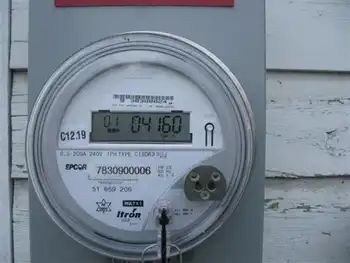
Through smart-metering technology, power distribution companies will be able to bill customers not only according to how much electricity they use but will be able to charge lower rates in off-peak times when the power costs less.
Unlike current meters, which only measure overall consumption, the new "interval" meters can record consumption by the hour and transmit that to the hydro distributor to match to wholesale prices that prevailed at the time. The idea is already being tested in Milton, west of Toronto, where a few residential customers have joined larger commercial users in adopting smart technology meters and a billing system that ties prices to fluctuating market costs. Nova Scotia Power and Edmonton's EpCorp. have also installed some interval meters to track time-of-day usage and are researching the idea, said Daniel Pouliot, vice-president of Nertec Design Inc., a Granby, Que., company that supplies the meters. It announced a marketing deal with Ozz Corp. of Concord, Ont., this week to step up marketing in Ontario.
If the idea takes hold, it could mean savings for those who do their laundry at 10 p.m. and curtail air-conditioning until bedtime and higher prices for those whose patterns don't adjust during heat-waves and other high-demand periods.
Tom Adams, executive director of Energy Probe, a clean-energy conservation group, thinks time-of-day hydro billing is the next logical step in the evolution of the industry which was recently deregulated.
Since May prices have been set by market forces and they are set every five minutes by the province's independent electricity market operator, which matches buy and sell orders. During the current heat wave, prices have swung from pennies to almost a dollar, during one brief period.
Some consumers have signed fixed price contracts, which guarantee a level prices for the period of the contract, gambling that they'll come out ahead if market prices average more than their contracted price.
But for most consumers, the prices for wholesale electricity are passed along by distribution companies, such as Hydro Ottawa, which also charge distribution and other costs.
Owen Mahaffy, Hydro Ottawa's marketing director, says he doubts the savings from billing customers different rates according to when they use electricity would be worth the higher cost for such devices, which may run well over $100 for a meter, or triple the cost of conventional ones.
While shifting use to off-peak hours has been practiced by major industrial users for a long time, for consumers simply reducing overall consumption through energy efficient appliances, better insulation and small changes in habits would probably pay off better in the long run, Mr. Mahaffy says.
Still, there's little doubt that consumers who buy power through their local distributor will feel the results of the latest heat wave in their pocketbook shortly, as wholesale prices are passed along.
Hydro Ottawa won't be able to estimate the impact of this week's heat wave for some time. But July's scorching Canada Day and a second hot spell at the end of the month made a dramatic difference in what a typical household, using 750 kilowatts of power per month, would have paid.
In May, the hydro part of the bill would have been $22.87 when the average was 3.05 cents per kilowatt hour. The total bill, including distribution and other charges would have been $57.40, before taxes.
But hotter weather in July, would have increased monthly wholesale electricity costs to $43.20 and the total bill to $73.73 for the same amount of electricity use. (The comparison period provided by Hydro Ottawa was June 28 through July 28).
Because Hydro Ottawa billings are for two-month periods, hot spells may be tempered by cool spells. In any case, Mr. Mahaffy says he's confident the average for the year will be in line with a 3.8 cents-per-hour forecast provided by the independent electricity market operator, which supplies wholesale electricity to companies like Hydro Ottawa.
Source: Ottawa Citizen
Related News

Substation Maintenance Training
Substation Maintenance Training delivers live online instruction on testing switchgear, circuit breakers, transformers, protective relays,…
View more

Energy groups warn Trump and Perry are rushing major change to electricity pricing
DOE Grid Resilience Pricing Rule faces FERC review as energy groups challenge an expedited timeline…
View more
State-sponsored actors 'very likely' looking to attack electricity supply, says intelligence agency
Canada Critical Infrastructure Cyber Risks include state-sponsored actors probing the electricity grid and ICS/OT, ransomware…
View more

Transmission constraints impede incremental Quebec-to-US power deliveries
Hydro-Québec Northeast Clean Energy Transmission delivers surplus hydropower via HVDC interconnections to New York and…
View more
Electricity prices spike in Alberta
Alberta electricity price spike drives 25% CPI surge amid heatwave demand, coal-to-gas conversions, hydro shortfalls,…
View more
Annual U.S. coal-fired electricity generation will increase for the first time since 2014
U.S. coal-fired generation 2021 rose as higher natural gas prices, stable coal costs, and a…
View more
Sign Up for Electricity Forum’s Newsletter
Stay informed with our FREE Newsletter — get the latest news, breakthrough technologies, and expert insights, delivered straight to your inbox.
Electricity Today T&D Magazine Subscribe for FREE

Stay informed with the latest T&D policies and technologies.
- Timely insights from industry experts
- Practical solutions T&D engineers
- Free access to every issue

