Utility Proposes Second Minnesota Plant

By Saint Paul Pioneer Press


CSA Z463 Electrical Maintenance -

Our customized live online or in‑person group training can be delivered to your staff at your location.
  • Live Online
  • 6 hours Instructor-led
  • Group Training Available
Regular Price:
$249
Coupon Price:
$199
Reserve Your Seat Today
Call it Power City.

Great River Energy officials said the utility wants to build a $400 million natural gas plant in Rosemount along County Road 42 east of U.S. 52. It's the second major plant proposed for Rosemount.

Xcel Energy is proposing a 550-megawatt coal-fired plant a few miles away.

The Great River Energy plant would generate up to 600 megawatts of power. If both proposed plants are built, Rosemount would become the state's second-largest provider of electricity. The two proposed plants would generate enough power for more than one million homes, turning northeastern Rosemount into a kind of energy park.

Why Rosemount?

"It is just a prime spot for power plants," said Kandace Olsen, spokeswoman for Great River, which supplies power to rural cooperatives in Minnesota and Wisconsin. She and county officials said that for a city in the metro area, Rosemount has a great deal of open space, correct zoning and access to natural gas lines, rivers, highways and rail lines.

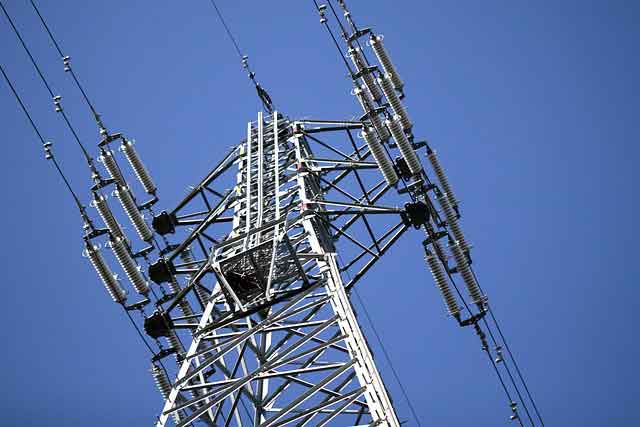
Olsen said a high-power line already crosses the 300-acre site and only slight modifications would be needed to tap into it.

But the completion of each power plant depends on legislative actions.

Great River officials have said they need certain tax exemptions, common for such plants, from the Legislature, according to Barry Schade, environmental management director for Dakota County.

Xcel's coal-fired plant would be built to make up for power lost if the Legislature forces the Prairie Island nuclear plant to close early.

Prairie Island is running out of space for its spent fuel rods, and if the Legislature doesn't allow for more expansion of storage capacity, the plant will have to be shut down in 2007. This week, Xcel and the Prairie Island Tribal Council reached a tentative deal to gain more storage capacity at the plant, but many hurdles remain.

The new plant would make up some of the difference if a deal can't be reached.

Mary Sandok, spokeswoman for Xcel, said that if the Legislature allows the expansion and permits the plan to operate for its licensed lifetime -- until 2013 and 2014 for the two reactors -- then the new coal-fired plant will be canceled.

Xcel Energy accepted a bid from LS Power Development of New Brunswick, N.J., to build the plant. It isn't known exactly where the plant would be built, but officials have said they are seeking a 200-acre site southeast of the Flint Hills refinery.

Rosemount Mayor Bill Droste was bullish on the plants. "We need power with growth south of the river," he said.

Together, Rosemount's proposed plants would produce more power than the 1,060-megawatt Prairie Island plant. In Minnesota, only the 2,450-megawatt Sherco Plant in Becker would be bigger than the Rosemount plants combined.

Droste said that, in addition to a several-year surge in construction employment, the Xcel plant would add 100 jobs in Rosemount, and the Great River plant, about 30.

Droste said that the location was appropriate. "It's already in an industrial area," he said. It was on slightly depressed ground, making the plants less visible from distances, Droste said.

The mayor only had one worry -- the possibility of additional, long trains in the area, carrying coal for the Xcel plant.

Bob Brooks, a vice president of LS Power Development, wouldn't give specifics about its plans for the plant. He said LS built and operated a power plant in Cottage Grove in 1997 and later sold it.

That's one of the roughly seven plants LS has developed and operated in the country.

Great River's plant would be its first in the Twin Cities area, but Olsen said the company provides power to 60 percent of Minnesota, geographically speaking.

Related News

Group to create Canadian cyber standards for electricity sector IoT devices

Canadian Industrial IoT Cybersecurity Standards aim to unify device security for utilities, smart grids, SCADA, and OT systems, aligning with NERC CIP, enabling certification, trust marks, compliance testing, and safer energy sector deployments.


Key Points

National standards to secure industrial IoT for utilities and grids, enabling certification and NERC CIP alignment.

✅ Aligns with NERC CIP and NIST frameworks for energy sector security

✅ Defines certification, testing tools, and a trusted device repository

✅ Enhances OT, SCADA, and smart grid resilience against cyber threats


The Canadian energy sector has been buying Internet-connected sensors for monitoring a range of activities in generating plants, distribution networks facing harsh weather risks and home smart meters for several years. However, so far industrial IoT device makers have been creating their own security standards for devices, leaving energy producers and utilities at their mercy.

The industry hopes to change that by creating national cybersecurity standards for industrial IoT devices, with the goal of improving its ability to predict, prevent, respond to and recover from cyber threats, such as emerging ransomware attacks across the grid.

To help, the federal government today announced an $818,000 grant support a CIO Strategy Council project oversee the setting of standards.

In an interview council executive director Keith Jansa said the money will help a three-year effort that will include holding a set of cross-country meetings with industry, government, academics and interest groups to create the standards, tools to be able to test devices against the standards and the development of product repository of IoT safe devices companies can consult before making purchases.

“The challenge is there are a number of these devices that will be coming online over the next few years,” Jansa said. “IoT devices are designed for convenience and not for security, so how do you ensure that a technology an electricity utility secures is in fact safeguarded against cyber threats? Currently, there is no associated trust mark or certification that gives confidence associated with these devices.”

He also said the council will work with the North American Electric Reliability Corporation (NERC), which sets North American-wide utility safety procedural standards and informs efforts on protecting the power grid across jurisdictions. The industrial IoT standards will be product standards.

According to Robert Wong, vice-president and CIO of Toronto Hydro, all the big provincial utilities are subject to adhering to NERC CIP standards which have requirements for both cyber and physical security. Ontario is different from most provinces in that it has local distribution companies — like Toronto Hydro — which buy electricity in bulk and resell it to customers.  These LDCs don’t own or operate critical infrastructure and therefore don’t have to follow the NERC CIP standards.

Regional reforms, such as regulatory changes in Atlantic Canada, aim to bring greener power options to the grid.

Electricity is considered around the world as one of a country’s critical national infrastructure. Threats to the grid can be used for ransom or by a country for political pressure. Ukraine had its power network knocked offline in 2015 and 2016 by what were believed to be Russian-linked attackers operating against utilities.

All the big provincial utilities operate “critical infrastructure” and are subject to adhering to NERC CIP (critical infrastructure protection) standards, which have requirements for both cyber and physical security, as similar compromises at U.S. electric utilities have highlighted recently.  There are audited on a regular basis for compliance and can face hefty fines if they fail to meet the requirements.  The LDCs in Ontario don’t own or operate “critical infrastructure” and therefore are not required to adopt NERC CIP standards (at least for now).

The CIO Strategy Council is a forum for chief information officers that is helping set standards in a number of areas. In January it announced a partnership with the Internet Society’s Canada Chapter to create standards of practice for IoT security for consumer devices. As part of the federal government’s updated national cybersecurity strategy it is also developing a national cybersecurity standard for small and medium-sized businesses. That strategy would allow SMBs to advertise to customers that they meet minimum security requirements.

“The security of Canadians and our critical infrastructure is paramount,” federal minister of natural resources Seamus O’Regan said in a statement with today’s announcement. “Cyber attacks are becoming more common and dangerous. That’s why we are supporting this innovative project to protect the Canadian electricity sector.”

The announcement was welcomed by Robert Wong, Toronto Hydro’s vice-president and CIO. “Any additional investment towards strengthening the safeguards against cyberattacks to Canada’s critical infrastructure is definitely good news.  From the perspective of the electricity sector, the convergence of IT and OT (operational technology) has been happening for some time now as the traditional electricity grid has been transforming into a Smart Grid with the introduction of smart meters, SCADA systems, electronic sensors and monitors, smart relays, intelligent automated switching capabilities, distributed energy resources, and storage technologies (batteries, flywheels, compressed air, etc.).

“In my experience, many OT device and system manufacturers and vendors are still lagging the traditional IT vendors in incorporating Security by Design philosophies and effective security features into their products.  This, in turn, creates greater risks and challenges for utilities to protecting their critical infrastructures and ensuring a reliable supply of electricity to its customers.”

The Ontario Energy Board, which regulates the industry in the province, has led an initiative for all utilities to adopt the National Institute of Standards and Technology (NIST) Cybersecurity Framework, along with the ES-C2M2 maturity and Privacy By Design models, he noted.  Toronto Hydro has been managing its cybersecurity practice in adherence to these standards, as the city addresses growing electricity needs as well, he said.

“Other jurisdictions, such as Israel, have invested heavily on a national level in developing its cybersecurity capabilities and are seen as global leaders.  I am confident that given the availability of talent, capabilities and resources in Canada (especially around the GTA) if we get strong support and leadership at a federal level we can also emerge as a leader in this area as well.”


Related News

View more

Clean-energy generation powers economy, environment

Atlin Hydro and Transmission Project delivers First Nation-led clean energy via hydropower to the Yukon grid, replacing diesel, cutting emissions, and creating jobs, with a 69-kV line from Atlin, B.C., supplying about 35 GWh annually.


Key Points

A First Nation-led 8.5 MW hydropower and 69-kV line supplying clean energy to the Yukon, reducing diesel use.

✅ 8.5 MW capacity; ~35 GWh annually to Yukon grid

✅ 69-kV, 92 km line links Atlin to Jakes Corner

✅ Creates 176 construction jobs; cuts diesel and emissions


A First Nation-led clean-power generation project for British Columbia’s Northwest will provide a significant economic boost and good jobs for people in the area, as well as ongoing revenue from clean energy sold to the Yukon.

“This clean-energy project has the potential to be a win-win: creating opportunities for people, revenue for the community and cleaner air for everyone across the Northwest,” said Premier John Horgan. “That’s why our government is proud to be working in partnership with the Taku River Tlingit First Nation and other levels of government to make this promising project a reality. Together, we can build a stronger, cleaner future by producing more clean hydropower to replace fossil fuels – just as they have done here in Atlin.”

The Province is contributing $20 million toward a hydroelectric generation and transmission project being developed by the Taku River Tlingit First Nation (TRTFN) to replace diesel electricity generation in the Yukon, which is also supported by the Government of Yukon and the Government of Canada, and comes as BC Hydro demand fell during COVID-19 across the province.

“Renewable-energy projects are helping remote communities reduce the use of diesel for electricity generation, which reduces air pollution, improves environmental outcomes and creates local jobs,” said Bruce Ralston, Minister of Energy, Mines and Low Carbon Innovation. “This project will advance reconciliation with TRTFN, foster economic development in Atlin and support intergovernmental efforts to reduce greenhouse gas emissions.”

TRTFN is based in Atlin with territory in B.C., the Yukon, and Alaska. TRTFN is an active participant in clean-energy development and, since 2009, has successfully replaced diesel-generated electricity in Atlin with a 2.1-megawatt (MW) hydro facility amid oversight issues such as BC Hydro misled regulator elsewhere in the province today.

TRTFN owns the Tlingit Homeland Energy Limited Partnership (THELP), which promotes economic development through clean energy. THELP plans to expand its hydro portfolio by constructing the Atlin Hydro and Transmission Project and selling electricity to the Yukon via a new transmission line, in a landscape shaped by T&D rates decisions in jurisdictions like Ontario for cost recovery.

The Government of Yukon is requiring its Yukon Energy Corporation (YEC) to generate 97% of its electricity from renewable resources by 2030. This project provides an opportunity for the Yukon government to reduce reliance on diesel generators and to meet future load growth, at a time when Manitoba Hydro's debt pressures highlight utility cost challenges.

The new transmission line between Atlin and the Yukon grid will include a fibre-optic data cable to support facility operations, with surplus capacity that can be used to bring high-speed internet connectivity to Atlin residents for the first time.

“Opportunities like this hydroelectricity project led by the Taku River Tlingit First Nation is a great example of identifying and then supporting First Nations-led clean-energy opportunities that will support resilient communities and provide clean economic opportunities in the region for years to come. We all have a responsibility to invest in projects that benefit our shared climate goals while advancing economic reconciliation.” said George Heyman, Minister of Environment and Climate Change Strategy.

“Thank you to the Government of British Columbia for investing in this important project, which will further strengthen the connection between the Yukon and Atlin. This ambitious initiative will expand renewable energy capacity in the North in partnership with the Taku River Tlingit First Nation while reducing the Yukon’s emissions and ensuring energy remains affordable for Yukoners.“ said Sandy Silver, Premier of Yukon.

“The Atlin Hydro Project represents an important step toward meeting the Yukon’s growing electricity needs and the renewable energy targets in the Our Clean Future strategy. Our government is proud to contribute to the development of this project and we thank the Government of British Columbia and all partners for their contributions and commitment to renewable energy initiatives. This project demonstrates what can be accomplished when communities, First Nations and federal, provincial and territorial governments come together to plan for a greener economy and future.” said John Streicker, Minister Responsible for the Yukon Development Corporation. 

“Atlin has enjoyed clean and renewable energy since 2009 because of our hydroelectric project. Over its lifespan, Atlin’s hydro opportunity will prevent more than one million tonnes of greenhouse gases from being created to power the southern Yukon. We are looking forward to the continuation of this project. Our collective dream is to meet our environmental and economic goals for the region and our local community within the next 10 years. We are so grateful to all our partners involved for their financial support, as we continue onward in creating an energy efficient and sustainable North.” said Charmaine Thom, Taku River Tlingit First Nation spokesperson.

Quick Facts:

  • The 8.5-MW project is expected to provide an average of 35 gigawatt hours of energy annually to the Yukon. To accomplish this, TRTFN plans to leverage the existing water storage capability of Surprise Lake, add new infrastructure, and send power 92 km north to Jakes Corner, Yukon, along a new 69-kilovolt transmission line.
  • The project is expected to cost $253 - 308.5 million, the higher number reflecting recently estimated impacts of inflation and supply chain cost escalation, alongside sector accounting concerns such as deferred BC Hydro costs noted in recent reports.
  • The project is expected to have a positive impact on local and provincial economic development in the form of, even as governance debates like Manitoba Hydro board changes draw attention elsewhere:
  • 176 full-time positions during construction;
  • six to eight full-time positions in operations and maintenance over 40 years; and
  • increased business for B.C. contractors.
  • Territorial and federal funders have committed $151.1 million to support the project, most recently the $32.2 million committed in the 2022 federal bdget.


Related News

View more

Electricity use actually increased during 2018 Earth Hour, BC Hydro

Earth Hour BC highlights BC Hydro data on electricity use, energy savings, and participation in the Lower Mainland and Vancouver Island amid climate change and hydroelectric power dynamics.


Key Points

BC observance tracking BC Hydro electricity use and conservation during Earth Hour, amid hydroelectric power dominance.

✅ BC Hydro reports rising electricity use during Earth Hour 2018

✅ Savings fell from 2% in 2008 to near zero province-wide

✅ Hydroelectric grid yields low GHG emissions in BC


For the first time since it began tracking electricity use in the province during Earth Hour, BC Hydro said customers used more power during the 60-minute period when lights are expected to dim, mirroring all-time high electricity demand seen recently.

The World Wildlife Fund launched Earth Hour in Sydney, Australia in 2007. Residents and businesses there turned off lights and non-essential power as a symbol to mark the importance of combating climate change.

The event was adopted in B.C. the next year and, as part of that, BC Hydro began tracking the megawatt hours saved.

#google#

In 2008, residents and businesses achieved a two per cent savings in electricity use. But since then, BC Hydro says the savings have plummeted.

The event was adopted in B.C. the next year and, as part of that, BC Hydro began tracking the megawatt hours saved.

In 2008, residents and businesses achieved a two per cent savings in electricity use. But since then, BC Hydro says the savings have plummeted, as record-breaking demand in 2021 and beyond changed consumption patterns.


Lights on

For Earth Hour this year, which took place 8:30-9:30 p.m. on March 24, BC Hydro says electricity use in the Lower Mainland increased by 0.5 per cent, even as it activated a winter payment plan to help customers manage bills. On Vancouver Island it increased 0.6 per cent.

In the province's southern Interior and northern Interior, power use remained the same during the event.

On Friday, the utility released a report called: "lights out". Why Earth Hour is dimming in BC. which explores the decline of energy savings related to Earth Hour in the province.

The WWF says the way in which hydro companies track electricity savings during Earth Hour is not an accurate measure of participation, and tracking of emerging loads like crypto mining electricity use remains opaque, and noted that more countries than ever are turning off lights for the event.

For 2018, the WWF shifted the focus of Earth Hour to the loss of wildlife across the globe.

BC Hydro says in its report that the symbolism of Earth Hour is still important to British Columbians, but almost all power generation in B.C. is hydroelectric, though recent drought conditions have required operational adjustments, and only accounts for one per cent of greenhouse gas emissions.


Related News

View more

U.S. Launches $250 Million Program To Strengthen Energy Security For Rural Communities

DOE RMUC Cybersecurity Program supports rural, municipal, and small investor-owned utilities with grants, technical assistance, grid resilience, incident response, workforce training, and threat intelligence sharing to harden energy systems and protect critical infrastructure.


Key Points

A $250M DOE program providing grants to boost rural and municipal utilities' cybersecurity and incident response.

✅ Grants and technical assistance for grid security

✅ Enhances incident response and threat intel sharing

✅ Builds cybersecurity workforce in rural utilities


The U.S. Department of Energy (DOE) today issued a Request for Information (RFI) seeking public input on a new $250 million program to strengthen the cybersecurity posture of rural, municipal, and small investor-owned electric utilities.

Funded by President Biden’s Bipartisan Infrastructure Law and broader clean energy funding initiatives, the Rural and Municipal Utility Advanced Cybersecurity Grant and Technical Assistance (RMUC) Program will help eligible utilities harden energy systems, processes, and assets; improve incident response capabilities; and increase cybersecurity skills in the utility workforce. Providing secure, reliable power to all Americans, with a focus on equity in electricity regulation across communities, will be a key focus on the pathway to achieving President Biden’s goal of a net-zero carbon economy by 2050. 

“Rural and municipal utilities provide power for a large portion of low- and moderate-income families across the nation and play a critical role in ensuring the economic security of our nation’s energy supply,” said U.S. Secretary of Energy Jennifer M. Granholm. “This new program reflects the Biden Administration's commitment to improving energy reliability and connecting our nation’s rural communities to resilient energy infrastructure and the transformative benefits that come with it.” 

Nearly one in six Americans live in a remote or rural community. Utilities in these communities face considerable obstacles, including difficulty recruiting top cybersecurity talent, inadequate infrastructure, as the aging U.S. power grid struggles to support new technologies, and lack of financial resources needed to modernize and harden their systems. 

The RMUC Program will provide financial and technical assistance to help rural, municipal, and small investor-owned electric utilities improve operational capabilities, increase access to cybersecurity services, deploy advanced cyber security technologies, and increase participation of eligible entities in cybersecurity threat information sharing programs and coordination with federal partners initiatives. Priority will be given to eligible utilities that have limited cybersecurity resources, are critical to the reliability of the bulk power system, or those that support our national defense infrastructure. 

The Office of Cybersecurity, Energy Security, and Emergency Response (CESER), which advances U.S. energy security objectives, will manage the RMUC Program, providing $250 million dollars in BIL funding over five years. To help inform Program implementation, DOE is seeking input from the cybersecurity community, including eligible utilities and representatives of third parties and organizations that support or interact with these utilities. The RFI seeks input on ways to improve cybersecurity incident preparedness, response, and threat information sharing; cybersecurity workforce challenges; risks associated with technologies deployed on the electric grid; national-scale initiatives to accelerate cybersecurity improvements in these utilities; opportunities to strengthen partnerships and energy security support efforts; the selection criteria and application process for funding awards; and more. 


Related News

View more

When will the US get 1 GW of offshore wind on the grid?

U.S. Offshore Wind Capacity is set to exceed 1 GW by 2024, driven by BOEM approvals, federal leases, and resilient supply chains, with eastern states scaling renewable energy, turbines, and content despite COVID-19 disruptions.


Key Points

Projected gigawatt-scale offshore wind growth enabled by BOEM approvals, federal leases, and East Coast state demand.

✅ 17+ GW leased; only 1,870 MW in announced first phases.

✅ BOEM approvals are critical to reach >1 GW by 2024.

✅ Local supply chains mitigate COVID-19 impacts and lower costs.


Offshore wind in the U.S. will exceed 1 GW of capacity by 2024 and add more than 1 GW annually by 2027, a trajectory consistent with U.S. offshore wind power trends, according to a report released last week by Navigant Research.

The report calculated over 17 GW of offshore state and federal leases for wind production, reflecting forecasts that $1 trillion offshore wind market growth is possible. However, the owners of those leases have only announced first phase plans for 1,870 MW of capacity, leaving much of the projects in early stages with significant room to grow, according to senior research analyst Jesse Broehl.

The Business Network for Offshore Wind (BNOW) believes it is possible to hit 1 GW by 2023-24, according to CEO Liz Burdock. While the economy has taken a hit from the coronavirus pandemic, she said the offshore wind industry can continue growing as "the supply chain from Asia and Europe regains speed this summer, and the administration starts clearing" plans of construction.

BNOW is concerned with the economic hardship imposed on secondary and tertiary U.S. suppliers due to the global spread of COVID-19.

Offshore wind has been touted by many eastern states and governors as an opportunity to create jobs, with U.S. wind employment expected to expand, according to industry forecasts. Analysts see the growing momentum of projects as a way to further lower costs by creating a local supply chain, which could be jeopardized by a long-term shutdown and recession.

"The federal government must act now — today, not in December — and approve project construction and operation plans," a recent BNOW report said. Approving any of the seven projects before BOEM, which has recently received new lease requests, currently would allow small businesses to get to work "following the containment of the coronavirus," but approval of the projects next year "may be too late to keep them solvent."

The prospects for maintaining momentum in the industry falls largely to the Department of the Interior's Bureau of Ocean Energy Management (BOEM). The industry cannot hit the 1 GW milestone without project approvals by BOEM, which is revising processes to analyze federal permit applications in the context of "greater build out of offshore wind capacity," according to its website.

"It is heavily dependent on the project approval success," Burdock told Utility Dive.

Currently, seven projects are awaiting determinations from BOEM on their construction operation plans in Massachusetts, New York, where a major offshore wind farm was recently approved, New Jersey and Maryland, with more to be added soon, a BNOW spokesperson told Utility Dive.

To date, only one project has received BOEM approval for development in federal waters, a 12 MW pilot by Dominion Energy and Ørsted in Virginia. The two-turbine project is a stepping stone to a commercial-scale 2.6 GW project the companies say could begin installation as soon as 2024, and gave the developers experience with the permitting process.

In the U.S., developers have the capacity to develop 16.9 GW of offshore wind in federal U.S. lease areas, even as wind power's share of the electricity mix surges nationwide, Broehl told Utility Dive, but much of that is in early stages. The Navigant report did not address any impacts of coronavirus on offshore wind, he said.

Although Massachusetts has legislation in place to require utilities to purchase 1.6 GW of wind power by 2026, and several other projects are in early development stages, Navigant expects the first large offshore wind projects in the U.S. (exceeding 200 MW) will come online in 2022 or later, and the first projects with 400 MW or more capacity are likely to be built by 2024-2025, and lessons from the U.K.'s experience could help accelerate timelines. The U.S. would add about 1.2 GW in 2027, Broehl said.

The federal leasing activities along with the involvement from Eastern states and utilities "virtually guarantees that a large offshore wind market is going to take off in the U.S.," Broehl said.


Related News

View more

Washington County planning officials develop proposed recommendations for solar farms

Washington County solar farm incentives aim to steer projects to industrial sites with tax breaks, underground grid connections, decommissioning bonds, and wildlife corridors, balancing zoning, historic preservation, and Maryland renewable energy mandates.


Key Points

Policies steer solar to industrial sites with tax breaks, buried lines, and bonds, aligning with zoning and state goals.

✅ Tax breaks to favor rooftops and parking canopies

✅ Bury new grid lines to shift projects to industrial parks

✅ Require decommissioning bonds and wildlife corridors


Incentives for establishing solar farms at industrial spaces instead of on prime farmland are among the ideas the Washington County Planning Commission is recommending for the county to update its policies regarding solar farms.

Potential incentives would include tax breaks on solar equipment and requiring developers to put power-grid connections and line extensions underground, a move tied to grid upgrade cost debates in other regions, Planning Commission members said during a Monday meeting.

The tax break could make it more attractive for a developer to put a solar farm on a roof or over a parking lot, similar to California's building-solar requirement policies that favor rooftop generation, which could cost more than putting it on farmland, said Commission member Dave Kline, who works for FirstEnergy.

Requiring a company to bury new transmission lines could steer them to industrial or business parks where, theoretically, transmission lines are more readily available, Kline said Wednesday in a phone interview.

Chairman Clint Wiley suggested talking to industrial property owners to create a list of industrial sites that make sense for a solar site, which could generate extra income for the property owner.

Commission members also talked about requiring a wildlife corridor. Anne Arundel County requires such a corridor if a solar site is over 15 acres, according to Jill Baker, deputy director of planning and zoning. The solar site is broken into sections so animals such as deer can get through, she said.

However, that means the solar farm would take up more agricultural land, Commission member Jeremiah Weddle said. Weddle, a farmer, has repeatedly voiced concerns about solar farms using prime farmland.

County zoning law already states solar farms are prohibited in Rural Legacy Areas, Priority Preservation Areas, and within Antietam Overlay zones that preserve the Antietam National Battlefield viewshed. They also cannot be built on land with permanent preservation easements, Baker said.

However, a big reason county officials are looking to strengthen county policies for solar generating systems, or solar farms, is a recent court decision that ruled the Maryland Public Service Commission can preempt county zoning law when it comes to large solar farms.

County zoning law defines a solar energy generating system as a solar facility, with multiple solar arrays, tied into the power grid and whose primary purpose is to generate power to distribute and/or sell into the public utility grid rather than consuming that power on site.

The Maryland Court of Appeals ruled in July that the Public Service Commission can preempt local zoning regarding solar farms larger than 2 megawatts. But the ruling also stated local government is a "significant participant in the process" and the state commission must give "due consideration" to local zoning laws.

County officials are looking at recommendations for solar farms, whether they are over 2 megawatts or not.

Solar farms are a popular issue statewide, especially with Maryland solar subscriptions expanding, and were discussed at a recent Maryland Association of Counties meeting for planners, Planning and Zoning Director Stephen Goodrich said.

The thinking is the best way for counties to express their opinions about a solar project is to participate in the state commission's local public hearings, where issues like how solar owners are paid often arise, Goodrich said. Another popular idea is for the county to continue to follow its process, which requires a public hearing for a special exception to establish a solar farm. That will help the county form an opinion, on individual cases, to offer the state commission, he said.

Recommendations discussed by the Planning Commission include:

A break on personal property taxes, which is on equipment, including affordable battery storage that can firm output, to steer developers away from areas where the county doesn't want solar farms. The Board of County Commissioners have been split on tax-break agreements for solar farms, with a majority recently granting a few.


Protecting valuable historic sites.

Requiring a decommissioning bond for removing the equipment at the end of the solar farm's life. The bond is protection in case the company goes bankrupt. The county commissioners have been making such a bond a requirement when granting recent tax breaks.

Looking at allowing solar farms in stormwater-management areas.

Other counties, particularly in Western Maryland and on the Eastern Shore, are having issues with solar farms even as research to improve solar and wind advances, because land is cheaper and there are wide-open spaces, Goodrich said.

Many solar projects are being developed or proposed because state lawmakers passed legislation requiring 50% of electricity produced in the state to come from renewable sources by 2030, and a federal plan to expand solar is also shaping expectations. Of that 50%, 14.5% is to come from solar energy.

In Maryland, the average number of homes that can be powered by 1 megawatt of solar energy is about 110, according to the Solar Energy Industries Association's website.


Related News

View more

Sign Up for Electricity Forum’s Newsletter

Stay informed with our FREE Newsletter — get the latest news, breakthrough technologies, and expert insights, delivered straight to your inbox.

Electricity Today T&D Magazine Subscribe for FREE

Stay informed with the latest T&D policies and technologies.
  • Timely insights from industry experts
  • Practical solutions T&D engineers
  • Free access to every issue

Download the 2025 Electrical Training Catalog

Explore 50+ live, expert-led electrical training courses –

  • Interactive
  • Flexible
  • CEU-cerified