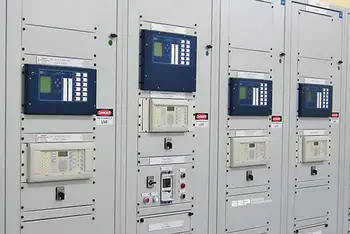
Protective Relay Training - Basic
Our customized live online or in‑person group training can be delivered to your staff at your location.
- Live Online
- 12 hours Instructor-led
- Group Training Available
Regular Price:
$699
Coupon Price:
$599
At first, no one in the brick apartment buildings on 51st Street in Woodside, Queens, complained about the giant white trailer that appeared at the curb.
About the size of a cargo container, the trailer, which houses an 800-kilowatt generator, and a service truck gobbled up about seven parking spaces, on a street where spaces are as prized as truffles.
“Five days I have no air-conditioner, no elevator,” said Consuelo Boza, one of the generator’s champions, as she and her houseguests from Spain navigated a narrow passage to a car that was double-parked on the street. “But they put this here and I have everything.”
But there was also no parking, Ms. Boza was told.
“Yeah, but I don’t care,” she said.
Across parts of western Queens, noisy, diesel-fuel-guzzling generators have become a common sight, continuing to supply power to thousands of Consolidated Edison customers.
Although the blackout officially ended last week, the utility company is still using 19 generators at some sites in Long Island City, Sunnyside, Woodside and Astoria where it is still repairing damaged feeder cables. It is using another 19 generators to supply power to densely populated buildings in an effort to reduce the pressure on an already overtaxed grid, according to Alfonso Quiroz, a spokesman for the utility.
And some private businesses, wary of new electric failures as temperatures soar, have opted to power their buildings with their own generators.
One result is a cross between urban crisis and open-air movie set, as yellow police tape cordons off swaths of curbs and the generator technicians sit back as if in director’s chairs, taking in the scenery. The industrial street furniture is simply part of post-blackout life in Queens, and most residents of 51st Street — like Ms. Boza, now able to enjoy electricity — have taken it in stride.
But when one of the technicians for the company supplying the generators, H. O. Penn, asked a resident what kind of Christmas ornaments would be appropriate for a generator, there was an outcry that quickly spread. (The technician, who would not give his name, said it was only a joke.)
It turned out that the generators, as wonderful as they were for supplying power, were a bit like houseguests — not very welcome over the long haul.
Part of the problem, residents say, has been the days of breathing diesel fumes.
Rosemarie McHugh, a retiree, said the fumes from the diesel fuel were rising up to her fifth-floor windows and left her feeling sick.
“I just don’t understand why Con Ed doesn’t have this resolved by now,” she said as she folded laundry.
Eric Kessel, 34, a packaging designer who lives in the same building, said he and his wife could see the fumes rising near their fourth-floor apartment. “When I wake up in the morning, it stinks,” he said. “It just hangs there.”
Mr. Quiroz said the fuel the utility was using had a low sulfur content, 0.05 percent. The sulfur content determines how dirty the emissions will be. And it is no small amount of fuel that the generators burn. An 800-kilowatt generator like the one on 51st Street can hold 550 gallons of fuel, and needs to be refilled every 10 hours, said Chris Olert, another Con Edison spokesman.
The generators are not cheap. For small generators, 200-kilowatt and 400-kilowatt machines, the utility pays about $2,300 to $4,500 a week in rental fees, Mr. Quiroz said. He did not know how much the utility paid to rent the larger machines. Diesel fuel can run into thousands of dollars per generator each 24 hours.
For keeping customers supplied with power, however, the generators have been worth the expense, though it is not one that the company might be finished with soon.
“I don’t think we have a clear sense of how long the generators are going to be there,” Mr. Quiroz said.
Related News

Europe's stunted hydro & nuclear output may hobble recovery drive
Europe 2023 Energy Shortfall underscores how weak hydro and nuclear offset record solar and wind,…
View more

Potent greenhouse gas declines in the US, confirming success of control efforts
US SF6 Emissions Decline as NOAA analysis and EPA mitigation show progress, with atmospheric measurements…
View more

Doug Ford ‘proud’ of decision to tear up hundreds of green energy contracts
Ontario Renewable Energy Cancellations highlight Doug Ford's move to scrap wind turbine contracts, citing electricity…
View more
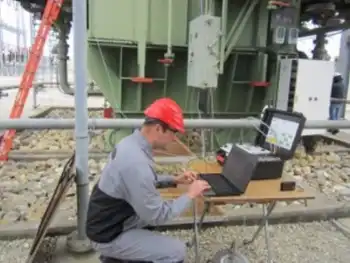
Substation Maintenance Training
Substation Maintenance Training delivers live online instruction on testing switchgear, circuit breakers, transformers, protective relays,…
View more

Ontario faces growing electricity supply gap, study finds
Ontario Electricity Capacity Gap threatens reliability as IESO forecasts shortfalls from the Pickering shutdown and…
View more
Manitoba Hydro scales back rate increase next year
Manitoba Hydro 3.5 Percent Rate Increase proposes a smaller electricity rate hike under Public Utilities…
View more
Sign Up for Electricity Forum’s Newsletter
Stay informed with our FREE Newsletter — get the latest news, breakthrough technologies, and expert insights, delivered straight to your inbox.
Electricity Today T&D Magazine Subscribe for FREE

Stay informed with the latest T&D policies and technologies.
- Timely insights from industry experts
- Practical solutions T&D engineers
- Free access to every issue

