NB Power Seeks Approval For New US Line

By Reuters


Electrical Testing & Commissioning of Power Systems

Our customized live online or in‑person group training can be delivered to your staff at your location.
  • Live Online
  • 12 hours Instructor-led
  • Group Training Available
Regular Price:
$599
Coupon Price:
$499
Reserve Your Seat Today
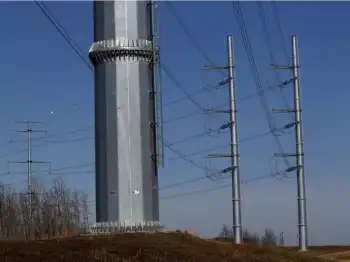
NB Power, the main energy company in New Brunswick, is seeking regulatory approvals to build a new 90-kilometer power cable to carry up to 1,000 megawatts of electricity between the province and the state of Maine.

NB Power hopes to complete the CAN$75 million line in 2005 or 2006.

"New Brunswick is a winter peaking system and New England is a summer peaking system. We have a tremendous opportunity to export power during the summer months," said Jeffrey Carleton of NB Power.

He explained that the company has more than 2,000 megawatts of generating assets in the southern part of the province that could produce power for export, including the 1,000 MW Coleson Cove plant, 265 MW of natural gas plants, the 600 MW Point Lepreau nuclear station and some 600 MW of hydropower.

On the US side, NB Power is talking with Bangor Hydro, a subsidiary of Nova Scotia's Emera Inc., and other parties to find a connection point for the cable in Maine.

Carleton said the new line will help strengthen the reliability of New Brunswick's grid by allowing the province to import, as well as export, power. Current lines out of the province are mostly full carrying exports to New England.

The line will also allow other energy firms to sell power into the province, enhancing local competition.

In other news, NB Power said it is still searching for equity partners for Coleson Cove project and it has just opened the search for partners for Point Lepreau.

Related News
Cheap at Last, Batteries Are Making a Solar Dream Come True

Solar Plus Storage is accelerating across utilities and microgrids, pairing rooftop solar with lithium-ion batteries to enhance grid resilience, reduce peak costs, prevent blackouts, and leverage tax credits amid falling prices and decarbonization goals.


Key Points

Solar Plus Storage combines solar generation with batteries to shift load, boost reliability, and cut energy costs.

✅ Cuts peak demand charges and enhances blackout resilience

✅ Falling battery and solar costs drive nationwide utility adoption

✅ Enables microgrids and grid services like frequency regulation


Todd Karin was prepared when California’s largest utility shut off power to millions of people to avoid the risk of wildfires last month. He’s got rooftop solar panels connected to a single Tesla Powerwall in his rural home near Fairfield, California. “We had backup power the whole time,” Karin says. “We ran the fridge and watched movies.”

Californians worried about an insecure energy future are increasingly looking to this kind of solution. Karin, a 31-year-old postdoctoral fellow at Lawrence Berkeley National Laboratory, spent just under $4,000 for his battery by taking advantage of tax credits. He's also saving money by discharging the battery on weekday evenings, when energy is more expensive during peak demand periods. He expects to save around $1,500 over the 10 years the battery is under warranty.

The economics don’t yet work for every household, but the green-power combo of solar panels plus batteries is popping up on a much bigger scale in some unexpected places. Owners of a rice processing plant in Arkansas are building a system to generate 26 megawatts of solar power and store another 40 MW. The plant will cut its power bill by a third, and owners say they will pass the savings to local rice growers. New York’s JFK Airport is installing solar plus storage to reduce its power load by 10 percent, while Pittsburgh International Airport is building a 20-MW solar and natural gas microgrid to keep it independent from the local utility. Officials at both airports are worried about recent power shutdowns due to weather and overload-related blackouts.

And residents of the tiny northern Missouri town of Green City (pop. 608) are getting 2.5 MW of solar plus four hours of battery storage from the state’s public utility next year. The solar power won’t go directly to townspeople, but instead will back up the town’s substation, reducing the risk of a potential shutdown. It’s part of a $68 million project to improve the reliability of remote substations far from electric generating stations.

“It’s a pretty big deal for us,” says Chad Raley, who manages technology and renewables at Ameren, a Missouri utility that is building three rural solar-plus-storage projects to better manage the flow of electricity across the local grid. “It gives us so much flexibility with renewable generation. We can’t control the sun or clouds or wind, but we can have battery storage.”

The first solar-plus-storage installations started about a decade ago on a small scale in sunny states like California, Hawaii, and Arizona. Now they’re spreading across the country, driven by falling prices of both solar panels and lithium-ion batteries the size of a shipping container imported from both China and South Korea, with wind, solar, and batteries making up most of the utility-scale pipeline nationwide. These countries have ramped up production efficiencies and lowered labor costs, leaving many US manufacturers in the dust. In fact, the price of building a comparable solar-plus-storage generating facility is now cheaper than operating a coal-fired power plant, industry officials say. In certain circumstances, the cost is equal to some natural gas plants.

“This is not just a California, New York, Massachusetts thing,” says Kelly Speakes-Backman, CEO of the Energy Storage Association, an industry group in Washington. She says more than 30 states have renewable storage on the grid. Utilities have proposed and states have approved 7 gigawatts to be installed by 2030, and most new storage will be paired with solar across the US.

Speakes-Backman estimates the unit cost of electricity produced from a solar-plus-storage system will drop 10 to 15 percent each year through 2024, supporting record growth in solar and storage investments. “If you have the option of putting out a polluting or non-polluting generating source at the same price, what are you going to pick?” says Speakes-Backman.

She notes that PJM, a large Mid-Atlantic wholesale grid operator, announced it will deploy battery storage to help smooth out fluctuating power from two wind farms it operates. “When the grid fluctuates, storage can react to it quickly and can level out the supply,” she says. In the Midwest, grid-level battery storage is also being used to absorb extra wind power. Batteries hold onto the wind and put it back onto the grid when people need it.

While the solar-plus-storage trend isn’t yet putting a huge dent in our fossil fuel use, according to Paul Denholm, an energy analyst at the National Renewable Energy Laboratory in Golden, Colorado, it is a good beginning and has the side effect of cutting air pollution. By 2021, solar and other renewable energy sources will overtake coal as a source of energy, and the US is moving toward 30% electricity from wind and solar, according to a new report by the Institute for Energy Economics and Financial Analysis, a nonprofit think tank based in Cleveland.

That’s a glimmer of hope in a somewhat dreary week of news on carbon emissions. A new United Nations report released this week finds that the planet is on track to warm by 3.9 degrees Celsius (7 Fahrenheit) by 2100 unless drastic cuts are made by phasing out gas-powered cars, eliminating new coal-fired power plants, and changing how we grow and manage land, and scientists are working to improve solar and wind power to limit climate change as well.

Energy-related greenhouse gas emissions in the US rose 2.7 percent in 2018 after several years of decline. The Trump administration has rolled back climate policies from the Obama years, including withdrawing from the Paris climate accords.

There may be hope from green power initiatives outside the Beltway, though, and from federal proposals like a tenfold increase in US solar that could remake the electricity system. Arizona plans to boost solar-plus-storage from today’s 6 MW to a whopping 850 MW by 2025, more than the entire capacity of large-scale batteries in the US today. And some folks might be cheering the closing of the West’s biggest coal-fired power plant, the 2.25-gigawatt Navajo Generating Station, in Arizona, which had spewed soot and carbon dioxide over the region for 45 years until last week. The closure might help the planet and clear the hazy smog over the Grand Canyon.


Related News

View more

Consumer choice has suddenly revolutionized the electricity business in California. But utilities are striking back

California Community Choice Aggregators are reshaping electricity markets with renewable energy, solar and wind sourcing, competitive rates, and customer choice, challenging PG&E, SDG&E, and Southern California Edison while advancing California's clean power goals.


Key Points

Local governments that buy power, often cleaner and cheaper, while utilities handle delivery and billing.

✅ Offer higher renewable mix than utilities at competitive rates

✅ Utilities retain transmission and billing responsibilities

✅ Rapid expansion threatens IOU market share across California


Nearly 2 million electricity customers in California may not know it, but they’re part of a revolution. That many residents and businesses are getting their power not from traditional utilities, but via new government-affiliated entities known as community choice aggregators. The CCAs promise to deliver electricity more from renewable sources, such as solar and wind, even as California exports its energy policies across Western states, and for a lower price than the big utilities charge.

The customers may not be fully aware they’re served by a CCA because they’re still billed by their local utility. But with more than 1.8 million accounts now served by the new system and more being added every month, the changes in the state’s energy system already are massive.

Faced for the first time with real competition, the state’s big three utilities have suddenly become havens of innovation. They’re offering customers flexible options on the portion of their power coming from renewable energy, amid a broader review to revamp electricity rates aimed at cleaning the grid, and they’re on pace to increase the share of power they get from solar and wind power to the point where they are 10 years ahead of their deadline in meeting a state mandate.

#google#

But that may not stem the flight of customers. Some estimates project that by late this year, more than 3 million customers will be served by 20 CCAs, and that over a longer period, Pacific Gas & Electric, Southern California Edison, and San Diego Gas & Electric could lose 80% of their customers to the new providers.

Two big customer bases are currently in play: In Los Angeles and Ventura counties, a recently launched CCA called the Clean Power Alliance is hoping by the end of 2019 to serve nearly 1 million customers. Unincorporated portions of both counties and 29 municipalities have agreed in principle to join up.

Meanwhile, the city of San Diego is weighing two options to meet its goal of 100% clean power by 2035, as exit fees are being revised by the utilities commission: a plan to be submitted by SDG&E, or the creation of a CCA. A vote by the City Council is expected by the end of this year. A city CCA would cover 1.4 million San Diegans, accounting for half SDG&E’s customer demand, according to Cody Hooven, the city’s chief sustainability officer.

Don’t expect the big companies to give up their customers without a fight. Indeed, battle lines already are being drawn at the state Public Utilities Commission, where a recent CPUC ruling sided with a community energy program over SDG&E, and local communities.

“SDG&E is in an all-out campaign to prevent choice from happening, so that they maintain their monopoly,” says Nicole Capretz, who wrote San Diego’s climate action plan as a city employee and now serves as executive director of the Climate Action Campaign, which supports creation of the CCA.

California is one of seven states that have legalized the CCA concept, even as regulators weigh whether the state needs more power plants to ensure reliability. (The others are New York, New Jersey, Massachusetts, Ohio, Illinois and Rhode Island.) But the scale of its experiment is likely to be the largest in the country, because of the state’s size and the ambition of its clean-power goal, which is for 50% of its electricity to be generated from renewable sources by 2030.

California created its system via legislative action in 2002. Assembly Bill 117 enabled municipalities and regional governments to establish CCAs anywhere that municipal power agencies weren’t already operating. Electric customers in the CCA zones were automatically signed up, though they could opt out and stay with their existing power provider. The big utilities would retain responsibility for transmission and distribution lines.

The first CCA, Marin Clean Energy, began operating in 2010 and now serves 470,000 customers in Marin and three nearby counties.

The new entities were destined to come into conflict with the state’s three big investor-owned utilities. Their market share already has fallen to about 70%, from 78% as recently as 2010, and it seems destined to keep falling. In part that’s because the CCAs have so far held their promise: They’ve been delivering relatively clean power and charging less.

The high point of the utilities’ hostility to CCAs was the Proposition 16 campaign in 2009. The ballot measure was dubbed the “Taxpayers Right to Vote Act,” but was transparently an effort to smother CCAs in the cradle. PG&E drafted the measure, got it on the ballot, and contributed all of the $46.5 million spent in the unsuccessful campaign to pass it.

As recently as last year, PG&E and SDG&E were lobbying in the legislature for a bill that would place a moratorium on CCAs. The effort failed, and hasn’t been revived this year.

Rhetoric similar to that used by PG&E against Marin’s venture has surfaced in San Diego, where a local group dubbed “Clear the Air” is fighting the CCA concept by suggesting that it could be financially risky for local taxpayers and questioning whether it will be successful in providing cleaner electricity. Whether Clear the Air is truly independent of SDG&E’s parent, Sempra Energy, is questionable, as at least two of its co-chairs are veteran lobbyists for the company.

SDG&E spokeswoman Helen Gao says the utility supports “customers’ right to choose an energy provider that best meets their needs” and expects to maintain a “cooperative relationship” with any provider chosen by the city.


Related News

View more

Canada's Electricity Exports at Risk Amid Growing U.S.-Canada Trade Tensions

US-Canada Electricity Tariff Dispute intensifies as proposed tariffs spur Canadian threats to restrict hydroelectric exports, risking cross-border energy supply, grid reliability, higher electricity prices, and clean energy goals in the Northeast and Midwest.


Key Points

Trade clash over tariffs and hydroelectric exports that threatens power supply, prices, and grid reliability.

✅ Potential export curbs on Canadian hydro to US markets

✅ Risks: higher prices, strained grids, reduced clean energy

✅ Diplomacy urged to avoid retaliatory trade measures


In early February 2025, escalating trade tensions between the United States and Canada have raised concerns about the future of electricity exports from Canada to the U.S. The potential imposition of tariffs by the U.S. has prompted Canadian officials to consider retaliatory measures, including restricting electricity exports and pursuing high-level talks such as Ford's Washington meeting with federal counterparts.

Background of the Trade Dispute

In late November 2024, President-elect Donald Trump announced plans to impose a 25% tariff on all Canadian products, citing issues related to illegal immigration and drug trafficking. This proposal has been met with strong opposition from Canadian leaders, who view such tariffs as unjustified and detrimental to both economies, even as tariff threats boost support for Canadian energy projects among some stakeholders.

Canada's Response and Potential Retaliatory Measures

In response to the proposed tariffs, Canadian officials have discussed various countermeasures. Ontario Premier Doug Ford has threatened to cut electricity supplies to 1.5 million Americans and ban imports of U.S.-made beer and liquor. Other provinces, such as Quebec and Alberta, are also considering similar actions, though experts advise against cutting Quebec's energy exports due to reliability concerns.

Impact on U.S. Energy Supply

Canada is a significant supplier of electricity to the United States, particularly in regions like the Northeast and Midwest. A reduction or cessation of these exports could lead to energy shortages and increased electricity prices in affected U.S. states, with New York especially vulnerable according to regional assessments. For instance, Ontario exports substantial amounts of electricity to neighboring U.S. states, and any disruption could strain local energy grids.

Economic Implications

The imposition of tariffs and subsequent retaliatory measures could have far-reaching economic consequences. In Canada, industries such as agriculture, manufacturing, and energy could face significant challenges due to reduced access to the U.S. market, even as many Canadians support energy and mineral tariffs as leverage. Conversely, U.S. consumers might experience higher prices for goods and services that rely on Canadian imports, including energy products.

Environmental Considerations

Beyond economic factors, the trade dispute could impact environmental initiatives. Canada's hydroelectric power exports are a clean energy source that helps reduce carbon emissions in the U.S., where policymakers look to Canada for green power to meet targets. A reduction in these exports could lead to increased reliance on fossil fuels, potentially hindering environmental goals.

The escalating trade tensions between the United States and Canada, particularly concerning electricity exports, underscore the complex interdependence of the two nations. While the situation remains fluid, it highlights the need for diplomatic engagement to resolve disputes and maintain the stability of cross-border energy trade.


Related News

View more

Ireland announces package of measures to secure electricity supplies

Ireland electricity support measures include PSO levy rebates, RESS 2 renewables, CRU-directed EirGrid backup capacity, and grid investment for the Celtic Interconnector, cutting bills, boosting security of supply, and reducing reliance on imported fossil fuels.


Key Points

Government steps to cut bills and secure supply via PSO rebates, RESS 2 renewables, backup power, and grid upgrades.

✅ PSO levy rebates lower domestic electricity bills.

✅ RESS 2 adds wind, solar, and hydro to the grid.

✅ EirGrid to procure temporary backup capacity for winter peaks.


Ireland's Cabinet has approved a package of measures to help mitigate the rising cost of rising electricity bills, as Irish provider price increases continue to pressure consumers, and to ensure secure supplies to electricity for households and business across Ireland over the coming years.

The package of measures includes changes to the Public Service Obligation (PSO) levy (beyond those announced earlier in the year), which align with emerging EU plans for more fixed-price electricity contracts to improve price stability. The changes will result in rebates, and thus savings, for domestic electricity bills over the course of the next PSO year beginning in October. This further reduction in the PSO levy occurs because of a fall in the relative cost of renewable energy, compared to fossil fuel generation.

The Government has also approved the final results of the second onshore Renewable Electricity Support Scheme (RESS 2) auction, echoing how Ontario's electricity auctions have aimed to lower costs for consumers. This will bring significantly more indigenous wind, solar and hydro-electric energy onto the National Grid. This, in turn, will reduce our reliance on increasingly expensive imported fossil fuels, as the UK explores ending the gas-electricity price link to curb bills.

The package also includes Government approval for the provision of funding for back-up generation capacity, to address risks to security of electricity supply over the coming winters, similar to the UK's forthcoming energy security law approach in this area. The Commission for the Regulation of Utilities (CRU), which has statutory responsibility for security of supply, has directed EirGrid to procure additional temporary emergency generation capacity (for the winters of 2023/2024 to 2025/2026). This will ultimately provide flexible and temporary back-up capacity, to safeguard secure supplies of electricity for households and businesses as we deploy longer-term generation capacity.

Today’s measures also see an increased borrowing limit (€3 billion) for EirGrid – to strengthen our National Grid as part of 'Shaping Our Electricity Future' and to deliver the Celtic (Ireland-France) Interconnector, amid wider European moves to revamp the electricity market that could enhance cross-border resilience. An increased borrowing limit (€650 million) for Bord na Móna will drive greater deployment of indigenous renewable energy across the Midlands and beyond – as part of its 'Brown to Green' strategy, while measures like the UK's household energy price cap illustrate the scale of consumer support elsewhere.


Related News

View more

TCS Partners with Schneider Electric Marathon de Paris to Boost AI and Technology

TCS AI Partnership Paris Marathon integrates predictive analytics, digital twin simulations, real-time runner tracking, and sustainability solutions to elevate logistics, athlete performance, and immersive spectator engagement across the Schneider Electric Marathon de Paris ecosystem.


Key Points

AI-driven TCS partnership enhancing Paris logistics, performance, engagement, and sustainability for three years.

✅ Predictive analytics and digital twins optimize race-day ops

✅ Real-time runner tracking and health insights

✅ Sustainable resource management and waste reduction


Tata Consultancy Services (TCS) has officially become the AI & Technology Partner for the Schneider Electric Marathon de Paris, marking the start of a three-year collaboration with one of the world’s most prestigious running events. This partnership, announced on April 1, 2025, aims to revolutionize the marathon experience by integrating cutting-edge technology, artificial intelligence (AI), and data analytics, and modern AI data centers to power scalable capabilities, enhancing both the runner's journey and the spectator experience.

The Schneider Electric Marathon de Paris, which attracts over 55,000 runners from across the globe, is a renowned event that not only challenges athletes but also captivates a worldwide audience. As the Official AI & Technology Partner, TCS is set to bring its deep expertise in AI, digital innovation, and data-driven insights to this iconic event, drawing on adjacent domains such as substation automation training to strengthen operations. With more than 30 years of presence in France and its significant partnerships with French corporations, TCS is uniquely positioned to merge its global technology capabilities with local knowledge, thus adding immense value to this prestigious marathon.

The collaboration will primarily focus on enhancing the race logistics, improving athlete performance, and creating a personalized experience for both runners and spectators. Using advanced AI tools, predictive analytics, and digital twin technologies, TCS will streamline various aspects of the event. For example, AI-powered predictive models, reflecting progress recognized by European electricity prediction specialists in forecasting, will be used to track and monitor runners in real-time, providing insights into their performance and well-being during the race. Additionally, the implementation of digital twin technology will enable TCS to create accurate virtual models of the event, improving logistics and supporting better decision-making.

One of the key goals of the partnership is to improve the sustainability of the marathon. By utilizing advanced AI solutions, including AI for energy savings approaches, TCS will help optimize race-day operations, ensuring efficient management of resources, reducing waste, and minimizing environmental impact. This aligns with the growing trend of incorporating sustainability into large-scale events, ensuring that such iconic marathons not only provide an exceptional experience for participants but also contribute to global environmental goals.

TCS’s PacePort™ innovation hub in Paris will play a pivotal role in the collaboration. This innovation center will serve as the testing ground for new AI-powered solutions and tools aimed at improving runner performance and creating a more engaging race experience. Early priorities for the project include the development of personalized AI-based training programs for runners, real-time tracking systems for athlete health monitoring, and advanced analytics to support better training and recovery strategies, drawing on insights from EU smart meter analytics to inform personalization.

Additionally, TCS will introduce new technologies to enhance spectator engagement. Digital experiences, such as virtual race tracking and immersive content, will bring spectators closer to the event, even if they are not physically present at the marathon. This will allow fans worldwide to engage with the race in more interactive ways, enhancing the global reach and excitement surrounding the event.

TCS’s role in the Schneider Electric Marathon de Paris is part of its broader strategy to leverage technology in the realm of sports. The company already supports several major global marathons, including those in New York, London, where projects like the London electricity tunnel showcase infrastructure innovation, and Mumbai, contributing to their operational success and social impact. In fact, marathons supported by TCS raised nearly $280 million for charitable causes in 2024 alone, demonstrating the company’s commitment to blending innovation with social responsibility.

The strategic partnership with the Paris marathon also underscores TCS’s continued commitment to its French operations, and aligns with Schneider Electric’s Notre Dame restoration initiatives that highlight local impact, reinforcing its role as a leader in AI and digital technology. Through this collaboration, TCS aims to not only support the marathon’s logistical and technological needs but also to contribute to the broader development of digital sports experiences.

This partnership promises to deliver a more dynamic, sustainable, and engaging marathon experience, benefiting runners, spectators, and the broader event ecosystem. With TCS’s cutting-edge technology and commitment to enhancing the marathon, the Schneider Electric Marathon de Paris is poised to set new standards for global sports events, blending athletic performance with digital innovation in unprecedented ways.


Related News

View more

Ukraine Helps Spain Amid Blackouts

Ukraine-Spain Power Aid highlights swift international solidarity as Kyiv offers grid restoration expertise to Spain after unprecedented blackouts, aiding energy infrastructure recovery, interconnectors, and emergency response while operators restore power across Spain and Portugal.


Key Points

Ukraine sends grid experts to help Spain recover from blackouts, restore power, and reinforce energy infrastructure.

✅ Ukraine offers grid restoration expertise and emergency support.

✅ Partial power restored; cause of blackouts under investigation.

✅ EU funding and Ukrenergo bolster infrastructure resilience.


In a remarkable display of international solidarity, Ukraine has extended assistance to Spain as the country grapples with widespread power outages. On April 28, 2025, Spain and neighboring Portugal experienced unprecedented blackouts that disrupted daily life, including internet connectivity and subway operations. The two nations declared a state of emergency as they worked to restore power.

Ukraine's Offer of Assistance

In response to the crisis, Ukrainian President Volodymyr Zelensky reached out to Spanish Prime Minister Pedro Sánchez, offering support to help restore Spain's power grid. Zelensky emphasized Ukraine's extensive experience in managing energy challenges, particularly in fighting to keep the lights on during sustained Russian attacks on its energy infrastructure. He instructed Ukraine’s Energy Minister, Herman Haluschchenko, to mobilize technical experts to assist Spain swiftly. As of April 29, grid operators in both Spain and Portugal reported partial restoration of power, with recovery efforts ongoing. Authorities continue to investigate the cause of the outages. 

Ukraine's Energy Crisis: A Background

Ukraine's offer of assistance is particularly poignant given its own recent struggles with energy security. Throughout 2024, Russia launched numerous aerial strikes targeting Ukraine's energy infrastructure, including strikes on western Ukraine that severely damaged power generation facilities and transmission networks. These attacks led to significant challenges during the winter season, including widespread blackouts and difficulties in heating households, prompting efforts to keep the lights on this winter across the country. Despite these adversities, Ukraine managed to navigate the winter without major power shortages, thanks to rapid repairs and the resilience of its energy sector. 

International Support for Ukraine

The international community has played a crucial role in supporting Ukraine's energy sector, even as U.S. support for grid restoration has shifted, with continued aid from European partners. In July 2024, the European Union allocated nearly $110 million through the KfW Development Bank to modernize high-voltage substations and develop interconnectors with continental Europe's power system. This funding has been instrumental in repairing and restoring equipment damaged by Russian attacks and enhancing the protection of Ukraine's substations. Since the onset of the conflict, Ukraine's energy grid operator, Ukrenergo, has received international assistance totaling approximately €1.5 billion. 

A Gesture of Solidarity

Ukraine's offer to assist Spain underscores the deepening ties between the two nations and reflects a broader spirit of international cooperation. While Spain continues its recovery efforts, the support from Ukraine serves as a reminder of the importance of solidarity, and of Ukraine's electricity reserves that help prevent further outages in times of crisis. As both countries work towards restoring and securing their energy infrastructures, their collaboration highlights the shared challenges and mutual support that define the European community.

Ukraine's proactive stance in offering assistance to Spain amidst the recent blackouts exemplifies the strength of international partnerships and the shared commitment to new energy solutions that overcome energy challenges. As the situation develops, the continued cooperation between nations will be pivotal in ensuring energy security and resilience as winter looms over Ukraine once more.


Related News

View more

Sign Up for Electricity Forum’s Newsletter

Stay informed with our FREE Newsletter — get the latest news, breakthrough technologies, and expert insights, delivered straight to your inbox.

Electricity Today T&D Magazine Subscribe for FREE

Stay informed with the latest T&D policies and technologies.
  • Timely insights from industry experts
  • Practical solutions T&D engineers
  • Free access to every issue

Live Online & In-person Group Training

Advantages To Instructor-Led Training – Instructor-Led Course, Customized Training, Multiple Locations, Economical, CEU Credits, Course Discounts.

Request For Quotation

Whether you would prefer Live Online or In-Person instruction, our electrical training courses can be tailored to meet your company's specific requirements and delivered to your employees in one location or at various locations.