By -- Source, Reuters


CSA Z463 Electrical Maintenance -

Our customized live online or in‑person group training can be delivered to your staff at your location.

  • Live Online
  • 6 hours Instructor-led
  • Group Training Available
Regular Price:
$249
Coupon Price:
$199
Reserve Your Seat Today
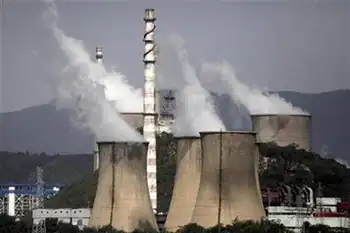
ST. JOHN'S, Newfoundland - Newfoundland Power Inc. said on Friday its first-quarter profit fell because of slightly lower electricity prices and the lack of a tax refund that padded earnings in the first quarter of 2001.

Newfoundland Power, owned by utility holding firm Fortis Inc., made a profit of C$10.3 million ($6.6 million), or C$1 per share, down from a profit of C$12.2 million, or C$1.18 per share, in the year-ago quarter.

Revenue fell slightly to C$115.4 million from C$116.1 million.

The company said its operating expenses are at their lowest level in nearly a decade.

During the quarter, the company reduced electricity rates 0.6 percent, which also added to the drop in earnings.

The company's shares were up 17 Canadian cents to C$47.40 a share in Friday morning trade on the Toronto Stock Exchange.

($1=$1.57 Canadian)

Related News

Feds "changing goalposts" with 2035 net-zero electricity grid target: Sask. premier

Canada Clean Electricity Regulations outline a 2035 net-zero grid target, driving decarbonization via wind, solar, hydro, SMRs, carbon capture, and efficiency, balancing reliability, affordability, and federal-provincial collaboration while phasing out coal and limiting fossil-fuel generation.


Key Points

Federal rules to cap CO2 from power plants and deliver a reliable, affordable net-zero grid by 2035.

✅ Applies to fossil-fired units; standards effective by Jan 1, 2035.

✅ Promotes wind, solar, hydro, SMRs, carbon capture, and efficiency.

✅ Balances reliability, affordability, and emissions cuts; ongoing consultation.


Saskatchewan’s premier said the federal government is “changing goalposts” with its proposed target for a net-zero electricity grid.

“We were looking at a net-zero plan in Saskatchewan and across Canada by the year 2050. That’s now been bumped to 2035. Well there are provinces that quite frankly aren’t going to achieve those types of targets by 2035,” Premier Scott Moe said Wednesday.

Ottawa proposed the Clean Electricity Regulations – formerly the Clean Electricity Standard – as part of its target for Canada to transition to net-zero emissions by 2050.

The regulations would help the country progress towards an updated proposed goal of a net-zero electricity grid by 2035.

“They’re un-consulted, notional targets that are put forward by the federal government without working with industries, provinces or anyone that’s generating electricity,” Moe said.

The Government of Canada was seeking feedback from stakeholders on the plan’s regulatory framework document earlier this year, up until August 2022.

“The clean electricity standard is something that’s still being consulted on and we certainly heard the views of Saskatchewan – not just Saskatchewan, many other provinces – and I think that’s something that’s being reflected on,” Jonathan Wilkinson, Canada’s minister of natural resources, said during an event near Regina Wednesday.

“We also recognize that the federal government has a role to play in helping provinces to make the kinds of changes that would need to be made in order to actually achieve a clean grid,” Wilkinson added.

The information received during the consultation will help inform the development of the proposed regulations, which are expected to be released before the end of the year, according to the federal government.


NET-ZERO ELECTRICITY GRID
The federal government said its Clean Electricity Regulations (CER) is part of a suite of measures, as the country moves towards a broad “decarbonization” of the economy, with Alberta's clean electricity path illustrating provincial approaches as well.

Net-zero emissions would mean Canada’s economy would either emit no greenhouse gas emissions or offset its emissions.

The plan encourages energy efficiency, abatement and non-emitting generation technologies such as carbon capture and storage and electricity generation options such as solar, wind, geothermal, small modular nuclear reactors (SMRs) and hydro, among others.

The government suggests consumer costs could be lowered by using some of these energy efficiency techniques, alongside demand management and a shift to lower-cost wind and solar power, echoing initiatives like the SaskPower 10% rebate aimed at affordability.

The CER focuses on three principles, each tied to affordability debates like the SaskPower rate hike in Saskatchewan:

 Maximize greenhouse gas reductions to achieve the 2035 target
 Ensure a reliable electrical grid to support Canadians and the economy
 Maintain electrical affordability

“Achieving a net-zero electricity supply is key to reaching Canada’s climate targets in two ways,” the government said in its proposed regulations.

“First, it will reduce [greenhouse gas] emissions from the production of electricity. Second, using clean electricity instead of fossil fuels in vehicles, heating and industry will reduce emissions from those sectors too.

The regulations would regulate carbon dioxide emissions from electricity generating units that combust any amount of fossil fuel, have a capacity above a small megawatt threshold and sell electricity onto a regulated electricity system.

New rules would also be implemented for the development of new electricity generation units firing fossil fuels in or after 2025 and existing units. All units would be subject to emission standards by Jan. 1, 2035, at the latest.

The federal government launched consultations on the proposed regulations in March 2022.

Canada also has a 2030 emissions reduction plan that works towards meeting its Paris Agreement target to reduce emissions by 40-45 per cent from 2005 levels by 2030. This plan includes regulations to phase out coal-fired electricity by 2030.


COLLABORATION
The province recently introduced the Saskatchewan First Act, in an attempt to confirm its own jurisdiction and sovereignty when it comes to natural resources.

The act would amend Saskatchewan’s constitution to exert exclusive legislative jurisdiction under the Constitution of Canada.

The province is seeking jurisdiction over the exploration of non-renewable resources, the development, conservation and management of non-renewable natural and forestry resources, and the operation of sites and facilities for the generation and production of electrical energy.

While the federal government and Saskatchewan have come head-to-head publicly over several policy concerns in the past year, both sides remain open to collaborating on issues surrounding natural resources.

“We do have provincial jurisdiction in the development of these natural resources. We’d like to work collaboratively with the federal government on developing some of the most sustainable potash, uranium, agri-food products in the world,” Moe said.

Minister Wilkinson noted that while both the federal and provincial governments aim to respect each other’s jurisdiction, there is often some overlap, particularly in the case of environmental and economic policies, with Alberta's electricity sector changes underscoring those tensions as well.

“My view is we should endeavour to try to figure out ways that we can work together, and to ensure that we’re actually making progress for Saskatchewanians and for Canadians,” Wilkinson said.

“I think that Canadians expect us to try to figure out ways to work together, and where there are some disputes that can’t get resolved, ultimately the Supreme Court will decide on the issue of jurisdiction as they did in the case on the price on pollution.”

Moe said Saskatchewan is always open to working with the federal government, but not at the expense of its “provincial, constitutional autonomy.”


Related News

View more

Bomb Cyclone Leaves Half a Million Without Power in Western Washington

Western Washington Bomb Cyclone unleashed gale-force winds, torrential rain, and coastal flooding, causing massive power outages from Seattle to Tacoma; storm surge, downed trees, and blocked roads hindered emergency response and infrastructure repairs.


Key Points

A rapidly deepening storm with severe winds, rain, flooding, and major power outages across Western Washington.

✅ Rapid barometric pressure drop intensified the system

✅ Gale-force winds downed trees and power lines

✅ Coastal flooding and storm surge disrupted transport


A powerful "bomb cyclone" recently hit Western Washington, causing widespread destruction across the region. The intense storm left more than half a million residents without power, similar to B.C. bomb cyclone outages seen to the north, with outages affecting communities from Seattle to Olympia. This weather phenomenon, marked by a rapid drop in atmospheric pressure, unleashed severe wind gusts, heavy rain, and flooding, causing significant disruption to daily life.

The bomb cyclone, which is a rapidly intensifying storm, typically features a sharp drop in barometric pressure over a short period of time. This creates extreme weather conditions, including gale-force winds, torrential rain, and coastal flooding, as seen during California storm impacts earlier in the season. In Western Washington, the storm struck just as the region was beginning to prepare for the winter season, catching many off guard with its strength and unpredictability.

The storm's impact was immediately felt as high winds downed trees, power lines, and other infrastructure. By the time the worst of the storm had passed, utility companies had reported widespread power outages, with more than 500,000 customers losing electricity. The outages were particularly severe in areas like Seattle, Tacoma, and the surrounding communities. Crews worked tirelessly in difficult conditions to restore power, but many residents faced extended outages, underscoring US grid climate vulnerabilities that complicate recovery efforts, with some lasting for days due to the scope of the damage.

The power outages were accompanied by heavy rainfall, leading to localized flooding. Roads were inundated, making it difficult for first responders and repair crews to reach affected areas. Emergency services were stretched thin as they dealt with downed trees, blocked roads, and flooded neighborhoods. In some areas, floodwaters reached homes, forcing people to evacuate. In addition, several schools were closed, and public transportation services were temporarily halted, leaving commuters stranded and businesses unable to operate.

As the storm moved inland, its effects continued to be felt. Western Washington’s coastal regions were hammered by high waves and storm surges, further exacerbating the damage. The combination of wind and rain also led to hazardous driving conditions, prompting authorities to advise people to stay off the roads unless absolutely necessary.

While power companies worked around the clock to restore electricity, informed by grid resilience strategies that could help utilities prepare for future events, challenges persisted. Fallen trees and debris blocked access to repair sites, and the sheer number of outages made it difficult for crews to restore power quickly. Some customers were left in the dark for days, forced to rely on generators, candles, and other makeshift solutions. The storm's intensity left a trail of destruction, requiring significant resources to address the damages and rebuild critical infrastructure.

In addition to the immediate impacts on power and transportation, the bomb cyclone raised important concerns about climate change and the increasing frequency of extreme weather events. Experts note that storms like these are becoming more common, with rapid intensification leading to more severe consequences and compounding pressures such as extreme-heat electricity costs for households. As the planet warms, scientists predict that such weather systems will continue to grow in strength, posing greater challenges to cities and regions that are not always prepared for such extreme events.

In the aftermath of the storm, local governments and utility companies faced the daunting task of not only restoring services but also assessing the broader impact of the storm on communities. Many areas, especially those hit hardest by flooding and power outages, will require substantial recovery efforts. The devastation of the bomb cyclone highlighted the vulnerability of infrastructure in the face of rapidly changing weather patterns and water availability, as seen in BC Hydro drought adaptations nearby, and reinforced the need for greater resilience in the face of future storms.

The storm's impact on the Pacific Northwest is a reminder of the power of nature and the importance of preparedness. As Western Washington recovers, there is a renewed focus on strengthening infrastructure, including expanded renewable electricity to diversify supply, improving emergency response systems, and ensuring that communities are better equipped to handle the challenges posed by increasingly severe weather events. For now, residents remain hopeful that the worst is behind them and are working together to rebuild and prepare for whatever future storms may bring.

The bomb cyclone has left an indelible mark on Western Washington, but it also serves as a call to action for better preparedness, more robust infrastructure, and a greater focus on combating climate change to mitigate the impact of such extreme weather in the future.


Related News

View more

Balancing Act: Germany's Power Sector Navigates Energy Transition

Germany January Power Mix shows gas-fired generation rising, coal steady, and nuclear phaseout impacts, amid cold weather, energy prices, industrial demand, and emissions targets shaping renewables, grid stability, and security of supply.


Key Points

The January electricity mix, highlighting gas, coal, renewables, and nuclear exit effects on emissions, prices, and demand.

✅ Gas output up 13% to 8.74 TWh, share at 18.6%.

✅ Coal share 23%, down year on year, steady vs late 2023.

✅ Nuclear gap filled by gas and coal; emissions below Jan 2023.


Germany's electricity generation in January presented a fascinating snapshot of its energy transition journey. As the country strives to move away from fossil fuels, with renewables overtaking coal and nuclear in its power mix, it grapples with the realities of replacing nuclear power and meeting fluctuating energy demands.

Gas Takes the Lead:

Gas-fired power plants saw their highest output in two years, generating 8.74 terawatt hours (TWh). This 13% increase compared to January 2023 compensated for the closure of nuclear reactors, which were extended during the energy crisis to shore up supply, and colder weather driving up heating needs. This reliance on gas, however, pushed its share in the electricity mix to 18.6%, highlighting Germany's continued dependence on fossil fuels.

Coal Fades, but Not Forgotten:

While gas surged, coal-fired generation remained below previous levels, dropping 29% from January 2023. However, it stayed relatively flat compared to late 2023, suggesting utilities haven't entirely eliminated it. Coal still held a 23% share, and periodic coal reliance remains evident, exceeding gas' contribution, reflecting its role as a reliable backup for intermittent renewable sources like wind.

Nuclear Void and its Fallout:

The shutdown of nuclear plants in April 2023 created a significant gap, previously accounting for an average of 12% of annual electricity output. This loss is being compensated through gas and coal, with gas currently the preferred choice, even as a nuclear option debate persists among policymakers. This strategy kept January's power sector emissions lower than the previous year, but rising demand could shift the balance.

Industry's Uncertain Impact:

Germany's industrial sector, a major energy consumer, is facing challenges like high energy prices and weak consumer demand. While the government aims to foster industrial recovery, uncertainties linger due to a shaky coalition and limited budget, and debate about a possible nuclear resurgence continues in parallel, which could reshape policy. Any future industrial revival would likely increase energy demand and potentially necessitate more gas or coal.

Cost-Driven Choices and Emission Concerns:

The choice between gas and coal depends on their relative costs, in a system pursuing a coal and nuclear phase-out under long-term policy. Currently, gas seems more favorable emission-wise, but if its price rises, coal might become more attractive, impacting overall emissions.

Looking Ahead:

Germany's energy transition faces a complex balancing act, with persistent grid expansion woes and exposure to cheap gas complicating progress. While the reliance on gas and coal highlights the difficulties in replacing nuclear, the focus on emissions reduction is encouraging. Navigating the challenges of affordability, industrial needs, and climate goals will be crucial for a successful transition to a clean and secure energy future.


Related News

View more

US NRC streamlines licensing for advanced reactors

NRC Advanced Reactor Licensing streamlines a risk-informed, performance-based, technology-inclusive pathway for advanced non-light water reactors, aligning with NEIMA to enable predictable regulatory reviews, inherent safety, clean energy deployment, and industrial heat, hydrogen, and desalination applications.


Key Points

A risk-informed, performance-based NRC pathway streamlining licensing for advanced non-light water reactors.

✅ Aligned with NEIMA: risk-informed, performance-based, tech-inclusive

✅ Predictable licensing for advanced non-light water reactor designs

✅ Enables clean heat, hydrogen, desalination beyond electricity


The US Nuclear Regulatory Commission (NRC) voted 4-0 to approve the implementation of a more streamlined and predictable licensing pathway for advanced non-light water reactors, aligning with nuclear innovation priorities identified by industry advocates, the Nuclear Energy Institute (NEI) announced, and amid regional reliability measures such as New England emergency fuel stock plans that have drawn cost scrutiny.

This approach is consistent with the Nuclear Energy Innovation and Modernisation Act (NEIMA), a nuclear innovation act passed in 2019 by the US Congress calling for the development of a risk-informed, performance-based and technology inclusive licensing process for advanced reactor developers.

NEI Chief Nuclear Officer Doug True said: “A modernised regulatory framework is a key enabler of next-generation nuclear technologies that, amid ACORE’s challenge to DOE subsidy proposals in energy market proceedings, can help us meet our energy needs while protecting the climate. The Commission’s unanimous approval of a risk-informed and performance-based licensing framework paves the way for regulatory reviews to be aligned with the inherent safety characteristics, smaller reactor cores and simplified designs of advanced reactors.”

Over the last several years the industry’s Licensing Modernisation Project, sponsored by US Department of Energy, led by Southern Nuclear, and supported by NEI’s Advanced Reactor Regulatory Task Force, and influenced by a presidential order to bolster uranium and nuclear energy, developed the guidance for this new framework. Amid shifts in the fuel supply chain, including the U.S. ban on Russian uranium, this approach will inform the development of a new rule for licensing advanced reactors, which NEIMA requires.

“A well-defined licensing path will benefit the next generation of nuclear plants, especially as regions consider New England market overhaul efforts, which could meet a wide range of applications beyond generating electricity such as producing heat for industry, desalinating water, and making hydrogen – all without carbon emissions,” True noted.


Related News

View more

Ukraine Resumes Electricity Exports

Ukraine Electricity Exports resume as the EU grid links stabilize; ENTSO-E caps, megawatt capacity, renewables, and infrastructure repairs enable power flows to Moldova, Poland, Slovakia, and Romania despite ongoing Russian strikes.


Key Points

Resumed cross-border power sales showing grid stability under ENTSO-E limits and surplus generation.

✅ Exports restart to Moldova; Poland, Slovakia, Romania next.

✅ ENTSO-E cap limits to 400 MW; more capacity under negotiation.

✅ Revenues fund grid repairs after Russian strikes.


Ukraine began resuming electricity exports to European countries on Tuesday, its energy minister said, a dramatic turnaround from six months ago when fierce Russian bombardment of power stations plunged much of the country into darkness in a bid to demoralize the population.

The announcement by Energy Minister Herman Halushchenko that Ukraine was not only meeting domestic consumption demands but also ready to restart exports to its neighbors was a clear message that Moscow’s attempt to weaken Ukraine by targeting its infrastructure did not work.

Ukraine’s domestic energy demand is “100%” supplied, he told The Associated Press in an interview, and it has reserves to export due to the “titanic work” of its engineers and international partners.

Russia ramped up infrastructure attacks in September, when waves of missiles and exploding drones destroyed about half of Ukraine's energy system, even as it built lines to reactivate the Zaporizhzhia plant in occupied territory. Power cuts were common across the country as temperatures dropped below freezing and tens of millions struggled to keep warm.

Moscow said the strikes were aimed at weakening Ukraine’s ability to defend itself, and both sides have floated a possible agreement on power plant attacks amid mounting civilian harm, while Western officials said the blackouts that caused civilians to suffer amounted to war crimes. Ukrainians said the timing was designed to destroy their morale as the war marked its first anniversary.


Ukraine had to stop exporting electricity in October to meet domestic needs.

Engineers worked around the clock, often risking their lives to come into work at power plants and keep the electricity flowing. Kyiv’s allies also provided help. In December, U.S. Secretary of State Antony Blinken announced $53 million in bilateral aid to help the country acquire electricity grid equipment, on top of $55 million for energy sector support.

Much more work remains to be done, Halushchenko said. Ukraine needs funding to repair damaged generation and transmission lines, and revenue from electricity exports would be one way to do that.

The first country to receive Ukraine’s energy exports will be Moldova, he said.

Besides the heroic work by engineers and Western aid, warmer temperatures are enabling the resumption of exports by making domestic demand lower, and across Europe initiatives like virtual power plants for homes are helping balance grids. Nationwide consumption was already down at least 30% due to the war, Halushchenko said, with many industries having to operate with less power.

Renewables like solar and wind power also come into play as temperatures rise, taking some pressure off nuclear and coal-fired power plants.

But it’s unclear if Ukraine can keep up exports amid the constant threat of Russian bombardment.

“Unfortunately now a lot of things depend on the war,” Halushchenko said. “I would say we feel quite confident now until the next winter.”

Exports to Poland, Slovakia and Romania are also on schedule to resume, he said.

“Today we are starting with Moldova, and we are talking about Poland, we are talking about Slovakia and Romania,” Halushchenko added, noting that how much will depend on their needs.

“For Poland, we have only one line that allows us to export 200 megawatts, but I think this month we will finish another line which will increase this to an additional 400 MW, so these figures could change,” he said.

Export revenue will depend on fluctuating electricity prices in Europe, where stunted hydro and nuclear output may hobble recovery efforts. In 2022, while Ukraine was still able to export energy, Ukrainian companies averaged 40 million to 70 million euros a month depending on prices, Halushchenko said.

“Even if it’s 20 (million euros) it’s still good money. We need financial resources now to restore generation and transmission lines,” he said.

Ukraine has the ability to export more than the 400 megawatt capacity limit imposed by the European Network of Transmission System Operators for Electricity, or ENTSO-E, and rising EU wind and solar output is reshaping cross-border flows. “We are in negotiations to increase this cap because today we can export even more, we have the necessary reserves in the system,” the minister said.

The current capacity limit is in line with what Ukraine was exporting in September 2022 before Ukraine diverted resources to meet domestic needs amid the Russian onslaught.


Related News

View more

NDP takes aim at approval of SaskPower 8 per cent rate hike

SaskPower Rate Hike 2022-2023 signals higher electricity rates in Saskatchewan as natural gas costs surge; the Rate Review Panel approved increases, affecting residential utility bills amid affordability concerns and government energy policy shifts.


Key Points

An 8% SaskPower electricity rate increase split 4% in Sept 2022 and 4% in Apr 2023, driven by natural gas costs.

✅ 4% increase Sept 1, 2022; +4% on Apr 1, 2023

✅ Panel-approved amid natural gas price surge and higher fuel costs

✅ Avg residential bill up about $5 per step; affordability concerns


The NDP Opposition is condemning the provincial government’s decision to approve the Saskatchewan Rate Review Panel’s recommendation to increase SaskPower’s rates for the first time since 2018, despite a recent 10% rebate pledge by the Sask. Party.

The Crown electrical utility’s rates will increase four per cent this fall, and another four per cent in 2023, a trajectory comparable to BC Hydro increases over two years. According to a government news release issued Thursday, the new rates will result in an average increase of approximately $5 on residential customers’ bills starting on Sept. 1, 2022, and an additional $5 on April 1, 2023.

“The decision to increase rates is not taken lightly and came after a thorough review by the independent Saskatchewan Rate Review Panel,” Minister Responsible for SaskPower Don Morgan said in a news release, amid Nova Scotia’s 14% hike this year. “World events have caused a significant rise in the price of natural gas, and with 42 per cent of Saskatchewan’s electricity coming from natural gas-fueled facilities, SaskPower requires additional revenue to maintain reliable operations.”

But NDP SaskPower critic Aleana Young says the rate hike is coming just as businesses and industries are struggling in an “affordability crisis,” even as Manitoba Hydro scales back a planned increase next year.

She called the announcement of an eight per cent increase in power bills on a summer day before the long weekend “a cowardly move” by the premier and his cabinet, amid comparable changes such as Manitoba’s 2.5% annual hikes now proposed.

“Not to mention the Sask. Party plans to hike natural gas rates by 17% just days from now,” said Young in a news release issued Friday, as Manitoba rate hearings get underway nearby. “If Scott Moe thinks his choices — to not provide Saskatchewan families any affordability relief, to hike taxes and fees, then compound those costs with utility rate hikes — are defensible, he should have the courage to get out of his closed-door meetings and explain himself to the people of this province.”

The province noted natural gas is the largest generation source in SaskPower’s fleet. As federal regulations require the elimination of conventional coal generation in Canada by 2030, SaskPower’s reliance on natural gas generation is expected to grow, with experts in Alberta warning of soaring gas and power prices in the region. Fuel and Purchased Power expense increases are largely driven by increased natural gas prices, and SaskPower’s fuel and purchased power expense is expected to increase from $715 million in 2020-21 to $1.069 billion in 2023-24. This represents a 50 per cent increase in fuel and purchased power expense over three years.

“In the four years since our last increase SaskPower has worked to find internal efficiencies, but at this time we require additional funding to continue to provide reliable and sustainable power,” SaskPower president & CEO Rupen Pandya said in the release “We will continue to be transparent about our rate strategy and the need for regular, moderate increases.”


Related News

View more

Sign Up for Electricity Forum’s Newsletter

Stay informed with our FREE Newsletter — get the latest news, breakthrough technologies, and expert insights, delivered straight to your inbox.

Electricity Today T&D Magazine Subscribe for FREE

Stay informed with the latest T&D policies and technologies.
  • Timely insights from industry experts
  • Practical solutions T&D engineers
  • Free access to every issue

Live Online & In-person Group Training

Advantages To Instructor-Led Training – Instructor-Led Course, Customized Training, Multiple Locations, Economical, CEU Credits, Course Discounts.

Request For Quotation

Whether you would prefer Live Online or In-Person instruction, our electrical training courses can be tailored to meet your company's specific requirements and delivered to your employees in one location or at various locations.