NFPA 70E Training - 2027 Edition - Arc Flash and Electrical Safety Course
Our customized live online or in‑person group training can be delivered to your staff at your location.

- Live Online
- 6 hours Instructor-led
- Group Training Available
Regular Price:
$199
Coupon Price:
$149
U.S. and North Korean envoys failed to reach an agreement on when to resume six-party disarmament negotiations on Pyongyang's atomic weapons program.
U.S. Assistant Secretary of State Christopher Hill said that after two days of talks with his North Korean counterpart, Vice Foreign Minister Kim Kye Gwan, he planned to leave Beijing without a follow-up meeting.
A U.S. Embassy statement said that Mr. Hill's delegation “shared ideas that could help ensure progress when the six-party talks resume,” without elaborating.
“The DPRK promised to study these ideas,” the statement said, using the acronym for the North's official name, the Democratic People's Republic of Korea.
The heads of delegations from the three countries “frankly and deeply exchanged views on the issue of promoting the process of the six-party talks and improve mutual understanding,” China's Foreign Ministry said on its Web site. “The three parties also agreed to strive for the progress of the talks.”
Mr. Hill, who had been scheduled to fly to Seoul after Beijing, cancelled the trip, said Susan Stevenson, spokeswoman for the U.S. Embassy in Beijing. She did not give a reason, but said Mr. Hill now planned to leave for Washington with a possible stopover in Japan.
Japan's Kyodo News agency cited unidentified people at the talks as saying that Mr. Kim demanded that the U.S. lift financial sanctions and freeze UN sanctions that were imposed after the North's first nuclear test on Oct. 9.
Mr. Hill responded by saying that the possible lifting of financial sanctions can be discussed during the talks and working level discussions, which are expected to be held simultaneously, Kyodo said.
Similar stances were taken when the three met bilaterally and trilaterally recently, Japanese and South Korean media have reported.
North Korea agreed in September 2005 to abandon its nuclear program in exchange for security guarantees and aid. But Washington imposed the financial sanctions against a Macau-based bank on suspicions it was laundering counterfeit money for the North Koreans. Angered by the move, Pyongyang withdrew from the talks two months later.
The six-party talks involve the United States, North Korea, Japan, South Korea and Russia, which has not sent an envoy to Beijing.
State Department spokesman Sean McCormack said in Washington that the main goal of the Beijing meetings was to “make sure that everybody, at least, has a good, solid understanding of what might happen” when the six-nation talks resume.
Mr. Kim said earlier that the timing of the next round of six-nation talks “depends on the United States.”
Mr. Kim's trip to Beijing — a rare overseas visit — and the presence of other negotiators had lifted expectations that there could be a breakthrough in ongoing efforts to restart the talks.
An unannounced meeting between Mr. Hill and Mr. Kim last month in Beijing led to Pyongyang agreeing to return to the arms negotiations amid heightened tensions after the Oct. 9 nuclear test.
Meanwhile, a South Korean lawmaker said North Korea could conduct an additional nuclear test next month or early next year unless the United States offers economic concessions such as lifting financial restrictions.
“I believe that there are specific movements in North Korea to prepare for a second nuclear test,” said opposition lawmaker Chung Hyung-keun, citing information obtained by state intelligence agencies, according to his office.
Related News
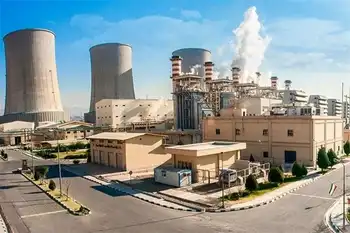
Iran turning thermal power plants to combined cycle to save energy
Iran Combined-Cycle Power Plants drive energy efficiency, cut greenhouse gases, and expand megawatt capacity by…
View more
Washington AG Leads Legal Challenge Against Trump’s Energy Emergency
Washington-Led Lawsuit Against Energy Emergency challenges President Trump's executive order, citing state rights, environmental reviews,…
View more

Clorox accelerates goal of achieving 100% renewable electricity in the U.S. and Canada to 2021
Clorox Enel 70 MW VPPA accelerates renewable energy, sourcing Texas solar from the Roadrunner project…
View more

Why California's Climate Policies Are Causing Electricity Blackouts
California Rolling Blackouts expose grid reliability risks amid a heatwave, as CAISO curtails power while…
View more
B.C. Streamlines Regulatory Process for Clean Energy Projects
BCER Renewable Energy Permitting streamlines single-window approvals for wind, solar, and transmission projects in BC,…
View more
Electricity Prices in France Turn Negative
Negative Electricity Prices in France signal oversupply from wind and solar, stressing the wholesale market…
View more
Sign Up for Electricity Forum’s Newsletter
Stay informed with our FREE Newsletter — get the latest news, breakthrough technologies, and expert insights, delivered straight to your inbox.
Electricity Today T&D Magazine Subscribe for FREE

Stay informed with the latest T&D policies and technologies.
- Timely insights from industry experts
- Practical solutions T&D engineers
- Free access to every issue
