High Rates Inflate OPG Profits

By Canadian Press


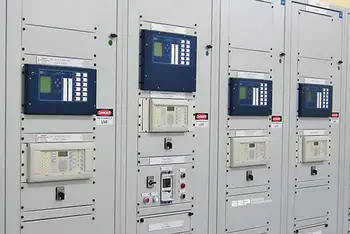
Protective Relay Training - Basic

Our customized live online or in‑person group training can be delivered to your staff at your location.
  • Live Online
  • 12 hours Instructor-led
  • Group Training Available
Regular Price:
$699
Coupon Price:
$599
Reserve Your Seat Today
Hot weather and high prices for electricity this summer, and a special gain, helped more than double net profits despite slightly lower revenues at Ontario Power Generation Inc. (OPG), the dominant power generator of the province.

OPG, the giant publicly owned utility and spinoff of the former Ontario Hydro, said it earned $215 million, or 84 cents per share, in the three months ended Sept. 30, at a time of unseasonably high weather than boosted power demand for air conditioners and sent consumer electricity bills soaring. Revenue fell slightly to $1.5 billion from $1.55 billion last year.

"OPG's third quarter earnings reflect open market prices for the summer period and the impact of warmer than normal weather," the power producer said in a statement.

Peak demand in Ontario reached record levels during the third quarter, with a new peak of 25,414 megawatts set Aug. 13.

The government owned utility also cited a "favourable generation mix" of higher nuclear and hydroelectric generation for its strong earnings.

OPG stressed in a statement that under its government-driven mandate, it is ordered to provide consumers with rebates if the average price of power tops 3.8 cents a kilowatt hour over a year. OPG is also mandated to reduce its share of generating capacity to 35 per cent from almost 70 per cent within 10 years. Critics have said the utility should make such divestitures within a quicker timeframe.

The utility did have a gain in the third quarter from the sale of four hydroelectric stations on the Mississagi River, east of Sault Ste. Marie. The buyer was an income fund 50 per cent owned by Brascan Power Corp., one of Canada's biggest private power producers.

Four provincial properties on the block are the coal-fired Lakeview station in Mississauga; the Lennox station near Kingston; the Atikokan generating plant in northwestern Ontario; and a Thunder Bay operation.

OPG said it also had increased expenditures related to Pickering A, its nuclear power plant east of Toronto that was taken out of service in 1997 because of serious reliability problems and safety concerns. It was due back online this year at a cost of about $800 million but reports suggest it may not reopen before 2006 at a total cost of more than $3 billion.

Related News
America’s Electricity is Safe From the Coronavirus—for Now

US Grid Pandemic Response coordinates control rooms, grid operators, and critical infrastructure, leveraging hydroelectric plants, backup control centers, mutual assistance networks, and deep cleaning protocols to maintain reliability amid reduced demand and COVID-19 risks.


Key Points

US Grid Pandemic Response encompasses measures by utilities and operators to safeguard power reliability during COVID-19

✅ Control rooms staffed on-site; operators split across backup centers

✅ Health screenings, deep cleaning, and isolation protocols mitigate contagion

✅ Reduced demand and mutual assistance improve grid resilience


Control rooms are the brains of NYPA’s power plants, which are mostly hydroelectric and supply about a quarter of all the electricity in New York state. They’re also a bit like human petri dishes. The control rooms are small, covered with frequently touched switches and surfaces, and occupied for hours on end by a half-dozen employees. Since social distancing and telecommuting isn’t an option in this context, NYPA has instituted regular health screenings and deep cleanings to keep the coronavirus out.

The problem is that each power plant relies on only a handful of control room operators. Since they have a specialized skill set, they can’t be easily replaced if they get sick. “They are very, very critical,” says Gil Quiniones, NYPA president and CEO. If the pandemic worsens, Quiniones says that NYPA may require control room operators to live on-site at power plants to reduce the chance of the virus making it in from the outside world. It sounds drastic, but Quiniones says NYPA has done it before during emergencies—once during the massive 2003 blackout, and again during Hurricane Sandy.

Meanwhile, PJM is one of North America’s nine regional grid operators and manages the transmission lines that move electricity from power plants to millions of customers in 13 states on the Eastern seaboard, including Washington, DC. PJM has had a pandemic response plan on the books for 15 years, but Mike Bryson, senior vice president of operations, says that this is the first time it’s gone into full effect. As of last week, about 80 percent of PJM’s 750 full-time employees have been working from home. But PJM also requires a skeleton crew of essential workers to be on-site at all times in its control centers. As part of its emergency planning, PJM built a backup control center years ago, and now it is splitting control center operators between the two to limit contact.

Past experience with large-scale disasters has helped the energy sector keep the lights on and ventilators running during the pandemic. Energy is one of 16 sectors that the US government has designated as “critical infrastructure,” which also includes the communications industry, transportation sector, and food and water systems. Each is seen as vital to the country and therefore has a duty to maintain operations during national emergencies.

“We need to be treated as first responders,” says Scott Aaronson, the vice president of security and preparedness at the Edison Electric Institute, a trade group representing private utilities. “Everybody's goal right now is to keep the public healthy, and to keep society functioning as best we can. A lack of electricity will certainly create a challenge for those goals.”

America’s electricity grid is a patchwork of regional grid operators connecting private and state-owned utilities. This means simply figuring out who’s in charge and coordinating among the various organizations is one of the biggest challenges to keeping the electricity flowing during a national emergency, according to Aaronson.

Generally, a lot of this responsibility falls on formal energy organizations like the nonprofit North American Electric Reliability Corporation and the Federal Energy Regulatory Commission. But during the coronavirus outbreak, an obscure organization run by the CEOs of electric utilities called the Electricity Subsector Coordinating Council has also served as a primary liaison between the federal government and the thousands of utility companies around the US. Aaronson says the organization has been meeting twice a week for the past three weeks to ensure that utilities are implementing best practices in their response to the coronavirus, as well as to inform the government of material needs to keep the energy sector running smoothly.

This tight-knit coordination will be especially important if the pandemic gets worse, as many forecasts suggest it will. Most utilities belong to at least one mutual assistance group, an informal network of electricity suppliers that help each other out during a catastrophe. These mutual assistance networks are usually called upon following major storms that threaten prolonged outages. But they could, in principle, be used to help during the coronavirus pandemic too. For example, if a utility finds itself without enough operators to manage a power plant, it could conceivably borrow trained operators from another company to make sure the power plant stays online.

So far, utilities and grid operators have managed to make it work on their own. There have been a handful of coronavirus cases reported at power plants, but they haven’t yet affected these plants’ ability to deliver energy. The challenges of running a power plant with a skeleton crew is partially offset by the reduced power demand as businesses shut down and more people work from home, says Robert Hebner, the director of the Center for Electromechanics at the University of Texas. “The reduced demand for power gives utilities a little breathing room,” says Hebner.

A recent study by the University of Chicago’s Energy Policy Institute found that electricity demand in Italy has plunged by 18 percent following the severe increase in coronavirus cases in the country. Energy demand in China also plummeted as a result of the pandemic. Bryson, at PJM, says the grid operator has seen about a 6 percent decrease in electricity demand in recent weeks, but expects an even greater drop if the pandemic gets worse.

Generally speaking, problems delivering electricity in the US occur when the grid is overloaded or physically damaged, such as during California wildfires or a hurricane.

An open question among coronavirus researchers is whether there will be a second wave of the pandemic later this year. During the Spanish flu pandemic in the early 20th century, the second wave turned out to be deadlier than the first. If the coronavirus remerges later this year, it could be a serious threat to reliable electricity in the US, says John MacWilliams, a former associate deputy secretary of the Department of Energy and a senior fellow at Columbia University’s Center on Global Energy Policy.

“If this crisis extends into the fall, we're going to hit hurricane season along the coasts,” MacWilliams says. “Utilities are doing a very good job right now, but if we get unlucky and have an active hurricane season, they're going to get very stressed because the number of workers that are available to repair damage and restore power will become more limited.”

This was a sentiment echoed by Bryson at PJM. “Any one disaster is manageable, but when you start layering them on top of each other, it gets much more challenging,” he adds. The US electricity grid struggles to handle major storms as it is, and these challenges will be heightened if too many workers are home sick. In this sense, the energy sector’s ability to deliver the electricity needed to keep manufacturing medical supplies or keep ventilators running depends to a large extent on our ability to flatten the curve today. The coronavirus is bad enough without having to worry about the lights going out.


Related News

View more

U.S Bans Russian Uranium to Bolster Domestic Industry

U.S. Russian Uranium Import Ban reshapes nuclear fuel supply, bolstering energy security, domestic enrichment, and sanctions policy while diversifying reactor-grade uranium sources and supply chains through allies, waivers, and funding to sustain utilities and reliability.


Key Points

A U.S. law halting Russian uranium imports to boost energy security diversify nuclear fuel and revive U.S. enrichment.

✅ Cuts Russian revenue; reduces geopolitical risk.

✅ Funds U.S. enrichment; supports reactor fuel supply.

✅ Enables waivers to prevent utility shutdowns.


In a move aimed at reducing reliance on Russia and fostering domestic energy security for the long term, the United States has banned imports of Russian uranium, a critical component of nuclear fuel. This decision, signed into law by President Biden in May 2024, marks a significant shift in the U.S. nuclear fuel supply chain and has far-reaching economic and geopolitical implications.

For decades, Russia has been a major supplier of enriched uranium, a processed form of uranium used to power nuclear reactors. The U.S. relies on Russia for roughly a quarter of its enriched uranium needs, feeding the nation's network of 94 nuclear reactors operated by utilities which generate nearly 20% of the country's electricity. This dependence has come under scrutiny in recent years, particularly following Russia's invasion of Ukraine.

The ban on Russian uranium is a multifaceted response. First and foremost, it aims to cripple a key revenue stream for the Russian government. Uranium exports are a significant source of income for Russia, and by severing this economic tie, the U.S. hopes to weaken Russia's financial capacity to wage war.

Second, the ban serves as a national energy security measure. Relying on a potentially hostile nation for such a critical resource creates vulnerabilities. The possibility of Russia disrupting uranium supplies, either through political pressure or in the event of a wider conflict, is a major concern. Diversifying the U.S. nuclear fuel supply chain mitigates this risk.

Third, the ban is intended to revitalize the domestic uranium mining and enrichment industry, building on earlier initiatives such as Trump's uranium order announced previously. The U.S. has historically been a major uranium producer, but environmental concerns and competition from cheaper foreign sources led to a decline in domestic production. The ban, coupled with $2.7 billion in federal funding allocated to expand domestic uranium enrichment capacity, aims to reverse this trend.

The transition away from Russian uranium won't be immediate. The law includes a grace period until mid-August 2024, and waivers can be granted to utilities facing potential shutdowns if alternative suppliers aren't readily available. Finding new sources of enriched uranium will require forging partnerships with other uranium-producing nations like Kazakhstan, Canada on minerals cooperation, and Australia.

The long-term success of this strategy hinges on several factors. First, successfully ramping up domestic uranium production will require overcoming regulatory hurdles and addressing environmental concerns, alongside nuclear innovation to modernize the fuel cycle. Second, securing reliable alternative suppliers at competitive prices is crucial, and supportive policy frameworks such as the Nuclear Innovation Act now in law can help. Finally, ensuring the continued safe and efficient operation of existing nuclear reactors is paramount.

The ban on Russian uranium is a bold move with significant economic and geopolitical implications. While challenges lie ahead, the potential benefits of a more secure and domestically sourced nuclear fuel supply chain are undeniable. The success of this initiative will be closely watched not only by the U.S. but also by other nations seeking to lessen their dependence on Russia for critical resources.


Related News

View more

Opinion: With deregulated electricity, no need to subsidize nuclear power

Pennsylvania Electricity Market Deregulation has driven competitive pricing, leveraged low-cost natural gas, and spurred private investment, jobs, and efficient power plants, while nuclear subsidies threaten wholesale market signals and long-term consumer savings.


Key Points

Policy that opens generation to competition, leverages cheap gas, lowers rates, and resists subsidies for nuclear plants.

✅ Competitive wholesale pricing benefits consumers statewide

✅ Gas-driven plants add efficient, flexible capacity and jobs

✅ Nuclear subsidies distort market signals and raise costs


For decades, the government regulation of Pennsylvania's electricity markets dictated all aspects of power generation resources in the state, thus restricting market-driven prices for consumers and hindering new power plant development and investment.

Deregulation has enabled competitive markets to drive energy prices downward, as recent grid auction payouts fell 64% indicate, which has transformed Pennsylvania from a higher-electricity-cost state to one with prices below the national average.

Recently, the economic advantage of abundant low-cost natural gas has spurred an influx of billions of dollars of private capital investment and thousands of jobs to construct environmentally responsible natural gas power generation facilities throughout the commonwealth — including our three power generation facilities in operation and one presently under construction.

Calpine is an independent power provider with a national portfolio of 80 highly efficient power plants in operation or under construction with an electric generating capacity of approximately 26,000 megawatts. Collectively, these resources can provide sufficient power for more than 30 million residential homes. We are not a regulated utility receiving a guaranteed rate of return on investment. Rather, Calpine competes to sell wholesale power into the electric markets, and the economics of supply and demand are fundamental to the success of our business.

Pennsylvania's deregulated electricity market is working. Consumers are benefiting from low-cost natural gas, as broader evidence shows competition benefits consumers and the environment across markets, and companies such as Calpine are investing billions of dollars and creating thousands of jobs to build advanced, energy efficient, environmentally responsible and flexible power generating facilities.

There are presently seven electric generating projects under construction in the commonwealth, representing about a $7 billion capital investment that will produce about 7,000 megawatts of efficient electrical power, with additional facilities being planned.

Looking back 20 years following the enactment of the Pennsylvania Electricity Generation Customer Choice and Competition Act, Pennsylvania's regulators and policymakers must conclude that the results of a free and fair market-driven structure have delivered indisputable benefits to the consumer, even amid potential winter rate spikes for residents, and the Pennsylvania economy.

While consumers are now reaping the benefits of open and competitive electricity markets, we see challenges on the horizon that could threaten the foundation of those markets. Due to pressure from nuclear power generators, state policymakers throughout the nation have been increasing efforts to impact the generation mix in their respective states by offering ratepayer funded subsidies to existing nuclear generation resources or by considering a market structure overhaul in New England.

Subsidizing one power generation type over others is having a significant, negative impact on wholesale electric markets, competitive retails markets and ultimately the cost the consumer will have to pay, and can exacerbate disruptions in coal and nuclear industries that strain the economy and risk brownouts.

In Pennsylvania, these subsidies would follow nearly $9 billion already paid by ratepayers to help the commonwealth's nuclear industry transition from regulated to competitive energy markets.

The deregulation of Pennsylvania's electricity markets in the late 1990s allowed the nuclear industry to receive billions of dollars from ratepayers to recover "stranded costs" related to investments in the commonwealth's nuclear plants. These costs were negotiated amounts based on settlements with Pennsylvania's Public Utility Commission to allow the nuclear industry to prepare and transition to competitive electricity markets.

Enough is enough. Regulatory or governmental interference in well functioning markets does not lead to better outcomes. Pennsylvania's state Legislature should not pick winners and losers by enacting legislation that would create an uneven playing field that subsidizes nuclear generating resources in the commonwealth.

William Ferguson is regional vice president for Calpine Corp.


Related News

View more

Uzbekistan Looks To Export Electricity To Afghanistan

Surkhan-Pul-e-Khumri Power Line links Uzbekistan and Afghanistan via a 260-kilometer transmission line, boosting electricity exports, grid reliability, and regional trade; ADB-backed financing could open Pakistan's energy market with 24 million kWh daily.


Key Points

A 260-km line to expand Uzbekistan power exports to Afghanistan, ADB-funded, with possible future links to Pakistan.

✅ 260 km Surkhan-Pul-e-Khumri transmission link

✅ +70% electricity exports; up to 24M kWh daily

✅ ADB $70M co-financing; $32M from Uzbekistan


Senior officials with Uzbekistan’s state-run power company have said work has begun on building power cables to Afghanistan that will enable them to increase exports by 70 per cent, echoing regional trends like Ukraine resuming electricity exports after grid repairs.

Uzbekenergo chief executive Ulugbek Mustafayev said in a press conference on March 24 that construction of the Afghan section of the 260-kilometer Surkhan-Pul-e-Khumri line will start in June.

The Asian Development Bank has pledged $70 million toward the final expected $150 million bill of the project. Another $32 million will come from Uzbekistan.

Mustafayev said the transmission line would give Uzbekistan the option of exporting up to 24 million kilowatt hours to Afghanistan daily, similar to Ukraine's electricity export resumption amid shifting regional demand.

“We could potentially even reach Pakistan’s energy market,” he said, noting broader regional ambitions like Iran's bid to be a power hub linking regional grids.

#google#

This project was given fresh impetus by Afghan President Ashraf Ghani’s visit to Tashkent in December, mirroring cross-border energy cooperation such as Iran-Iraq energy talks in the region. His Uzbek counterpart, Shavkat Mirziyoyev, had announced at the time that work was set to begin imminently on the line, which will run from the village of Surkhan in Uzbekistan’s Surkhandarya region to Pul-e-Khumri, a town in Afghanistan just south of Kunduz.

In January, Mirziyoyev issued a decree ordering that the rate for electricity deliveries to Afghanistan be dropped from $0.076 to $0.05 per kilowatt.

Mustafayev said up to 6 billion kilowatt hours of electricity could eventually be sent through the power lines. More than 60 billion kilowatt hours of electricity was produced in Uzbekistan in 2017.

According to Tulabai Kurbonov, an Uzbek journalist specializing in energy issues, the power line will enable the electrification of the the Hairatan-Mazar-i-Sharif railroad joining the two countries. Trains currently run on diesel. Switching over to electricity will help reduce the cost of transporting cargo.

There is some unhappiness, however, over the fact that Uzbekistan plans to sell power to Afghanistan when it suffers from significant shortages domestically and wider Central Asia electricity shortages persist.

"In the villages of the Ferghana Valley, especially in winter, people are suffering from a shortage of electricity,” said Munavvar Ibragimova, a reporter based in the Ferghana Valley. “You should not be selling electricity abroad before you can provide for your own population. What we clearly see here is the favoring of the state’s interests over those of the people.”


Related News

View more

By Land and Sea, Clean Electricity Needs to Lead the Way

Martha's Vineyard 100% Renewable Energy advances electrification across EVs, heat pumps, distributed solar, offshore wind, microgrids, and battery storage, cutting emissions, boosting efficiency, and strengthening grid resilience for storms and sea-level rise.


Key Points

It is an islandwide plan to electrify transport and buildings using wind, solar, storage, and a modern resilient grid.

✅ Electrify transport: EV adoption and SSA hybrid-electric ferries.

✅ Deploy heat pumps for efficient heating and cooling in buildings.

✅ Modernize the grid: distributed solar, batteries, microgrids, VPP.


Over the past year, it has become increasingly clear that climate change is accelerating. Here in coastal New England, annual temperatures and precipitation have risen more quickly than expected, tidal flooding is now commonplace, and storms have increased in frequency and intensity. The window for avoiding the worst consequences of a climate-changed planet is closing.

At their recent special town meeting, Oak Bluffs citizens voted to approve the 100 per cent renewable Martha’s Vineyard warrant article; now, all six towns have adopted the same goals for fossil fuel reduction and green electricity over the next two decades. Establishing these targets for the adoption of renewable energy, though, is only an initial step. Town and regional master plans for energy transformation are being developed, but this is a whole-community effort as well. Now is the time for action.

There is much to do to combat climate change, but our most important task is to transition our energy system from one heavily dependent on fossil fuels to one that is based on clean electricity. The good news is that this can be accomplished with currently available technology, and can be done in an economically efficient manner.

Electrification not only significantly lowers greenhouse gas emissions, but also is a powerful energy efficiency measure. So even though our detailed Island energy model indicates that eliminating all (or almost all) fossil fuel use will mean our electricity use will more than double, posing challenges for state power grids in some regions, our overall annual energy consumption will be significantly lower.

So what do we specifically need to do?

The primary targets for electrification are transportation (roughly 60 peer cent of current fossil fuel use on Martha’s Vineyard) and building heating and cooling (40 per cent).

Over the past two years, the increase in the number of electric vehicle models available across a wide range of price points has been remarkable — sedans, SUVs, crossovers, pickup trucks, even transit vans. When rebates and tax credits are considered, they are affordable. Range anxiety is being addressed both by increases in vehicle performance and the growing availability of charging locations (other than at home, which will be the predominant place for Islanders to refuel) and, over time, enable vehicle-to-grid support for our local system. An EV purchase should be something everyone should seriously consider when replacing a current fossil vehicle.

The elephant in the transportation sector room is the Steamship Authority. The SSA today uses roughly 10 per cent of the fossil fuel attributable to Martha’s Vineyard, largely but not totally in the ferries. The technology needed for fully electric short-haul vessels has been under development in Scandinavia for a number of years and fully electric ferries are in operation there. A conservative approach for the SSA would be to design new boats to be hybrid diesel-electric, retrofittable to plug-in hybrids to allow for shoreside charging infrastructure to be planned and deployed. Plug-in hybrid propulsion could result in a significant reduction in emissions — perhaps as much as 95 per cent, per the long-range plan for the Washington State ferries. While the SSA has contracted for an alternative fuel study for its next boat, given the long life of the vessels, an electrification master plan is needed soon.

For building heating and cooling, the answer for electrification is heat pumps, both for new construction and retrofits. These devices move heat from outside to inside (in the winter) or inside to outside (summer), and are increasingly integrated into connected home energy systems for smarter control. They are also remarkably efficient (at least three times more efficient than burning oil or propane), and today’s technology allows their operation even in sub-zero outside temperatures. Energy costs for electric heating via heat pumps on the Vineyard are significantly below either oil or propane, and up-front costs are comparable for new construction. For new construction and when replacing an existing system, heat pumps are the smart choice, and air conditioning for the increasingly hot summers comes with the package.

A frequent objection to electrification is that fossil-fueled generation emits greenhouse gases — thus a so-called green grid is required in order to meet our targets. The renewable energy fraction of our grid-supplied electricity is today about 30 per cent; by 2030, under current legislation that fraction will reach 54 per cent, and by 2040, 77 per cent. Proposed legislation will bring us even closer to our 2040 goals. The Vineyard Wind project will strongly contribute to the greening of our electricity supply, and our local solar generation (almost 10 per cent of our overall electricity use at this point) is non-negligible.

A final important facet of our energy system transformation is resilience. We are dependent today on our electricity supply, and this dependence will grow. As we navigate the challenges of climate change, with increasingly more frequent and more serious storms, 2021 electricity lessons underscore that resilience of electricity supply is of paramount importance. In many ways, today’s electricity distribution system is basically the same approach developed by Edison in the late 19th century. In partnership with our electric utility, we need to modernize the grid to achieve our resiliency goals.

While the full scope of this modernization effort is still being developed, the outline is clear. First, we need to increase the amount of energy generated on-Island — to perhaps 25 per cent of our total electricity use. This will be via distributed energy resources (in the form of distributed solar and battery installations as well as community solar projects) and the application of advanced grid control systems. For emergency critical needs, the concept of local microgrids that are detachable from the main grid when that grid suffers an outage are an approach that is technically sound and being deployed elsewhere. Grid coordination of distributed resources by the utility allows for handling of peak power demand; in the early 2030s this could result in what is known as a virtual power plant on the Island.

The adoption of the 100 renewable Martha’s Vineyard warrant articles is an important milestone for our community. While the global and national efforts in the climate crisis may sometimes seem fraught, we can take some considerable pride in what we have accomplished so far and will accomplish in coming years. As with many change efforts, the old catch-phrase applies: think globally, act locally.


Related News

View more

Extreme Heat Boosts U.S. Electricity Bills

Extreme Heat and Rising Electricity Bills amplify energy costs as climate change drives air conditioning demand, stressing the power grid and energy affordability, with low income households facing outsized burdens during prolonged heat waves.


Key Points

Heat waves from climate change raise AC demand, driving up electricity costs and straining energy affordability.

✅ More AC use spikes electricity demand during heat waves

✅ Low income households face higher energy burden

✅ Grid reliability risks rise with peak cooling loads


Extreme heat waves are not only straining public health systems but also having a significant impact on household finances, particularly through rising electricity bills. According to a recent AP-NORC poll, a growing number of Americans are feeling the financial pinch as soaring temperatures drive up the cost of cooling their homes. This development underscores the broader implications of climate change and its effects on everyday life.

The AP-NORC poll highlights that a majority of Americans are experiencing increased electricity costs as a direct result of extreme heat. As temperatures climb, so does the demand for air conditioning and other cooling systems. This increased energy consumption is contributing to higher utility bills, which can put additional strain on household budgets.

Extreme heat waves have become more frequent and intense due to climate change, which has led to a greater reliance on air conditioning to maintain comfortable indoor environments. Air conditioners and fans work harder during heat waves, and wasteful air conditioning can add around $200 to summer bills, consuming more electricity and consequently driving up energy bills. For many households, particularly those with lower incomes, these increased costs can be a significant burden.

The poll reveals that the impact of rising electricity bills is widespread, affecting a diverse range of Americans. Households across different income levels and geographic regions are feeling the heat, though the extent of the financial strain can vary. Lower-income households are particularly vulnerable, as they often have less flexibility in their budgets to absorb higher utility costs. For these families, the choice between cooling their homes and other essential expenses can be a difficult one.

In addition to financial strain, the poll highlights concerns about energy affordability and access. As electricity bills rise, some Americans may face challenges in paying their bills, leading to potential utility shut-offs or the need to make difficult choices between cooling and other necessities. This situation is exacerbated by the fact that many utility companies do not offer sufficient assistance or relief programs to help low-income households manage their energy costs.

The increasing frequency of extreme heat events and the resulting spike in electricity consumption also have broader implications for the energy infrastructure. Higher demand for electricity can strain power grids, as seen when California narrowly avoided blackouts during extreme heat, potentially leading to outages or reduced reliability. Utilities and energy providers may need to invest in infrastructure upgrades and maintenance to ensure that the grid can handle the increased load during heat waves.

Climate change is a key driver of the rising temperatures that contribute to higher electricity bills. As global temperatures continue to rise, extreme heat events are expected to become more common and severe, and experts warn the US electric grid was not designed to withstand these impacts. This trend underscores the need for comprehensive strategies to address both the causes and consequences of climate change. Efforts to reduce greenhouse gas emissions, improve energy efficiency, and invest in renewable energy sources are critical components of a broader climate action plan.

Energy efficiency measures can play a significant role in mitigating the impact of extreme heat on electricity bills. Upgrading to more efficient cooling systems, improving home insulation, and adopting smart thermostats can help reduce energy consumption and lower utility costs. Additionally, utility companies and government programs can offer incentives and rebates, including ways to tap new funding that help encourage energy-saving practices and support households in managing their energy use.

The poll also suggests that there is a growing awareness among Americans about the connection between climate change and rising energy costs. Many people are becoming more informed about the ways in which extreme weather events and rising temperatures impact their daily lives. This increased awareness can drive demand for policy changes and support for initiatives aimed at addressing climate change and improving energy efficiency, with many willing to contribute income to climate efforts, about the connection between climate change and rising energy costs.

In response to the rising costs and the impact of extreme heat, there are calls for policy interventions and support programs to help manage energy affordability. Proposals include expanding assistance programs for low-income households, investing in infrastructure improvements, and promoting energy efficiency initiatives alongside steps to make electricity systems more resilient to climate risks. By addressing these issues, policymakers can help alleviate the financial burden on households and support a more resilient and sustainable energy system.

Debates over policy impacts on electricity prices continue; in Alberta, federal policies are blamed by some for higher rates, illustrating how regulation can affect affordability.

In conclusion, the AP-NORC poll highlights the growing financial impact of extreme heat on American households, with rising electricity bills being a significant concern for many. The increased demand for cooling during heat waves is straining household budgets and raising broader questions about energy affordability and infrastructure resilience. Addressing these challenges requires a multifaceted approach, including efforts to combat climate change, improve energy efficiency, and provide support for those most affected by rising energy costs. As extreme heat events become more common, finding solutions to manage their impact will be crucial for both individual households and the broader energy system.


Related News

View more

Sign Up for Electricity Forum’s Newsletter

Stay informed with our FREE Newsletter — get the latest news, breakthrough technologies, and expert insights, delivered straight to your inbox.

Electricity Today T&D Magazine Subscribe for FREE

Stay informed with the latest T&D policies and technologies.
  • Timely insights from industry experts
  • Practical solutions T&D engineers
  • Free access to every issue

Download the 2025 Electrical Training Catalog

Explore 50+ live, expert-led electrical training courses –

  • Interactive
  • Flexible
  • CEU-cerified