Obama touts wind energy in Iowa

By Associated Press


NFPA 70e Training

Our customized live online or in‑person group training can be delivered to your staff at your location.
  • Live Online
  • 6 hours Instructor-led
  • Group Training Available
Regular Price:
$199
Coupon Price:
$149
Reserve Your Seat Today
President Barack Obama returned to Iowa, the state that jumpstarted his presidential campaign, with a message he hopes will resonate with voters this fall: the economic recovery hasnt reached everyone, but progress is being made.

In his twoday, threestate Midwestern trip, Obama plans to note his economic and clean energy programs are job creators, even as he acknowledges the pain and skepticism of hardhit areas. Hes not on the ballot this year, but his partys control of Congress is at stake, along with dozens of governors seats and state legislatures.

Despite encouraging news about an expanding economy and markets, the president told an Iowa crowd, times are still tough in towns like Fort Madison. And times are still tough for middleclass Americans, who had been swimming against the current for years before the economic tidal wave hit.

Obama outlined his administrations goals to create conditions so that folks who work hard can finally get ahead. They include improving schools, making college more affordable, expanding health coverage and preventing Wall Street irresponsibility, he said.

Underscoring the challenge was agriculture secretary and former Iowa governor Tom Vilsack, who told reporters traveling with Obama: Theres a silent crisis occuring in rural America thats been ongoing for several decades. He said the president is delivering a new framework for the revival of the rural economy.

Obama also plans to stop in Illinois and Missouri before returning to the White House. Iowa and Missouri are sharply contested in virtually every election, and Republicans this year think they can snag the Illinois Senate seat that Obama held before becoming president.

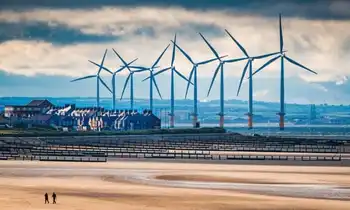
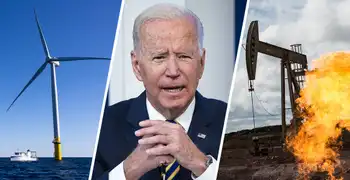
Obama spoke after touring a plant that makes wind turbines. The United States must lead the world in clean energy production, he said, and he cited tax credits included in last years economic stimulus package.

They helped make it possible for America to install nearly 10 gigawatts of new wind generating capacity last year alone, enough to power more than 2.4 million American homes, he said. And each new wind farm has the potential to create hundreds of construction jobs, and dozens of permanent local jobs, in communities just like Fort Madison.

Wind power conceivably could produce 20 percent of the nations energy in 20 years, Obama said. Its part of a strategy, he said, to move us from an economy that runs just on fossil fuels to one that relies on more homegrown fuels and clean energy.

He said he believes Congress and the nation can overcome deep divisions to enact farreaching energy and climate legislation that will ignite new industries, spark new jobs and make America more energy independent.

The latest economic forecasts show some signs of progress: The nation added jobs at the fastest pace in three years last month, the manufacturing industry is growing at a steady pace, and new claims for jobless benefits have declined.

But the unemployment rate, perhaps the most recognizable economic indicator, has held steady at 9.7 percent for three months, and 15 million Americans remain out of work. By the White Houses own estimates, as well as those of many independent economists, that rate isnt expected to fluctuate more than a few tenths of a percentage point through the end of 2010.

The presidents home state of Illinois, where he went to next, has one of the nations highest unemployment rates, 11.5 percent.

Thats far from the administrations predictions last year, when Obama rallied support for the $862 billion economic stimulus package. At the time, the White House said the massive infusion would keep the unemployment rate from topping 8 percent, though the administration later revised those estimates, saying the recession proved to be worse than it expected.

Polls suggest the president and his party are increasingly vulnerable on the economy. Democrats and Republicans each have the confidence of 44 percent of people for handling the economy, according to an Associated PressGfK poll conducted this month. The Democrats had a 9point advantage just four months ago and have held an edge since AP polls began asking about the issue in 2006.

Related News

Kenya on Course for $5 Billion Nuclear Plant to Power Industry

Kenya Nuclear Power Plant Project advances with environmental impact assessment, selecting Tana River County under a build-operate-transfer model to boost grid capacity, support manufacturing growth, and assess reactor technology for reliable baseload energy.


Key Points

A $5B BOT nuclear facility in Tana River to expand Kenya's grid, aiming to start operations in about seven years.

✅ Environmental impact study published for public review by NEMA

✅ Preferred site: Tana River County near coast; grid integration

✅ BOT concession; reactor tech under evaluation for baseload


Kenya’s nuclear agency submitted impact studies for a $5 billion power plant, and said it’s on course to build and start operating the facility in about seven years, as markets like China's nuclear program continue steady expansion.

The government plans to expand its nuclear-power capacity fourfold by 2035, mirroring policy steps in India to revive the sector, the Nuclear Power and Energy Agency said in a report on the National Environment Management Authority’s website. The document is set for public scrutiny before the environmental watchdog can approve it, aligning with global green industrial strategies that weigh nuclear in decarbonization, and pave the way for the project to continue.

President Uhuru Kenyatta wants to ramp up installed generation capacity from 2,712 megawatts as of April to boost manufacturing in East Africa’s largest economy, noting milestones such as Barakah Unit 1 reaching 100% power as indicators of nuclear readiness. Kenya expects peak demand to top 22,000 megawatts by 2031, and other jurisdictions, such as Ontario's exploration of new nuclear, are weighing similar large-scale options, partly due to industrial expansion, a component in Kenyatta’s Big Four Agenda. The other three are improving farming, health care and housing.

The nuclear agency is assessing technologies “to identify the ideal reactor for the country,” it said in the report, including next-gen nuclear designs now being evaluated.

A site in Tana River County, near the Kenyan coast was preferred after studies across three regions, according to the report. The plant will be developed with a concessionaire under a build, operate and transfer model, with innovators such as mini-reactor concepts informing vendor options.


Related News

View more

Ottawa hands N.L. $5.2 billion for troubled Muskrat Falls hydro project

Muskrat Falls funding deal delivers federal relief to Newfoundland and Labrador: Justin Trudeau outlines loan guarantees, transmission investment, Hibernia royalties, and $10-a-day child care to stabilize hydroelectric costs and curb electricity rate hikes.


Key Points

A $5.2b federal plan aiding NL hydro via loan guarantees, transmission funds, and Hibernia royalties to curb power rates.

✅ $1b for transmission and $1b in federal loan guarantees

✅ $3.2b via Hibernia royalty transfers through 2047

✅ Limits power rate hikes; adds $10-a-day child care in NL


Prime Minister Justin Trudeau was in Newfoundland and Labrador Wednesday to announce a $5.2-billion ratepayer protection plan to help the province cover the costs of a troubled hydroelectric project ahead of an expected federal election call.

Trudeau's visit to St. John's, N.L., wrapped up a two-day tour of Atlantic Canada that featured several major funding commitments, and he concluded his day in Newfoundland and Labrador by announcing the province will become the fourth to strike a deal with Ottawa for a $10-a-day child-care program.

As he addressed reporters, the prime minister was flanked by the six Liberal members of Parliament from the province. He alluded to the mismanagement that led the over-budget Muskrat Falls hydroelectric project to become what Liberal Premier Andrew Furey has called an "anchor around the collective souls" of the province.

"The pressures and challenges faced by Newfoundlanders and Labradorians for mistakes made in the past is something that Canadians all needed to step up on, and that's exactly what we did," Trudeau said.

Furey, who joined Trudeau for the two announcements and was effusive in his praise for the federal government, said the federal funding will help Newfoundland and Labrador avoid a spike in electricity rates as customers start paying for Muskrat Falls ahead of when the project begins generating power this November.

"Muskrat Falls has been the No. 1 issue facing Newfoundlanders and Labradorians now for well over a decade," Furey said, adding that he is regularly asked by people whether their electricity rates are going to double, a concern other provinces address through rate legislation in Ontario as well.

"We landed on a deal today that I think -- I know -- is a big deal for Newfoundland and Labrador and will finally get the muskrat off our back," he said.

The agreement-in-principle between the two governments includes a $1-billion investment from Ottawa in a transmission through Quebec portion of the project, as well as $1 billion in loan guarantees. The rest will come from annual transfers from Ottawa equivalent to its annual royalty gains from its share in the Hibernia offshore oilfield, which sits off the coast of St. John's. Those transfers are expected to add up to about $3.2 billion between now and 2047, when the oilfield is expected to run dry.

The money will help cover costs set to come due when the Labrador project comes online, preventing rate increases that would have been needed to pay the bills, and officials have discussed a lump-sum bill credit to help households. Though electricity rates in the province will still rise, to 14.7 cents per kilowatt hour from the current 12.5 cents, that's well below the projected 23 cents that officials had said would be needed to cover the project's costs.

Muskrat Falls was commissioned in 2012 at a cost of $7.4 billion, but its price tag has since ballooned to $13.1 billion. Ottawa previously backed the project with billions of dollars in loan guarantees, and in December, Trudeau announced he had appointed Serge Dupont, former deputy clerk of the Privy Council, to oversee rate mitigation talks with the province about financially restructuring the project.

Its looming impact on the provincial budget is set against an already grim financial situation: the province projected an $826-million deficit in its latest budget, and a recent financial update from the provincial energy corporation reflected pandemic impacts, coupled with $17.2 billion in net debt.

After visiting with children from a daycare centre in the College of the North Atlantic, Trudeau and Furey announced that in 2023, the average cost of regulated child care in the province for children under six would be cut to $10 a day from $25 a day. Trudeau said that within five years, almost 6,000 new daycare spaces would be created in the province.

"As part of the agreement, a new full-day, year-round pre-kindergarten program for four-year-olds will also start rolling out in 2023," the prime minister told reporters. "For parents, this agreement is huge."

Newfoundland and Labrador is the fourth province, after Prince Edward Island, Nova Scotia and British Columbia, to sign on to the federal government's child-care program.


Related News

View more

Irving Oil invests in electrolyzer to produce hydrogen from water

Irving Oil hydrogen electrolyzer expands green hydrogen capacity at the Saint John refinery with Plug Power technology, cutting carbon emissions, enabling clean fuel for buses, and supporting Atlantic Canada decarbonization and renewable grid integration.


Key Points

A 5 MW Plug Power unit at Irving's Saint John refinery producing low-carbon hydrogen via electrolysis.

✅ Produces 2 tonnes/day, enough to fuel about 60 hydrogen buses

✅ Uses grid power; targets cleaner supply via renewables and nuclear

✅ First Canadian refinery investing in electrolyzer technology


Irving Oil is expanding hydrogen capacity at its Saint John, N.B., refinery in a bid to lower carbon emissions and offer clean energy to customers.

The family-owned company said Tuesday it has a deal with New York-based Plug Power Inc. to buy a five-megawatt hydrogen electrolyzer that will produce two tonnes of hydrogen a day — equivalent to fuelling 60 buses with hydrogen — using electricity from the local grid and drawing on examples such as reduced electricity rates proposed in Ontario to grow the hydrogen economy.

Hydrogen is an important part of the refining process as it's used to lower the sulphur content of petroleum products like diesel fuel, but most refineries produce hydrogen using natural gas, which creates carbon dioxide emissions and raises questions explored in hydrogen's future for power companies in the energy sector.

"Investing in a hydrogen electrolyzer allows us to produce hydrogen in a very different way," Irving director of energy transition Andy Carson said in an interview.

"Instead of using natural gas, we're actually using water molecules and electricity through the electrolysis process to produce ... a clean hydrogen."

Irving plans to continue to work with others in the province to decarbonize the grid amid pressures like Ontario's push into energy storage as electricity supply tightens and ensure the electricity being used to power its hydrogen electrolyzer is as clean as possible, he said.

N.B. Power's electrical system includes 14 generating stations powered by hydro, coal, oil, wind, nuclear and diesel. The utility has committed to increasing its renewable energy sources and exploring innovations such as EV-to-grid integration piloted in Nova Scotia.

Irving said it will be the first oil refinery in Canada to invest in electrolyzer technology, as Ontario's Hydrogen Innovation Fund supports broader deployment nationwide.

The company said its goal is to offer hydrogen fuelling infrastructure in Atlantic Canada, complementing N.L.'s fast-charging network for EV drivers in the region.

"This kind of investment allows us to not just move to a cleaner form of hydrogen in the refinery. It also allows us to store and make hydrogen available to the marketplace," Carson said.

Federal watchdog warns Canada's 2030 emissions target may not be achievable
The hydrogen technology will help Irving "unlock pent up demand for hydrogen as an energy transition fuel for logistics organizations," he said.

Alberta also aims to expand its hydrogen production over the coming years, alongside British Columbia's $900 million hydrogen project moving ahead on the West Coast. 

Those plans lean on the development of carbon capture and storage (CCS) technology that aims to trap the emissions created when producing hydrogen from natural gas.


Related News

View more

Energy groups warn Trump and Perry are rushing major change to electricity pricing

DOE Grid Resilience Pricing Rule faces FERC review as energy groups challenge an expedited timeline to reward coal and nuclear for reliability in wholesale markets, impacting natural gas, renewables, baseload economics, and grid pricing.


Key Points

A DOE proposal directing FERC to compensate coal and nuclear plants for reliability attributes in wholesale markets.

✅ Industry coalition seeks normal FERC timeline and review

✅ Impacts wholesale pricing, baseload economics, reliability

✅ Request for 90-day comments and reply period


A coalition of 11 industry groups is pushing back on Energy Secretary Rick Perry's efforts to quickly implement a major change to the way electric power is priced in the United States.

The Energy Department on Friday proposed a rule that stands to bolster coal and nuclear power plants by forcing the regional markets that set electricity prices to compensate them for the reliability they provide. Perry asked the Federal Energy Regulatory Commission to consider and finalize the rule within 60 days, including a 45-day period during which stakeholders can issue comments.

On Monday, groups representing petroleum, natural gas, electric power and renewable energy interests including ACORE urged FERC to reject the expedited process, as well as the Department of Energy's request that the regulatory commission consider putting in place an interim rule.

They say the time frame is "aggressive" and the department didn't provide adequate justification for fast-tracking a process that could have huge impacts on wholesale electricity markets.

"This is one of the most significant proposed rules in decades related to the energy industry and, if finalized, would unquestionably have significant ramifications for wholesale markets under the Commission's jurisdiction," the groups said in the motion filed with FERC.

"The Energy Industry Associations urge the Commission to reject the proposed unreasonable timelines and instead proceed in a manner that would afford meaningful consideration of public comments and be consistent with the normal deliberative process that it typically affords such major undertakings," they said.

The groups are requesting a 90-day comment period, as well as another period for reply comments. FERC, which has authority to regulate interstate transmission and sale of electricity and natural gas, is not required to decide in favor of the rule but, amid a recent FERC decision that drew industry criticism, must consider it.

Expediting the process or imposing an interim rule is generally limited to emergencies, the groups said. The Energy Department's letter to FERC does not even attempt to establish that an immediate threat to U.S. electricity reliability exists, they allege.


  • A coalition of energy industry groups asked regulators to reject a rule proposed by the U.S. Department of Energy on Friday.
  • The rule would bolster coal-fired and nuclear power plants by requiring wholesale markets to compensate them for certain attributes.
  • The groups say the Energy Department proposed "unreasonable timelines" for stakeholders to offer feedback on a rule with "significant ramifications for wholesale markets."


The groups cite a recent Energy Department report on grid reliability that concluded: "reliability is adequate today despite the retirement of 11 percent of the generating capacity available in 2002, as significant additions from natural gas, wind, and solar have come online since then."

The Department of Energy did not return a request for comment.

The Energy Department's rule marks a flashpoint in the battle between natural gas-fired and renewable energy and so-called baseload power sources like coal and nuclear.

Separately, coal and business groups have supported the EPA in litigation over the Affordable Clean Energy rule, as documented in legal challenges brought during the rule's defense.

Gas, wind and solar power have eaten into coal and nuclear's share of U.S. electric power generation in recent years. That is thanks to a boom in U.S. gas production that has pushed down prices, the rapid adoption of subsidized renewable energy and President Barack Obama's efforts to mitigate emissions from power plants, which the Trump administration has sought to replace with a tune-up as policies shift.

Electric power is priced in deregulated, wholesale markets in many parts of the country. Utilities typically draw on the cheapest power sources first.

Some worry that the retirement of coal-fired and nuclear power plants undermines the nation's ability to reliably and affordably deliver electricity to households and businesses.

President Donald Trump has vowed to revive the ailing coal industry, declaring an end to the 'war on coal' in public remarks. Trump, Perry and other administration officials reject the consensus among climate scientists that carbon emissions from sources like coal-fired plants are the primary cause of global warming.


Related News

View more

Is a Resurgence of Nuclear Energy Possible in Germany?

Germany Nuclear Phase-Out reflects a decisive energy policy shift, retiring reactors as firms shun new builds amid high costs, radioactive waste challenges, climate goals, insurance gaps, and debate over small modular reactors and subsidies.


Key Points

Germany's policy to end nuclear plants and block new builds, emphasizing safety, waste, climate goals, and viability.

✅ Driven by safety risks, waste storage limits, and insurance gaps

✅ High capital costs and subsidies make new reactors uneconomic

✅ Political debate persists; SMRs raise cost and proliferation concerns


A year has passed since Germany deactivated its last three nuclear power plants, marking a significant shift in its energy policy.

Nuclear fission once heralded as the future of energy in Germany during the 1960s, was initially embraced with minimal concern for the potential risks of nuclear accidents. As Heinz Smital from Greenpeace recalls, the early optimism was partly driven by national interest in nuclear weapon technology rather than energy companies' initiatives.

Jochen Flasbarth, State Secretary in the Ministry of Development, reflects on that era, noting Germany's strong, almost naive, belief in technology. Germany, particularly the Ruhr region, grappled with smog-filled skies at that time due to heavy industrialization and coal-fired power plants. Nuclear energy presented a "clean" alternative at the time.

This sentiment was also prevalent in East Germany, where the first commercial nuclear power plant came online in 1961. In total, 37 nuclear reactors were activated across Germany, reflecting a widespread confidence in nuclear technology.

However, the 1970s saw a shift in attitudes. Environmental activists protested the construction of new power plants, symbolizing a generational rift. The 1979 Three Mile Island incident in the US, followed by the catastrophic Chornobyl disaster in 1986, further eroded public trust in nuclear energy.

The Chornobyl accident, in particular, significantly dampened Germany's nuclear ambitions, according to Smital. Post-Chernobyl, plans for additional nuclear power plants in Germany, once numbering 60, drastically declined.

The emergence of the Green Party in 1980, rooted in anti-nuclear sentiment, and its subsequent rise to political prominence further influenced Germany's energy policy. The Greens, joining forces with the Social Democrats in 1998, initiated a move away from nuclear energy, facing opposition from the Christian Democrats (CDU) and Christian Social Union (CSU).

However, the Fukushima disaster in 2011 prompted a policy reversal from CDU and CSU under Chancellor Angela Merkel, leading to Germany's eventual nuclear phase-out in March 2023, after briefly extending nuclear power amid the energy crisis.

Recently, the CDU and CSU have revised their stance once more, signaling a potential U-turn on the nuclear phaseout, advocating for new nuclear reactors and the reactivation of the last shut-down plants, citing climate protection and rising fossil fuel costs. CDU leader Friedrich Merz has lamented the shutdown as a "black day for Germany." However, these suggestions have garnered little enthusiasm from German energy companies.

Steffi Lemke, the Federal Environment Minister, isn't surprised by the companies' reluctance, noting their longstanding opposition to nuclear power, which she argues would do little to solve the gas issue in Germany, due to its high-risk nature and the long-term challenge of radioactive waste management.

Globally, 412 reactors are operational across 32 countries, even as Europe is losing nuclear power during an energy crunch, with the total number remaining relatively stable over the years. While countries like China, France, and the UK plan new constructions, there's a growing interest in small, modern reactors, which Smital of Greenpeace views with skepticism, noting their potential military applications.

In Germany, the unresolved issue of nuclear waste storage looms large. With temporary storage facilities near power plants proving inadequate for long-term needs, the search for permanent sites faces resistance from local communities and poses financial and logistical challenges.

Environment Minister Lemke underscores the economic impracticality of nuclear energy in Germany, citing prohibitive costs and the necessity of substantial subsidies and insurance exemptions.

As things stand, the resurgence of nuclear power in Germany appears unlikely, with economic factors playing a decisive role in its future.


Related News

View more

B.C. Hydro misled regulator: report

BC Hydro SAP Oversight Report assesses B.C. Utilities Commission findings on misleading testimony, governance failures, public funds oversight, IT project risk, compliance gaps, audit controls, ratepayer impacts, and regulatory accountability in major enterprise software decisions.


Key Points

A summary of BCUC findings on BC Hydro's SAP IT project oversight, governance lapses, and regulatory compliance.

✅ BCUC probed testimony, cost overruns, and governance failures

✅ Project split to avoid scrutiny; incomplete records and late corrections

✅ Reforms pledged: stronger business cases, compliance, audit controls


B.C. Hydro misled the province’s independent regulator about an expensive technology program, thereby avoiding scrutiny on how it spent millions of dollars in public money, according to a report by the B.C. Utilities Commission.

The Crown power corporation gave inaccurate testimony to regulators about the software it had chosen, called SAP, for an information technology project that has cost $197 million, said the report.

“The way the SAP decision was made prevented its appropriate scrutiny by B.C. Hydro’s board of directors and the BCUC, reflecting governance risks seen in Manitoba Hydro board changes in other jurisdictions,” the commission found.

“B.C. Hydro’s CEO and CFO and its (audit and risk management board committee) members did not exhibit good business judgment when reviewing and approving the SAP decision without an expenditure approval or business case, highlighting how board upheaval at Hydro One can carry market consequences.”

The report was the result of a complaint made in 2016 by then-opposition NDP MLA Adrian Dix, who alleged B.C. Hydro lied to the regulatory commission to try to get approval for a risky IT project in 2008 that then went over budget and resulted in the firing of Hydro’s chief information officer.

The commission spent two years investigating. Its report outlined how B.C. Hydro split the IT project into smaller components to avoid scrutiny, failed to produce the proper planning document when asked, didn’t disclose cost increases of up to $38 million, reflecting pressures seen at Manitoba Hydro's debt across the sector, gave incomplete testimony and did not quickly correct the record when it realized the mistakes.

“Essentially all of the things I asserted were substantiated, and so I’m pleased,” Dix, who is now minister of health, said on Monday. “I think ratepayers can be pleased with it, because even though it was an elaborate process, it involves hundreds of millions of spending by a public utility and it clearly required oversight.”

The BCUC stopped short of agreeing with Dix’s allegation that the errors were deliberate. Instead it pointed toward a culture at B.C. Hydro of confusion, misunderstanding and fear of dealing with the independent regulatory process.

“Therefore, the panel finds that there was a culture of reticence to inform the BCUC when there was doubt about something, even among individuals that understood or should have understood the role of the BCUC, a pattern that can fuel Hydro One investor concerns in comparable markets,” read the report.

“Because of this doubt and uncertainty among B.C. Hydro staff, the panel finds no evidence to support a finding that the BCUC was intentionally misled. The panel finds B.C. Hydro’s culture of reticence to be inappropriate.”

By law, B.C. Hydro is supposed to get approval by the commission for rate changes and major expenditures. Its officials are often put under oath when providing information.

B.C. Hydro apologized for its conduct in 2016. The Crown corporation said Monday it supports the commission’s findings and has made improvements to management of IT projects, including more rigorous business case analyses.

“We participated fully in the commission’s process and acknowledged throughout the inquiry that we could have performed better during the regulatory hearings in 2008,” said spokesperson Tanya Fish.

“Since then, we have taken steps to ensure we meet the highest standards of openness and transparency during regulatory proceedings, including implementing a (thorough) awareness program to support staff in providing transparent and accurate testimony at all times during a regulatory process.”

The Ministry of Energy, which is responsible for B.C. Hydro, said in a statement it accepts all of the BCUC recommendations and will include the findings as part of a review it is conducting into Hydro’s operations and finances, including its deferred operating costs for context, and regulatory oversight.

Dix, who is now grappling with complex IT project management in his Health Ministry, said the lessons learned by B.C. Hydro and outlined in the report are important.

“I think the report is useful reading on all those scores,” he said. “It’s a case study in what shouldn’t happen in a major IT project.”


Related News

View more

Sign Up for Electricity Forum’s Newsletter

Stay informed with our FREE Newsletter — get the latest news, breakthrough technologies, and expert insights, delivered straight to your inbox.

Electricity Today T&D Magazine Subscribe for FREE

Stay informed with the latest T&D policies and technologies.
  • Timely insights from industry experts
  • Practical solutions T&D engineers
  • Free access to every issue

Download the 2025 Electrical Training Catalog

Explore 50+ live, expert-led electrical training courses –

  • Interactive
  • Flexible
  • CEU-cerified