NFPA 70E Training - 2027 Edition - Arc Flash and Electrical Safety Course
Our customized live online or in‑person group training can be delivered to your staff at your location.

- Live Online
- 6 hours Instructor-led
- Group Training Available
Regular Price:
$199
Coupon Price:
$149
The Ontario Energy Board (the "Board") set new electricity commodity prices for consumers in the province on the Regulated Price Plan (RPP).
Starting November 1st, prices for RPP consumers who buy their electricity commodity from a utility will decrease from 5.8 cents to 5.5 cents per kilowatt hour for electricity use up to a certain threshold per month and from 6.7 cents to 6.4 cents per kilowatt hour (kWh) for consumption above that threshold.
On average, this represents a 5.8% reduction in electricity commodity prices. Residential consumers using 1,000 kWh a month will see a decrease of around $6.60 on the electricity line of their bills. This is the result of the decrease in RPP prices and an increase in the threshold level for the lower price from 600 kWh a month during the summer season to 1,000 kWh during the winter months.
The reduction in RPP prices is principally due to the need to recover a lower than expected variance account balance. The other forecast costs to supply RPP consumers with electricity over the next 12 months have remained essentially the same.
The variance account balance reflects the difference between the forecast price paid by consumers and the actual cost of supplying them with electricity since the Regulated Price Plan was first introduced in April 2005. During 2005, the hottest and most humid summer in recent history as well as high natural gas prices resulted in a significant shortfall in the variance account.
Since the last RPP price adjustment in May 2006, progress in terms of reducing the variance account balance has exceeded the Board's forecast. The shortfall in the variance account as of May 1st was almost $420 million and prices were set at that time to recover it over 12 months. By October 31st of this year, the Board anticipates the shortfall will be down to approximately $105 million. This means that about 75 percent of the shortfall in the variance account has been recovered over the past six months.
As a result, the Board has reduced the amount included in RPP prices to eliminate the variance account (called the "variance recovery factor") paid by consumers from 0.5 cents per kWh to 0.15 cents per kWh, which is expected to recover the remaining variance account balance over the next 12 months. For residential consumers, the monthly threshold for the lower price will increase to 1,000 kWh per month during the winter season (November to April). This is up from the 600 kWh per month for the summer season (May to October). This difference recognizes the fact that consumers use more electricity for lighting and indoor activity in the winter and that many Ontarians are reliant on electricity as their heating source. The threshold for non-residential consumers that are eligible for the price plan will continue to remain at 750 kWh per month throughout the year.
Time-of-Use pricing will also change for consumers whose utilities have opted to bill TOU electricity prices for those with smart meters. The new Time-of-Use electricity prices will be 3.4 per kWh (during "off-peak" periods), 7.1 per kWh ("mid-peak"), and 9.7 per kWh ("on-peak"). These prices only apply to a small subset of consumers on the Regulated Price Plan at this time. While Time-of-Use pricing is not yet mandatory, it is expected to increase in use as the Government's smart meter initiative is rolled out over the next several years.
The commodity prices were set under the Board's Regulated Price Plan (RPP), which ensures that the prices consumers pay for the electricity they use better reflect the actual amount paid to generators. These prices are reflected on the "Electricity" line of consumers' bills. Today's announced changes will not affect the "Delivery" portion of consumers' bills.
Related News

Manitoba Hydro seeks unpaid days off to trim costs during pandemic
Manitoba Hydro unpaid leave plan offers unpaid days off to curb workforce costs amid COVID-19,…
View more

Are Norwegian energy firms ‘best in class’ for environmental management?
CO2 Tax for UK Offshore Energy Efficiency can accelerate adoption of aero-derivative gas turbines, flare…
View more

COVID-19 Response: Electric Power Industry Closely Coordinating With Federal Partners
ESCC COVID-19 Response coordinates utilities, public power, and cooperatives to protect the energy grid and…
View more
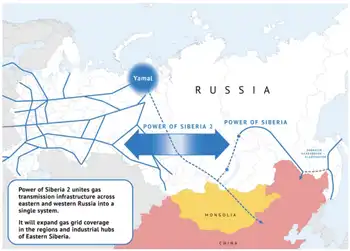
Russia to triple electricity supplies to China
Amur-Heihe ETL Power Supply Tripling will expand Russia-China electricity exports, extending 750 MW DC full-load…
View more

Hinkley C nuclear reactor roof lifted into place
Hinkley Point C dome lift marks a nuclear reactor milestone in Somerset, as EDF used…
View more

Peterborough Distribution sold to Hydro One for $105 million.
Peterborough Distribution Inc. Sale to Hydro One delivers a $105 million deal pending Ontario Energy…
View more
Sign Up for Electricity Forum’s Newsletter
Stay informed with our FREE Newsletter — get the latest news, breakthrough technologies, and expert insights, delivered straight to your inbox.
Electricity Today T&D Magazine Subscribe for FREE

Stay informed with the latest T&D policies and technologies.
- Timely insights from industry experts
- Practical solutions T&D engineers
- Free access to every issue

