NFPA 70E Training - 2027 Edition - Arc Flash and Electrical Safety Course
Our customized live online or in‑person group training can be delivered to your staff at your location.

- Live Online
- 6 hours Instructor-led
- Group Training Available
Regular Price:
$199
Coupon Price:
$149
Professor James Lovelock, the scientist who inspired the Greens, recently offered to store high level nuclear waste on his land if it would help to revive the fortunes of atomic energy in Britain.
In May, the Prime Minister said that a new generation of nuclear power stations would have to be built to meet energy needs and avoid dependence on foreign imports, pre-empting the Government's own energy review.
But the economics of the nuclear industry have always been dogged by the failure of politicians of all parties to decide what to do with the high level nuclear waste.
In April the argument over what to do with Britain's 60-year legacy of civil nuclear waste returned to where it was a decade ago when a committee recommended burying it in a hole in the ground.
But where that hole should be remains the big issue.
"I have offered to take the full output of a nuclear power station in my back yard," said Prof Lovelock, who lives on the border between Devon and Cornwall.
"I would be glad to have it. I would use it for home heating. It would be a waste not to use it."
His neighbours are enthusiastic supporters, he said. "They are all farmers and they have got a strong sense of the value of money."
As for the local council, "one can just imagine putting in planning permission to store high level nuclear waste".
The green movement has "built up a miasma of fear" about nuclear waste, he said.
"I am a scientist when they [environmentalists] are mostly not," he added, arguing that new reactors should be built on the old sites.
The green movement's recommendations of sustainable development and renewable energy are well intentioned but too late, said Prof Lovelock, who was discussing his ideas at the Cheltenham Science Festival, which is backed by The Daily Telegraph.
He added that many members of the current Labour Government "are old CND [Campaign for Nuclear Disarmament] marchers. It was a dream of theirs to have a nuclear-free Britain and they hate to see that dream being spoiled. But we are facing a serious energy shortage if we don't do something about it".
Prof Lovelock is best known for his ideas that portray Earth as a living thing, a super-organism - named Gaia, after the ancient Earth goddess - in which creatures, rocks, air and water interact in subtle ways to ensure the environment remains stable.
Meanwhile as if the prospect of drought, heat waves and more violent storms is not worrying enough, Prof Bill McGuire of University College London, gave a warning that climate change could also trigger volcanic eruptions, earthquakes and tsunamis.
The idea that climate change is linked to geological catastrophes is not as far-fetched as it might sound, Prof McGuire, a director of the university's Benfield Hazard Research Centre, told the festival.
"Evidence is stacking up that changes in global climate can and do affect the frequencies of earthquakes, volcanic eruptions and catastrophic sea floor landslides," he said. "Not only has this happened several times throughout Earth's history, the evidence suggests that it is starting to happen again.
"There is a growing consensus that if climate change continues unchecked, we can expect not only a warmer future, but a more geologically turbulent one too."
Related News
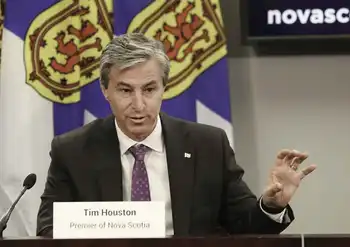
Nova Scotia Premier calls on regulators to reject 14% electricity rate hike agreement
Nova Scotia Power Rate Increase Settlement faces UARB scrutiny as regulators weigh electricity rates, fuel…
View more

NY Governor Cuomo Announces Green New Deal Included in 2019 Executive Budget
New York Green New Deal accelerates clean energy and climate action, targeting carbon neutrality with…
View more
Integrating AI Data Centers into Canada's Electricity Grids
Canada AI Data Center Grid Integration aligns AI demand with renewable energy, energy storage, and…
View more
Nearly $1 Trillion in Investments Estimated by 2030 as Power Sector Transitions to a More Decarbonized and Flexible System
Distributed Energy Resources (DER) are surging as solar PV, battery storage, and demand response decarbonize…
View more

Georgia Power warns customers of scams during pandemic
Georgia Power Scam Alert cautions customers about phone scams, phishing, and fraud during COVID-19, urging…
View more
British carbon tax leads to 93% drop in coal-fired electricity
Carbon Price Support, the UK carbon tax on power, slashed coal generation, cut CO2 emissions,…
View more
Sign Up for Electricity Forum’s Newsletter
Stay informed with our FREE Newsletter — get the latest news, breakthrough technologies, and expert insights, delivered straight to your inbox.
Electricity Today T&D Magazine Subscribe for FREE

Stay informed with the latest T&D policies and technologies.
- Timely insights from industry experts
- Practical solutions T&D engineers
- Free access to every issue
