Offshore wind can help state replace lost power suppliers

By New Bedford Wind Energy Center.


Protective Relay Training - Basic

Our customized live online or in‑person group training can be delivered to your staff at your location.

  • Live Online
  • 12 hours Instructor-led
  • Group Training Available
Regular Price:
$699
Coupon Price:
$599
Reserve Your Seat Today
Two recent news headlines should be central to the important debate over legislation that will determine whether Massachusetts has access to clean, reliable, and affordable sources of energy to power our homes, schools, and workplaces.

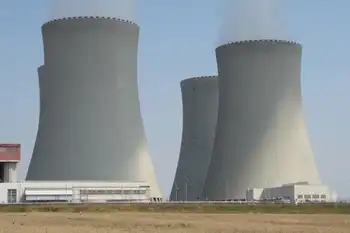
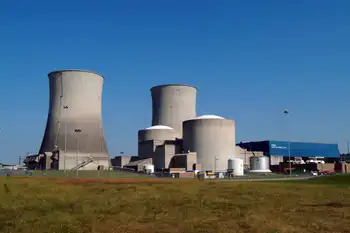
First, Entergy Corp. announced in October that it would close the Pilgrim Nuclear Power Station in Plymouth by 2019, shortly after Dominion Energy announced next yearÂ’s shutdown of the Brayton Point Power Plant in Somerset.

The closure of these and other obsolete coal and oil-powered power plants around the region will cost Massachusetts more than 10 percent of its power production with New England losing 25 percent of its production within the next decade, according to ISO-New England, which manages the regionÂ’s power supply.

How we replace those power generators will affect how much we pay for electricity to heat and cool our homes and whether or not Massachusetts will continue to be an affordable place to do business.

Second, a recent study by the Woods Hole Oceanographic Institution and the Buzzards Bay Coalition found that water temperatures in Buzzards Bay have increased by 4 degrees Fahrenheit over the past two decades as a result of climate change fueled by rising levels of greenhouse gases linked to the burning of fossil fuels, all but eliminating the bayÂ’s lobster fishery and harming water quality. Those are two of the big reasons why the current debate in the state Legislature over a bill that will decide energy policy for a decade or more is so important. It will determine whether we are able to wean ourselves from an over-reliance on natural gas, which provides an unhealthy 64 percent of the stateÂ’s electrical power production, and to address the serious environmental changes that are the result of climate change.

The energy bill before the Legislature will also determine whether Massachusetts is able to procure adequate supplies of power, thereby eliminating the volatility in electric rates to which we all have become accustomed.

Even before the announced Pilgrim shutdown, New EnglandÂ’s electric bill was going to be at least $2 billion higher in 2017, because ISO New England, which oversees the regionÂ’s power grid, was forced to cover the expected energy shortfall with power purchased on the energy futures market. State legislators are considering legislation that is likely to include a mix of energy sources, including natural gas, hydroelectric, and wind.

One key provision would require that public utilities buy 2,000 megawatts of power from offshore wind farms.

Those wind farms are in no way related to the moribund Cape Wind project, and none will be built in Nantucket Sound.

Instead, the offshore wind industry in Massachusetts will be built in tracts of ocean 15 to 25 miles southwest of MarthaÂ’s Vineyard in waters leased by the Bureau of Ocean Management to three of the worldÂ’s largest and most experienced offshore wind developers: Deepwater Wind, which is building a demonstration wind farm off Block Island DONG Energy, the worldÂ’s largest developer of offshore wind farms and Offshore MW, which is owned by one of the worldÂ’s largest venture capital firms.

Those waters produce among the strongest and most reliable winds in the world, and they are located sufficiently far offshore that they will provide little disturbance to views from shore.

Each year, offshore wind could eliminate more than 3 million tons of carbon dioxide, 3,000 tons of sulphur dioxide and 1,100 tons of nitrous oxide from spewing into the atmosphere from fossil fuel-fired power plants, according to the National Wildlife Federation. In addition, a new offshore wind industry would create thousands of jobs for Massachusetts.

The U.S. Department of Energy forecasts the industry will employ 43,000 people along the East Coast by 2030 — most of them in New England. Port cities like New Bedford, Fall River, and Quincy stand to gain jobs servicing that emerging industry.

The price of the power produced by offshore wind farms in Europe — which has developed more than 10,000 MW of wind power — is already competitive with other energy generators, and the price is falling as technology improves and the industry matures and benefits from economies of scale.

In Massachusetts, the three developers looking to build the first industrial-scale wind farm in the United States would be required to bid against one another to offer the lowest price. Further, offshore wind should help keep overall energy prices down because wind farms produce the most power during periods of peak demand: during summer heat waves and frigid winters.

Finally, as SouthCoast residents understand as well as anyone, Massachusetts must act decisively against climate change if we are to preserve our way of life and our coastal communities, which are so closely linked to the health of our oceans.

For all those reasons, offshore wind should be part of a comprehensive state energy plan.

Related News

Operating record for Bruce Power as Covid-19 support Council announced

Bruce Power Life-Extension Programme advances Ontario nuclear capacity through CANDU Major Component Replacement, reliable operation milestones, supply chain retooling for COVID-19 recovery, PPE production, ventilator projects, and medical isotope supply security.


Key Points

A program to refurbish CANDU reactors, extend asset life, and mobilize Ontario nuclear supply chain and isotopes.

✅ Extends CANDU units via Major Component Replacement

✅ Supports COVID-19 recovery with PPE and ventilator projects

✅ Boosts Ontario energy reliability and medical isotopes


Canada’s Bruce Power said on 1 May that unit 1 at the Bruce nuclear power plant had set a record of 624 consecutive days of reliable operation – the longest since it was returned to service in 2012.

It exceeded Bruce 8’s run of 623 consecutive days between May 2016 and February 2018. Bruce 1, a Candu reactor, was put into service in 1977. It was shut down and mothballed by the former Ontario Hydro in 1997, and was refurbished and returned to service in 2012 by Bruce Power.

Bruce units 3 and 4 were restarted in 2003 and 2004. They are part of Bruce Power’s Life-Extension Programme, and future planning such as Bruce C project exploration continues across the fleet, with units 3 and 4 to undergo Major Component Replacement (MCR) Projects from 2023-28, adding about 30 years of life to the reactors.

The refurbishment of Bruce 6 has begun and will be followed by MCR Unit 3 which is scheduled to begin in 2023. Nuclear power accounts for more than 60% of Ontario’s supply, with Bruce Power providing more than 30%   of the province’s electricity.

Set up of Covid recovery council
On 30 April, Bruce Power announced the establishment of the Bruce Power Retooling and Economic Recovery Council to leverage the province’s nuclear supply chain to support Ontario’s fight against Covid-19 and to help aid economic recovery.

Bruce Power’s life extension programme is Canada’s second largest infrastructure project and largest private sector infrastructure programme. It is creating 22,000 direct and indirect jobs, delivering economic benefits that are expected to contribute $4 billion to Ontario’s GDP and $8-$11 billion to Canada’s gross domestic product (GDP), Bruce Power said.

“With 90% of the investment in manufactured goods and services coming from 480 companies in Ontario and other provinces, including recent manufacturing contracts with key suppliers, we can harness these capabilities in the fight against Covid-19, and help drive our economic recovery,” the company said.

“An innovative and dynamic nuclear supply chain is more important than ever in meeting this new challenge while successfully implementing our mission of providing clean, reliable, flexible, low-cost nuclear energy and a global supply of medical isotopes,” said Bruce Power president and CEO Mike Rencheck. “We are mobilising a great team with our extended supply chain, which spans the province, to assist in the fight against Covid-19 and to help drive our economic recovery in the future.”

Greg Rickford, the Minister of Energy, Mines, Northern Development, and Minister of Indigenous Affairs, said the launch of the council is consistent with Ontario’s focus to fight Covid-19 as a top priority and a look ahead to economic recovery, and initiatives like Pickering life extensions supporting long-term system reliability.

The creation of the Council was announced during a live event on Bruce Power's Facebook page, in which Rencheck was joined by Associate Minister of Energy Bill Walker and Rocco Rossi, the president and CEO of the Ontario Chamber of Commerce.

Walker reiterated the Government of Ontario’s commitment to nuclear power over the long term and to the life extension programme, including the Pickering B refurbishment as part of this strategy.

The Council, which will be formed for the duration of the pandemic and will include of all of Bruce Power’s Ontario-based suppliers, will focus on the continued retooling of the supply chain to meet front-line Covid-19 needs to contribute to the province’s economy recovery in the short, medium and long term.

New uses for nuclear medical applications will be explored, including isotopes for the sterilisation of medical equipment and long-term supply security.

The supply chain will be leveraged to support the health care sector through the rapid production of medical Personal Protection Equipment for front line-workers and large-scale PPE donations to communities as well as participation in pilot projects to make ventilators within the Bruce Power supply chain or help identify technology to better utilise existing ventilators;

“Buy Local” tools and approaches will be emphasised to ensure small businesses are utilised fully in communities where nuclear suppliers are located.

The production of hand sanitiser and other cleaning products will be facilitated for distribution to communities.


Related News

View more

New Texas will bill electric vehicle drivers an extra $200 a year

Texas EV Registration Fee adds a $200 annual charge under Senate Bill 505, offsetting lost gasoline tax revenue to the State Highway Fund, impacting electric vehicle owners at registration and renewals across Texas.


Key Points

A $200 yearly charge on electric vehicles to replace lost gasoline tax revenue and support Texas Highway Fund road work.

✅ $200 due at registration or renewal; $400 upfront on new EVs.

✅ Enacted by Senate Bill 505 to offset lost gasoline tax revenue.

✅ Advocates propose mileage-based fees; limited $2,500 rebates exist.


Plano resident Tony Federico bought his Tesla five years ago in part because he hated spending lots of money on gas, and Supercharger billing changes have also influenced charging expenses. But that financial calculus will change slightly on Sept. 1, when Texas will start charging electric vehicle drivers an additional fee of $200 each year.

“It just seems like it’s arbitrary, with no real logic behind it,” said Federico, 51, who works in information technology. “But I’m going to have to pay it.”

Earlier this year, state lawmakers passed Senate Bill 505, which requires electric vehicle owners to pay the fee when they register a vehicle or renew their registration, even as fights for control over charging continue among utilities, automakers and retailers. It’s being imposed because lawmakers said EV drivers weren’t paying their fair share into a fund that helps cover road construction and repairs across Texas.

The cost will be especially high for those who purchase a new electric vehicle and have to pay two years of registration, or $400, up front.

Texas agencies estimated in a 2020 report that the state lost an average of $200 per year in federal and state gasoline tax dollars when an electric vehicle replaced a gas-fueled one. The agencies called the fee “the most straightforward” remedy.

Gasoline taxes go to the State Highway Fund, which the Texas Department of Transportation calls its “primary funding source.” Electric vehicle drivers don’t pay those taxes, though, because they don’t use gasoline.

Still, EV drivers do use the roads. And while electric vehicles make up a tiny portion of cars in Texas for now, that fraction is expected to increase, raising concerns about state power grids in the years ahead.

Many environmental and consumer advocates agreed with lawmakers that EV drivers should pay into the highway fund but argued over how much, and debates over fairer vehicle taxes are surfacing abroad as well.

Some thought the state should set the fee lower to cover only the lost state tax dollars, rather than both the state and federal money, because federal officials may devise their own scheme. Others argued the state should charge nothing because EVs help reduce greenhouse gas emissions that drive climate change and can offer budget benefits for many owners.

“We urgently need to get more electric vehicles on the road,” said Luke Metzger, executive director of Environment Texas. “Any increased fee could create an additional barrier for Texans, and particularly more moderate- to low-income Texans, to make that transition.”

Tom “Smitty” Smith, the executive director of the Texas Electric Transportation Resources Alliance, advocated for a fee based on how many miles a person drove their electric car, which would better mirror how the gas taxes are assessed.

Texas has a limited incentive that could offset the cost: It offers rebates of up to $2,500 for up to 2,000 new hydrogen fuel cell, electric or hybrid vehicles every two years. Adrian Shelley, Public Citizen’s Texas office director, recommended that the state expand the rebates, noting that state-level EV benefits can be significant.

In the Houston area, dealer Steven Wolf isn’t worried about the fee deterring potential customers from buying the electric Ford F-150 Lightning and Mustang Mach-E vehicles he sells. Electric cars are already more expensive than comparable gasoline-fueled cars, and charging networks compete for drivers, he said.


Related News

View more

IEA praises Modi govt for taking electricity to every village; calls India 'star performer'

India Village Electrification hailed by the IEA in World Energy Outlook 2018 showcases rapid energy access progress, universal village power, clean cooking advances via LPG, and Modi-led initiatives, inspiring Indonesia, Bangladesh, and Sub-Saharan Africa.


Key Points

A national push to power every Indian village, praised by the IEA for boosting energy access and clean cooking.

✅ Electrified 597,464 villages ahead of schedule in April 2018.

✅ IEA hails India in World Energy Outlook 2018 as star performer.

✅ LPG connections surge via Ujjwala, aiding clean cooking access.


The global energy watchdog International Energy Agency (IEA) has called India's electrification of every village the greatest success story of 2018. In its latest report, World Energy Outlook 2018, the IEA has called India a "star performer" in terms of achieving the big milestone of the providing power to each village. "In particular, one of the greatest success stories in access to energy in 2018 was India completing the electrification of all of its villages," said the IEA. It added that countries like Indonesia and Bangladesh have also achieved the commendable electrification rate of 95% (up from 50% in 2000), and 80% (up from 20% in 2000), respectively, even as Europe's electrification push continues as part of broader transitions.

This 643-page report by the IEA says over 120 million people worldwide gained access to electricity in 2017 and charts growth in the electric car market as part of broader energy trends. For the first time ever, the total number of people without access fell below 1 billion, it said.  The mega plan of providing electricity to 597,464 villages in India was announced by Prime Minister Narendra Modi during his Independence Day speech in 2015. On April 28, 2018, PM Modi confirmed that India had achieved its goal ahead of schedule. "This is one of the greatest achievements in the history of energy," said the IEA.

Praising the Narendra Modi government for making efforts towards lighting up every village in India, the agency said: "Since 2000 around half a billion people have gained access to electricity in India, with political effort over the last five years significantly accelerating progress."

India's achievement of providing universal household electricity access will improve the lives of over 230 million people, said the IEA, even as analyses like a Swedfund report debate some poverty outcomes in electrified areas. For a start, electric lighting makes the use of candles, kerosene and other polluting fuels for lighting redundant, not only saving money (and providing more light) but also seriously improving health, it said.

Though the global energy agency has called India "a success story", and a "bright spot for energy access", it says huge challenges remain in other regions of the world where over 670 million people still live without electricity access. "90% of these people are concentrated in sub-Saharan Africa, with countries such as Nigeria facing severe shortages," said the report.

Seven decades after independence and nearly three decades after India's economic liberalisation, the Modi government achieved the historic milestone of giving power to every single village of India, 12 days ahead of the deadline set by PM Modi. Leisang in Manipur became the last village to be connected to the grid, while a Delhi energy storage project explores ways to balance supply and demand.

The agency also praised India for tackling a related problem: access to clean cooking facilities. "While an estimated 780 million people in India rely on biomass for cooking, progress is emerging, as India is one of the few countries in the world targeting this "blind spot" of energy policy," it said.

Around 36 million LPG connections have been made since Prime Minister Modi and Minister for Petroleum and Natural Gas, Dharmendra Pradhan, launched the Pradhan Mantri Ujjwala Yojana scheme in May 2016 to provide free connections to families living below the poverty line. In India, around 50 million free LPG stoves and initial refills have been provided to poor households via this scheme since 2015. The government has set a target of providing LPG connections to 80 million households by 2020.


Related News

View more

Negative Electricity Prices Amid Renewable Energy Surplus

France Negative Electricity Prices highlight surplus renewables as solar and wind output exceeds demand, driving grid flexibility, demand response, and storage signals while reshaping energy markets, lowering emissions, and improving economic efficiency and energy security.


Key Points

They occur when surplus solar and wind push wholesale power prices below zero, signaling flexible, low-carbon grids.

✅ Surplus solar and wind outpace demand, flipping price signals

✅ Incentivizes demand response, storage, and flexible loads

✅ Enhances decarbonization, energy security, and market efficiency


In a remarkable feat for renewable energy, France has recently experienced negative electricity prices due to an abundant supply of solar and wind power. This development highlights the country's progress towards sustainable energy solutions and underscores the potential of renewables to reshape global energy markets.

The Surge in Renewable Energy Supply

France's electricity grid benefited from a surplus of renewable energy generated by solar panels and wind turbines. During periods of peak production, such as sunny and windy days, the supply of electricity exceeded demand, leading to negative prices and reflecting how solar is reshaping price dynamics in Northern Europe.

Implications for Energy Markets

The occurrence of negative electricity prices reflects a shift towards a more flexible and responsive energy system. It demonstrates the capability of renewables to meet substantial portions of electricity demand reliably and economically, with evidence of falling wholesale prices in many markets, challenging traditional notions of energy supply and pricing dynamics.

Technological Advancements and Policy Support

Technological advancements in renewable energy infrastructure, coupled with supportive government policies and incentives, have played pivotal roles in France's achievement. Investments in solar farms, wind farms, and grid modernization, including the launch of France's largest battery storage platform by TagEnergy, have enhanced the efficiency and reliability of renewable energy integration into the national grid.

Economic and Environmental Benefits

The adoption of renewable energy sources not only reduces greenhouse gas emissions but also fosters economic growth and energy independence. By harnessing abundant solar and wind resources, France strengthens its energy security and reduces reliance on fossil fuels, contributing to long-term sustainability goals and reflecting a continental shift as renewable power has surpassed fossil fuels for the first time.

Challenges and Future Outlook

While France celebrates the success of negative electricity prices, challenges remain in scaling renewable energy deployment and optimizing grid management. Balancing supply and demand, integrating intermittent renewables, and investing in energy storage technologies are critical for ensuring grid stability and maximizing the benefits of renewable energy, particularly in addressing clean energy's curtailment challenge across modern grids.

Global Implications

France's experience with negative electricity prices serves as a model for other countries striving to transition to clean energy economies. It underscores the potential of renewables to drive economic prosperity, mitigate climate change impacts, and reshape global energy markets towards sustainability, as seen in Germany where solar-plus-storage is now cheaper than conventional power in several contexts.

Conclusion

France's achievement of negative electricity prices driven by renewable energy surplus marks a significant milestone in the global energy transition. By leveraging solar and wind power effectively, France demonstrates the feasibility and economic viability of renewable energy integration at scale. As countries worldwide seek to reduce carbon emissions and enhance energy resilience, France's example provides valuable insights and inspiration for advancing renewable energy agendas and accelerating towards a sustainable energy future.


Related News

View more

France and Germany arm wrestle over EU electricity reform

EU Electricity Market Reform CFDs seek stable prices via contracts for difference, balancing renewables and nuclear, shielding consumers, and boosting competitiveness as France and Germany clash over scope, grid expansion, and hydrogen production.


Key Points

EU framework using contracts for difference to stabilize power prices, support renewables and nuclear, and protect users.

✅ Guarantees strike prices for new low-carbon generation

✅ Balances consumer protection with industrial competitiveness

✅ Disputed scope: nuclear inclusion, grids, hydrogen eligibility


Despite record temperatures this October, Europe is slowly shifting towards winter - its second since the Ukraine war started and prompted Russia to cut gas supplies to the continent amid an energy crisis that has reshaped policy.

After prices surged last winter, when gas and electricity bills “nearly doubled in all EU capitals”, the EU decided to take emergency measures to limit prices.

In March, the European Commission proposed a reform to revamp the electricity market “to boost renewables, better protect consumers and enhance industrial competitiveness”.

However, France and Germany are struggling to find a compromise as rolling back prices is tougher than it appears and the clock is ticking as European energy ministers prepare to meet on 17 October in Luxembourg.


The controversy around CFDs
At the heart of the issue are contracts for difference (CFDs).

By providing a guaranteed price for electricity, CFDs aim to support investment in renewable energy projects.

France - having 56 nuclear reactors - is lobbying for nuclear energy to be included in the CFDs, but this has caught the withering eye of Germany.

Berlin suspects Paris of wanting an exception that would give its industry a competitive advantage and plead that it should only apply to new investments.


France wants ‘to regain control of the price’
The disagreement is at the heart of the bilateral talks in Hamburg, which started on Monday, between the French and German governments.

French President Emmanuel Macron promised “to regain control of the price of electricity, at the French and European level” and outlined a new pricing scheme in a speech at the end of September.

As gas electricity is much more expensive than nuclear electricity, France might be tempted to switch to a national system rather than a European one after a deal with EDF on prices to be more competitive economically.

However, France is "confident" that it will reach an agreement with Germany on electricity market reforms, Macron said on Friday.

Siding with France are other pro-nuclear countries such as Hungary, the Czech Republic and Poland, while Germany can count on the support of Austria, Luxembourg, Belgium and Italy amid opposition from nine EU countries to treating market reforms as a price fix.

But even if a last-minute agreement is reached, the two countries’ struggles over energy are creeping into all current European negotiations on the subject.

Germany wants a massive extension of electricity grids on the continent so that it can import energy; France is banking on energy sovereignty and national production.

France wants to be able to use nuclear energy to produce clean hydrogen, while Germany is reluctant, and so on.


Related News

View more

Ontario Reducing Burden on Industrial Electricity Ratepayers

Ontario Industrial Electricity Pricing Reforms aim to cut regulatory burden for industrial ratepayers through an energy concierge service, IESO billing reviews, GA estimation enhancements, clearer peak demand data, and contract cost savings.


Key Points

Measures to reduce industrial power costs via an energy concierge, IESO and GA reviews, and better peak demand data.

✅ Energy concierge eases pricing and connection inquiries

✅ IESO to simplify bills and refine GA estimation

✅ Real-time peak data and contract savings under review


Ontario's government is pursuing burden reduction measures for industrial electricity ratepayers, including legislation to lower rates to help businesses compete, and stimulate growth and investment.

Over the next year, Ontario will help industrial electricity ratepayers focus on their businesses instead of their electricity management practices by establishing an energy concierge service to provide businesses with better customer service and easier access to information about electricity pricing and changes for electricity consumers as well as connection processes.

Ontario is also tasking the Independent Electricity System Operator (IESO) to review and report back on its billing, settlement and customer service processes, building on initiatives such as electricity auctions that aim to reduce costs.


Improve and simplify industrial electricity bills, including clarifying the recovery rate that affects charges;

Review how the monthly Global Adjustment (GA) charge is estimated and identify potential enhancements related to cost allocation across classes; and,

Improve peak demand data publication processes and assess the feasibility of using real-time data to determine the factors that allocate GA costs to consumers.

Further, as part of the government's continued effort to finding efficiencies in the electricity system, Ontario is also directing IESO to review generation contracts to find opportunities for cost savings.

These measures are based on industry feedback received during extensive industrial electricity price consultations held between April and July 2019, which underscored how high electricity rates have impacted factories across the province.

"Our government is focused on finding workable electricity pricing solutions that will provide the greatest benefit to Ontario," said Greg Rickford, Minister of Energy, Northern Development and Mines. "Reducing regulatory burden on businesses can free up resources that can then be invested in areas such as training, new equipment and job creation."

The government is also in the process of developing further changes to industrial electricity pricing policy, amid planned rate increases announced by the OEB, informed by what was heard during the industrial electricity price consultations.

"It's important that we get this right the first time," said Minister Rickford. "That's why we're taking a thoughtful approach and listening carefully to what businesses in Ontario have to say."

Helping industrial ratepayers is part of the government's balanced and prudent plan to build Ontario together through ensuring our province is open for business and building a more transparent and accountable electricity system.


Related News

View more

Sign Up for Electricity Forum’s Newsletter

Stay informed with our FREE Newsletter — get the latest news, breakthrough technologies, and expert insights, delivered straight to your inbox.

Electricity Today T&D Magazine Subscribe for FREE

Stay informed with the latest T&D policies and technologies.
  • Timely insights from industry experts
  • Practical solutions T&D engineers
  • Free access to every issue

Download the 2025 Electrical Training Catalog

Explore 50+ live, expert-led electrical training courses –

  • Interactive
  • Flexible
  • CEU-cerified