Ohio Might Be Power Failure Source

By Canadian Press


Protective Relay Training - Basic

Our customized live online or in‑person group training can be delivered to your staff at your location.
  • Live Online
  • 12 hours Instructor-led
  • Group Training Available
Regular Price:
$699
Coupon Price:
$599
Reserve Your Seat Today
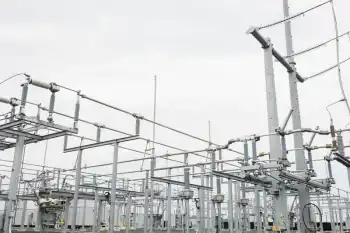
A massive power blackout retreated stubbornly today as power officials struggled to understand why the historic outage spread in minutes through the northeastern United States and southern Canada. Lights flicked on and air conditioners restarted for some, but new problems arose as the power system struggled back to life.

There were growing indications the original problem began in Ohio, rather than New York or Canada, as some had thought.

In Connecticut, Gov. John G. Rowland issued an emergency plea for residents to save power this morning after a state transmission line fizzled.

"There presently is insufficient capacity to remain a reliable power supply," John Wiltse, a spokesperson for the governor, said after a transmission line that feeds southwestern Connecticut went down around 5:45 a.m.

Cleveland weathered its worst water crisis in history as the blackout shut all four major pumping stations. The pumps, which serve more than one million residents in the city and 20 suburbs, began operating this morning, but the National Guard trucked in 6.3 million litres of drinking water to help until taps flowed again.

In Canada, millions of Ontario residents woke today to another sweltering day without electricity.

With Ontario Premier Ernie Eves declaring a state of emergency, citizens were advised to stay home from work today unless they were essential or emergency workers. The provincial government urged people to conserve electricity and asked businesses to close for the day.

In New York City, power was restored this morning to parts of all five boroughs and some suburbs, but millions faced a morning rush hour without subway service or many of the traffic lights and no timetable for full restoration of power.

"Today will also present challenges," New York Mayor Michael Bloomberg told reporters. He asked essential city workers to come in but told non-essential counterparts to stay home and urged citizens to use judgment about working today.

"There are worse things than taking a summer Friday off from work," he said.

Bloomberg said a trying, hot night had cost the life of a 40-year-old who suffered a heart attack during one of New York City's 60 serious fires, most caused by candles used to stave off darkness. There were 800 elevator rescues; 80,000 calls to 911 and a record 5,000 emergency medical service calls. Emergency personnel "worked incredibly hard to get us through the night safely," Bloomberg said.

In Michigan, some customers may have to endure a weekend without electricity. Everywhere officials urged residents, businesses and travellers to cope with the inconvenience.

"This is truly one of the instances where we're all in this together," Gov. Jennifer Granholm of Michigan said during a statewide address last night. "So be calm, be supportive of your neighbour."

State workers in Michigan's capitol, Lansing, were told to report to work today but in harder-hit Detroit they were ordered to stay home.

While terrorism was swiftly ruled out by President George W. Bush and other officials, there was scant indication of what had caused the outage, which began on the cusp of yesterday's afternoon rush hour in Eastern cities.

There are indications it probably "started somewhere in the Midwest, perhaps Ohio," Michehl Gent, president of the North American Electric Reliability Council, said today on ABC-TV's Good Morning America.

Gent, whose non-profit council was formed after the 1965 Northeast blackout to promote the reliability of the bulk electric systems, did not say what those indications were but expressed confidence that terrorism was not involved.

New York Independent System Operator president William Museler said huge power fluctuations originating from a Midwest power plant started the downfall of the grid. He said the power swings became so large that the system in Ontario system could not sustain them, and the problem migrated to New York.

The New York Independent System Operator, which runs the state's wholesale electricity market and monitors power usage, said it had detected a sudden loss of power generation at 4:11 p.m.

More generally, industry and government experts blamed a system composed of interconnected grids that has not been upgraded to meet power demands.

The disruptions were as diverse as they were widespread.

A small explosion at the Marathon Oil refinery 15 kilometres south of Detroit was blamed on the outage, which cut power to a pump, allowing a buildup of gasses that ultimately exploded in a smoke stack. No one was hurt but police fearing additional explosions or possible release of toxic gas evacuated hundreds of residents from a 1.6-kilometre radius around the refinery.

In New York City, thousands of stranded commuters were forced to sleep in bus and train terminals and even in the streets. Hundreds of out-of-towners at the Marriott Marquis slept on sidewalks because the hotel did not have a generator to power its electronic room keys.

In Sudbury, Ont, some 340 kilometres north of Toronto, more than 100 miners at a nickel mine were stranded in underground lunchrooms because the outage halted elevators used to bring them to the surface. Authorities said they were not in any immediate danger because they had water and that backup power was running the ventilation system.

In Cleveland, the loss of power wasn't the only problem. About 1.5 million residents faced a crisis because there was no electricity to pump water from Lake Erie. At least three Eastern suburbs were out of water and officials said western suburbs could go dry.

With sewage treatment plants blacked out, untreated waste releases forced the closing of beaches in New York City and Cleveland.

Despite the outages in Manhattan, New York's financial markets had no intention of shutting down.

The New York Stock Exchange and Nasdaq resumed stock trading on schedule this morning, but the American exchange delayed trading because problems at a Consolidated Edison substation prevented air conditioning from reaching the trading floor.

However, businesses from Manhattan through the Midwest were anxious about technical glitches and more power outages a day after the biggest blackout in U.S. history.

In San Diego, Bush said, "slowly but surely we're coping with this massive, national problem," and added that he would order a review of "why the cascade was so significant."

The president said he suspected that the U.S. electrical grid would need to be modernized.

Electric industry and government officials said the U.S. power grid has needed major upgrades for years, but industry experts said there were three major obstacles in the way: the expense, environmental opposition and people who didn't want power facilities nearby.

Both federal and state agencies, as well as congressional committees, are expected to investigate the blackout and try to determine why measures put in place to isolate grids and keep power disruptions from spreading failed to do so.

Related News

Tesla updates Supercharger billing to add cost of electricity use for other than charging

Tesla Supercharger Billing Update details kWh-based pricing that now includes HVAC, battery thermal management, and other HV loads during charging sessions, improving cost transparency across pay-per-use markets and extreme climate scenarios.


Key Points

Tesla's update bills for kWh used by HVAC, battery heating, and HV loads during charging, reflecting true energy costs.

✅ kWh charges now include HVAC and battery thermal management

✅ Expect 10-25 kWh increases in extreme climates during sessions

✅ Some regions still bill per minute due to regulations


Tesla has updated its Supercharger billing policy to add the cost of electricity use for things other than charging, like HVAC, battery thermal management, etc, while charging at a Supercharger station, a shift that impacts overall EV charging costs for drivers. 

For a long time, Tesla’s Superchargers were free to use, or rather the use was included in the price of its vehicles. But the automaker has been moving to a pay-to-use model over the last two years in order to finance the growth of the charging network amid the Biden-era charging expansion in the United States.

Not charging owners for the electricity enabled Tesla to wait on developing a payment system for its Supercharger network.

It didn’t need one for the first five years of the network, and now the automaker has been fine-tuning its approach to charge owners for the electricity they consume as part of building better charging networks across markets.

At first, it meant fluctuating prices, and now Tesla is also adjusting how it calculates the total power consumption.

Last weekend, Tesla sent a memo to its staff to inform them that they are updating the calculation used to bill Supercharging sessions in order to take into account all the electricity used:

The calculation used to bill for Supercharging has been updated. Owners will also be billed for kWhs consumed by the car going toward the HVAC system, battery heater, and other HV loads during the session. Previously, owners were only billed for the energy used to charge the battery during the charging session.

Tesla says that the new method should more “accurately reflect the value delivered to the customer and the cost incurred by Tesla,” which mirrors recent moves in its solar and home battery pricing strategy as well.

The automaker says that customers in “extreme climates” could see a difference of 10 to 25 kWh for the energy consumed during a charging session:

Owners may see a noticeable increase in billed kWh if they are using energy-consuming features while charging, e.g., air conditioning, heating etc. This is more likely in extreme climates and could be a 10-25 kWh difference from what a customer experienced previously, as states like California explore grid-stability uses for EVs during peak events.

Of course, this is applicable where Tesla is able to charge by the kWh for charging sessions. In some markets, regulations push Tesla to charge by the minute amid ongoing fights over charging control between utilities and private operators.

Electrek’s Take
It actually looks like an oversight from Tesla in the first place. It’s fair to charge for the total electricity used during a session, and not just what was used to charge your battery pack, since Tesla is paying for both, even as some states add EV ownership fees like the Texas EV fee that further shape costs.

However, I wish Tesla would have a clearer way to break down the charging sessions and their costs.

There have been some complaints about Tesla wrongly billing owners for charging sessions, and this is bound to create more confusion if people see a difference between the kWhs gained during charging and what is shown on the bill.


Related News

View more

$1.6 Billion Battery Plant Charges Niagara Region for Electric Vehicle Future

Ontario EV Battery Separator Plant anchors Canada's EV supply chain, with Asahi Kasei producing lithium-ion battery separators in Niagara Region to support Honda's Alliston assembly, clean transportation growth, and sustainable manufacturing jobs.


Key Points

Asahi Kasei's Niagara Region plant makes lithium-ion battery separators supplying Honda's EV factory in Ontario.

✅ Starts up by 2027 to align with Honda EV output timeline.

✅ Backed by clean tech tax credits and public investment.

✅ Boosts local jobs, R&D, and clean transportation leadership.


The automotive industry is undergoing a seismic shift, and Canada is firmly planting its flag in the electric vehicle (EV) revolution, propelled by recent EV assembly deals across the country. A new $1.6 billion battery component plant in Ontario's Niagara Region signifies a significant step towards a cleaner, more sustainable transportation future. This Asahi Kasei facility, a key player in Honda's $15 billion electric vehicle supply chain investment, promises to create jobs, boost the local economy, and solidify Ontario's position as a leader in clean transportation technology.

Honda's ambitious project forms part of Honda's Ontario EV investment that involves constructing a dedicated battery plant adjacent to their existing Alliston, Ontario assembly facility. This new plant will focus on producing fully electric vehicles, requiring a robust supply chain for critical components. Asahi Kasei's Niagara Region plant enters the picture here, specializing in the production of battery separators – a thin film crucial for separating the positive and negative electrodes within a lithium-ion battery. These separators play a vital role in ensuring the battery functions safely and efficiently.

The Niagara Region plant is expected to be operational by 2 027, perfectly aligning with Honda's EV production timeline. This strategic partnership benefits both companies: Honda secures a reliable source for a vital component, while Asahi Kasei capitalizes on the burgeoning demand for EV parts. The project is a catalyst for economic growth in Ontario, creating jobs in construction and manufacturing, supporting an EV jobs boom province-wide, and potentially future research and development sectors. Additionally, it positions the province as a hub for clean transportation technology, attracting further investment and fostering innovation.

This announcement isn't an isolated event. News of Volkswagen constructing a separate EV battery plant in St. Thomas, Ontario, and the continuation of a major EV battery project near Montreal further underscore Canada's commitment to electric vehicles. These developments signify a clear shift in the country's automotive landscape, with a focus on sustainable solutions.

Government support has undoubtedly played a crucial role in attracting these investments. The Honda deal involves up to $5 billion in public funds. Asahi Kasei's Niagara Region plant is also expected to benefit from federal and provincial clean technology tax credits. This demonstrates a collaborative effort between government and industry, including investments by Canada and Quebec in battery assembly, to foster a thriving EV ecosystem in Canada.

The economic and environmental benefits of this project are undeniable. Battery production is expected to create thousands of jobs, while the shift towards electric vehicles will lead to reduced emissions and a cleaner environment. Ontario stands to gain significantly from this transition, becoming a leader in clean energy technology and attracting skilled workers and businesses catering to the EV sector, especially as the U.S. auto pivot to EVs accelerates across the border.

However, challenges remain. Concerns about the environmental impact of battery production, particularly the sourcing of raw materials and the potential for hazardous waste, need to be addressed. Additionally, ensuring a skilled workforce capable of handling the complexities of EV technology is paramount.

Despite these challenges, the future of electric vehicles in Canada appears bright. Major automakers are making significant investments, government support is growing, and consumer interest in EVs is on the rise. The Niagara Region plant serves as a tangible symbol of Canada's commitment to a cleaner and more sustainable transportation future. With careful planning and continued Canada-U.S. collaboration across the sector, this project has the potential to revolutionize the Canadian automotive industry and pave the way for a greener tomorrow.


Related News

View more

Zapping elderly brains with electricity improves short-term memory — for almost an hour

Transcranial electrical stimulation synchronizes brain waves to bolster working memory, aligning neural oscillations across the prefrontal and temporal cortex. This noninvasive brain stimulation may counter cognitive aging by restoring network coupling and improving short-term recall.


Key Points

Transcranial electrical stimulation applies scalp currents to synchronize brain waves, briefly enhancing working memory.

✅ Synchronizes prefrontal-temporal networks to restore coupling

✅ Noninvasive tES/tACS protocols show rapid, reversible gains

✅ Effects lasted under an hour; durability remains to be tested


To read this sentence, you hold the words in your mind for a few seconds until you reach the period. As you do, neurons in your brain fire in coordinated bursts, generating electrical waves that let you hold information for as long as it is needed, much as novel devices can generate electricity from falling snow under specific conditions. But as we age, these brain waves start to get out of sync, causing short-term memory to falter. A new study finds that jolting specific brain areas with a periodic burst of electricity might reverse the deficit—temporarily, at least.

The work makes “a strong case” for the idea that out-of-sync brain waves in specific regions can drive cognitive aging, says Vincent Clark, a neuroscientist at the University of New Mexico in Albuquerque, who was not involved in the research. He adds that the brain stimulation approach in the study may result in a new electrical therapy for age-related deficits in working memory.

Working memory is “the sketchpad of the mind,” allowing us to hold information in our minds over a period of seconds. This short-term memory is critical to accomplishing everyday tasks such as planning and counting, says Robert Reinhart, a neuroscientist at Boston University who led the study. Scientists think that when we use this type of memory, millions of neurons in different brain areas communicate through coupled bursts of activity, a form of electrical conduction that coordinates timing across networks. “Cells that fire together, wire together,” Reinhart says.

But despite its critical role, working memory is a fragile cognitive resource that declines with age, Reinhart says. Previous studies had suggested that reduced working-memory performance in the elderly is linked to uncoupled activity in different brain areas. So Reinhart and his team set out to test whether recoupling brain waves in older adults could boost the brain’s ability to temporarily store information, a systems-level coordination challenge akin to efforts to use AI for energy savings on modern power grids.

To do so, the researchers used jolts of weak electrical current to synchronize waves in the prefrontal and temporal cortex—two brain areas critical for cognition, a targeted approach not unlike how grids use batteries to stabilize power during strain—and applied the current to the scalps of 42 healthy people in their 60s and 70s who showed no signs of decline in mental ability. Before their brains were zapped, participants looked at a series of images: an everyday object, followed briefly by a blank screen, and then either an identical or a modified version of the same object. The goal was to spot whether the two images were different.

Then the participants took the test again, while their brains were stimulated with a current. After about 25 minutes of applying electricity, participants were on average more accurate at identifying changes in the images than they were before the stimulation. Following stimulation, their performance in the test was indistinguishable from that of a group of 42 people in their 20s. And the waves in the prefrontal and temporal cortex, which had previously been out of sync in most of the participants, started to fire in sync, the researchers report today in Nature Neuroscience, a synchronization imperative reminiscent of safeguards that prevent power blackouts on threatened grids. No such effects occurred in a second group of older people who received jolts of current that didn’t synchronize waves in the prefrontal and temporal cortex.

By using bursts of current to knock brain waves out of sync, the researchers also modulated the brain chatter in healthy people in their 20s, making them slower and less accurate at spotting differences in the image test.

“This is a very nice and clear demonstration of how functional connections underlie memory in younger adults and how alterations … can lead to memory reductions in older adults,” says Cheryl Grady, a cognitive neuroscientist at the Rotman Research Institute at Baycrest in Toronto, Canada. It’s also the first time that transcranial stimulation has been shown to restore working memory in older people, says Michael O’Sullivan, a neuroscientist at the University of Queensland in Brisbane, Australia, though electricity in medicine extends far beyond neurostimulation.

But whether brain zapping could turbocharge the cognitive abilities of seniors or help improve the memories of people with diseases like Alzheimer’s is still unclear: In the study, the positive effects on working memory lasted for just under an hour—though Reinhart says that’s as far as they recorded in the experiment. The team didn’t see the improvements decline toward the end, so he suspects that the cognitive boost may last for longer. Still, researchers say much more work has to be done to better understand how the stimulation works.

Clark is optimistic. “No pill yet developed can produce these sorts of effects safely and reliably,” he says. “Helping people is the ultimate goal of all of our research, and it’s encouraging to see that progress is being made.”


Related News

View more

Bruce Power cranking out more electricity after upgrade

Bruce Power Capacity Uprate boosts nuclear output through generator stator upgrades, turbine and transformer enhancements, and cooling pump improvements at Bruce A and B, unlocking megawatts and efficiency gains from legacy heavy water design capacity.


Key Points

Upgrades that raise Bruce Power capacity via stator, turbine, transformer, and cooling enhancements.

✅ Generator stator replacement increases electrical conversion efficiency

✅ Turbine and transformer upgrades enable higher MW output

✅ Cooling pump enhancements optimize plant thermal performance


Bruce Power’s Unit 3 nuclear reactor will squeeze out an extra 22 megawatts of electricity, thanks to upgrades during its recent planned outage for refurbishment.

Similar gains are anticipated at its three sister reactors at Bruce A generating station, which presents the opportunity for the biggest efficiency gains and broader economic benefits for Ontario, due to a design difference over Bruce B’s four reactors, Bruce Power spokesman John Peevers said.

Bruce A reactor efficiency gains stem mainly from the fact Bruce A’s non-nuclear side, including turbines and the generator, was sized at 88 per cent of the nuclear capacity, Peevers said, while early Bruce C exploration work advances.

This allowed 12 per cent of the energy, in the form of steam, to be used for heavy water production, which was discontinued at the plant years ago. Heavy water, or deuterium, is used to moderate the reactors.

That design difference left a potential excess capacity that Bruce Power is making use of through various non-nuclear enhancements. But the nuclear operator, which also made major PPE donations during the pandemic, will be looking at enhancements at Bruce B as well, Peevers said.

Bruce Power’s efficiency gain came from “technology advancements,” including a “generator-stator improvement project that was integral to the uprate,” and contributed to an operating record at the site, a Bruce Power news release said July 11.

Peevers said the stationary coils and the associated iron cores inside the generator are referred to as the stator. The stator acts as a conductor for the main generator current, while the turbine provides the mechanical torque on the shaft of the generator.

“Some of the other things we’re working on are transformer replacement and cooling pump enhancements, backed by recent manufacturing contracts, which also help efficiency and contribute to greater megawatt output,” Peevers said.

The added efficiency improvements raised the nuclear operator’s peak generating capacity to 6,430 MW, as projects like Pickering life extensions continue across Ontario.


Related News

View more

Electric vehicle sales triple in Australia despite lack of government support

Australian Electric Vehicle Sales tripled in 2019 amid expanding charging infrastructure and more models, but market share remains low, constrained by limited government policy, weak incentives, and absent emissions standards despite growing ultra-fast chargers.


Key Points

EV units sold in Australia; in 2019 they tripled to 6,718, but market share was just 0.6%.

✅ Sales rose from 2,216 (2018) to 6,718 (2019); ~80% were BEVs.

✅ Public charging sites reached 2,307; fast chargers up 40% year-on-year.

✅ Policy gaps and absent standards limit model supply and EV uptake.


Sales of electric vehicles in Australia tripled in 2019 despite a lack of government support, according to the industry’s peak body.

The country’s network of EV charging stations was also growing, the Electric Vehicle Council’s annual report found, including a rise in the number of faster charging stations that let drivers recharge a car in about 15 minutes.

But the report, released on Wednesday, found the market share for electric vehicles was still only 0.6% of new vehicle sales – well behind the 2.5% to 5% in other developed countries.

The chief executive of the council, Behyad Jafari, said the rise in sales was down to more models becoming available. There are now 28 electric models on sale, with eight priced below $65,000.

Six more were due to arrive before the end of 2021, including two priced below $50,000, the council’s report said.

“We have repeatedly heard from car companies that they were planning to bring vehicles here, but Australia doesn’t have that policy support.”

The Morrison government promised a national electric vehicle strategy would be finalised by the middle of this year, but the policy has been delayed. The prime minister, Scott Morrison, last year accused Labor of wanting to “end the weekend” and force people out of four-wheel drives after the opposition set a target of 50% of new car sales being electric by 2030.

Jafari cited the Kia e-Niro – an award-winning electric SUV that was being prepared for an Australian launch, but is now reportedly on hold because the manufacturer favoured shipping to countries with emissions standards.

The council’s members include BMW, Nissan, Hyundai and Harley Davidson, as well as energy, technology and charging infrastructure companies.

Sales of electric vehicles – which include plug-in hybrids – went from 2,216 in 2018 to 6,718 in 2019, the report said. Jafari said about 80% of those sales were all-electric vehicles.

There have been 3,226 electric vehicles sold in 2020, the report said, despite an overall drop of 20% in vehicle sales due to the Covid-19 pandemic, while U.S. EV sales have surged into 2024.

Jafari said: “Our report is showing that Australian consumers want these cars.

“There is no controversy that the future of the industry is electric, but at the moment the industry is looking at different markets. We want policies that show [Australia] is going on this journey.”

Government agency data has forecast that half the new cars sold will be electric by 2035, underscoring that the age of electric cars is arriving even if there is no policy to support their uptake.

Manufacturers currently selling electric cars in Australia are Nissan, Hyundai, Mitsubishi, Tesla, Volvo, Porsche, Audi, BMW, Mercedes, Jaguar and Renault, the report said.

Jafari said most G20 countries had emissions standards in place for vehicles sold and incentives in place to support electric vehicles, such as rebates or exemptions from charges. This hadn’t happened in Australia, he said.

The report said: “Globally, carmakers are rolling out more electric vehicle models as the electric car market expands, but so far production cannot keep up with demand. This means that without policy signals, Australians will continue to be denied access to the full global range of electric vehicles.”

On Tuesday, one Australian charging provider, Evie Networks, opened an ultra-fast station at a rest stop at Campbell Town in Tasmania – between Launceston and Hobart.

The company said the station would connect EV owners in the state’s north and south and the two 350kW chargers could recharge a vehicle in 15 minutes, highlighting whether grids have the power to charge EVs at scale. Two more sites were planned for Tasmania, the company said.

A Tasmanian government grant to support electric vehicle charging had helped finance the site. Evie was also supported with a $15m grant from the federal government’s Australian Renewable Energy Agency.

According to the council report, Australia now has 2,307 public charging stations, including 357 fast chargers – a rise of 40% in the past year.

A survey of 2,900 people in New South Wales, the ACT, Victoria and South Australia, carried out by NRMA, RACV and RAA on behalf of the council, found the main barriers to buying an electric vehicle were concerns over access to charging points, higher prices and uncertainty over driving range.

Consumers favoured electric vehicles because of their environmental footprint, lower maintenance costs and vehicle performance.

The report said the average battery range of electric vehicles available in Australia was 400km, but almost 80% of people thought the average was less.

According to the survey, 56% of Australians would consider an electric car when they next bought a vehicle, and in the UK, EV inquiries soared during a fuel supply crisis.

“We are far behind, but it is surmountable,” Jafari said.

The council report also rated state and territories on the policies that supported its industry and found the ACT was leading, followed by NSW and Queensland.

A review of commercial electric vehicle use found public electric bus trials were planned or under way in Queensland, NSW, WA, Victoria and ACT. There are now more than 400,000 electric buses in use around the globe.


Related News

View more

Northvolt Affirms Continuation of EV Battery Plant Project Near Montreal

Northvolt Montreal EV Battery Plant advances as a Quebec clean energy hub, leveraging hydroelectric power to supply EV batteries, strengthen North American supply chains, and support automakers' electrification with sustainable manufacturing and regional distribution.


Key Points

A Quebec-based EV battery facility using hydroelectric power to scale sustainable production for North America.

✅ Powered by Quebec hydro for lower-carbon cell manufacturing

✅ Strengthens North American EV supply chain resilience

✅ Creates local jobs, R&D, and advanced manufacturing skills


Northvolt, a prominent player in the electric vehicle (EV) battery industry, has reaffirmed its commitment to proceed with its battery plant project near Montreal as originally planned. This development marks a significant step forward in Northvolt's expansion strategy and signals confidence in Canada's role in the global EV market.

The decision to move forward with the EV battery plant project near Montreal underscores Northvolt's strategic vision to establish a strong foothold in North America's burgeoning electric vehicle sector. The plant is poised to play a crucial role in meeting the growing demand for sustainable battery solutions as automakers accelerate their transition towards electrification.

Located strategically in Quebec, a province known for its abundant hydroelectric power and supportive government policies towards clean energy initiatives, including major Canada-Quebec investments in battery assembly, the battery plant project aligns with Canada's commitment to promoting green technology and reducing carbon emissions. By leveraging Quebec's renewable energy resources, Northvolt aims to produce batteries with a lower carbon footprint compared to traditional manufacturing processes.

The EV battery plant is expected to contribute significantly to the local economy by creating jobs, stimulating economic growth, and fostering technological innovation in the region, much as a Niagara Region battery plant is catalyzing development in Ontario. As Northvolt progresses with its plans, collaboration with local stakeholders, including government agencies, educational institutions, and industry partners, will be pivotal in ensuring the project's success and maximizing its positive impact on the community.

Northvolt's decision to advance the battery plant project near Montreal also reflects broader trends in the global battery manufacturing landscape. With increasing emphasis on sustainability and supply chain resilience, companies like Northvolt are investing in diversified production capabilities, including projects such as a $1B B.C. battery plant, to meet regional market demands and reduce dependency on overseas suppliers.

Moreover, the EV battery plant project near Montreal represents a milestone in Canada's efforts to strengthen its position in the global electric vehicle supply chain, with EV assembly deals helping put the country in the race. By attracting investments from leading companies like Northvolt, Canada aims to build a robust ecosystem for electric vehicle manufacturing and innovation, driving economic competitiveness and environmental stewardship.

The plant's proximity to key markets in North America further enhances its strategic value, enabling efficient distribution of batteries to automotive manufacturers across the continent. This geographical advantage positions Northvolt to capitalize on the growing demand for electric vehicles in Canada, the United States, and beyond, supporting Canada-U.S. collaboration on supply chains and market growth.

Looking ahead, Northvolt's commitment to advancing the EV battery plant project near Montreal underscores its long-term vision and dedication to sustainable development. As the global electric vehicle market continues to evolve, alongside the U.S. auto sector's pivot to EVs, investments in battery manufacturing infrastructure will play a critical role in shaping the industry's future landscape and accelerating the adoption of clean transportation technologies.

In conclusion, Northvolt's affirmation to proceed with the EV battery plant project near Montreal represents a significant milestone in Canada's transition towards sustainable mobility solutions. By harnessing Quebec's renewable energy resources and fostering local partnerships, Northvolt aims to establish a state-of-the-art manufacturing facility that not only supports the growth of the electric vehicle sector but also contributes to Canada's leadership in clean technology innovation, bolstered by initiatives like Nova Scotia vehicle-to-grid pilots that strengthen grid readiness nationwide. As the project moves forward, its impact on economic growth, job creation, and environmental sustainability is expected to resonate positively both locally and globally.


Related News

View more

Sign Up for Electricity Forum’s Newsletter

Stay informed with our FREE Newsletter — get the latest news, breakthrough technologies, and expert insights, delivered straight to your inbox.

Electricity Today T&D Magazine Subscribe for FREE

Stay informed with the latest T&D policies and technologies.
  • Timely insights from industry experts
  • Practical solutions T&D engineers
  • Free access to every issue

Download the 2025 Electrical Training Catalog

Explore 50+ live, expert-led electrical training courses –

  • Interactive
  • Flexible
  • CEU-cerified