By The Toronto Star


Protective Relay Training - Basic

Our customized live online or in‑person group training can be delivered to your staff at your location.

  • Live Online
  • 12 hours Instructor-led
  • Group Training Available
Regular Price:
$699
Coupon Price:
$599
Reserve Your Seat Today
Hydro One picks up tab for oil spill

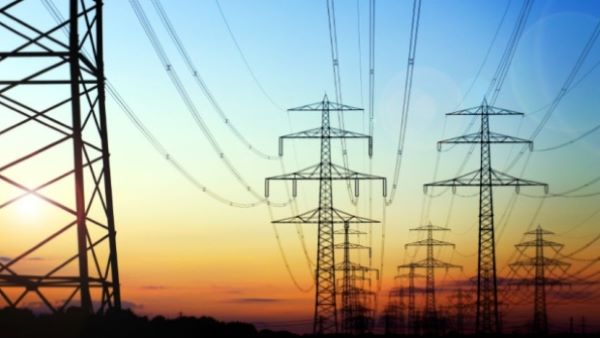
The City of Pickering and Hydro One have a tentative agreement on who should pay the estimated $1 million cleanup after a transformer oil leak into Pine Creek recently.

Pickering's interim Mayor Maurice Brenner said he has been very happy with the utility's initial response to the city's claim for the full cost of repairing the damage caused by a massive oil spill at what is said to be North America's largest single transformer station in a residential community.

"It has become apparent through this that a much better emergency plan is needed to deal with situations that can happen in this environment," Brenner said.

Hydro One has agreed to pay all costs for repairing the damage caused when about 30,000 litres of mineral oil escaped from the Cherrywood transformer station into Pine Creek.

As well, the utility has agreed to develop a new emergency plan with the city and will contribute to the cost of a new fire hall in the area and the training of firefighters to deal with electricity-related emergencies.

Meanwhile, the cleanup continues along a five-kilometre stretch of Pine creek in south-central Pickering. The Oct. 1 hydro transformer rupture spilled about 132,000 litres of light mineral oil on the property of the Cherrywood transformer station near Finch Ave. and Dixie Rd. An estimated 30,000 litres of oil leaked from a berm around the transformer and made its way through a storm sewer system into Pine Creek.

Two weeks after the spill, patches of oil continue to flow down the creek, and vast areas of the creek side are roped off with yellow tape.

Environmental contractors hired by Hydro One — the transmission successor to Ontario Hydro — continue to suck the oil-water mixture out of the creek at several locations.

Radom St. between Fairview and Douglas Rds. has been closed to traffic since the spill to allow the movement of large tanker trucks used to collect the oil.

An environmental sweep of the creek last week failed to find any fish or wildlife that had been hurt by the spill.

Related News
California Public Utilities Commission sides with community energy program over SDG&E

CPUC Decision on San Diego Community Power directs SDG&E to use updated forecasts, stabilizing electricity rates for CCA customers and supporting clean energy in San Diego with accurate rate forecasting and reduced volatility.


Key Points

A CPUC ruling directing SDG&E to use updated forecasts to ensure accurate, stable CCA rates and limit volatility.

✅ Uses 2021 sales forecasts for rate setting

✅ Aims to prevent undercollection and bill spikes

✅ Levels changes across customer classes


The California Public Utilities Commission on Thursday sided with the soon-to-launch San Diego community energy program in a dispute it had with San Diego Gas & Electric.

San Diego Community Power — which will begin to purchase power for customers in San Diego, Chula Vista, La Mesa, Encinitas and Imperial Beach later this year — had complained to the commission that data SDG&E intended to use to calculate rates, including community choice exit fees that could make the new energy program less attractive to prospective customers.

SDG&E argued it was using numbers it was authorized to employ as part of a general rate case amid a potential rate structure revamp that is still being considered by the commission.

But in a 4-0 vote, the commission, or CPUC, sided with San Diego Community Power and directed SDG&E to use an updated forecast for energy sales.

"This was not an easy decision," said CPUC president Marybel Batjer at the meeting, held remotely due to COVID-19 restrictions. "In my mind, this outcome best accounts for the shifting realities ... in the San Diego area while minimizing the impact on ratepayers during these difficult financial times."

In filings to the commission, SDG&E predicted a rate decrease of 12.35 percent in the coming year. While that appears to be good news for customers, Californians still face soaring electricity prices statewide, Commissioner Martha Guzman Aceves said the data set SDG&E wanted to use would lead to an undercollection of $150 million to $260 million.

That would result in rates that would be "artificially low," Guzman Aceves said, and rates "would inevitably go up quite a bit after the undercollection was addressed."

San Diego Community Power, or SDCP, said the temporary reduction would make its rates less attractive than SDG&E's, especially amid SDG&E's minimum charge proposal affecting low-usage customers, just as it is about to begin serving customers. SDCP's board members wrote an open letter last month to the commission, accusing the utility of "willful manipulation of data."

Working with an administrative law judge at the CPUC, Guzman Aceves authored a proposal requiring SDG&E to use numbers based on 2021 forecasts, as regulators simultaneously weigh whether the state needs more power plants to ensure reliability. The utility argued that could result in an increase of "roughly 40 percent" for medium and large commercial and industrial customers this year.

To help reduce potential volatility, Guzman Aceves, SDCP and other community energy supporters called for using a formula that would average out changes in rates across customer classes amid debates over income-based utility charges statewide. That's what the commissioners OK'd Thursday.

"It is essential that customer commodity rates be as accurate as we can possibly get them to avoid undercollections," said Commissioner Genevieve Shiroma.

San Diego Community Power is one of 23 community choice aggregation, or CCA, energy programs that have launched in California in the past decade.

CCAs compete with traditional power companies amid California's evolving power competition landscape, in one important role — purchasing power for a given community. They were created to boost the use of cleaner energy sources, such as wind and solar, at rates equal to or lower than investor-owned utilities.

However, CCAs do not replace utilities because the incumbent power companies still perform all of the tasks outside of power purchasing, such as transmission and distribution of energy and customer billing.

When a CCA is formed, California rules stipulate the utility customers in that area are automatically enrolled in the CCA. If customers prefer to stay with their previous power company, they can opt out of joining the CCA.

The shift of customers from SDG&E to San Diego Community Power is expected to be large. The total number of accounts for SDCP is expected to be 770,000, which would make it the second-largest CCA in the state. That's why SDCP considered Thursday's CPUC decision to be so important.

"At a time when customers are choosing between sticking with San Diego Gas & Electric and migrating to a CCA, we want them to have accurate bill information," said Commissioner Clifford Rechtschaffen.

"SDCP is very happy with today's CPUC decision, and that the commissioners shared our goal of limiting rate volatility for businesses and families in the region," said SDCP interim CEO Bill Carnahan. "This is definitely a win for accurate rate forecasting, and our mutual customers, and we look forward to working with SDG&E on next steps."

In an email, SDG&E spokeswoman Helen Gao said, "We are committed to continuing to work collaboratively with local Community Choice Aggregation programs to support their successful launch in 2021 and ensure that our mutual customers receive excellent customer service."

San Diego Community Power's case before the CPUC was joined by the California Community Choice Association, a trade group advocating for CCAs, and the Clean Energy Alliance — the North County-based CCA representing Del Mar, Solana Beach and Carlsbad that is scheduled to launch this summer.

SDCP will begin its rollout this year, folding in about 71,000 municipal, commercial and industrial accounts. The bulk of its roughly 700,000 residential accounts is expected to come in January 2022.


Related News

View more

Electricity deal clinches $100M bitcoin mining operation in Medicine Hat

Medicine Hat Bitcoin Mining Deal delivers 42 MW electricity to Hut 8, enabling blockchain data centres, cryptocurrency mining expansion, and economic diversification in Alberta with low-cost power, land lease, and rapid construction near Unit 16.


Key Points

A pact to supply 42 MW and lease land, enabling Hut 8's blockchain data centres and crypto mining growth in Alberta.

✅ 42 MW electricity from city; land lease near Unit 16

✅ Hut 8 expands to 60.7 MW; blockchain data centres

✅ 100 temporary jobs; 42 ongoing roles in Alberta


The City of Medicine Hat has agreed to supply electricity and lease land to a Toronto-based cryptocurrency mining company, at a time when some provinces are pausing large new crypto loads in a deal that will see $100 million in construction spending in the southern Alberta city.

The city will provide electric energy capacity of about 42 megawatts to Hut 8 Mining Corp., which will construct bitcoin mining facilities near the city's new Unit 16 power plant.

The operation is expected to be running by September and will triple the company's operating power to 60.7 megawatts, Hut 8 said, amid broader investments in new turbines across Canada.

#google#

"The signing of the electricity supply agreement and the land lease represents a key component in achieving our business plan for the roll-out of our BlockBox Data Centres in low-cost energy jurisdictions," said the company's board chairman, Bill Tai, in a release.

"[Medicine Hat] offers stable, cost-competitive utility rates and has been very welcoming and supportive of Hut 8's fast-paced growth plans."

In bitcoin mining operations, rows upon rows of power-consuming computers are used to solve mathematical puzzles in exchange for bitcoins and confirm crytopcurrency transactions. The verified transactions are then added to the public ledger known as the blockchain.

Hut 8's existing 18.7-megawatt mining operation at Drumheller, Alta. — a gated compound filled with rows of shipping containers housing the computers — has so far mined 750 bitcoins. Bitcoin was trading Tuesday morning for about $11,180.

Medicine Hat Mayor Ted Clugston says the deal is part of the city's efforts to diversify its economy.

We've made economic development a huge priority down here because we were hit very, very hard by the oil and gas decline," he said, noting that being the generator and vendor of its own electricity puts the city in a uniquely good position.

"Really we're just turning gas into electricity and they're taking that electricity and turning it into blockchain, or ones and zeroes."

Elsewhere in Canada, using more electricity for heat has been urged by green energy advocates, reflecting broader electrification debates.

Hut 8 says construction of the facility is starting right away and will create about 100 temporary jobs. The project is expected to be finished by the third-quarter of this year.

The Medicine Hat mining operation will generate 42 ongoing jobs for electricians, general labourers, systems technicians and security staff.


Related News

View more

Why Canada's Energy Security Hinges on Renewables

Renewable Energy Security strengthens affordability and grid reliability through electrification, wind, and solar, reducing fossil fuel volatility exposed by the Ukraine crisis, aligning with IEA guidance and the Paris Agreement to deliver resilient, low-cost power.


Key Points

Renewable energy security is reliable, affordable power from electrification, wind and solar, cutting fossil fuel risk.

✅ Wind and solar now outcompete gas for new power capacity.

✅ Diversifies supply and reduces fossil price volatility.

✅ Requires grid flexibility, storage, and demand response.


Oil, gas, and coal have been the central pillar of the global energy system throughout the 20th century. And for decades, these fossil fuels have been closely associated with energy security.  

The perception of energy security, however, is rapidly changing. Renewables form an increasing share of energy sectors worldwide as countries look to deliver on the Paris Agreement and mitigate the effects of climate change, with IEA clean energy investment now significantly outpacing fossil fuels. Moreover, Russia’s invasion of Ukraine has demonstrated how relying on fossil fuels for power, heating, and transport has left many countries vulnerable or energy insecure.  

The International Energy Agency (IEA) defines energy security as “the uninterrupted availability of energy sources at an affordable price” (IEA, 2019a). This definition hardly describes today’s global energy situation, with the cancellation of natural gas deliveries and skyrocketing prices for oil and gas products, and with supply chain challenges in clean energy that also require attention. These circumstances have cascading effects on electricity prices in countries like the United Kingdom that rely heavily on natural gas to produce electricity. In Europe, energy insecurity has been even further amplified since the Russian corporation Gazprom recently cut off gas supplies to several countries.  

As a result, energy security has gained new urgency in Canada and worldwide, creating opportunities in the global electricity market for Canada. Recent events provide a stark reminder of the volatility and potential vulnerability of global fossil fuel markets and supply chains. Even in Canada, as one of the largest producers of oil and gas in the world, the price of fuels depends on global and regional market forces rather than government policy or market design. Thus, the average monthly price for gasoline in Canada hit a record high of CAD 2.07 per litre in May 2022 (Figure 1), and natural gas prices surged to a record CAD 7.54 per MMBtu in May 2022 (Figure 2).  

Energy price increases of this magnitude are more than enough to strain Canadian household budgets. But on top of that, oil and gas prices have accelerated inflation more broadly as it has become more expensive to produce, transport, and store goods, including food and other basic commodities (Global News, 2022).  


Renewable Energy Is More Affordable 

In contrast to oil and gas, renewable energy can reliably deliver affordable energy, as shown by falling wholesale electricity prices in markets with growing clean power. This is a unique and positive aspect of today’s energy crisis compared to historical crises: options for electrification and renewable-based electricity systems are both available and cost-effective.  

For new power capacity, wind and solar are now cheaper than any other source, and wind power is making gains as a competitive source in Canada. According to Equinor (2022), wind and solar were already cheaper than gas-based power in 2020. This means that renewable energy was already the cheaper option for new power before the recent natural gas price spikes. As illustrated in Figure 3, the cost of new renewable energy has dropped so dramatically that, for many countries, it is cheaper to install new solar or wind infrastructure than to keep operating existing fossil fuel-based power plants (International Renewable Energy Agency, 2021). This means that replacing fossil-based electricity generation with renewables would save money and reduce emissions. Wind and solar prices are expected to continue their downward trends as more countries increase deployment and learn how to best integrate these sources into the grid. 


Renewable Energy Is Reliable 

To deliver on the uninterrupted availability side of the energy security equation, renewable power must remain reliable even as more variable energy sources, like wind and solar, are added to the system, and regional leaders such as the Prairie provinces will help anchor this transition. For Canada and other countries to achieve high energy security through electrification, grid system operations must be able to support this, and pathways to zero-emissions electricity by 2035 are feasible.  


Related News

View more

Perry presses ahead on advanced nuclear reactors

Advanced Nuclear Reactors drive U.S. clean energy with small modular reactors, a new test facility at Idaho National Laboratory, and public-private partnerships accelerating nuclear innovation, safety, and cost reductions through DOE-backed programs and university simulators.


Key Points

Advanced nuclear reactors are next-gen designs, including SMRs, offering safer, cheaper, low-carbon power.

✅ DOE test facility at Idaho National Laboratory

✅ Small modular reactors with passive safety systems

✅ University simulators train next-gen nuclear operators


Energy Secretary Rick Perry is advancing plans to shift the United States towards next-gen nuclear power reactors.

The Energy Department announced this week it has launched a new test facility at the Idaho National Laboratory where private companies can work on advanced nuclear technologies, as the first new U.S. reactor in nearly seven years starts up, to avoid the high costs and waste and safety concerns facing traditional nuclear power plants.

“[The National Reactor Innovation Center] will enable the demonstration and deployment of advanced reactors that will define the future of nuclear energy,” Perry said.

With climate change concerns growing and net-zero emissions targets emerging, some Republicans and Democrats are arguing for the need for more nuclear reactors to feed the nation’s electricity demand. But despite nuclear plants’ absence of carbon emissions, the high cost of construction, questions around what to do with the spent nuclear rods and the possibility of meltdown have stymied efforts.

A new generation of firms, including Microsoft founder Bill Gates’ Terra Power venture, are working on developing smaller, less expensive reactors that do not carry a risk of meltdown.

“The U.S. is on the verge of commercializing groundbreaking nuclear innovation, and we must keep advancing the public-private partnerships needed to traverse the dreaded valley of death that all too often stifles progress,” said Rich Powell, executive director of ClearPath, a non-profit advocating for clean energy and green industrial strategies worldwide.

The new Idaho facility is budgeted at $5 million under next year’s federal budget, even as the cost of U.S. nuclear generation has fallen to a ten-year low, which remains under negotiation in Congress.

On Thursday another advanced nuclear developer working on small modular systems, Oregon-based NuScale Power, announced it was building three virtual nuclear control rooms at Texas A&M University, Oregon State University and the University of Idaho, with funding from the Energy Department.

The simulators will be open to researchers and students, to train on the operation of smaller, modular reactors, as well as the general public.

NuScale CEO John Hopkins said the simulators would “help ensure that we educate future generations about the important role nuclear power and small modular reactor technology will play in attaining a safe, clean and secure energy future for our country.”


Related News

View more

Zero-emission electricity in Canada by 2035 is practical and profitable

Canada 100% Renewable Power by 2035 envisions a decentralized grid built on wind, solar, energy storage, and efficiency, delivering zero-emission, resilient, low-cost electricity while phasing out nuclear and gas to meet net-zero targets.


Key Points

Zero-emission, decentralized grid using wind, solar, and storage, plus efficiency, to retire fossil and nuclear by 2035.

✅ Scale wind and solar 18x with storage for reliability.

✅ Phase out nuclear and gas; no CCS or offsets needed.

✅ Modernize grids and codes; boost efficiency, jobs, and affordability.


A powerful derecho that left nearly a million people without power in Ontario and Quebec on May 21 was a reminder of the critical importance of electricity in our daily lives.

Canada’s electrical infrastructure could be more resilient to such events, while being carbon-emission free and provide low-cost electricity with a decentralized grid powered by 100 per cent renewable energy, according to a new study from the David Suzuki Foundation (DSF), a vision of an electric, connected and clean future if the country chooses.

This could be accomplished by 2035 by building a lot more solar and wind, despite indications that demand for solar electricity has lagged in Canada, adding energy storage, while increasing the energy efficiency in buildings, and modernizing provincial energy grids. As this happens, nuclear energy and gas power would be phased out. There would also be no need for carbon capture and storage nor carbon offsets, the modeling study concluded.

“Solar and wind are the cheapest sources of electricity generation in history,” said study co-author Stephen Thomas, a mechanical engineer and climate solutions policy analyst at the DSF.

“There are no technical barriers to reaching 100 per cent zero-emission electricity by 2035 nationwide,” Thomas told The Weather Network (TWN). However, there are considerable institutional and political barriers to be overcome, he said.

Other countries face similar barriers and many have found ways to reduce their emissions; for example, the U.S. grid's slow path to 100% renewables illustrates these challenges. There are enormous benefits including improved air quality and health, up to 75,000 new jobs annually, and lower electricity costs. Carbon emissions would be reduced by 200 million tons a year by 2050, just over one quarter of the reductions needed for Canada to meet its overall net zero target, the study stated.

Building a net-zero carbon electricity system by 2035 is a key part of Canada’s 2030 Emissions Reduction Plan. Currently over 80 per cent of the nation’s electricity comes from non-carbon sources including a 15 per cent contribution from nuclear, with solar capacity nearing a 5 GW milestone nationally. How the final 20 per cent will be emission-free is currently under discussion.

The Shifting Power study envisions an 18-fold increase in wind and solar energy, with the Prairie provinces expected to lead growth, along with a big increase in Canada’s electrical generation capacity to bridge the 20 per cent gap as well as replacing existing nuclear power.

The report does not see a future role for nuclear power due to the high costs of refurbishing existing plants, including the challenges with disposal of radioactive wastes and decommissioning plants at their end of life. As for the oft-proposed small modular nuclear reactors, their costs will likely “be much more costly than renewables,” according to the report.

There are no technical barriers to building a bigger, cleaner, and smarter electricity system, agrees Caroline Lee, co-author of the Canadian Climate Institute’s study on net-zero electricity, “The Big Switch” released in May. However, as Lee previously told TWN, there are substantial institutional and political barriers.

In many respects, the Shifting Power study is similar to Lee’s study except it phases out nuclear power, forecasts a reduction in hydro power generation, and does not require any carbon capture and storage, she told TWN. Those are replaced with a lot more wind generation and more storage capacity.

“There are strengths and weaknesses to both approaches. We can do either but need a wide debate on what kind of electricity system we want,” Lee said.

That debate has to happen immediately because there is an enormous amount of work to do. When it comes to energy infrastructure, nearly everything “we put in the ground has to be wind, solar, or storage” to meet the 2035 deadline, she said.

There is no path to net zero by 2050 without a zero-emissions electricity system well before that date. Here are some of the necessary steps the report provided:

Create a range of skills training programs for renewable energy construction and installation as well as building retrofits.

Prioritize energy efficiency and conservation across all sectors through regulations such as building codes.

Ensure communities and individuals are fully informed and can decide if they wish to benefit from hosting energy generation infrastructure.

Create a national energy poverty strategy to ensure affordable access.

Strong and clear federal and provincial rules for utilities that mandate zero-emission electricity by 2035.

For Indigenous communities, make sure ownership opportunities are available along with decision-making power.

Canada should move as fast as possible to 100 per cent renewable energy to gain the benefits of lower energy costs, less pollution, and reduced carbon emissions, says Stanford University engineer and energy expert Mark Jacobson.

“Canada has so many clean, renewable energy resources that it is one of the easier countries [that can] transition away from fossil fuels,” Jacobson told TWN.

For the past decade, Jacobson has been producing studies and technical reports on 100 per cent renewable energy, including a new one for Canada, even as Canada is often seen as a solar power laggard today. The Stanford report, A Solution to Global Warming, Air Pollution, and Energy Insecurity for Canada, says a 100 per cent transition by 2035 timeline is ideal. Where it differs from DSF’s Shifting Power report is that it envisions offshore wind and rooftop solar panels which the latter did not.

“Our report is very conservative. Much more is possible,” agrees Thomas.

“We’re lagging behind. Canadians really want to get going on building solutions and getting the benefits of a zero emissions electricity system.”


Related News

View more

Former B.C. Hydro CEO earns half a million without working a single day

B.C. Hydro Salary Continuance Payout spotlights executive compensation, severance, and governance at a Crown corporation after a firing, citing financial disclosure reports, Site C dam ties, and a leadership change under a new government.


Key Points

Severance-style pay for B.C. Hydro's fired CEO, via salary continuance and disclosed in public filings.

✅ $541,615 total compensation without working days

✅ Salary continuance after NDP firing; financial disclosures

✅ Later named Canada Post interim CEO amid strike


Former B.C. Hydro president and chief executive officer Jessica McDonald received a total of $541,615 in compensation during the 2017-2018 fiscal year, a figure that sits amid wider debates over executive pay at utilities such as Hydro One CEO pay at the provincial utility, without having worked a single day for the Crown corporation.

She earned this money under a compensation package after the in-coming New Democratic government of John Horgan fired her, a move comparable to Ontario's decision when the Hydro One CEO and board exit amid share declines. The previous B.C. Liberal government named her president and CEO of B.C. Hydro in 2014, and McDonald was a strong supporter of the controversial Site C dam project now going ahead following a review.

The current New Democratic government placed her on what financial disclosure documents call “salary continuance” effective July 21, 2017 — the day the government announced her departure — at a utility scrutinized in a misled regulator report that raised oversight concerns.

According to financial disclosure statements, McDonald remained on “salary continuance” until Sept. 21 of this year, and the utility has also been assessed in a deferred operating costs report released by the auditor general. During this period, she earned $272,659, a figure that includes benefits, pension and other compensation.

McDonald — who used to be the deputy minister to former premier Gordon Campbell — is now working for Canada Post, which appointed her as interim president and chief executive officer in March, while developments at Manitoba Hydro highlight broader political pressures on Crown utilities.

She started in her new role on April 2, 2018, and now finds herself in the middle of managing a postal carrier strike.


Related News

View more

Sign Up for Electricity Forum’s Newsletter

Stay informed with our FREE Newsletter — get the latest news, breakthrough technologies, and expert insights, delivered straight to your inbox.

Electricity Today T&D Magazine Subscribe for FREE

Stay informed with the latest T&D policies and technologies.
  • Timely insights from industry experts
  • Practical solutions T&D engineers
  • Free access to every issue

Download the 2025 Electrical Training Catalog

Explore 50+ live, expert-led electrical training courses –

  • Interactive
  • Flexible
  • CEU-cerified