By -- Source, the Daily Oklahoman


NFPA 70b Training - Electrical Maintenance

Our customized live online or in‑person group training can be delivered to your staff at your location.
  • Live Online
  • 12 hours Instructor-led
  • Group Training Available
Regular Price:
$699
Coupon Price:
$599
Reserve Your Seat Today
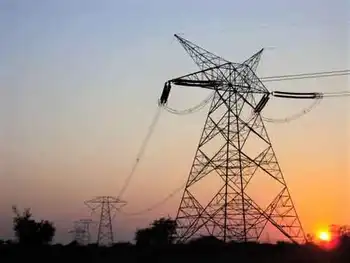
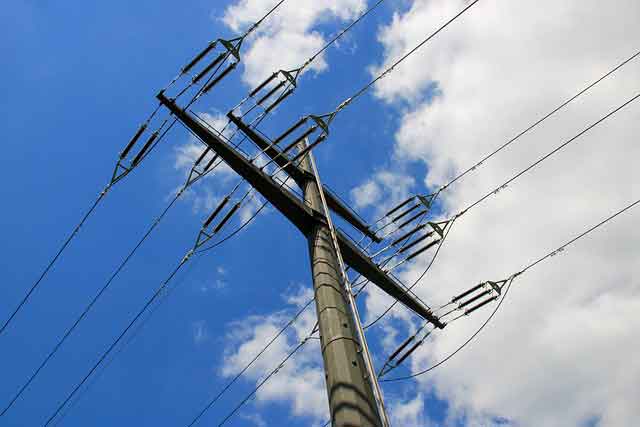
Two of Oklahoma's leading providers of electricity said Wednesday they have no plans to ask for a rate increase to cover costs related to damage done by the recent ice storm. That ran counter to OGE Energy's Tuesday announcement that it likely will seek a rate increase from the Oklahoma Corporation Commission for $100 million-plus in ice storm damage costs. OGE Energy is the parent company of Oklahoma Gas & Electric Co., the state's largest electric utility. American Electric Power-PSO, which serves about 500,000 customers statewide, likely will have at least "several million" in outlays related to the Jan. 30 storm, spokesman Ed Bettinger said. "I'm guessing it'll be a couple of weeks or more before we have a ballpark figure established on the cost," he said. "At this point we do not have plans to ask for any cost recovery on this, but that could change." He said the Christmas 2000 ice storm cost PSO $40 million in service areas in Oklahoma and nearby states. The company has not sought any recovery on that cost, he said. "You can't really budget for disasters," he said. "It goes into operating expenses, it takes a bite out of company profits and is not recovered." At the Corporation Commission, spokesman Matt Skinner said no notice has been received from OG&E about the $100 million-plus rate-relief issue. However, he said, the commission is working on a prior OG&E request for a $22 million rate hike, which the utility has said will go mainly for improved security in the wake of the Sept. 11 attacks. At the Oklahoma Association of Electric Cooperatives, executive director Harold Hale said about 10 utilities out of his group of 65 small city and rural co-ops have been hit hard. He estimated the total repair cost to be $60 million to $70 million. "I don't guess we've ever had anything like this," he said. Some 17,000 to 18,000 co-op poles are down, Hale said, with north central and western Oklahoma worst hit. Cimarron Electric Cooperative in Kingfisher has been hit hardest, he said. However, unlike investor-owned utilities, the co-ops can turn to the Federal Emergency Management Agency for relief. The cooperatives stand to be reimbursed for 75 percent of the costs that FEMA approves. The co-op association has turned to FEMA for help in past disaster situations, he said. "They've been a lifesaver," he said. The co-op utility group also may be able to get some state funds, he added, since Gov. Keating has declared some counties disaster areas. One problem that all utilities are facing, Hale said, is how to dispose of the 28,000 or so utility poles that have snapped under the unprecedented ice burden. The poles are treated with a variety of chemicals, including arsenic, and cannot be burned under environmental rules. Hale said the co-op association is working with the state Department of Environmental Quality and the Environmental Protection Agency on disposal options. Hale said that The Williams Cos. of Tulsa gave his group needed aid in the form of large electric generators. Such generators -- called distributed generation -- are a Williams business segment. Two Williams generators are at work for Cimarron, he said. In addition, ONEOK has been helping out by selling electricity from one of its plants to co-ops at reasonable rates. Another report, from Municipal Electric Systems of Oklahoma, says Williams recently delivered a 6,000-kilowatt generator to Newkirk, enough to serve the entire town of 2,250. "People just step up and do the right thing when you're in a crisis," Hale said.

-- Source, the Daily Oklahoman

Related News
Germany turns its back on nuclear for good despite Europe's energy crisis

Germany nuclear phase-out underscores a high-stakes energy transition, trading reactors for renewables, LNG imports, and grid resilience to secure supply, cut emissions, and navigate climate policy, public opinion shifts, and post-Ukraine supply shocks.


Key Points

Germany's nuclear phase-out retires reactors, shifting to renewables, LNG, and grid upgrades for low-carbon power.

✅ Last three reactors: Neckarwestheim, Isar 2, and Emsland closed

✅ Supply secured via LNG imports, renewables, and grid flexibility

✅ Policy accelerated post-Fukushima; debate renewed after Ukraine war


The German government is phasing out nuclear power despite the energy crisis. The country is pulling the plug on its last three reactors, betting it will succeed in its green transition without nuclear power.

On the banks of the Neckar River, not far from Stuttgart in south Germany, the white steam escaping from the nuclear power plant in Baden-Württemberg will soon be a memory.

The same applies further east for the Bavarian Isar 2 complex and the Emsland complex, at the other end of the country, not far from the Dutch border.

While many Western countries depend on nuclear power, Europe's largest economy is turning the page, even if a possible resurgence of nuclear energy is debated until the end.

Germany is implementing the decision to phase out nuclear power taken in 2002 and accelerated by Angela Merkel in 2011, after the Fukushima disaster.

Fukushima showed that "even in a high-tech country like Japan, the risks associated with nuclear energy cannot be controlled 100 per cent", the former chancellor justified at the time.

The announcement convinced public opinion in a country where the powerful anti-nuclear movement was initially fuelled by fears of a Cold War conflict, and then by accidents such as Chernobyl.

The invasion of Ukraine on 24 February 2022 brought everything into question. Deprived of Russian gas, the flow of which was essentially interrupted by Moscow, Germany found itself exposed to the worst possible scenarios, from the risk of its factories being shut down to the risk of being without heating in the middle of winter.

With just a few months to go before the initial deadline for closing the last three reactors on 31 December, the tide of public opinion began to turn, and talk of a U-turn on the nuclear phaseout grew louder. 

"With high energy prices and the burning issue of climate change, there were of course calls to extend the plants," says Jochen Winkler, mayor of Neckarwestheim, where the plant of the same name is in its final days.

Olaf Scholz's government, which the Green Party - the most hostile to nuclear power - is part of, finally decided to extend the operation of the reactors to secure the supply until 15 April.

"There might have been a new discussion if the winter had been more difficult if there had been power cuts and gas shortages nationwide. But we have had a winter without too many problems," thanks to the massive import of liquefied natural gas, notes Mr Winkler.


Related News

View more

Poland’s largest power group opts to back wind over nuclear

Poland Offshore Wind Energy accelerates as PGE exits nuclear leadership, PKN Orlen steps in, and Baltic Sea projects expand to cut coal reliance, meet EU emissions goals, attract investors, and bridge the power capacity gap.


Key Points

A shift from coal and nuclear to Baltic offshore wind to add capacity, cut EU emissions, and attract investment.

✅ PGE drops lead in nuclear; pivots $10bn to offshore wind.

✅ PKN Orlen may assume nuclear role; projects await approval.

✅ 6 GW offshore could add 60b zlotys and 77k jobs by 2030.


PGE, Poland’s biggest power group has decided to abandon a role in building the country’s first nuclear power plant and will instead focus investment on offshore wind energy.

Reuters reports state-run refiner PKN Orlen (PKN.WA) could take on PGE’s role, while the latter announces a $10bn offshore wind power project.

Both moves into renewables and nuclear represent a major change in Polish energy policy, diversifying away from the country’s traditional coal-fired power base, as regional efforts like the North Sea wind farms initiative expand, in a bid to fill an electricity shortfall and meet EU emission standards.

An unnamed source told the news agency, PGE could not fund both projects and cheap technology had swung the decision in favour of wind, with offshore wind competing with gas in some markets. PGE could still play a smaller role in the nuclear project which has been delayed and still needs government approval.

#google#

A proposed law is currently before the Polish parliament aiming at facilitating easy construction of wind turbines, mindful of Germany’s grid expansion challenges that have hindered rollout.

If the law is passed, as expected, several other wind farm projects could also proceed.

Polenergia has said it would like to build a wind farm in the Baltic by 2022. PKN Orlen is also considering building one.

PGE said in March that it wants to build offshore windfarms with a capacity of 2.5 gigawatts (GW) by 2030.

Analysts and investors say that offshore wind farms are the easiest and fastest way for Poland to fill the expected capacity gap from coal, with examples like the largest UK offshore wind farm coming online underscoring momentum, and reduce CO2 emissions in line with EU’s 2030 targets as Poland seeks improved ties with Brussels.

The decision to open up the offshore power industry could also draw in investors, as shown by Japanese utilities’ UK offshore investment attracting cross-border capital. Statoil said in April it would join Polenergia’s offshore project which has drawn interest from other international wind companies. “

The Polish Wind Energy Association (PWEA) estimates that offshore windfarms with a total capacity of 6 GW would help create around 77,000 new jobs and add around 60 billion zlotys to economic growth.


Related News

View more

India’s Kakrapur 3 achieves criticality

Kakrapar Unit 3 700MWe PHWR achieved first criticality, showcasing indigenously designed nuclear power, NPCIL operations, Make in India manufacturing, advanced safety systems, grid integration, and closed-fuel-cycle strategy for India's expansion of pressurised heavy water reactors.


Key Points

India's first indigenous 700MWe PHWR at Kakrapar reached criticality, advancing NPCIL's Make in India nuclear power.

✅ First indigenous 700MWe PHWR achieves criticality

✅ NPCIL-built, Make in India components and contractors

✅ Advanced safety: passive decay heat removal, containment spray


Unit 3 of India’s Kakrapar nuclear plant in Gujarat achieved criticality on 22 July, as milestones at nuclear projects worldwide continue to be reached. It is India’s first indigenously designed 700MWe pressurised heavy water reactor (PHWR) to achieve this milestone.

Prime Minister Narendra Modi congratulated nuclear scientists, saying the reactor is a shining example of the 'Make in India' campaign and of the government's steps to get nuclear back on track in recent years, and a trailblazer for many such future achievements. 

India developed its own nuclear power generation technology as it faced sanctions from the international community following its first nuclear weapons test in in 1974. It has not signed the Nuclear Non-Proliferation Treaty, while China's nuclear energy development is on a steady track according to experts. India has developed a three-stage nuclear programme based on a closed-fuel cycle, where the used fuel of one stage is reprocessed to produce fuel for the next stage.

Kakrapar 3 was developed and is operated by state-owned Nuclear Power Corporation of India Ltd (NPCIL), while in Europe KHNP considered for a Bulgarian project as countries weigh options. The first two units are 220MWe PHWRs commissioned in 1993 and 1995. NPCIL said in a statement that the components and equipment for Kakrapur 3 were “manufactured by lndian industries and the construction and erection was undertaken by various lndian contractors”.

The 700MWe PHWRs have advanced safety features such as steel lined inner containment, a passive decay heat removal system, a containment spray system, hydrogen management systems etc, the statement added.

Fuel loading was completed by mid-March, a crucial step in Abu Dhabi during its commissioning as well. “Thereafter, many tests and procedures were carried out during the lockdown period following all COVlD-19 guidelines.”

“As a next step, various experiments / tests will be conducted and power will be increased progressively, a path also followed by Barakah Unit 1 reaching 100% power before commercial operations.” Kakrapur 3 will be connected to the western grid and will be India’s 23rd nuclear power reactor.

Kakrapur 3 “is the front runner in a series of 16 indigenous 700MWe PHWRs which have been accorded administrative approval and financial sanction by the government and are at various stages of implementation”. Five similar units are under construction at Kakarapur 4, Rajasthan 7&8 and Gorakhpur1&2.

DAE said in January 2019 that India planned to put 21 new nuclear units with a combined generating capacity of 15,700MWe into operation by 2031, including ten indigenously designed PHWRs, while Bangladesh develops nuclear power with IAEA assistance. 


Related News

View more

Rooftop Solar Grids

Rooftop solar grids transform urban infrastructure with distributed generation, photovoltaic panels, smart grid integration and energy storage, cutting greenhouse gas emissions, lowering utility costs, enabling net metering and community solar for low-carbon energy systems.


Key Points

Rooftop solar grids are PV systems on buildings that generate power, cut emissions, and enable smart grid integration.

✅ Lowers utility bills via net metering and demand offset

✅ Reduces greenhouse gases and urban air pollution

✅ Enables resiliency with storage, smart inverters, and microgrids


As urban areas expand and the climate crisis intensifies, cities are seeking innovative ways to integrate renewable energy sources into their infrastructure. One such solution gaining traction is the installation of rooftop solar grids. A recent CBC News article highlights the significant impact of these solar systems on urban environments, showcasing their benefits and the challenges they present.

Harnessing Unused Space for Sustainable Energy

Rooftop solar panels are revolutionizing how cities approach energy consumption and environmental sustainability. By utilizing the often-overlooked space on rooftops, these systems provide a practical solution for generating renewable energy in densely populated areas. The CBC article emphasizes that this approach not only makes efficient use of available space but also contributes to reducing a city's reliance on non-renewable energy sources.

The ability to generate clean energy directly from buildings helps decrease greenhouse gas emissions and, as scientists work to improve solar and wind power, promotes a shift towards a more sustainable energy model. Solar panels absorb sunlight and convert it into electricity, reducing the need for fossil fuels and lowering overall carbon footprints. This transition is crucial as cities grapple with rising temperatures and air pollution.

Economic and Environmental Advantages

The economic benefits of rooftop solar grids are considerable. For homeowners and businesses, installing solar panels can lead to substantial savings on electricity bills. The initial investment in solar technology is often balanced by long-term energy savings and financial incentives, such as tax credits or rebates, and evidence that solar is cheaper than grid electricity in Chinese cities further illustrates the trend toward affordability. According to the CBC report, these financial benefits make solar energy a compelling option for many urban residents and enterprises.

Environmentally, the advantages are equally compelling. Solar energy is a renewable and clean resource, and increasing the number of rooftop solar installations can play a pivotal role in meeting local and national renewable energy targets, as illustrated when New York met its solar goals early in a recent milestone. The reduction in greenhouse gas emissions from fossil fuel energy sources directly contributes to mitigating climate change and improving air quality.

Challenges in Widespread Adoption

Despite the clear benefits, the adoption of rooftop solar grids is not without its challenges. One of the primary hurdles is the upfront cost of installation. While prices for solar panels have decreased over time, the initial financial outlay remains a barrier for some property owners, and regions like Alberta have faced solar expansion challenges that highlight these constraints. Additionally, the effectiveness of solar panels can vary based on factors such as geographic location, roof orientation, and local weather patterns.

The CBC article also highlights the importance of supportive infrastructure and policies for the success of rooftop solar grids. Cities need to invest in modernizing their energy grids to accommodate the influx of solar-generated electricity, and, in the U.S., record clean energy purchases by Southeast cities have signaled growing institutional demand. Furthermore, policies and regulations must support solar adoption, including issues related to net metering, which allows solar panel owners to sell excess energy back to the grid.

Innovative Solutions and Future Prospects

The future of rooftop solar grids looks promising, thanks to ongoing technological advancements. Innovations in photovoltaic cells and energy storage solutions are expected to enhance the efficiency and affordability of solar systems. The development of smart grid technology and advanced energy management systems, including peer-to-peer energy sharing, will also play a critical role in integrating solar power into urban infrastructures.

The CBC report also mentions the rise of community solar projects as a significant development. These projects allow multiple households or businesses to share a single solar installation, making solar energy more accessible to those who may not have suitable rooftops for solar panels. This model expands the reach of solar technology and fosters greater community engagement in renewable energy initiatives.

Conclusion

Rooftop solar grids are emerging as a key element in the transition to sustainable urban energy systems. By leveraging unused rooftop space, cities can harness clean, renewable energy, reduce greenhouse gas emissions, and, as developers learn that more energy sources make better projects, achieve long-term economic savings. While there are challenges to overcome, such as initial costs and regulatory hurdles, the benefits of rooftop solar grids make them a crucial component of the future energy landscape. As technology advances and policies evolve, rooftop solar grids will play an increasingly vital role in shaping greener, more resilient urban environments.


Related News

View more

Renewable power developers discover more energy sources make better projects

Hybrid renewable energy projects integrate wind, solar, and battery storage to enhance grid reliability, reduce curtailment, and provide dispatchable power in markets like Alberta, leveraging photovoltaic tracking, overbuilt transformers, and improved storage economics.


Key Points

Hybrid renewable energy projects combine wind, solar, and storage to deliver reliable, dispatchable clean power.

✅ Combine wind, solar, and batteries for steady, dispatchable output

✅ Lower curtailment by using shared transformers and smart inverters

✅ Boost farm income via leases; diversify risk from oil and gas


Third-generation farmer James Praskach has been burned by the oil and gas sector and watched wicked weather pound his crops flat, but he is hoping a new kind of energy -- the renewable kind -- will pay dividends.

The 39-year-old is part of a landowner consortium that is hosting the sprawling 300-megawatt Blackspring Ridge wind power project in southeastern Alberta.

He receives regular lease payments from the $600-million project that came online in 2014, even though none of the 166 towering wind turbines that surround his land are actually on it.

His lease payments stand to rise, however, when and if the proposed 77-MW Vulcan Solar project, which won regulatory approval in 2016, is green-lighted by developer EDF Renewables Inc.

The panels would cover about 400 hectares of his family's land with nearly 300,000 photovoltaic solar panels in Alberta, installed on racks designed to follow the sun. It would stand in the way of traditional grain farming of the land, but that wouldn't have been a problem this year, Praskach says.

"This year we actually had a massive storm roll through. And we had 100 per cent hail damage on all of (the Vulcan Solar lands). We had canola, peas and barley on it this year," he said, adding the crop was covered by insurance.

Meanwhile, poor natural gas prices and a series of oilpatch financial failures mean rents aren't being paid for about half of the handful of gas wells on his land, showing how a province that is a powerhouse for both fossil and green energy can face volatility -- he's appealed to the Alberta surface Rights Board for compensation.

"(Solar power) would definitely add a level of security for our farming operations," said Praskach.

Hybrid power projects that combine energy sources are a growing trend as selling renewable energy gains traction across markets. Solar only works during the day and wind only when it is windy so combining the two -- potentially with battery storage or natural gas or biomass generation -- makes the power profile more reliable and predictable.

Globally, an oft-cited example is on El Hierro, the smallest of the Canary Islands, where wind power is used to pump water uphill to a reservoir in a volcanic crater so that it can be released to provide hydroelectric power when needed. At times, the project has provided 100 per cent of the tiny island's energy needs.

Improvements in technology such as improving solar and wind power and lower costs for storage mean it is being considered as a hybrid add-on for nearly all of its renewable power projects, said Dan Cunningham, manager of business development at Greengate Power Corp. of Calgary.

Grant Arnold, CEO of developer BluEarth Renewables, agreed.

"The barrier to date, I would say, has been cost of storage but that is changing rapidly," he said. "We feel that wind and storage or solar and storage will be a fundamental way we do business within five years. It's changing very, very rapidly and it's the product everybody wants."

Vulcan Solar was proposed after Blackspring Ridge came online, said David Warner, associate director of business development for EDF Renewables, which now co-owns the wind farm with Enbridge Inc.

"Blackspring actually had incremental capacity in the main power transformers," he said. "Essentially, it was capable of delivering more energy than Blackspring was producing. It was overbuilt."

Vulcan Solar has been sized to utilize the shortfall without producing so much energy that either will ever have to be constrained, he said. Much of the required environmental work has already been done for the wind farm.

Storage is being examined as a potential addition to the project but implementing it depends on the regulatory system. At present, Alberta's regulators are still working on how to permit and control what they call "dispatchable renewables and storage" systems.

EDF announced last spring it would proceed with the Arrow Canyon Solar Project in Nevada which is to combine 200 MW of solar with 75 MW of battery storage by 2022 -- the batteries are to soak up the sun's power in the morning and dispatch the electricity in the afternoon when Las Vegas casinos' air conditioning is most needed.

What is clear is that renewable energy will continue to grow, with Alberta renewable jobs expected to follow -- in a recent report, the International Energy Agency said global electricity capacity from renewables is set to rise by 50 per cent over the next five years, an increase equivalent to adding the current total power capacity of the United States.

The share of renewables is expected to rise from 26 per cent now to 30 per cent in 2024 but will remain well short of what is needed to meet long-term climate, air quality and energy access goals, it added.


Related News

View more

Californians Learning That Solar Panels Don't Work in Blackouts

Rooftop Solar Battery Backup helps Californians keep lights on during PG&E blackouts, combining home energy storage with grid-tied systems for wildfire prevention, outage resilience, and backup power when solar panels cannot supply nighttime demand.


Key Points

A home battery paired with rooftop solar, providing backup power and blackout resilience when the grid is down.

✅ Works when grid is down; panels alone stop for safety.

✅ Requires home battery storage; market adoption is growing.

✅ Supports wildfire mitigation and PG&E outage preparedness.


Californians have embraced rooftop solar panels more than anyone in the U.S., but amid California's solar boom many are learning the hard way the systems won’t keep the lights on during blackouts.

That’s because most panels are designed to supply power to the grid -- not directly to houses, though emerging peer-to-peer energy models may change how neighbors share power in coming years. During the heat of the day, solar systems can crank out more juice than a home can handle, a challenge also seen in excess solar risks in Australia today. Conversely, they don’t produce power at all at night. So systems are tied into the grid, and the vast majority aren’t working this week as PG&E Corp. cuts power to much of Northern California to prevent wildfires, even as wildfire smoke can dampen solar output during such events.

The only way for most solar panels to work during a blackout is pairing them with solar batteries that store excess energy. That market is just starting to take off. Sunrun Inc., the largest U.S. rooftop solar company, said some of its customers are making it through the blackouts with batteries, but it’s a tiny group -- countable in the hundreds.

“It’s the perfect combination for getting through these shutdowns,” Sunrun Chairman Ed Fenster said in an interview. He expects battery sales to boom in the wake of the outages, as the state has at times reached a near-100% renewables mark that heightens the need for storage.

And no, trying to run appliances off the power in a Tesla Inc. electric car won’t work, at least without special equipment, and widespread U.S. power-outage risks are a reminder to plan for home backup.


Related News

View more

Sign Up for Electricity Forum’s Newsletter

Stay informed with our FREE Newsletter — get the latest news, breakthrough technologies, and expert insights, delivered straight to your inbox.

Electricity Today T&D Magazine Subscribe for FREE

Stay informed with the latest T&D policies and technologies.
  • Timely insights from industry experts
  • Practical solutions T&D engineers
  • Free access to every issue

Live Online & In-person Group Training

Advantages To Instructor-Led Training – Instructor-Led Course, Customized Training, Multiple Locations, Economical, CEU Credits, Course Discounts.

Request For Quotation

Whether you would prefer Live Online or In-Person instruction, our electrical training courses can be tailored to meet your company's specific requirements and delivered to your employees in one location or at various locations.