By Copies of the IMOÂ’s Settlement Agreement and the Ontario Energy BoardÂ’s Decision with Reasons are available on the IMO Web site: www.theimo.com


Substation Relay Protection Training

Our customized live online or in‑person group training can be delivered to your staff at your location.

  • Live Online
  • 12 hours Instructor-led
  • Group Training Available
Regular Price:
$699
Coupon Price:
$599
Reserve Your Seat Today
The Ontario Energy Board has approved the Independent Electricity Market Operator’s (IMO) 2002 Fee Submission, granting a usage fee of .0959¢ per kw/h, or 95.9¢ per MWh, on all energy withdrawn for use or sale once the market opens.

"The fact that we will be able to provide our services at below a dollar a megawatt hour sends a very positive signal to market participants about the long-term prospects for a competitive electricity market in Ontario," said IMO President and CEO Dave Goulding. "With the impending launch of the live market, our focus is not only to provide a superior level of customer service but also to keep costs reasonable for both market participants and end-users alike."

As part of its fees submission process, the IMO engaged all interest parties and stakeholders to gather their input before the final submission was put to a formal OEB review.

"We felt it was important to obtain endorsements from all interested parties before making our final submissions to the Ontario Energy Board," said Goulding. "Not only does this streamline the process for all involved, it ensures that stakeholders have a active voice on issues relating to our fees."

Related News

California Public Utilities Commission sides with community energy program over SDG&E

CPUC Decision on San Diego Community Power directs SDG&E to use updated forecasts, stabilizing electricity rates for CCA customers and supporting clean energy in San Diego with accurate rate forecasting and reduced volatility.


Key Points

A CPUC ruling directing SDG&E to use updated forecasts to ensure accurate, stable CCA rates and limit volatility.

✅ Uses 2021 sales forecasts for rate setting

✅ Aims to prevent undercollection and bill spikes

✅ Levels changes across customer classes


The California Public Utilities Commission on Thursday sided with the soon-to-launch San Diego community energy program in a dispute it had with San Diego Gas & Electric.

San Diego Community Power — which will begin to purchase power for customers in San Diego, Chula Vista, La Mesa, Encinitas and Imperial Beach later this year — had complained to the commission that data SDG&E intended to use to calculate rates, including community choice exit fees that could make the new energy program less attractive to prospective customers.

SDG&E argued it was using numbers it was authorized to employ as part of a general rate case amid a potential rate structure revamp that is still being considered by the commission.

But in a 4-0 vote, the commission, or CPUC, sided with San Diego Community Power and directed SDG&E to use an updated forecast for energy sales.

"This was not an easy decision," said CPUC president Marybel Batjer at the meeting, held remotely due to COVID-19 restrictions. "In my mind, this outcome best accounts for the shifting realities ... in the San Diego area while minimizing the impact on ratepayers during these difficult financial times."

In filings to the commission, SDG&E predicted a rate decrease of 12.35 percent in the coming year. While that appears to be good news for customers, Californians still face soaring electricity prices statewide, Commissioner Martha Guzman Aceves said the data set SDG&E wanted to use would lead to an undercollection of $150 million to $260 million.

That would result in rates that would be "artificially low," Guzman Aceves said, and rates "would inevitably go up quite a bit after the undercollection was addressed."

San Diego Community Power, or SDCP, said the temporary reduction would make its rates less attractive than SDG&E's, especially amid SDG&E's minimum charge proposal affecting low-usage customers, just as it is about to begin serving customers. SDCP's board members wrote an open letter last month to the commission, accusing the utility of "willful manipulation of data."

Working with an administrative law judge at the CPUC, Guzman Aceves authored a proposal requiring SDG&E to use numbers based on 2021 forecasts, as regulators simultaneously weigh whether the state needs more power plants to ensure reliability. The utility argued that could result in an increase of "roughly 40 percent" for medium and large commercial and industrial customers this year.

To help reduce potential volatility, Guzman Aceves, SDCP and other community energy supporters called for using a formula that would average out changes in rates across customer classes amid debates over income-based utility charges statewide. That's what the commissioners OK'd Thursday.

"It is essential that customer commodity rates be as accurate as we can possibly get them to avoid undercollections," said Commissioner Genevieve Shiroma.

San Diego Community Power is one of 23 community choice aggregation, or CCA, energy programs that have launched in California in the past decade.

CCAs compete with traditional power companies amid California's evolving power competition landscape, in one important role — purchasing power for a given community. They were created to boost the use of cleaner energy sources, such as wind and solar, at rates equal to or lower than investor-owned utilities.

However, CCAs do not replace utilities because the incumbent power companies still perform all of the tasks outside of power purchasing, such as transmission and distribution of energy and customer billing.

When a CCA is formed, California rules stipulate the utility customers in that area are automatically enrolled in the CCA. If customers prefer to stay with their previous power company, they can opt out of joining the CCA.

The shift of customers from SDG&E to San Diego Community Power is expected to be large. The total number of accounts for SDCP is expected to be 770,000, which would make it the second-largest CCA in the state. That's why SDCP considered Thursday's CPUC decision to be so important.

"At a time when customers are choosing between sticking with San Diego Gas & Electric and migrating to a CCA, we want them to have accurate bill information," said Commissioner Clifford Rechtschaffen.

"SDCP is very happy with today's CPUC decision, and that the commissioners shared our goal of limiting rate volatility for businesses and families in the region," said SDCP interim CEO Bill Carnahan. "This is definitely a win for accurate rate forecasting, and our mutual customers, and we look forward to working with SDG&E on next steps."

In an email, SDG&E spokeswoman Helen Gao said, "We are committed to continuing to work collaboratively with local Community Choice Aggregation programs to support their successful launch in 2021 and ensure that our mutual customers receive excellent customer service."

San Diego Community Power's case before the CPUC was joined by the California Community Choice Association, a trade group advocating for CCAs, and the Clean Energy Alliance — the North County-based CCA representing Del Mar, Solana Beach and Carlsbad that is scheduled to launch this summer.

SDCP will begin its rollout this year, folding in about 71,000 municipal, commercial and industrial accounts. The bulk of its roughly 700,000 residential accounts is expected to come in January 2022.


Related News

View more

Covid-19 crisis hits solar and wind energy industry

COVID-19 Impact on US Renewable Energy disrupts solar and wind projects, dries up tax equity financing, strains supply chains, delays construction, and slows jobs growth amid limited federal stimulus and uncertain investor appetite.


Key Points

COVID-19 has slowed US clean energy growth by curbing tax equity, disrupting supply chains, and delaying projects.

✅ Tax equity dries up as investor profits fall

✅ Supply chain and construction face pandemic delays

✅ Policy aid and credit extensions sought by industry


Swinerton Renewable Energy had everything it needed to build a promising new solar farm in Texas. It lined up more than 2,000 acres for the $109 million project estimated to generate 400 jobs while under construction. By its completion date, the solar farm was expected to produce 200 megawatts of energy — enough to power about 25,000 homes — and generate big tax breaks for its investors as part of a government program to incentivize clean energy.

But the coronavirus pandemic put everything on hold. The solar farm’s backers aren’t sure they will make enough money from other investments during the pandemic-fueled downturn for those tax breaks to be worth it. So the project has been delayed at least six months.

“This is not a shortage of materials. It is not a pricing issue,” said George Hershman, president of Swinerton Renewable Energy. “Everything was pointing to successful projects.”

The coronavirus crisis is not only battering the oil and gas industry. It’s drying up capital and disrupting supply chains for businesses trying to move the country toward cleaner sources of energy.

While President Trump has promised lifelines for airlines and oil companies struggling with a drastic decrease in demand as Americans remain under stay-at-home orders, there is little focus in Washington on economic relief for this sector, despite a power coalition's call for action to address the pandemic — unlike during the Great Recession a decade ago, when Congress and the Obama administration earmarked an unprecedented sum for renewable energy and more efficient automobiles in a stimulus bill.

“We don’t want to lose our great oil companies,” Trump said during an April 1 news briefing. He so far has not made a similar promise to help wind and solar firms, and none of the four economic rescue and stimulus packages that Congress has passed to respond to the coronavirus crisis set aside any money for renewable energy specifically.

Sign up for our Coronavirus Updates newsletter to track the outbreak. All stories linked in the newsletter are free to access.

The impact of the crisis is already clear: About 106,000 clean-energy workers have already filed for unemployment in March alone, according to an analysis of Bureau of Labor Statistics data by Environmental Entrepreneurs, an advocacy group.

The layoffs are a blow to a sector that has prided itself on official projections that solar installers and wind turbine technicians would be the two fastest growing occupations over the next decade.

The job losses include not just wind and solar construction workers, but also those assembling electric cars and installing energy-efficient appliances, lighting, heating and air conditioning.

“These aren’t left-wing coastal hippies,” said Bob Keefe, executive director of Environmental Entrepreneurs. “These are construction workers who get up every day and lace up their boots and pull on their gloves and go to work putting insulation in our attics.”

Despite the economic turmoil, climate experts say the coronavirus pandemic could be an opportunity to make drastic shifts in the energy landscape, with green investments potentially driving a robust recovery. They say governments around the world should help fund renewable energy and use the turmoil in energy markets to remake the industry and slash carbon dioxide emissions, which will tumble 8 percent this year, according to the International Energy Agency.

The agency said that while global energy demand fell 3.8 percent in the first quarter, renewables were the only source to post an increase in demand, rising 1.5 percent thanks to new renewable power plants, low operating costs and priority on some electricity grids.

But many investors, who rely on a broad mix of investments, are spooked. “Everything is quiet because people want to see where we land with the current crisis, and people are holding on to cash,” said Daniel Klier, the global head of sustainable finance at HSBC bank. “As soon as people have a bit of confidence that the market is recovering, they can get projects going.”

Social distancing and the country’s stay-at-home orders are also having a deep effect on daily operations. The areas hardest hit are installing solar panels on rooftops and adding energy-efficiency measures inside homes — work that often requires face-to-face interactions. Sungevity, once one of the nation’s leading solar-installation companies, laid off 377 workers, most of its workforce, in late March, according to filings with California’s Employment Development Department. The company, which had emerged from a 2017 bankruptcy, cited economic conditions.

The push to promote a more fuel-efficient automobile fleet has also veered off track. The electric car maker Tesla was forced to shut down its factory in Fremont, Calif., just as it was turning up production on its new crossover vehicle, the Model Y.

Lockdown orders across the country led Tesla’s outspoken chief executive, Elon Musk, to launch into an expletive-laden rant during an earnings call last week in which Tesla posted a lukewarm profit of $16 million.

“To say that they cannot leave their house and they will be arrested if they do,” Musk said, “this is fascist.”

Sungevity and Tesla represent only a sliver of the economic pain in this sector across the country. The Solar Energy Industries Association had anticipated a growth in solar jobs, from 250,000 to 300,000, over the course of the year, said the group’s president, Abigail Ross Hopper. Now, she said, half the workforce is at risk.

“Shelter in place puts limitations on how people can work,” she said. “Literally, people don’t want other people inside their houses to fix electrical boxes. And there are no door-to-door sales.”

Bigger projects are also grappling with the pandemic economy, though not as severely. Hopper said the industry was geared up to increase the number of new solar farms, in part to take advantage of federal tax credits. “We were on track to do almost 20 gigawatts, which would have been the highest year yet,” Hopper said. That would have been enough to power about 3.7 million homes. Now she expects new projects will come closer to last year’s 13.27 gigawatts’ worth of new construction, after a report on utility-scale solar delays warned of widespread slowdowns, enough to run approximately 2.5 million homes.

Wind energy companies, too, are bracing for lost progress unless the federal government steps in. The American Wind Energy Association said projects that would add 25 gigawatts of wind power to the U.S. grid are at risk of being scaled back or canceled outright over the next two years because of the pandemic. Altogether, that work represents about 35,000 jobs.

“2019 was a good year for the wind industry,” said Tom Kiernan, the association’s chief executive. “We were expecting 2020 to be an even stronger year.”

One project put on the back burner: an enormous 9 gigawatt offshore wind venture led by the New York State Energy Research and Development Authority set to be completed by 2035.

With New York City besieged by coronavirus cases, the authority said it would comply with an executive order from Gov. Andrew M. Cuomo (D), “pausing” all on-site work on clean-energy projects until at least May 15. Michigan, New Jersey and Pennsylvania also delayed wind turbine projects by deeming construction on them nonessential.

The Danish offshore wind firm Orsted said that plans for offshore U.S. wind installations would move “at a slower pace than originally expected due to a combination of the Bureau of Ocean Energy Management’s prolonged analysis of the cumulative impacts from the build-out of US offshore wind projects, and now also COVID-19 effects.” The company told investors it expects delays on projects off the coasts of New York, New Jersey and Rhode Island totaling almost 3 gigawatts.

The supply chains have also taken a hit during the pandemic: Even if contractors can get the money to erect wind turbines or lay solar arrays, that doesn’t mean they will have the parts. At least two factories that make wind turbine parts — one in North Dakota and another in Iowa — were forced to pause production because of coronavirus outbreaks. Factory shutdowns in China have constrained solar supplies, too.

The key reason for delaying most big solar and wind projects is the use of tax credits known as “tax equity.” These allow investors, such as banks, to use the credits to directly offset their overall tax burdens. But if an investor doesn’t have enough profit to offset the credits, the tax equity could become worthless.

“If your profitability is going down, you don’t have the same appetite,” Hopper said.

Solar and wind industry leaders are pressing Congress and the Trump administration to extend the eligibility period for tax credits that are due to expire, with senators urging support for clean energy in relief packages, and to make the tax credits refundable, meaning the government would issue a check to investors who do not have enough profit to justify their investments.

Currently, big wind turbines get a 1.5 cents per kilowatt hour tax credit if construction begins before the end of this year. Tax credits for residential renewable energy — solar panels and small wind — phase out by the end of 2021, and debate over a potential solar ITC extension continues to shape expectations in the wind market.

The lack of attention to renewables in Congress’s relief efforts so far is in stark contrast to 2009, when the United States spent $112 billion to boost “green” energy, according to the World Resources Institute. The government’s package then provided a mixture of grants and loans for a variety of renewable energy ventures — including a $465 million loan Tesla used to get its Fremont factory off the ground.

This year, a handful of clean-energy firms, including a Connecticut-based manufacturer of fuel cells and an Ohio-based maker of energy-efficient lighting systems, took money from a federal small-business lending program, before funds ran dry in the middle of last month. Broadwind Energy, a maker of steel wind energy towers based outside Chicago, received $9.5 million in small-business loans, one of the biggest totals in the program.

So far, the Trump administration has shown far more eagerness to help American petroleum producers that the president said were “ravaged” by a sharp drop in energy demand. Last month, Trump met with oil executives at the White House, and Energy Secretary Dan Brouillette has floated the idea of bridge loans for struggling oil firms.

During negotiations for the last relief package, congressional Democrats tried to strike a deal to refill the nation’s Strategic Petroleum Reserve in exchange for extending the clean-energy incentives, but Senate Majority Leader Mitch McConnell (R-Ky.) rebuffed those calls.

“Democrats won’t let us fund hospitals or save small businesses unless they get to dust off the Green New Deal,” McConnell said in March.

Already, Democrats are signaling they will make a push again in the next round of stimulus spending.

“Relief and recovery legislation will shape our society for years to come,” said Rep. A. Donald McEachin (D-Va.), vice chair of the House Sustainable Energy and Environment Coalition, a caucus that supports renewable energy resources. “We must use these bills to build in a climate-smart way.”

But it remains unclear how much appetite the GOP will have for a deal. “I just don’t know how to handicap that at this point,” said Grant Carlisle, an analyst at the Natural Resources Defense Council, a major environmental group.

Kiernan, the head of the American Wind Energy Association, said his group has “gotten a very good reception with the administration and with the Hill” when it comes to coronavirus relief, but he declined to go into specifics.

In other parts of the world, governments have been providing support for renewables. The European Union has its own Green New Deal, and China is expected to support wind and solar to get the economy moving more quickly.

Some energy analysts note that big oil companies don’t have to wait for government stimulus. The price of oil is so low that they would be better off investing in wind and solar, they say.

“For all these oil companies, the returns on these renewable projects are better than what they can do in the oil and gas industry,” said Sarah Ladislaw, director of the energy program at the Center for Strategic and International Studies. “Now is a good time to do that and tell their investors.”

This fits in with their broader goals, analysts contend. After all, Royal Dutch Shell recently matched BP’s earlier promise to aim to be net-zero for carbon emissions by 2050.

Shell’s chief executive Ben van Beurden has said the company would try to protect its low-carbon Integrated Gas and New Energies division from the largest spending cuts as it sought to weather the pandemic. “We must maintain focus on the long term,” he said in a video message. “Society expects nothing less.”


Related News

View more

Minister approves 30-megawatt wind farm expansion in Eastern Kings

Eastern Kings Wind Farm Expansion advances P.E.I. renewable energy with seven new wind turbines, environmental assessment, wildlife monitoring of birds and bats, and community consultation to double output to 30 MW for domestic consumption.


Key Points

A P.E.I. project adding seven turbines for 30 MW, under 17 conditions, with wildlife monitoring and community oversight.

✅ Seven new turbines, larger than existing units

✅ 17 conditions, monthly compliance reporting

✅ Two-year wildlife study for birds and bats


A proposal to expand an existing wind farm in eastern P.E.I. has been given the go-ahead, according to P.E.I.’s Department of Environment, Water and Climate Change, as related grid work like a new transmission line progresses in the region.

Minister Natalie Jameson approved the P.E.I. Energy Corporation’s Eastern Kings Wind Farm expansion project, the province announced in a release Wednesday afternoon, as Atlantic Canada advances other renewable initiatives like tidal power to diversify supply.

The project will be subject to 17 conditions, which were drawn from a review of the 80 responses the province received from the public on the proposed Eastern Kings Wind Farm expansion.

The corporation must provide a summary on the status of each condition to the department on a monthly basis.

“This decision balances the needs of people, communities, wellness and the environment,” Jameson said in the release.

“It allows this renewable energy project to proceed and reduce greenhouse [gas] emissions that cause climate change while mitigating the project’s impact to the Island’s ecosystem.”

The P.E.I. Energy Corporation wants to double the output of its Eastern Kings Wind Farm with the installation of seven wind turbines between the communities of Elmira and East Point to develop 30 megawatts of wind power for domestic consumption, according to the minister’s impact assessment, aligning with regional moves to expand wind and solar projects across Atlantic Canada.

The new turbines are expected to be larger than the existing 10 at the site, even as regional utilities study major grid changes to integrate more renewables.

Project must comply with conditions

In February, the province said it would identify any specific questions or concerns it felt needed to be addressed in the submissions, according to Greg Wilson, manager of environmental land management for the province, while some advocate for independent electricity planning to guide such decisions.

Public feedback closed in January, after an earlier extension to wait for a supplemental report on birds and bats.

The corporation needs to comply with all conditions – such as monitoring environmental impact, setting up an environmental management plan and creating a committee to address concerns – listed in the release on Wednesday, amid calls from environmental advocates to reduce biomass use in electricity generation.

A condition in the release suggests representatives from L’nuey, the Souris and Area Wildlife Branch, the Rural Municipality of Eastern Kings and local residents to make up the committee.

The corporation will also need to conduct a study over two years after construction to look at the impact on bats and birds, and implement a protocol to report deaths of birds to federal and provincial authorities.

According to Canada Energy Regulator, roughly 98 per cent of power generated on P.E.I. comes from wind farms. It also said there were 203 megawatts installed on P.E.I. as of 2018, and the majority of energy consumed on the Island comes from New Brunswick from a mix of nuclear, fossil fuels and hydroelectricity, while in Nova Scotia, the utility has increased biomass generation as part of its supply mix.


Related News

View more

U.S. Renewable and Clean Energy Industries Set Sights on Market Majority

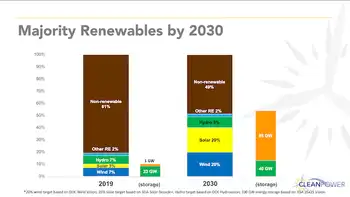
U.S. Majority Renewables by 2030 targets over half of electricity from wind, solar, hydropower, and energy storage, enabling a resilient, efficient grid, deep carbon reductions, fair market rules, and job growth across regions.


Key Points

A joint industry pledge for over 50% U.S. power from wind, solar, hydropower, and storage by 2030.

✅ Joint pledge by AWEA, SEIA, NHA, and ESA for a cleaner grid

✅ Focus on resilience, efficiency, affordability, and fair competition

✅ Storage enables flexibility to integrate variable renewables


Within a decade, more than half of the electricity generated in the U.S. will come from clean, renewable resources, with analyses indicating that wind and solar could meet 80% of U.S. electricity demand, supported by energy storage, according to a joint commitment today from the American wind, solar, hydropower, and energy storage industries. The American Wind Energy Association (AWEA), Solar Energy Industries Association (SEIA), National Hydropower Association (NHA), and Energy Storage Association (ESA) have agreed to actively collaborate across their industry segments to achieve this target. 

The four industries have released a set of joint advocacy principles that will enable them to realize this bold vision of a majority renewables grid. Along with increased collaboration, these shared principles include building a more resilient, efficient, sustainable, and affordable grid; achieving carbon reductions; and advancing greater competition through electricity market reforms and fair market rules. Each of these areas is critical to attaining the shared vision for 2030.  

The leaders of the four industry associations gathered to announce the shared vision, aligned with a broader 100% renewables pathway pursued nationwide, during the first CLEANPOWER annual conference for businesses across the renewable and clean energy spectrum. 

American Wind Energy Association 

"This collaborative promise sets the stage to deliver on the American electric grid of the future powered by wind, solar, hydropower, and storage," said Tom Kiernan, CEO of the American Wind Energy Association. "Market opportunities for projects that include a mix of technologies have opened up that didn't exist even a few years ago. And demand is growing for integrated renewable energy options. Individually and cooperatively, these sectors will continue growing to meet that demand and create hundreds of thousands of new jobs to strengthen economies from coast to coast, building a better, cleaner tomorrow. In the face of significant challenges the country is currently facing across pandemic response, economic, climate and social injustice problems, we are prepared to help lead toward a healthier and more equitable future."

Solar Energy Industries Association

"These principles are just another step toward realizing our vision for a Solar+ Decade," said Abigail Ross Hopper, president and CEO of the Solar Energy Industries Association. "In the face of this dreadful pandemic, our nation must chart a path forward that puts a premium on innovation, jobs recovery and a smarter approach to energy generation, reflecting expected solar and storage growth across the market. The right policies will make a growing American economy fueled by clean energy a reality for all Americans."

National Hydropower Association 

"The path towards an affordable, reliable, carbon-free electricity grid, supported by an ongoing grid overhaul for renewables, starts by harnessing the immense potential of hydropower, wind, solar and storage to work together," said Malcolm Woolf, President and CEO of the National Hydropower Association. "Today, hydropower and pumped storage are force multipliers that provide the grid with the flexibility needed to integrate other renewables onto the grid. By adding new generation onto existing non-powered dams and developing 15 GW of new pumped storage hydropower capacity, we can help accelerate the development of a clean energy electricity grid."

Energy Storage Association 

"We are pleased to join forces with our clean energy friends to substantially reduce carbon emissions by 2030, guided by practical decarbonization strategies, building a more resilient, efficient, sustainable, and affordable grid for generations to come," said ESA CEO Kelly Speakes-Backman. "A majority of generation supplied by renewable energy represents a significant change in the way we operate the grid, and the storage industry is a fundamental asset to provide the flexibility that a more modern, decarbonized grid will require. We look forward to actively collaborating with our colleagues to make this vision a reality by 2030."


Related News

View more

Is tidal energy the surge remote coastal communities need?

BC Tidal Energy Micro-Grids harness predictable tidal currents to replace diesel in remote Indigenous coastal communities, integrating marine renewables, storage, and demand management for resilient off-grid power along Vancouver Island and Haida Gwaii.


Key Points

Community-run tidal turbines and storage deliver reliable, diesel-free electricity to remote B.C. coastal communities.

✅ Predictable power from tidal currents reduces diesel dependence

✅ Integrates storage, demand management, and microgrid controls

✅ Local jobs via marine supply chains and community ownership


Many remote West Coast communities are reliant on diesel for electricity generation, which poses a number of negative economic and environmental effects.

But some sites along B.C.’s extensive coastline are ideal for tidal energy micro-grids that may well be the answer for off-grid communities to generate clean power, suggested experts at a COAST (Centre for Ocean Applied Sustainable Technologies) virtual event Wednesday.

There are 40 isolated coastal communities, many Indigenous communities, and 32 of them are primarily reliant on diesel for electricity generation, said Ben Whitby, program manager at PRIMED, a marine renewable energy research lab at the University of Victoria (UVic).

Besides being a costly and unreliable source of energy, there are environmental and community health considerations associated with shipping diesel to remote communities and running generators, Whitby said.

“It's not purely an economic question,” he said.

“You've got the emissions associated with diesel generation. There's also the risks of transporting diesel … and sometimes in a lot of remote communities on Vancouver Island, when deliveries of diesel don't come through, they end up with no power for three or four days at a time.”

The Heiltsuk First Nation, which suffered a 110,000-litre diesel spill in its territorial waters in 2016, is an unfortunate case study for the potential environmental, social, and cultural risks remote coastal communities face from the transport of fossil fuels along the rough shoreline.

A U.S. barge hauling fuel for coastal communities in Alaska ran aground in Gale Pass, fouling a sacred and primary Heiltsuk food-harvesting area.

There are a number of potential tidal energy sites near off-grid communities along the mainland, on both sides of Vancouver Island, and in the Haida Gwaii region, Whitby said.

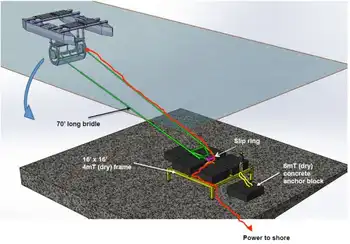
Tidal energy exploits the natural ebb and flow of the coast’s tidal water using technologies like underwater kite turbines to capture currents, and is a highly predictable source of renewable energy, he said.

Micro-grids are self-reliant energy systems drawing on renewables from ocean, wave power resources, wind, solar, small hydro, and geothermal sources.

The community, rather than a public utility like BC Hydro, is responsible for demand management, storage, and generation with the power systems running independently or alongside backup fuel generators — offering the operators a measure of energy sovereignty.

Depending on proximity, cost, and renewable solutions, tidal energy isn’t necessarily the solution for every community, Whitby noted, adding that in comparison to hydro, tidal energy is still more expensive.

However, the best candidates for tidal energy are small, off-grid communities largely dependent on costly fossil fuels, Whitby said.

“That's really why the focus in B.C. is at a smaller scale,” he said.

“The time it would take (these communities) to recoup any capital investment is a lot shorter.

“And the cost is actually on a par because they're already paying a significant amount of money for that diesel-generated power.”

Lisa Kalynchuk, vice-president of research and innovation at UVic, said she was excited by the possibilities associated with tidal power, not only in B.C., but for all of Canada’s coasts.

“Canada has approximately 40,000 megawatts available on our three coastlines,” Kalynchuk said.

“Of course, not all this power can be realized, but it does exist, so that leads us to the hard part — tapping into this available energy and delivering it to those remote communities that need it.”

Challenges to establishing tidal power include the added cost and complexity of construction in remote communities, the storage of intermittent power for later use, the economic model, though B.C.’s streamlined regulatory process may ease approvals, the costs associated with tidal power installations, and financing for small communities, she said.

But smaller tidal energy projects can potentially set a track record for more nascent marine renewables, as groups like Marine Renewables Canada pivot to offshore wind development, at a lower cost and without facing the same social or regulatory resistance a large-scale project might face.

A successful tidal energy demo project was set up using a MAVI tidal turbine in Blind Channel to power a private resort on West Thurlow Island, part of the outer Discovery Islands chain wedged between Vancouver Island and the mainland, Whitby said.

The channel’s strong tidal currents, which routinely reach six knots and are close to the marina, proved a good site to test the small-scale turbine and associated micro-grid system that could be replicated to power remote communities, he said.

The mooring system, cable, and turbine were installed fairly rapidly and ran through the summer of 2017. The system is no longer active as provincial and federal funding for the project came to an end.

“But as a proof of concept, we think it was very successful,” Whitby said, adding micro-grid tidal power is still in the early stages of development.

Ideally, the project will be revived with new funding, so it can continue to act as a test site for marine renewable energy and to showcase the system to remote coastal communities that might want to consider tidal power, he said.

In addition to harnessing a local, renewable energy source and increasing energy independence, tidal energy micro-grids can fuel employment and new business opportunities, said Whitby.

The Blind Channel project was installed using the local supply chain out of nearby Campbell River, he said.

“Most of the vessels and support came from that area, so it was all really locally sourced.”

Funding from senior levels of government would likely need to be provided to set up a permanent tidal energy demonstration site, with recent tidal energy investments in Nova Scotia offering a model, or to help a community do case studies and finance a project, Whitby said.

Both the federal and provincial governments have established funding streams to transition remote communities away from relying on diesel.

But remote community projects funded federally or provincially to date have focused on more established renewables, such as hydro, solar, biomass, or wind.

The goal of B.C.’s Remote Community Energy Strategy, part of the CleanBC plan and aligned with zero-emissions electricity by 2035 targets across Canada, is to reduce diesel use for electricity 80 per cent by 2030 by targeting 22 of the largest diesel locations in the province, many of which fall along the coast.

The province has announced a number of significant investments to shift Indigenous coastal communities away from diesel-generated electricity, but they predominantly involve solar or hydro projects.

A situation that’s not likely to change, as the funding application guide in 2020 deemed tidal projects as ineligible for cash.

Yet, the potential for establishing tidal energy micro-grids in B.C. is good, Kalynchuk said, noting UVic is a hub for significant research expertise and several local companies, including ocean and river power innovators working in the region, are employing and developing related service technologies to install and maintain the systems.

“It also addresses our growing need to find alternative sources of energy in the face of the current climate crisis,” she said.

“The path forward is complex and layered, but one essential component in combating climate change is a move away from fossil fuels to other sources of energy that are renewable and environmentally friendly.”


Related News

View more

Sen. Cortez Masto Leads Colleagues in Urging Congress to Support Clean Energy Industry in Economic Relief Packages

Clean Energy Industry Support includes tax credits, refundability, safe harbor extensions, EV incentives, and stimulus measures to stabilize renewable energy projects, protect the workforce, and ensure financing continuity during economic recovery.


Key Points

Policies and funding to stabilize renewables, protect jobs, and extend tax incentives for workforce continuity.

✅ Extend PTC/ITC and remove phase-outs to sustain projects

✅ Enable direct pay or refundability to unlock financing

✅ Preserve safe harbor timelines disrupted by supply chains


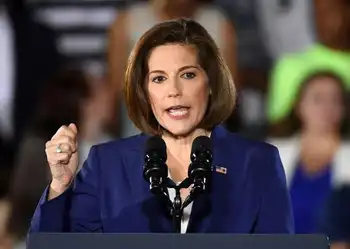
U.S. Senator Catherine Cortez Masto (D-Nev.) led 17 Senate colleagues, as the Senate moves to modernize public-land renewables, in sending a letter calling on Congress to include support for the United States' clean energy industry and workforce in any economic aid packages.

"As Congress takes steps to ensure that our nation's workforce is prepared to emerge stronger from the coronavirus health and economic crisis, we must act to shore up clean energy businesses and workers who are uniquely impacted by the crisis, echoing a power-sector call for action from industry groups," said the senators. "This action, which has precedent in prior financial recovery efforts, could take several forms, including tax credit extensions or removal of the current phase-out schedule, direct payment or refundability, or extensions of safe harbor continuity."

"We need to make sure that any package protects workers and helps families stay afloat in these challenging times. Providing support to the clean energy industry will give much-needed certainty and confidence, as the sector targets a market majority, for those workers that they will be able to keep their paychecks and their jobs in this critical industry," the senators also said.

In addition to Senator Cortez Masto, the letter was also signed by Senators Ed Markey (D-Mass.), Martin Heinrich (D-N.M), Sheldon Whitehouse (D-R.I.), Debbie Stabenow (D-Mich.), Tina Smith (D-Minn.), Jack Reed (D-R.I.), Cory Booker (D-N.J.), Richard Blumenthal (D-Conn.), Amy Klobuchar (D-Minn.), Chris Van Hollen (D-Md.), Dianne Feinstein (D-Calif.), Jacky Rosen (D-Nev.), Tammy Duckworth (D-Ill.), Chris Coons (D-Del.), Mazie Hirono (D-Hawaii), Dick Durbin (D-Ill.), and Kyrsten Sinema (D-Ariz.).

Dear Leader McConnell, Leader Schumer, Chairman Grassley, Ranking Member Wyden:

As Congress takes steps to ensure that our nation's workforce is prepared to emerge stronger from the coronavirus health and economic crisis, we must act to shore up clean energy businesses and workers who are uniquely impacted by the crisis, with wind investments at risk amid the pandemic. This action, which has precedent in prior financial recovery efforts, could take several forms, including tax credit extensions or removal of the current phase-out schedule, direct payment or refundability, or extensions of safe harbor continuity.

First and foremost, we need to take care of workers' health and immediate needs to stay in their homes and provide for their families, and the Families First Coronavirus Response Act is a critical down payment. Now, we must make sure the workforce has jobs to return to and that employers remain able to pay for critical benefits like paid sick and family leave, healthcare, and Unemployment Insurance.

The renewable energy industry employs over 800,000 people across every state in the United States. This industry and its workers could suffer significant harms as a result of the coronavirus emergency and resulting financial impact. Renewable energy businesses are already seeing project cancellations or delays, as the Covid-19 crisis hits solar and wind across the sector, with the solar industry reporting delays of 30 percent. Likewise, the energy efficiency sector is susceptible to similar impacts. As the coronavirus pandemic intensifies in the United States, that rate of delay or cancellations will only continue to skyrocket. Global and domestic supply chains are already facing chaotic changes, with equipment delays of three to four months for parts of the industry. A major collapse in financing is all but certain as investment firms' profits turn to losses and capital is suddenly unavailable for large labor-intensive investments.

To ensure that we do not lose years of progress on clean energy and the source of employment for tens of thousands of renewable energy workers, Congress should look to previous relief packages as an example for how to support this sector and the broader American economy. The American Recovery and Reinvestment Act of 2009 (also known as the Recovery Act or ARRA) provided over $90 billion in funding for clean energy and grid modernization, along with emergency relief programs. Specifically, ARRA provided immediate funding streams like the 1603 Cash Grant program for renewables and the 30 percent clean energy manufacturing tax credit to give immediate relief for the clean energy industry. As Congress develops this new package, it should consider these immediate relief programs for the renewable and clean energy industry, especially as analyses suggest green energy could drive Covid-19 recovery at scale. This could include direct payment or refundability, extensions of safe harbor continuity, tax credit extensions, electric vehicle credit expansion, or removal of the current phase-out schedules for the clean energy industry.

We need to make sure that any package protects workers and helps families stay afloat in these challenging times. Providing support to the clean energy industry will give much-needed certainty and confidence for those workers that they will be able to keep their paychecks and their jobs in this critical industry.

These strategies to provide assistance to the clean energy industry must be included in any financial recovery discussions, particularly if the Trump Administration continues its push to aid the oil industry, even as some advocate a total fossil fuel lockdown to accelerate climate action. We appreciate your consideration and collaboration as we do everything in our power to quickly recover from this health and economic emergency.


Related News

View more

Sign Up for Electricity Forum’s Newsletter

Stay informed with our FREE Newsletter — get the latest news, breakthrough technologies, and expert insights, delivered straight to your inbox.

Electricity Today T&D Magazine Subscribe for FREE

Stay informed with the latest T&D policies and technologies.
  • Timely insights from industry experts
  • Practical solutions T&D engineers
  • Free access to every issue

Live Online & In-person Group Training

Advantages To Instructor-Led Training – Instructor-Led Course, Customized Training, Multiple Locations, Economical, CEU Credits, Course Discounts.

Request For Quotation

Whether you would prefer Live Online or In-Person instruction, our electrical training courses can be tailored to meet your company's specific requirements and delivered to your employees in one location or at various locations.