Substation Protection Training - Protect Transformers, Buses and Lines
Our customized live online or in‑person group training can be delivered to your staff at your location.

- Live Online
- 12 hours Instructor-led
- Group Training Available
Regular Price:
$799
Coupon Price:
$699
OTTAWA, ONTARIO--Ralph Goodale, Minister of Natural Resources Canada (NRCan), and David Anderson, Minister of the Environment, today announced the details of 28 specific Government of Canada climate change initiatives that will cut Canada's greenhouse gas (GHG) emissions by more than 23.7 megatonnes by 2010.
The projects, worth $425.15 million, are funded as part of the $1.1 billion in climate change commitments made in Budget 2000 and the Action Plan 2000 on Climate Change announced in October 2000, which are expected to take us about one-third of the way to meeting Canada's international climate change obligations when fully implemented.
"The initiatives we're announcing today reach out to all Canadians and all sectors of our economy, and they will put us significantly closer to meeting our climate change goals," said Minister Goodale. "They demonstrate our determination to continue leading the way on climate change and our commitment to finding solutions."
"We are putting these tools in place to continue the partnership between governments, industry, and all Canadians in addressing climate change," said Minister Anderson. "These initiatives will offer Canadians choices for cleaner energy, more energy-efficient buildings and homes, and greener transportation. By building on past actions and by acting today, we can contribute to a better, more secure tomorrow."
Among the initiatives announced by the Ministers are the following:
These initiatives are part of the Government of Canada's contribution to Canada's First National Business Plan, which also includes provincial and territorial initiatives.
On November 10, 2001, international negotiations on the operation of the Kyoto Protocol concluded. The Protocol will go into force after it has been ratified by a minimum of 55 countries, representing at least 55 percent of industrial countries' emissions. Prime Minister Chretien has stated that the agreement opens the door for Canada to consider a decision on ratification in 2002, following full consultations with provinces and territories, other stakeholders, and the Canadian public.
Related News
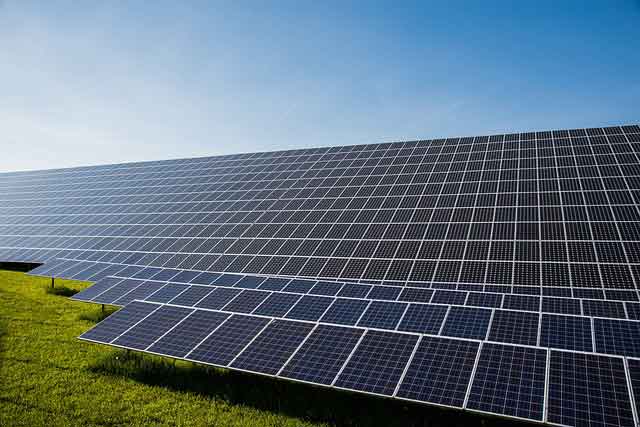
Schott Powers German Plants with Green Electricity
Schott Green Electricity CPPA secures renewable energy via a solar park in Schleswig-Holstein, supporting decarbonization…
View more

Why California's Climate Policies Are Causing Electricity Blackouts
California Rolling Blackouts expose grid reliability risks amid a heatwave, as CAISO curtails power while…
View more
Ukraine resumes electricity exports despite Russian attacks
Ukraine Electricity Exports resume to the European grid, starting with Moldova and expanding to Poland,…
View more

Ontario Energy Board Sets New Electricity Rate Plan Prices and Support Program Thresholds
OESP Eligibility 2024 updates Ontario electricity affordability: TOU, Tiered, Ultra-Low-Overnight price plans, online bill calculator,…
View more

Does Providing Electricity To The Poor Reduce Poverty? Maybe Not
Rural Electrification Poverty Impact examines energy access, grid connections, and reliability, testing economic development claims…
View more

Nuclear plant workers cite lack of precautions around virus
Millstone COVID-19 safety concerns center on a nuclear refueling outage in Connecticut, temporary workers, OSHA…
View more
Sign Up for Electricity Forum’s Newsletter
Stay informed with our FREE Newsletter — get the latest news, breakthrough technologies, and expert insights, delivered straight to your inbox.
Electricity Today T&D Magazine Subscribe for FREE

Stay informed with the latest T&D policies and technologies.
- Timely insights from industry experts
- Practical solutions T&D engineers
- Free access to every issue
