OPG Signs Deal For Green Power

By


High Voltage Maintenance Training Online

Our customized live online or in‑person group training can be delivered to your staff at your location.

  • Live Online
  • 12 hours Instructor-led
  • Group Training Available
Regular Price:
$599
Coupon Price:
$499
Reserve Your Seat Today
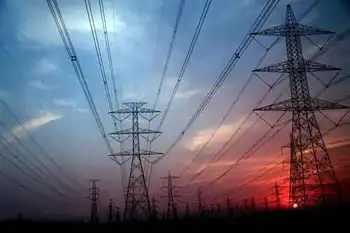
Ontario Power Generation (OPG), a leading generator and seller of electricity, announced that it has signed a deal to supply Green Power to Oakville Hydro Energy Services Inc. (OHESI), the retail arm of Oakville Hydro Corporation.

OHESI is offering customers in the Town of Oakville and surrounding area the option of purchasing Evergreen Clean Green Power - low environmental impact electricity that is generated using renewable energy resources such as wind, biomass and low-impact hydro. This is the first time an Ontario energy retailer has offered OPG’s Evergreen Energy Clean Green Power to residential customers. The OHESI offer is available to customers through its “Green Light Pact” Program.

“We’re very pleased and excited to be able to offer Green Power benefits to our customers,” says Alex Bystrin, President and Chief Executive Officer of Oakville Hydro Corporation. “By signing on for Green Power from Ontario Power Generation, we now have access to a constant, reliable portfolio of renewable energy that will enable us to help our customers meet a wide range of business and personal objectives.”

Bystrin adds that the company also plans to make its Green Power offerings available to residential and business customers in other parts of the Province.

Pete Sprukulis, Vice-President, Marketing at Ontario Power Generation, says that the decision by OHESI to offer its customers Green Power from OPG demonstrates commitment to environmental leadership that others may like to follow.

“It is important for all members of the community to work together to protect the environment,” Sprukulis says. “A growing number of consumers understand that purchasing Green Power can provide a visible demonstration of environmental commitment. OPG believes that the decision by OHESI on Green Power is one that will encourage the growth of the renewable energy sector.”

Related News

Data Center Boom Poses a Power Challenge for U.S. Utilities

U.S. Data Center Power Demand is straining electric utilities and grid reliability as AI, cloud computing, and streaming surge, driving transmission and generation upgrades, demand response, and renewable energy sourcing amid rising electricity costs.


Key Points

The rising electricity load from U.S. data centers, affecting utilities, grid capacity, and energy prices.

✅ AI, cloud, and streaming spur hyperscale compute loads

✅ Grid upgrades: transmission, generation, and substations

✅ Demand response, efficiency, and renewables mitigate strain


U.S. electric utilities are facing a significant new challenge as the explosive growth of data centers puts unprecedented strain on power grids across the nation. According to a new report from Reuters, data centers' power demands are expected to increase dramatically over the next few years, raising concerns about grid reliability and potential increases in electricity costs for businesses and consumers.


What's Driving the Data Center Surge?

The explosion in data centers is being fueled by several factors, with grid edge trends offering early context for these shifts:

  • Cloud Computing: The rise of cloud computing services, where businesses and individuals store and process data on remote servers, significantly increases demand for data centers.
  • Artificial Intelligence (AI): Data-hungry AI applications and machine learning algorithms are driving a massive need for computing power, accelerating the growth of data centers.
  • Streaming and Video Content: The growth of streaming platforms and high-definition video content requires vast amounts of data storage and processing, further boosting demand for data centers.


Challenges for Utilities

Data centers are notorious energy hogs. Their need for a constant, reliable supply of electricity places  heavy demand on the grid, making integrating AI data centers a complex planning challenge, often in regions where power infrastructure wasn't designed for such large loads. Utilities must invest significantly in transmission and generation capacity upgrades to meet the demand while ensuring grid stability.

Some experts warn that the growth of data centers could lead to brownouts or outages, as a U.S. blackout study underscores ongoing risks, especially during peak demand periods in areas where the grid is already strained. Increased electricity demand could also lead to price hikes, with utilities potentially passing the additional costs onto consumers and businesses.


Sustainable Solutions Needed

Utility companies, governments, and the data center industry are scrambling to find sustainable solutions, including using AI to manage demand initiatives across utilities, to mitigate these challenges:

  • Energy Efficiency: Data center operators are investing in new cooling and energy management solutions to improve energy efficiency. Some are even exploring renewable energy sources like onsite solar and wind power.
  • Strategic Placement: Authorities are encouraging the development of data centers in areas with abundant renewable energy and access to existing grid infrastructure. This minimizes the need for expensive new transmission lines.
  • Demand Flexibility: Utility companies are experimenting with programs as part of a move toward a digital grid architecture to incentivize data centers to reduce their power consumption during peak demand periods, which could help mitigate power strain.


The Future of the Grid

The rapid growth of data centers exemplifies the significant challenges facing the aging U.S. electrical grid, with a recent grid report card highlighting dangerous vulnerabilities. It highlights the need for a modernized power infrastructure, capable of accommodating increasing demand spurred by new technologies while addressing climate change impacts that threaten reliability and affordability.  The question for utilities, as well as data center operators, is how to balance the increasing need for computing power with the imperative of a sustainable and reliable energy future.


Related News

View more

Minister approves 30-megawatt wind farm expansion in Eastern Kings

Eastern Kings Wind Farm Expansion advances P.E.I. renewable energy with seven new wind turbines, environmental assessment, wildlife monitoring of birds and bats, and community consultation to double output to 30 MW for domestic consumption.


Key Points

A P.E.I. project adding seven turbines for 30 MW, under 17 conditions, with wildlife monitoring and community oversight.

✅ Seven new turbines, larger than existing units

✅ 17 conditions, monthly compliance reporting

✅ Two-year wildlife study for birds and bats


A proposal to expand an existing wind farm in eastern P.E.I. has been given the go-ahead, according to P.E.I.’s Department of Environment, Water and Climate Change, as related grid work like a new transmission line progresses in the region.

Minister Natalie Jameson approved the P.E.I. Energy Corporation’s Eastern Kings Wind Farm expansion project, the province announced in a release Wednesday afternoon, as Atlantic Canada advances other renewable initiatives like tidal power to diversify supply.

The project will be subject to 17 conditions, which were drawn from a review of the 80 responses the province received from the public on the proposed Eastern Kings Wind Farm expansion.

The corporation must provide a summary on the status of each condition to the department on a monthly basis.

“This decision balances the needs of people, communities, wellness and the environment,” Jameson said in the release.

“It allows this renewable energy project to proceed and reduce greenhouse [gas] emissions that cause climate change while mitigating the project’s impact to the Island’s ecosystem.”

The P.E.I. Energy Corporation wants to double the output of its Eastern Kings Wind Farm with the installation of seven wind turbines between the communities of Elmira and East Point to develop 30 megawatts of wind power for domestic consumption, according to the minister’s impact assessment, aligning with regional moves to expand wind and solar projects across Atlantic Canada.

The new turbines are expected to be larger than the existing 10 at the site, even as regional utilities study major grid changes to integrate more renewables.

Project must comply with conditions

In February, the province said it would identify any specific questions or concerns it felt needed to be addressed in the submissions, according to Greg Wilson, manager of environmental land management for the province, while some advocate for independent electricity planning to guide such decisions.

Public feedback closed in January, after an earlier extension to wait for a supplemental report on birds and bats.

The corporation needs to comply with all conditions – such as monitoring environmental impact, setting up an environmental management plan and creating a committee to address concerns – listed in the release on Wednesday, amid calls from environmental advocates to reduce biomass use in electricity generation.

A condition in the release suggests representatives from L’nuey, the Souris and Area Wildlife Branch, the Rural Municipality of Eastern Kings and local residents to make up the committee.

The corporation will also need to conduct a study over two years after construction to look at the impact on bats and birds, and implement a protocol to report deaths of birds to federal and provincial authorities.

According to Canada Energy Regulator, roughly 98 per cent of power generated on P.E.I. comes from wind farms. It also said there were 203 megawatts installed on P.E.I. as of 2018, and the majority of energy consumed on the Island comes from New Brunswick from a mix of nuclear, fossil fuels and hydroelectricity, while in Nova Scotia, the utility has increased biomass generation as part of its supply mix.


Related News

View more

Announces Completion of $16 Million Project to Install Smart Energy-Saving Streetlights in Syracuse

Smart Street Lighting NY delivers Syracuse-wide LED retrofits with smart controls, Wi-Fi, and sensors, saving $3.3 million annually and cutting nearly 8,500 tons of greenhouse gases, improving energy efficiency, safety, and maintenance.


Key Points

A NYPA-backed program replacing streetlights with LED and controls to cut costs and emissions across New York by 2025.

✅ Syracuse replaced 17,500 fixtures with LED and smart controls.

✅ Saves $3.3M yearly; cuts 8,500 tons CO2e; improves safety.

✅ NYPA financing and maintenance support enable Smart City sensors.


Governor Andrew M. Cuomo today announced the completed installation of energy-efficient LED streetlights throughout the City of Syracuse as part of the Governor's Smart Street Lighting NY program. Syracuse, through a partnership with the New York Power Authority, replaced all of its streetlights with the most comprehensive set of innovative Smart City technologies in the state, saving the city $3.3 million annually and reducing greenhouse gas emissions by nearly 8,500 tons a year--the equivalent of taking more than 1,660 cars off the road. New York has now replaced more than 100,000 of its streetlights with LED fixtures, reflecting broader state renewable ambitions across the country, a significant milestone in the Governor's goal to replace at least 500,000 streetlights with LED technology by 2025 under Smart Street Lighting NY.

Today's announcement directly supports the goals of the Climate Leadership and Community Protection Act, the most aggressive climate change law in the nation, through the increased use of energy efficiency, exemplified by Seattle City Light's program that helps customers reduce bills, to annually reduce electricity demand by three percent--equivalent to 1.8 million New York households--by 2025.

"As we move further into the 21st century, it's critical we make the investments necessary for building smarter, more sustainable communities and that's exactly what we are doing in Syracuse," Governor Cuomo said. "Not only is the Smart Street Lighting NY program reducing the city's carbon footprint, but millions of taxpayer dollars will be saved thanks to a reduction in utility costs. Climate change is not going away and it is these types of smart, forward-thinking programs which will help communities build towards the future."

The more than $16 million cutting-edge initiative, implemented by NYPA, includes the replacement of approximately 17,500 streetlights throughout the city with SMART, LED fixtures, improving lighting quality and neighborhood safety while saving energy and maintenance costs. The city's streetlights are now outfitted with SMART controls that provide programmed dimming ability, energy metering, fault monitoring, and additional tools for emergency services through on-demand lighting levels.

"The completion of the replacement of LED streetlights in Syracuse is part of our overall efforts to upgrade more than 100,000 streetlights across the state," Lieutenant Governor Kathy Hochul said. "The new lights will save the city $3.3 million annually, helping to reduce cost for energy and maintenance and reducing greenhouse gas emissions. These new light fixtures will also help to improve safety and provide additional tools for emergency services. The conversion of streetlights statewide to high-tech LED fixtures will help local governments and taxpayers save money, while increasing efficiency and safety as we work to build back better and stronger for the future."

NYPA provided Syracuse with a $500,000 Smart Cities grant for the project. The city utilized the additional funding to support special features on the streetlights that demonstrate the latest in Smart City technologies, focused on digital connectivity, environmental monitoring and public safety. These features are expected to be fully implemented in early 2021.

Connectivity: The city is planning to deploy exterior Wi-Fi at community centers and public spaces, including in neighborhoods in need of expanded digital network services.

Environmental Monitoring: Ice and snow detection systems that assist city officials in pinpointing streets covered in ice or snow and require attention to prevent accidents and improve safety. The sensors provide data that can tell the city where salt trucks and plows are most needed instead of directing trucks to drive pre-determined routes. Flood reporting and monitoring systems will also be installed.

Public Safety and Property Protection: Illegal dumping and vandalism detection sensors will be installed at strategic locations to help mitigate these disturbances. Vacant house monitoring will also be deployed by the city. The system can monitor for potential fires, detect motion and provide temperature and humidity readings of vacant homes. Trash bin sensors will be installed at various locations throughout the city that will detect when a trash bin is full and alert local officials for pick-up.

NYPA President and CEO Gil C. Quiniones said, "Syracuse is truly a pioneer in its exploration of using SMART technologies to improve public services and the Power Authority was thrilled to partner with the city on this innovative initiative. Helping our customers bring their streetlights into the future further advances NYPA's reputation as a first-mover in the energy-sector."

New York State Public Service Commission Chair John B. Rhodes said, "Governor Cuomo signed legislation making it easier for municipalities to purchase and upgrade their street lighting systems. With smart projects like these, cities such as Syracuse can install state-of-the-art, energy efficient lights and take control over their energy use, lower costs to taxpayers and protect the environment."

Mayor Ben Walsh said, "Governor Cuomo and the New York Power Authority have helped power Syracuse to the front of the pack of cities in the U.S., leveraging SMART LED lighting to save money and make life better for our residents. Because of our progress, even in the midst of a global pandemic, the Syracuse Surge, our strategy for inclusive growth in the New Economy, continues to move forward. Syracuse and all of New York State are well positioned to lead the nation and the world because of NYPA's support and the Governor's leadership."

To date, NYPA has installed more than 50,000 LED streetlights statewide, with more than 115,000 lighting replacements currently implemented. Some of the cities and towns that have already converted to LED lights, in collaboration with NYPA, include Albany, Rochester, and White Plains. In addition, the Public Service Commission, whose ongoing retail energy markets review informs consumer protections, in conjunction with investor-owned utilities around the state, has facilitated the installation of more than 50,000 additional LED lights.

The NYPA Board of Trustees, in support of the Smart Street Lighting NY program, authorized at its September meeting the expenditure of $150 million over the next five years to secure the services of Candela Systems in Hawthorne, D&M Contracting in Elmsford and E-J Electric T&D in Wallingford, Connecticut, while in other regions, city officials take a clean energy message to Georgia Power and the PSC to spur utility action. All three firms will work on behalf of NYPA to continue to implement LED lighting replacements throughout New York State to meet the Governor's goal of 500,000 LED streetlights installed by 2025.

Smart Street Lighting NY: Energy Efficient and Economically Advantageous

NYPA is working with cities, towns, villages and counties throughout New York to fully manage and implement a customer's transition to LED streetlight technology. NYPA provides upfront financing for the project, and during emergencies, New York's utility disconnection moratorium helps protect customers while payments to NYPA are made in the years following from the cost-savings created by the reduced energy use of the LED streetlights, which are 50 to 65 percent more efficient than alternative street lighting options.

Through this statewide street lighting program, NYPA's government customers are provided a wide-array of lighting options to help meet their individual needs, including specifications on the lights to incorporate SMART technology, which can be used for dozens of other functions, such as cameras and other safety features, weather sensors, Wi-Fi and energy meters.

To further advance the Governor's effort to replace existing New York street lighting, in 2019, NYPA launched a new maintenance service to provide routine and on-call maintenance services for LED street lighting fixtures installed by NYPA throughout the state, and during the COVID-19 response, New York and New Jersey suspended utility shut-offs to protect customers and maintain essential services. The new service is available to municipalities that have engaged NYPA to implement a LED street lighting conversion and have elected to install an asset management controls system on their street lighting system, reducing the number of failures and repairs needed after installation is complete.

To learn more about the Smart Street Lighting NY program, visit the program webpage on NYPA's website.


New York State's Nation-Leading Climate Plan

Governor Cuomo's nation-leading climate plan is the most aggressive climate and clean energy initiative in the nation, calling for an orderly and just transition to clean energy that creates jobs and continues fostering a green economy as New York State builds back better as it recovers from the COVID-19 pandemic. Enshrined into law through the CLCPA, New York is on a path to reach its mandated goals of economy wide carbon neutrality and achieving a zero-carbon emissions electricity sector by 2040, similar to Ontario's clean electricity regulations that advance decarbonization, faster than any other state. It builds on New York's unprecedented ramp-up of clean energy including a $3.9 billion investment in 67 large-scale renewable projects across the state, the creation of more than 150,000 jobs in New York's clean energy sector, a commitment to develop over 9,000 megawatts of offshore wind by 2035, and 1,800 percent growth in the distributed solar sector since 2011. New York's Climate Action Council is working on a scoping plan to build on this progress and reduce greenhouse gas emissions by 85 percent from 1990 levels by 2050, while ensuring that at least 40 percent of the benefits of clean energy investments benefit disadvantaged communities, and advancing progress towards the state's 2025 energy efficiency target of reducing on-site energy consumption by 185 TBtus.


Related News

View more

Environmentalist calls for reduction in biomass use to generate electricity

Nova Scotia Biomass Energy faces scrutiny as hydropower from Muskrat Falls via the Maritime Link increases, raising concerns over carbon emissions, biodiversity, ratepayer costs, and efficiency versus district heating in the province's renewable mix.


Key Points

Electricity from wood chips and waste wood in Nova Scotia, increasingly questioned as hydropower from the Maritime Link grows.

✅ Hydropower deliveries reduce need for biomass on the grid

✅ Biomass is inefficient, costly, and impacts biodiversity

✅ District heating offers better use of forestry residuals


The Ecology Action Centre's senior wilderness coordinator is calling on the Nova Scotia government to reduce the use of biomass to generate electricity now that more hydroelectric power is flowing into the province.

In 2020, the government of the day signed a directive for Nova Scotia Power to increase its use of biomass to generate electricity, including burning more wood chips, waste wood and other residuals from the forest industry. At the time, power from Muskrat Falls hydroelectric project in Labrador was not flowing into the province at high enough levels to reach provincial targets for electricity generated by renewable resources.

In recent months, however, the Maritime Link from Muskrat Falls has delivered Nova Scotia's full share of electricity, and, in some cases, even more, as the province also pursues Bay of Fundy tides projects to diversify supply.

Ray Plourde with the Ecology Action Centre said that should be enough to end the 2020 directive.

Ray Plourde is senior wilderness coordinator for the Ecology Action Centre. (CBC)
Biomass is "bad on a whole lot of levels," said Plourde, including its affects on biodiversity and the release of carbon into the atmosphere, he said. The province's reliance on waste wood as a source of fuel for electricity should be curbed, said Plourde.

"It's highly inefficient," he said. "It's the most expensive electricity on the power grid for ratepayers."

A spokesperson for the provincial Natural Resources and Renewables Department said that although the Maritime Link has "at times" delivered adequate electricity to Nova Scotia, "it hasn't done so consistently," a context that has led some to propose an independent planning body for long-term decisions.

"These delays and high fossil fuel prices mean that biomass remains a small but important component of our renewable energy mix," Patricia Jreiga said in an email, even as the province plans to increase wind and solar projects in the years ahead.

But to Plourde, that explanation doesn't wash.

The Nova Scotia Utility and Review Board recently ruled that Nova Scotia Power could begin recouping costs of the Maritime Link project from ratepayers. As for the rising cost of fossil fuels, Ploude noted that the inefficiency of biomass means there's no deal to be had using it as a fuel source.

"Honestly, that sounds like a lot of obfuscation," he said of the government's position.

No update on district heating plans
At the time of the directive, government officials said the increased use of forestry byproducts at biomass plants in Point Tupper and Brooklyn, N.S., including the nearby Port Hawkesbury Paper mill, would provide a market for businesses struggling to replace the loss of Northern Pulp as a customer. Brooklyn Power has been offline since a windstorm damaged that plant in February, however. Repairs are expected to be complete by the end of the year or early 2023.

Ploude said a better use for waste wood products would be small-scale district heating projects, while others advocate using more electricity for heat in cold regions.

Although the former Liberal government announced six public buildings to serve as pilot sites for district heating in 2020, and a list of 100 other possible buildings that could be converted to wood heat, there have been no updates.

"Currently, we're working with several other departments to complete technical assessments for additional sites and looking at opportunities for district heating, but no decisions have been made yet," provincial spokesperson Steven Stewart said in an email.


Related News

View more

Residential electricity use -- and bills -- on the rise thanks to more working from home

Work From Home Energy Consumption is driving higher electricity bills as residential usage rises. Smart meter data, ISO-New-England trends, and COVID-19 telecommuting show stronger power demand and sensitivity to utility rates across regions.


Key Points

Higher household electricity use from telecommuting, shifting load to residences and raising utility bills.

✅ Smart meters show 5-22 percent residential usage increases.

✅ Commercial demand fell as home cooling and IT loads rose.

✅ Utility rates and AC use drive bill spikes during summer.


Don't be surprised if your electric bills are looking higher than usual, with a sizable increase in the amount of power that you have used.

Summer traditionally is a peak period for electricity usage because of folks' need to run fans and air-conditioners to cool their homes or run that pool pump. But the arrival of the coronavirus and people working from home is adding to amount of power people are using.

Under normal conditions, those who work in their employer's offices might not be cooling their homes as much during the middle of the day or using as much electricity for lights and running computers.

For many, that's changed.

Estimates on how much of an increase residential electric customers are seeing as result of working from home vary widely.

ISO-New England, the regional electric grid operator, has seen a 3 percent to 5 percent decrease in commercial and industrial power demand, even as the grid overseer issued pandemic warnings nationally. The expectation is that much of that decrease translates into a corresponding increase in residential electricity usage.

But other estimates put the increase in residential electricity usage much higher. A Washington state company that makes smart electric meters, Itron, estimates that American households are using 5 percent to 10 percent more electricity per month since March, when many people began working from home as part of an effort to prevent the spread of the coronavirus.

Another smart metering company, Cambridge, Mass.-based Sense, found that average home electricity usage increased 22 percent in April compared to the same period in 2019, a reflection of people using more electricity while they stayed home. Based on its analysis of data from 5,000 homes across 30 states, Sense officials said a typical customer's monthly electric bill increased by between $22 and $25, with a larger increase for consumers in states with higher electricity rates.

Connecticut-specfic data is harder to come by.

Officials with Orange-based United Illuminating declined to provide any customer usage data, though, like others in the power industry, they did acknowledge that residential customers are using more electricity. And the state's other large electric distribution utility, Eversource, was unable to provide any recent data on residential electric usage. The company did tell Connecticut utility regulators there was a 3 percent increase in residential power usage for the week of March 21 compared to the week before.

Over the same time period, Eversource officials saw a 3 percent decrease in power usage by commercial and industrial customers.

Separately, nuclear plant workers raised concerns about pandemic precautions at some facilities, reflecting operational strains.

Alan Behm of Cheshire said he normally uses 597 kilowatt hours of electricity during an average month. But in April of this year, the amount of electricity he used rose by nearly 51 percent.

With many offices closed, the expense of heating, cooking and lighting is being shifted from employer to employee, and some utilities such as Manitoba Hydro have pursued unpaid days off to trim costs during the pandemic. And one remote work expert believes some companies are recognizing the burden those added costs are placing on workers -- and are trying to do something about it.

Technology giant Google announced in late May that it was giving employees who work from home $1,000 allowances to cover equipment costs and other expenses associated with establishing a home office.

Moe Vela, chief transparency officer for the New York City-based computer software company TransparentBusiness, said the move by Google executives is a savvy one.

"Google is very smart to have figured this out," Vela said. "This is what employees want, especially millenials. People are so much happier to be working remotely, getting those two to three hours back per day that some people spend getting to and from work is so much more important than a stipend."

Vela predicted that even after a vaccine is found for the corona virus, one of the key worklife changes is likely to be a broader acceptance of telework and working from home.

Beyond the immediate shifts, more young Canadians would work in electricity if awareness improved, pointing to future talent pipelines.

"I think that's where we're headed," he said. "I think it will make an employer more attractive as they try to attract talent from around the world."

Vela said employers save an average of $11,000 per year for each employee they have working from home.

"It would be a brilliant move if a company were to share some of that amount with employees," he said. "I wouldn't do it if it's going to cause a company to not be there (in business) though."

The idea of a company sharing whatever savings it achieves by having employees work from home wasn't well received by many Connecticut residents who responded to questions posed via social media by Hearst Connecticut Media. More than 100 people responded and an overwhelming number of people spoke out against the idea.

"You are saving on gas and other travel related expenses, so the small increase in your electric bill shouldn't really be a concern," said Kathleen Bennett Charest of Wallingford.

Jim Krupp, also of Wallingford, said, "to suggest that the employers compensate the employees makes as much sense as suggesting that the employees should take a pay cut due to their reduced expenses for travel, day care, and eating lunch at work."

"Employers must still maintain their offices and incur all of the fixed expenses involved, including basic utilities, taxes and insurance," Krupp said. "The cost savings (for employers) that are realized are also offset by increased costs of creating and maintaining IT networks that allow employees to access their work sites from home and the costs of monitoring and managing the work force."

Kiki Nichols Nugent of Cheshire said she was against the idea of an employee trying to get their employer to pay for the increased electricity costs associated with working from home.

"I would not nickle and dime," Nugent said. "If companies are saving on electricity now, maybe employers will give better raises next year."

New Haven resident Chris Smith said he is "just happy to have a job where I am able to telecommute."

"When teleworking becomes more the norm, either now or in the future, we may see increased wages for teleworkers either for the lower cost to the employer or for the increase in productivity it brings," Smith said.


Related News

View more

Indian government takes steps to get nuclear back on track

India Nuclear Generation Shortfall highlights missed five-year plan targets due to uranium fuel scarcity, commissioning delays at Kudankulam, PFBR slippage, and PHWR equipment bottlenecks under IAEA safeguards and domestic supply constraints.


Key Points

A gap between planned and actual nuclear output due to fuel shortages, reactor delays, and first-of-a-kind hurdles.

✅ Fuel scarcity pre-2009-10 constrained unsafeguarded reactors.

✅ Kudankulam delays from protests, litigation, and remobilisation.

✅ FOAK PHWR equipment bottlenecks and PFBR slippage.


A lack of available domestically produced nuclear fuel and delays in constructing and commissioning nuclear power plants, including first-of-a-kind plants and the Prototype Fast Breeder Reactor (PFBR), meant that India failed to meet its nuclear generation targets under the governmental plans over the decade to 2017, even as global project milestones were being recorded elsewhere.

India's nuclear generation target under its 11th five-year plan, covering the period 2007-2012, was 163,395 million units (MUs) and the 12th five-year Plan (2012-17) was 241,748 MUs, Minister of state for the Department of Atomic Energy and the Prime Minister's Office Jitendra Singh told parliament on 6 February. Actual nuclear generation in those periods was 109,642 MUs and 183,488 MUs respectively, Singh said in a written answer to questions in the Lok Sabah.

Singh attributed the shortfall in generation to a lack of availability of the necessary quantities of domestically produced fuel during the three years before 2009-2010; delays to the commissioning of two 1000 MWe nuclear power plants at Kudankulam due to local protests and legal challenges; and delays in the completion of two indigenously designed pressurised heavy water reactors and the PFBR.

Kudankulam 1 and 2 are VVER-1000 pressurised water reactors (PWRs) supplied by Russia's Atomstroyexport under a Russian-financed contract. The units were built by Nuclear Power Corporation of India Ltd (NPCIL) and were commissioned and are operated by NPCIL under International Atomic Energy Agency (IAEA) safeguards, with supervision from Russian specialists, while China's nuclear program advanced on a steady development track in the same period. Construction of the units - the first PWRs to enter operation in India - began in 2002.

Singh said local protests resulted in the halt of commissioning work at Kudankulam for nine months from September 2011 to March 2012, when he said project commissioning had been at its peak. As a consequence, additional time was needed to remobilise the workforce and contractors, he said. Litigation by anti-nuclear groups, and compliance with supreme court directives, impacted commissioning in 2013, he said. Unit 1 entered commercial operation in December 2014 and unit 2 in April 2017.

Delays in the manufacture and supply by domestic industry of critical equipment for first-of-a-kind 700 MWe pressurised heavy water reactors -  Kakrapar units 3 and 4, and Rajasthan units 7 and 8 - has led to delays in the completion of those units, the minister said, as well as noting the delay in completion of the PFBR, which is being built at Kalpakkam by Bhavini. In answer to a separate question, Singh said the PFBR is in an "advance stage of integrated commissioning" and is "expected to approach first criticality by the year 2020."

Eight of India's operating nuclear power plants are not under IAEA safeguards and can therefore only use indigenously-sourced uranium. The other 14 units operate under IAEA safeguards and can use imported uranium. The Indian government has taken several measures to secure fuel supplies for reactors in operation and under construction, amid coal supply rationing pressures elsewhere in the power sector, concluding fuel supply contracts with several countries for existing and future reactors under IAEA Safeguards and by "augmentation" of fuel supplies from domestic sources, Singh said.

Kakrapar 3 and 4, with Kakrapar 3 criticality already reported, and Rajasthan 7 and 8 are all currently expected to enter service in 2022, according to World Nuclear Association information.


Joint venture discussions

In February 2016 the government amended the Atomic Energy Act to allow NPCIL to form joint venture companies with other public sector undertakings (PSUs) for involvement in nuclear power generation and possibly other aspects of the fuel cycle, reflecting green industrial strategies shaping future reactor waves globally. In answer to another question, Singh confirmed that NPCIL has entered into joint ventures with NTPC Limited (National Thermal Power Corporation, India's largest power company) and Indian Oil Corporation Limited. Two joint venture companies - Anushakti Vidhyut Nigam Limited and NPCIL-Indian Oil Nuclear Energy Corporation Limited - have been incorporated, and discussions on possible projects to be set up by the joint venture companies are in progress.

An exploratory discussion had also been held with Oil & Natural Gas Corporation, Singh said. Indian Railways - which has in the past been identified as a potential joint venture partner for NPCIL - had "conveyed that they were not contemplating entering into an MoU for setting up of nuclear power plants," Singh said.


Related News

View more

Sign Up for Electricity Forum’s Newsletter

Stay informed with our FREE Newsletter — get the latest news, breakthrough technologies, and expert insights, delivered straight to your inbox.

Electricity Today T&D Magazine Subscribe for FREE

Stay informed with the latest T&D policies and technologies.
  • Timely insights from industry experts
  • Practical solutions T&D engineers
  • Free access to every issue

Download the 2025 Electrical Training Catalog

Explore 50+ live, expert-led electrical training courses –

  • Interactive
  • Flexible
  • CEU-cerified