Hydro One Appoints New President

By


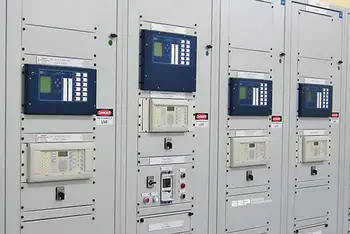
Substation Relay Protection Training

Our customized live online or in‑person group training can be delivered to your staff at your location.
  • Live Online
  • 12 hours Instructor-led
  • Group Training Available
Regular Price:
$699
Coupon Price:
$599
Reserve Your Seat Today
The Board of Directors of Hydro One Inc. today announced the appointment of Tom Parkinson as President and Chief Executive Officer of Hydro One Inc.

"Choosing Tom Parkinson was a unanimous decision of our Board. Tom is an experienced operator who understands the wires business and how to run it safely, reliably, and commercially," said Hydro One Inc. Chair, Glen Wright on behalf of the Board, "He has demonstrated the abilities we need to implement our back to basics strategy."

Following an extensive international search, Mr. Parkinson left Australia to join Hydro One in 2001 as President and CEO of Hydro One Network Services Inc., the operating subsidiary of Hydro One. In July 2002, he became President and Chief Operating Officer for Hydro One Inc. taking on responsibility for all of the company's subsidiaries.

During his short time at Hydro One Mr. Parkinson has streamlined the company structure and executive management and made significant progress in eliminating bureaucracy and improving productivity and efficiency. Mr. Parkinson has set a new strategic direction for the company including a commitment to lead the industry on safety and customer service.

Before coming to Canada and Hydro One, Mr. Parkinson was President and CEO of NorthPower in Australia from 1995 to 2001, leading that company through an amalgamation of seven utilities and promoting a new commercial culture while remaining owned by the government.

Hydro One Inc. is a holding company that operates through its subsidiaries in electricity transmission and distribution and telecom businesses. One of its subsidiaries, Hydro One Networks Inc., operates one of the largest transmission and distribution systems in North America. Hydro One Inc. is wholly owned by the Ontario government.

Related News

Solar farm the size of 313 football fields to be built at Edmonton airport

Airport City Solar Edmonton will deliver a 120-megawatt, 627-acre photovoltaic, utility-scale renewable energy project at EIA, creating jobs, attracting foreign investment, and supplying clean power to Fortis Alberta and airport distribution systems.


Key Points

A 120 MW, 627-acre photovoltaic solar farm at EIA supplying clean power to Fortis Alberta and airport systems.

✅ 120 MW utility-scale project over 627 acres at EIA

✅ Feeds Fortis Alberta and airport distribution networks

✅ Drives jobs, investment, and regional sustainability


A European-based company is proposing to build a solar farm bigger than 300 CFL football fields at Edmonton's international airport, aligning with Alberta's red-hot solar growth seen across the province.

Edmonton International Airport and Alpin Sun are working on an agreement that will see the company develop Airport City Solar, a 627-acre, 120-megawatt solar farm that reflects how renewable power developers combine resources for stronger projects on what is now a canola field on the west side of the airport lands.

The solar farm will be the largest at an airport anywhere in the world, EIA said in a news release Tuesday, in a region that also hosts the largest rooftop solar array at a local producer.

"It's a great opportunity to drive economic development as well as be better for the environment," Myron Keehn, vice-president, commercial development and air service at EIA, told CBC News, even as Alberta faces challenges with solar expansion that require careful planning.

"We're really excited that [Alpin Sun] has chosen Edmonton and the airport to do it. It's a great location. We've got lots of land, we're geographically located north, which is great for us, because it allows us to have great hours of sunlight.

"As everyone knows in Edmonton, you can golf early in the morning or golf late at night in the summertime here. And in wintertime it's great, because of the snow, and the reflective [sunlight] off the snow that creates power as well."

Airport official Myron Keehn says the field behind him will become home to the world's largest solar farm at an airport. (Scott Neufeld/CBC)

The project will "create jobs, provide sustainable solar power for our region and show our dedication to sustainability," Tom Ruth, EIA president and CEO, said in the news release, while complementing initiatives by Ermineskin First Nation to expand Indigenous participation in electricity generation.

Construction is expected to begin in early 2022, as new solar facilities in Alberta demonstrate lower costs than natural gas. The solar farm would be operational by the end of that year, the release said. 

Alpin Sun says the project will bring in $169 million in foreign investment to the Edmonton metro region amid federal green electricity contracts that are boosting market certainty. 

Power generated by Airport City Solar will feed into Fortis Alberta and airport distribution systems.


Related News

View more

Ukraine Helps Spain Amid Blackouts

Ukraine-Spain Power Aid highlights swift international solidarity as Kyiv offers grid restoration expertise to Spain after unprecedented blackouts, aiding energy infrastructure recovery, interconnectors, and emergency response while operators restore power across Spain and Portugal.


Key Points

Ukraine sends grid experts to help Spain recover from blackouts, restore power, and reinforce energy infrastructure.

✅ Ukraine offers grid restoration expertise and emergency support.

✅ Partial power restored; cause of blackouts under investigation.

✅ EU funding and Ukrenergo bolster infrastructure resilience.


In a remarkable display of international solidarity, Ukraine has extended assistance to Spain as the country grapples with widespread power outages. On April 28, 2025, Spain and neighboring Portugal experienced unprecedented blackouts that disrupted daily life, including internet connectivity and subway operations. The two nations declared a state of emergency as they worked to restore power.

Ukraine's Offer of Assistance

In response to the crisis, Ukrainian President Volodymyr Zelensky reached out to Spanish Prime Minister Pedro Sánchez, offering support to help restore Spain's power grid. Zelensky emphasized Ukraine's extensive experience in managing energy challenges, particularly in fighting to keep the lights on during sustained Russian attacks on its energy infrastructure. He instructed Ukraine’s Energy Minister, Herman Haluschchenko, to mobilize technical experts to assist Spain swiftly. As of April 29, grid operators in both Spain and Portugal reported partial restoration of power, with recovery efforts ongoing. Authorities continue to investigate the cause of the outages. 

Ukraine's Energy Crisis: A Background

Ukraine's offer of assistance is particularly poignant given its own recent struggles with energy security. Throughout 2024, Russia launched numerous aerial strikes targeting Ukraine's energy infrastructure, including strikes on western Ukraine that severely damaged power generation facilities and transmission networks. These attacks led to significant challenges during the winter season, including widespread blackouts and difficulties in heating households, prompting efforts to keep the lights on this winter across the country. Despite these adversities, Ukraine managed to navigate the winter without major power shortages, thanks to rapid repairs and the resilience of its energy sector. 

International Support for Ukraine

The international community has played a crucial role in supporting Ukraine's energy sector, even as U.S. support for grid restoration has shifted, with continued aid from European partners. In July 2024, the European Union allocated nearly $110 million through the KfW Development Bank to modernize high-voltage substations and develop interconnectors with continental Europe's power system. This funding has been instrumental in repairing and restoring equipment damaged by Russian attacks and enhancing the protection of Ukraine's substations. Since the onset of the conflict, Ukraine's energy grid operator, Ukrenergo, has received international assistance totaling approximately €1.5 billion. 

A Gesture of Solidarity

Ukraine's offer to assist Spain underscores the deepening ties between the two nations and reflects a broader spirit of international cooperation. While Spain continues its recovery efforts, the support from Ukraine serves as a reminder of the importance of solidarity, and of Ukraine's electricity reserves that help prevent further outages in times of crisis. As both countries work towards restoring and securing their energy infrastructures, their collaboration highlights the shared challenges and mutual support that define the European community.

Ukraine's proactive stance in offering assistance to Spain amidst the recent blackouts exemplifies the strength of international partnerships and the shared commitment to new energy solutions that overcome energy challenges. As the situation develops, the continued cooperation between nations will be pivotal in ensuring energy security and resilience as winter looms over Ukraine once more.


Related News

View more

Trump's Pledge to Scrap Offshore Wind Projects

Trump Offshore Wind Pledge signals a push for deregulation over renewable energy, challenging climate policy, green jobs, and coastal development while citing marine ecosystems, navigation, and energy independence amid state-federal permitting and legal hurdles.


Key Points

Trump's vow to cancel offshore wind projects favors deregulation and fossil fuels, impacting climate policy and jobs.

✅ Day-one plan to scrap offshore wind leases and permits

✅ Risks to renewable targets, grid mix, and coastal supply chains

✅ Likely court fights and state-federal regulatory conflicts


During his tenure as President of the United States, Donald Trump made numerous promises and policy proposals, many of which sparked controversy and debate. One such pledge was his vow to scrap offshore wind projects on "day one" of his presidency. This bold statement, while appealing to certain interests, raised concerns about its potential impact on U.S. offshore wind growth and environmental conservation efforts.

Trump's opposition to offshore wind projects stemmed from various factors, including his skepticism towards renewable energy, even as forecasts point to a $1 trillion offshore wind market in coming years, concerns about aesthetics and property values, and his focus on promoting traditional energy sources like coal and oil. Throughout his presidency, Trump prioritized deregulation and sought to roll back environmental policies introduced by previous administrations, arguing that they stifled economic growth and hindered American energy independence.

The prospect of scrapping offshore wind projects drew mixed reactions from different stakeholders. Supporters of Trump's proposal pointed to potential benefits such as preserving scenic coastal landscapes, protecting marine ecosystems, and addressing concerns about navigational safety and national security. Critics, however, raised valid concerns about the implications of such a decision on the renewable energy sector, including progress toward getting 1 GW on the grid nationwide, climate change mitigation efforts, and job creation in the burgeoning green economy.

Offshore wind energy has emerged as a promising source of clean, renewable power with the potential to reduce greenhouse gas emissions and diversify the energy mix. Countries like Denmark, the United Kingdom, and Germany have made significant investments in offshore wind in Europe, demonstrating its viability as a sustainable energy solution. In the United States, offshore wind projects have gained traction in states like Massachusetts, New York, and New Jersey, where coastal conditions are conducive to wind energy generation.

Trump's pledge to scrap offshore wind projects on "day one" of his presidency raised questions about the feasibility and legality of such a move. While the president has authority over certain aspects of energy policy and regulatory oversight, the development of offshore wind projects often involves multiple stakeholders, including state governments, local communities, private developers, and federal agencies, and actions such as Interior's move on Vineyard Wind illustrate federal leverage in permitting. Any attempt to halt or reverse ongoing projects would likely face legal challenges and regulatory hurdles, potentially delaying or derailing implementation.

Moreover, Trump's stance on offshore wind projects reflected broader debates about the future of energy policy, environmental protection, and economic development. While some argued for prioritizing fossil fuel extraction and traditional energy infrastructure, others advocated for a transition towards clean, renewable energy sources, drawing on lessons from the U.K. about wind deployment, to mitigate climate change and promote sustainable development. The Biden administration, which succeeded the Trump presidency, has signaled a shift towards a more climate-conscious agenda, including support for renewable energy initiatives and commitments to rejoin international agreements like the Paris Climate Accord.

In hindsight, Trump's pledge to scrap offshore wind projects on "day one" of his presidency underscores the complexities of energy policy and the importance of balancing competing interests and priorities. While concerns about aesthetics, property values, and environmental impact are valid, addressing the urgent challenge of climate change requires bold action and innovation in the energy sector. Offshore wind energy presents an opportunity, as seen in the country's biggest offshore wind farm approved in New York, to harness the power of nature in a way that is both environmentally responsible and economically beneficial. As the United States navigates its energy future, finding common ground and forging partnerships will be essential to ensure a sustainable and prosperous tomorrow.


Related News

View more

Canada Extends Net-Zero Target to 2050

Canada Clean Electricity Regulations 2050 balance net-zero goals with grid reliability and affordability, setting emissions caps, enabling offset credits, and flexible provincial pathways, including support for non-grid facilities during the clean energy transition.


Key Points

A federal plan for a net-zero grid by 2050 with emissions caps, offsets, and flexible provincial compliance.

✅ Emissions cap targeting 181 Mt CO2 from the power sector by 2050

✅ Offset credits and annual limits enable compliance flexibility

✅ Support for remote, non-grid facilities and regional pathways


In December 2024, the Government of Canada announced a significant policy shift regarding its clean electricity objectives. The initial target to achieve a net-zero electricity grid by 2035 has been extended to 2050. This decision reflects the government's response to feedback from provinces and energy industry stakeholders, who expressed concerns about the feasibility of meeting the 2035 deadline.

Revised Clean Electricity Regulations

The newly finalized Clean Electricity Regulations (CER) outline the framework for Canada's transition to a net-zero electricity grid by 2050, advancing the goal of 100 per cent clean electricity nationwide.

  • Emissions Reduction Targets: The regulations set a cap on emissions from the electricity sector, targeting a reduction of 181 megatonnes of CO₂ by 2050. This is a decrease from the previous goal of 342 megatonnes, reflecting a more gradual approach to emissions reduction.

  • Flexibility Mechanisms: To accommodate the diverse energy landscapes across provinces, the CER introduces flexibility measures. These include annual emissions limits and the option to use offset credits, allowing provinces to tailor their strategies while adhering to national objectives.

  • Support for Non-Grid Connected Facilities: Recognizing the unique challenges of remote and off-grid communities, the regulations provide accommodations for certain non-grid connected facilities, ensuring that all regions can contribute to the national clean electricity goals.

Implications for Canada's Energy Landscape

The extension of the net-zero electricity target to 2050 signifies a strategic recalibration of Canada's energy policy. This adjustment acknowledges the complexities involved in transitioning to a clean energy future, including:

  • Grid Modernization: Upgrading the electrical grid to accommodate renewable energy sources and ensure reliability is a critical component of the transition, especially as Ontario's EV wave accelerates across the province.

  • Economic Considerations: Balancing environmental objectives with economic impacts is essential. The government aims to create over 400,000 clean energy jobs, fostering economic growth while reducing emissions, supported by ambitious EV goals in the transport sector.

  • Regional Variations: Provinces have diverse energy profiles and resources, and British Columbia's power supply challenges highlight planning constraints. The CER's flexibility mechanisms are designed to accommodate these differences, allowing for tailored approaches that respect regional contexts.

Public and Industry Reactions

The policy shift has elicited varied responses:

  • Environmental Advocates: Some environmental groups express concern that the extended timeline may delay critical climate action, while debates over Quebec's push for EV dominance underscore policy trade-offs. They emphasize the need for more ambitious targets to address the escalating impacts of climate change.

  • Industry Stakeholders: The energy sector generally welcomes the extended timeline, viewing it as a pragmatic approach that allows for a more measured transition, particularly amid criticism of the 2035 EV mandate in transportation policy. The flexibility provisions are particularly appreciated, as they provide the necessary leeway to adapt to evolving market and technological conditions.

Looking Forward

As Canada moves forward with the implementation of the Clean Electricity Regulations, the focus will be on:

  • Monitoring Progress: Establishing robust mechanisms to track emissions reductions and ensure compliance with the new targets.

  • Stakeholder Engagement: Continuing dialogue with provinces, industry, and communities to refine strategies and address emerging challenges, including coordination on EV sales regulations as complementary measures.

  • Innovation and Investment: Encouraging the development and deployment of clean energy technologies through incentives and support programs.

The extension of Canada's net-zero electricity target to 2050 represents a strategic adjustment aimed at achieving a balance between environmental goals and practical implementation considerations. The Clean Electricity Regulations provide a framework that accommodates regional differences and industry concerns, setting the stage for a sustainable and economically viable energy future.


Related News

View more

Most Energy Will Come From Fossil Fuels, Even In 2040

2040 Energy Outlook projects a shifting energy mix as renewables scale, EV adoption accelerates, and IEA forecasts plateauing oil demand alongside rising natural gas, highlighting policy, efficiency, and decarbonization trends that shape global consumption.


Key Points

A data-driven view of future energy mix, covering renewables, fossil fuels, EVs, oil demand, and policy impacts.

✅ Renewables reach 16-30% by 2040, higher with strong policy support.

✅ Fossil fuels remain dominant, with oil flat and natural gas rising.

✅ EV share surges, cutting oil use; efficiency curbs demand growth.


Which is more plausible: flying taxis, wind turbine arrays stretching miles into the ocean, and a solar roof on every house--or a scorched-earth, flooded post-Apocalyptic world? 

We have no way of peeking into the future, but we can certainly imagine it. There is plenty of information about where the world is headed and regardless of how reliable this information is—or isn’t—we never stop wondering. Will the energy world of 20 years from now be better or worse than the world we live in now? 

The answer may very well lie in the observable trends.


A Growing Population

The global population is growing, and it will continue to grow in the next two decades. This will drive a steady growth in energy demand, at about 1 percent per year, according to the International Energy Agency.

This modest rate of growth is good news for all who are concerned about the future of the planet. Parts of the world are trying to reduce their energy consumption, and this should have a positive effect on the carbon footprint of humanity. The energy thirst of most parts of the world will continue growing, however, hence the overall growth.

The world’s population is currently growing at a rate of a little over 1 percent annually. This rate of growth has been slowing since its peak in the 1960s and forecasts suggest that it will continue to slow. Growth in energy demand, on the other hand, may at some point stop moving in tune with population growth trends as affluence in some parts of the world grows. The richer people get, the more energy they need. So, to the big question: where will this energy come from?


The Rise of Renewables

For all the headline space they have been claiming, it may come as a disappointing surprise to many that renewable energy, excluding hydropower, to date accounts for just 14 percent of the global primary energy mix. 

Certainly, adoption of solar and wind energy has been growing in leaps and bounds, with their global share doubling in five years in many markets, but unless governments around the world commit a lot more money and effort to renewable energy, by 2040, solar and wind’s share in the energy mix will still only rise to about 16 to 17 percent. That’s according to the only comprehensive report on the future of energy that collates data from all the leading energy authorities in the world, by non-profit Resources for the Future.

The growth in renewables adoption, however, would be a lot more impressive if governments do make serious commitments. Under that scenario, the share of renewables will double to over 30 percent by 2040, echoing milestones like over 30% of global electricity reached recently: that’s the median rate of all authoritative forecasts. Amongst them, the adoption rates of renewables vary between 15 percent and 61 percent by 2040.

Even the most bullish of the forecasts on renewables is still far below the 100-percent renewable future many would like to fantasize about, although BNEF’s 50% by 2050 outlook points to what could be possible in the power sector. 

But in 2040, most of the world’s energy will still come from fossil fuels.


EV Energy

Here, forecasters are more optimistic. Again, there is a wide variation between forecasts, but in each and every one of them the share of electric vehicles on the world’s roads in 2040 is a lot higher than the meagre 1 percent of the global car fleet EVs constitute today.
Related: Gas Prices Languish As Storage Falls To Near-Record Lows

Government policy will be the key, as U.S. progress toward 30% wind and solar shows how policy steers the power mix that EVs ultimately depend on. Bans of internal combustion engines will go a long way toward boosting EV adoption, which is why some forecasters expect electric cars to come to account for more than 50 percent of cars on the road in 2040. Others, however, are more guarded in their forecasts, seeing their share of the global fleet at between 16 percent and a little over 40 percent.

Many pin their hopes for a less emission-intensive future on electric cars. Indeed, as the number of EVs rises, they displace ICE vehicles and, respectively, the emission-causing oil that fuels for ICE cars are made from.  It should be a no brainer that the more EVs we drive, the less emissions we produce. Unfortunately, this is not necessarily the case: China is the world’s biggest EV market, and its solar PV expansion has been rapid, it has the most EVs—including passenger cars and buses—but it is also one of the biggest emitters.

Still, by 2040, if the more optimistic forecasts come true, the world will be consuming less oil than it is consuming now: anywhere from 1.2 million bpd to 20 million bpd less, the latter case envisaging an all-electric global fleet in 2040. 


This Ain’t Your Daddy’s Oil

No, it ain’t. It’s your grandchildren’s oil, for good or for bad. The vision of an oil-free world where renewable power is both abundant and cheap enough to replace all the ways in which crude oil and natural gas are used will in 2040 still be just that--a vision, with practical U.S. grid constraints underscoring the challenges. Even the most optimistic energy scenarios for two decades from now see them as the dominant source of energy, with forecasts ranging between 60 percent and 79 percent. While these extremes are both below the over-80 percent share fossil fuels have in the world’s energy mix, they are well above 50 percent, and in the U.S. renewables are projected to reach about one-fourth of electricity soon, even as fossil fuels remain foundational.

Still, there is good news. Fuel efficiency alone will reduce oil demand significantly by 2040. In fact, according to the IEA, demand will plateau at a little over 100 million bpd by the mid-2030s. Combined with the influx of EVs many expect, the world of 20 years from now may indeed be consuming a lot less oil than the world of today. It will, however, likely consume a lot more natural gas. There is simply no way around fossil fuels, not yet. Unless a miracle of politics happens (complete with a ripple effect that will cost millions of people their jobs) in 2040 we will be as dependent on oil and gas as we are but we will hopefully breathe cleaner air.

By Irina Slav for Oilprice.com


Related News

View more

U.S. Renewable and Clean Energy Industries Set Sights on Market Majority

U.S. Majority Renewables by 2030 targets over half of electricity from wind, solar, hydropower, and energy storage, enabling a resilient, efficient grid, deep carbon reductions, fair market rules, and job growth across regions.


Key Points

A joint industry pledge for over 50% U.S. power from wind, solar, hydropower, and storage by 2030.

✅ Joint pledge by AWEA, SEIA, NHA, and ESA for a cleaner grid

✅ Focus on resilience, efficiency, affordability, and fair competition

✅ Storage enables flexibility to integrate variable renewables


Within a decade, more than half of the electricity generated in the U.S. will come from clean, renewable resources, with analyses indicating that wind and solar could meet 80% of U.S. electricity demand, supported by energy storage, according to a joint commitment today from the American wind, solar, hydropower, and energy storage industries. The American Wind Energy Association (AWEA), Solar Energy Industries Association (SEIA), National Hydropower Association (NHA), and Energy Storage Association (ESA) have agreed to actively collaborate across their industry segments to achieve this target. 

The four industries have released a set of joint advocacy principles that will enable them to realize this bold vision of a majority renewables grid. Along with increased collaboration, these shared principles include building a more resilient, efficient, sustainable, and affordable grid; achieving carbon reductions; and advancing greater competition through electricity market reforms and fair market rules. Each of these areas is critical to attaining the shared vision for 2030.  

The leaders of the four industry associations gathered to announce the shared vision, aligned with a broader 100% renewables pathway pursued nationwide, during the first CLEANPOWER annual conference for businesses across the renewable and clean energy spectrum. 

American Wind Energy Association 

"This collaborative promise sets the stage to deliver on the American electric grid of the future powered by wind, solar, hydropower, and storage," said Tom Kiernan, CEO of the American Wind Energy Association. "Market opportunities for projects that include a mix of technologies have opened up that didn't exist even a few years ago. And demand is growing for integrated renewable energy options. Individually and cooperatively, these sectors will continue growing to meet that demand and create hundreds of thousands of new jobs to strengthen economies from coast to coast, building a better, cleaner tomorrow. In the face of significant challenges the country is currently facing across pandemic response, economic, climate and social injustice problems, we are prepared to help lead toward a healthier and more equitable future."

Solar Energy Industries Association

"These principles are just another step toward realizing our vision for a Solar+ Decade," said Abigail Ross Hopper, president and CEO of the Solar Energy Industries Association. "In the face of this dreadful pandemic, our nation must chart a path forward that puts a premium on innovation, jobs recovery and a smarter approach to energy generation, reflecting expected solar and storage growth across the market. The right policies will make a growing American economy fueled by clean energy a reality for all Americans."

National Hydropower Association 

"The path towards an affordable, reliable, carbon-free electricity grid, supported by an ongoing grid overhaul for renewables, starts by harnessing the immense potential of hydropower, wind, solar and storage to work together," said Malcolm Woolf, President and CEO of the National Hydropower Association. "Today, hydropower and pumped storage are force multipliers that provide the grid with the flexibility needed to integrate other renewables onto the grid. By adding new generation onto existing non-powered dams and developing 15 GW of new pumped storage hydropower capacity, we can help accelerate the development of a clean energy electricity grid."

Energy Storage Association 

"We are pleased to join forces with our clean energy friends to substantially reduce carbon emissions by 2030, guided by practical decarbonization strategies, building a more resilient, efficient, sustainable, and affordable grid for generations to come," said ESA CEO Kelly Speakes-Backman. "A majority of generation supplied by renewable energy represents a significant change in the way we operate the grid, and the storage industry is a fundamental asset to provide the flexibility that a more modern, decarbonized grid will require. We look forward to actively collaborating with our colleagues to make this vision a reality by 2030."


Related News

View more

Sign Up for Electricity Forum’s Newsletter

Stay informed with our FREE Newsletter — get the latest news, breakthrough technologies, and expert insights, delivered straight to your inbox.

Electricity Today T&D Magazine Subscribe for FREE

Stay informed with the latest T&D policies and technologies.
  • Timely insights from industry experts
  • Practical solutions T&D engineers
  • Free access to every issue

Live Online & In-person Group Training

Advantages To Instructor-Led Training – Instructor-Led Course, Customized Training, Multiple Locations, Economical, CEU Credits, Course Discounts.

Request For Quotation

Whether you would prefer Live Online or In-Person instruction, our electrical training courses can be tailored to meet your company's specific requirements and delivered to your employees in one location or at various locations.