CSA Z462 Arc Flash Training - Electrical Safety Compliance
Our customized live online or in‑person group training can be delivered to your staff at your location.

- Live Online
- 6 hours Instructor-led
- Group Training Available
Regular Price:
$249
Coupon Price:
$199
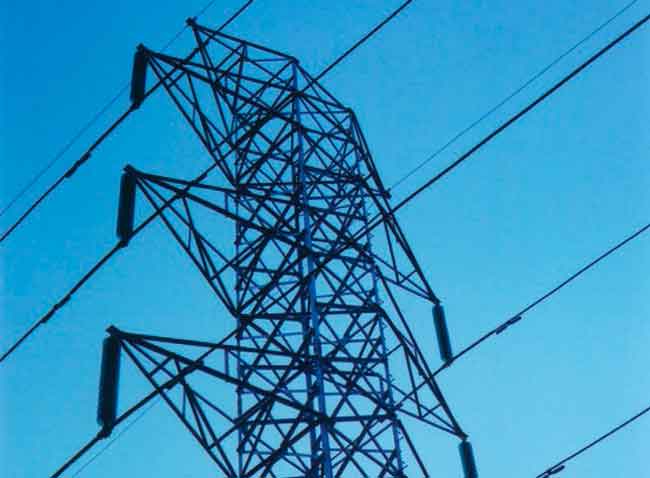
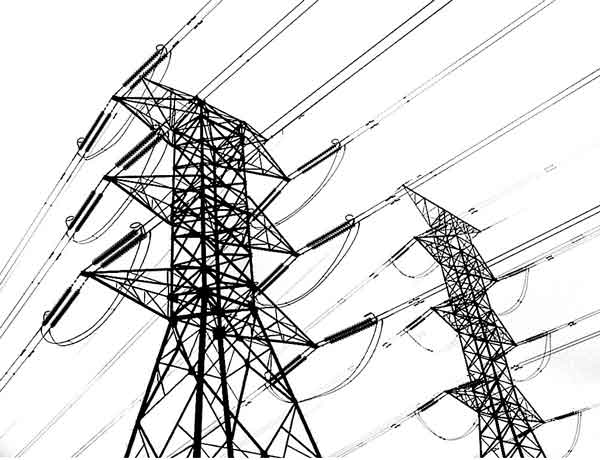
In an ambitious $3 billion plan, the nation's largest power generator has proposed building a 550-mile power line stretched atop 13-story towers to bring surplus electricity from coal-fired plants in Appalachia and the Midwest to the power-hungry Eastern Seaboard.
The initial proposed route would take the high-voltage power line through scenic mountain areas of West Virginia, through Maryland's midsection and across Pennsylvania's Amish country on its way to New Jersey.
Even if state regulators balk, that might not be enough to stop the project.
American Electric Power Co.'s plan could provide one of the first tests of a new law, enacted last year, that allows federal regulators to use the power of eminent domain to override states that don't approve a transmission line that has a demonstrated interstate interest.
Already, environmentalists and clean-energy advocates along the potential path of the towers are sounding alarms over the proposal, which will face years of scrutiny before the line's operative target date of 2014.
Many will watch the plan closely, from regulators measuring the benefits for their states' ratepayers to homeowners worried about property values.
Columbus, Ohio-based American Electric, which unveiled the proposal, cautioned that the proposed route could change.
American Electric is proposing to build the highest-voltage line yet in Pennsylvania, Maryland and New Jersey. Industry officials say new transmission lines are needed to meet growing power demands and expanding electricity markets.
Primarily, the line would serve the corridor from northern New Jersey through Philadelphia and Baltimore to Washington, D.C., where electricity prices are comparatively high and power plants difficult to build.
The 765-kilovolt line would carry 50 percent more capacity than any other power line in the mid-Atlantic and require clearance of 100 feet on each side.
An important first step in the project will be an analysis of the line's service and price benefits by PJM Interconnection, the Valley Forge, Pa., company that operates the mid-Atlantic electricity grid.
Then, state utility regulators would decide whether the cheaper electricity would offset the loss of land and environmental damage that could result from building the line, state consumer advocates said.
Just recently, American Electric began seeking federal approval to have ratepayers who benefit from the power line subsidize the cost of the project. And it asked the federal Department of Energy to give the power line's proposed corridor a special designation that raises the possibility that the Federal Energy Regulatory Commission could override the eminent domain authority of state regulators who oppose the project.
State consumer advocates in Pennsylvania and New Jersey say it is too early to tell whether the project would benefit ratepayers there.
John Hanger, a clean-energy advocate and former utility regulator in Pennsylvania, said people would lose their land for the benefit of the utility.
The cheaper, more sensible solution is to build a power plant in New Jersey, he said. "I'm sure AEP believes that this line will increase its revenue and profits," Hanger said. "But the question is, is that enough? This line must meet the public interest."
Related News
N.W.T. green energy advocate urges using more electricity for heat
Taltson Hydro Electric Heating directs surplus hydro power in the South Slave to space heat…
View more
Schneider Electric Aids in Notre Dame Restoration
Schneider Electric Notre Dame Restoration delivers energy management, automation, and modern electrical infrastructure, boosting safety,…
View more

Nissan accepting electricity from EVs as payment for parking
Nissan V2G Parking lets EV drivers pay with electricity via bidirectional charging at the Yokohama…
View more
Tariff Threats Boost Support for Canadian Energy Projects
Canadian Energy Infrastructure Tariffs are reshaping pipelines, deregulation, and energy independence, as U.S. trade tensions…
View more
Site C mega dam billions over budget but will go ahead: B.C. premier
Site C Dam Update outlines hydroelectric budget overruns, geotechnical risks, COVID-19 construction delays, BC Hydro…
View more
Mercury in $3 billion takeover bid for Tilt Renewables
Mercury Energy Tilt Renewables acquisition signals a trans-Tasman energy push as PowAR and Mercury split…
View more
Sign Up for Electricity Forum’s Newsletter
Stay informed with our FREE Newsletter — get the latest news, breakthrough technologies, and expert insights, delivered straight to your inbox.
Electricity Today T&D Magazine Subscribe for FREE

Stay informed with the latest T&D policies and technologies.
- Timely insights from industry experts
- Practical solutions T&D engineers
- Free access to every issue

