Cascading Power Outage Missed Pittsburgh

By AP


Protective Relay Training - Basic

Our customized live online or in‑person group training can be delivered to your staff at your location.

  • Live Online
  • 12 hours Instructor-led
  • Group Training Available
Regular Price:
$699
Coupon Price:
$599
Reserve Your Seat Today
While the cascading blackouts that rolled west from New York took out close neighbors Erie, Akron and Cleveland, they stopped short of Pittsburgh.

Southwestern Pennsylvania was spared largely because it's on a different power transmission system and its equipment knew when to shut itself off.

Duquesne Light Co., which serves about 580,000 customers in the Pittsburgh metropolitan area, reported no outages in its service area as a result of the blackout.

Allegheny Power, formerly known as West Penn Power, also reported that its 680,000 customers in the southwestern Pennsylvania were largely unaffected by outages resulting from yesterday's massive power failure.

But for a few tense hours yesterday, it wasn't clear that the region would be spared.

Pennsylvania Public Utility Commission staff, along with officials from the Pennsylvania Emergency Management Agency, huddled in PEMA's command center in Harrisburg to monitor the blackout as it spread into parts of the state.

"The fact that we [in the Pittsburgh area] still have power means local [power grid] operators have been successful in preventing [the blackout] from going further," said M. Granger Morgan, a professor in the Department of Engineering and Public Policy at Carnegie Mellon University. "They do extensive analysis of all contingencies, and they have lots of plans in place."

Electricity generation stations throughout the United States are interconnected in a system called power grids. This allows electricity generated in one state or region to be sent to users in another state or region of the country. It also allows distant power stations to provide electricity for cities and towns whose generators may have failed, be idled for repairs, or have been destroyed by some accident or sabotage.

In the U.S. electrical system, there are more than 6,000 power generating units, which use coal, and to a lesser extent, oil, natural gas, falling water and nuclear fission to produce electricity.

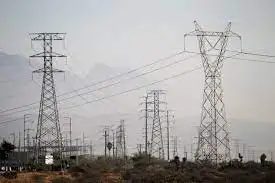
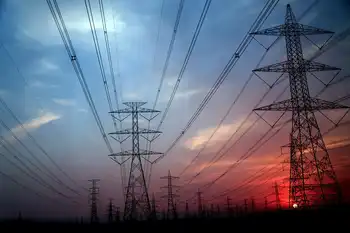
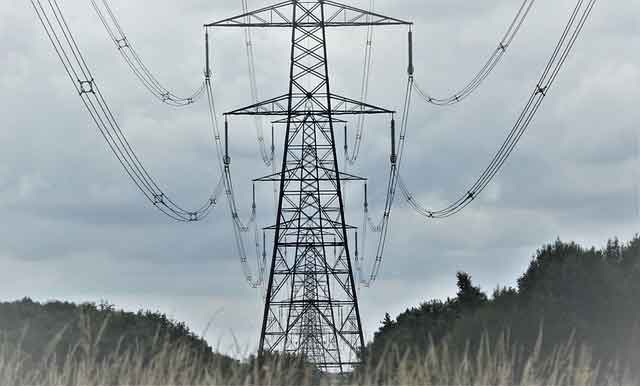
Power from these stations is moved around the country on almost a half-million miles of bulk transmission lines that carry high voltage charges of electricity.

Power grids cover the United States and Canada in an interlocking web. The eastern two-thirds of the United States, from the Atlantic seaboard to the Rockies, is served by a network of power grids, which are all interconnected. The only island in this sea of power grids is Texas, which is, electrically speaking, isolated from the rest of the nation.

Transmission grid operators work at large consoles that look something like Mission Control at NASA, said Allen Staggers, spokesman for Allegheny Power Co.

They can control power flow at other locations through radio-controlled switches.

"You're pushing a button in Greensburg, Pennsylvania, that throws a switch in a Maryland substation," he said.

However, most of the system is automatic and most of the time things happen too quickly for much human intervention.

"Electricity travels at the speed of light," said Staggers. "Yes there are controls that the operators can do. They can open up lines. They can isolate lines. They can isolate problems. That's what transmission grid operators do. But things can happen very quickly. They can't always take reactive steps."

It wasn't anything that Duquesne Light did that shielded the Pittsburgh area from the outages, said spokesman John Laudenslager.

"We didn't do anything here. We monitor constantly power flow that goes in and out of Duquesne Light's area. But Duquesne Light doesn't own any power stations. We didn't take any action to open and close anything," he said.

If anyone reacted, it was likely system managers in New York who took steps to keep the domino effect from getting any worse than it did. Power stations have automatic controls that shut them down when they are in danger of overload.

"As these power stations started kicking offline in New York power grid managers saw that happening," said Laudenslager. "What they do is open up ties between power grids, and that stops the domino effect."

They acted in concert with PJM, a regional transmission organization -- basically a regional grid -- that covers this part of Pennsylvania as well as New Jersey and Maryland, said Laudenslager. PJM is based in Valley Forge. Officials there said that automatic safeguards already in place and a more robust system were responsible for the fact that it withstood the cascading outages.

Duquesne Light is not officially part of PJM, though its grid is managed by PJM. It is seeking to join PJM.

"That would make us part of a bigger system, with more robust procedures, more security," said Laudenslager. "They have rules and regulations that are more protective, more conservative."

Although the blackout didn't start in the PJM area, it potentially could have crippled the transmission grid. PJM officials said yesterday at a press briefing that the principal reason this didn't happen was the protective equipment built into the transmission system to prevent overload. A minor reason -- they put it at 10 percent -- was human intervention.

The nation's power transmission system is directed by more than 100 control centers. Engineers and other experts there can monitor the distribution of power and reroute electricity from areas of low demand to areas of high demand. Often there are automatic switches where that direct the routing of power to where it is needed.

"It's what keeps the lights on all the time," said John Hanger, president of the advocacy group PennFuture and a former PUC commissioner. "But the system has a major weakness. When you have a catastrophic failure, it can spread to other parts of the grid."

In recent years, the transmission systems have moved away from their original purpose: to provide backup to local power plants and utilities in times of peak demand when they didn't have enough power to meet demand.

Now, these power grids have become wholesale markets for electricity, in which utilities and power plant owners bid on power as one would on any commodity.

Unlike other industrial states, such as California, Pennsylvania has "a surplus of electric generation capacity," noted Hanger.

"We normally have substantially more electricity than we need even on a high demand day," such as yesterday, when temperatures were sizzling and people were cranking up their air conditioners. "A major power plant could drop off and we would still have a enough power," Hanger said.

But that doesn't mean that at any given moment on a given day, the electricity used in Pennsylvania was generated here, Staggers noted. Electric utilities buy power or have contracts to buy power from distant power plants that is then transmitted to the region.

Hanger, who was a member of the PUC when the state had its last major blackout during extremely cold weather in January 1994, said he would be surprised if the blackout was from sabotage or terrorism.

He said the likely suspect was an operational failure at a substation, since the blackout occurred on a sizzling August day, when temperatures were in the 90s, and around 4 p.m., when demand for electricity is usually highest.

He said investigators need first to determine what was the cause of the outage and then why did it cascade through New York state and beyond.

"One area that needs to be looked at is what was the communications between operators on the grid? What kind of notice or warning delivery system was in place when the first outages occurred?" he said.

"There are procedures to limit the effects of a blackout on other service areas territories if you have enough notice."

The transmissions were originally built by electric utilities, once government-protected monopolies that owned the power plants that produced electricity, the lines that transmitted the power and the distribution lines that carrier electricity to individual homes and businesses.

But since the wave of deregualtion in the 1990s, many electric utilities sold off their power plants and have no financial interest in the transmission lines. Some companies have placed their transmission lines under the management of regional transmission organizations, such as the PJM.

The deregulated environment has produced some unexpected results.

"Investment in the transmission systems has been neglected, largely because people weren't sure who was going to end up owning it, so they didn't want to invest. The system has been running closer and closer to the edge," CMU's Granger said.

Related News
Utilities commission changes community choice exit fees; what happens now in San Diego?

CPUC Exit Fee Increase for CCAs adjusts the PCIA, affecting utilities, San Diego ratepayers, renewable energy procurement, customer equity, and cost allocation, while providing regulatory certainty for Community Choice Aggregation programs and clean energy goals.


Key Points

A CPUC-approved change raising PCIA exit fees paid by CCAs to utilities, balancing cost shifts and customer equity.

✅ PCIA rises from about 2.5c to roughly 4.25c per kWh in San Diego

✅ Aims to reduce cost shifts and protect non-CCA customers

✅ Offers regulatory certainty for CCA launches and clean energy goals


The California Public Utilities Commission approved an increase on the exit fees charged to customers who take part in Community Choice Aggregation -- government-run alternatives to traditional utilities like San Diego Gas & Electric.

After reviewing two competing exit fee proposals, all five commissioners voted Thursday in favor of an adjustment that many CCA advocates predicted could hamper the growth of the community choice movement.

But minutes after the vote was announced, one of the leading voices in favor of the city San Diego establishing its own CCA said the decision was good news because it provides some regulatory certainty.

"For us in San Diego, it's a green light to move forward with community choice," said Nicole Capretz, executive director of the Climate Action Campaign. "For us, it's let's go, let's launch and let's give families a choice. We no longer have to wait."

Under the CCA model, utilities still maintain transmission and distribution lines (poles and wires, etc.) and handle customer billing. But officials in a given local government entity make the final decisions about what kind of power sources are purchased.

Once a CCA is formed, its customers must pay an exit fee -- called a Power Charge Indifference Adjustment -- to the legacy utility serving that particular region. The fee is included in customers' monthly bills.

The fee is required to offset the costs of the investments utilities made over the years for things like natural gas power plants, renewable energy facilities and other infrastructure.

Utilities argue if the exit fee is set too low, it does not fairly compensate them for their investments; if it's too high, CCAs complain it reduces the financial incentive for their potential customers.

The Public Utilities Commission chose to adopt a proposal that some said was more favorable to utilities, leading to complaints from CCA boosters.

"We see this will really throw sand in the gears in our ability to do things that can move us toward (climate change) goals," Jim Parks, staff member of Valley Clean Energy, a CCA based in Davis, said before the vote.

Commissioner Carla Peterman, who authored the proposal that passed, said she supports CCAs but stressed the commission has a "legal obligation" to make sure increased costs are not shouldered by "customers who do not, or cannot, join a CCA. Today's proposal ensures a more level playing field between customers."

As for what the vote means for the exit fee in San Diego, Peterman's office earlier in the week estimated the charge would rise from 2.5 cents a kilowatt-hour to about 4.25 cents.

The Clear the Air Coaltion, a San Diego County group critical of CCAs, said the newly established exit fee -- which goes into effect starting next year -- is "a step in the direction."

But the group, which includes the San Diego Regional Chamber of Commerce, the San Diego County Taxpayers Association and lobbyists for Sempra Energy (the parent company of SDG&E), repeated concerns it has brought up before.

"If the city of San Diego decides to get into the energy business this decision means ratepayers in National City, Chula Vista, Carlsbad, Imperial Beach, La Mesa, El Cajon and all other neighboring communities would see higher energy bills, and San Diego taxpayers would be faced with mounting debt," coalition spokesman Tony Manolatos said in an email.

CCA supporters say community choice is critical in ensuring San Diego meets the pledge made by Mayor Kevin Faulconer to adopt the city's Climate Action Plan, mandating 100 percent of the city's electricity needs must come from renewable sources by 2035.

Now attention turns to Faulconer, who promised to make a decision on bringing a CCA proposal to the San Diego City Council only after the utilities commission made its decision.

A Faulconer spokesman said Thursday afternoon that the vote "provides the clarity we've been waiting for to move forward" but did not offer a specific time table.

"We're on schedule to reach Mayor Faulconer's goal of choosing a pathway that achieves our renewable energy goals while also protecting ratepayers, and the mayor looks forward to making his recommendation in the next few weeks," said Craig Gustafson, a Faulconer spokesman, in an email.

A feasibility study released last year predicted a CCA in San Diego has the potential to deliver cheaper rates over time than SDG&E's current service, while providing as much as 50 percent renewable energy by 2023 and 80 percent by 2027.

"The city has already figured out we are still capable of launching a program, having competitive, affordable rates and finally offering families a choice as to who their energy provider is," said Capretz, who helped draft an initial blueprint of the climate plan as a city staffer.

SDG&E has come to the city with a counterproposal that offers 100 percent renewables by 2035.

Thus far, the utility has produced a rough outline for a "tariff" program that would charge ratepayers the cost of delivering more clean sources of energy over time.

Some council members have expressed frustration more specifics have not been sketched out.

SDG&E officials said they will take the new exit fee into account as they go forward with their counterproposal to the city council.

Speaking in general about the utility commission's decision, SDG&E spokeswoman Helen Gao called it "a victory for our customers, as it minimizes the cost shifts that they have been burdened with under the existing fee formula.

"As commissioners noted in rendering their decision, reforming the (exit fee) addresses a customer-to-customer equity issue and has nothing to do with increasing profits for investor-owned utilities," Gao said in an email.


Related News

View more

UK National Grid Commissions 2GW Substation

UK 2-GW Substation strengthens National Grid power transmission in Kent, enabling offshore wind integration, voltage regulation, and grid modernization to meet rising electricity demand and support the UK energy transition with resilient, reliable infrastructure.


Key Points

National Grid facility in Kent that steps voltage, regulates power, and connects offshore wind to strengthen UK grid.

✅ Adds 2 GW capacity to meet rising electricity demand

✅ Integrates offshore wind farms into transmission network

✅ Improves reliability, voltage control, and grid resilience


The United Kingdom has strengthened its national power grid with the commissioning of a major new 2-gigawatt capacity substation in Kent. This massive project, a key part of the National Grid's ongoing efforts to modernize and expand power transmission infrastructure, including plans to fast-track grid connections across critical projects, will play a critical role in supporting the UK's energy transition and growing electricity demands.


What is a Substation?

Substations are vital components of electricity grids. They serve as connection points, transforming high voltage electricity from power plants to lower voltages suitable for homes and businesses. They also help to regulate voltage levels, and, where appropriate, interface with expanding HVDC technology initiatives, ensuring stable electricity delivery.  Modern substations often act as hubs, supporting the integration of renewable power sources with the main electricity network.


Why This Substation Is Important

The new 2-gigawatt capacity substation is significant for several reasons:

  • Expanding Capacity: It adds significant capacity to the UK's grid, enabling the transmission of large amounts of electricity to where it's needed. This capacity boost is crucial for supporting growing electricity demand as the UK shifts its energy mix towards renewable sources.
  • Integrating Renewables: The substation will aid in integrating substantial amounts of offshore wind power, as projects like the Scotland-England subsea link illustrate, helping the UK achieve its ambitious clean energy goals. Offshore wind farms are a booming source of renewable energy in the UK, and ensuring reliable connections to the grid is essential in maximizing their potential.
  • Future-Proofing the Grid: The newly commissioned substation helps bolster the reliability and resilience of the UK's power transmission network, where reducing losses with superconducting cables could further enhance efficiency. It will play a key role in securing electricity supplies as older power plants are decommissioned and renewable energy sources become more dominant.


A Landmark Project

The commissioning of this substation is a major achievement for the National Grid, amid an independent operator transition underway in the sector, and UK energy infrastructure upgrades. The sheer scale of the project required extensive planning and collaboration with various stakeholders, underscoring the complexity of upgrading the nation's power grid to meet future needs.


The Path Towards a Cleaner Grid

The new substation is not an isolated project. It is part of a broader, multi-year effort by the National Grid to modernize and expand the country's power grid.  This entails building new transmission lines and urban conduits such as London's newest electricity tunnel now in service, investing in storage technologies, and adapting infrastructure to accommodate the shift towards distributed energy generation, where power is generated closer to the point of use.


Beyond Substations

While projects like the new 2-gigawatt substation are crucial, ensuring a successful energy transition requires more than just infrastructure upgrades. Continued support for renewable energy development, highlighted by recent offshore wind power milestones that demonstrate grid-readiness, investment in emerging energy storage solutions, and smart grid technology that leverages data for effective grid management are all important components of building a cleaner and more resilient energy future for the UK.


Related News

View more

Power Outages to Mitigate Wildfire Risks

Colorado Wildfire Power Shutoffs reduce ignition risk through PSPS, grid safety protocols, data-driven forecasts, and emergency coordination, protecting communities, natural resources, and infrastructure during extreme fire weather fueled by drought and climate change.


Key Points

Planned PSPS outages cut power in high-risk areas to prevent ignitions, protect residents, and boost wildfire resilience.

✅ PSPS triggered by forecasts, fuel moisture, and fire danger indices.

✅ Utilities coordinate alerts, timelines, and critical facility support.

✅ Paired with forest management, education, and rapid response.


Colorado, known for its stunning landscapes and outdoor recreation, has implemented proactive measures to reduce the risk of wildfires by strategically shutting off power in high-risk areas, similar to PG&E wildfire shutoffs implemented in California during extreme conditions. This approach, while disruptive, aims to safeguard communities, protect natural resources, and mitigate the devastating impacts of wildfires that have become increasingly prevalent in the region.

The decision to initiate power outages as a preventative measure against wildfires underscores Colorado's commitment to proactive fire management and public safety, aligning with utility disaster planning practices that strengthen grid readiness. With climate change contributing to hotter and drier conditions, the state faces heightened wildfire risks, necessitating innovative strategies to minimize ignition sources and limit fire spread.

Utility companies, in collaboration with state and local authorities, identify areas at high risk of wildfire based on factors such as weather forecasts, fuel moisture levels, and historical fire data. When conditions reach critical thresholds, planned power outages, also known as Public Safety Power Shutoffs (PSPS), are implemented to reduce the likelihood of electrical equipment sparking wildfires during periods of extreme fire danger, particularly during windstorm-driven outages that elevate ignition risks.

While power outages are a necessary precautionary measure, they can pose challenges for residents, businesses, and essential services that rely on uninterrupted electricity, as seen when a North Seattle outage affected thousands last year. To mitigate disruptions, utility companies communicate outage schedules in advance, provide updates during outages, and coordinate with emergency services to ensure the safety and well-being of affected communities.

The implementation of PSPS is part of a broader strategy to enhance wildfire resilience in Colorado. In addition to reducing ignition risks from power lines, the state invests in forest management practices, wildfire prevention education, and emergency response capabilities, including continuity planning seen in the U.S. grid COVID-19 response, to prepare for and respond to wildfires effectively.

Furthermore, Colorado's approach to wildfire prevention highlights the importance of community preparedness and collaboration, and utilities across the region adopt measures like FortisAlberta precautions to sustain critical services during emergencies. Residents are encouraged to create defensible space around their properties, develop emergency evacuation plans, and stay informed about wildfire risks and response protocols. Community engagement plays a crucial role in building resilience and fostering a collective effort to protect lives, property, and natural habitats from wildfires.

The effectiveness of Colorado's proactive measures in mitigating wildfire risks relies on a balanced approach that considers both short-term safety measures and long-term fire prevention strategies. By integrating technology, data-driven decision-making, and community partnerships, the state aims to reduce the frequency and severity of wildfires while enhancing overall resilience to wildfire impacts.

Looking ahead, Colorado continues to refine its wildfire management practices in response to evolving environmental conditions and community needs, drawing on examples of localized readiness such as PG&E winter storm preparation to inform response planning. This includes ongoing investments in fire detection and monitoring systems, research into fire behavior and prevention strategies, and collaboration with neighboring states and federal agencies to coordinate wildfire response efforts.

In conclusion, Colorado's decision to implement power outages as a preventative measure against wildfires demonstrates proactive leadership in wildfire risk reduction and public safety. By prioritizing early intervention and community engagement, the state strives to safeguard vulnerable areas, minimize the impact of wildfires, and foster resilience in the face of increasing wildfire threats. As Colorado continues to innovate and adapt its wildfire management strategies, its efforts serve as a model for other regions grappling with the challenges posed by climate change and wildfire risks.


Related News

View more

Ontario tables legislation to lower electricity rates

Ontario Clean Energy Adjustment lowers hydro bills by shifting global adjustment costs, cutting time-of-use rates, and using OPG debt financing; ratepayers get inflation-capped increases for four years, then repay costs over 20 years.


Key Points

A 20-year line item repaying debt used to lower rates for 10 years by shifting global adjustment costs off hydro bills.

✅ 17% average bill cut takes effect after royal assent

✅ OPG-managed entity assumes debt for 10 years

✅ 20-year surcharge repays up to $28B plus interest


Ontarians will see lowered hydro bills for the next 10 years, but will then pay higher costs for the following 20 years, under new legislation tabled Thursday.

Ten weeks after announcing its plan to lower hydro bills, the Liberal government introduced legislation to lower time-of-use rates, take the cost of low-income and rural support programs off bills, and introduce new social programs.

It will lower time-of-use rates by removing from bills a portion of the global adjustment, a charge consumers pay for above-market rates to power producers. For the next 10 years, a new entity overseen by Ontario Power Generation will take on debt to pay that difference.

Then, the cost of paying back that debt with interest -- which the government says will be up to $28 billion -- will go back onto ratepayers' bills for the next 20 years as a "Clean Energy Adjustment."

An average 17-per-cent cut to bills will take effect 15 days after the hydro legislation receives royal assent, even as a Nov. 1 rate increase was set by the Ontario Energy Board, but there are just eight sitting days left before the Ontario legislature breaks for the summer. Energy Minister Glenn Thibeault insisted that leaves the opposition "plenty" of time for review and debate.

Premier Kathleen Wynne promised to cut hydro bills and later defended a 25% rate cut after widespread anger over rising costs helped send her approval ratings to record lows.

Electricity bills in the province have roughly doubled in the last decade, due in part to green energy initiatives, and Thibeault said the goal of this plan is to better spread out those costs.

"Like the mortgage on your house, this regime will cost more as we refinance over a longer period of time, but this is a more equitable and fair approach when we consider the lifespan of the clean energy investments, and generating stations across our province," he said.

NDP critic Peter Tabuns called it a "get-through-the-election" next June plan.

"We're going to take on a huge debt so Kathleen Wynne can look good on the hustings in the next few months and for decades we're going to pay for it," he said.

The legislation also holds rate increases to inflation for the next four years. After that, they'll rise more quickly, as illustrated by a leaked cabinet document the Progressive Conservatives unveiled Thursday.

The Liberals dismissed the document as containing outdated projections, but confirmed that it went before cabinet at some point before the government decided to go ahead with the hydro plan.

From about 2027 onward -- when consumers would start paying off the debt associated with the hydro plan -- Ontario electricity consumers will be paying about 12 per cent more than they would without the Liberal government's plan to cut costs in the short term, even though a deal with Quebec was not expected to reduce hydro bills, the government document projected.

But that was just one of many projections, said Energy Minister Glenn Thibeault.

"We have been working on this plan for months, and as we worked on it the documents and calculations evolved," he said.

The government's long-term energy plan is set to be updated this spring, and Thibeault said it will provide a more accurate look at how the hydro plan will reduce rates, even as a recovery rate could lead to higher hydro bills in certain circumstances.

Progressive Conservative critic Todd Smith said the "Clean Energy Adjustment" is nothing more than a revamped debt retirement charge, which was on bills from 2002 to 2016 to pay down debt left over from the old Ontario Hydro, the province's giant electrical utility that was split into multiple agencies in 1999 under the previous Conservative government.

"The minister can call it whatever he wants but it's right there in the graph, that there is going to be a new charge on the line," Smith said. "It's the debt retirement charge on steroids."


Related News

View more

Electrifying Manitoba: How hydro power 'absolutely revolutionized' the province

Manitoba Electrification History charts arc lights, hydroelectric dams, Winnipeg utilities, transmission lines, rural electrification, and Manitoba Hydro to today's wind, solar, and EV transition across the provincial power grid, driving modernization and reliability.


Key Points

Manitoba's power evolution from arc lights to hydro and rural electrification, advancing wind and solar on a modern grid.

✅ 1873 Winnipeg arc light predates Edison and Bell.

✅ 1919 Act built transmission lines, rural electrification.

✅ Hydroelectric dams reshaped lands and affected First Nations.


The first electric light in Manitoba was turned on in Winnipeg in 1873, but it was a century ago this year that the switch was flipped on a decision that would bring power to the fingertips of people across the province.

On March 12, 1873, Robert Davis — who owned the Davis House hotel on Main Street, about a block from Portage Avenue — used an electric arc light to illuminate the front of his building, according to A History of Electric Power in Manitoba, published by Manitoba Hydro.

That type of light used an an inert gas in a glass container to create an electric arc between two metal electrodes.

"The lamp in front of the Davis Hotel is quite an institution," a Manitoba Free Press report from the day said. "It looks well and guides the weary traveller to a haven of rest, billiards and hot drinks."

A ladder crew from the Winnipeg Electric Street Railway Company working on an electric trolley line in 1905. (I.F. Allen/Manitoba Hydro archives)

The event took place six years before Thomas Edison's first incandescent lamp was invented and three years before the first complete sentence was spoken over the telephone by Alexander Graham Bell.

"Electrification probably had a bigger influence on the lives of Manitobans than virtually anything else," said Gordon Goldsborough, head researcher with the Manitoba Historical Society.

"It's one of the most significant changes in the lives of Manitobans ever, because basically it transformed so many aspects of their lives. It wasn't just one thing — it touched pretty much every aspect of life."


Winnipeg gets its 1st street lamps

In the pioneer days of lighting and street railway transportation in Winnipeg, multiple companies formed in an effort to take advantage of the new utility: Winnipeg Gas Company, Winnipeg General Power Company, Manitoba Electric and Gas Light Company, and The North West Electric Light and Power Company.

In October 1882, the first four street lamps, using electric arc lights, were turned on along Main Street from Broadway to the CPR crossing over the Assiniboine River.

They were installed privately by P.V. Carroll, who came from New York to establish the Manitoba Electric Light & Power Company and try to win a contract for illuminating the rest of the city's streets.

He didn't get it. Newspaper reports from the time noted many outages and other problems and general disappointment in the quality of the light.

Instead, the North West Electric Light and Power Company won that contract and in June 1883 it lit up the streets.

Workers erect a wooden hydro pole beside the Belmont Hotel in 1936. Belmont is a small community southeast of Brandon. (Manitoba Hydro archives)

Over the years, other companies would bring power to the city as it became more reliable, including the Winnipeg Electric Street Railway Company (WERCo), which built the streetcar system and sold electric heat, light and power.

But it was the Brandon Electric Light Company that first tapped into a new source of power — hydro. In 1900, a dam was built across the Minnedosa River (now known as the Little Saskatchewan River) in western Manitoba, and the province's first hydroelectric generating station was created.

The first transmission line was also built, connecting the station with Brandon.

By 1906, WERCo had taken over the Winnipeg General Power Company and the Manitoba Electric and Gas Light Company, and changed its name to the Winnipeg Electric Railway Company. Later, it became the Winnipeg Electric Company, or WECo.

It also took a cue from Brandon, building a hydroelectric plant to provide more power. The Pinawa dam site operated until 1951 and is now a provincial park.

The Minnedosa River plant was the first hydroelectric generating station in Manitoba. (Manitoba Hydro archives)

The City of Winnipeg Hydroelectric System was also formed in 1906 as a public utility to combat the growing power monopoly held by WECo, and to get cheaper power. The city had been buying its supply from the private company "and the City of Winnipeg didn't quite like that price," said Bruce Owen, spokesman for Manitoba Hydro.

So the city funded and built its own dam and generating station site on the Winnipeg River in Pointe du Bois — about 125 kilometres northeast of Winnipeg — which is still in operation today.

"All of a sudden, not only did we have street lights … businesses had lights, power was supplied to homes, people no longer had to cook on wood stoves or walk around with kerosene lanterns. This city took off," said Owen.

"It helped industry grow in the city of Winnipeg. Within a few short years, a second plant had to be built, at Slave Falls."


Lighting up rural Manitoba

While the province's two biggest cities enjoyed the luxury of electricity and the conveniences it brought, the patchwork of power suppliers had also created a jumble of contracts with differing rates and terms, spurring periodic calls for a western Canadian electricity grid to improve coordination.

Meanwhile, most of rural Manitoba remained in the dark.

The Pinawa Dam was built by the Winnipeg Electric Street Railway Company in 1906 and operated until 1951. (Manitoba Hydro archives)

The Pinawa Dam site now, looking like some old Roman ruins. (Darren Bernhardt/CBC)

That began to change in 1919 when the Manitoba government passed the Electric Power Transmission Act, with the aim of supplying rural Manitoba with electrical power. The act enabled the construction of transmission lines to carry electricity from the Winnipeg River generating stations to communities all over southern Manitoba.

It also created the Manitoba Power Commission, predecessor to today's Manitoba Hydro, to purchase power from the City of Winnipeg — and later WECo — to supply to those other communities.

The first transmission line, a 97-kilometre link between Winnipeg and Portage la Prairie, opened in late 1919, and modern interprovincial projects like Manitoba-Saskatchewan power line funding continue that legacy today. The power came from Pointe du Bois to a Winnipeg converter station that still stands at the corner of Stafford Street and Scotland Avenue, then went on to Portage la Prairie.

"That's the remarkable thing that started in 1919," said Goldsborough.

Every year after that, the list of towns connected to the power grid became longer "and gradually, over the early 20th century, the province became electrified," Goldsborough said.

"You'd see these maps that would spider out across the province showing the [lines] that connected each of these communities — a precursor to ideas like macrogrids — to each other, and it was really quite remarkable."

By 1928, 33 towns were connected to the Manitoba Power Commission grid. That rose to 44 by 1930 and 140 by 1939, according to the Manitoba Historical Society.


Power on the farm

Still, one group who could greatly use electricity for their operations — farmers — were still using lanterns, steam and coal for light, heat and power.

"The power that came to the [nearest] town didn't extend to them," said Goldsborough.

It was during the Second World War, as manual labour was hard to come by on farms, that the Manitoba Power Commission recognized the gap in its grid.

It met with farmers to explain the benefits electricity could bring and surveyed their interest. When the war ended in 1945, the farm electrification process got underway.

Employees, their spouses, and children pose for a photo outside of Great Falls generating station in 1923. (Manitoba Hydro archives)

Farmers were taught wiring techniques and about the use of motors for farm equipment, as well as about electric appliances and other devices to ease the burden of domestic life.

"The electrification of the 1940s and '50s absolutely revolutionized rural life," said Goldsborough.

"Farmers had to provide water for all those animals and in a lot of cases [prior to electrification] they would just use a hand pump, or sometimes they'd have a windmill. But these were devices that weren't especially reliable and they weren't high capacity."

Electric motors changed everything, from pumping water to handling grain, while electric heat provided comfort to both people and animals.

Workers build a hydro transmission line tower in an undated photo from Manitoba Hydro. (Manitoba Hydro archives)

"Now you could have heat lamps for your baby chickens. They would lose a lot of chickens normally, because they would simply be too cold," Goldsborough said.

Keeping things warm was important, but so too was refrigeration. In addition to being able to store meat in summer, it was "something to prolong the life of dairy products, eggs, anything," said Manitoba Hydro's Owen.

"It's all the things we take for granted — a flick of a switch to turn the lights on instead of walking around with a lantern, being able to have maybe a bit longer day to do routine work because you have light."

Agriculture was the backbone of the province but it was limited without electricity, said Owen.

Connecting it to the grid "brought it into the modern age and truly kick-started it to make it a viable part of our economy," he said. "And we still see that today."

In 1954, when the farm electrification program ended, Manitoba was the most wired of the western provinces, with 75 per cent of farms and 100,000 customers connected.

The success of the farm electrification program, combined with the post-war boom, brought new challenges, as the existing power generation could not support the new demand.

The three largest players — City Hydro, WECo and the Manitoba Power Commission, along with the provincial government  — created the Manitoba Hydro-Electric Board in 1949 to co-ordinate generation and distribution of power.

A float in a Second World War victory parade represents a hydroelectric dam and the electricity it generates to power cities. (Manitoba Hydro archives)

More hydroelectric generating stations were built and more reorganizations took place. WECo was absorbed by the board and its assets split into separate companies — Greater Winnipeg Gas and Greater Winnipeg Transit.

Its electricity distribution properties were sold to City Hydro, which became the sole distributor in central Winnipeg. The Manitoba Power Commission became sole distributor of electricity in the suburbs and the rest of Manitoba.


Impacts on First Nations

Even as the lives of many people in the province were made easier by the supply of electricity, many others suffered from negative impacts in the rush of progress.

Many First Nations were displaced by hydro dams, which flooded their ancestral lands and destroyed their traditional ways of life.

"And we hear stories about the potential abuses that occurred," said Goldsborough. "So you know, there are there pluses but there are definitely minuses."

In the late 1950s, the Manitoba Power Commission continued to grow and expand its reach, this time moving into the north by buying up private utilities in The Pas and Cranberry Portage.

In 1961, the provincial government merged the commission with the Manitoba Hydro-Electric Board to create Manitoba Hydro.

In 1973, 100 years after the first light went on at that Main Street hotel, the last of the independent power utilities in the province — the Northern Manitoba Power Company Ltd. — was taken over by Hydro.

Winnipeg Hydro, previously called City Hydro, joined the fold in 2002.

Today, Manitoba Hydro operates 15 generating stations and serves 580,262 electric power customers in the province, as well as 281,990 natural gas customers.


New era

And now, as happened in 1919, a new era in electricity distribution is emerging as alternative sources of power — wind and solar — grow in popularity, and as communities like Fort Frances explore integrated microgrids for resilience.

"There's a bit of a clean energy shift happening," said Owen, adding use of biomass energy — energy production from plant or animal material — is also expanding.

"And there's a technological change going on and that's the electrification of vehicles. There are only really several hundred [electric vehicles] in Manitoba on the streets right now. But we know at some point, with affordability and reliability, there'll be a switch over and the gas-powered internal combustion engine will start to disappear."

'We're just a little behind here': Manitoba electric vehicle owners call for more charging stations

That means electrical utilities around the world are re-examining their capabilities, as climate change increasingly stresses grids, said Owen.

"It's coming [and we need to know], are we in a position to meet it? What will be the demands on the system on a path to a net-zero grid by 2050 nationwide?" he said.

"It may not come in my lifetime, but it is coming."


Related News

View more

Let’s make post-COVID Canada a manufacturing hub again

Canada Manufacturing Policy prioritizes affordable energy, trims carbon taxes, aligns with Buy America, and supports the resource sector, PPE and plastics supply, nearshoring, and resilient supply chains amid COVID-19, correcting costly green energy policies.


Key Points

A policy to boost industry with affordable energy, lower carbon taxes, resource ties, and aligned U.S. trade.

✅ Cuts energy costs and carbon tax burdens for competitiveness

✅ Rebuilds resource-sector linkages and domestic supply chains

✅ Seeks Buy America relief and clarity on plastics regulation


By Jocelyn Bamford

Since its inception in 2017, the Coalition of Concerned Manufacturers and Businesses has warned all levels of government that there would be catastrophic effects if policies that drove both the manufacturing and natural resources sectors out of the country were adopted.

The very origins of our coalition was in the fight for a competitive landscape in Ontario, a cornerstone of which is affordable energy and sounding the alarm that the Green Energy Policy in Ontario pushed many manufacturers out of the province.


The Green Energy Policy made electricity in Ontario four times the average North American rate. These unjust prices were largely there to subsidize the construction of expensive and inefficient wind and solar energy infrastructure, even as cleaning up Canada's grid is cited as critical to meeting climate pledges.

My company’s November hydro bill was $55,000 and $36,500 of that was the so-called global adjustment charge, the name given to these green energy costs.

Unaffordable electricity, illustrated by higher Alberta power costs in recent years, coupled with ever-more burdensome carbon taxes, have pushed Canadian manufacturing into the open arms of other countries that see the importance of affordable energy to attract business.

One can’t help but ask the question: If Canada had policies that attracted and maintained a robust manufacturing sector, would we be in the same situation with a lack of personal protective equipment and medical supplies for our front-line medical workers and our patients during this pandemic?  If our manufacturing sector wasn’t crippled by taxes and regulation, would it be more nimble and able to respond to a national emergency?

It seems that the federal government’s policies are designed to push manufacturing out, stifle our resource sector, and kill the very plastics industry that is so essential to keeping our front-line medical staff, patients, and citizens safe, even as the net-zero race accelerates federally.

As the federal government chased its obsession with a new green economy – a strange obsession given our country’s small contribution to global GHGs – including proposals for a fully renewable grid by 2030 advocated by some leaders, it has been blinded from the real threats to our country, threats that became very, very real with COVID-19.

After the pandemic has passed, the federal government must work to make Canada manufacturing and resource friendly again, recognizing that the IEA net-zero electricity report projects the need for more power. COVID-19 proves that Canada relies on a robust resource economy and manufacturing sector to survive. We need to ensure that we are prepared for future crises like the one we are facing now.

Here are five things our government can do now to meet that end:

1. End all carbon taxes immediately.

2. Create a mandate to bring manufacturing back to Canada through competitive offerings and favourable tax regimes.

3. Recognize the interconnections between the resource sector and manufacturing, including how fossil-fuel workers support the transition across supply chains. Many manufacturers supply parts and pieces to the resource sector, and they rely on affordable energy to compete globally.

4. Stop the current federal government initiative to label plastic as toxic. At a time when the government is appealing to manufacturers to re-tool and produce needed plastic products for the health care sector, labelling plastics as toxic is counterproductive.

5. Work to secure a Canadian exemption to Buy America. This crisis has clearly shown us that dependency on China is dangerous. We must forge closer ties with America and work as a trading block in order to be more self-sufficient.

These are troubling times. Many businesses will not survive.

We need to take back our manufacturing sector.  We need to take back our resource sector.

We need to understand the interconnected nature of these two important segments of our gross domestic production, and opportunities like an Alberta–B.C. grid link to strengthen reliability.
If we do not, in the next pandemic we may find ourselves not only without ventilators, masks and gowns but also without energy to operate our hospitals.

Jocelyn Bamford is a Toronto business executive and President of the Coalition of Concerned Manufacturers and Businesses of Canada


Related News

View more

Sign Up for Electricity Forum’s Newsletter

Stay informed with our FREE Newsletter — get the latest news, breakthrough technologies, and expert insights, delivered straight to your inbox.

Electricity Today T&D Magazine Subscribe for FREE

Stay informed with the latest T&D policies and technologies.
  • Timely insights from industry experts
  • Practical solutions T&D engineers
  • Free access to every issue

Live Online & In-person Group Training

Advantages To Instructor-Led Training – Instructor-Led Course, Customized Training, Multiple Locations, Economical, CEU Credits, Course Discounts.

Request For Quotation

Whether you would prefer Live Online or In-Person instruction, our electrical training courses can be tailored to meet your company's specific requirements and delivered to your employees in one location or at various locations.