Portugal minister

By Reuters


CSA Z463 Electrical Maintenance -

Our customized live online or in‑person group training can be delivered to your staff at your location.
  • Live Online
  • 6 hours Instructor-led
  • Group Training Available
Regular Price:
$249
Coupon Price:
$199
Reserve Your Seat Today
Portuguese Economy Minister Carlos Tavares said he was confident that Eni and Portugal could resolve differences over the Italian firm's role in restructured state energy concern Galpenergia.

Galpenergia shareholders have set January 31 as a deadline for Portugal and Eni to reach agreement on whether the Italian energy group should remain a strategic partner.

Eni recently voted against a government plan to transfer control of Galp's gas assets to state power company Electricidade de Portugal with Eni as a second partner.

The plan was passed by the majority of shareholders.

"There is no news, but I am confident," Tavares told Reuters on the sidelines of a ceremony to seal an investment agreement between German car maker Volkswagen and Portugal.

Eni, Italy's biggest listed company, holds 33.34 percent of Galpenergia and was the only shareholder to vote against the proposal on reaching an accord.

The state holds 34.8 percent.

Related News
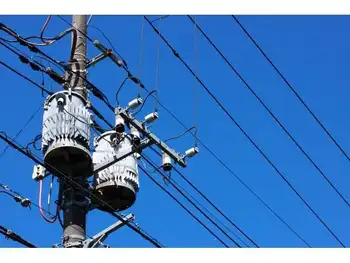
Fish boom prompts energy conglomerate to spend $14.5M to bury subsea cables

Maritime Link Cable Burial safeguards 200-kV subsea cables in the Cabot Strait as Emera and Nova Scotia Power trench lines to mitigate bottom trawling risks from a redfish boom, ensuring Muskrat Falls hydro delivery.


Key Points

Trenching Cabot Strait subsea power cables to prevent redfish-driven bottom trawling and ensure Muskrat Falls power.

✅ $14.492M spent trenching 59 km at 400 m depth

✅ Protects 200-kV, 170-km subsea interconnects from trawls

✅ Driven by Gulf redfish boom; DFO and UARB consultations


The parent company of Nova Scotia Power disclosed this week to the Utility and Review Board, amid Site C dam watchdog attention to major hydro projects, that it spent almost $14,492,000 this summer to bury its Maritime Links cables lying on the floor of the Cabot Strait between Newfoundland and Cape Breton.

It's a fish story no one saw coming, at least not Halifax-based energy conglomerate Emera.

The parent company of Nova Scotia Power disclosed this week to the Utility and Review Board that it spent almost $14,492,000 this summer to bury its Maritime Link cables lying on the floor of the Cabot Strait between Newfoundland and Cape Breton.

The cables were protected because an unprecedented explosion in the redfish population in the Gulf of St Lawrence is about to trigger a corresponding boom in bottom trawling in the area.

Also known as ocean perch, redfish were not on anyone's radar when the $1.5-billion Maritime Link was designed and built to carry Muskrat Falls hydroelectricity from Newfoundland to Nova Scotia.

The two 200-kilovolt electrical submarine cables spanning the Cabot Strait are the longest in North America, compared with projects like the New England Clean Power Link planned further south. They are each 170 kilometres long and weigh 5,500 tonnes.

Nova Scotia Power customers are paying for the Maritime Link in return for a minimum of 20 per cent of the electricity generated by Muskrat Falls over 35 years.

The electricity is supposed to start sending first electricity through the Maritime Link in mid-2020.

First time cost disclosed
In August, the company buried 59 kilometres of subsea cables one metre below the bottom at depths of 400 metres.

"These cables had not been previously trenched due to the absence of fishing activities at those depths when the cables were originally installed," spokesperson Jeff Myrick wrote in an email to CBC News in October.

Ratepayers will get the bill next year, as utilities also face risks like copper theft that can drive costs in the region. Until now, the company had declined to release costs relating to protecting the Maritime Link.

The bill will be presented to regulators, a process that has affected projects such as a Manitoba Hydro line to Minnesota, when the company applies to recover Maritime Link costs from Nova Scotia Power ratepayers in 2020.

Myrick said the company was acting after consultation with the Department of Fisheries and Oceans.

Unexpected consequences
After years of overfishing in the 1980s and early 1990s, redfish quotas were slashed and a moratorium imposed on some redfish.

Confusingly, there are actually two redfish species in the Gulf of St. Lawrence.

But very strong recent year classes, that have coincided with warming waters in the gulf, as utilities adapt to climate change considerations grow, have produced redfish in massive numbers.

After years of overfishing, the redfish population is now booming in the Gulf of St. Lawrence. (Submitted by Marine Institute)
There is now believed to be three-million tonnes of redfish in the Gulf of St Lawrence.

The Department of Fisheries and Oceans is expected to increase quotas in the coming years and the fishing industry is gearing up in a big way.

Earlier this month, Scotia Harvest announced it will begin construction of a new $14-million fish plant in Digby next spring in part to process increased redfish catches.


Related News

View more

Renewable power developers discover more energy sources make better projects

Hybrid renewable energy projects integrate wind, solar, and battery storage to enhance grid reliability, reduce curtailment, and provide dispatchable power in markets like Alberta, leveraging photovoltaic tracking, overbuilt transformers, and improved storage economics.


Key Points

Hybrid renewable energy projects combine wind, solar, and storage to deliver reliable, dispatchable clean power.

✅ Combine wind, solar, and batteries for steady, dispatchable output

✅ Lower curtailment by using shared transformers and smart inverters

✅ Boost farm income via leases; diversify risk from oil and gas


Third-generation farmer James Praskach has been burned by the oil and gas sector and watched wicked weather pound his crops flat, but he is hoping a new kind of energy -- the renewable kind -- will pay dividends.

The 39-year-old is part of a landowner consortium that is hosting the sprawling 300-megawatt Blackspring Ridge wind power project in southeastern Alberta.

He receives regular lease payments from the $600-million project that came online in 2014, even though none of the 166 towering wind turbines that surround his land are actually on it.

His lease payments stand to rise, however, when and if the proposed 77-MW Vulcan Solar project, which won regulatory approval in 2016, is green-lighted by developer EDF Renewables Inc.

The panels would cover about 400 hectares of his family's land with nearly 300,000 photovoltaic solar panels in Alberta, installed on racks designed to follow the sun. It would stand in the way of traditional grain farming of the land, but that wouldn't have been a problem this year, Praskach says.

"This year we actually had a massive storm roll through. And we had 100 per cent hail damage on all of (the Vulcan Solar lands). We had canola, peas and barley on it this year," he said, adding the crop was covered by insurance.

Meanwhile, poor natural gas prices and a series of oilpatch financial failures mean rents aren't being paid for about half of the handful of gas wells on his land, showing how a province that is a powerhouse for both fossil and green energy can face volatility -- he's appealed to the Alberta surface Rights Board for compensation.

"(Solar power) would definitely add a level of security for our farming operations," said Praskach.

Hybrid power projects that combine energy sources are a growing trend as selling renewable energy gains traction across markets. Solar only works during the day and wind only when it is windy so combining the two -- potentially with battery storage or natural gas or biomass generation -- makes the power profile more reliable and predictable.

Globally, an oft-cited example is on El Hierro, the smallest of the Canary Islands, where wind power is used to pump water uphill to a reservoir in a volcanic crater so that it can be released to provide hydroelectric power when needed. At times, the project has provided 100 per cent of the tiny island's energy needs.

Improvements in technology such as improving solar and wind power and lower costs for storage mean it is being considered as a hybrid add-on for nearly all of its renewable power projects, said Dan Cunningham, manager of business development at Greengate Power Corp. of Calgary.

Grant Arnold, CEO of developer BluEarth Renewables, agreed.

"The barrier to date, I would say, has been cost of storage but that is changing rapidly," he said. "We feel that wind and storage or solar and storage will be a fundamental way we do business within five years. It's changing very, very rapidly and it's the product everybody wants."

Vulcan Solar was proposed after Blackspring Ridge came online, said David Warner, associate director of business development for EDF Renewables, which now co-owns the wind farm with Enbridge Inc.

"Blackspring actually had incremental capacity in the main power transformers," he said. "Essentially, it was capable of delivering more energy than Blackspring was producing. It was overbuilt."

Vulcan Solar has been sized to utilize the shortfall without producing so much energy that either will ever have to be constrained, he said. Much of the required environmental work has already been done for the wind farm.

Storage is being examined as a potential addition to the project but implementing it depends on the regulatory system. At present, Alberta's regulators are still working on how to permit and control what they call "dispatchable renewables and storage" systems.

EDF announced last spring it would proceed with the Arrow Canyon Solar Project in Nevada which is to combine 200 MW of solar with 75 MW of battery storage by 2022 -- the batteries are to soak up the sun's power in the morning and dispatch the electricity in the afternoon when Las Vegas casinos' air conditioning is most needed.

What is clear is that renewable energy will continue to grow, with Alberta renewable jobs expected to follow -- in a recent report, the International Energy Agency said global electricity capacity from renewables is set to rise by 50 per cent over the next five years, an increase equivalent to adding the current total power capacity of the United States.

The share of renewables is expected to rise from 26 per cent now to 30 per cent in 2024 but will remain well short of what is needed to meet long-term climate, air quality and energy access goals, it added.


Related News

View more

Balancing Act: Germany's Power Sector Navigates Energy Transition

Germany January Power Mix shows gas-fired generation rising, coal steady, and nuclear phaseout impacts, amid cold weather, energy prices, industrial demand, and emissions targets shaping renewables, grid stability, and security of supply.


Key Points

The January electricity mix, highlighting gas, coal, renewables, and nuclear exit effects on emissions, prices, and demand.

✅ Gas output up 13% to 8.74 TWh, share at 18.6%.

✅ Coal share 23%, down year on year, steady vs late 2023.

✅ Nuclear gap filled by gas and coal; emissions below Jan 2023.


Germany's electricity generation in January presented a fascinating snapshot of its energy transition journey. As the country strives to move away from fossil fuels, with renewables overtaking coal and nuclear in its power mix, it grapples with the realities of replacing nuclear power and meeting fluctuating energy demands.

Gas Takes the Lead:

Gas-fired power plants saw their highest output in two years, generating 8.74 terawatt hours (TWh). This 13% increase compared to January 2023 compensated for the closure of nuclear reactors, which were extended during the energy crisis to shore up supply, and colder weather driving up heating needs. This reliance on gas, however, pushed its share in the electricity mix to 18.6%, highlighting Germany's continued dependence on fossil fuels.

Coal Fades, but Not Forgotten:

While gas surged, coal-fired generation remained below previous levels, dropping 29% from January 2023. However, it stayed relatively flat compared to late 2023, suggesting utilities haven't entirely eliminated it. Coal still held a 23% share, and periodic coal reliance remains evident, exceeding gas' contribution, reflecting its role as a reliable backup for intermittent renewable sources like wind.

Nuclear Void and its Fallout:

The shutdown of nuclear plants in April 2023 created a significant gap, previously accounting for an average of 12% of annual electricity output. This loss is being compensated through gas and coal, with gas currently the preferred choice, even as a nuclear option debate persists among policymakers. This strategy kept January's power sector emissions lower than the previous year, but rising demand could shift the balance.

Industry's Uncertain Impact:

Germany's industrial sector, a major energy consumer, is facing challenges like high energy prices and weak consumer demand. While the government aims to foster industrial recovery, uncertainties linger due to a shaky coalition and limited budget, and debate about a possible nuclear resurgence continues in parallel, which could reshape policy. Any future industrial revival would likely increase energy demand and potentially necessitate more gas or coal.

Cost-Driven Choices and Emission Concerns:

The choice between gas and coal depends on their relative costs, in a system pursuing a coal and nuclear phase-out under long-term policy. Currently, gas seems more favorable emission-wise, but if its price rises, coal might become more attractive, impacting overall emissions.

Looking Ahead:

Germany's energy transition faces a complex balancing act, with persistent grid expansion woes and exposure to cheap gas complicating progress. While the reliance on gas and coal highlights the difficulties in replacing nuclear, the focus on emissions reduction is encouraging. Navigating the challenges of affordability, industrial needs, and climate goals will be crucial for a successful transition to a clean and secure energy future.


Related News

View more

The Haves and Have-Nots of Electricity in California

California Public Safety Power Shutoffs highlight wildfire prevention as PG&E outages disrupt schools, businesses, and rural communities, driving generator use, economic hardship, and emergency preparedness across Northern California during high-wind events.


Key Points

Utility outages to reduce wildfire risk during extreme winds, impacting homes and businesses in high-risk California.

✅ PG&E cuts power during high winds to prevent wildfires

✅ Costs rise for generators, fuel, batteries, and spoiled food

✅ Rural, low-income communities face greater economic losses


The intentional blackout by California’s largest utility this week put Forest Jones out of work and his son out of school. On Friday morning Mr. Jones, a handyman and single father, sat in his apartment above a tattoo parlor waiting for the power to come back on and for school to reopen.

“I’ll probably lose $400 or $500 dollars because of this,” said Mr. Jones, who lives in the town of Paradise, which was razed by fire last year and is slowly rebuilding. “Things have been really tough up here.”

Millions of people were affected by the blackout, which spanned the outskirts of Silicon Valley to the forests of Humboldt County near the Oregon border. But the outage, which the power company said was necessary to reduce wildfire risk across the region, also drew a line between those who were merely inconvenienced and those who faced a major financial hardship.

To have the lights on, the television running and kitchen appliances humming is often taken for granted in America, even as U.S. grid during coronavirus questions persisted. During California’s blackout it became an economic privilege.

The economic impacts of the shut-off were especially acute in rural, northern towns like Paradise, where incomes are a fraction of those in the San Francisco Bay Area.

Both wealthy and poorer areas were affected by the blackout but interviews across the state suggested that being forced off the grid disproportionately hurt the less affluent. One family in Humboldt County said they had spent $150 on batteries and water alone during the shutdown.

“To be prepared costs money,” Sue Warhaftig, a massage therapist who lives in Mill Valley, a wealthy suburb across the Golden Gate Bridge from San Francisco. Ms. Warhaftig spent around two days without electricity but said she had been spared from significant sacrifices during the blackout.

She invested in a generator to keep the refrigerator running and to provide some light. She cooked in the family’s Volkswagen camper van in her driveway. At night she watched Netflix on her phone, which she was able to charge with the generator. Her husband, a businessman, is in London on a work trip. Her two sons, both grown, live in Southern California and Seattle.

“We were inconvenienced but life wasn’t interrupted,” Ms. Warhaftig said. “But so many people’s lives were.

Pacific Gas & Electric restored power to large sections of Northern California on Friday, including Paradise, where the electricity came back on in the afternoon. But hundreds of thousands of people in other areas remained in the dark. The carcasses of burned cars still littered the landscape around Paradise, where 86 people died in the Camp Fire last year, some of them while trying to escape.

Officials at power company said that by Saturday they hoped to have restored power to 98 percent of the customers who were affected.

The same dangerous winds that spurred the shut-off in Northern California have put firefighters to work in the south. The authorities in Los Angeles County ordered the evacuation of nearly 100,000 people on Friday as the Saddleridge Fire burned nearly 5,000 acres and destroyed 25 structures. The Sandalwood Fire, which ignited Thursday in Riverside County, had spread to more than 800 acres and destroyed 74 structures by Friday afternoon.

While this week’s outage was the first time many customers in Northern California experienced a deliberate power shut-off, residents in and around Paradise have had their power cut four times in recent months, residents say.

Many use a generator, but running one has become increasingly expensive with gasoline now at more than $4 a gallon in California.

On Friday, Dennis and Viola Timmer drove up the hill to their home in Magalia, a town adjacent to Paradise, loaded with $102 dollars of gasoline for their generators. It was their second gasoline run since the power went out Tuesday night.

The couple, retired and on a fixed income after Mr. Timmer’s time in the Navy and in construction, said the power outage had severely limited their ability to do essential tasks like cooking, or to leave the house.

“You know what it feels like? You’re in jail,” said Ms. Timmer, 72. “You can’t go anywhere with the generators running.”

Since the generators are not powerful enough to run heat or air conditioning, the couple slept in their den with an electric space heater.

“It’s really difficult because you don’t have a normal life,” Ms. Timmer said. “You’re trying to survive.”

To be sure, the shutdown has affected many people regardless of economic status, and similar disruptions abroad, like a London power outage that disrupted routines, show how widespread such challenges can be. The areas without power were as diverse as the wealthy suburbs of Silicon Valley, the old Gold Rush towns of the Sierra Nevada, the East Bay of San Francisco and the seaside city of Arcata.

Ms. Cahn’s cellphone ran out of power during the blackout and even when she managed to recharge it in her car cell service was spotty, as it was in many areas hit by the blackout.

Accustomed to staying warm at night with an electric blanket, Ms. Cahn slept under a stack of four blankets.

“I’m doing what I have to do which is not doing very much,” she said.

Further south in Marin City, Chanay Jackson stood surrounded by fumes from generators still powering parts of the city.

She said that food stamps were issued on the first of the month and that many residents who had to throw away food were out of luck.

“They’re not going to issue more food stamps just because the power went out,” Ms. Jackson said. “So they’re just screwed until next month.”

Strong winds have many times in the past caused power lines to come in contact with vegetation, igniting fires that are then propelled by the gusts, and hurricanes elsewhere have crippled infrastructure with Louisiana grid rebuild after Laura according to state officials. This was the case with the Camp Fire.

Since higher elevations had more extreme winds many of the neighborhoods where power was turned off this week were in hills and canyons, including in the Sierra Nevada.

The shut-off, which by one estimate affected a total of 2.5 million people, has come under strong criticism by residents and politicians, and warnings from Cal ISO about rolling blackouts as the power grid strained. The company’s website crashed just as customers sought information about the outage. Gov. Gavin Newsom called it unacceptable. But his comments were nuanced, criticizing the way the shut-off was handled, not the rationale for it. Mr. Newsom and others said the ravages of the Camp Fire demanded preventive action to prevent a reoccurrence.

Yet the calculus of trying to avoid deadly fires by shutting off power will continue to be debated as California enters its peak wildfire season, even as electricity reliability during COVID-19 was generally maintained for most consumers.

In the city of Grass Valley, Matthew Gottschalk said he and his wife realized that a generator was essential when they calculated that they had around $500 worth of food in their fridge.

“I don’t know what we would have done,” said Mr. Gottschalk, whose power went out Tuesday night.

His neighbors are filling coolers with ice. Everyone is hoping the power will come back on soon.

“Ice is going to run out and gas is going to run out,” he said.


Related News

View more

Renewables are not making electricity any more expensive

Renewables' Impact on US Wholesale Electricity Prices is clear: DOE analysis shows wind and solar, capacity gains, and natural gas lowering rates, shifting daily patterns, and triggering occasional negative pricing in PJM and ERCOT.


Key Points

DOE data show wind and solar lower wholesale prices, reshape price curves, and cause negative pricing in markets.

✅ Natural gas price declines remain the largest driver of cheaper power

✅ Wind and solar shift seasonal and time-of-day price patterns

✅ Negative wholesale prices appear near high wind and solar output


One of the arguments that's consistently been raised against doing anything about climate change is that it will be expensive. On the more extreme end of the spectrum, there have been dire warnings about plunging standards of living due to skyrocketing electricity prices. The plunging cost of renewables like solar cheaper than gas has largely silenced these warnings, but a new report from the Department of Energy suggests that, even earlier, renewables were actually lowering the price of electricity in the United States.


Plunging prices
The report focuses on wholesale electricity prices in the US. Note that these are distinct from the prices consumers actually pay, which includes taxes, fees, payments to support the grid that delivers the electricity, and so on. It's entirely possible for wholesale electricity prices to drop even as consumers end up paying more, and market reforms determine how those changes are passed through. That said, large changes in the wholesale price should ultimately be passed on to consumers to one degree or another.

The Department of Energy analysis focuses on the decade between 2008 and 2017, and it includes an overall analysis of the US market, as well as large individual grids like PJM and ERCOT and, finally, local prices. The decade saw a couple of important trends: low natural gas prices that fostered a rapid expansion of gas-fired generators and the rapid expansion of renewable generation that occurred concurrently with a tremendous drop in price of wind and solar power.

Much of the electricity generated by renewables in this time period would be more expensive than that generated by wind and solar installed today. Not only have prices for the hardware dropped, but the hardware has improved in ways that provide higher capacity factors, meaning that they generate a greater percentage of the maximum capacity. (These changes include things like larger blades on wind turbines and tracking systems for solar panels.) At the same time, operating wind and solar is essentially free once they're installed, so they can always offer a lower price than competing fossil fuel plants.

With those caveats laid out, what does the analysis show? Almost all of the factors influencing the wholesale electricity price considered in this analysis are essentially neutral. Only three factors have pushed the prices higher: the retirement of some plants, the rising price of coal, and prices put on carbon, which only affect some of the regional grids.

In contrast, the drop in the price of natural gas has had a very large effect on the wholesale power price. Depending on the regional grid, it's driven a drop of anywhere from $7 to $53 per megawatt-hour. It's far and away the largest influence on prices over the past decade.


Regional variation and negative prices
But renewables have had an influence as well. That influence has ranged from roughly neutral to a cost reduction of $2.2 per MWh in California, largely driven by solar. While the impact of renewables was relatively minor, it is the second-largest influence after natural gas prices, and the data shows that wind and solar are reducing prices rather than increasing them.

The reports note that renewables are influencing wholesale prices in other ways, however. The growth of wind and solar caused the pattern of seasonal price changes to shift in areas of high wind and solar, as seen with solar reshaping prices in Northern Europe as daylight hours and wind patterns shift with the seasons. Similarly, renewables have a time-of-day effect for similar reasons, helping explain why the grid isn't 100% renewable today, which also influences the daily timing price changes, something that's not an issue with fossil fuel power.

A map showing the areas where wholesale electricity prices have gone negative, with darker colors indicating increased frequency.
Enlarge / A map showing the areas where wholesale electricity prices have gone negative, with darker colors indicating increased frequency.

US DOE
One striking feature of areas where renewable power is prevalent is that there are occasional cases in which an oversupply of renewable energy produces negative electricity prices in the wholesale market. (In the least-surprising statement in the report, it concludes that "negative prices in high-wind and high-solar regions occurred most frequently in hours with high wind and solar output.") In most areas, these negative prices are rare enough that they don't have a significant influence on the wholesale price.

That's not true everywhere, however. Areas on the Great Plains see fairly frequent negative prices, and they're growing in prevalence in areas like California, the Southwest, and the northern areas of New York and New England, while negative prices in France have been observed in similar conditions. In these areas, negative wholesale prices near solar plants have dropped the overall price by 3%. Near wind plants, that figure is 6%.

None of this is meant to indicate that there are no scenarios where expanded renewable energy could eventually cause wholesale prices to rise. At sufficient levels, the need for storage, backup plants, and grid management could potentially offset their low costs, a dynamic sometimes referred to as clean energy's dirty secret by analysts. But it's clear we have not yet reached that point. And if the prices of renewables continue to drop, then that point could potentially recede fast enough not to matter.


Related News

View more

Egypt's renewable energy to reach 6.6 GW by year-end

Egypt Renewable Energy Expansion targets solar and wind power projects to diversify the energy mix, adding 6.6 GW by 2020 and reaching 8,200 MW, with UK cooperation, grid upgrades, and investment in the electricity sector.


Key Points

A plan to boost solar and wind by 6.6 GW by 2020, reaching 8,200 MW and diversifying Egypt's energy mix.

✅ Adds 6.6 GW by 2020; targets 8,200 MW total capacity

✅ Focus on solar, wind, grid upgrades, and investment

✅ UK-Egypt cooperation in electricity sector projects


Egypt is planning to expand into renewable energy projects in a bid to increase its contribution to the energy mix, in step with global records being set in renewables, and amid Saudi Arabia’s 60 GW drive in the region, the country’s minister of electricity and renewable energy Mohamed Shaker said.

Renewable power is expected to add 6.6 gigawatts (GW) by the end of 2020, a scale comparable to Saudi wind expansion underway, with plans to reach 8,200 megawatts (MW) after the completion of the renewable energy projects currently under consideration, reflecting gains seen since IRENA’s 2016 record year for renewables, Shaker added in a statement on Tuesday, even as regional challenges persist.

This came during the minister’s video-conference meeting with the British ambassador to Egypt Geoffrey Adams to explore the potential means for cooperation between the two countries in the electricity sector, including lessons from the UK project backlog now affecting investments and from Ireland’s green-electricity goals being pursued.


Related News

View more

Sign Up for Electricity Forum’s Newsletter

Stay informed with our FREE Newsletter — get the latest news, breakthrough technologies, and expert insights, delivered straight to your inbox.

Electricity Today T&D Magazine Subscribe for FREE

Stay informed with the latest T&D policies and technologies.
  • Timely insights from industry experts
  • Practical solutions T&D engineers
  • Free access to every issue

Live Online & In-person Group Training

Advantages To Instructor-Led Training – Instructor-Led Course, Customized Training, Multiple Locations, Economical, CEU Credits, Course Discounts.

Request For Quotation

Whether you would prefer Live Online or In-Person instruction, our electrical training courses can be tailored to meet your company's specific requirements and delivered to your employees in one location or at various locations.