CSA Z462 Arc Flash Training - Electrical Safety Compliance
Our customized live online or in‑person group training can be delivered to your staff at your location.

- Live Online
- 6 hours Instructor-led
- Group Training Available
Regular Price:
$249
Coupon Price:
$199
Salem residents are paying higher electric rates for the second year in a row - but aren't seeing anything like the 40 percent increase they faced last year.
Starting July 1, the city began adding 0.55 cents per kilowatt hour to most consumers' electric bills. That translates to $5.50 a month per 1,000 kilowatt hours, or in the neighborhood of $6.80 a month for the average residential customer in the city whose bill rose to about $85 a month last year.
The fee - called a power cost adjustment - is designed to help offset the increased wholesale rate the city is paying under a new 20-year contract with Appalachian Power, said Frank Turk, the city's director of finance.
Base rates and charges are unchanged for city residents.
The power cost adjustment "takes care of about half the amount we absorbed last year," Turk said, when the city's wholesale electric costs rose about 75 percent. The city passed on about half the increase directly to consumers in the form of higher rates.
The power cost adjustment will bring in about $1 million this fiscal year, Turk said.
Salem is one of several Virginia localities that operate their own electric distribution systems, rather than having residents served by commercial electric companies.
The city's system, which dates to 1892, provides power to about 10,500 residential and 1,700 business customers. Salem buys electricity at wholesale rates and distributes it to the city's residents through seven substations and 200 miles of transmission lines. The electric department also operates the city's streetlights and traffic signals.
For years, the city's electric rates were among the lowest in the country based on a long-term contract with Cynergy of Ohio. When that arrangement ended in June 2005, the city wasn't able to negotiate a new contract right away. It ended up with a one-year deal with Appalachian Power and significantly higher rates.
This June, Salem City Council approved the two-decade contract with Appalachian Power that calls for gradually increasing rates over the term of the agreement. It begins with a cost of $45 per megawatt hour and could rise to $50 per megawatt hour within five years, City Manager Forest Jones told the council in June.
As part of its budget process, the council left the actual rate adjustments for this year to Turk and Electric Department Director A.K. Briele.
The power cost adjustment can be raised or lowered at any time, Turk said, although that hadn't been necessary for many years under the Cynergy contract. "It's just a mechanism for us to adjust for the cost of fuel... without going back every other year and redoing the electric rate structure," Turk said.
Technically, the adjustment is not exactly the same as the "fuel factor" commercial utilities sometimes add to consumers' bills, but it does fill a similar function.
Appalachian Power in January, for instance, raised its fuel factor from 1.42 cents per kilowatt hour to 1.785 cents per kilowatt hour to offset higher fuel costs.
The increase added $3.65 to the bill of a homeowner using 1,000 kilowatt hours per month.
Salem's power cost adjustment rate "theoretically could go up or down" at any time, but will probably not change during the fiscal year, Turk said.
Related News

Maryland’s renewable energy facilities break pollution rules, say groups calling for enforcement
Maryland Renewable Energy Violations highlight RPS compliance gaps as facilities selling renewable energy certificates, including…
View more
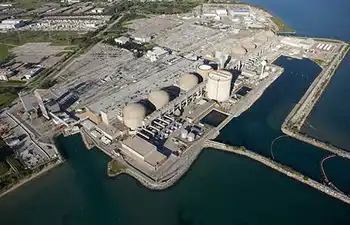
Ontario will refurbish Pickering B NGS
Pickering nuclear refurbishment will modernize Ontario's Candu reactors at Pickering B, sustaining 2,000 MW of…
View more
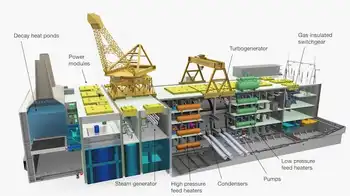
Advanced Reactors Will Stand On The Shoulders Of Giants
Advanced Nuclear Reactors redefine nuclear energy with SMRs, diverse fuels, passive safety, digital control rooms,…
View more

No time to be silent on NZ's electricity future
New Zealand Renewable Energy Strategy examines decarbonisation, GHG emissions, and net energy as electrification accelerates,…
View more

Duke Energy reaffirms capital investments in renewables and grid projects to deliver cleaner energy, economic growth
Duke Energy Clean Energy Strategy advances renewables, battery storage, grid modernization, and energy efficiency to…
View more

Climate change poses high credit risks for nuclear power plants: Moody's
Nuclear Plant Climate Risks span flood risk, heat stress, and water scarcity, threatening operations, safety…
View more
Sign Up for Electricity Forum’s Newsletter
Stay informed with our FREE Newsletter — get the latest news, breakthrough technologies, and expert insights, delivered straight to your inbox.
Electricity Today T&D Magazine Subscribe for FREE

Stay informed with the latest T&D policies and technologies.
- Timely insights from industry experts
- Practical solutions T&D engineers
- Free access to every issue

