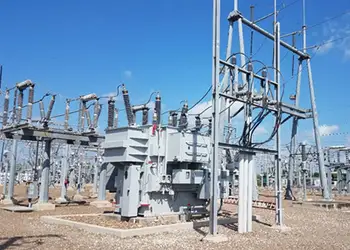
Substation Protection Training - Protect Transformers, Buses and Lines
Our customized live online or in‑person group training can be delivered to your staff at your location.
- Live Online
- 12 hours Instructor-led
- Group Training Available
Regular Price:
$799
Coupon Price:
$699
Remember the ice storms of a couple of winters back? You would have given anything for a toasty warm house.
As temperatures in the Piedmonts latest heat wave approached triple digits, residents just wanted to keep cool.
Either way, customers turn to Duke Energy for answers. During those crippling winter storms, Duke, as the states major electricity provider, worked around the clock to get people back on line. But to avoid outages on sweltering August days, the solution is cutting back on usage.
As scorching temperatures moved eastward across the nation last week, thousands were left sweating as overloaded power grids failed. Though excessive summer heat can be just as life threatening as winters chill, no heat-related deaths were reported here.
Soaring temperatures call for conservation and common sense. When the mercury rises, set the thermostat on at least 78 degrees. Duke says for each degree cooled below 78, cooling costs can rise as much as 10 percent. Gov. Mike Easley says 80 degrees is fine in state offices. Thats sound advice even when the weather cools a bit.
But cutting back does more than lower electric bills. It also means the lights stay on and air conditioners hum during the unprecedented demand.
Other suggestions from Duke Energy worth considering: Use fans. Circulating air - even warm - is more comfortable than still air.
Avoid using appliances like washers, dryers and dishwashers until after 8 p.m. Turn off lights when possible, draw drapes to reduce heat buildup and avoid preparing hot meals.
At work, turn off computers before leaving. The sleep mode saves electricity. Go paperless. Copy machines and printers are big energy wasters.
Could it be we end up longing for August when the January forecast is for a half-inch of ice on power lines?
Related News
Greening Ontario's electricity grid would cost $400 billion: report
Ontario Electricity Grid Decarbonization outlines the IESO's net-zero pathway: $400B investment, nuclear expansion, renewables, hydrogen,…
View more

Key Ontario power system staff may end up locked down at work sites due to COVID-19, operator says
Ontario IESO COVID-19 Control Room Measures detail how essential operators safeguard the electricity grid with…
View more

PG&E keeps nearly 60,000 Northern California customers in the dark to reduce wildfire risk
PG&E Public Safety Power Shutoff reduces wildfire risk during extreme winds, triggering de-energization across the…
View more
India Electricity Prices are Spiking
India spot electricity prices surged on Q3 demand, lifting power tariffs in the spot market…
View more

Why Canada's Energy Security Hinges on Renewables
Renewable Energy Security strengthens affordability and grid reliability through electrification, wind, and solar, reducing fossil…
View more

Covid-19: Secrets of lockdown lifestyle laid bare in electricity data
Lockdown Electricity Demand Trends reveal later mornings, weaker afternoons, and delayed peaks as WFH, streaming,…
View more
Sign Up for Electricity Forum’s Newsletter
Stay informed with our FREE Newsletter — get the latest news, breakthrough technologies, and expert insights, delivered straight to your inbox.
Electricity Today T&D Magazine Subscribe for FREE

Stay informed with the latest T&D policies and technologies.
- Timely insights from industry experts
- Practical solutions T&D engineers
- Free access to every issue

