U.S. to revive dormant nuclear-power industry

By Biloxi Sun Herald


CSA Z463 Electrical Maintenance -

Our customized live online or in‑person group training can be delivered to your staff at your location.

  • Live Online
  • 6 hours Instructor-led
  • Group Training Available
Regular Price:
$249
Coupon Price:
$199
Reserve Your Seat Today
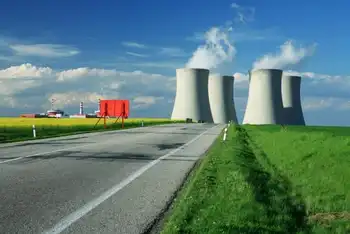
Washington The nation's moribund nuclear-power industry -- whose last new plant was ordered in 1973 -- is showing signs of awakening soon, thanks to a generous jolt of federal help and promises of more to come.=

Later this year, three utilities -- Entergy, Exelon and Dominion Resources -- will begin seeking licenses to build new nuclear plants, reviving a practice essentially abandoned in America after 1979's Three Mile Island near-meltdown.

Bush administration officials and nuclear industry leaders speculate that the first new nuclear-power plant will be finished around 2010, probably next to an existing nuclear generator somewhere in the Southeast.

But even with robust new federal help, iffy economics, worries about plant security in an age of terrorism and continuing fears about safety risks make some outside experts doubtful that nuclear power is ready for a comeback.

The last five U.S. nuclear power plants cost 11 times as much to build per kilowatt produced as do current natural-gas plants.

Even if new next-generation nuclear plants can be built much more cheaply, their construction costs still are likely to be two to four times higher than natural gas, coal, or wind plants, according to the U.S. Energy Information Administration.

Both the Congressional Budget Office and the investment-rating firm Standard and Poor's concluded recently that investing in loans to build large nuclear power plants is a bad risk.

Some analysts think the same logic will keep nuclear power dormant.

"All that's happening right now is that the pieces are being put into the puzzle, but the puzzle hasn't been solved yet," said Geoff Rothwell, a Stanford University economist who specializes in nuclear issues.

America's 103 nuclear power plants produce about 20 percent of the nation's electricity, but the last one to go on line, Watt's Bar in Tennessee, turned on in 1996 after 23 years of construction and billions of dollars in cost overruns.

The biggest sign of a looming resurgence: The Senate voted 50-48 last week in favor of $15 billion in federal loan guarantees for companies to build six or seven new nuclear power plants.

The terms were part of broader energy legislation; the House of Representatives has voted for similar but lesser aid.

Such support from the federal government -- as well as environmental and economic problems nagging other power sources -- is prompting nuclear proponents to dust off their construction plans.

Industry officials are optimistic because:

- The current Senate energy bill either would provide straight loan guarantees for half the cost of power plant construction or commit the federal government to buy much of their power.

- Last year, the Bush administration cleared the way to solving the looming nuclear-waste disposal problem by approving Yucca Mountain in Nevada as an eventual dump site.

- The administration advocates a long-term switch to hydrogen as a fuel source, especially for cars. The Senate energy bill includes funding to build a $1.1 billion test project for a new type of nuclear power plant in Idaho that also would produce hydrogen.

- Natural gas prices are soaring.

- Efforts to combat global warming and air pollution could make coal and natural gas power plants more expensive and nuclear power more desirable.

Related News
A Texas-Sized Gas-for-Electricity Swap

Texas Heat Pump Electrification replaces natural gas furnaces with electric heating across ERCOT, cutting carbon emissions, lowering utility bills, shifting summer peaks to winter, and aligning higher loads with strong seasonal wind power generation.


Key Points

Statewide shift from gas furnaces to heat pumps in Texas, reducing emissions and bills while moving grid peak to winter.

✅ Up to $452 annual utility savings per household

✅ CO2 cuts up to 13.8 million metric tons in scenarios

✅ Winter peak rises, summer peak falls; wind aligns with load


What would happen if you converted all the single-family homes in Texas from natural gas to electric heating?

According to a paper from Pecan Street, an Austin-based energy research organization, the transition would reduce climate-warming pollution, save Texas households up to $452 annually on their utility bills, and flip the state from a summer-peaking to a winter-peaking system. And that winter peak would be “nothing the grid couldn’t evolve to handle,” according to co-author Joshua Rhodes, a view echoed by analyses outlining Texas grid reliability improvements statewide today.

The report stems from the reality that buildings must be part of any comprehensive climate action plan.

“If we do want to decarbonize, eventually we do have to move into that space. It may not be the lowest-hanging fruit, but eventually we will have to get there,” said Rhodes.

Rhodes is a founding partner of the consultancy IdeaSmiths and an analyst at Vibrant Clean Energy. Pecan Street commissioned the study, which is distilled from a larger original analysis by IdeaSmiths, at the request of the nonprofit Environmental Defense Fund.

In an interview, Rhodes said, “The goal and motivation were to put bounding on some of the claims that have been made about electrification: that if we electrify a lot of different end uses or sectors of the economy...power demand of the grid would double.”

Rhodes and co-author Philip R. White used an analysis tool from the National Renewable Energy Laboratory called ResStock to determine the impact of replacing natural-gas furnaces with electric heat pumps in homes across the ERCOT service territory, which encompasses 90 percent of Texas’ electricity load.

Rhodes and White ran 80,000 simulations in order to determine how heat pumps would perform in Texas homes and how the pumps would impact the ERCOT grid.

The researchers modeled the use of “standard efficiency” (ducted, SEER 14, 8.2 HSPF air-source heat pump) and “superior efficiency” (ductless, SEER 29.3, 14 HSPF mini-split heat pump) heat pump models against two weather data sets — a typical meteorological year, and 2011, which had extreme weather in both the winter and summer and highlighted blackout risks during severe heat for many regions.

Emissions were calculated using Texas’ power sector data from 2017. For energy cost calculations, IdeaSmiths used 10.93 cents per kilowatt-hour for electricity and 8.4 cents per therm for natural gas.

Nothing the grid can't handle
Rhodes and White modeled six scenarios. All the scenarios resulted in annual household utility bill savings — including the two in which annual electricity demand increased — ranging from $57.82 for the standard efficiency heat pump and typical meteorological year to $451.90 for the high-efficiency heat pump and 2011 extreme weather year.

“For the average home, it was cheaper to switch. It made economic sense today to switch to a relatively high-efficiency heat pump,” said Rhodes. “Electricity bills would go up, but gas bills can go down.”

All the scenarios found carbon savings too, with CO2 reductions ranging from 2.6 million metric tons with a standard efficiency heat pump and typical meteorological year to 13.8 million metric tons with the high-efficiency heat pump in 2011-year weather.

Peak electricity demand in Texas would shift from summer to winter. Because heat pumps provide both high-efficiency space heating and cooling, in the scenario with “superior efficiency” heat pumps, the summer peak drops by nearly 24 percent to 54 gigawatts compared to ERCOT’s 71-gigawatt 2016 summer peak, even as recurring strains on the Texas power grid during extreme conditions persist.

The winter peak would increase compared to ERCOT’s 66-gigawatt 2018 winter peak, up by 22.73 percent to 81 gigawatts with standard efficiency heat pumps and up by 10.6 percent to 73 gigawatts with high-efficiency heat pumps.

“The grid could evolve to handle this. This is not a wholesale rethinking of how the grid would have to operate,” said Rhodes.

He added, “There would be some operational changes if we went to a winter-peaking grid. There would be implications for when power plants and transmission lines schedule their downtime for maintenance. But this is not beyond the realm of reality.”

And because Texas’ wind power generation is higher in winter, a winter peak would better match the expected higher load from all-electric heating to the availability of zero-carbon electricity.


A conservative estimate
The study presented what are likely conservative estimates of the potential for heat pumps to reduce carbon pollution and lower peak electricity demand, especially when paired with efficiency and demand response strategies that can flatten demand.

Electric heat pumps will become cleaner as more zero-carbon wind and solar power are added to the ERCOT grid, as utilities such as Tucson Electric Power phase out coal. By the end of 2018, 30 percent of the energy used on the ERCOT grid was from carbon-free sources.

According to the U.S. Energy Information Administration, three in five Texas households already use electricity as their primary source of heat, much of it electric-resistance heating. Rhodes and White did not model the energy use and peak demand impacts of replacing that electric-resistance heating with much more energy efficient heat pumps.

“Most of the electric-resistance heating in Texas is located in the very far south, where they don’t have much heating at all,” Rhodes said. “You would see savings in terms of the bills there because these heat pumps definitely operate more efficiently than electric-resistance heating for most of the time.”

Rhodes and White also highlighted areas for future research. For one, their study did not factor in the upfront cost to homeowners of installing heat pumps.

“More study is needed,” they write in the Pecan Street paper, “to determine the feasibility of various ‘replacement’ scenarios and how and to what degree the upgrade costs would be shared by others.”

Research from the Rocky Mountain Institute has found that electrification of both space and water heating is cheaper for homeowners over the life of the appliances in most new construction, when transitioning from propane or heating oil, when a gas furnace and air conditioner are replaced at the same time, and when rooftop solar is coupled with electrification, aligning with broader utility trends toward electrification.

More work is also needed to assess the best way to jump-start the market for high-efficiency all-electric heating. Rhodes believes getting installers on board is key.

“Whenever a homeowner’s making a decision, if their system goes out, they lean heavily on what the HVAC company suggests or tells them because the average homeowner doesn’t know much about their systems,” he said.

More work is also needed to assess the best way to jump-start the market for high-efficiency all-electric heating, and how utility strategies such as smart home network programs affect adoption too. Rhodes believes getting installers on board is key.


Related News

View more

Changes Coming For Ontario Electricity Consumers

Ontario Electricity Billing Changes include OEB-backed shifts to time-of-use or tiered pricing, landlord blanket elections, LDC implementation guidance, a customer choice webpage with a bill calculator, and ENDM rate mitigation messaging.


Key Points

They are OEB measures enabling TOU-to-tiered switching, landlord elections, LDC guidance, and ENDM bill messages.

✅ Option to switch from TOU to tiered pricing

✅ Landlord blanket elections on tenant turnover

✅ ENDM-led bill info and rate mitigation messaging


By David Stevens, Aird & Berlis LLP

Electricity consumers in Ontario may see a couple of electricity rate changes in their bills in the coming months.

First, as we have already discussed, as of November 1, 2020, regulated price plan customers will have the option to switch to "tiered pricing" instead of time-of-use (TOU) pricing structures. Those who switch to "tiered pricing" will see changes in their electricity bills.

The Ontario Energy Board (OEB) has now issued final amendments to the Standard Supply Service Code to support the customer election process necessary to switch from TOU pricing to tiered pricing. The main change from what was already published in previous OEB notices is that landlords will be permitted to make a "blanket election" between TOU pricing and tiered pricing that will apply each time a tenant's account reverts back to the landlord on turnover of the rental unit. In its most recent notice, the OEB acknowledges that implementing the new customer billing option as of Nov. 1 (less than two months from now) will be challenging and directs Local Distribution Companies (LDCs) who cannot meet this date to be immediately in touch with the OEB. Finally, the OEB indicates that there will be a dedicated "customer choice webpage for consumers, including a bill calculator" in place by early October.

Second, as of January 1, 2021 low-volume consumers will see additional messaging on their bills to inform them of available rate mitigation programs.

A recent proposal posted on Ontario's Regulatory Registry indicates that the Ministry of Energy, Northern Development and Mines (ENDM) proposes that LDCs and Utility Sub-Meter Providers will be required to include a new on-bill message for low-volume consumers that "will direct customers to ENDM's new web page for further information about how the province provides financial support to electricity consumers." This new requirement is planned to be in place as of January 1, 2021. In conjunction with this requirement, the ENDM plans to launch a new web page that will provide "up-to-date information about electricity bills," including information about rate mitigation programs available to consumers. Parties are invited to submit comments on the ENDM proposal by October 5, 2020.


Related News

View more

Tesla CEO Elon Musk slams Texas energy agency as unreliable: "not earning that R"

ERCOT Texas Power Grid Crisis disrupts millions amid a winter storm, with rolling blackouts, power outages, and energy demand; Elon Musk criticizes ERCOT as Tesla owners use Camp Mode while wind turbines face icing


Key Points

A Texas blackout during a winter storm, exposing ERCOT failures, rolling blackouts, and urgent grid resilience measures.

✅ Millions without power amid record cold and energy demand

✅ Elon Musk criticizes ERCOT over grid reliability failures

✅ Tesla Camp Mode aids warmth during extended outages


Tesla CEO Elon Musk on Wednesday slammed the Texas agency responsible for a statewide blackout amid a U.S. grid with frequent outages that has left millions of people to fend for themselves in a freezing cold winter storm.

Musk tweeted that Texas’ power grid manager, the Electricity Reliability Council of Texas (ERCOT), is not earning the “R” in the acronym, highlighting broader grid vulnerabilities that critics have noted.

Musk moved to Texas from California in December and is building a new Tesla factory in Austin. His critique of the state’s electrical grid operator came after multiple Tesla owners in the state said they had slept in their vehicles to keep warm amid the lingering power outage.

In 2019, Tesla released a vehicle with a “Camp Mode,” which enables owners to use the vehicle’s features – like lights and climate control – without significantly depleting the battery.

“We had the power go out for 6 hours last night. Our house does not have gas, and we ran out of firewood... what are we going to do,” one Reddit user wrote on “r/TeslaMotors.”

“So my wife my dog and my newborn daughter slept in the garage in our Model3 all nice and cozy. If I didn't have this car, it would have been a very rough night.”

More than two dozen people have died in the extreme weather this week, some while struggling to find warmth inside their homes. In the Houston area, one family succumbed to carbon monoxide from car exhaust in their garage. Another perished as they used a fireplace to keep warm.

Utilities from Minnesota to Texas and Mississippi have implemented rolling blackouts to ease the burden on power grids straining to meet extreme demand for heat and electricity, as longer, more frequent outages hit systems nationwide.

More than 3 million customers remained without power in Texas, Louisiana and Mississippi, more than 200,000 more in four Appalachian states, and nearly that many in the Pacific Northwest, according to poweroutage.us, which tracks utility outage reports, and advocates warn that millions could face summer shut-offs without protections.

ERCOT said early Wednesday that electricity had been restored to 600,000 homes and businesses by Tuesday night, though nearly 3 million homes and businesses remained without power, as California turns to batteries to help balance demand. Officials did not know when power would be restored.

ERCOT President Bill Magness said he hoped many customers would see at least partial service restored soon but could not say definitively when that would be.

Magness has defended ERCOT’s decision, saying it prevented an “even more catastrophic than the terrible events we've seen this week."

Utility crews raced Wednesday to restore power to nearly 3.4 million customers around the U.S. who were still without electricity in the aftermath of a deadly winter storm, even as officials urge residents to prepare for summer blackouts that could tax systems further, and another blast of ice and snow threatened to sow more chaos.

The latest storm front was expected to bring more hardship to states that are unaccustomed to such frigid weather — parts of Texas, Arkansas and the Lower Mississippi Valley — before moving into the Northeast on Thursday.

"There's really no letup to some of the misery people are feeling across that area," said Bob Oravec, lead forecaster with the National Weather Service, referring to Texas.

Sweden, known for its brutally cold climate, has offered some advice to Texans unaccustomed to such freezing temperatures, as Canadian grids are increasingly exposed to harsh weather that strains reliability. Stefan Skarp of the Swedish power company told Bloomberg on Tuesday: “The problem with sub-zero temperatures and humid air is that ice will form on the wind turbines.”

“When ice freezes on to the wings, the aerodynamic changes for the worse so that wings catch less and less wind until they don't catch any wind at all,” he said.


Related News

View more

Could selling renewable energy be Alberta's next big thing?

Alberta Renewable Energy Procurement is surging as corporate PPAs drive wind and solar growth, with the Pembina Institute and the Business Renewables Centre linking buyers and developers in Alberta's energy-only market near Medicine Hat.


Key Points

A market-led approach where corporations use PPAs to secure wind and solar power from Alberta projects.

✅ Corporate PPAs de-risk projects and lock in clean power.

✅ Alberta's energy-only market enables efficient transactions.

✅ Skilled workforce supports wind, solar, legal, and financing.


Alberta has big potential when it comes to providing renewable energy, advocates say.

The Pembina Institute says the practice of corporations committing to buy renewable energy is just taking off in Canada, and Alberta has both the energy sector and the skilled workforce to provide it.

Earlier this week, a company owned by U.S. billionaire Warren Buffett announced a large new wind farm near Medicine Hat. It has a buyer for the power.

Sara Hastings-Simon, director of the Pembina's Business Renewables Centre, says this is part of a trend.

"We're talking about the practice of corporate institutions purchasing renewables to meet their own electricity demand. And this is a really well-established driver for renewable energy development in the U.S.," she said. "You may be hearing headlines like Google, Apple and others that are buying renewables and we're helping to bring this practice to Canada."

The Business Renewables Centre (BRC) is a not-for-profit working to accelerate corporate and institutional procurement of renewables in Canada. The group held its inaugural all members event in Calgary on Thursday.

Hastings-Simon says shareholders and investors are encouraging more use of solar and wind power in Canada.

"We have over 10 gigawatts of renewable energy projects in the pipeline that are ready for buyers. And so we see multinational companies coming to Canada to start to procure here, as well as Canadian companies understanding that this is an opportunity for them as well," Hastings-Simon said.

"It's really exciting to see business interests driving renewable energy development."

Sara Hastings-Simon is the director of the Pembina Institute's Business Renewables Centre, which seeks to build up Alberta's renewable energy industry. (Mike Symington/CBC)

Hastings-Simon says renewable procurement could help dispel the narrative that it's all about oil and gas in Alberta by highlighting Alberta as a powerhouse for both green energy and fossil fuels in Canada.

She says the practice started with a handful of tech companies in the U.S. and has become more mainstream there, even as Canada remains a solar laggard to some observers, with more and more large companies wanting to reduce their energy footprint.

He says his U.S.-based organization has been working for years to speed up and expand the renewables market for companies that want to address their own sustainability.

"We try and make that a little bit easier by building out a community that can help to really reinforce each other, share lessons learned, best practices and then drive for transactions to have actual material impact worldwide," he said.

"We're really excited to be working with the Pembina group and the BRC Canada team," he said. "We feel our best value for this is just to support them with our experiences and lessons. They've been basically doing the same thing for many years helping to grow and grow and cultivate the market."


Porter says Alberta's market is more than ready.

"There are some precedent transactions already so people know it can work," he said. "The way Alberta is structured, being an energy-only market is useful. And I think that there is a strong ecosystem of both budget developers and service providers … that can really help these transactions get over the line."

As procurement ramps up, Hastings-Simon says Alberta already has the skilled workers needed to fill renewable energy jobs across the province.

"We have a lot of the knowledge that's needed, and that's everybody from the construction down through the legal and financing — all those pieces of building big projects," she said. "We are seeing increasing interest in people that want to become involved in that industry, and so there is increasing demand for training in things like solar power installation and wind technicians."

Hastings-Simon predicts an increase in demand for both the services and the workers.

"As this industry ramps up, we're going to need to have more workers that are active in those areas," she said. "So I think we can see a very nice increase — both the demand and the number of folks that are able to work in this field."


Related News

View more

More people are climbing dangerous hydro dams and towers in search of 'social media glory,' utility says

BC Hydro Trespassing Surge highlights risky social media stunts at dams and power stations, with restricted areas breached for selfies, electrocution hazards ignored, and safety signage violated across Buntzen Lake, Jones Lake, and Jordan River.


Key Points

A spike in illegal entries at BC Hydro sites for social media, increasing electrocution and drowning risks.

✅ 200% rise in trespassing over five years

✅ Risks: electrocution, drowning, deadly falls

✅ Obey signage; avoid restricted dam and substation areas


More and more daredevils are climbing onto dangerous dams and power stations to gain likes and social media followers, according to a new report from BC Hydro.

The power provider says it's seen a 200 per cent uptick in trespassing into restricted areas over the past five years, with many of the incidents posted onto sites like YouTube, Facebook and Instagram.

"It's concerning for us because our infrastructure has risk with it," said David Conway, a community relations manager for BC Hydro.

"There's a risk of electrocution in regards to our transmission towers and our substations ... and people can be severely injured, as seen in serious injuries cases, or killed," he said.

The company released a report Tuesday, noting specific incidents of users trespassing onto sites at Buntzen Lake in Anmore, Jones Lake in the Fraser Valley and Jordan River near Victoria; it has also been issuing Site C updates during the pandemic. The incidents ranged from climbing transmission towers to swimming in restricted areas at dam sites.

In a separate matter, an external investigation at Manitoba Hydro has examined alleged assaults by workers.

Conway says annual incidents climbed from a handful to about one dozen, but BC Hydro expects the figures to be even higher. He says many more events likely go unreported.

The report ties the increase in incidents to the pursuit of "social media glory." Between 2011 and 2017, at least 259 people were killed worldwide in selfie-related incidents, according to the Journal of Family Medicine and Primary Care, and a knowledge gap in electrical safety remains a factor. Many of the incidents involved water, electrical equipment or dangerous heights.

In 2018, three social media personalities died after falling off a cliff at Shannon Falls near Squamish, B.C.

North Shore Rescue attributes about 30 per cent of its calls to outdoor users attempting to capture content for social media.

Survey results highlighted in the BC Hydro report show that 15 per cent of British Columbians admit to putting themselves in a dangerous position "to achieve the 'perfect' shot."

Awareness also influences careers, as many young Canadians say they would work in electricity if they knew more.

The survey was conducted online by 800 B.C. residents. For comparison purposes, a probability sample of the same size would yield a margin of error of plus or minus 3.5 per cent, 19 times out of 20.

During the pandemic, the U.S. grid overseer issued a coronavirus warning to highlight operational risks.

Risky activities include standing at the edge of a cliff, knowingly disobeying safety signage or trespassing, or taking a selfie from a dangerous height.

Two per cent of British Columbians admit to injuring themselves in the name of a selfie.

"We want people to stay safe. We want to remind the public to stay a safe distance away from our infrastructure, and follow safety guidance near downed lines, as electricity and generating facilities can be dangerous," said Conway.

BC Hydro is urging all visitors to obey signage, steer clear of power-generating equipment and to stay on designated trails.


Related News

View more

What 2018 Grid Edge Trends Reveal About 2019

2019 Grid Edge Trends highlight evolving demand response, DER orchestration, real-time operations, AMI data, and EV charging, as wholesale markets seek flexibility and resiliency amid tighter reserve margins and fossil baseload retirements.


Key Points

Shifts toward DER-enabled demand response and real-time, behind-the-meter flexibility.

✅ Real-time DER dispatch enhances reliability during tight reserves

✅ AMI and ICT improve forecasting, monitoring, and control of resources

✅ Demand response shifts toward aggregated behind-the-meter orchestration


Which grid edge trends will continue into 2019 as the digital grid matures and what kind of disruption is on the horizon in the coming year?

From advanced metering infrastructure endpoints to electric-vehicle chargers, grid edge venture capital investments to demand response events, hundreds of data points go into tracking new trends at the edge of the grid amid ongoing grid modernization discussions across utilities.

Trends across these variables tell a story of transition, but perhaps not yet transformation. Customers hold more power than ever before in 2019, with utilities and vendors innovating to take advantage of new opportunities behind the meter. Meanwhile, external factors can always throw things off-course, including the data center boom that is posing new power challenges, and reliability is top of mind in light of last year's extreme weather events. What does the 2018 data say about 2019?

For one thing, demand response evolved, enabled by new information and communications technology. Last year, wholesale market operators increasingly sought to leverage the dispatch of distributed energy resource flexibility in close to real time. Three independent system operators and regional transmission organizations called on demand response five times in total for relief in the summer of 2018, including the NYISO.

The demand response events called in the last 18 months send a clear message: Grid operators will continue to call events year-round. This story unfolds as reserve margins continue to tighten, fossil baseload generation retirements continue, and system operators are increasingly faced with proving the resiliency and reliability of their systems while efforts to invest in a smarter electricity infrastructure gain momentum across the country.

In 2019, the total amount of flexible demand response capacity for wholesale market participation will remain about the same. However, the way operators and aggregators are using demand response is changing as information and communications technology systems improve and utilities are using AI to adapt to electricity demands, allowing the behavior of resources to be more accurately forecasted, monitored and controlled.

These improvements are allowing customer-sited resources to offer  flexibility services closer to real-time operations and become more reactive to system needs. At the same time, traditional demand response will continue to evolve toward the orchestration of DERs as an aggregate flexible resource to better enable growing levels of renewable energy on the grid.


Related News

View more

Sign Up for Electricity Forum’s Newsletter

Stay informed with our FREE Newsletter — get the latest news, breakthrough technologies, and expert insights, delivered straight to your inbox.

Electricity Today T&D Magazine Subscribe for FREE

Stay informed with the latest T&D policies and technologies.
  • Timely insights from industry experts
  • Practical solutions T&D engineers
  • Free access to every issue

Live Online & In-person Group Training

Advantages To Instructor-Led Training – Instructor-Led Course, Customized Training, Multiple Locations, Economical, CEU Credits, Course Discounts.

Request For Quotation

Whether you would prefer Live Online or In-Person instruction, our electrical training courses can be tailored to meet your company's specific requirements and delivered to your employees in one location or at various locations.