U.S. Power Lines Need Huge Investment, Analysts Say

By Reuters


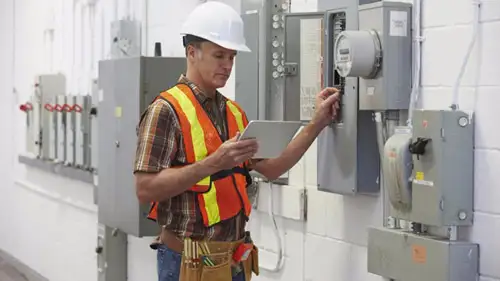
Electrical Testing & Commissioning of Power Systems

Our customized live online or in‑person group training can be delivered to your staff at your location.
  • Live Online
  • 12 hours Instructor-led
  • Group Training Available
Regular Price:
$599
Coupon Price:
$499
Reserve Your Seat Today
Billions of dollars are needed to shore up the faltering North American power grid if more big blackouts are to be avoided, but the incentives needed to lure that kind of cash are missing, energy analysts say.

"We need between $50 billion and $100 billion over several years to upgrade the nation's transmission system," said Kurt Yeager, president and chief executive officer at the Electric Power Research Institute (EPRI) in Palo Alto, California.

Thursday's blackout, whose cause is still unknown, cut power to about 50 million people along a swath stretching from Michigan to New England, clobbering such major cities as Detroit, Cleveland, New York, Toronto, and the Canadian capital of Ottawa.

The investigation to pinpoint the cause is focusing on three power transmission lines near Cleveland, Ohio.

On Friday, U.S. President George W. Bush called the blackout a wake-up call showing an acute need to modernize the high-voltage electric system that carries energy from power plants to the nation's cities and towns.

Yeager and other analysts said the United States had built plenty of power plants in recent years but ignored the vast network of lines that move electricity to where it is most needed, a recipe for overloading lines and bringing down the system.

EPRI, a non-profit energy research consortium, estimates U.S. power demand has surged 30 percent over the past decade, while capacity of high-voltage transmission lines grew just 15 percent.

RULES, CONGRESS

Energy analysts for years have blamed the lack of investment in transmission networks, the high-voltage power lines that ship electrons across long distances, on a patchwork of federal and state rules

"One of the big problems is the grid rules are not consistent and this has prevented the incentives that are needed to increase investments," said William Hogan, a professor of public policy at Harvard University.

The medley of power grid rules makes it more difficult for regional grid operators to quickly coordinate when unexpected problems arise in their regions, like power plant outages, Hogan said.

Unlike the power generation side of the electricity business, transmission lines remain tightly regulated, scaring off investors with meager returns.

The result is a major rift in business, with big money thrown at new power plants and minimal investment in the power lines themselves, an unacceptable imbalance back in the days when utilities managed both sides of the industry and reliability was paramount.

Federal efforts to boost investments in power lines by creating standardized power grid rules have run into major roadblocks in Congress.

Lawmakers and state regulators in low-cost power states, like Kentucky, have thwarted efforts by the Federal Energy Regulatory Commission to standardize grid rules by combining transmission grids into super-regional groups.

Opponents say they have nothing to gain from a single set of rules that could force retail and commercial customers to pony up money for power line upgrades that will largely benefit customers in other high-cost power states.

Related News

Manitoba Hydro scales back rate increase next year

Manitoba Hydro 3.5 Percent Rate Increase proposes a smaller electricity rate hike under Public Utilities Board oversight to bolster financial reserves, address debt and Bipole III costs, amid shifting export sales and water flow conditions.


Key Points

It is Manitoba Hydro's proposed 3.5% electricity rate hike for 2019-20 to shore up finances under PUB oversight.

✅ PUB review sought without lengthy hearing

✅ Revenue boost forecast at 59 million dollars

✅ Natural gas rates flat; class shifts adjust bills


Manitoba Hydro is scaling back its rate hike request for next year, instead of the annual 7.9 per cent hikes the Crown corporation previously said it would need until 2023-24 to address debt. 

Hydro is asking the Public Utilities Board for a 3.5 per cent rate increase next year, which would take effect on April 1.

In last week's application, Hydro said its new board is reviewing the corporation's financial picture. Once that is complete, the utility expects to submit a new multi-year rate plan in late 2019 that addresses the organization's long-term future.

"It's too speculative at this point to discuss any possible future rate increases," spokesperson Bruce Owen said in an email.

The proposed increase next year is similar to other jurisdictions and nearly in line with the Public Utilities Board's decision to allow an average 3.6 per cent jump in electricity rates in 2018-19, which began this summer.

"The requested 3.5 per cent rate increase … generates a modest level of net income under average water flow conditions that will assist in gradually building the revenue base and reduce the risk of the corporation incurring a loss" in 2019-20, the rate application said.

If approved, consumers would face their second rate increase from Hydro in under a year.

Crown Services Minister Colleen Mayer said she's sympathetic to customers bracing for another rate increase amid NL rate hike concerns that far exceeds the rate of inflation.

"I hear that, very clearly," she said. "The NDP left us with an insurmountable problem — we're trying to fix that."

Hydro goes to court over special rate class for First Nations residents in Manitoba

National Energy Board OK's Manitoba-Minnesota Transmission Project

Next year's rate increase is projected to bring in $59 million of revenue, boosting the Crown corporation's financial reserves by $31 million.

Without it, the utility would deal with a net loss, it said.

This time, Hydro officials are asking PUB to forgo a rate hearing, suggesting neither itself nor the board has the resources for a lengthy six- to nine-month process to review an application where not much has changed financially and would generate a "minimum level of net income," Hydro said in a letter to the board.

The short-term rate relief, the letter recommends, should be "awarded in a timely and cost-effective manner, recognizing that the corporation's long-term financial forecasts will be finalized and available for review" in late 2019.

Hydro's net income next year will be lower than projected, the rate application said, due to a reduction in export sales and increases in depreciation and financing costs from Bipole III.

"Even though they had a total implosion of their previous board, on this very issue, they haven't learned lessons and they continue to be cheerleaders for these rapid rate increases," Kinew said, referring to the exodus of every board member but one earlier this year.

Manitoba Hydro's burgeoning debt surpasses $19 billion

On natural gas, Manitoba Hydro is asking PUB for no rate increase for the next two years.

There will, however, be some changes in rates in different customer classes, Owen said, resulting in modest rate reductions for mainly residential customers and increases for customers who use a lot of natural gas.

The corporation also wants to stop collecting fees to support the furnace replacement program. The initiative will continue with existing fees.


Related News

View more

British Columbians can access more in EV charger rebates

B.C. EV Charging Rebates boost CleanBC incentives as NRCan and ZEVIP funding covers up to 75% of Level 2 and DC fast-charger purchase and installation costs for homes, workplaces, condos, apartments, and fleet operators.


Key Points

Incentives in B.C. cover up to 75% of Level 2 and DC fast charger costs for homes, workplaces, and fleets.

✅ Up to 75% back; Level 2 max $5,000; DC fast max $75,000 for fleets.

✅ Eligible sites: homes, workplaces, condos, apartments, fleet depots.

✅ Funded by CleanBC with NRCan ZEVIP; time-limited top-up.


The Province and Natural Resources Canada (NRCan) are making it more affordable for people to install electric vehicle (EV) charging stations in their homes, businesses and communities, as EV demand ramps up across the province.

B.C. residents, businesses and municipalities can receive higher rebates for EV charging stations through the CleanBC Go Electric EV Charger Rebate and Fleets programs. For a limited time, funding will cover as much as 75% of eligible purchase and installation costs for EV charging stations, which is an increase from the previous 50% coverage.

“With electric vehicles representing 13% of all new light-duty vehicles sold in B.C. last year, our province has the strongest adoption rate of electric vehicles in Canada. We’re positioning ourselves to become leaders in the EV industry,” said Bruce Ralston, B.C.’s Minister of Energy, Mines and Low Carbon Innovation. “We’re working with our federal partners to increase rebates for home, workplace and fleet charging, and making it easier and more affordable for people to make the switch to electric vehicles.”

With a $2-million investment through NRCan’s Zero-Emission Vehicle Infrastructure Program (ZEVIP) to top up the Province’s EV Charger Rebate program, workplaces, condominiums and apartments can get a rebate for a Level 2 charging station for as much as 75% of purchase and installation costs to a maximum of $5,000. As many as 360 EV chargers will be installed through the program.

“We’re making electric vehicles more affordable and charging more accessible where Canadians live, work and play,” said Jonathan Wilkinson, federal Minister of Natural Resources. “Investing in more EV chargers, like the ones announced today in British Columbia, will put more Canadians in the driver’s seat on the road to a net-zero future and help achieve our climate goals.”

Through the CleanBC Go Electric Fleets program and in support of B.C. businesses that own and operate fleet vehicles, NRCan has invested $1.54 million through ZEVIP to top up rebates. Fleet operators can get combined rebates from NRCan and the Province for a Level 2 charging station as much as 75% to a maximum of $5,000 of purchase and installation costs, and 75% to a maximum of $75,000 for a direct-current, fast-charging station. As many as 450 EV chargers will be installed through the program.

CleanBC is a pathway to a more prosperous, balanced and sustainable future. It supports government’s commitment to climate action to meet B.C.’s emission targets and build a cleaner, stronger economy.

Quick Facts:

  • A direct-current fast charger on the BC Electric Highway allows an EV to get 100-300 kilometres of range from 30 minutes of charging.
  • Faster chargers, which give more range in less time, are coming out every year.
  • A Level 2 charger allows an EV to get approximately 30 kilometres of range per hour of charging.
  • It uses approximately the same voltage as a clothes dryer and is usually installed in homes, workplaces or for fleets to get a faster charge than a regular outlet, or in public places where people might park for a longer time.
  • A key CleanBC action is to strengthen the Zero-Emission Vehicles Act to require light-duty vehicle sales to be 26% zero-emission vehicles (ZEVs) by 2026, 90% by 2030 and 100% by 2035, five years ahead of the original target.
  • At the end of 2021, B.C. had more than 3,000 public EV charging stations and almost 80,000 registered ZEVs.

Learn More:

To learn more about home and workplace EV charging-station rebates, eligibility and application processes, visit: https://goelectricbc.gov.bc.ca/   

To learn more about the Fleets program, visit: https://pluginbc.ca/go-electric-fleets/    

To learn more about Natural Resources Canada’s Zero-Emission Vehicle Infrastructure Program, visit:
https://www.nrcan.gc.ca/energy-efficiency/transportation-alternative-fuels/zero-emission-vehicle-infrastructure-program/21876


Related News

View more

Toshiba, Tohoku Electric Power and Iwatani start development of large H2 energy system

Fukushima Hydrogen Energy System leverages a 10,000 kW H2 production hub for grid balancing, demand response, and renewable integration, delivering hydrogen supply across Tohoku while supporting storage, forecasting, and flexible power management.


Key Points

A 10,000 kW H2 project in Namie for grid balancing, renewable integration, and regional hydrogen supply.

✅ 10,000 kW H2 production hub in Namie, Fukushima

✅ Balances renewable-heavy grids via demand response

✅ Supported by NEDO; partners Toshiba, Tohoku Electric, Iwatani


Toshiba Corporation, Tohoku Electric Power Co. and Iwatani Corporation have announced they will construct and operate a large-scale hydrogen (H2) energy system in Japan, based on a 10,000 kilowat class H2 production facility, which reflects advances in PEM hydrogen R&D worldwide.

The system, which will be built in Namie-Cho, Fukushima, will use H2 to offset grid loads and deliver H2 to locations in Tohoku and beyond, while complementary approaches like power-to-gas storage in Europe demonstrate broader storage options, and will seek to demonstrate the advantages of H2 as a solution in grid balancing and as a H2 gas supply.

The product has won a positive evaluation from Japan’s New Energy and Industrial Technology Development Organisation (NEDO), and its continued support for the transition to the technical demonstration phase. The practical effectiveness of the large-scale system will be determined by verification testing in financial year 2020, even as interest grows in nuclear beyond electricity for complementary services.

The main objectives of the partners are to promote expanded use of renewable energy in the electricity grid, including UK offshore wind investment by Japanese utilities, in order to balance supply and demand and process load management; and to realise a new control system that optimises H2 production and supply with demand forecasting for H2.

Hiroyuki Ota, General Manager of Toshiba’s Energy Systems and Solutions Company, said, “Through this project, Toshiba will continue to provide comprehensive H2 solutions, encompassing all processes from the production to utilisation of hydrogen.”

Manager of Tohoku Electric Power Co., Ltd, Mitsuhiro Matsumoto, added, “We will study how to use H2 energy systems to stabilize electricity grids with the aim of increasing the use of renewable energy and contributing to Fukushima.”

Moriyuki Fujimoto, General Manager of Iwatani Corporation, commented, “Iwatani considers that this project will contribute to the early establishment of a H2 economy that draws on our experience in the transportation, storage and supply of industrial H2, and the construction and operation of H2stations.”

Japan’s Ministry of Economy, Trade and Industry’s ‘Long-term Energy Supply and Demand Outlook’ targets increasing the share of renewable energy in Japan’s overall power generation mix from 10.7% in 2013 to 22-24% by 2030. Since output from renewable energy sources is intermittent and fluctuates widely with the weather and season, grid management requires another compensatory power source, as highlighted by a near-blackout event in Japan. The large hydrogen energy system is expected to provide a solution for grids with a high penetration of renewables.


Related News

View more

Leading Offshore Wind Conference to Launch National Job Fair

OSW CareerMatch Offshore Wind Job Fair convenes industry leaders, supply chain employers, and skilled candidates at IPF 2020 in Providence, Rhode Island, spotlighting workforce development, training programs, and near-term hiring for U.S. offshore wind projects.


Key Points

An IPF 2020 job fair connecting offshore wind employers, advancing workforce development in Providence, RI.

✅ National job fair at IPF 2020, Providence, RI

✅ Connects supply chain employers with skilled candidates

✅ Includes a workforce development and education summit


The Business Network for Offshore Wind, the leading non-profit advocate for U.S. offshore wind at the state, federal and global levels, amid a U.S. grid warning about coronavirus impacts, will host its seventh annual International Partnership Forum (IPF) on April 21-24, 2020 in Providence, Rhode Island. 

New this year: the first-ever national offshore wind industry job fair plus a half-day workforce development summit, in partnership with Skills for Rhode Island’s Future. The OSW CareerMatch, will showcase jobs at top-tier companies seeking to grow the workforce of the future, informed by young people's interest in electricity careers, and recruit qualified candidates. The Offshore Wind Workforce Development and Education Summit, an invitation-only event, will bring together educators, stakeholders, and industry leaders to address current energy training programs, identify industry employment needs, required skillsets, and how organizations can fulfill these near-term needs. CareerMatch will take place 8:30 a.m. to 1:00 p.m. on Tuesday, April 21, and the Workforce Summit from 12:30 p.m. to 4:00 p.m., both at the Rhode Island Convention Center. 

“The U.S. offshore wind industry has reached the stage that, in order to successfully develop and meet new project demands, will require an available and qualified workforce,” said Liz Burdock, CEO and president of the Business Network for Offshore Wind, noting worker safety concerns in other energy sectors. “This first-ever national Job Fair will allow top-tier supply chain companies to connect with skilled individuals to discuss projects that are going on as they speak.” 

“Hosting the first-of-its-kind offshore wind energy job fair in The Ocean State is apropos,” said Nina Pande, executive director of Skills for Rhode Island’s Future, as future of work investments accelerate across the electricity sector. “Our organization is thrilled to have the unique opportunity to help convene talent at OSW CareerMatch to engage with the employers across the offshore wind supply chain.”

The annual IPF conference is the premier event for the offshore wind supply chain, which is now projected to be a $70 billion revenue opportunity through 2030. Fully developing this supply chain will foster local economic growth, provide thousands of jobs, adapt to shifts like working from home electricity demand, and help offshore wind energy meet its potential. If fully built out worldwide, offshore wind could power 18 times the world’s current electricity needs.    

The exhibit and conference sells out every year and is again on track to draw over 2,500 industry professionals representing over 575 companies, all focused on sharing valuable insights on how to move the emerging U.S. wind industry forward, including operational resilience such as on-site staffing plans during the outbreak. The full conference schedule may be seen online here. More details, including special guest speakers, will be announced soon.


Related News

View more

Chinese-built electricity poles plant inaugurated in South Sudan

Juba Power Distribution Expansion accelerates grid rehabilitation in South Sudan, adding concrete poles, medium and low voltage networks, and LED street lighting, funded by AfDB and executed by Power China for reliable, affordable electricity.


Key Points

A project to upgrade Juba's grid with concrete poles, MV-LV networks, and LED lighting for reliable, affordable power.

✅ 13,350 concrete poles produced locally for network rollout

✅ Medium and low voltage network rehabilitation and expansion

✅ LED street lighting and customer care improvements funded by AfDB


The South Sudan government has launched a factory producing concrete poles that will facilitate an ambitious project done by a Chinese company to rehabilitate and expand the Power Distribution System in Juba, its capital.

The Minister of Dams and Electricity, Dhieu Mathok, said that the factory, rented by Power China, will produce some 13,350 poles for the electricity distribution in the capital and other states.

"The main objective of this project is to increase the supply capacity and reliability of the power distribution system in Juba. Access to the grid will replace the use of generators by the population, allow supply of energy at more affordable price and, hence contribute toward economic growth and poverty eradication in South Sudan," Mathok said during the inauguration of the plant along the Yei road in Juba.

#google#

He disclosed that it will help solve the problem associated with non-availability of concrete poles for the project and to mitigate the risk of importing poles from other countries.

"This factory will create positive impact on the construction of the national grid in South Sudan. It is owned by South Sudanese business people but currently it has been taken over by Power China for a brief period of one year," he said.

South Sudan is largely generator driven economy with continued electricity blackout, and across the continent initiatives like Cape Town's municipal power build-out illustrate alternative approaches, in the wake of the collapse of the generator power plant operated by the South Sudan Electricity Corporation (SSEC) in 2013.

Wang Cun, an official with Power China said they got the contract to build the electricity project in June 2016 and that they will continue to support South Sudanese staff with skills and knowledge, drawing on advances such as PEM green hydrogen R&D that point to future low-carbon options, and also work with the government on several major power projects.

"We have achieved much from these projects and we also suffered much from the instability and continuous conflicts all these years, but we confirm and believe the year of 2018 will be a year of peace and development in South Sudan," Wang said, adding that the company has been operating in South Sudan since 2009.

He disclosed that Power China has conducted several projects before South Sudan won independence from Sudan in 2011 such as the peace road project from Renk to Malakal, Maridi water plant and Malakal municipal road projects.

Wang said they will immediately reorganize all necessary resources to increase post-production capacity and immediately shall commence the erection of these poles to all corners of Juba city and start the distribution.

"We shall do as we did before to recruit more local technicians, engineers and laborers during the construction period, so that they are there in place for similar projects in the near future. We shall make more efforts to improve these local staffs' working environment and to realize sustainable development of Power China and Sino-hydro in South Sudan," said Wang.

Power China has been committing itself in the economic development of South Sudan and has signed eight commercial contracts with the government of South Sudan since independence like the Juba-hydro power project and the Tharjiath thermal power plant project, while in China projects such as the Lawa hydropower station demonstrate ongoing hydropower expertise that can inform regional work.

Liu Xiaodong, the Charge d'Affaires at the Chinese embassy in South Sudan, said Power China has been working very hard in the engineering and procurement in the earlier stage of the project, and as China expands energy ties such as nuclear cooperation with Cambodia that demonstrate broader engagement, also thanked the South Sudan government and the African Development Bank for their strong support.

Liu added upon completion Juba will have an upgraded power distribution system with 2,250 lighting points along the main roads in the capital and lamps will be LED ones.

The project falls under the Juba Power Distribution System Rehabilitation and Expansion Project, which was funded by the African Development Bank (AfDB) and has undertaken an AfDB review of a Senegal power plant to inform regional energy decisions.

It comprises of five different lots like Rehabilitation of Diesel plant substation, Rehabilitation and Expansion of medium voltage network, low voltage network, and Rehabilitation and Expansion of street lighting and improvement of customer care.


Related News

View more

Hydro One stock has too much political risk to recommend, Industrial Alliance says

Hydro One Avista merger faces regulatory scrutiny in Washington, Oregon, and Idaho, as political risk outweighs defensive utilities fundamentals like stable cash flow, rate base growth, EPS outlook, and a near 5% dividend yield.


Key Points

A planned Hydro One-Avista acquisition awaiting key state approvals amid elevated political and regulatory risk.

✅ Hold rating, $24 price target, 28.1% implied return

✅ EPS forecast: $1.27 in 2018; $1.38 in 2019

✅ Defensive utility: stable cash flow, 4-6% rate base growth


A seemingly positive development for Hydro One is overshadowed by ongoing political and regulatory risk, as seen after the CEO and board ouster, Industrial Alliance Securities analyst Jeremy Rosenfield says.

On October 4, staff from the Washington Utilities and Transportation Commission filed updated testimony in support of the merger of Hydro One and natural gas distributor Avista, which had previously received U.S. antitrust clearance from federal authorities.

The merger, which was announced in July of 2017 has received the green light from federal and key states, with Washington, Oregon and Idaho being exceptions, though the companies would later seek reconsideration from U.S. regulators in the process.

But Rosenfield says even though decisions from Oregon and Idaho are expected by December, there are still too many unknowns about Hydro One to recommend investors jump into the stock.


Hydro One stock defensive but risky

“We continue to view Hydro One as a fundamentally defensive investment, underpinned by (1) stable earnings and cash flows from its regulated utility businesses (2) healthy organic rate base and earning growth (4-6%/year through 2022) and (3) an attractive dividend (~5% yield, 70-80% target payout),” the analyst says. “In the meantime, and ahead of key regulatory approvals in the AVA transaction, we continue to see heightened political/regulatory risk as an overhand on the stock, outweighing Hydro One’s fundamentals in the near term.”

In a research update to clients today, Rosenfield maintained his “Hold” rating and one year price target of $24.00 on Hydro One, implying a return of 28.1 per cent at the time of publication.

Rosenfield thinks Hydro One will generate EPS of $1.27 per share in fiscal 2018, even though its Q2 profit plunged 23% as electricity revenue fell. He expects that number will improve to EPS of $1.38 a share the following year.


Related News

View more

Sign Up for Electricity Forum’s Newsletter

Stay informed with our FREE Newsletter — get the latest news, breakthrough technologies, and expert insights, delivered straight to your inbox.

Electricity Today T&D Magazine Subscribe for FREE

Stay informed with the latest T&D policies and technologies.
  • Timely insights from industry experts
  • Practical solutions T&D engineers
  • Free access to every issue

Live Online & In-person Group Training

Advantages To Instructor-Led Training – Instructor-Led Course, Customized Training, Multiple Locations, Economical, CEU Credits, Course Discounts.

Request For Quotation

Whether you would prefer Live Online or In-Person instruction, our electrical training courses can be tailored to meet your company's specific requirements and delivered to your employees in one location or at various locations.