PPL under fire by state regulators

By Associated Press


NFPA 70e Training - Arc Flash

Our customized live online or in‑person group training can be delivered to your staff at your location.
  • Live Online
  • 6 hours Instructor-led
  • Group Training Available
Regular Price:
$199
Coupon Price:
$149
Reserve Your Seat Today
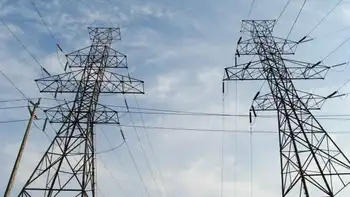
State authorities are pushing federal regulators to force PPL Montana to sell cheaper electricity in Montana.

Over the past 12 months, the state’s Consumer Counsel and attorneys hired by the office have been trying to get the Federal Energy Regulatory Commission to revoke PPL Montana’s “market-based rate authority.”

PPL Montana, the major supplier of electricity for the state after buying the former Montana Power Co. power generating units, could be forced to charge its Montana customers much lower, cost-based prices for wholesale power.

“In our view, there is a realistic chance that the (rate authority) could be revoked, and there could be benefits in terms of lower generation costs for our market,” said Bob Nelson, with the Consumer Counsel.

They argue that PPL owns and operates more than 90 percent of the power sold in MontanaÂ’s unregulated market, controlling a near monopoly over in-state wholesale power sales.

The Consumer Counsel cites spiraling energy costs in the state as an example of abuse of the monopoly.

PPL, the subsidiary of a Pennsylvania-based energy conglomerate, disputes the claim.

“(Nelson’s) filing seems to be based on a lot of conjecture, and not any real legal or economic theory,” said David Hoffman, head of external affairs for the company.

PPL sells up to 450 megawatts of wholesale power to NorthWestern Energy, the stateÂ’s largest utility, with nearly 300,000 retail electric customers. NorthWestern Energy is a division of NorthWestern Corp., the South Dakota firm on the verge of bankruptcy.

The two companies bought different pieces of the now-defunct Montana Power Co.

Nelson said his office will file an analysis later this year to back up his claims that PPL Montana does have “market dominance” in Montana, and that no real competition exists.

He said federal regulators have been cracking down on firms caught manipulating energy prices in the West, and thinks the time is ripe to go after PPL.

But Hoffman said PPL has never been named by FERC as a market manipulator, and the firm will fight to maintain its authority to charge market rates.

Related News

Massive power line will send Canadian hydropower to New York

Twin States Clean Energy Link connects New England to Hydro-Quebec via a 1,200 MW transmission line, DOE-backed capacity, underground segments, existing corridors, boosting renewable energy reliability across Vermont and New Hampshire with cross-border grid flexibility.


Key Points

DOE-backed 1,200 MW line linking Hydro-Quebec to New England, adding clean capacity with underground routes.

✅ 1,200 MW cross-border capacity for the New England grid

✅ Uses existing corridors; underground in VT and northern NH

✅ DOE capacity contract lowers risk and spurs investment


A proposal to build a new transmission line to connect New England with Canadian hydropower is one step closer to reality.

The U.S. Department of Energy announced Monday that it has selected the Twin States Clean Energy Link as one of three transmission projects that will be part of its $1.3 billion cross-border transmission initiative to add capacity to the grid.

WBUR is a nonprofit news organization. Our coverage relies on your financial support. If you value articles like the one you're reading right now, give today.

Twin States is a proposal from National Grid, a utility company that serves Massachusetts, New York, and Rhode Island, and also owns transmission in England and Wales as the region advances projects like the Scotland-to-England subsea link that expand renewable flows, and the non-profit Citizens Energy Corporation.

The transmission line would connect New England with power from Hydro-Quebec, moving into the United States from Canada in Northern Vermont and crossing into New Hampshire near Dalton. It would run through parts of Grafton, Merrimack, and Hillsborough counties, routing through a substation in Dunbarton and ending at a proposed new substation in Londonderry. (Here's a map of the Twin States proposal.)

The federal funding will allow the U.S. Department of Energy to purchase capacity on the planned transmission line, which officials say reduces the risk for other investors and can help encourage others to purchase capacity.

The project has gotten support from local officials in Vermont and New Hampshire, but there are still hurdles to cross. The contract negotiation process is beginning, National Grid said, and the proposal still needs approvals from regulators before construction could begin.

First Nations communities in Canada have opposed transmission lines connecting Hydro-Quebec with New England in the past, and the company has faced scrutiny from environmental groups.

What would Twin States look like?
Transmission projects, like the failed Northern Pass proposal, have been controversial in New England, though the Great Northern Transmission Line progressed in Minnesota.

But Reihaneh Irani-Famili, vice president of capital delivery, project management and construction at National Grid, said this one is different because the developers listened to community concerns before planning the project.

“They did not want new corridors of infrastructure, so we made sure that we're using existing right of way,” she said. “They did not want the visual impact and some of the newer corridors of infrastructure, we're making sure we're undergrounding portions of the line.”

In Vermont and northern New Hampshire, the transmission lines would be buried underground along state roads. South of Littleton, they would be located within existing transmission corridors.

The developers say the lines could provide 1,200 megawatts of transmission capacity. The project would have the ability to carry electricity from hydro facilities in Quebec to New England, and would also be able to bring electricity from New England into Quebec, a step toward broader macrogrid connectivity across regions.

“Those hydro dams become giant green batteries for the region, and they hold that water until we need the electrons,” Irani-Famili said. “So if you think about our energy system not as one that sees borders, but one that sees resources, this is connecting the Quebec resources to the New England resources and helping all of us get into that cleaner energy future with a lot less build than we otherwise would have.”

Irani-Famili says the transmission line could help facilitate more clean energy resources like offshore wind coming online. In a report released last week by New Hampshire’s Department of Energy, authors said importing Canadian hydropower could be one of the most cost-effective ways to move away from fossil fuels on the electric grid.

National Grid estimates the project will help save energy customers $8.3 billion in its first 12 years. The developers are constructing a $260 million “community benefits plan” that would take some profits from the transmission line and give that money back to communities that host the transmission lines and environmental justice communities in New England.


Related News

View more

Ontario energy minister asks for early report exploring a halt to natural gas power generation

Ontario Natural Gas Moratorium gains momentum as IESO weighs energy storage, renewables, and demand management to meet rising electricity demand, ensure grid reliability, and advance zero-emissions goals while long-term capacity procurements proceed.


Key Points

A proposed halt on new gas plants as IESO assesses storage and renewables to maintain reliability and cut emissions.

✅ Minister seeks interim IESO report by Oct. 7

✅ Near-term contracts extend existing gas plants for reliability

✅ Long-term procurements emphasize storage, renewables, conservation


Ontario's energy minister says he doesn't think the province needs any more natural gas generation and has asked the electricity system regulator to speed up a report exploring a moratorium.

Todd Smith had previously asked the Independent Electricity System Operator (IESO) to report back by November on the feasibility of a moratorium and a plan to get to zero emissions in the electricity sector.

He has asked them today for an interim report by Oct. 7 so he can make a decision on a moratorium before the IESO secures contracts over the long term for new power generation.

"I've asked the IESO to speed up that report back to us so that we can get the information from them as to what the results would be for our grid here in Ontario and whether or not we actually need more natural gas," Smith said Tuesday after question period.

"I don't believe that we do."

Smith said that is because of the "huge success" of two updates provided Tuesday by the IESO to its attempts to secure more electricity supply for both the near term and long term. Demand is growing by nearly two per cent a year, while Ontario is set to lose a significant amount of nuclear generation, including the planned shutdown of the Pickering nuclear station over the next few years.

'For the near term, we need them,' regulator says
The regulator today released a list of 55 qualified proponents for those long-term bids and while it says there is a significant amount of proposed energy storage projects on that list, there are some new gas plants on it as well.

Chuck Farmer, the vice-president of planning, conservation and resource adequacy at the IESO, said it's hoped that the minister makes a decision on whether or not to issue a moratorium on new gas generation before the regulator proceeds with a request for proposals for long-term contracts.

The IESO also announced six new contracts — largely natural gas, with a small amount of wind power and storage — to start in the next few years. Farmer noted that these contracts were specifically for existing generators whose contracts were ending, while the province is exploring new nuclear plants for the longer term.

"When you look at the pool of generation resources that were in that situation, the reality is most of them were actually natural gas plants, and that we are relying on the continued use of the natural gas plants in the transition," he said in an interview. 

"So for the near term, we need them for the reliability of the system."

The upcoming request for proposals for more long-term contracts hopes to secure 3,500 megawatts of capacity, as Ontario faces an electricity shortfall in the coming years, and Farmer said the IESO plans to run a series of procurements over the next few years.

Opposition slams reliance on natural gas
The NDP and Greens on Tuesday criticized Ontario's reliance in the near term on natural gas because of its environmental implications.

The IESO has said that due to natural gas, greenhouse gas emissions from the electricity sector are set to increase for the next two decades, but by about 2038 it projects the net reductions from electric vehicles will offset electricity sector emissions.

Green Party Leader Mike Schreiner said it makes no sense to ramp up natural gas, both for the climate and for people's wallets.

"The cost of wind and solar power is much lower than gas," he said.

Ontario quietly revises its plan for hitting climate change targets
"We're in a now-or-never moment to address the climate crisis and the government is failing to meet this moment."

Interim NDP Leader Peter Tabuns said Ontario wouldn't be in as much of a supply crunch if the Progressive Conservative government hadn't cancelled 750 green energy contracts during their first term.

The Tories argued the province didn't need the power and the contracts were driving up costs for ratepayers, amid debate over whether greening the grid would be affordable.

The IESO said it is also proposing expanding conservation and demand management programs, as a "highly cost-effective" way to reduce strain on the system, though it couldn't say exactly what is on the table until the minister accepts the recommendation.


Related News

View more

California’s Solar Power Cost Shift: A Misguided Policy Threatening Energy Equity

California Rooftop Solar Cost Shift examines PG&E rate hikes, net metering changes, and utility infrastructure spending impacts on low-income households, distributed generation, and clean energy adoption, potentially raising bills and undermining grid resilience.


Key Points

A claim that rooftop solar shifts fixed grid costs to others; critics cite PG&E rates, avoided costs, and impacts.

✅ PG&E rates outpace national average, underscoring cost drivers.

✅ Net metering cuts risk burdening low- and middle-income homes.

✅ Distributed generation avoids infrastructure spend and grid strain.


California is grappling with soaring electricity prices across the state, with Pacific Gas & Electric (PG&E) rates more than double the national average and increasing at an average of 12.5% annually over the past six years. In response, Governor Gavin Newsom issued an executive order directing state energy agencies to identify ways to reduce power costs. However, recent policy shifts targeting rooftop solar users may exacerbate the problem rather than alleviate it.

The "Cost Shift" Theory

A central justification for these pricing changes is the "cost shift" theory. This theory posits that homeowners with rooftop solar panels reduce their electricity consumption from the grid, thereby shifting the fixed costs of maintaining and operating the electrical grid onto non-solar customers. Proponents argue that this leads to higher rates for those without solar installations.

However, this theory is based on a flawed assumption: that PG&E owns 100% of the electricity generated by its customers and is entitled to full profits even for energy it does not deliver. In reality, rooftop solar users supply only about half of their energy needs and still pay for the rest. Moreover, their investments in solar infrastructure reduce grid strain and save ratepayers billions by avoiding costly infrastructure projects and reducing energy demand growth, aligning with efforts to revamp electricity rates to clean the grid as well.

Impact on Low- and Middle-Income Households

The majority of rooftop solar users are low- and middle-income households. These individuals often invest in solar panels to lower their energy bills and reduce their carbon footprint. Policy changes that undermine the financial viability of rooftop solar disproportionately affect these communities, and efforts to overturn income-based charges add uncertainty about affordability and access.

For instance, Assembly Bill 942 proposes to retroactively alter contracts for millions of solar consumers, cutting the compensation they receive from providing energy to the grid, raising questions about major changes to your electric bill that could follow if their home is sold or transferred. This would force those with solar leases—predominantly lower-income individuals—to buy out their contracts when selling their homes, potentially incurring significant financial burdens.

The Real Drivers of Rising Energy Costs

While rooftop solar users are being blamed for rising electricity rates, calls for action have mounted as the true culprits lie elsewhere. Unchecked utility infrastructure spending has been a significant factor in escalating costs. For example, PG&E's rates have increased rapidly, yet the utility's spending on infrastructure projects has often been criticized for inefficiency and lack of accountability. Instead of targeting solar users, policymakers should scrutinize utility profit motives and infrastructure investments to identify areas where costs can be reduced without sacrificing service quality.

California's approach to addressing rising electricity costs by targeting rooftop solar users is misguided. The "cost shift" theory is based on flawed assumptions and overlooks the substantial benefits that rooftop solar provides to the grid and ratepayers. To achieve a sustainable and equitable energy future, the state must focus on controlling utility spending, promoting clean energy access for all, especially as it exports its energy policies across the West, and ensuring that policies support—not undermine—the adoption of renewable energy technologies.


Related News

View more

Don't be taken in by scammers threatening to shut off electricity: Manitoba Hydro

Manitoba Hydro Phone Scam targets small businesses with disconnection threats, prepaid card payments, caller ID spoofing, phishing texts, and door-to-door fraud; hang up, verify your account directly, and never share banking information.


Key Points

A scam where callers threaten disconnection and demand prepaid cards; verify account status directly with Manitoba Hydro.

✅ Hang up and call Manitoba Hydro at 1-888-624-9376 to verify.

✅ Never pay by prepaid cards, gift cards, or crypto.

✅ Hydro will not cut power on one-hour notice.


Manitoba Hydro is warning customers, particularly small business owners, to be wary of high-pressure scammers, as Ontario utilities warn of scams in other provinces, threatening to shut off their electricity.

The callers demand the customer to make immediate payment by a prepaid card. Often, the calls are made in the middle of the day at a busy time, frightening the customer with aggressive threats about disconnection, as hydro disconnections have made headlines elsewhere, says hydro spokesman Bruce Owen.

"They tell them 'we have a truck on the way to cut off your power. If you don't pay in the next hour you're out of luck,'" he said.

"And because these folks have inventory in freezers and they have customers … they're willing to fork over several hundred or even several thousand dollars on a prepaid card to somebody they don't know to keep the lights on."

Maybe the business owners can't recall, with everything happening, including discussions about Hydro One peak rates in Ontario, if they've made their payments on time. They start second-guessing and believing the person on the other line, Owen says.

And they worry about losing thousands of dollars in business if they lose power. So they're more than willing to run out to a store, buy a prepaid debit card and provide the number to the caller.

"Their goal is to manipulate you into sending money before you figure out it's a scam," said Chris McColm, hydro's security and investigations supervisor. "These people are crooks and you should hang up on them."

For any customers that are in arrears, hydro will work with them to resolve the issue, Owen said.

"We do not have to take that extreme measure of cutting off or disconnecting anybody. That's not the business we're in — we don't strong arm people that way," he said.

"Anybody who's threatening to cut off your power with an hour or half-an-hour notice, well it's it's no better than someone waiting around the corner, waiting the club you over the head in the dark of night. That's what they are."


Fraud reports soar

The power utility has recorded a nearly-300 per cent jump in the number of fraud-related complaints this year over 2017. There have been 862 phone, text and e-mail scams and that could still go much higher.

The current statistics from 2018 have only calculated up to Oct. 31. In 2017, there were 221.

That jump in numbers doesn't necessarily mean there are more scammers out there.

It could simply mean people are finally getting wise to fraudsters and reporting it more, Owen says.

"At the same token, we don't hear of everybody who's been taking advantage of because once they've found out that they've been hoodwinked they don't want to tell anybody because they're so embarrassed," he said.

"These scammers can be very convincing and anyone can be victimized," McColm said.

If you are able to think clearly when some high-pressure caller gets you on the line, Owen suggests asking a few simple questions to challenge their legitimacy:

  • What street am I on?
  • What does my business look like? 
  • What's the weather outside right now?

Phone scammers can falsify their caller ID information to make it appear they're calling from a local number, but what you'll find is most of them aren't in Winnipeg or Manitoba and likely not even this country or continent, Owen says.

The key to being safe is simply to never give out banking information, Owen says. It's a message that has been stressed for years and 80-90 per cent of people understand it, but it's that other 10-20 per cent that are still being victimized.And it's not just phone calls. Many other fraud-related complaints to Manitoba Hydro this year concerned unsolicited text messages to customers saying they had been overbilled, or faced retroactive charges elsewhere, and were eligible for a refund.

This scam is also aimed at getting a customer's personal banking information, under the guise of having money put back into their account.

Also, many people, especially seniors living alone, continue to be targeted by aggressive door-to-door fraudsters, and cases like the electricity theft ring in Montreal underscore the risks, McColm says. However, he adds, hydro employees always display photo ID and will never demand to come into a home. 

If you're unsure whether a phone call, text or email is real or a scam, contact Manitoba Hydro at 1-888-624-9376.


Related News

View more

Canadian gold mine cleans up its act with electricity

Electric mining equipment enables zero-emission, diesel-free operations at Goldcorp's Borden mine, using Sandvik battery-electric drills and LHD trucks to cut ventilation costs, noise, and maintenance while improving underground air quality.


Key Points

Battery-powered mining equipment replaces diesel, cutting emissions and ventilation costs in underground operations.

✅ Cuts diesel use, heat load, and noise in underground headings.

✅ Reduces ventilation infrastructure and operating expense.

✅ Improves air quality, worker health, and equipment uptime.


Mining operations get a lot of flack for creating environmental problems around the world. Yet they provide much of the basic material that keeps the global economy humming. Some mining companies are drilling down in their efforts to clean up their acts, exploring solutions such as recovering mine heat for power to reduce environmental impact.

As the world’s fourth-largest gold mining company Goldcorp has received its share of criticism about the impact it has on the environment.

In 2016, the Canadian company decided to do something about it. It partnered with mining-equipment company Sandvik and began to convert one of its mines into an all-electric operation, a process that is expected to take until 2021.

The efforts to build an all-electric mine began with the Sandvik DD422iE in Goldcorp’s Borden mine in Ontario, Canada.

Goldcorp's Borden mine in Borden, Ontario, CanadaGoldcorp's Borden mine in Borden, Ontario, Canada

The machine weighs 60,000 pounds and runs non-stop on a giant cord. It has a 75-kwh sodium nickel chloride battery to buffer power demands, a crucial consideration as power-hungry Bitcoin facilities can trigger curtailments during heat waves, and to move the drill from one part of the mine to another.

This electric rock-chewing machine removes the need for the immense ventilation systems needed to clean the emissions that diesel engines normally spew beneath the surface in a conventional mining operation, though the overall footprint depends on electricity sources, as regions with Clean B.C. power imports illustrate in practice.

These electric devices improve air quality, dramatically reduce noise pollution, and remove costly maintenance of internal combustion engines, Goldcorp says.

More importantly, when these electric boring machines are used across the board, it will eliminate the negative health effects those diesel drills have on miners.

“It would be a challenge to go back,” says big drill operator Adam Ladouceur.

Mining with electric equipment also removes second- or third-highest expenditure in mining, the diesel fuel used to power the drills, said Goldcorp spokesman Pierre Noel, even as industries pursue dedicated energy deals like Bitcoin mining in Medicine Hat to manage power costs. (The biggest expense is the cost of labor.)

Electric load, haul, dump machine at Goldcorp Borden mine in OntarioElectric load, haul, dump machine at Goldcorp Borden mine in Ontario

Aside from initial cost, the electric Borden mine will save approximately $7 million ($9 million Canadian) annually just on diesel, propane and electricity.

Along with various sizes of electric drills and excavating tools, Goldcorp has started using electric powered LHD (load, haul, dump) trucks to crush and remove the ore it extracts, and Sandvik is working to increase the charging speed for battery packs in the 40-ton electric trucks which transport the ore out of the mines, while utilities add capacity with new BC generating stations coming online.


Related News

View more

Pennsylvania residents could see electricity prices rise as much as 50 percent this winter

Pennsylvania Electric Rate Increases hit Peco, PPL, and Pike County, driven by natural gas costs and wholesale power markets; default rate changes, price to compare shifts, and time-of-use plans affect residential bills.


Key Points

Electric default rates are rising across Pennsylvania as natural gas costs climb, affecting Peco, PPL, and Pike customers.

✅ PPL, Peco, and Pike raising default rates Dec. 1

✅ Natural gas costs driving wholesale power prices

✅ Consider standard offer, TOU rates, and efficiency


Energy costs for electric customers are going up by as much as 50% across Pennsylvania next week, the latest manifestation of US electricity price increases impacting gasoline, heating oil, propane, and natural gas.

Eight Pennsylvania electric utilities are set to increase their energy prices on Dec. 1, reflecting the higher cost to produce electricity. Peco Energy, which serves Philadelphia and its suburbs, will boost its energy charge by 6.4% on Dec. 1, from 6.6 cents per kilowatt hour to about 7 cents per kWh. Energy charges account for about half of a residential bill.

PPL Electric Utilities, the Allentown company that serves a large swath of Pennsylvania including parts of Bucks, Montgomery, and Chester Counties, will impose a 26% increase on residential energy costs on Dec. 1, from about 7.5 cents per kWh to 9.5 cents per kWh. That’s an increase of $40 a month for an electric heating customer who uses 2,000 kWh a month.

Pike County Light & Power, which serves about 4,800 customers in Northeast Pennsylvania, will increase energy charges by 50%, according to the Pennsylvania Public Utility Commission.

“All electric distribution companies face the same market forces as PPL Electric Utilities,” PPL said in a statement. Each Pennsylvania utility follows a different PUC-regulated plan for procuring energy from power generators, and those forces can include rising nuclear power costs in some regions, which explains why some customers are absorbing the hit sooner rather than later, it said.

There are ways customers can mitigate the impact. Utilities offer a host of programs and grants to support low-income customers, and some states are exploring income-based fixed charges to address affordability, and they encourage anyone struggling to pay their bills to call the utility for help. Customers can also control their costs by conserving energy. It may be time to put on a sweater and weatherize the house.

Peco recently introduced time-of-use rates — as seen when Ontario ended fixed pricing — that include steep discounts for customers who can shift electric usage to late night hours — that’s you, electric vehicle owners.

There’s also a clever opportunity available for many Pennsylvania customers called the “standard offer” that might save you some real money, but you need to act before the new charges take effect on Dec. 1 to lock in the best rates.

Why are the price hikes happening?
But first, how did we get here?

Energy charges are rising for a simple reason: Fuel prices for power generators are increasing, and that’s driven mostly by natural gas. It’s pushing up electricity prices in wholesale power markets and has lifted typical residential bills in recent years.

“It’s all market forces right now,” said Nils Hagen-Frederiksen, PUC spokesperson. Energy charges are strictly a pass-through cost for utilities. Utilities aren’t allowed to mark them up.

The increase in utility energy charges does not affect customers who buy their energy from competitive power suppliers in deregulated electricity markets. About 27% of Pennsylvania’s 5.9 million electric customers who shop for electricity from third-party suppliers either pay fixed rates, whose price remains stable, or are on a variable-rate plan tied to market prices. The variable-rate electric bills have probably already increased to reflect the higher cost of generating power.

Most New Jersey electric customers are shielded for now from rising energy costs. New Jersey sets annual energy prices for customers who don’t shop for power. Those rates go into effect on June 1 and stay in place for 12 months. The current energy market fluctuations will be reflected in new rates that take effect next summer, said Lauren Ugorji, a spokesperson for Public Service Electric & Gas Co., New Jersey’s largest utility.

For each utility, its own plan
Pennsylvania has a different system for setting utility energy charges, which are also known as the “default rate,” because that’s the price a customer gets by default if they don’t shop for power. The default rate is also the same thing as the “price to compare,” a term the PUC has adopted so consumers can make an apples-to-apples comparison between a utility’s energy charge and the price offered by a competitive supplier.

Each of the state’s 11 PUC-regulated electric utilities prepares its own “default service plan,” that governs the method by which they procure power on wholesale markets. Electric distribution companies like Peco are required to buy the lowest priced power. They typically buy power in blind auctions conducted by independent agents, so that there’s no favoritism for affiliated power generators

Some utilities adjust charges quarterly, and others do it semi-annually. “This means that each [utility’s] resulting price to compare will vary as the market changes, some taking longer to reflect price changes, both up and down,” PPL said in a statement. PPL conducted its semi-annual auction in October, when energy prices were rising sharply.

Most utilities buy power from suppliers under contracts of varying durations, both long-term and short-term. The contracts are staggered so market price fluctuations are smoothed out. One utility, Pike County Power & Light, buys all its power on the spot market, which explains why its energy charge will surge by 50% on Dec. 1. Pike County’s energy charge will also be quicker to decline when wholesale prices subside, as they are expected to next year.

Peco adjusts its energy charge quarterly, but it conducts power auctions semi-annually. It buys about 40% of its power in one-year contracts, and 60% in two-year contracts, and does not buy any power on spot markets, said Richard G. Webster Jr., Peco’s vice president of regulatory policy and strategy.

“At any given time, we’re replacing about a third of our supplied portfolio,” he said.

The utility’s energy charge affects only part of the monthly bill. For a Peco residential electric customer who uses 700 kWh per month, the Dec. 1 energy charge increase will boost monthly bills by $2.94 per month, or 2.9%. For an electric heating customer who uses about 2,000 kWh per month, the change will boost bills $8.40 a month, or about 3.5%, said Greg Smore, a Peco spokesperson.


Related News

View more

Sign Up for Electricity Forum’s Newsletter

Stay informed with our FREE Newsletter — get the latest news, breakthrough technologies, and expert insights, delivered straight to your inbox.

Electricity Today T&D Magazine Subscribe for FREE

Stay informed with the latest T&D policies and technologies.
  • Timely insights from industry experts
  • Practical solutions T&D engineers
  • Free access to every issue

Download the 2025 Electrical Training Catalog

Explore 50+ live, expert-led electrical training courses –

  • Interactive
  • Flexible
  • CEU-cerified