Hydro-Québec's profit slumps 50%

By Montreal Gazette


NFPA 70e Training - Arc Flash

Our customized live online or in‑person group training can be delivered to your staff at your location.

  • Live Online
  • 6 hours Instructor-led
  • Group Training Available
Regular Price:
$199
Coupon Price:
$149
Reserve Your Seat Today
Profit at Hydro-Québec plummeted 50 per cent in the third quarter because of a dramatic drop in lucrative electricity sales to Ontario and the northeastern United States.

Hydro's profit fell to $143 million in the quarter ended Sept. 30 from $287 million last year. Revenues in the quarter were $2.4 billion, off by almost $1 billion from last year.

A cooler summer this year in export markets compared with last year's scorching temperatures, coupled with higher demand in Quebec, explain the sharp decline in revenue and profit in the quarter, Hydro executives explained recently.

Electricity consumption in the province jumped 7.5 terawatt-hours, or 6.6 per cent, in the first nine months of 2003. The increase can be attributed to cold temperatures last winter, higher industrial activity and rising residential demand amid brisk housing construction.

Delivering more power to Quebec customers is slashing the amount of power available for export.

Net exports will fall to about 5 Twh this year from 12.6 Twh in 2002.

Hydro's production arm is required to sell electricity to the utility's distribution arm for sale in Quebec at 2.8 cents a kilowatt hour vs. more than the 6 cents it can typically get on spot export markets.

For the first nine months, Hydro-Québec posted net income of $1.5 billion vs. $1.2 billion in the year-earlier period.

Nine-month revenues fell 12 per cent to $8.7 billion.

Quebec Finance Minister Yves Séguin has called on Hydro to deliver a $2.1-billion dividend to the government for the fiscal year ending March 31.

Hydro-Québec chief financial officer Daniel Leclair reiterated recently the stated position of chief executive André Caillé that: "There's a lot of work to be done to meet (the target). But we're not giving up."

Hydro distribution, the arm responsible for delivering electricity to customers in Quebec, posted a loss of $197 million in the quarter on sales of $6.2 billion.

The utility has applied to government regulators for a three-per-cent rate increase this year and another three per cent in 2004.

Caillé has said rising demand in Quebec will require aggressive action to increase electricity production over the next five years, including speeding up dam projects and building a controversial natural-gas-fired plant at Suroît on the South Shore.

But Hydro critics say the utility can do a much better job on energy conservation.

Hydro's operating expenses climbed by a healthy 8.6 per cent in the third quarter and 2.9 per cent in the nine months.

Caillé has promised to freeze the utility's operating expenses at their 2003 level for the next three years.

Related News
Alberta is a powerhouse for both green energy and fossil fuels

Alberta Renewable Energy Market is accelerating as wind and solar prices fall, corporate PPAs expand, and a deregulated, energy-only system, AESO outlooks, and TIER policy drive investment across the province.


Key Points

An open, energy-only Alberta market where wind and solar growth is driven by corporate PPAs, AESO outlooks, and TIER.

✅ Energy-only, deregulated grid enables private investment

✅ Corporate PPAs lower costs and hedge power price risk

✅ AESO forecasts and TIER policy support renewables


By Chris Varcoe, Calgary Herald

A few things are abundantly clear about the state of renewable energy in Alberta today.

First, the demise of Alberta’s Renewable Electricity Program (REP) under the UCP government isn’t going to see new projects come to a screeching halt.

In fact, new developments are already going ahead.

And industry experts believe private-sector companies that increasingly want to purchase wind or solar power are going to become a driving force behind even more projects in Alberta.

BluEarth Renewables CEO Grant Arnold, who spoke Wednesday at the Canadian Wind Energy Association conference, pointed out the sector is poised to keep building in the province, even with the end of the REP program that helped kick-start projects and triggered low power prices.

“The fundamentals here are, I think, quite fantastic — strong resource, which leads to really competitive wind prices . . . it’s now the cheapest form of new energy in the province,” he told the audience.

“Alberta is in a fundamentally good place to grow the wind power market.”

Unlike other provinces, Alberta has an open, deregulated marketplace, which create opportunities for private-sector investment and renewable power developers as well.

The recent decision by the Kenney government to stick with the energy-only market, instead of shifting to a capacity market, is seen as positive for Alberta's energy future by renewable electricity developers.

There is also increasing interest from corporations to buy wind and solar power from generators — a trend that has taken off in the United States with players such as Google, General Motors and Amazon — and that push is now emerging in Canada.

“It’s been really important in the U.S. for unlocking a lot of renewable energy development,” said Sara Hastings-Simon, founding director of the Business Renewable Centre Canada, which seeks to help corporate buyers source renewable energy directly from project developers.

“You have some companies where . . . it’s what their investors and customers are demanding. I think we will see in Alberta customers who see this as a good way to meet their carbon compliance requirements.

“And the third motivation to do it is you can get the power at a good price.”

Just last month, Perimeter Solar signed an agreement with TC Energy to supply the Calgary-based firm with 74 megawatts from its solar project near Claresholm.

More deals in the industry are being discussed, and it’s expected this shift will drive other projects forward.

There is increasing interest from corporations to buy solar and wind energy directly from generators.

“The single-biggest change has been the price of wind and solar,” Arnold said in an interview.

“Alberta looks really, really bright right now because we have an open market. All other provinces, for regulatory reasons, we can’t have this (deal) . . . between a generator and a corporate buyer of power. So Alberta has a great advantage there.”

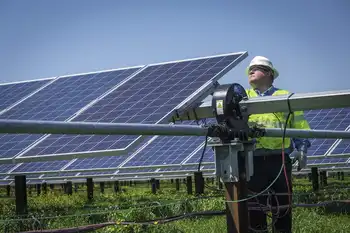
These forces are emerging as the renewable energy industry has seen dramatic change in recent years in Alberta, with costs dropping and an array of wind and solar developments moving ahead, even as solar expansion faces challenges in the province.

The former NDP government had an aggressive target to see green energy sources make up 30 per cent of all electricity generation by 2030.

Last week, the Alberta Electric System Operator put out its long-term outlook, with its base-case scenario projecting moderate demand growth for power over the next two decades. However, the expected load growth — expanding by an average of 0.9 per cent annually until 2039 — is only half the rate seen in the past 20 years.

Natural gas will become the main generation source in the province as coal-fired power (now comprising more than one-third of generation) is phased out.

Renewable projects initiated under the former NDP government’s REP program will come online in the near term, while “additional unsubsidized renewable generation is expected to develop through competitive market mechanisms and support from corporate power purchase agreements,” the report states.

AESO forecasts installed generation capacity for renewables will almost double to about 19 per cent by 2030, with wind and solar increasing to 21 per cent by 2039.

Another key policy issue for the sector will likely come within the next few weeks when the provincial government introduces details of its new Technology Innovation and Emissions Reduction program (TIER).

The initiative will require large industrial emitters to reduce greenhouse gas emissions to a benchmark level, pay into the technology fund, or buy offsets or credits. The carbon price is expected to be around $20 to $30 a tonne, and the system will kick in on Jan. 1, 2020.

Industry players point out the decision to stick with Alberta’s energy-only market along with the details surrounding TIER, and a focus by government on reducing red tape, should all help the sector attract investment.

“It is pretty clear there is a path forward for renewables here in the province,” said Evan Wilson, regional director with the Canadian Wind Energy Association.

All of these factors are propelling the wind and solar sector forward in the province, at the same time the oil and gas sector faces challenges to grow.

But it doesn’t have to be an either/or choice for the province moving forward. We’re going to need many forms of energy in the coming decades, and Alberta is an energy powerhouse, with potential to develop more wind and solar, as well as oil and natural gas resources.

“What we see sometimes is the politics and discussion around renewables or oil becomes a deliberate attempt to polarize people,” Arnold added.

“What we are trying to show, in working in Alberta on renewable projects, is it doesn’t have to be polarizing. There are a lot of solutions.

“The combination of solutions is part of what we need to talk about.”


Related News

View more

NT Power Penalized $75,000 for Delayed Disconnection Notices

NT Power OEB Compliance Penalty highlights a $75,000 fine for improper disconnection notices, 14-day rule violations, process oversight failures, refunds, LEAP support, and corrective training to strengthen consumer protection and regulatory adherence in Ontario areas.


Key Points

A $75,000 OEB fine to NT Power for improper disconnection notices; refunds, LEAP support, and improved compliance.

✅ $75k administrative monetary penalty; $25k LEAP donation; refunds

✅ 870 notices misdated; 14-day rule training implemented

✅ 10 disconnects reconnected; $100 goodwill credits


The Ontario Energy Board recently ruled against Newmarket-Tay Power Distribution Ltd. (NT Power), fining them $75,000 for failing to issue timely disconnection notices to 870 customers between April and August 2022. These notices did not comply with the Ontario Energy Board's distribution system code, similar to standards reaffirmed in the OEB decision on Hydro One rates earlier this year, which mandates a minimum 14-day notice period before disconnection.

Out of the affected customers, ten had their electricity services disconnected, and six were additionally charged reconnection fees. However, NT Power has since reconnected all disconnected customers and refunded the reconnection fees, as confirmed by the Ontario Energy Board.

In response to these issues, NT Power has voluntarily accepted an assurance of compliance. This agreement stipulates that NT Power will pay a $75,000 administrative monetary penalty. Furthermore, they will make an additional payment of $25,000 to the Salvation Army's Northridge Community Church, which administers the Low-income Energy Assistance Program (LEAP) within NT Power's service area, aligning with broader efforts to reduce costs for industry highlighted by Canadian Manufacturers & Exporters recently, according to the association.

This is not the first time NT Power has faced compliance issues in this regard. The utility company admitted that this incident marks the second instance in three years where they failed to adhere to their disconnection-related obligations as outlined in the code, and sector governance debates, including the Manitoba Hydro board debate, underscore how oversight remains a national focus.

In a statement to NewmarketToday, NT Power acknowledged a similar issue three years ago when they were alerted to problems with their disconnection process. They promptly made adjustments to align their in-house procedures with the requirements of the Ontario Energy Board. Unfortunately, they neglected to implement a secondary check, leading to disconnect notices being dated a few days too early.

Alex Braletic, NT Power's Vice President of Engineering and Operation, clarified that no customers were actually disconnected prematurely, and debates over paying for electricity in India illustrate how enforcement challenges differ globally, but the issued letters contained inaccuracies. He added that NT Power has since instituted additional verification procedures to prevent such errors from occurring again.

The Ontario Energy Board emphasized that NT Power has assured them that corrective measures have been taken to ensure that their staff involved in the disconnection process receive proper training and management oversight, and recent market reactions such as Hydro One shares falling after leadership changes underscore the importance of strong governance to guarantee compliance with regulatory requirements.

Brian Hewson, Vice President of Consumer Protection and Industry Performance at the Ontario Energy Board, stated, referencing earlier Ontario rate reductions for businesses that complemented consumer protections, "As a result of the actions we have taken and NT Power’s assurance that it is aware of its obligations and has taken steps to improve its processes, consumers will be better protected."

Braletic encouraged NT Power's customers who are facing difficulties paying their electricity bills to reach out to their customer service department or visit their website. He emphasized that various programs and services are available to provide relief for bills, and amid ongoing Toronto Hydro impersonation scams customers should contact NT Power directly. NT Power is committed to collaborating with customers proactively and connecting them with assistance to avoid serving them with disconnection notices.

Furthermore, NT Power plans to send a letter to the ten affected customers and provide each of them with a $100 bill credit as a goodwill gesture.


Related News

View more

BC announces grid development, job creation

BC Hydro Power Pathway accelerates electrification with clean energy investments, new transmission lines, upgraded substations, and renewable projects like wind and solar, strengthening the grid, supporting decarbonization, and creating jobs across British Columbia's growing economy.


Key Points

A $36B, 10-year BC Hydro plan to expand clean power infrastructure, accelerate electrification, and support jobs.

✅ $36B for new lines, substations, dam upgrades, and distribution

✅ Supports 10,500-12,500 jobs per year across B.C.

✅ Adds wind and solar, leveraging hydro to balance renewables


BC Hydro is gearing up for a decade of extensive construction to enhance British Columbia's electrical system, supporting a burgeoning clean economy and community growth while generating new employment opportunities.

Premier David Eby emphasized the necessity of expanding the electrical system for industrial growth, residential needs, and future advancements. He highlighted the role of clean, affordable energy in reducing pollution, securing well-paying jobs, and fostering economic growth.

At the B.C. Natural Resources Forum in Prince George, Premier Eby unveiled a $36-billion investment plan for infrastructure projects in communities and regions and green energy solutions to provide clean, affordable electricity for future generations.

The Power Pathway: Building BC’s Energy Future, BC Hydro’s revised 10-year capital plan, involves nearly $36 billion in investments across the province from 2024-25 to 2033-34. This marks a 50% increase from the previous plan of $24 billion and includes a substantial rise in electrification and emissions-reduction projects (nearly $10 billion, up from $1 billion).

These upcoming construction projects are expected to support approximately 10,500 to 12,500 jobs annually. The plan is set to bolster and sustain BC Hydro’s capital investments as significant projects like Site C are near completion.

The plan addresses the increasing demand for electricity due to population and housing growth, industrial development, such as a major hydrogen project, and the transition from fossil fuels to clean electricity. Key projects include constructing new high-voltage transmission lines from Prince George to Terrace, building or expanding substations in high-growth areas, and upgrading dams and generating facilities for enhanced safety and efficiency.

Minister of Energy, Mines, and Low Carbon Innovation Josie Osborne stated that this plan aims to build a clean energy future and support EV charging expansion while creating construction jobs. With BC Hydro’s capital plan allocating almost $4 billion annually for the next decade, it will drive economic growth and ensure access to clean, affordable electricity.

BC Hydro aims to add new clean, renewable energy sources like wind and solar, while acknowledging power supply challenges that must be managed as capacity grows. B.C.’s hydroelectric dams, functioning as batteries, enable the integration of intermittent renewables into the grid, providing reliable backup.

Chris O’Riley, president and CEO of BC Hydro, said the grid is one of the world’s cleanest. The new $36 billion capital plan encompasses investments in generation assets, large transmission infrastructure, and local distribution networks.

In partnership with BC Hydro, Premier Eby also announced a new streamlined approval process to expedite electrification for high-demand industries and support job creation, complementing measures like the BC Hydro rebate and B.C. Affordability Credit that help households.

Minister of Environment and Climate Change Strategy George Heyman highlighted the importance of rapid electrification in collaboration with the private sector to achieve CleanBC climate goals by 2030, including corridor charging via the BC's Electric Highway, and maintain the competitiveness of B.C. industries. The new process will streamline approvals for industrial electrification projects, enhancing efficiency and funding certainty.


Related News

View more

California proposes income-based fixed electricity charges

Income Graduated Fixed Charge aligns CPUC billing with utility fixed costs, lowers usage rates, supports electrification, and shifts California investor-owned utilities' electric bills by income, with CARE and Climate Credit offsets for low-income households.


Key Points

A CPUC proposal: an income-based monthly fixed fee with lower usage rates to align costs and aid low-income customers.

✅ Income-tiered fixed fees: $0-$42; CARE: $14-$22, by utility territory

✅ Usage rates drop 16%-22% to support electrification and cost-reflective billing

✅ Lowest-income save ~$10-$20; some higher earners pay ~$10+ more monthly


The Public Advocates Office (PAO) for the California Public Utilities Commission (CPUC) has proposed adding a monthly income-based fixed charge on electric utility bills based on income level.  

The rate change is designed to lower bills for the lowest-income residents while aligning billing more directly with utility costs. 

PAO’s recommendation for the Income Graduated Fixed Charge places fees between $22 and $42 per month in the three major investor-owned utilities’ territories, including an SDG&E minimum charge debate under way, for customers not enrolled in the California Alternative Rates for Energy (CARE) program. As seen below, CARE customers would be charged between $14 per month and $22 a month, depending on income level and territory.

For households earning $50,000 or less per year, the fixed charge would be $0, but only if the California Climate Credit is applied to offset the fixed cost.

Meanwhile, usage-based electricity rates are lowered in the PAO proposal, part of major changes to electric bills statewide. Average rates would be reduced between 16% to 22% for the three major investor-owned utilities.

The lowest-income bracket of Californians is expected to save roughly $10 to $20 a month under the proposal, while middle-income customers may see costs rise by about $20 a month, even as lawmakers seek to overturn income-based charges in Sacramento.

“We anticipate the vast majority of low-income customers ($50,000 or less per year) will have their monthly bills decrease by $10 or more, and a small proportion of the highest income earners ($100,000+ per year) will see their monthly bills rise by $10 or more,” said the PAO.

The charges are an effort to help suppress ever-increasing electricity generation and transmission rates, which are among the highest in the country, with soaring electricity prices reported across California. Rates are expected to rise sharply as wildfire mitigation efforts are implemented by the utilities found at fault for their origin.

“We are very concerned. However, we do not see the increases stopping at this point,” Linda Serizawa, deputy director for energy, PAO, told pv magazine. “We think the pace and scale of the [rate] increases is growing faster than we would have anticipated for several years now.”

Consumer advocates and regulators face calls for action on surging electricity bills across the state.

The proposed changes are also meant to more directly couple billing with the fixed charges that utilities incur, as California considers revamping electricity rates to clean the grid. For example, activities like power line maintenance, energy efficiency programs, and wildfire prevention are not expected to vary with usage, so these activities would be funded through a fixed charge.

Michael Campbell of the PAO’s customer programs team, and leader of the proposed program, likened paying for grid enhancements and other social programs with utility rate increases to “paying for food stamps by taxing food.” Instead, a fixed charge would cover these costs.

PAO said the move to lower rates for usage should help encourage electrification as California moves to replace heating and cooling, appliances, and gas combustion cars with electrified counterparts. In addition, lower rates mean the cost burden of running these devices is improved.


Related News

View more

The biggest problem facing the U.S. electric grid isn't demand. It's climate change

US power grid modernization addresses aging infrastructure, climate resilience, extreme weather, EV demand, and clean energy integration, using AI, transmission upgrades, and resilient substations to improve reliability, reduce outages, and enable rapid recovery.


Key Points

US power grid modernization strengthens infrastructure for resilience, reliability, and clean energy under rising demand.

✅ Hardening substations, lines, and transformers against extreme weather

✅ Integrating EV load, DERs, and renewables into transmission and distribution

✅ Using AI, sensors, and automation to cut outages and speed restoration


The power grid in the U.S. is aging and already struggling to meet current demand, with dangerous vulnerabilities documented across the system today. It faces a future with more people — people who drive more electric cars and heat homes with more electric furnaces.

Alice Hill says that's not even the biggest problem the country's electricity infrastructure faces.

"Everything that we've built, including the electric grid, assumed a stable climate," she says. "It looked to the extremes of the past — how high the seas got, how high the winds got, the heat."

Hill is an energy and environment expert at the Council on Foreign Relations. She served on the National Security Council staff during the Obama administration, where she led the effort to develop climate resilience. She says past weather extremes can no longer safely guide future electricity planning.

"It's a little like we're building the plane as we're flying because the climate is changing right now, and it's picking up speed as it changes," Hill says.

The newly passed infrastructure package dedicates billions of dollars to updating the energy grid with smarter electricity infrastructure programs that aim to modernize operations. Hill says utility companies and public planners around the country are already having to adapt. She points to the storm surge of Hurricane Sandy in 2012.

Article continues after sponsor message

"They thought the maximum would be 12 feet," she says. "That storm surge came in close to 14 feet. It overcame the barriers at the tip of Manhattan, and then the electric grid — a substation blew out. The city that never sleeps [was] plunged into darkness."

Hill noted that Con Edison, the utility company providing New York City with energy, responded with upgrades to its grid: It buried power lines, introduced artificial intelligence, upgraded software to detect failures. But upgrading the way humans assess risk, she says, is harder.

"What happens is that some people tend to think, well, that last storm that we just had, that'll be the worst, right?" Hill says. "No, there is a worse storm ahead. And then, probably, that will be exceeded."

In 2021, the U.S. saw electricity outages for millions of people as a result of historic winter storms in Texas, a heatwave in the Pacific Northwest and Hurricane Ida along the Gulf Coast. Climate change will only make extreme weather more likely and more intense, driving longer, more frequent outages for utilities and customers.

In the West, California's grid reliability remains under scrutiny as the state navigates an ambitious clean energy shift.

And that has forced utility companies and other entities to grapple with the question: How can we prepare for blackouts and broader system stress we've never experienced before?

A modern power station in Maryland is built for the future
In the town of Edgemere, Md., the Fitzell substation of Baltimore Gas and Electric delivers electricity to homes and businesses. The facility is only a year or so old, and Laura Wright, the director of transmission and substation engineering, says it's been built with the future in mind.

She says the four transformers on site are plenty for now. And to counter the anticipated demand of population growth and a future reliance on electric cars, she says the substation has been designed for an easy upgrade.

"They're not projecting to need that additional capacity for a while, but we designed this station to be able to take that transformer out and put in a larger one," Wright says.

Slopes were designed to insulate the substation from sea level rise. And should the substation experience something like a catastrophic flooding event or deadly tornado, there's a plan for that too.

"If we were to have a failure of a transformer," Wright says, "we can bring one of those mobile transformers into the substation, park it in the substation, connect it up in place of that transformer. And we can do that in two to three days."

The Fitzell substation is a new, modern complex. Older sites can be knocked down for weeks.

That raises the question: Can the amount of money dedicated to the power grid in the new infrastructure legislation actually make meaningful changes to the energy system across the country, where studies find more blackouts than other developed nations persist?

"The infrastructure bill, unfortunately, only scratches the surface," says Daniel Cohan, an associate professor in civil and environmental engineering at Rice University.

Though the White House says $65 billion of the infrastructure legislation is dedicated to power infrastructure, a World Resources Institute analysis noted that only $27 billion would go to the electric grid — a figure that Cohan also used.

"If you drill down into how much is there for the power grid, it's only about $27 billion or so, and mainly for research and demonstration projects and some ways to get started," he says.

Cohan, who is also author of the forthcoming book Confronting Climate Gridlock, says federal taxpayer dollars can be significant but that most of the needed investment will eventually come from the private sector — from utility companies and other businesses spending "many hundreds of billions of dollars per decade," even as grid modernization affordability remains a concern. He also says the infrastructure package "misses some opportunities" to initiate that private-sector action through mandates.

"It's better than nothing, but, you know, with such momentous challenges that we face, this isn't really up to the magnitude of that challenge," Cohan says.

Cohan argues that thinking big, and not incrementally, can pay off. He believes a complete transition from fossil fuels to clean energy by 2035 is realistic and attainable — a goal the Biden administration holds — and could lead to more than just environmental benefit.

"It also can lead to more affordable electricity, more reliable electricity, a power supply that bounces back more quickly when these extreme events come through," he says. "So we're not just doing it to be green or to protect our air and climate, but we can actually have a much better, more reliable energy supply in the future."


Related News

View more

"Knowledge Gap" Is Contributing To On-the-job Electrical Injuries

BC Hydro Trades Electrical Safety addresses electric contact incidents among trade workers, emphasizing power line hazards, overhead lines clearance, the 3 m rule, jobsite planning, and safety training to prevent injuries during spring and summer.


Key Points

BC Hydro Trades Electrical Safety is guidance and training to reduce power-line contact risks for trade workers.

✅ Stay at least 3 m from overhead power lines and equipment

✅ Plan worksites and spot hazards before starting tasks

✅ Use BC Hydro electrical awareness training near electricity


A BC Hydro report finds serious electrical contact incidents are more common among trades workers, and research shows this is partly due to a knowledge gap in the electricity sector in Canada.

Trade workers were involved in more than 60 per cent of electric contact incidents that led to serious injuries over the last three years, according to BC Hydro.

One-in-five trade workers have also either made contact or had a close call with electric equipment.

A recent worksite electrocution case underscores the consequences of contact.

“New research finds many have had a close call with electricity on the job or have witnessed unsafe work near overhead lines or electrical equipment,” BC Hydro staff said in the report.

“A gap in electrical safety knowledge is a contributing factor in most of these incidents.”

Most electrical contact incidents take place in the spring and summer, when trade workers are working outdoors and are working in close proximity to power lines.

BC Hydro offered tips for trades workers who may work closely to possible electrical contact points:

  • Look up and down – Observe the site beforehand and plan work so you can avoid contact with power lines
  • Stay back – You and your tools should stay at least 3 m away from an overhead power line
  • Call for help – If you come across a fallen power line, or a tree branch or object contacts a line—stay back 10 metres and call 911. Never try and move it yourself. If you must work closer than 3 m to a power line at your worksite, call BC Hydro before you begin.
  • Learn about the risks – BC Hydro offers in-person and online electrical awareness training, such as arc flash training, for anyone who works near electricity.

The report found that 38 per cent of trades workers who participated in the report said they only feel “somewhat informed” about safety measures around working near electricity and 71 per cent were unable to identify the correct distance they should be away from active power lines or electrical equipment.

BC Hydro said trade workers should participate in its electrical awareness training courses, including arc flash training, to make sure all safety measures are taken.


Related News

View more

Sign Up for Electricity Forum’s Newsletter

Stay informed with our FREE Newsletter — get the latest news, breakthrough technologies, and expert insights, delivered straight to your inbox.

Electricity Today T&D Magazine Subscribe for FREE

Stay informed with the latest T&D policies and technologies.
  • Timely insights from industry experts
  • Practical solutions T&D engineers
  • Free access to every issue

Download the 2025 Electrical Training Catalog

Explore 50+ live, expert-led electrical training courses –

  • Interactive
  • Flexible
  • CEU-cerified