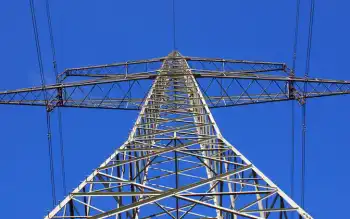
Grid upgrade might cost Rhode Island $63 million

By Providence Journal, R.I.


Arc Flash Training CSA Z462 - Electrical Safety Essentials

Our customized live online or in‑person group training can be delivered to your staff at your location.

  • Live Online
  • 6 hours Instructor-led
  • Group Training Available
Regular Price:
$249
Coupon Price:
$199
Reserve Your Seat Today
A proposal before federal regulators would require Rhode Island ratepayers to pony up some $63 million to upgrade antiquated sections of the power grid in New England, even though the state's transmission system is working just fine.

The head of Rhode Island's Public Utilities Commission opposes the idea, and says that the ratepayers who live in the areas that will benefit from the upgrades should pay more than everyone else.

"If Connecticut were upgraded, we don't need that. Connecticut needs it," said Elia Germani, chairman of the PUC.

Last week's massive power outage has called attention to the aging transmission lines within the nation's power grid.

In New England, weak transmission systems were blamed for the outage that struck southwest Connecticut and small sections of Massachusetts and Vermont. The rest of the region was not affected, largely because other parts of the system are in good shape, power-grid officials said.

While regulators, utility companies and the company that operates New England's power grid agree that upgrades are needed in Connecticut and elsewhere, there's no consensus about who should pay for it.

Some argue that the entire region would benefit from the improvements, so all electricity customers in New England should share the costs equally. Others, such as Germani, say local areas that will see the most benefit from power-grid upgrades should shoulder more of the costs.

ISO New England, which operates the six-state power grid, has estimated that $900 million needs to be spent to improve the region's power grid over the next 5 to 10 years.

"The projects are to bolster our grid for New England," said Steve Whitley, chief operating officer for ISO New England, in a telephone interview yesterday. "If we have pockets that are unreliable, it can affect the whole grid."

About $700 million of that would beef up the transmission system in southwest Connecticut, which ISO New England has described as "antiquated" and the "weak link" in the region's power grid.

Other projects include transmission improvements in Massachusetts and Vermont. There are no plans for work in Rhode Island, Whitley said.

ISO New England and New England Power Pool, an association of electric utility companies in the region, have proposed paying for upgrades, such as those planned for Connecticut, by sharing the costs proportionally among all the states, based on how much electricity is used.

The two organizations filed such a plan, as they were required to do by the Federal Energy Regulatory Commission, or FERC.

The proposal calls for ratepayers to pay the same amount to cover the upgrades, regardless of which state they are in.

They would pay according to how much electricity they use.

Rhode Island consumes about 7 percent of New England's electricity, Germani said. The current plan to invest $900 million in New England would mean that electricity customers in the state would be responsible for about $63 million for the improvement projects.

If that was divided into 10 years, the typical electricity customer in the state might pay an extra $1.25 to $1.50 a month, Germani estimated.

The concept of sharing costs among all ratepayers isn't a radical new idea. Whitley says that's the way it has worked for years. FERC ordered the New England Power Pool to take a look at how costs are allocated, and the filing submitted in July essentially keeps the same system in place, he said, with a few tweaks.

Some want that changed. Germani, along with regulators in Maine, propose spreading only half the cost of improvements among all ratepayers. The other half would be paid for by the local area that gets the most benefit.

Germani said that Rhode Islanders should not have to pay for the problems in Connecticut because, to some degree, that state brought the problems on itself. He said the Connecticut state legislature had imposed a moratorium that restricted transmission improvements. And the not-in-my-backyard phenomenon among residents in Connecticut has contributed to the problems as well, he said.

Whitley said the problem with that approach is that it's very difficult to tell who is the beneficiary of a particular project.

"You can't chase who really got the benefit," he said. "It's just an impossible task."

The New England grid is closely tied together, and improvements to its reliability benefit all the states, he said.

"We look at the system in total, not from the perspective of one state," he said. "The problem of the parochial standpoint is it depends on the time you look at it."

For example, right now, Connecticut needs infrastructure improvement. Next time, it may be Rhode Island. When that time comes, ratepayers from elsewhere would help pay for improvements here, he said.

"I certainly agree, I wish we had the transmission projects built in Connecticut sooner."

But had they been built, he said, they would have been paid for under this same cost-sharing methodology that's long been in place.

Related News
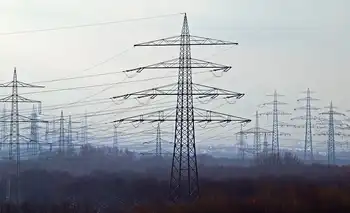
UN: Renewable Energy Ambition in NDCs must Double by 2030

NDC Renewable Energy Ambition drives COP25 calls to align with the Paris Agreement, as IRENA urges 2030 targets toward 7.7 TW, accelerating decarbonization, energy transition, socio-economic benefits, and scalable renewables in Nationally Determined Contributions.


Key Points

Raised 2030 renewable targets in NDCs to meet Paris goals, reaching 7.7 TW efficiently and speeding decarbonization.

✅ Double current NDC renewables to align with 7.7 TW by 2030

✅ Cost effective pathway with jobs, growth, welfare gains

✅ Accelerates decarbonization and energy access per UN goals


We need an oracle to get us out of this debacle. The UN climate group has met for the 25th time. Will anything ever change?

Countries are being urged to significantly raise renewable energy ambition and adopt targets to transform the global energy system in the next round of Nationally Determined Contributions (NDCs), according to a new IRENA report by the International Renewable Energy Agency (IRENA) that will be released at the UN Climate Change Conference (COP25) in Madrid.

The report will show that renewable energy ambition within NDCs would have to more than double by 2030 to put the world in line with the Paris Agreement goals, cost-effectively reaching 7.7 terawatts (TW) of globally installed capacity by then. Today’s renewable energy pledges under the NDCs are falling short of this, targeting only 3.2 TW, even as over 30% of global electricity is already generated from renewables.

The reportNDCs in 2020: Advancing Renewables in the Power Sector and Beyondwill be released at IRENA’s official side event on enhancing NDCs and raising ambition on 11 December 2019.It will state that with over 2.3 TW installed renewable capacity today, following a record year for renewables in 2016, almost half of the additional renewable energy capacity foreseen by current NDCs has already been installed.

The analysis will also highlight that delivering on increased renewable energy ambition can be achieved in a cost-effective way and with considerable socio-economic benefits across the world.

“Increasing renewable energy targets is absolutely necessary,” said IRENA’s Director-General Francesco La Camera. “Much more is possible. There is a decisive opportunity for policy makers to step up climate action, including a fossil fuel lockdown, by raising ambition on renewables, which are the only immediate solution to meet rising energy demand whilst decarbonizing the economy and building resilience.

“IRENA’s analysis shows that a pathway to a decarbonised economy is technologically possible and socially and economically beneficial,” continued Mr. La Camera.

“Renewables are good for growth, good for job creation and deliver significant welfare benefits. With renewables, we can also expand energy access and help eradicate energy poverty by ensuring clean, affordable and sustainable electricity for all in line with the UN Sustainable Development Agenda 2030.

IRENA will promote knowledge exchange, strengthen partnerships and work with all stakeholders to catalyse action on the ground. We are engaging with countries and regions worldwide, from Ireland's green electricity push to other markets, to facilitate renewable energy projects and raise their ambitions”.

NDCs must become a driving force for an accelerated global energy transformation toward 100% renewable energy globally. The current pledges reflect neither the past decade’s rapid growth nor the ongoing market trends for renewables. Through a higher renewable energy ambition, NDCs could serve to advance multiple climate and development objectives.


Related News

View more

5,000 homes would be switched to geothermal energy free of charge

Manitoba NDP Geothermal Conversion Program offers full-cost heat pump installation for 5,000 homes, lowering electricity bills, funding contractor training and rebates, and cutting greenhouse gas emissions via geothermal energy administered by Efficiency Manitoba.


Key Points

A plan funding 5,000 home heat pump conversions to cut electricity bills, reduce emissions, and expand installer capacity.

✅ Covers equipment and installation for 5,000 homes

✅ Cuts electricity bills up to 50% vs electric heat

✅ Administered by Efficiency Manitoba; trains contractors


An NDP government would cover the entire cost for 5,000 families to switch their homes to geothermal energy, New Democrats have promised.

If elected on Oct. 3, the NDP will pay for the equipment and installation of new geothermal systems at 5,000 homes, St. James candidate Adrien Sala announced outside a St. Boniface home that previously made the switch. 

The homes that switch to geothermal energy could save as much as 50 per cent on their electricity bills, Sala said.

"It will save you money, it will grow our economy and it will reduce greenhouse gas emissions. And I think we can safely call that a win, win, win," Sala said.

Geothermal energy is derived from heat that is generated within the Earth.

The NDP said each conversion to geothermal heating and cooling would cost an estimated $26,000, and comes as new turbine investments advance in Manitoba, and it would take four years to complete all 5,000 conversions.

The program would be administered through Efficiency Manitoba, the Crown corporation responsible for conserving energy, as Manitoba Hydro's new president navigates changes at the utility. The NDP estimates it will cost $32.5 million annually over the four years, at a time of red ink at Manitoba Hydro as new power generation needs loom. Some of that money would support the training of more contractors who could install geothermal systems.


Subsidies get low pickup: NDP
Sala wouldn't say Wednesday which homeowners or types of homes would be eligible.

He said the NDP's plan would be a first in Canada, even as Ontario's energy plan seeks to address growing demand elsewhere.

"What we've seen elsewhere is where other jurisdictions have used a strict subsidy model, where they try to reduce the cost of geothermal, and while Ontario reviews a halt to natural gas generation to cut emissions, approaches differ across provinces. We really haven't seen a lot of uptake in those other jurisdictions," Sala said.

"This is an attempt at dealing with one of those key barriers for homeowners."

Efficiency Manitoba runs a subsidy program for geothermal energy through ground source heat pumps, supporting using more electricity for heat across the province, valued at up to $2.50 per square foot. It is estimated a 1,600 sq. ft. home switching from an electric furnace to geothermal will receive a rebate of around $4,000 and save around $900 annually on their electricity bills, the Crown corporation said.anitoba homeProgressive Conservative spokesperson Shannon Martin questioned how NDP Leader Wab Kinew can afford his party's numerous election promises.

"He will have no choice but to raise taxes, and history shows the NDP will raise them all," said Martin, the McPhillips MLA who isn't seeking re-election.

Wednesday's announcement was the first for the NDP in which Kinew wasn't present. The party has criticized the Progressive Conservatives for leader Heather Stefanson showing up for only a few announcements a week.

Sala said Kinew was busy preparing for the debate later in the day.

"This stuff is near and dear to Wab's heart, and frankly, I think he's probably hurting that he's not here with us right now."


Related News

View more

U.S. Electricity Sales Projections Continue to Fall

US Electricity Demand Outlook examines EIA forecasts, GDP decoupling, energy efficiency, electrification, electric vehicles, grid load growth, and weather variability to frame long term demand trends and utility planning scenarios.


Key Points

An analysis of EIA projections showing demand decoupling from GDP, with EV adoption and efficiency shaping future grid load.

✅ EIA lowers load growth; demand decouples from GDP.

✅ Efficiency and sector shifts depress kWh sales.

✅ EV adoption could revive load and capacity needs.


Electricity producers and distributors are in an unusual business. The product they provide is available to all customers instantaneously, literally at the flip of a switch. But the large amount of equipment, both hardware and software to do this takes years to design, site and install.

From a long range planning perspective, just as important as a good engineering design is an accurate sales projections. For the US electric utility industry the most authoritative electricity demand projec-tions come from the Department of Energy’s Energy Information Administration (EIA). EIA's compre-hensive reports combine econometric analysis with judgment calls on social and economic trends like the adoption rate of new technologies that could affect future electricity demand, things like LED light-ing and battery powered cars, and the rise of renewables overtaking coal in generation.

Before the Great Recession almost a decade ago, the EIA projected annual growth in US electricity production at roughly 1.5 percent per year. After the Great Recession began, the EIA lowered its projections of US electricity consumption growth to below 1 percent. Actual growth has been closer to zero. While the EIA did not antici-pate the last recession or its aftermath, we cannot fault them on that.

After the event, though, the EIA also trimmed its estimates of economic growth. For the 2015-2030 period it now predicts 2.1 percent economic and 0.3 percent electricity growth, down from previously projections of 2.7 percent and 1.3 percent respectively. (See Figures 1 and 2.)


Table 1. EIA electric generation projections by year of forecast (kWh billions)


Table 2. EIA forecast of GDP by year of forecast (billion 2009 $)

Back in 2007, the EIA figured that every one percent increase in economic activity required a 0.48 percent in-crease in electric generation to support it. By 2017, the EIA calculated that a 1 percent growth in economic activity now only required a 0.14 percent increase in electric output. What accounts for such a downgrade or disconnect between electricity usage and economic growth? And what factors might turn the numbers 
around?

First, the US economy lost energy intensive heavy industry like smelting, steel mills and refineries; patterns in China's electricity sector highlight how industrial shifts can reshape power demand. A more service oriented economy (think health care) relies more heavily on the movement of data or information and uses far less power than a manufacturing-oriented economy.

A small volcano in Argentina is about to fuel the next tech boom – and a little known company is going to be right at the center. Early investors stand to gain incredible profits and you can too. Read the report.

Second, internet shopping has hurt so-called "brick and mortar" retailers. Despite the departure of heavy industry, in years past a burgeoning US commercial sector increased its demand and usage of electricity to offset the industrial decline. But not anymore. Energy efficiency measures as well as per-haps greater concern about global warming and greenhouse gas emissions and have cut into electricity sales. “Do more with less” has the right ring to it.

But there may be other components to the ongoing decline in electricity usage. Academic studies show that electricity usage seems to increase with income along an S curve, and flattens out after a certain income level. That is, if you earn $1 billion per year you do not (or cannot) use ten times a much electricity as someone earning only $100 million.

But people at typical, middle income levels increase or decrease electricity usage when incomes rise or fall. The squeeze on middle income families was discussed often in the late presidential campaign. In recent decades an increasing percentage of income has gone to a small percentage of the population at the top of the income scale. This trend probably accounts for some weakness in residential sales. This suggests that government policy addressing income inequality would also boost electricity sales.

Population growth affects demand for electricity as well as the economy as a whole. The EIA has made few changes in its projections, showing 0.7 percent per year population growth in 2015- 2030 in both the 2007 and 2017 forecasts. Recent studies, however, have shown a drop in the birth rate to record lows. More troubling, from a national health perspective is that the average age of death may have stopped rising. Those two factors point to lower population growth, especially if the government also restricts immi-gration. Thus, the US may be approaching a period of rather modest population growth.

All of the above factors point to minimal sales growth for electricity producers in the US--perhaps even lower than the seemingly conservative EIA estimates. But the cloud on the horizon has a silver lining in the shape of an electric car. Both the United Kingdom and France have set dates to end of production of automobiles with internal combustion engines. Several European car makers have declared that 20 percent of their output will be electric vehicles by the early 2020s. If we adopt automobiles powered by electricity and not gasoline or diesel, electricity sales would increase by one third. For the power indus-try, electric vehicles represent the next big thing.

We don’t pretend to know how electric car sales will progress. But assume vehicle turnover rates re-main at the current 7 percent per year and electric cars account for 5 percent of sales in the first five years (as op-posed to 1 percent now), 20 percent in the next five years and 50 percent in the third five year period. Wildly optimistic assumptions? Maybe. By 2030, electric cars would constitute 28 percent of the vehicle fleet. They would add about 10 percent to kilowatt hour sales by that date, assuming that battery efficiencies do not improved by then. Those added sales would require increased electric generation output, with low-emissions sources expected to cover almost all the growth globally. They would also raise long term growth rates for 2015-2030 from the present 0.3 percent to 1.0 percent. The slow upturn in demand should give the electric companies time to gear up so to speak.

In the meantime, weather will continue to play a big role in electricity consumption. Record heat-induced demand peaks are being set here in the US even as surging global demand puts power systems under strain worldwide.

Can we discern a pattern in weather conditions 15 years out? Maybe we can, but that is one topic we don’t expect a government agency to tackle in public right now. Meantime, weather will affect sales more than anything else and we cannot predict the weather. Or can we?


Related News

View more

"Energy war": Ukraine tries to protect electricity supply before winter

Ukraine Power Grid Resilience details preparations for winter blackouts, airstrike defense, decentralized generation, backup generators, battery storage, DTEK restorations, EU grid synchronization, and upgraded air defenses to safeguard electricity, heating, water, and essential services.


Key Points

Ukraine Power Grid Resilience is a strategy to harden energy systems against winter attacks and outages.

✅ DTEK repairs, backup equipment, and fortified plants across Ukraine

✅ Expanded air defenses targeting missiles and attack drones

✅ EU grid sync enables emergency imports and power trading


Oleksandr Gindyuk is determined not to be caught off guard if electricity supplies fail again this winter. When Russia pounded Ukraine’s power grid with widespread and repeated waves of airstrikes last year, causing massive rolling blackouts, his wife had just given birth to their second daughter.

“It was quite difficult,”  Gindyuk, who lives with his family in the suburbs of the capital, Kyiv, told CNN. “There is no life in our house if there is no electricity. Without electricity, we have no water, light or heating.”

He has spent the summer preparing for Russia to repeat its strategy, which was designed to sow terror and make life unsustainable, robbing Ukrainians of heat, water and health services. “We are totally ready — we have a diesel generator and a powerful 9 kWh battery. We are not scared, we are ready,” Gindyuk told CNN.

As families like Gindyuk’s gird themselves for the possibility of another dark winter, Ukraine has been rushing to rebuild and, drawing on protecting the grid lessons, protect its fragile energy infrastructure.

The summer provided a respite for Ukraine’s power grid. Russia focused its attacks on military targets and on ports on the Black Sea and the Danube River, to hinder Ukraine’s efforts to move grain and choke off an important income stream.

As the days grow shorter and the temperatures drop, Russia has another opportunity to try to break Ukrainian resilience with punishing blackouts. But this winter, defense and energy officials say Ukraine is better prepared.

With limited Ukrainian air defenses in operation last year, Russia was able to target and hit the energy grid easily, including during missile and drone assaults on Kyiv’s grid that strained responders.

“The Russians may use a combination of missile weapons and attack UAVs (unmanned aerial vehicles, or drones). These will definitely not be such primitive attacks as last year. It will be difficult for the Russians to achieve a result - we are also preparing and understanding how they act.”

DTEK, the country’s largest private energy company, has spent the past seven months restoring infrastructure, trying to boost output and bolstering defenses at its facilities across Ukraine, mindful of Russian utility hacks reported elsewhere.

“We restored what could be restored, bought back-up equipment and installed defenses around power plants, as Russian-linked breaches at US plants have underscored risks,” DTEK chief executive Maxim Timchenko told CNN.

The company generates around a quarter of Ukraine’s electricity and runs 40% of its grid network, making it a prime target for Russian attacks. Four DTEK employees have been killed while on duty and its power stations have been attacked nearly 300 times since the start of the full-scale invasion, according to the company. “Last winter, determination carried us through. This winter we are stronger, and our people are more experienced,” Timchenko said.

Russia launched 1,200 attacks on Ukraine’s energy system between October 2022 and April 2023, with every thermal power and hydro-electric plant in the country sustaining some damage, according to DTEK.

In a damage assessment report released in June, the United Nations Development Programme said that Ukraine’s power generation capacity had been reduced to about half of what it was before Russia’s full-scale invasion. “Ukraine’s power system continues to operate in an emergency mode, which affects both power grids and generation, amid rising concerns about state-backed grid hacking worldwide,” a news release accompanying the report said.

The report also laid out a roadmap to rebuilding the energy sector, prioritizing decentralization, renewable energy sources and greater integration with the European Union. Ukraine has been hooked into the EU’s power grid since the full-scale invasion, allowing it to synchronize and trade power with the bloc. But the massive wave of attacks on energy infrastructure last winter threw that balance off kilter.


Related News

View more

British Columbia Halts Further Expansion of Self-Driving Vehicles

BC Autonomous Vehicle Ban freezes new driverless testing and deployment as BC develops a regulatory framework, prioritizing safety, liability clarity, and road sharing with pedestrians and cyclists while existing pilot projects continue.


Key Points

A moratorium pausing new driverless testing until a safety-first regulatory framework and clear liability rules exist.

✅ Freezes new AV testing and deployment provincewide

✅ Current pilot shuttles continue under existing approvals

✅ Focus on safety, liability, and road-user integration


British Columbia has halted the expansion of fully autonomous vehicles on its roads. The province has announced it will not approve any new applications for testing or deployment of vehicles that operate without a human driver until it develops a new regulatory framework, even as it expands EV charging across the province.


Safety Concerns and Public Questions

The decision follows concerns about the safety of self-driving vehicles and questions about who would be liable in the event of an accident. The BC government emphasizes the need for robust regulations to ensure that self-driving cars and trucks can safely share the road with traditional vehicles, pedestrians, and cyclists, and to plan for infrastructure and power supply challenges associated with electrified fleets.

"We want to make sure that British Columbians are safe on our roads, and that means putting the proper safety guidelines in place," said Rob Fleming, Minister of Transportation and Infrastructure. "As technology evolves, we're committed to developing a comprehensive framework to address the issues surrounding self-driving technology."


What Does the Ban Mean?

The ban does not affect current pilot projects involving self-driving vehicles that already operate in BC, such as limited shuttle services and segments of the province's Electric Highway that support charging and operations.


Industry Reaction

The response from industry players working on autonomous vehicle technology has been mixed, amid warnings of a potential EV demand bottleneck as adoption ramps up. While some acknowledge the need for clear regulations, others express concern that the ban could stifle innovation in the province.

"We understand the government's desire to ensure safety, but a blanket ban risks putting British Columbia behind in the development of this important technology," says a spokesperson for a self-driving vehicle start-up.


Debate Over Self-Driving Technology

The BC ban highlights a larger debate about the future of autonomous vehicles. While proponents point to potential benefits such as improved safety, reduced traffic congestion, and increased accessibility, and national policies like Canada's EV goals aim to accelerate adoption, critics raise concerns about liability, potential job losses in the transportation sector, and the ability of self-driving technology to handle complex driving situations.


BC Not Alone

British Columbia is not the only jurisdiction grappling with the regulation of self-driving vehicles. Several other provinces and states in both Canada and the U.S. are also working to develop clear legal and regulatory frameworks for this rapidly evolving technology, even as studies suggest B.C. may need to double its power output to fully electrify road transport.


The Road Ahead

The path forward for fully autonomous vehicles in BC depends on the government's ability to create a regulatory framework that balances safety considerations with fostering innovation, and align with clean-fuel investments like the province's hydrogen project to support zero-emission mobility.  When and how that framework will materialize remains unclear, leaving the future of self-driving cars in the province temporarily uncertain.


Related News

View more

Two new BC generating stations officially commissioned

BC Hydro Site C and Clean Energy Policy shapes B.C.'s power mix, affecting run-of-river hydro, net metering for rooftop solar, independent power producers, and surplus capacity forecasts tied to LNG Canada demand.


Key Points

BC Hydro's strategy centers on Site C, limiting new run-of-river projects and tightening net metering amid surplus power

✅ Site C adds long-term capacity with lower projected rates.

✅ Run-of-river IPP growth paused amid surplus forecasts.

✅ Net metering limits deter oversized rooftop solar.


Innergex Renewable Energy Inc. is celebrating the official commissioning today of what may be the last large run-of-river hydro project in B.C. for years to come.

The project – two new generating stations on the Upper Lillooet River and Boulder Creek in the Pemberton Valley – actually began producing power in 2017, but the official commissioning was delayed until Friday September 14.

Innergex, which earlier this year bought out Vancouver’s Alterra Power, invested $491 million in the two run-of-river hydro-electric projects, which have a generating capacity of 106 megawatts of power. The project has the generating capacity to power 39,000 homes.

The commissioning happened to coincide with an address by BC Hydro CEO Chris O’Riley to the Greater Vancouver Board of Trade Friday, in which he provided an update on the progress of the $10.7-billion Site C dam project.

That project has put an end, for the foreseeable future, of any major new run-of-river projects like the Innergex project in Pemberton.

BC Hydro expects the new dam to produce a surplus of power when it is commissioned in November 2024, so no new clean energy power calls are expected for years to come.

Independent power producers aren’t the only ones who have seen a decline in opportunities to make money in B.C. providing renewable power, as the Siwash Creek project shows. So will homeowners who over-build their own solar power systems, in an attempt to make money from power sales.

There are about 1,300 homeowners in B.C. with rooftop solar systems, and when they produce surplus power, they can sell it to BC Hydro.

BC Hydro is amending the net metering program to discourage homeowners from over-building. In some cases, some howeowners have been generating 40% to 50% more power than they need.

“We were getting installations that were massively over-sized for their load, and selling this big quantity of power to us,” O’Riley said. “And that was never the idea of the program.”

Going forward, BC Hydro plans to place limits on how much power a homeowner can sell to BC Hydro.

BC Hydro has been criticized for building Site C when the demand for power has been generally flat, and reliance on out-of-province electricity has drawn scrutiny. But O’Riley said the dam isn’t being built for today’s generation, but the next.

“We’re not building Site C for today,” he said. “We have an energy surplus for the short term. We’re not even building it for 2024. We’re building it for the next 100 years.”

O’Riley acknowledged Site C dam has been a contentious and “extremely challenging” project. It has faced numerous court challenges, a late-stage review by the BC Utilities Commission, cost overruns, geotechnical problems and a dispute with the main contractors.

In a separate case, the province was ordered to pay $10 million over the denial of a Squamish power project, highlighting broader legal risk.

But those issues have been resolved, O’Riley said, and the project is back on track with a new construction schedule.

“As we move forward, we have a responsibility to deliver a project on time and against the new revised budget, and I’m confident the changes we’ve made are set up to do that,” O’Riley said.

Currently, there are about 3,300 workers employed on the dam project.

Despite criticisms that BC Hydro is investing in a legacy mega-project at a time when cost of wind and solar have been falling, O’Riley insisted that Site C was the best and lowest cost option.

“First, it’s the lowest cost option,” he said. “We expect over the first 20 years of Site C’s operating life, our customers will see rates 7% to 10% below what it would otherwise be using the alternatives.”

BC Hydro missed a critical window to divert the Peace River, something that can only be done in September, during lower river flows. That added a full year’s delay to the project.

O’Riley said BC Hydro had built in a one-year contingency into the project, so he expects the project can still be completed by 2024 – the original in-service target date. But the delay will add more than $2 billion to the last budget estimate, boosting the estimated capital cost from $8.3 billion to $10.7 billion.

Meeting the 2024 in-service target date could be important, if Royal Dutch Shell and its consortium partners make a final investment decision this year on the $40 billion LNG Canada project.

That project also has a completion target date of 2024, and would be a major new industrial customer with a substantial power draw for operations.

“If they make a decision to go forward, they will be a very big customer of BC Hydro,” O’Riley told Business in Vancouver. “They would be in our top three or four biggest customers.”


Related News

View more

Sign Up for Electricity Forum’s Newsletter

Stay informed with our FREE Newsletter — get the latest news, breakthrough technologies, and expert insights, delivered straight to your inbox.

Electricity Today T&D Magazine Subscribe for FREE

Stay informed with the latest T&D policies and technologies.
  • Timely insights from industry experts
  • Practical solutions T&D engineers
  • Free access to every issue

Download the 2025 Electrical Training Catalog

Explore 50+ live, expert-led electrical training courses –

  • Interactive
  • Flexible
  • CEU-cerified