New York State utility sells lakeside nuclear

By Times Union-Albany NY


Arc Flash Training CSA Z462 - Electrical Safety Essentials

Our customized live online or in‑person group training can be delivered to your staff at your location.
  • Live Online
  • 6 hours Instructor-led
  • Group Training Available
Regular Price:
$249
Coupon Price:
$199
Reserve Your Seat Today
Constellation Energy Group is buying the nation's longest-serving nuclear plant for $401 million

Constellation, which already owns one nuclear plant and part of another one along the Lake Ontario shore, said Tuesday it is acquiring the 495-megawatt Robert E. Ginna pressurized-water atomic reactor from Rochester Gas & Electric, a division of Albany-based Energy East Corp.

The Ginna plant has churned out electricity for 33 years from its perch overlooking the lake in the rural town of Ontario, 16 miles northeast of Rochester.

Under the deal, which is expected to close next summer, Baltimore- based Constellation will sell 90 percent of the plant's energy to Rochester Gas & Electric for an average price of $44 a megawatt hour for 10 years. Constellation also will pay the utility $21.6 million for nuclear fuel.

The acquisition, expected to close next June 30, needs to be approved by various federal and state nuclear regulatory agencies. The sale is contingent on the plant's operating license, which expires in 2009, being extended next year for another 20 years.

The Ginna plant supplies half of Rochester Gas & Electric's electrical demand. It began operating commercially in July 1970, making it the most durable of America's 103 nuclear plants but not the oldest. It employs 440 people.

The Ginna plant was refitted with steam generators in 1996. Heated by the uranium reactor, the circulating water turns into steam, which drives turbines that power the generators.

In trading on the New York Stock Exchange, Constellation Energy shares rose 48 cents to close at $36.60 while Energy East shares rose 49 cents to close at $22.99.

Related News
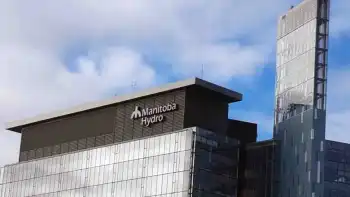
Investor: Hydro One has too many unknowns to be a good investment

Hydro One investment risk reflects Ontario government influence, board shakeup, Avista acquisition uncertainty, regulatory hearings, dividend growth prospects, and utility M&A moves in Peterborough, with stock volatility since the 2015 IPO.


Key Points

Hydro One investment risk stems from political control, governance turnover, regulatory outcomes, and uncertain M&A.

✅ Ontario retains near-50% stake, affecting autonomy and policy risk

✅ Board overhaul and CEO exit create governance uncertainty

✅ Avista deal, OEB hearings, local utility M&A drive outcomes


Hydro One may be only half-owned by the province on Ontario but that’s enough to cause uncertainty about the company’s future, thus making for an investment risk, says Douglas Kee of Leon Frazer & Associates.

Since its IPO in November of 2015, Hydro One has seen its share of ups and downs, including a Q2 profit decline earlier this year, mostly downs at this point. Currently trading at $19.87, the stock has lost 11 per cent of its value in 2018 and 12 per cent over the last 12 months, despite a one-time gain boosting Q2 profit that followed a court ruling.

This year has been a turbulent one, to say the least, as newly elected Ontario premier Doug Ford made good this summer on his campaign promise re Hydro One by forcing the resignation of the company’s 14-person board of directors along with the retirement of its chief executive, an event that saw Hydro One shares fall amid the turmoil. An interim CEO has been found and a new 10-person board and chairman put in place, but Kee says it’s unclear what impact the shakeup will ultimately have, other than delaying a promising-looking deal to purchase US utility Avista Corp, with the companies moving to ask the U.S. regulator to reconsider the order.


Douglas Kee’s take on Hydro One stock

“We looked at Hydro One a couple of times two years ago and just decided that with the Ontario government’s still owning a big chunk of the company … there are other public companies where you get the same kind of yield, the same kind of dividend growth, so we just avoided it,” says Kee, managing director and chief investment officer with Leon Frazer & Associates, to BNN Bloomberg.

“The old board versus the new board, I’m not sure that there’s much of an improvement. It was politics more than anything,” he says. “The unfortunate part is that the acquisition they were making in the United States is kind of on hold for now. The regulatory procedures have gone ahead but they are worried, and I guess the new board has to make a decision whether to go ahead with it or not.”

“Their transmissions side is coming up for regulatory hearings next year, which could be difficult in Ontario,” says Kee. “The offset to that is that there are a lot of municipal distributions systems in Ontario that may be sold — they bought one in Peterborough recently, which was a good deal for them. There may be more of that coming too.”

Last month, Hydro One reached an agreement with the City of Peterborough to buy its Peterborough Distribution utility which serves about 37,000 customers for $105 million. Another deal to purchase Orillia Power Distribution Corp for $41 million has been cancelled after an appeal to the Ontario Energy Board was denied in late August. Hydro One’s sought-after Avista Corp acquisition is reported to be worth $7 billion.


Related News

View more

TVA faces federal scrutiny over climate goals, electricity rates

TVA Rates and Renewable Energy Scrutiny spotlights electricity rates, distributed energy resources, solar and wind deployment, natural gas plans, grid access charges, energy efficiency cuts, and House oversight of lobbying, FERC inquiries, and least-cost planning.


Key Points

A congressional probe into TVA pricing and practices affecting renewables, energy efficiency, and climate goals.

✅ House panel probes TVA rates, DER and solar policies.

✅ Efficiency programs cut; least-cost planning questioned.

✅ Inquiry on lobbying, hidden fees; FERC scrutiny.


The Tennessee Valley Authority is facing federal scrutiny about its electricity rates and climate action, amid ongoing debates over network profits in other markets.

Members of the House Committee on Energy and Commerce are “requesting information” from TVA about its ratepayer bills and “out of concern” that TVA is interfering with the deployment of renewable and distributed energy resources, even as companies such as Tesla explore electricity retail to expand customer options.

“The Committee is concerned that TVA’s business practices are inconsistent with these statutory requirements to the disadvantage of TVA’s ratepayers and the environment,” the committee said in a letter to TVA CEO Jeffrey Lyash.

The four committee members — U.S. Reps. Frank Pallone, Jr. (D-NJ), Bobby L. Rush (D-IL), Diana DeGette (D-CO), and Paul Tonko (D-NY) — suggested that Tennessee Valley residents pay too much for electricity despite TVA’s relatively low rates, even as regulators have, in other cases, scrutinized mergers like the Hydro One-Avista deal to safeguard ratepayers, underscoring similar concerns. In 2020, Tennessee residents had electric bills higher than the national average, while low-income residents in Memphis have historically faced one of the highest energy burdens in the U.S.

In 2018, TVA reduced its wholesale rate while adding a grid access charge on local power companies—and interfered with the adoption of solar energy. Internal TVA documents obtained through a Freedom of Information Act request by the Energy and Policy Institute revealed that TVA permitted local power companies to impose new fees on distributed solar generation to “lessen the potential decrease in TVA load that may occur through the adoption of [behind the meter] generation.”

Additionally, the committee said TVA is not prioritizing energy conservation and efficiency or “least-cost planning” that includes renewables, as seen in oversight such as the OEB's Hydro One rates decision emphasizing cost allocation. TVA reduced its energy efficiency programs by nearly two-thirds between 2014 and 2018 and cut its energy efficiency customer incentive programs.

At this time, TVA has not aligned its long-term planning with the Biden administration’s goal to achieve a carbon-free electricity sector by 2035. TVA’s generation mix, which is roughly 60% carbon-free, comprises 39% nuclear, 19% coal, 26% natural gas, 11% hydro, 3% wind and solar, and 1% energy efficiency programs, according to TVA.

The committee is “greatly concerned that TVA has invested comparatively little to date in deploying solar and wind energy, while at the same time considering investments in new natural gas generation.”

TVA has announced plans to shutter the Kingston and Cumberland coal plants and is evaluating whether to replace this generation with natural gas, which is a fossil fuel, while debates over grid privatization raise questions about consumer benefits. TVA’s coal and natural gas plants represent most of the largest sources of greenhouses emissions in Tennessee.

TVA responded with a statement without directly addressing the committee’s concerns. TVA said its “developing and implementing emerging technologies to drive toward net-zero emissions by 2050.”

The final question that the House committee posed is whether TVA is funding any political activity. In 2019, the committee questioned TVA about its membership to the now-disbanded Utility Air Regulatory Group, a coalition that was involved in over 200 lawsuits that primarily fought Clear Air Act regulations.

TVA revealed that it had contributed $7.3 million to the industry lobbying group since 2001. Since TVA doesn’t have shareholders, customers paid for UARG membership fees, echoing findings that deferred utility costs burden customers in other jurisdictions. An Office of the Inspector General investigation couldn’t prove whether TVA’s contributions directly funded litigation because UARG didn’t have a line-by-line accounting of what they did with TVA’s dollars.

The congressional committee questioned whether TVA is still paying for lobbying or litigation that opposes “public health and welfare regulations.”

This last question follows a recent trend of questioning utilities about “hidden fees.” In December, the Federal Energy Regulatory Commission issued a Notice of Inquiry to examine how bills from investor-owned utilities might contain fees that fund political activity, and regulators have penalized firms like NT Power over customer notice practices, highlighting consumer protection. The Center for Biological Diversity filed a petition to protect electric and gas customers of investor-owned utilities from paying these fees, which may be used for lobbying, campaign-related donations and litigation.


Related News

View more

Washington State's Electric Vehicle Rebate Program

Washington EV Rebate Program drives EV adoption with incentives, funding, and clean energy goals, cutting greenhouse gas emissions. Residents embrace electric vehicles as charging infrastructure expands, supporting sustainable transportation and state climate targets.


Key Points

Washington EV Rebate Program provides incentives to cut EV costs, accelerate adoption, and support clean energy targets.

✅ Over half of allocated funding already utilized statewide.

✅ Incentives lower upfront costs and spur EV demand.

✅ Charging infrastructure expansion remains a key priority.


Washington State has reached a significant milestone in its electric vehicle (EV) rebate program, with more than half of the allocated funding already utilized. This rapid uptake highlights the growing interest in electric vehicles as residents seek more sustainable transportation options. As the state continues to prioritize environmental initiatives, this development showcases both the successes and challenges of promoting electric vehicle adoption.

A Growing Demand for Electric Vehicles

The substantial drawdown of rebate funds indicates a robust demand for electric vehicles in Washington. As consumers become increasingly aware of the environmental benefits associated with EVs—such as reduced greenhouse gas emissions and improved air quality—more individuals are making the switch from traditional gasoline-powered vehicles. Additionally, rising fuel prices and advancements in EV technology, alongside zero-emission incentives are further incentivizing this shift.

Washington's rebate program, which offers financial incentives to residents who purchase or lease eligible electric vehicles, plays a critical role in making EVs more accessible. The program helps to lower the upfront costs associated with purchasing electric vehicles, and similar approaches like New Brunswick EV rebates illustrate how regional incentives can boost adoption, thus encouraging more drivers to consider these greener alternatives. As the state moves toward its goal of a more sustainable transportation system, the popularity of the rebate program is a promising sign.

The Impact of Funding Utilization

With over half of the rebate funding already used, the program's popularity raises questions about the sustainability of its financial support and the readiness of state power grids to accommodate rising EV demand. Originally designed to spur adoption and reduce barriers to entry for potential EV buyers, the rapid depletion of funds could lead to future challenges in maintaining the program’s momentum.

The Washington State Department of Ecology, which oversees the rebate program, will need to assess the current funding levels and consider future allocations to meet the ongoing demand. If the funds run dry, it could slow down the adoption of electric vehicles, potentially impacting the state’s broader climate goals. Ensuring a consistent flow of funding will be essential for keeping the program viable and continuing to promote EV usage.

Environmental Benefits and Climate Goals

The increasing adoption of electric vehicles aligns with Washington’s ambitious climate goals, including a commitment to reduce carbon emissions significantly by 2030. The state aims to transition to a clean energy economy and has set a target for all new vehicles sold by 2035 to be electric, and initiatives such as the hybrid-electric ferry upgrade demonstrate progress across the transportation sector. The success of the rebate program is a crucial step in achieving these objectives.

As more residents switch to EVs, the overall impact on air quality and carbon emissions can be profound. Electric vehicles produce zero tailpipe emissions, which contributes to improved air quality, particularly in urban areas that struggle with pollution. The transition to electric vehicles can also help to reduce dependence on fossil fuels, further enhancing the state’s sustainability efforts.

Challenges Ahead

While the current uptake of the rebate program is encouraging, there are challenges that need to be addressed. One significant issue is the availability of EV models. Although the market is expanding, not all consumers have equal access to a variety of electric vehicle options. Affordability remains a barrier for many potential buyers, especially in lower-income communities, but targeted supports like EV charger rebates in B.C. can ease costs for households. Ensuring that all residents can access EVs and the associated incentives is vital for equitable participation in the transition to electric mobility.

Additionally, there are concerns about charging infrastructure. For many potential EV owners, the lack of accessible charging stations can deter them from making the switch. Expanding charging networks, particularly in underserved areas, is essential for supporting the growing number of electric vehicles on the road, and B.C. EV charging expansion offers a regional model for scaling access.

Looking to the Future

As Washington continues to advance its electric vehicle initiatives, the success of the rebate program is a promising indication of changing consumer attitudes toward sustainable transportation. With more than half of the funding already used, the focus will need to shift to sustaining the program and ensuring that it meets the needs of all residents, while complementary incentives like home and workplace charging rebates can amplify its impact.

Ultimately, Washington’s commitment to electric vehicles is not just about rebates; it’s about fostering a comprehensive ecosystem that supports clean energy, infrastructure, and equitable access. By addressing these challenges head-on, the state can continue to lead the way in the transition to electric mobility, benefiting both the environment and its residents in the long run.


Related News

View more

N.L., Ottawa agree to shield ratepayers from Muskrat Falls cost overruns

Muskrat Falls Financing Restructuring redirects megadam benefits to ratepayers, stabilizes electricity rates, and overhauls federal provincial loan guarantees for the hydro project, addressing cost overruns flagged by the Public Utilities Board in Newfoundland and Labrador.


Key Points

A revised funding model shifting benefits to ratepayers to curb rate hikes linked to Muskrat Falls cost overruns.

✅ Shields ratepayers from megadam cost overruns

✅ Revises federal provincial loan guarantees

✅ Targets stable electricity rates by 2021 and beyond


Ottawa and Newfoundland and Labrador say they will rewrite the financial structure of the Muskrat Falls hydro project to shield ratepayers from paying for the megadam's cost overruns.

Federal Natural Resources Minister Seamus O'Regan and Premier Dwight Ball announced Monday that their two governments would scrap the financial structure agreed upon in past federal-provincial loan agreements, moving to a model that redirects benefits, such as a lump sum credit, to ratepayers.

Both politicians called the announcement, which was light on dollar figures, a major milestone in easing residents' fears that electricity rates will spike sharply, as seen with Nova Scotia's debated 14% hike, when the over-budget dam comes fully online next year.
"We are in a far better place today thanks to this comprehensive plan," Ball said.

Ball has said the issue of electricity rates is a top priority for his government, and he has pledged to keep rates near existing levels, but rate mitigation talks with Ottawa have dragged on since April.

A report by the province's Public Utilities Board released Friday forecast an "unprecedented" 75 per cent increase in average domestic rates for island residents in 2021, while Nova Scotia's regulator approved a 14% hike, and reported concerns from industrial customers about their ability to remain competitive.

Costs of the Muskrat Falls megadam on Labrador's Lower Churchill River have ballooned to more than $12.7 billion since the project was approved in 2012, according to the latest estimate of Crown corporation Nalcor Energy.

The dam is set to produce more power than the province can sell. Its existing financial structure would have left electricity ratepayers paying for Muskrat Falls to make up the difference starting in 2021, an issue both governments said Monday has been resolved with the relaunch of financing talks.

"Essentially, you won't pay this on your monthly light bills," Ball said.

But details of how the project will meet financing requirements in coming decades to make up the gap in funds are still to be worked out.

Both Ball and O'Regan criticized previous governments for sanctioning the poorly planned development and again pledged their commitment to easing the burden on residents.

"We promised we would be there to help, and we will be," O'Regan said before announcing a "relaunch" of negotiations around the project's financial structure.

He did not say how much the new setup might cost the federal government, despite earlier federal funding commitments, stressing that the new focus will be on the project's long-term sustainability. "There's no single piece of policy ... that can resolve such a large and complicated mess," O'Regan said.

The two governments also said they will work towards electrifying federal buildings to reduce an anticipated power surplus in the province.

In the short term, the federal government said it would allow for "flexibility" in upcoming cash requirements related to debt servicing, allowing deferral of payments if necessary.

Ball said that flexibility was built in to ensure the plan would still be applicable if costs continue to rise before Muskrat Falls is commissioned.

Political opponents criticized Monday's plan as lacking detail.

"What I heard talked about was an agreement that in the future, there's going to be an agreement," said Progressive Conservative Leader Ches Crosbie. "This was an occasion to reassure people that there's a plan in place to make life here affordable, and I didn't see that happen today."

Others addressed the lingering questions about the project's final cost.

Nalcor's latest financial update has remained unchanged since 2017, though the Muskrat Falls project has seen additional delays related to staffing and software issues.

Dennis Browne, the province's consumer advocate, said the switch to a cost of service model is a significant move that will benefit ratepayers, but he said it's impossible to truly restructure the project while it's a work in progress. "We need to know what the figures are, and we don't have them," he said.


Related News

View more

Global electric power demand surges above pre-pandemic levels

Global Power Sector CO2 Surge 2021 shows electricity demand outpacing renewable energy, with coal and fossil fuels rebounding, undermining green recovery goals and climate change targets flagged by the IEA and IPCC.


Key Points

Record rise in power sector CO2 in 2021 as demand outpaced renewables and coal rebounded, undermining a green recovery.

✅ Electricity demand rose 5% above pre-pandemic levels

✅ Fossil fuels supplied 61% of power; coal led the rebound

✅ Wind and solar grew 15% but lagged demand


Carbon dioxide emissions from the global electric power sector surged past pre-pandemic levels to record highs in the first half of 2021, according to new research by London-based environmental think tank Ember.

Electricity demand and emissions are now 5% higher than where they were before the Covid-19 outbreak, which prompted worldwide lockdowns that led to a temporary drop in global greenhouse gas emissions. Electricity demand also surpassed the growth of renewable energy, and surging electricity demand is putting power systems under strain, the analysis found.

The findings signal a failure of countries to achieve a so-called “green recovery” that would entail shifting away from fossil fuels toward renewable energy, though European responses to Covid-19 have accelerated the electricity system transition by about a decade, to avoid the worst consequences of climate change.

The report found that 61% of the world’s electricity still came from fossil fuels in 2020. Five G-20 countries had more than 75% of their electricity supplied from fossil fuels last year, with Saudi Arabia at 100%, South Africa at 89%, Indonesia at 83%, Mexico at 75% and Australia at 75%.

Coal generation did fall a record 4% in 2020, but overall coal supplied 43% of the additional energy demand between 2019 and 2020, with soaring electricity and coal use underscoring persistent demand pressures. Asia currently generates 77% of the world’s coal electricity and China alone generates 53%, up from 44% in 2015.

The world’s transition out of coal power, which contributes to roughly 30% of the world’s greenhouse gas emissions, is happening far too slowly to avoid the worst impacts of climate change, the study warned. And the International Energy Agency forecasts coal generation will rebound in 2021 as electricity demand picks up again, even as renewables are poised to eclipse coal by 2025 according to other analyses.

“Progress is nowhere near fast enough. Despite coal’s record drop during the pandemic, it still fell short of what is needed,” Ember lead analyst Dave Jones said in a statement.

Jones said coal power usage must collapse by 80% by the end of the decade to avoid dangerous levels of global warming above 1.5 degrees Celsius (2.7 degrees Fahrenheit).

“We need to build enough clean electricity to simultaneously replace coal and electrify the global economy,” Jones said. “World leaders have yet to wake up to the enormity of the challenge.”

The findings come ahead of a major U.N. climate conference in Glasgow, Scotland, in November, where negotiators will push for more ambitious climate action and emissions reduction pledges from nations.

Without immediate, rapid and large-scale reductions to global emissions, scientists of the Intergovernmental Panel on Climate Change warn that the average global temperature will likely cross the 1.5 degrees Celsius threshold within 20 years.

The study also highlighted some upsides. Wind and solar generation, for instance, rose by 15% in 2020, and low-emissions sources are set to cover almost all the growth in global electricity demand in the next three years, producing nearly a tenth of the world’s electricity last year and doubling production since 2015.

Some countries now get about 10% of their electricity from wind and solar, including India, China, Japan, Brazil. The U.S. and Europe have experienced the biggest growth in wind and solar, and in the EU, wind and solar generated more electricity than gas last year, with Germany at 33% and the U.K. leads the G20 for wind power at 29%.


Related News

View more

California electricity pricing changes pose an existential threat to residential rooftop solar

California Rooftop Solar Rate Reforms propose shifting net metering to fixed access fees, peak-demand charges, and time-of-use pricing, aligning grid costs, distributed generation incentives, and retail rates for efficient, least-cost electricity and fair cost recovery.


Key Points

Policies replacing net metering with fixed fees, demand charges, and time-of-use rates to align costs and incentives.

✅ Large fixed access charge funds grid infrastructure

✅ Peak-demand pricing reflects capacity costs at system peak

✅ Time-varying rates align marginal costs and emissions


The California Public Service Commission has proposed revamping electricity rates for residential customers who produce electricity through their rooftop solar panels. In a recent New York Times op‐​ed, former Governor Arnold Schwarzenegger argued the changes pose an existential threat to residential rooftop solar. Interest groups favoring rooftop solar portray the current pricing system, often called net metering, in populist terms: “Net metering is the one opportunity for the little guy to get relief, and they want to put the kibosh on it.” And conventional news coverage suggests that because rooftop solar is an obvious good development and nefarious interests, incumbent utilities and their unionized employees, support the reform, well‐​meaning people should oppose it. A more thoughtful analysis would inquire about the characteristics and prices of a system that supplies electricity at least cost.

Currently, under net metering customers are billed for their net electricity use plus a minimum fixed charge each month. When their consumption exceeds their home production, they are billed for their net use from the electricity distribution system (the grid) at retail rates. When their production exceeds their consumption and the excess is supplied to the grid, residential consumers also are reimbursed at retail rates. During a billing period, if a consumer’s production equaled their consumption their electric bill would only be the monthly fixed charge.

Net metering would be fine if all the fixed costs of the electric distribution and transmission systems were included in the fixed monthly charge, but they are not. Between 66 and 77 percent of the expenses of California private utilities do not change when a customer increases or decreases consumption, but those expenses are recovered largely through charges per kWh of use rather than a large monthly fixed charge. Said differently, for every kWh that a PG&E solar household exported into the grid in 2019, it saved more than 26 cents, on average, while the utility’s costs only declined by about 8 cents or less including an estimate of the pollution costs of the system’s fossil fuel generators. The 18‐​cent difference pays for costs that don’t change with variation in a household’s consumptions, like much of the transmission and distribution system, energy efficiency programs, subsidies for low‐​income customers, and other fixed costs. Rooftop solar is so popular in California because its installation under a net metering system avoids the 18 cents, creating a solar cost shift onto non-solar customers. Rooftop solar is not the answer to all our environmental needs. It is simply a form of arbitrage around paying for the grid’s fixed costs.

What should electricity tariffs look like? This article in Regulation argues that efficient charges for electricity would consist of three components: a large fixed charge for the distribution and transmission lines, meter reading, vegetation trimming, etc.; a peak‐​demand charge related to your demand when the system’s peak demand occurs to pay for fixed capacity costs associated with peak use; and a charge for electricity use that reflects the time‐ and location‐​varying cost of additional electricity supply.

Actual utility tariffs do not reflect this ideal because of political concerns about the effects of large fixed monthly charges on low‐​income customers and the optics of explaining to customers that they must pay 50 or 60 dollars a month for access even if their use is zero. Instead, the current pricing system “taxes” electricity use to pay for fixed costs. And solar net metering is simply a way to avoid the tax. The proposed California rate reforms would explicitly impose a fixed monthly charge on rooftop solar systems that are also connected to the grid, a change that could bring major changes to your electric bill statewide, and would thus end the fixed‐​cost avoidance. Any distributional concerns that arise because of the effect of much larger fixed charges on lower‐​income customers could be managed through explicit tax deductions that are proportional to income.

The current rooftop solar subsidies in California also should end because they have perverse incentive effects on fossil fuel generators, even as the state exports its energy policies to neighbors. Solar output has increased so much in California that when it ends with every sunset, natural gas generated electricity has to increase very rapidly. But the natural gas generators whose output can be increased rapidly have more pollution and higher marginal costs than those natural gas plants (so called combined cycle plants) whose output is steadier. The rapid increase in California solar capacity has had the perverse effect of changing the composition of natural gas generators toward more costly and polluting units.

The reforms would not end the role of solar power. They would just shift production from high‐​cost rooftop to lower‐​cost centralized solar production, a transition cited in analyses of why electricity prices are soaring in California, whose average costs are comparable with electricity production in natural gas generators. And they would end the excessive subsidies to solar that have negatively altered the composition of natural gas generators.

Getting prices right does not generate citizen interest as much as the misguided notion that rooftop solar will save the world, and recent efforts to overturn income-based utility charges show how politicized the debate remains. But getting prices right would allow the decentralized choices of consumers and investors to achieve their goals at least cost.


Related News

View more

Sign Up for Electricity Forum’s Newsletter

Stay informed with our FREE Newsletter — get the latest news, breakthrough technologies, and expert insights, delivered straight to your inbox.

Electricity Today T&D Magazine Subscribe for FREE

Stay informed with the latest T&D policies and technologies.
  • Timely insights from industry experts
  • Practical solutions T&D engineers
  • Free access to every issue

Live Online & In-person Group Training

Advantages To Instructor-Led Training – Instructor-Led Course, Customized Training, Multiple Locations, Economical, CEU Credits, Course Discounts.

Request For Quotation

Whether you would prefer Live Online or In-Person instruction, our electrical training courses can be tailored to meet your company's specific requirements and delivered to your employees in one location or at various locations.