New Safety, Work Rules Imposed at Nuclear Power Plants

By


Substation Relay Protection Training

Our customized live online or in‑person group training can be delivered to your staff at your location.

  • Live Online
  • 12 hours Instructor-led
  • Group Training Available
Regular Price:
$699
Coupon Price:
$599
Reserve Your Seat Today
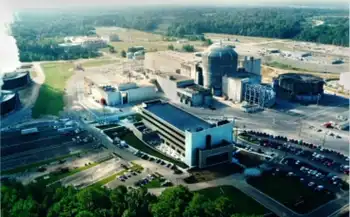
-- Federal regulators toughened security requirements at the nation's nuclear power plants yesterday, ordering new tactics and firearms training for private guards while limiting their work week to prevent fatigue.

The rules imposed by the Nuclear Regulatory Commission also require plants to overhaul their plans to thwart terrorist attacks and sabotage. The orders have been widely anticipated by plant operators since Sept. 11, 2001. Officials with the NRC and the San Onofre Nuclear Generating Station in North San Diego County refused to release details on the new measures, calling them classified.

The Associated Press, however, reported that new guard training will include, for the first time, practicing firing at moving targets. Ray Golden, a spokesman for Southern California Edison, the majority owner of the local plant, said physical and procedural changes will be made to the plant in response to the latest regulations. "Security and emergency planning are two aspects of our business that are very dynamic that will constantly be evolving," Golden said.

The San Onofre plant is one of the nation's 103 commercial nuclear reactors. Golden said guards at the San Onofre plant have worked overtime in the last 18 months, but he said he has heard of no complaints similar to those at other reactor sites of guards working 72-hour weeks. Peter Stockton, an investigator with the watchdog Project on Government Oversight, criticized the NRC for "tailoring its requirements to meet the existing capabilities of the plants' private security guards" rather than "determining the realistic threat, then sizing the forces to meet that threat."

Related News
Aging U.S. power grid threatens progress on renewables, EVs

U.S. Grid Modernization is critical for renewable energy integration, EV adoption, climate resilience, and reliability, requiring transmission upgrades, inter-regional links, hardened substations, and smart grid investments to handle extreme weather and decarbonization targets.


Key Points

U.S. Grid Modernization upgrades power networks to improve reliability, integrate renewables, and support EV demand.

✅ $2T+ investment needed for transmission upgrades

✅ Extreme weather doubling outages since 2017

✅ Regulatory fragmentation slows inter-regional lines


After decades of struggle, the U.S. clean-energy business is booming, with soaring electric-car sales and fast growth in wind and solar power. That’s raising hopes for the fight against climate change.

All this progress, however, could be derailed, as the green revolution stalls without a massive overhaul of America’s antiquated electric infrastructure – a task some industry experts say requires more than $2 trillion. The current network of transmission wires, substations and transformers is decaying with age and underinvestment, a condition highlighted by catastrophic failures during increasingly frequent and severe weather events.

Power outages over the last six years have more than doubled in number compared to the previous six years, according to a Reuters examination of federal data. In the past two years, power systems have collapsed in Gulf Coast hurricanes, West Coast wildfires, Midwest heat waves and a Texas deep freeze and recurring Texas grid crisis risks, causing long and sometimes deadly outages.

Compounding the problem, the seven regional grid operators in the United States are underestimating the growing threat of severe weather caused by climate change, Reuters found in a review of more than 10,000 pages of regulatory documents and operators’ public disclosures. Their risk models, used to guide transmission-network investments, consider historical weather patterns extending as far back as the 1970s. None account for scientific research documenting today’s more extreme weather and how it can disrupt grid generation, transmission and fuel supplies simultaneously.

The decrepit power infrastructure of the world’s largest economy is among the biggest obstacles to expanding clean energy and combating climate change on the ambitious schedule laid out by U.S. President Joe Biden. His administration promises to eliminate or offset carbon emissions from the power sector by 2035 and from the entire U.S. economy by 2050. Such rapid clean-energy growth would pressure the nation’s grid in two ways: Widespread EV adoption will spark a huge surge in power demand; and increasing dependence on renewable power creates reliability problems on days with less sun or wind, as seen in Texas, where experts have outlined reliability improvements that address these challenges.

The U.S. transmission network has seen outages double in recent years amid more frequent and severe weather events, driven by climate change and a utility supply-chain crunch that slows critical repairs. The system needs a massive upgrade to handle expected growth in clean energy and electric cars. 

“Competition from renewables is being strangled without adequate and necessary upgrades to the transmission network,” said Simon Mahan, executive director of the Southern Renewable Energy Association, which represents solar and wind companies.

The federal government, however, lacks the authority to push through the massive grid expansion and modernization needed to withstand wilder weather and accommodate EVs and renewable power. Under the current regulatory regime, and amid contentious electricity pricing proposals in recent years, the needed infrastructure investments are instead controlled by a Byzantine web of local, state and regional regulators who have strong political incentives to hold down spending, according to Reuters interviews with grid operators, federal and state regulators, and executives from utilities and construction firms.

“Competition from renewables is being strangled without adequate and necessary upgrades to the transmission network.”

Paying for major grid upgrades would require these regulators to sign off on rate increases likely to spark strong opposition from consumers and local and state politicians, who are keen to keep utility bills low. In addition, utility companies often fight investments in transmission-network improvements because they can result in new connections to other regional grids that could allow rival companies to compete on their turf, even as coal and nuclear disruptions raise brownout risks in some regions. With the advance of green energy, those inter-regional connections will become ever more essential to move power from far-flung solar and wind installations to population centers.

The power-sharing among states and regions with often conflicting interests makes it extremely challenging to coordinate any national strategy to modernize the grid, said Alison Silverstein, an independent industry consultant and former senior adviser to the U.S. Federal Energy Regulatory Commission (FERC).

“The politics are a freakin’ nightmare,” she said.

The FERC declined to comment for this story. FERC Commissioner Mark Christie, a Republican, acknowledged the limitations of the agency’s power over the U.S. grid in an April 21 agency meeting involving transmission planning and costs.

“We can’t force states to do anything,” Christie said.

The White House and Energy Department did not comment in response to detailed questions from Reuters on the Biden administration’s plans to tackle U.S. grid problems and their impact on green-energy expansion.

The administration said in an April news release that it plans to offer $2.5 billion in grants for grid-modernization projects as part of Biden’s $1 trillion infrastructure package, complementing a proposed clean electricity standard to accelerate decarbonization over the next decade. A modernized grid, the release said, is the “linchpin” of Biden’s clean-energy agenda.


Related News

View more

Bruce Power awards $914 million in manufacturing contracts

Bruce Power Major Component Replacement secures Ontario-made nuclear components via $914M contracts, supporting refurbishment, clean energy, low-cost electricity, and advanced manufacturing, extending reactor life to 2064 while boosting jobs, supply chain growth, and economy.


Key Points

A refurbishment program investing $914M in advanced manufacturing to extend reactors and deliver low-cost, clean power.

✅ $914M Ontario-made components for steam generators, tubes, fittings

✅ Extends reactor life to 2064; clean, low-cost electricity for Ontario

✅ Supports 22,000 jobs annually; boosts supply chain and economy


Today, Bruce Power signed $914 million in advanced manufacturing contracts for its Major Component Replacement, which gets underway in 2020, as the reactor refurbishment begins across the site and will allow the site to provide low-cost, carbon-free electricity to Ontario through 2064.

The Major Component Replacement (MCR) Project agreements include:

  • $642 million to BWXT Canada Inc. for the manufacturing of 32 steam generators to be produced at BWXT’s Cambridge facility.
  • $144 million to Laker Energy Products for end fittings, liners and flow elements, which will be manufactured at its Oakville location.
  • $62 million to Cameco Fuel Manufacturing, in Cobourg, for calandria tubes and annulus spacers for all six MCRs.
  • $66 million for Nu-Tech Precision Metals, in Arnprior, for the production of zirconium alloy pressure tubes for Units 6 and 3.


Bruce Power’s Life-Extension Program, which started in January 2016 with Asset Management Program investments and includes the MCRs on Units 3-8, remains on time and on budget.”

#google#

By signing these contracts today, we have secured ‘Made in Ontario‘ solutions for the components we will need to successfully complete our MCR Projects, extending the life of our site to 2064,” said Mike Rencheck, Bruce Power’s President and CEO.

“Today’s announcements represent a $914 million investment in Ontario’s highly skilled workforce, which will create untold economic opportunities for the communities in which they operate for many years to come.”We look forward to growing our already excellent relationships with these supplier partners and unions as we work toward our common goal, supported by an operating record, of continuing to keep Canada’s largest infrastructure project on time and on budget."

By extending the life of Bruce Power’s reactors to 2064, the company will create and sustain 22,000 jobs annually, both directly and indirectly, across Ontario, while investing $4 billion a year into the province’s economy, underscoring the economic benefits of nuclear development across Canada.

At the same time, Bruce Power will produce 30 per cent of Ontario’s electricity at 30 per cent less than the average cost to generate residential power, while also producing zero carbon emissions, aligning with Pickering NGS life extensions across the province.The Hon. Glenn Thibeault, Minister of Energy, said today’s announcement is good news for the people of Ontario.”

Bruce Power’s Life-Extension Program makes sense for Ontario, and the announcements made today will create good jobs and benefit our economy for decades to come,” Minister Thibeault said.

“Moving forward with the refurbishment project is part of our government’s plan to support care and opportunity, while producing affordable, reliable and clean energy for the people of Ontario.”Kim Rudd, Parliamentary Secretary to the Minister of Natural Resources and MP for Northumberland-Peterborough South, offered her support and congratulations.”

Related planning includes Bruce C project exploration funding that supports long-term nuclear options in Ontario.

Canada’s nuclear industry, including its advanced manufacturing capability, is respected internationally,” Rudd said. “Bruce Power’s announcement today related to the advanced manufacturing of key components throughout Ontario as part of its Life-Extension Program will allow these suppliers to have a secure base to not only meet Canada’s needs, but export internationally.”


Related News

View more

Electricity complaints filed by Texans reach three-year high, report says

Texas Electricity Complaints surged to a three-year high, highlighting Public Utility Commission data on billing disputes, meter problems, and service issues in the competitive retail electricity market and consumer protection process.


Key Points

Consumer filings to Texas PUC about billing, service, and meters, with 2018 reaching a three-year high.

✅ 5,371 complaints/inquiries in FY2018; 43.8% involved billing disputes.

✅ Service issues 15.8% and meters 12.6%; PUC publishes complaint stats.

✅ Advocates urge monitoring to keep deregulated retail market healthy.


The number of electricity service-related complaints and inquiries filed with the state’s Public Utility Commission reached a three-year high this past fiscal year, an advocacy group said Tuesday.

According to the Texas Coalition for Affordable Power, a nonprofit that advocates for low electricity prices, Texans filed 5,371 complaints or inquiries with the commission between September 2017 and August of this year. That’s up from the 4,175 complaints or inquiries filed during the same period in 2017 and the 4,835 filed in 2016. The complaints and inquiries included concerns with billing, meters and service.

“This stark uptick in complaints is disappointing — especially after several years of generally improving numbers,” Jay Doegey, the coalition's executive director, said in a written statement. “In percentage terms, the year-to-year rise in complaints is the greatest in a decade. Clearly, many Texans remain frustrated with aspects of their electric service.”

The utility commission did not immediately respond to a request for comment.

While complaints and inquiries increased in 2018, the number of complaints and inquiries has generally decreased since 2009, when Texans filed 15,956 with the commission. That could be because there have been lower residential electricity prices and because Texans have become more familiar with the state’s competitive retail electricity system over the last decade, the coalition's report said.

And complaints from 2018 are well below 2003 levels, when the number of complaints and inquiries soared to more than 17,000, a year after Texas deregulated most of its electricity market structure at the time.

But Jake Dyer, a policy analyst at the coalition, said his group is closely watching the uptick in complaints this year as the Texas power grid faces recurring strains.

“We are invested in making sure the competition works,” Dyer said. “When you see an uptick like this, you should watch very closely to make sure the market remains healthy and to make sure there is not something else going on.”

However, Dyer said that it is too early to know what that something else that is going on might be.

According to the report, concerns about billing made up most of the complaints and inquiries filed this year at 43.8 percent. That’s up from 42.5 percent in fiscal year 2017. Concerns about the provision of electrical service and about electrical meters also ranked high, constituting 15.8 percent and 12.6 percent of the complaints and inquiries, respectively.

The Public Utility Commission publishes customer complaint statistics on its website. The Texas Coalition for Affordable Power takes into account both complaints and inquiries filed with the commission for its report in order “to gauge general consumer sentiment and to maintain a uniform methodology across the study period.”

Texans can file an official complaint with the the commission's Customer Protection Division. Under the complaint process, the complaint is sent to the electric company, which has 21 days to respond.

Some providers outside the competitive market, such as electric cooperatives, drew praise for performance during the 2021 winter storm.

Following the 2021 winter storm, Texas lawmakers proposed an electricity market bailout to stabilize costs and reliability.


Related News

View more

18% of electricity generated in Canada in 2019 came from fossil fuels

EV Decarbonization Strategy weighs life-cycle emissions and climate targets, highlighting mode shift to public transit, cycling, and walking, grid decarbonization, renewable energy, and charging infrastructure to cut greenhouse gases while reducing private car dependence.


Key Points

A plan to cut transport emissions by pairing EV adoption with mode shift, clean power, and less private car use.

✅ Prioritize mode shift: transit, cycling, and walking.

✅ Electrify remaining vehicles with clean, renewable power.

✅ Expand charging, improve batteries, and manage critical minerals.


California recently announced that it plans to ban the sales of gas-powered vehicles by 2035, a move similar to a 2035 electric vehicle mandate seen elsewhere, Ontario has invested $500 million in the production of electric vehicles (EVs) and Tesla is quickly becoming the world's highest-valued car company.

It almost seems like owning an electric vehicle is a silver bullet in the fight against climate change, but it isn't, as a U of T study explains today. What we should also be focused on is whether anyone should use a private vehicle at all.
 
As a researcher in sustainable mobility, I know this answer is unsatisfying. But this is where my latest research has led.

Battery EVs, such as the Tesla Model 3 - the best selling EV in Canada in 2020 - have no tailpipe emissions. But they do have higher production and manufacturing emissions than conventional vehicles, and often run on electricity that comes from fossil fuels.

Almost 18 per cent of the electricity generated in Canada came from fossil fuels in 2019, and even as Canada's EV goals grow more ambitious today, the grid mix varies from zero in Quebec to 90 per cent in Alberta.
 
Researchers like me compare the greenhouse gas emissions of an alternative vehicle, such as an EV, with those of a conventional vehicle over a vehicle lifetime, an exercise known as a life-cycle assessment. For example, a Tesla Model 3 compared with a Toyota Corolla can provide up to 75 per cent reduction in greenhouse gases emitted per kilometre travelled in Quebec, but no reductions in Alberta.


Hundreds of millions of new cars

To avoid extreme and irreversible impacts on ecosystems, communities and the overall global economy, we must keep the increase in global average temperatures to less than 2 C - and ideally 1.5 C - above pre-industrial levels by the year 2100.

We can translate these climate change targets into actionable plans. First, we estimate greenhouse gas emissions budgets using energy and climate models for each sector of the economy and for each country. Then we simulate future emissions, taking alternative technologies into account, as well as future potential economic and societal developments.

I looked at the U.S. passenger vehicle fleet, which adds up to about 260 million vehicles, while noting the potential for Canada-U.S. collaboration in this transition, to answer a simple question: Could the greenhouse gas emissions from the sector be brought in line with climate targets by replacing gasoline-powered vehicles with EVs?

The results were shocking. Assuming no changes to travel behaviours and a decarbonization of 80 per cent of electricity, meeting a 2 C target could require up to 300 million EVs, or 90 per cent of the projected U.S. fleet, by 2050. That would require all new purchased vehicles to be electric from 2035 onwards.

To put that into perspective, there are currently 880,000 EVs in the U.S., or 0.3 per cent of the fleet. Even the most optimistic projections, despite hype about an electric-car revolution gaining steam, from the International Energy Agency suggest that the U.S. fleet will only be at about 50 per cent electrified by 2050.


Massive and rapid electrification

Still, 90 per cent is theoretically possible, isn't it? Probably, but is it desirable?

In order to hit that target, we'd need to very rapidly overcome all the challenges associated with EV adoption, such as range anxiety, the higher purchase cost and availability of charging infrastructure.
 
A rapid pace of electrification would severely challenge the electricity infrastructure and the supply chain of many critical materials for the batteries, such as lithium, manganese and cobalt. It would require vast capacity of renewable energy sources and transmission lines, widespread charging infrastructure, a co-ordination between two historically distinct sectors (electricity and transportation systems) and rapid innovations in electric battery technologies. I am not saying it's impossible, but I believe it's unlikely.

Read more: There aren't enough batteries to electrify all cars - focus on trucks and buses instead

So what? Shall we give up, accept our collective fate and stop our efforts at electrification?

On the contrary, I think we should re-examine our priorities and dare to ask an even more critical question: Do we need that many vehicles on the road?


Buses, trains and bikes

Simply put, there are three ways to reduce greenhouse gas emissions from passenger transport: avoid the need to travel, shift the transportation modes or improve the technologies. EVs only tackle one side of the problem, the technological one.

And while EVs do decrease emissions compared with conventional vehicles, we should be comparing them to buses, including leading electric bus fleets in North America, trains and bikes. When we do, their potential to reduce greenhouse gas emissions disappears because of their life cycle emissions and the limited number of people they carry at one time.

If we truly want to solve our climate problems, we need to deploy EVs along with other measures, such as public transit and active mobility. This fact is critical, especially given the recent decreases in public transit ridership in the U.S., mostly due to increasing vehicle ownership, low gasoline prices and the advent of ride-hailing (Uber, Lyft)

Governments need to massively invest in public transit, cycling and walking infrastructure to make them larger, safer and more reliable, rather than expanding EV subsidies alone. And we need to reassess our transportation needs and priorities.

The road to decarbonization is long and winding. But if we are willing to get out of our cars and take a shortcut through the forest, we might get there a lot faster.

Author: Alexandre Milovanoff - Postdoctoral Researcher, Environmental Engineering, University of Toronto The Conversation


Related News

View more

Are we ready for electric tractors?

Electric tractors are surging, with battery-powered models, grid-tethered JD GridCON, and solar-charged designs delivering autonomous guidance, high efficiency, low maintenance, quiet operation, robust PTO compatibility, and durability for sustainable, precision agriculture.


Key Points

Electric tractors use battery or grid power to run implements with high efficiency, low noise, and minimal maintenance.

✅ Battery, grid-tethered, or solar-charged power options

✅ Lower operating costs, reduced noise, fewer moving parts

✅ Autonomous guidance, PTO compatibility, and quick charging


Car and truck manufacturers are falling off the fossil fuel bandwagon in droves and jumping on the electric train.

Now add tractors to that list.

Every month, another e-tractor announcement comes across our desks. Environmental factors drive this trend, along with energy efficiency, lower maintenance, lower noise level and motor longevity, and even autonomous weed-zapping robots are emerging.

Let’s start with the Big Daddy of them all, the 400 horsepower JD GridCON. This tractor is not a hybrid and it has no hassle with batteries. The 300 kilowatts of power come to the GridCON through a 1,000 metre extension cord connected to the grid, including virtual power plants or an off-field generator. A reel on the tractor rolls the cable in and out. The cable is guided by a robotic arm to prevent the tractor from running over it.

It uses a 700 volt DC bus for electric power distribution onboard and for auxiliary implements. It uses a cooling infrastructure for off-board electrical use. Total efficiency of the drive train is around 85 percent. A 100 kilowatt electric motor runs the IVT transmission. There’s an auxiliary outlet for implements powered by an electric motor up to 200 kW.

GridCON autonomously follows prescribed routes in the field at speeds up to 12 m.p.h., leveraging concepts similar to fleet management solutions for coordination. It can also be guided manually with a remote control when manoeuvring the tractor to enter a field. Empty weight is 8.5 tonnes, which is about the same as a 6195R but with double the power. Deere engineers say it will save about 50 percent in operating costs compared to battery powered tractors.

Solectrac
Two California-built all-battery powered tractors are finally in full production. While the biggest is only 40 horsepower, these are serious tractors that may foretell the future of farm equipment.

The all-electric 40 h.p. eUtility tractor is based on a 1950s Ford built in India. Solectrac is able to buy the bare tractor without an engine, so it can create a brand new electric tractor with no used components for North American customers. One tractor has already been sold to a farmer in Ontario. | Solectrac photo
The tractors are built by Solectrac, owned by inventor Steve Heckeroth, who has been doing electric conversions on cars, trucks, race cars and tractors for 25 years. He said there are three main reasons to take electric tractors seriously: simplicity, energy efficiency and longevity.

“The electric motor has only one moving part, unlike small diesel engines, which have over 300 moving parts,” Heckeroth said, adding that Solectrac tractors are not halfway compromise hybrids but true electric machines that get their power from the sun or the grid, particularly in hydro-rich regions like Manitoba where clean electricity is abundant, whichever is closest.

Neither tractor uses hydraulics. Instead, Heckeroth uses electric linear actuators. The ones he installs provide 1,000 pounds of dynamic load and 3,000 lb. static loads. He uses linear actuators because they are 20 times more efficient than hydraulics.

The eUtility and eFarmer are two-wheel drive only, but engineers are working on compact four-wheel drive electric tractors. Each tractor carries a price tag of US$40,000. Because production numbers are still limited, both tractors are available on a first to deposit basis. One e-tractor has already been sold and delivered to a farmer in Ontario.

The eUtility is a 40 h.p. yard tractor that accepts all Category 1, 540 r.p.m. power take-off implements on the rear three-point hitch, except those requiring hydraulics. An optional hydraulic pump can be installed for $3,000 for legacy implements that require hydraulics. For that price, a dedicated electricity believer might instead consider converting the implement to electric.

“The eUtility is actually a converted new 1950s Ford tractor made in a factory in India that was taken over after the British were kicked out in 1948,” Heckeroth said.

“I am able to buy only the parts I need and then add the motor, controller and batteries. I had to go to India because it’s one of the few places that still makes geared transmissions. These transmissions work the best for electric tractors. Gear reduction is necessary to keep the motor in the most efficient range of about 2,000 r.p.m. It has four gears with a high and low range, which covers everything from creep to 25 m.p.h.

On his eUtility, a single 30 kWh onboard battery pack provides five to eight hours of run time, depending on loads. It can carry two battery packs. The Level 2 quick charge gives an 80 percent charge for one pack in three hours. Two packs can receive a full charge overnight with support from home batteries like Powerwall for load management.

The integrated battery management system protects the batteries during charging and discharging, while backup fuel cell chargers can keep storage healthy in remote deployments. Batteries are expected to last about 10 years, depending on the number of operating cycles and depth of discharge.

Exchangeable battery packs are available to keep the tractor running through the full work day. These smaller 20 kWh packs can be mounted on the rear hitch to balance the weight of the optional front loader or carried in the optional front loader to balance the weight of heavy implements mounted on the rear hitch.

The second tractor is the 20 kWh eFarmer, which features high visibility for row crop farms at a fraction of the cost of diesel fuel tractors. The 30 h.p. eFarmer is basically just a tube frame with the necessary components attached. A simple joystick controls steering, speed and brakes.

Harvest
Introduced to the North American public this spring by Motivo Engineering in California, the Harvest tractor is simply a big battery on wheels. The complex electrical system takes power in through a variety of renewable energy sources, such as solar panels with smart solar inverters enabling optimized PV integration, water wheels, wind turbines or even intermittent electrical grids. It stores electrical power on-board and delivers it when and where required, putting power out to a large number of electrical tools and farm implements. It operates in AC or DC modes.


Related News

View more

Ontario government wants new gas plants to boost electricity production

Ontario Gas Plant Expansion aims to boost grid reliability as nuclear refurbishments proceed, using natural gas to meet electricity demand, despite critics urging renewables, energy storage, and efficiency to reduce carbon emissions, protecting investment growth.


Key Points

Ontario plan to expand gas plants for reliability during nuclear outages, sparking debate on emissions and clean options.

✅ IESO data: gas share rose from 4% (2017) to 10.4% (2022).

✅ Government cites nuclear refurbishments and demand growth.

✅ Critics propose storage, wind, solar, and efficiency.


The Ontario government is preparing to expand gas-fired power plants in Ontario; a move critics say will make the province's electricity system dirtier and could eventually leave taxpayers on the hook.

The province is currently soliciting bids for additional gas-fired electricity generation, which means new gas plants get built, or existing gas plants get expanded. 

It's poised to be Ontario's biggest increase in the gas-fired power supply in more than a decade since the previous Liberal government scrapped two gas plants, in Mississauga and Oakville, at a cost the auditor general pegged at around $1 billion. 

Doug Ford's energy minister, Todd Smith, says Ontario needs gas plants now to help meet an expected surge in demand for electricity as the province faces a supply shortfall in the coming years and to provide power while some units of the province's nuclear stations are down for refurbishment. 

"It's really important to have natural gas as an insurance policy to keep the lights on and provide the reliability that we need," Smith said in an interview. 

"We need natural gas for the short term, especially to get us through these refurbishments."

The portion of Ontario's electricity supply that comes from natural gas matters for the environment and the province's economy. Manufacturing companies increasingly seek clean power that emits as little carbon dioxide as possible. 

The portion of Ontario's electricity supply that comes from natural gas matters for the environment and the province's economy. Manufacturing companies increasingly seek a power supply that emits as little carbon dioxide as possible. 

Increasing the amount of gas-fired generation in the electricity system puts Ontario's ability to attract such investments at risk as it complicates balancing demand and emissions across the grid, says Evan Pivnick, program manager with Clean Energy Canada, a think tank. 

"Building new natural gas (power plants) in Ontario today should be seen as an absolute last resort for meeting our energy needs," said Pivnick in an interview. 

Ontario's electricity system has among the lowest rates of CO2 emissions in North America, with roughly half of the annual supply provided by nuclear power, one-quarter from hydro dams, and one-tenth from wind turbines. 

However, Ontario's gas plants have produced a growing amount of electricity in recent years, despite an early report exploring a gas halt by the minister, and that trend will continue if new gas plants are built. 

In 2017, gas- and oil-fired generation provided just four percent of Ontario's electricity supply, according to figures from the provincial agency that manages the grid, the Independent Electricity System Operator (IESO). 

By 2022, that figure reached 10.4 percent. 

Ontario doesn't need new gas plants to meet the electricity demand, says Bryan Purcell, vice president of policy and programs at The Atmospheric Fund. This agency invests in low-carbon projects in the Greater Toronto and Hamilton Area. 

"We're quite concerned about where Ontario's electric grid is going," said Purcell. "Thankfully, there's still time to adjust course and look at other options." 

According to Purcell and Pivnick, those options to avoid gas could include power storage (in which excess generated energy is stored for later use when electricity demand rises), wind and solar projects, or energy efficiency and conservation programs.


Related News

View more

Sign Up for Electricity Forum’s Newsletter

Stay informed with our FREE Newsletter — get the latest news, breakthrough technologies, and expert insights, delivered straight to your inbox.

Electricity Today T&D Magazine Subscribe for FREE

Stay informed with the latest T&D policies and technologies.
  • Timely insights from industry experts
  • Practical solutions T&D engineers
  • Free access to every issue

Download the 2025 Electrical Training Catalog

Explore 50+ live, expert-led electrical training courses –

  • Interactive
  • Flexible
  • CEU-cerified