By PR Newswire


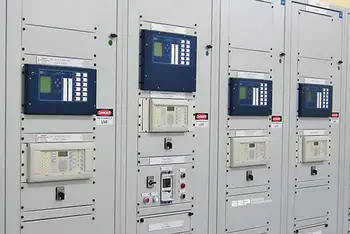
Substation Relay Protection Training

Our customized live online or in‑person group training can be delivered to your staff at your location.
  • Live Online
  • 12 hours Instructor-led
  • Group Training Available
Regular Price:
$699
Coupon Price:
$599
Reserve Your Seat Today
Recommendations reflect SDG&E's long term goals

SAN DIEGO -- San Diego Gas & Electric (SDG&E) has recently proposed a plan to purchase a mix of demand response and local generation assets, including energy from renewable resources and new power plants, to meet growing customer needs beginning in 2005. This announcement reflects a state decision effective Jan. 1, 2003, to put SDG&E back in the role of planning and procuring electricity for its customers after the energy crisis of 2000-2001.

"For more than 100 years, SDG&E has supplied safe, reliable power to its customers," said Edwin A. Guiles, chairman and chief executive officer of SDG&E. "We are pleased to be back in the role of planning and procuring the resources to meet our customers' needs."

"Today, we are asking the California Public Utilities Commission (CPUC) to approve our recommendations to meet SDG&E's grid reliability needs and help ensure the region's future energy security. Our proposal is in alignment with the state's Energy Action Plan and represents direction from the commission to consider utility generation ownership in our mix of resources."

The state Energy Action Plan, drafted and approved earlier this year by the CPUC, the California Energy Commission and the California Power Authority, provides policy guidance for future resource additions.

Proposal Highlights

The recommendation for local resources to meet SDG&E's grid reliability needs in 2005-2007 includes:

Demand response

-- A voluntary program that will cycle air conditioners during peak-use periods to reduce the amount of energy needed in the region. The program will target SDG&E's business customers with a goal of reducing demand by 8.7 megawatts in 2005, climbing to a total of 30 megawatts by 2007.

Renewables

-- Purchase of 40 megawatts of renewable biomass energy.

-- Partnership in a joint demonstration project using solar thermal generation technology.

Power Plants

-- Purchase of a new 45-megawatt combustion turbine.

-- Purchase of the 550-megawatt Palomar power plant from SDG&E's affiliate, Sempra Energy Resources. SDG&E will buy the plant, located in Escondido, when construction is complete in 2006. The plant will then be owned and operated by SDG&E under CPUC regulation.

This mix of resources, valued at approximately $600 million, reflects SDG&E's commitment to create a balanced portfolio of resource types.

As part of the RFP process, SDG&E also identified another project that, while not needed for near-term grid reliability, would provide the region and the state with an additional new power plant.

SDG&E is requesting CPUC approval to sign a power-purchase agreement for 570 megawatts of power from Calpine Corp.'s Otay Mesa plant for 10 years. Under the agreement, Calpine's power plant, still under construction, will begin supplying power to SDG&E in 2007 at regulated rates.

Several steps still must be completed before this agreement with Calpine can create the full benefits for San Diego and the state. SDG&E would need to receive expedited approval of electric transmission system upgrades in the southern portion of SDG&E's service territory to receive the power. A state power-purchase contract currently allocated to SDG&E customers would need to be shifted to Pacific Gas & Electric (PG&E) by the CPUC. That power is generated in PG&E's service territory.

SDG&E's resource recommendations in today's filing are in line with its long-term resource plan announced in April 2003. That plan outlined a balanced portfolio of resource options, including more energy efficiency, increased use of renewable energy, new transmission lines and more local generation. In May, SDG&E issued a request for proposal (RFP) to meet the region's energy needs starting in 2005, which drew 22 bids representing a variety of resource types including demand reduction, renewable and fossil fueled generation.

"We were very pleased with the number of strong proposals we received in response to the RFP, and we are confident that the resources we recommend today are reliable, low cost and environmentally superior," said Lad Lorenz, SDG&E's vice president of electric and gas procurement. "This combination of generation assets is at least 30-percent more fuel-efficient than existing power plants in the region."

SDG&E subjected the bids to several months of analysis and negotiation to ensure that the different proposals were fairly evaluated and that an appropriate mix of resources was chosen that would best meet customer needs. A Procurement Review Group, established by the CPUC, provided review and advice during the procurement process. The panel includes representatives from consumer and environmental groups and state agencies. An independent third-party observer also monitored all the negotiations with Sempra Energy Resources and Calpine to ensure compliance with the RFP and the CPUC's affiliate guidelines.

"The RFP is an industry standard and a proven, competitive process," said Robert J. Resley, SDG&E's vice president of strategic and resource planning. "We are confident these steps helped ensure the best results for San Diego and our customers, and we believe this balanced mix of resources will provide a significant enhancement to San Diego's energy reliability for years to come."

Resley pointed out that SDG&E's long-term resource plan calls for more energy efficiency and demand response, more renewable and distributed generation resources, as well as an additional transmission line.

"Today's resource recommendations provide the region with the time needed to bridge to greater use of these emerging technologies consistent with the Energy Action Plan," added Resley.

SDG&E's filing is subject to CPUC approval, including public hearings expected to be held by the end of the year with a final decision anticipated in the first quarter of 2004.

Related News
Latvia eyes electricity from Belarus nuclear plant

Latvia Astravets electricity imports weigh AST purchases from the Belarusian nuclear plant, impacting the Baltic grid, Lithuania market, energy security, and cross-border trading as Latvia seeks to mitigate supply risks and stabilize power flows.


Key Points

Proposed AST purchases of power from Belarus's Astravets plant to bolster Baltic grid supply via Lithuania.

✅ AST evaluates imports to mitigate supply risk

✅ Energy could enter Lithuania via existing trading route

✅ Debate centers on nuclear safety and Baltic grid impacts


Latvia’s electricity transmission system operator, AST, is looking at the possibility of purchasing electricity from the soon-to-be completed Belarusian nuclear power plant in Astravets, at a time when Ukraine's electricity exports have resumed in the region, long criticised by the Lithuanian government, Belsat TV has reported.

According to the Latvian media, the Latvian government is seeking to mitigate the risk of a possible drop in electricity supplies amid price spikes in Ireland highlighting dispatchable power concerns, given that energy trading between the Baltic states and third parties is currently carried out only through the Belarusian-Lithuanian border, including Latvian imports from Lithuania.

If AST starts importing electricity from the Belarusian plant to Latvia, in a pattern similar to Georgia's electricity imports during peak demand, the energy is expected to enter the Lithuanian market as well.

Such cross-border flows also mirror responses to Central Asia's electricity shortages seen recently.

The Lithuanian government has repeatedly criticised the nuclear power over national security and environmental safety concerns, as well as a number of emergencies that took place during construction, particularly as Europe is losing nuclear power and confronting energy security challenges.

Debates over infrastructure and safety have also intensified by projects like power lines to reactivate Zaporizhzhia in Ukraine.

The first Astravets reactor, which is being built close to the Lithuanian border in the Hrodno region, is expected to be operational by the end of 2019, a year that saw Belgium's nuclear exports rise across Europe.


Related News

View more

Ontario Energy Board prohibiting electricity shutoffs during latest stay-at-home order

OEB Disconnection Ban shields Ontario residential customers under the stay-at-home order, pausing electricity distributor shutoffs for non-payment and linking COVID-19 Energy Assistance Program credits for small businesses, charities, and overdue utility bills.


Key Points

A pause on electricity shutoff notices during Ontario's stay-at-home order, with COVID-19 bill credits for customers.

✅ Distributors cannot issue residential disconnection notices.

✅ Applies through the stay-at-home order timeline.

✅ CEAP credits: $750 residential; $1,500 small biz and charities.


With Ontario now into the third province-wide lockdown, the Ontario Energy Board (OEB) has promised residents won't have to worry about their power being shut off.

On April 8, the Province issued the third stay-at-home order in the last 13 months which is scheduled to last for 28 days until at least May 6, as electricity rates and policies continue to shift.

On April 30, the annual winter disconnection ban is set to expire, meaning electricity distributors like Hydro One would normally be permitted to issue disconnection notices for non-payment as early as 14 days before the end of the ban.

However, the OEB has announced changes for electricity consumers that prohibit electricity distributors from issuing disconnection notices to residential customers for the entirety of the stay-at-home order.

Additionally, the COVID-19 Energy Assistance Program is available for residential, small business, and registered charity customers who have overdue amounts on their electricity or gas bills as a result of the pandemic, complementing support for electric bills introduced during COVID-19, and the fixed COVID-19 hydro rate that helped stabilize costs.

Those who meet these criteria are eligible for credits up to a maximum of $750 for residential customers and $1,500 for small businesses and charities, alongside earlier moves to set an off-peak price to ease costs.


Related News

View more

Iran eyes transmitting electricity to Europe as region’s power hub

Iran Electricity Grid Synchronization enables regional interconnection, cross-border transmission, and Caspian-Europe energy corridors, linking Iraq, Azerbaijan, Russia, and Qatar to West Asia and European markets with reliable, flexible power exchange.


Key Points

Iran's initiative to link West Asian and European power grids for trade, transit, reliability, and regional influence.

✅ Synchronizes grids with Iraq, Azerbaijan, Russia, and potential Qatar link

✅ Enables east-to-Europe electricity transit via Caspian energy corridors

✅ Backed by gas-fueled and combined-cycle generation capacity


Following a plan for becoming West Asia’s electricity hub, Iran has been taking serious steps for joining its electricity network with neighbors in the past few years.

The Iranian Energy Ministry has been negotiating with the neighboring countries including Iraq for the connection of their power networks with Iran, discussing Iran-Iraq energy cooperation as well as ties with Russia, Afghanistan, Azerbaijan, and Qatar to make them enable to import or transmit their electricity to new destination markets through Iran.

The synchronization of power grids with the neighboring countries, not only enhances Iran’s electricity exchanges with them, but it will also increase the political stance of the country in the region.

So far, Iran’s electricity network has been synchronized with Iraq, where Iran is supplying 40% of Iraq's power today, and back in September, the Energy Minister Reza Ardakanian announced that the electricity networks of Russia and Azerbaijan are the next in line for becoming linked with the Iranian grid in the coming months.

“Within the next few months, the study project of synchronization of the electricity networks of Iran, Azerbaijan, and Russia will be completed and then the executive operations will begin,” the minister said.

Meanwhile, Ardakanian and Qatari Minister of State for Energy Affairs Saad Sherida Al-Kaabi held an online meeting in late September to discuss joining the two countries' electricity networks via sea.

During the online meeting, Al-Kaabi said: "Electricity transfer between the two countries is possible and this proposal should be worked on.”

Now, taking a new step toward becoming the region’s power hub, Iran has suggested becoming a bridge between East and Europe for transmitting electricity.

In a virtual conference dubbed 1st Caspian Europe Forum hosted by Berlin on Thursday, the Iranian energy minister has expressed the country’s readiness for joining its electricity network with Europe.

"We are ready to connect Iran's electricity network, as the largest power generation power in West Asia, with the European countries and to provide the ground for the exchange of electricity with Europe," Ardakanian said addressing the online event.

Iran's energy infrastructure in the oil, gas, and electricity sectors can be used as good platforms for the transfer of energy from east to Europe, he noted.

In the event, which was aimed to study issues related to the development of economic cooperation, especially energy, between the countries of the Caspian Sea region, the official added that Iran, with its huge energy resources and having skilled manpower and advanced facilities in the field of energy, can pave the ground for the prosperity of international transport and energy corridors.

"In order to help promote communication between our landlocked neighbors with international markets, as Uzbekistan aims to export power to Afghanistan across the region, we have created a huge transit infrastructure in our country and have demonstrated in practice our commitment to regional development and peace and stability," Ardakanian said.

He pointed out that having a major percentage of proven oil and gas resources in the world, regional states need to strengthen relations in a bid to regulate production and export policies of these huge resources and potentially play a role in determining the price and supply of these resources worldwide.

“EU countries can join our regional cooperation in the framework of bilateral or multilateral mechanisms such as ECO,” he said.

Given the growing regional and global energy needs and the insufficient investment in the field, with parts of Central Asia facing severe electricity shortages today, as well as Europe's increasing needs, this area can become a sustainable area of cooperation, he noted.

Ardakanian also said that by investing in energy production in Iran, Europe can meet part of its future energy needs on a sustainable basis.

In Iraq, plans for nuclear power plants are being pursued to tackle chronic electricity shortages, reflecting parallel efforts to diversify generation.

Iran currently has electricity exchange with Armenia, Azerbaijan, Iraq, where grid rehabilitation deals have been finalized, Turkmenistan, and Afghanistan.

The country’s total electricity exports vary depending on the hot and cold seasons of the year, since during the hot season which is the peak consumption period, the country’s electricity exports decreases, however electrical communication with neighboring countries continues.

Enjoying abundant gas resources, which is the main fuel for the majority of the country’s power plants, Iran has the capacity to produce about 85,500 megawatts [85.5 gigawatts (GW)] of electricity.

Currently, combined cycle power plants account for the biggest share in the country’s total power generation capacity as Iran is turning thermal plants to combined cycle to save energy, followed by gas power plants.


Related News

View more

Clocks are running slow across Europe because of an argument over who pays the electricity bill

European Grid Frequency Clock Slowdown has made appliance clocks run minutes behind as AC frequency drifts on the 50 Hz electricity grid, driven by a Kosovo-Serbia billing dispute and ENTSO-E monitored supply-demand imbalance.


Key Points

An EU-wide timing error where 50 Hz AC deviations slow appliance clocks due to Kosovo-Serbia grid imbalances.

✅ Clocks drifted up to six minutes across interconnected Europe

✅ Cause: unpaid power in N. Kosovo, contested by Serbia

✅ ENTSO-E reported 50 Hz deviations from supply-demand mismatch


Over the past couple of months, Europeans have noticed time slipping away from them. It’s not just their imaginations: all across the continent, clocks built into home appliances like ovens, microwaves, and coffee makers have been running up to six minutes slow. The unlikely cause? A dispute between Kosovo and Serbia over who pays the electricity bill.

To make sense of all this, you need to know that the clocks in many household devices use the frequency of electricity to keep time. Electric power is delivered to our homes in the form of an alternating current, where the direction of the flow of electricity switches back and forth many times a second. (How this system came to be established is complex, but the advantage is that it allows electricity to be transmitted efficiently.) In Europe, this frequency is 50 Hertz — meaning a current alternating of 50 times a second. In America, it’s 60 Hz, and during peak summer demand utilities often prepare for blackouts as heat drives loads higher.

Since the 1930s, manufacturers have taken advantage of this feature to keep time. Each clock needs a metronome — something with a consistent rhythm that helps space out each second — and an alternating current provides one, saving the cost of extra components. Customers simply set the time on their oven or microwave once, and the frequency keeps it precise.

At least, that’s the theory. But because this timekeeping method is reliant on electrical frequency, when the frequency changes, so do the clocks. That is what has been happening in Europe.

The news was announced this week by ENTSO-E, the agency that oversees the single, huge electricity grid connecting 25 European countries and which recently synchronized with Ukraine to bolster regional resilience. It said that variations in the frequency of the AC caused by imbalances between supply and demand on the grid have been messing with the clocks. The imbalance is itself caused by a political argument between Serbia and Kosovo. “This is a very sensitive dispute that materializes in the energy issues,” Susanne Nies, a spokesperson for ENTSO-E, told The Verge.

Essentially, after Kosovo declared independence from Serbia in 2008, there were long negotiations over custody of utilities like telecoms and electricity infrastructure. As part of the ongoing agreements (Serbia still does not recognize Kosovo as a sovereign state), four Serb-majority districts in the north of Kosovo stopped paying for electricity. Kosovo initially covered this by charging the rest of the country more, but last December, it decided it had had enough and stopped paying. This led to an imbalance: the Kosovan districts were still using electricity, but no one was paying to put it on the grid.

This might sound weird, but it’s because electricity grids work on a system of supply and demand, where surging consumption has even triggered a Nordic grid blockade in response to constrained flows. As Stewart Larque of the UK’s National Grid explains, you want to keep the same amount of electricity going onto the grid from power stations as the amount being taken off by homes and businesses. “Think of it like driving a car up a hill at a constant speed,” Larque told The Verge. “You need to carefully balance acceleration with gravity.” (The UK itself has not been affected by these variations because it runs its own grid.)


“THEY ARE FREE-RIDING ON THE SYSTEM.”

This balancing act is hugely complex and requires constant monitoring of supply and demand and communication between electricity companies across Europe, and growing cyber risks have spurred a renewed focus on protecting the U.S. power grid among operators worldwide. The dispute between Kosovo and Serbia, though, has put this system out of whack, as the two governments have been refusing to acknowledge what the other is doing.

“The Serbians [in Kosovo] have, according to our sources, not been paying for their electricity. So they are free-riding on the system,” says Nies.

The dispute came to a temporary resolution on Tuesday, when the Kosovan government stepped up to the plate and agreed to pay a fee of €1 million for the electricity used by the Serb-majority municipalities. “It is a temporary decision but as such saves our network functionality,” said Kosovo’s prime minister Ramush Haradinaj. In the longer term, though, a new agreement will need to be reached.

There have been rumors that the increase in demand from northern Kosovo was caused by cryptocurrency miners moving into the area to take advantage of the free electricity. But according to ENTSO-E, this is not the case. “It is absolutely unrelated to cryptocurrency,” Nies told The Verge. “There’s a lot of speculation about this, and it’s absolutely unrelated.” Representatives of Serbia’s power operator, EMS, refused to answer questions on this.

For now, “Kosovo is in balance again,” says Nies. “They are producing enough [electricity] to supply the population. The next step is to take the system back to normal, which will take several weeks.” In other words, time will return to normal for Europeans — if they remember to change their clocks, even as the U.S. power grid sees more blackouts than other developed nations.


Related News

View more

B.C. Hydro doing good job managing billions in capital assets, says auditor

BC Hydro Asset Management Audit confirms disciplined oversight of dams, generators, power lines, substations, and transformers, with robust lifecycle planning, reliability metrics, and capital investment sustaining aging infrastructure and near full-capacity performance.


Key Points

Audit confirming BC Hydro's asset governance and lifecycle planning, ensuring safe, reliable grid infrastructure.

✅ $25B in assets; many facilities operating near full capacity.

✅ 80% of assets are dams, generators, lines, poles, substations, transformers.

✅ $2.5B invested in renewal, repair, and replacement in fiscal 2018.


A report by B.C.’s auditor-general says B.C. Hydro is doing a good job managing the province’s dams, generating stations and power lines, including storm response during severe weather events.

Carol Bellringer says in the audit that B.C. Hydro’s assets are valued at more than $25 billion and even though some generating facilities are more than 85 years old they continue to operate near full-capacity and can accommodate holiday demand peaks when needed.

The report says about 80 per cent of Hydro’s assets are dams, generators, power lines, poles, substations and transformers that are used to provide electrical service to B.C., where residential electricity use shifted during the pandemic.

The audit says Hydro invested almost $2.5 billion to renew, repair or replace the assets it manages during the last fiscal year, ending March 31, 2018, and, in a broader context, bill relief has been offered to only part of the province.

Bellringer’s audit doesn’t examine the $10.7 billion Site C dam project, which is currently under construction in northeast B.C. and not slated for completion until 2024.

She says the audit examined whether B.C. Hydro has the information, practices, processes and systems needed to support good asset management, at a time when other utilities are dealing with pandemic impacts on operations.


Related News

View more

Biden Imposes Higher Tariffs on Chinese Electric Cars and Solar Cells

U.S. Tariffs on Chinese EVs and Solar Cells target trade imbalances, subsidies, and intellectual property risks, bolstering domestic manufacturing, supply chains, and national security across clean energy, automotive technology, and renewable markets.


Key Points

Policy measures raising duties on Chinese EVs and solar cells to protect U.S. industry, IP, and national security.

✅ Raises duties to counter subsidies and IP risks

✅ Supports domestic EV and solar manufacturing jobs

✅ May reshape supply chains, prices, and trade flows


In a significant move aimed at bolstering domestic industries and addressing trade imbalances, the Biden administration has announced higher tariffs on Chinese-made electric cars and solar cells. This decision marks a strategic shift in U.S. trade policy, with market observers noting EV tariffs alongside industrial and financial implications across sectors today.

Tariffs on Electric Cars

The imposition of tariffs on Chinese electric cars comes amidst growing competition in the global electric vehicle (EV) market. U.S. automakers and policymakers have raised concerns about unfair trade practices, subsidies, and market access barriers faced by American EV manufacturers in China amid escalating trade tensions with key partners. The tariffs aim to level the playing field and protect U.S. interests in the burgeoning electric vehicle sector.

Impact on Solar Cells

Similarly, higher tariffs on Chinese solar cells address concerns regarding intellectual property theft, subsidies, and market distortions in the solar energy industry, where tariff threats have influenced investment signals across North American markets.

The U.S. solar sector, a key player in renewable energy development, has called for measures to safeguard fair competition and promote domestic manufacturing of solar technologies.

Economic and Political Implications

The tariff hikes underscore broader economic tensions between the United States and China, spanning trade, technology, and geopolitical issues. While aimed at protecting American industries, these tariffs could lead to retaliatory measures from China and impact global supply chains, particularly in renewable energy and automotive sectors, as North American electricity exports at risk add to uncertainty across markets.

Industry and Market Responses

Industry stakeholders have responded with mixed reactions to the tariff announcements. U.S. automakers and solar manufacturers supportive of the tariffs argue they will help level the playing field and encourage domestic production. However, critics warn of potential energy price spikes for consumers, supply chain disruptions, and unintended consequences for global clean energy goals.

Strategic Considerations

The Biden administration's tariff policy reflects a broader strategy to promote economic resilience, innovation, and national security in critical industries, even as cross-border electricity exports become flashpoints in trade policy debates today.

Efforts to strengthen domestic supply chains, invest in renewable energy infrastructure, and foster international partnerships remain central to U.S. economic competitiveness and climate objectives.

Future Outlook

Looking ahead, navigating U.S.-China trade relations will continue to be a complex challenge for policymakers. Balancing economic interests, diplomatic engagements, and environmental priorities, alongside regional public support for tariffs, will shape future trade policy decisions affecting electric vehicles, renewable energy, and technology sectors globally.

Conclusion

The Biden administration's decision to impose higher tariffs on Chinese electric cars and solar cells represents a strategic response to economic and geopolitical dynamics reshaping global markets. While aimed at protecting American industries and promoting fair trade practices, the tariffs signal a commitment to fostering competitiveness, innovation, and sustainability in critical sectors of the economy. As these measures unfold, stakeholders will monitor their impact on industry dynamics, supply chain resilience, and international trade relations in the evolving landscape of global commerce.


Related News

View more

Sign Up for Electricity Forum’s Newsletter

Stay informed with our FREE Newsletter — get the latest news, breakthrough technologies, and expert insights, delivered straight to your inbox.

Electricity Today T&D Magazine Subscribe for FREE

Stay informed with the latest T&D policies and technologies.
  • Timely insights from industry experts
  • Practical solutions T&D engineers
  • Free access to every issue

Download the 2025 Electrical Training Catalog

Explore 50+ live, expert-led electrical training courses –

  • Interactive
  • Flexible
  • CEU-cerified