Senate Finance Looks at Energy Taxes Amid Dreary Spending Picture

By Schedule: The Senate Finance Committee hearing on energy tax incentives starts at 10:30 a.m. on Wednesday, Sept. 12, in 215 Dirksen. Witnesses TBA.


Substation Relay Protection Training

Our customized live online or in‑person group training can be delivered to your staff at your location.
  • Live Online
  • 12 hours Instructor-led
  • Group Training Available
Regular Price:
$699
Coupon Price:
$599
Reserve Your Seat Today
The Senate Finance Committee wades back into examining the role of tax incentives in energy policy this week amid criticism from senior Democrats that the nearly $35 billion in tax breaks passed by the House this summer may be in jeopardy given the ongoing battle over FY '02 budget numbers and the ailing economy.

Despite the doubts expressed by Senate Majority Leader Tom Daschle (D-S.D.) last week, Senate Finance Chairman Max Baucus (D-Mont.) still sees energy tax breaks as doable this session, a committee aide said Friday, though in a more limited fashion than the scheme approved by the House under H.R. 4.

"We've talked about the $35 billion package, and it would have to be scaled backed somewhat," the aide said, adding that Baucus also favors adding more incentives aimed at renewables and energy efficiency.

Last week, as House Minority Leader Richard Gephardt (D-Mo.) called for an entirely new budget to account for a lower-than-expected surplus, Daschle wondered whether the funds are there to cover H.R. 4's many new tax breaks directed at increasing domestic supply as well as decreasing demand. He cited the Congressional Budget Office's new dreary economic forecast, which indicates Congress has far less room for new spending initiatives than assumed only six months ago.

"None of these [tax incentives] have yet been addressed in terms of how we're going to pay for them," Daschle said. As a result, both Baucus and Sen. Chuck Grassley (R-Iowa.), the committee's ranking member, recently admitted they're looking for offsets to finance energy tax proposals.

The tight spending picture has some tax experts predicting energy may be left out in the cold given more high-profile attempts to boost defense and education spending. "Everyone is perplexed on how they're going to proceed on budget issues," said Joel Friedman, of the Center on Budget and Policy Priorities. "This could make it extremely difficult to proceed on energy tax issues."

Some Democrats, led by Gephardt, are therefore using tax proposals and other new spending measures as fuel to press for a new budget to avoid dipping into the Social Security and Medicare trust funds. (Portions of this story appeared in the 9/6 Environment and Energy Daily.)

Administration officials, meantime, insist the funds are there to cover all of the president's spending priorities for FY '02, including a comprehensive energy bill and other key environmental priorities (such as the Conservation and Reinvestment Act). White House budget director Mitch Daniels told lawmakers last week the president's resolution is right on track and indicated a new economic stimulus package rather than revamped budget figures might be the appropriate legislative reaction.

"It's the economy that's struggling, not the finances of the federal government," said Daniels, who asked lawmakers to limit discretionary spending to the $661.3 billion outlined in the budget request, plus an additional $18.4 billion for defense funds.

Senate Republicans were equally dismissive of the Democratic war of words. Sen. Pete Domenici (R-N.M.), ranking member on the Budget Committee, defended this budget as "good enough to complete our work" for FY '02, and Sen. Ted Stevens (R-Alaska), ranking member on the Appropriations Committee, blasted Gephardt for offering a new scheme just 20 days from the end of the current fiscal year.

"He's just all wet," Stevens said.

Still, by week's end Domenici admitted he is ready to dip into the Social Security surplus to finance new spending initiatives. At a Senate Budget Committee hearing on the economic picture and government spending, Domenici said he sees "no reason in the world" why the surplus funds cannot be tapped to finance new spending. His comments are a radical departure from President Bush's insistence that the administration's FY '02 budget will not dip into so-called "lockbox" funds.

Tax and budget experts expect Congress will ultimately have to come up with revenue offsets to make room for new energy tax breaks, especially if the spending picture appears to tighten further before a comprehensive energy bill hits the Senate floor. As for where those offsets might originate, it's too soon to say, according to sources off and on the Hill.

As for why energy may have to take a backseat on the Senate side, Friedman offered two points: "For one, the crisis atmosphere seems to have abated a bit, and there are other pressing policy issues. On the tax side, short one-year extenders cost a bit of money, and during the appropriations battle everything gets lumped together."

In the House, meantime, Energy and Air Quality Subcommittee Chairman Joe Barton (R-Texas) has said he's puzzled by the criticism of H.R. 4's tax title since most of the credits are extensions of current breaks. The only new credits, he said on the House floor last month, are clean coal gasification improvement and energy efficiency tax breaks -- which are supported by broad sections of Congress, he said.

But many fiscal conservatives, led by the House Democratic Blue Dogs, objected to the nearly $35 billion in breaks over ten years on the grounds that the title signaled a return to deficit spending, presaging the debate this week in the Senate. Said Rep. Jim McDermott (D-Wash.), "None of this is paid for. It's all smoke and mirrors."

The problem, Blue Dogs argued, is the $1.35 trillion tax cut already enacted by Congress means H.R. 4's tax incentives -- granting breaks to energy efficient purchases as well as oil, coal and nuclear industries -- will have to be funded by the Medicare and Social Security trust funds. That line sounds very similar to Daschle's statement last week.

Related News
Doug Ford ‘proud’ of decision to tear up hundreds of green energy contracts

Ontario Renewable Energy Cancellations highlight Doug Ford's move to scrap wind turbine contracts, citing electricity rate relief and taxpayer savings, while critics, the NDP, and industry warn of job losses, termination fees, and auditor scrutiny.


Key Points

Ontario's termination of renewable contracts, defended as cost and rate relief, faces disputes over savings and jobs.

✅ PCs cite electricity rate relief and taxpayer savings.

✅ Critics warn of job losses and termination fees.

✅ Auditor inquiry sought into contract cancellation costs.


Ontario Premier Doug Ford, whose new stance on wind power has drawn attention, said Thursday he is “proud” of his decision to tear up hundreds of renewable energy deals, a move that his government acknowledges could cost taxpayers more than $230 million.

Ford dismissed criticism that his Progressive Conservatives are wasting public money, telling a news conference that the cancellation of 750 contracts signed by the previous Liberal government will save cash, even as Ontario moves to reintroduce renewable energy projects in the coming years.

“I’m so proud of that,” Ford said of his decision. “I’m proud that we actually saved the taxpayers $790 million when we cancelled those terrible, terrible, terrible wind turbines that really for the last 15 years have destroyed our energy file.”

Later Thursday, Ford went further in defending the cancelled contracts, saying “if we had the chance to get rid of all the wind mills we would,” though a court ruling near Cornwall challenged such cancellations.

The NDP first reported the cost of the cancellations Tuesday, saying the $231 million figure was listed as “other transactions”, buried in government documents detailing spending in the 2018-2019 fiscal year.

The Progressive Conservatives have said the final cost of the cancellations, which include the decommissioning of a wind farm already under construction in Prince Edward County, Ont., has yet to be established, amid warnings about wind project cancellation costs from developers.

The government has said it tore up the deals because the province didn’t need the power and it was driving up electricity rates, and the decision will save millions over the life of the contracts. Industry officials have disputed those savings, saying the cancellations will just mean job losses for small business, and ignore wind power’s growing competitiveness in electricity markets.

NDP Leader Andrea Horwath has asked Ontario’s auditor general to investigate the contracts and their termination fees, amid debates over Ontario’s electricity future among leadership contenders. She called Ford’s remarks on Thursday “ridiculous.”

“Every jurisdiction around the world is trying to figure out how to bring more renewables onto their electricity grids,” she said. “This government is taking us backwards and costing us at the very least $231 million in tearing these energy contracts.”

At the federal level, a recent green electricity contract with an Edmonton company underscores that shift.


Related News

View more

LOC Renewables Delivers First MWS Services To China's Offshore Wind Market

Pinghai Bay Offshore Wind Farm MWS advances marine warranty survey best practices, risk management, and international standards in Fujian, with Haixia Goldenbridge Insurance and reinsurer-aligned audits supporting safer offshore wind construction and logistics.


Key Points

An MWS program ensuring Pinghai Bay Phase 2 meets standards via audits, risk controls, and vetted procedures.

✅ First MWS delivered in China's offshore wind market

✅ Audits, risk consultancy, and reinsurer-aligned standards

✅ Supports 250MW Phase 2 at Pinghai Bay, Fujian


LOC Renewables has announced it is to carry out marine warranty survey (MWS) services for the second phase of the Pinghai Bay Offshore Wind Farm near Putian, Fujian province, China, on behalf of Haixia Goldenbridge Insurance Co., Ltd. The agreement represents the first time MWS services have been delivered to the Chinese offshore wind market.

China’s installed offshore capacity jumped more than 60% in 2017, and its growing offshore market is aiming for a total grid-connected capacity of 5GW by 2020, as the sector globally advances toward a $1 trillion industry over the coming decades. Much of this future offshore development is slated to take place in Jiangsu, Zhejiang, Guangdong and Fujian provinces. As developers becoming increasingly aware of the need for stringent risk management and value that internationally accepted standards can bring to projects, Pinghai Bay will be the first Chinese offshore wind farm to employ MWS to ensure it meets the highest technical standards and minimise project risk. The agreement will see LOC Renewables carry out audit and risk consultancy services for the project from March until the end of 2018.

#google#

In recent years, as Chinese offshore wind projects have grown in scale and complexity the need for international expertise in the market has increased, with World Bank support for emerging markets underscoring global momentum. In response, domestic insurers are partnering with international reinsurers to manage and mitigate the associated larger risks. Applying the higher standards required by international reinsurers, LOC Renewables will draw on its extensive experience in European, US and Asian offshore wind markets to provide MWS services on the Pinghai project from its Tianjin office.

“As offshore wind technology continues to proliferate across Asia, driven by declining global costs, successful knowledge transfer based on best practices and lessons learned in the established offshore wind markets becomes ever more important,” said Ke Wan, Managing Director, LOC China.

“With a wealth of experience in Europe and the US, where UK offshore wind growth has accelerated, we’re increasingly working on projects across Asia, and are delighted to now be providing the first MWS services to China’s offshore wind market – services that bring real value in lower risk and will enable the project to achieve its full potential.”

“At 250MW, phase two of the Pinghai Bay Wind Farm represents a significant expansion on phase one, and we wanted to ensure that it met the highest technical and risk mitigation standards, informed by regional learnings such as Korean installation vessels analyses,” said Fan Ming, Business Director at Haixia Goldenbridge Insurance.

“In addition to their global experience, LOC Renewables’ familiarity with and presence in the local market was very important to us, and we’re looking forward to working closely with them to help bring this project to fruition and make a significant contribution to China’s expanding offshore wind market.”


Related News

View more

4 ways the energy crisis hits U.S. electricity, gas, EVs

U.S. Energy Crunch disrupts fuel and power markets, driving natural gas price spikes, coal resurgence, utility mix shifts, supply chain strains for EV batteries, and inflation pressures, complicating climate policy, OPEC outreach and LNG trade


Key Points

Supply-demand gaps raise fuel costs, revive coal, strain EV materials, and complicate U.S. climate policy and plans.

✅ Natural gas spikes shift generation from gas to coal

✅ Supply chain shortages hit nickel, silicon, and chips

✅ Policy tensions between price relief and decarbonization


A global energy crunch is creating pain for people struggling to fill their tanks and heat their homes, as well as roiling the utility industry’s plans to change its mix of generation and complicating the Biden administration’s plans to tackle climate change.

The ripple effects of a surge in natural gas prices include a spike in coal use and emissions that counter clean energy targets. High fossil fuel prices also are translating into high prices and a supply crunch for key minerals like silicon used in clean energy projects. On a call with investors yesterday, a Tesla Inc. executive said the company is having a hard time finding enough nickel for batteries.

The crisis could pose political problems for the Biden administration, which spent the last few months fending off criticism about rising fuel prices and inflation (Energywire, Oct. 14).

“Energy issues at this moment are as salient to the American public as they have been in quite some time,” said Christopher Borick, who directs the Muhlenberg College Institute of Public Opinion in Pennsylvania, where Biden stopped yesterday to pitch his infrastructure plan.

While gasoline prices have gotten headlines all summer, natural gas prices have risen faster than motor fuels, more than doubling from an average $1.92 per thousand cubic feet in September 2020 to $5.16 last month. By comparison, gasoline prices have risen about 55 percent in the last year, to $3.36 per gallon nationwide this week, according to AAA.

The roots of the problem go back to the beginning of the pandemic and the recession in 2020. Oil and gas prices fell so fast then that many producers, particularly in the U.S., simply stopped drilling.

Oil companies began predicting a few months later that the abrupt shutdown would eventually lead to shortages and price spikes when the economy recovered. Those predictions turned out to be accurate.

With the economy beginning to recover, demand for gas has gone up, but there’s not enough supply to go around.

While the U.S. energy crunch isn’t as severe as Europe’s energy crisis today, and analysts predict that gas prices will gradually fall next year, consumers could be in for a rough couple of months.

Here’s four ways the global energy crisis is impacting the United States, from the electricity sector to the political landscape:

What are the political repercussions?
For the Biden administration, the energy price hikes come amid fears of rising inflation and persistent supply bottlenecks at the nation’s ports as its climate ambitions face headwinds in Congress.

“The confluence of energy prices, logistical challenges and the need to move on climate have raised this to the top tier,” said Borick, who in the past has polled on energy and environmental issues in Pennsylvania.

Borick noted the administration is facing counterpressures: Even as it pushes to decarbonize the nation’s electric system, it wants to keep gas prices in check. High gasoline prices have been linked to declining political approval ratings, including for presidents, even if much of the price hikes are beyond their control.

White House press secretary Jen Psaki said earlier this month that the administration can take steps to address what it called “short-term supply issues,” but also needs to focus on the long term — and climate.

In hopes of capping prices, the White House has spoken with members of OPEC about increasing oil production — though OPEC has little control over natural gas prices. And earlier this month, the administration talked to U.S. oil and gas producers about helping to bring down prices.

That comes even as environmentalists have pushed Biden to ban federal fossil fuel leasing and drilling and stop new projects.

The moves to curb prices have prompted ridicule from Republicans, who have accused Biden of declaring war on U.S. energy by canceling the Keystone XL pipeline.

“The Biden administration won’t say it out loud, yet let’s admit it: There is a crisis,” Sen. John Barrasso (R-Wyo.) said this week on the Senate floor. “It is one that Joe Biden and his administration has created. It is a crisis of Joe Biden’s own making.”

The situation has also resurfaced comparisons to former President Carter, who struggled politically in the 1970s with gasoline shortages and other energy pressures. Some political scientists say, though, the comparison between the two isn’t apples to apples.

"In 1979, the crisis began with the Iranian Revolution, producing a supply shortage. In the USA, some states rationed the supply. That’s not occurring now. Oil prices were also regulated, another difference, “ said Terry Madonna, a senior fellow in residence for political affairs at Millersville University.

A Morning Consult poll released yesterday carried warning signs for Democrats with worries about the economy on the rise across the political spectrum.

Voters, however, were evenly split on how Biden is handling energy. Forty-two percent of respondents approve of Biden’s energy policy, compared with 45 percent who disapproved. The margin of error is 2 percentage points.

Will the electricity mix change?
Higher gas prices are giving coal a boost in some markets.

Atlanta-based Southern Co. told CNBC earlier this week, for instance, that coal was about 17 percent of the company’s power mix last year. That has changed in 2021.

“The unintended consequence of high gas prices is that coal becomes more economic, and so my sense is … our coal production has bumped up above 20 percent,” Southern CEO Tom Fanning said. “Now, how long that’ll persist, I don’t know.”

Fanning said “what we’re seeing right now, and the real challenge in America, is this notion of energy in transition.”

But the U.S. power sector has been evolving for years, with more renewables and less coal on the grid, and experts say the current energy crunch won’t change long-term utility trends in the industry.

“In general, I wouldn’t place too much emphasis on short-term fluctuations,” Jay Apt, a professor at Carnegie Mellon University, said in an email. “There is still a robust supply chain for most components needed for low-pollution power, including renewables.”

In fact, elevated fossil fuel prices, and high natural gas prices in particular, could accelerate the move toward wind, solar and batteries in some areas. That’s because power plants that run on coal and natural gas can be affected by rising and volatile fuel prices, as illustrated by the recent move in commodities globally. That means higher costs to run the facilities, even if power prices often climb along with gas prices.

“If I were a utility planner, this would cause me to double down on new generation from [wind] and solar and storage as opposed to building additional natural gas plants where, you know, I could be having these super high and volatile operating costs,” said Bri-Mathias Hodge, an associate professor in the Department of Electrical, Computer and Energy Engineering at the University of Colorado, Boulder.

Ed Hirs, an energy fellow at the University of Houston, said the current global situation doesn’t change the U.S. power sector’s overall move toward generation with lower operating costs.

For example, he said nuclear and coal plants can require hundreds of employees, and both have fuel costs. Hirs said a gas facility also needs fuel and may need dozens of employees. Wind and solar facilities often need a smaller number of workers and don’t require fuel in their operations, he noted.

“Eventually the cheap wins out,” Hirs said.

That isn’t even factoring in climate change — the reason world leaders are seeking to slash greenhouse gas emissions. Indeed, lowering emissions remains a priority among many states and big companies in the U.S.

Over the next 10 to 15 years, Hirs said, a key question will be whether battery technology can compete economically in terms of backing up renewables. He said a national carbon price, if enacted, would aid renewables and enhance returns on batteries.

“The real battle is going to be between natural gas and battery storage,” Hirs said.

Apt and M. Granger Morgan, who’s also a Carnegie Mellon professor, noted in a Hill piece last month that the U.S. gets about 40 percent of its power from carbon-free sources, including nuclear.

“Modelers and many power system operators agree that it is possible that renewables can cost-effectively make up roughly 80% of electricity generation,” the professors wrote, adding that other sources could include “storage and gas turbines powered with hydrogen, synfuels, or natural gas with carbon capture.”

What about EVs and renewables?
As for electric vehicles, executives with Tesla said on a call yesterday that supply-chain problems are the major brake on production for both vehicles and batteries.

Chief Financial Officer Zachary Kirkhorn said that the company’s factories aren’t running at full capacity because of an ongoing shortage of semiconductor chips. Customers are waiting longer for vehicles, he said, and wait lists are growing.

The challenges extend to raw materials. In batteries, Kirkhorn said, the company is having trouble finding enough nickel, and in vehicles, it is scrounging for aluminum. He said the problem is "not small," and that prices may rise as supply contracts come up for renewal.

The supply problems are creating "cost headwinds," he said, and so are rising labor costs. Tesla is not immune from the worker shortages that are plaguing the entire U.S. economy.

The production woes aren’t limited to Tesla: Automakers around the world have have had their output crimped by the chip shortage that accompanied the economic rebound after pandemic lockdowns. Unlike many other automakers, Tesla hasn’t been forced to pause its factory lines.

Tesla said it is poised to greatly expand its production of batteries for the electric grid — with a caveat.

Last month, Tesla broke ground on a new California factory to make Megapack, its 3 megawatt-per-hour lithium-ion batteries for use by power companies. That future factory’s capacity, 40 gigawatt per hour a year, is vastly more than the 3 GWh it made in the last calendar year.

However, today’s supply-chain problems are braking the making of both Megapack and Powerwall, Tesla’s battery for homes, Kirkhorn said. He added that production will increase "as soon as parts allow us."

Other advocates for EVs and renewable power expressed little concern about the supply crunch’s meaning for their industries, noting that higher prices alone don’t automatically trigger a broader green revolution on their own.

Those problems likely wouldn’t change the immediate course of the energy transition, researchers said.

"Short-term trends, week to week or even month to month, don’t matter much for investors or policy makers," wrote John Graham, a former budget official with the Bush administration and professor at Indiana University’s O’Neill School of Public and Environmental Affairs, in an email to E&E News.

The crunch may give policymakers a glimpse of the future, however, according to one minerals analyst.

"This isn’t going to be an outlier. I think increasingly you’re going to see pockets of the world start to feel these strains," said Andrew Miller, product director at Benchmark Mineral Intelligence, which focuses its research on battery minerals and battery supply chains.

The U.S. and its allies are only now beginning to develop their own supply chains for batteries and other key clean energy technologies, he noted. "The issue you’re facing, and this is one coming over time, is to have the platform in place. You have to have the supply chain of raw materials," he said.

"I think you’re going to see the most turbulence over the coming decade. … It’s not going to be a smooth transition,” added Miller.

How long will gas prices stay high?
The gap between natural gas demand and supply has led to severe price spikes in Europe, where utilities and other gas buyers have to compete against China for cargoes of liquefied natural gas, according to a research note from IHS Markit Ltd.

Here in the U.S., the causes are the same, but the results aren’t as extreme. Less than 10 percent of domestic gas production is exported as LNG, so American customers don’t have to compete as much against overseas buyers.

Instead, gas-hungry sectors of the economy have run into another problem, IHS analyst Matthew Palmer said in an interview. Gas producers have been cautious about increasing their output, largely because of pressure from investors to limit their spending.

“That theme has really put a governor on production,” he said.

The disconnect will likely mean higher home gas bills and higher electric prices this winter, although deep freeze events or warm weather could disrupt the trend, he said. The U.S. Energy Information Administration is predicting that average heating bills for homes that use gas furnaces will rise 30 percent this winter.

This comes as U.S. gas supply remains high, according to a biennial assessment from the Potential Gas Committee, a group of volunteer geoscientists, engineers and other experts.

Including reserves, future gas supply in the U.S. stands at a record 3,863 trillion cubic feet, up 25 tcf from levels reported in 2019, the group said Tuesday at an event co-hosted with the American Gas Association.

Of that total, so-called technically recoverable resources — or those in the ground but not yet recovered — are 3,368 tcf, the PGC said, down less than 0.2 percent from the last assessment.

The amount of technically recoverable gas went relatively unchanged from year-end 2018 for several reasons, including a lack of company activity in exploration efforts last year due to COVID, said Alexei Milkov, the group’s executive director.

Another factor is that basins mature and shale plays “cannot increase in resources forever,” said Milkov, also a professor of geology and geological engineering at the Colorado School of Mines.

Still, Milkov added, “We cannot tell you right now if we are on a new plateau, or if we are going to start seeing more growth in gas resources again, right, because it’s a complex issue.”

The EIA predicts that gas production will increase and prices will begin to drop in 2022.

David Flaherty, CEO of the Republican polling firm Magellan Strategies in Colorado, said prices could particularly hit seniors. But he said he expected the energy crunch to ease in the U.S. well before the election.

“By early summer, this is likely to be behind us,” he said.


Related News

View more

More than Two-thirds of Americans Indicate Willingness to Give or Donate Part of their Income in Support of the Fight Against Climate Change

U.S. Climate Change Donation Survey reveals Americans' willingness to fund sustainability via government incentives, electrification, and renewable energy. Public opinion favors wind, solar, and decarbonization, highlighting policy support post-pandemic amid economic recovery efforts.


Key Points

A 2020 U.S. poll on climate attitudes: donation willingness, renewable support, and views on government incentives.

✅ 70% would donate income; 31% would donate nothing.

✅ 59% prefer government incentives; 47% support taxes, conservation.

✅ 85% land wind, 83% offshore wind, 90% solar support.


A new study of American consumers' attitudes toward climate change finds that more than two-thirds of respondents (70%) indicate their willingness to give or donate a percentage of their personal income to support the fight against climate change and the path to net-zero electricity emissions by mid-century. 

Twenty-eight percent indicated they were willing to provide less than 1% of their income; 33% said they would be willing to contribute 1-5% of their income; 6% said they would give between 6-10% of their income; and 3% indicated they would contribute more than 10% of their income. Just under one-third (31%) of those surveyed indicated they were unwilling to give or donate any percentage of their income to support the fight against climate change.

The U.S. findings are part of a series of surveys commissioned by Nexans in the U.S., UK and France, in order to determine public opinion on climate change and related issues in the wake of the COVID-19 pandemic. The U.S. study was conducted online by Researchscape from August 20 – 24, 2020. It had 1,013 respondents, ages 18 or older, with the results weighted to be representative of the overall population (variables available upon request).

Nexans, is headquartered in Paris with a major offshore wind cable manufacturing facility in Charleston, S.C. and an industrial cable manufacturing facility in El Dorado, Ark. The company is fully committed to fighting climate change and is helping to make sustainable electrification possible. The survey was developed as part of its celebration of the first Climate Day in Paris which included a roundtable event with world-renowned experts, the release of an unprecedented global study by Roland Berger on the challenges raised by the electrification of the world, the question of whether the global energy transition is on track, and Nexans' own commitment to be carbon neutral by 2030.

Paying the Tab to Address Climate Change

Participants were given the opportunity to choose from seven multiple responses to the question "How should the fight against climate change be paid for?" The majority (59%) replied it should be paid for by "government incentives for both businesses and consumers." It was followed by "federal, state and/or local taxes" and "conservation programs" (tied at 47%); "business investments" (42%), such as carbon-free electricity initiatives, and "consumer-driven purchases" (33%). Just 9% selected none of the above and 2% selected other.

"Through the organization of this Climate Day, Nexans is asserting itself not only as an actor but also a thought leader of the energy transition for a sustainable electrification of the world. This electrification raises a number of challenges and paradoxes that must be overcome. And it will only happen with the direct involvement of the populations concerned. These surveys provide a better understanding of the level of information and disinformation, including climate change denial, in public opinion as well as their level of acceptability of these lifestyle changes," said Christopher Guérin, CEO, Nexans.

Among other findings, 44% are dissatisfied with the job that federal and state governments are doing to address climate change, while utilities like Duke Energy face investor pressure to release climate reports, 35% are somewhat satisfied and 21% are either very satisfied or completed satisfied with government's role.

Americans expressed overwhelmingly favorable views of wind and solar renewable energy proposals, as carbon emissions fall when electricity producers move away from coal. Specifically, 85% stated being in favor of wind turbines on land (15% against), 83% in favor of wind turbines off the coast (17% against) and 90% in support of solar panel farms (10% opposed).

Those surveyed were asked about their current and changing priorities towards climate change as influenced by the coronavirus pandemic and impacts like extreme heat on electricity bills. Thirty-nine percent indicated that climate change was no more and no less a priority due to the current health emergency; just under a third (31%) indicated that climate change is more of a priority while 30% said it was less of a priority.

In similar research conducted by Nexans in the United Kingdom, nearly two thirds (65.8%) of UK respondents said they would be willing to donate part of their salary to fight climate change. Furthermore, nearly a third (29%) of the UK's consumers believe that combating climate change has become more of a priority in light of the coronavirus pandemic. The UK research was conducted online by Savanta from August 21 – 24, 2020. A total of 2210 respondents, aged 16 and above, representative of the UK population took part.


Related News

View more

Flowing with current, Frisco, Colorado wants 100% clean electricity

Frisco 100% Renewable Electricity Goal outlines decarbonization via Xcel Energy, wind, solar, and battery storage, enabling beneficial electrification and a smarter grid for 100% municipal power by 2025 and community-wide clean electricity by 2035.


Key Points

Frisco targets 100% renewable electricity: municipal by 2025, community by 2035, via Xcel decarbonization.

✅ Municipal operations to reach 100% renewable electricity by 2025

✅ Community-wide electricity to be 100% carbon-free by 2035

✅ Partnerships: Xcel Energy, wind, solar, storage, grid markets


Frisco has now set a goal of 100-per-cent renewable energy, joining communities on the road to 100% renewables across the country. But unlike some other resolutions adopted in the last decade, this one isn't purely aspirational. It's swimming with a strong current.

With the resolution adopted last week by the town council, Frisco joins 10 other Colorado towns and cities, plus Pueblo and Summit counties, a trend reflected in tracking progress on clean energy targets reports nationwide, in adopting 100-per-cent goals.

The goal is to get the municipality's electricity to 100-per-cent by 2025 and the community altogether by 2035, a timeline aligned with scenarios showing zero-emissions electricity by 2035 is possible in North America.

Decarbonizing electricity will be far easier than transportation, and transportation far easier than buildings. Many see carbon-free electricity as being crucial to both, a concept called "beneficial electrification," and point to ways to meet decarbonization goals that leverage electrified end uses.

Electricity for Frisco comes from Xcel Energy, an investor-owned utility that is making giant steps toward decarbonizing its power supply.

Xcel first announced plans to close its work-horse power plants early to take advantage of now-cheap wind and solar resources plus what will be the largest battery storage project east of the Rocky Mountains. All this will be accomplished by 2026 and will put Xcel at 55 per cent renewable generation in Colorado.

In December, a week after Frisco launched the process that produced the resolution, Xcel announced further steps, an 80 percent reduction in carbon dioxide emissions by 2030 as compared to 2050 levels. By 2050, the company vows to be 100 per cent "carbon-free" energy by 2050.

Frisco's non-binding goals were triggered by Fran Long, who is retired and living in Frisco. For eight years, though, he worked for Xcel in helping shape its response to the declining prices of renewables. In his retirement, he has also helped put together the aspirational goal adopted by Breckenridge for 100-per-cent renewables.

A task force that Long led identified a three-pronged approach. First, the city government must lead by example. The resolution calls for the town to spend $25,000 to $50,000 annually during the next several years to improve energy efficiency in its municipal facilities. Then, through an Xcel program called Renewable Connect, it can pay an added cost to allow it to say it uses 100-per-cent electricity from renewable sources.

Beyond that, Frisco wants to work with high-end businesses to encourage buying output from solar gardens or other devices that will allow them to proclaim 100-per-cent renewable energy. The task force also recommends a marketing program directed to homes and smaller businesses.

Goals of 100-per-cent renewable electricity are problematic, given why the grid isn't 100% renewable today for technical and economic reasons. Aspen Electric, which provides electricity for about two-thirds of the town, by 2015 had secured enough wind and hydro, mostly from distant locations, to allow it to proclaim 100 per cent renewables.

In fact, some of those electrons in Aspen almost certainly originate in coal or gas plants. That doesn't make Aspen's claim wrong. But the fact remains that nobody has figured out how, at least at affordable cost, to deliver 100-per-cent clean energy on a broad basis.

Xcel Energy, which supplies more than 60 per cent of electricity in Colorado, one of six states in which it operates, has a taller challenge. But it is a very different utility than it was in 2004, when it spent heavily in advertising to oppose a mandate that it would have to achieve 10 per cent of its electricity from renewable sources by 2020.

Once it lost the election, though, Xcel set out to comply. Integrating renewables proved far more easily than was feared. It has more than doubled the original mandate for 2020. Wind delivers 82 per cent of that generation, with another 18 per cent coming from community, rooftop, and utility-scale solar.

The company has become steadily more proficient at juggling different intermittent power supplies while ensuring lights and computers remain on. This is partly the result of practice but also of relatively minor technological wrinkles, such as improved weather forecasting, according to an Energy News Network story published in March.

For example, a Boulder company, Global Weather corporation, projects wind—and hence electrical production—from turbines for 10 days ahead. It updates its forecasts every 15 minutes.

Forecasts have become so good, said John T. Welch, director of power operations for Xcel in Colorado, that the utility uses 95 per cent to 98 per cent of the electricity generated by turbines. This has allowed the company to use its coal and natural gas plants less.M

Moreover, prices of wind and then solar declined slowly at first and then dramatically.

Xcel is now comfortable that existing technology will allow it to push from 55 per cent renewables in 2026 to an 80 per cent carbon reduction goal by 2030.

But when announcing their goal of emissions-free energy by mid-century in December, the company's Minneapolis-based chief executive, Ben Fowke, and Alice Jackson, the chief executive of the company's Colorado subsidiary, freely admitted they had no idea how they will achieve it. "I have a lot of confidence they will be developed," Fowke said of new technologies.

Everything is on the table, they said, including nuclear. But also including fossil fuels, if the carbon dioxide can be sequestered. So far, such technology has proven prohibitively expensive despite billions of dollars in federal support for research and deployment. They suggested it might involve new technology.

Xcel's Welch told Energy News Network that he believes solar must play a larger role, and he believes solar forecasting must improve.

Storage technology must also improve as batteries are transforming solar economics across markets. Batteries, such as produced by Tesla at its Gigafactory near Reno, can store electricity for hours, maybe even a few days. But batteries that can store large amounts of electricity for months will be needed in Colorado. Wind is plentiful in spring but not so much in summer, when air conditioners crank up.

Increased sharing of cheap renewable generation among utilities will also allow deeper penetration of carbon-free energy, a dynamic consistent with studies finding wind and solar could meet 80% of demand with improved transmission. Western US states and Canadian provinces are all on one grid, but the different parts are Balkanized. In other words, California is largely its own energy balancing authority, ensuring electricity supplies match electricity demands. Ditto for Colorado. The Pacific Northwest has its own balancing authority.

If they were all orchestrated as one in an expanded energy market across the West, however, electricity supplies and demands could more easily be matched. California's surplus of solar on summer afternoons, for example, might be moved to Colorado.

Colorado legislators in early May adopted a bill that requires the state's Public Utilities Commission to begin study by late this year of an energy imbalance market or regional transmission organization.


Related News

View more

Three Mile Island at center of energy debate: Let struggling nuclear plants close or save them

Three Mile Island Nuclear Debate spotlights subsidies, carbon pricing, wholesale power markets, grid reliability, and zero-emissions goals as Pennsylvania weighs keeping Exelon's reactor open amid natural gas competition and flat electricity demand.


Key Points

Debate over subsidies, carbon pricing, and grid reliability shaping Three Mile Island's zero-emissions future.

✅ Zero emissions credits vs market integrity

✅ Carbon pricing to value clean baseload power

✅ Closure risks jobs, tax revenue, and reliability


Three Mile Island is at the center of a new conversation about the future of nuclear energy in the United States nearly 40 years after a partial meltdown at the Central Pennsylvania plant sparked a national debate about the safety of nuclear power.

The site is slated to close in just two years, a closure plan Exelon has signaled, unless Pennsylvania or a regional power transmission operator delivers some form of financial relief, says Exelon, the Chicago-based power company that operates the plant.

That has drawn the Keystone State into a growing debate: whether to let struggling nuclear plants shut down if they cannot compete in the regional wholesale markets where energy is bought and sold, or adopt measures to keep them in the business of generating power without greenhouse gas emissions.

""The old compromise — that in order to have a reliable, affordable electric system you had to deal with a significant amount of air pollution — is a compromise our new customers today don't want to hear about.""
-Joseph Dominguez, Exelon executive vice president
Nuclear power plants produce about two-thirds of the country's zero-emissions electricity, a role many view as essential to net-zero emissions goals for the grid.

The debate is playing out as some regions consider putting a price on planet-warming carbon emissions produced by some power generators, which would raise their costs and make nuclear plants like Three Mile Island more viable, and developments such as Europe's nuclear losses highlight broader energy security concerns.

States that allow nuclear facilities to close need to think carefully because once a reactor is powered down, there's no turning back, said Jake Smeltz, chief of staff for Pennsylvania State Sen. Ryan Aument, who chairs the state's Nuclear Energy Caucus.

"If we wave goodbye to a nuclear station, it's a permanent goodbye because we don't mothball them. We decommission them," he told CNBC.

Three Mile Island's closure would eliminate more than 800 megawatts of electricity output. That's roughly 10 percent of Pennsylvania's zero-emissions energy generation, by Exelon's calculation. Replacing that with fossil fuel-fired power would be like putting roughly 10 million cars on the road, it estimates.

A closure would also shed about 650 well-paying jobs, putting the just transition challenge in focus for local workers and communities, tied to about $60 million in wages per year. Dauphin County and Londonderry Township, a rural area on the Susquehanna River where the plant is based, stand to lose $1 million in annual tax revenue that funds schools and municipalities. The 1,000 to 1,500 workers who pack local hotels, stores and restaurants every two years for plant maintenance would stop visiting.

Pennsylvanians and lawmakers must now decide whether these considerations warrant throwing Exelon a lifeline. It's a tough sell in the nation's second-largest natural gas-producing state, which already generates more energy than it uses. And time is running out to reach a short-term solution.

"What's meaningful to us is something where we could see the results before we turn in the keys, and we turn in the keys the third quarter of '19," said Joseph Dominguez, Exelon's executive vice president for governmental and regulatory affairs and public policy.

The end of the nuclear age?

The problem for Three Mile Island is the same one facing many of the nation's 60 nuclear plants: They are too expensive to operate.

Financial pressure on these facilities is mounting as power demand remains stagnant due to improved energy efficiency, prices remain low for natural gas-fired generation and costs continue to fall for wind and solar power.

Three Mile Island is something of a special case: The 1979 incident left only one of its two reactors operational, but it still employs about as many people as a plant with two reactors, making it less efficient. In the last three regional auctions, when power generators lock in buyers for their future energy generation, no one bought power from Three Mile Island.

But even dual-reactor plants are facing existential threats. FirstEnergy Corp's Beaver Valley will sell or close its nuclear plant near the Pennsylvania-Ohio border next year as it exits the competitive power-generation business, and facilities like Ohio's Davis-Besse illustrate what's at stake for the region.

Five nuclear power plants have shuttered across the country since 2013. Another six have plans to shut down, and four of those would close well ahead of schedule. An analysis by energy research firm Bloomberg New Energy Finance found that more than half the nation's nuclear plants are facing some form of financial stress.

Today's regional energy markets, engineered to produce energy at the lowest cost to consumers, do not take into account that nuclear power generates so much zero-emission electricity. But Dominguez, the Exelon vice president, said that's out of step with a world increasingly concerned about climate change.

"What we see is increasingly our customers are interested in getting electricity from zero air pollution sources," Dominguez said. "The old compromise — that in order to have a reliable, affordable electric system you had to deal with a significant amount of air pollution — is a compromise our new customers today don't want to hear about."

Strange bedfellows

Faced with the prospect of nuclear plant closures, Chicago and New York have both allowed nuclear reactors to qualify for subsidies called zero emissions credits. Exelon lobbied for the credits, which will benefit some of its nuclear plants in those states.

Even though the plants produce nuclear waste, some environmental groups like the Natural Resources Defense Council supported these plans. That's because they were part of broader packages that promote wind and solar power, and the credits for nuclear are not open-ended. They essentially provide a bridge that keeps zero-emissions power from nuclear reactors on the grid as renewable energy becomes more viable.

Lawmakers in Pennsylvania, Ohio and Connecticut are currently exploring similar options. Jake Smeltz, chief of staff to state Sen. Aument, said legislation could surface in Pennsylvania as soon as this fall. The challenge is to get people to consider the attributes of the sources of their electricity beyond just cost, according to Smeltz.

"Are the plants worth essentially saving? That's a social choice. Do they provide us with something that has benefits beyond the electrons they make? That's the debate that's been happening in other states, and those states say yes," he said.

Subsidies face opposition from anti-nuclear energy groups like Three Mile Island Alert, as well as natural gas trade groups and power producers who compete against Exelon by operating coal and natural gas plants.

"Where we disagree is to have an out-of-market subsidy for one specific company, for a technology that is now proven and mature in our view, at the expense of consumers and the integrity of competitive markets," NRG Energy Mauricio Gutierrez told analysts during a conference call this month.

Smeltz notes that power producers like NRG would fill in the void left by nuclear plants as they continue to shut down.

"The question that I think folks need to answer is are these programs a bailout or is the opposition to the program a payout? Because at the end of the day someone is going to make money. The question is who and how much?" Smeltz said.

Changing the market

Another critic is PJM Interconnection, the regional transmission organization that operates the grid for 13 states, including Pennsylvania, and Washington, D.C.

The subsidies distort price formation and inject uncertainty into the markets, says Stu Bresler, senior vice president in charge of operations and markets at PJM.

The danger PJM sees is that each new subsidy creates a precedent for government intervention. The uncertainty makes it harder for investors to determine what sort of power generation is a sound investment in the region, Bresler explained. Those investors could simply decide to put their capital to work in other energy markets where the regulatory outlook is more stable, ultimately leading to underinvestment in places where government intervenes, he added.

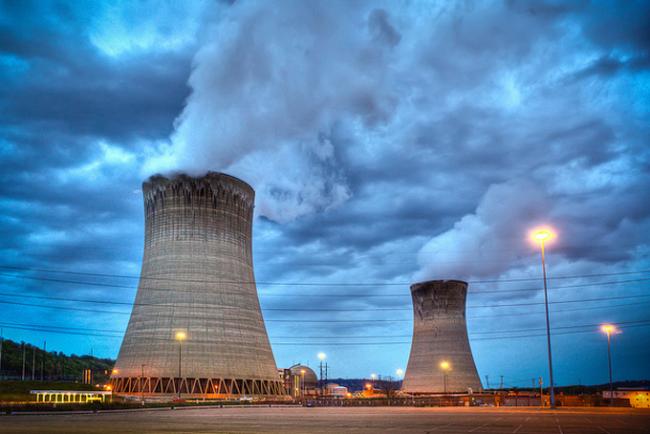
Three Mile Island nuclear power plant, Londonderry Township, Pennsylvania
PJM believes longer-term, regional approaches are more appropriate. It has produced research that outlines how coal plants and nuclear energy, which provide the type of stable energy that is still necessary for reliable power supply, could play a larger role in setting prices. It is also preparing to release a report on how to put a price on carbon emissions in all or parts of the regional grid.

"If carbon emissions are the concern and that is the public policy issue with which policymakers are concerned, the simple be-all answer from a market perspective is putting a price on carbon," Bresler said.

Three Mile Island could be viable if natural gas prices rose from below $3 per million British thermal units to about $5 per mmBtu and if a "reasonable" price were applied to carbon, according to Exelon's Dominguez. He is encouraged by the fact that conversations around new pricing models and carbon pricing are gaining traction.

"The great part about this is everybody understands we have a major problem. We're losing some of the lowest-cost, cleanest and most reliable resources in America," Dominguez said.


Related News

View more

Sign Up for Electricity Forum’s Newsletter

Stay informed with our FREE Newsletter — get the latest news, breakthrough technologies, and expert insights, delivered straight to your inbox.

Electricity Today T&D Magazine Subscribe for FREE

Stay informed with the latest T&D policies and technologies.
  • Timely insights from industry experts
  • Practical solutions T&D engineers
  • Free access to every issue

Live Online & In-person Group Training

Advantages To Instructor-Led Training – Instructor-Led Course, Customized Training, Multiple Locations, Economical, CEU Credits, Course Discounts.

Request For Quotation

Whether you would prefer Live Online or In-Person instruction, our electrical training courses can be tailored to meet your company's specific requirements and delivered to your employees in one location or at various locations.