Siemens receives largest wind order to date

By PR Newswire


Protective Relay Training - Basic

Our customized live online or in‑person group training can be delivered to your staff at your location.
  • Live Online
  • 12 hours Instructor-led
  • Group Training Available
Regular Price:
$699
Coupon Price:
$599
Reserve Your Seat Today
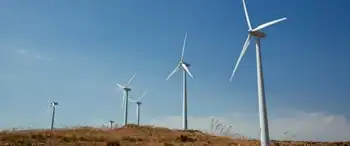
Siemens has received its largest onshore wind turbine order to date, for 258 of its SWT-2.3-101 units, which will be installed at three MidAmerican Energy Company wind projects in Iowa for a combined capacity of 593 megawatts.

This major order provides further evidence of the long-term future of the U.S. renewable energy market and positions Siemens for ongoing growth in the U.S. Most recently, Siemens Energy celebrated the official opening of its new wind turbine nacelle assembly facility in Hutchinson, Kansas, and the company has committed to further production expansion as the U.S. market continues to grow.

"MidAmerican Energy is a leader in Iowa's clean energy efforts, and we are proud to partner with them as they continue to install generating capacity using the wind resources of Iowa, the state with the highest percentage of wind energy generation in its mix," said Rene Umlauft, CEO of Siemens Renewable Energy Division. "These wind turbines will be produced in our factories in Fort Madison, Iowa, and in Hutchinson, Kansas, and will supply secure and environmentally friendly energy to 190,000 average U.S. households," added Umlauft. "As the U.S. market for wind power continues to develop even further, Siemens will continue to create clean energy jobs in America's heartland."

The scope of the MidAmerican Energy order includes the supply and commissioning of 258 Siemens 2.3-megawatt wind turbines with a rotor diameter of 101 meters, as well as a service, maintenance and warranty agreement for the Laurel, Rolling Hills and Pomeroy wind projects in Iowa. Delivery and commissioning of the turbines is expected to begin in the second quarter of 2011 and be completed by early 2012. Siemens and MidAmerican Energy first partnered on a wind power project in 2008 when Siemens delivered 76 of its 2.3-megawatt wind turbines with a rotor diameter of 93 meters for the Adair project in Iowa. In addition to the wind turbine order, Siemens signed a long-term service contract with MidAmerican Energy for its natural gas-fueled, combined-cycle Greater Des Moines Energy Center.

"We are pleased to move forward with these wind energy projects in Iowa. The projects make good economic sense for Iowa and our customers as the state continues to benefit from the construction of additional renewable energy generating capacity," said Bill Fehrman, president of MidAmerican Energy.

"In addition to being one of the most forward looking utilities in the U.S. and already the leader among regulated utilities in terms of wind generation ownership, MidAmerican Energy is one of our largest U.S. utility customers, crossing the full scope of our integrated energy business. We are proud to be selected by them to supply both wind turbines for three wind farms and long-term service for its Greater Des Moines Energy Center," said Randy Zwirn, President and CEO of Siemens Energy, Inc. "Orders of this magnitude create the environment for continued investment in the infrastructure America needs to meet the strong demand for clean energy right where it's used."

Siemens Energy provides power systems that generate more than one-third of the electricity used in the U.S. In addition to its wind power production facilities, Siemens broke ground in October of this year on a new 400,000-square-foot, 60-Hz gas turbine production plant adjacent to its existing Siemens Steam Turbine-Generator Manufacturing Plant in Charlotte, N.C.

Since 2005, Siemens has made significant strides to grow its presence in the wind energy industry in the U.S., and is on track to become number two in the market. In addition to its new 300,000-square-foot nacelle assembly plant in Hutchinson, Kansas, Siemens opened in 2007 and subsequently expanded its 600,000-square-foot wind turbine blade manufacturing facility in Fort Madison, Iowa.

Other U.S. wind power operations include a Houston-based wind turbine service operation, an R&D center in Boulder, Colorado, two gearbox factories in Elgin, Illinois, and the company's Americas headquarters in Orlando, Fla. In the U.S., Siemens employs close to 1,500 people in the wind business and has installed wind turbines with a combined capacity of more than 3,600 megawatts in the U.S., which is enough to supply power to more than one million average homes.

Wind Power is an important part of Siemens' Environmental Portfolio. In fiscal 2010, revenue from the Portfolio totaled about euro 28 billion, making Siemens the world's largest supplier of environmentally friendly technologies.

Related News

BC Hydro rates going up 3 per cent

BC Hydro Rate Freeze Rejection details the BCUC decision enabling a 3% rate increase, citing revenue requirements, debt, and capital costs, affecting electricity bills, with NDP government proposing lifeline rates and low-income relief.


Key Points

It is the BCUC ruling allowing a 3% BC Hydro rate hike, citing cost recovery, debt, and capital needs.

✅ BCUC rejects freeze; 3% increase proceeds April 1, 2018

✅ Rationale: cost recovery, debt, capital expenditures

✅ Relief: lifeline rate, $600 grants, winter payment plan


The B.C. Utilities Commission has rejected a request by the provincial government to freeze rates at BC Hydro for the coming year, meaning a pending rate increase of three percent will come into effect as higher BC Hydro rates on April 1, 2018.

BC Hydro had asked for the three per cent increase, aligning with a rate increase proposal that would add about $2 a month, but, last year, Energy Minister Michelle Mungall directed the Crown corporation to resubmit its request in order to meet an NDP election promise.

"After years of escalating electricity costs, British Columbians deserve a break on their bills," she said at the time.

However, the utilities commission found there was "insufficient regulatory justification to approve the zero per cent rate increase."

"Even these increases do not fully recover B.C. Hydro's forecast revenue requirement, which includes items such as operating costs, new capital expenditures and carrying costs on capital expenditures," the commission wrote in a news release.

Mungall said she was disappointed by the decision.

"We were always clear we were going to the BCUC. We need to respect the role the BCUC has here for the ratepayers and for the public. I'm very disappointed obviously with their decision."

Mungall blamed the previous government for leaving BC Hydro in a financial state where a rate freeze was ultimately not possible.

Last month, Moody's Investors Service calculated BC Hydro's total debt at $22 billion and said it was one of the province's two credit challenges going forward.

"There's quite a financial mess that is a B.C. Liberal legacy after 16 years of government. We have the responsibility as a new government to clean that up."

B.C. Liberal leader Andrew Wilkinson said it was an example of the new government not living up to its campaign promises.

"British Columbians, particularly those on fixed incomes, believed the B.C. NDP when they promised a freeze on hydro bills. They planned accordingly and are now left in the lurch and face higher expenses. This is a government that stumbles into messes that cost all of us because they put rhetoric ahead of planning," he said.


Help on the way?

With the freeze being rejected, Mungall said the government would be going forward on other initiatives to help low-income ratepayers, as advocates' call for change after a fund surplus, including:

Legislating a "lifeline rate" program, allowing people with "demonstrated need" to apply for a lower rate for electricity.

Starting in May, providing an emergency grant of $600 for customers who have an outstanding BC Hydro bill.

Hydro's annual winter payment plan also allows people the chance to spread the payment of bills from December to February out over six months, and, with a two-year rate increase on the horizon, a new pilot program to help people paying their bills begins in July.

Mungall couldn't say whether the government would apply for rate freezes in the future.

"I don't have a crystal ball, and can't predict what might happen in two or three years from now, but we need to act swiftly now," she said.

"I appreciate the [BCUC's] rationale, I understand it, and we'll be moving forward with other alternatives for making life more affordable."


Related News

View more

Opinion: The awesome, revolutionary electric-car revolution that doesn't actually exist

Ecofiscal Commission EV Policy Shift examines carbon pricing limits, endorsing signal boosters like subsidies, EV incentives, and coal bans, amid advisory changes and public pushback, to accelerate emissions cuts beyond market-based taxes and regulations.


Key Points

An updated stance recognizing carbon pricing limits and backing EV incentives, subsidies, and rules to reduce emissions.

✅ Carbon pricing plus subsidies, EV incentives

✅ Advisory shift; Jack Mintz departs

✅ Focus on emissions cuts, coal power bans


Something strange happened at the Ecofiscal Commission recently. Earlier this month, the carbon-tax advocacy group featured on its website as one of its advisers the renowned Canadian economist (and FP Comment columnist) Jack M. Mintz. The other day, suddenly and without fanfare, Mintz was gone from the website, and the commission’s advisory board.

Advisers come and advisers go, of course, but it turns out there was an impetus for Mintz’s departure. The Ecofiscal Commission in its latest report, dropped just before Canada Day, seemingly shifted from its position that carbon prices were so excellent at mimicking market forces that the tax could repeal and replace virtually the entire vast expensive gallimaufry of subsidies, caps, rules and regulations that are costing Canada a fortune in business and bureaucrats. As some Ecofiscal commissioners wrote just a few months ago, policies that “dictate specific technologies or methods for reducing emissions constrain private choice and increase costs” and were a bad idea.

But, in this latest report, the commission is now musing about the benefits of carbon-tax “signal boosters”: that is, EV subsidies and rules to, for instance, get people to start buying electric vehicles (EVs), as well as bans on coal-fired power. “Even well designed carbon pricing can have limitations,” rationalized the commission. Mintz said he had “misgivings” about the change of tack. He decided it best if he focus his advisory energies elsewhere.

It’s hard to blame the commission for falling like everyone else for the electric-car mania that’s sweeping the nation and the world. Electric cars offer a sexiness that dreary old carbon taxes can never hope to match — especially in light of a new Angus Reid poll last week that showed the majority of Canadians now want governments to shelve any plans for carbon taxes.

So far, because nobody’s really driving these miracle machines, said mania has been limited to breathless news reports about how the electric-vehicle revolution is about to rock our world. EVs comprise just two-tenths of a per cent of all passenger vehicles in North America, despite the media’s endless hype and efforts of green-obsessed governments to cover much of the price tag, like Ontario’s $14,000 rebate for Tesla buyers. In Europe, where virtue-signalling urban environmentalism is the coolest, they’re not feeling the vehicular electricity much more: EVs account for barely one per cent of personal vehicles in France, the U.K. and Germany. When Hong Kong cancelled Tesla rebates in April, sales fell to zero.

Going by the ballyhoo, you’d think EVs were at an inflection point and an unstoppable juggernaut. But it’s one that has yet to even get started. In his 2011 State of the Union address, then president Barack Obama predicted one million electric cars on the road by 2015. Four years later, there wasn’t even a third that many. California offered so many different subsidies for electric vehicles that low-income families could get rebates of up to US$13,500, but it still isn’t even close to reaching its target of having zero-emission vehicles make up 15 per cent of California auto sales by 2025, being stuck at three per cent since 2014. Ontario’s Liberal government last year announced to much laughter its plan to ensure that every family would have at least one zero-emission vehicle (ZEV) by 2024, and Quebec made a plan to make ZEVs worth 15.5 per cent of sales by 2020, while Ottawa’s 2035 EV mandate attracts criticism too. Let’s see how that’s going: Currently, ZEVs make up 0.16 per cent of new vehicle sales in Ontario and 0.38 per cent in Quebec.

The latest sensational but bogus EV news out last week was France’s government announcing the “end of the sale of gasoline and diesel cars by 2040,” and Volvo apparently announcing that as of 2019, all its models would be “electric.” Both announcements made international headlines. Both are baloney. France provided no actual details about this plan (will it literally become a crime to sell a gasoline car? Will hybrids, run partly on gasoline, be allowed?), but more importantly, as automotive writer Ed Wiseman pointed out in The Guardian, a lot will happen in technology and automotive use over the next 23 years that France has no way to predict, with changes in self-driving cars, public car-sharing and fuel technologies. Imagine making rules for today’s internet back in 1994.

Volvo, meanwhile, looked to be recycling and repackaging years-old news to seize on today’s infatuation with electric vehicles to burnish its now Chinese-owned brand. Since 2010, Volvo’s plan has been to focus on engines that were partly electric, with electric turbochargers, but still based on gasoline. Volvo doesn’t actually have an all-electric model, but the gasoline-swigging engine of its popular XC90 SUV is, partly, electrical. When Volvo said all its models would in two years be “electric,” it meant this kind of engine, not that it was phasing out the internal-combustion gasoline engine. But that is what it wanted reporters to think, and judging by all the massive and inaccurate coverage, it worked.

The real story being missed is just how pathetic things look right now for electric cars. Gasoline prices in the U.S. turned historically cheap in 2015 and stayed cheap, icing demand for gasless cars. Tesla, whose founder’s self-promotion had made the niche carmaker magically more valuable than powerhouses like Ford and GM, haemorrhaged US$12 billion in market value last week after tepid sales figures brought some investors back to Earth, even as the company’s new Model 3 began rolling off the line.

Not helping is that environmental claims about environmental cars are falling apart. In June, Tesla was rocked by a controversial Swedish study that found that making one of its car batteries released as much CO2 as eight years of gasoline-powered driving. And Bloomberg reported last week on a study by Chinese engineers that found that electric vehicles, because of battery manufacturing and charging by fossil-fuel-powered electricity sources, emit 50-per-cent more carbon than do internal-combustion engines. Still, the electric-vehicle hype not only continues unabated, it gets bigger and louder every day. If some car company figures out how to harness it, we’d finally have a real automotive revolution on our hands.

Kevin Libin, Financial Post


Related News

View more

'For now, we're not touching it': Quebec closes door on nuclear power

Quebec Energy Strategy focuses on hydropower, energy efficiency, and new dams as Hydro-Que9bec pursues Churchill Falls deals and the Champlain Hudson Power Express to New York, while nuclear power remains off the agenda.


Key Points

Quebec's plan prioritizes hydropower, efficiency, and new dams, excludes nuclear, and expands exports via CHPE.

✅ Nuclear power shelved; focus on renewables and dams

✅ Hydro-Que9bec pursues Churchill Falls and Gull Island talks

✅ CHPE line to New York advances; export contract with NYSERDA


Quebec Premier François Legault has closed the door on nuclear power, at least for now.

"For the time being, we're not touching it," said Legault when asked about the subject at a press scrum in New York on Tuesday.

The government is looking for new sources of energy as Hydro-Québec begins talks on a $185-billion strategy to wean the province off fossil fuels. In an interview with The Canadian Press at Quebec's official residence in New York, Legault said there are a number of avenues to explore:

  • Energy efficiency.
  • Negotiations with Newfoundland and Labrador over Churchill Falls and Gull Island.
  • Upgrading existing dams and building new ones.

"Nuclear power is not on the agenda," he said.

Yet the premier seemed open to the nuclear question some time ago. In August, Radio-Canada reported that he had raised the idea of nuclear power in front of dozens of MNAs at the National Assembly last April.

Also in August, Hydro-Québec was evaluating the possibility of reopening the Gentilly-2 nuclear power plant, which has been closed since 2012.

Asked about his leader's statement on Tuesday, the Minister of the Economy, Pierre Fitzgibbon, maintained his line: "At the moment, we're looking at everything that's possible because we know that we have a significant deficit in the supply of green energy," he said.

Another step forward for the Quebec-New York line

Premier Legault took part in Tuesday morning's announcement that construction had begun on the New York converter station of the Champlain Hudson Power Express line. New York State Governor Kathy Hochul was present at the announcement.

In November 2021, Hydro-Québec signed a contract with the New York State Energy Research and Development Authority (NYSERDA) to export 10.4 terawatt-hours of electricity to the American metropolis over 25 years, while Ontario declined to renew a deal with Quebec.

At a time when the Quebec government is constantly asserting that more energy will be needed for future economic projects -- particularly the battery industry -- Legault sees no contradiction in selling electricity to the Americans and to neighboring provinces such as NB Power deals to import Hydro-Québec power.

"Whether it's this contract or the contract for companies coming to set up in Quebec, it's out of the surplus we currently have in Quebec. Now, we have dozens of investment project proposals in Quebec where we need additional electricity," he explained.

The line will supply 20 per cent of New York City's electricity needs, despite transmission constraints on Quebec-to-U.S. deliveries. Commissioning is scheduled for May 2026. The spin-offs are estimated at $30 billion, according to the premier.

Will this money be used to finance new dams, such as the La Romaine hydroelectric complex built in recent years?

"It's certain that future projects will cost several tens of billions of dollars. Hydro-Québec has the capacity to borrow. It's a very healthy company. There's no doubt that these revenues will improve Hydro-Québec's image," he said.


Related News

View more

Hinkley C nuclear reactor roof lifted into place

Hinkley Point C dome lift marks a nuclear reactor milestone in Somerset, as EDF used Big Carl crane to place a 245-tonne steel roof, enabling 2027 startup amid costs, delays, and precision indoor welding.


Key Points

A 245-tonne dome lifted onto Hinkley Point C's first reactor, finishing the roof and enabling fit-out for a 2027 startup.

✅ 245-tonne steel dome lifted by Big Carl onto 44m-high reactor

✅ Indoor welding avoided weather defects seen at Flamanville

✅ Cost now £33bn; first power targeted by end of 2027


Engineers have lifted a steel roof onto a building which will house the first of two nuclear reactors at Hinkley Point in Somerset.

Hundreds of people helped with the delicate operation to get the 245-tonne steel dome into position.

It means the first reactor can be installed next year, ready to be switched on in June 2027.

Engineers at EDF said the "challenging job" was completed in just over an hour.

They first broke the ground on the new nuclear station in March 2017. Now, some 10,000 people work on what is Europe's largest building site.

Yet many analysts note that Europe is losing nuclear power even as demand for reliable energy grows.

They have faced delays from Covid restrictions and other recent setbacks, and the budget has doubled to £33bn, so getting the roof on the first of the two reactor buildings is a big deal.

EDF's nuclear island director Simon Parsons said it was a "fantastic night".

"Lifting the dome into place is a celebration of all the work done by a fantastic team. The smiles on people's faces this morning were something else.

"Now we can get on with the fitting of equipment, pipes and cables, including the first reactor which is on site and ready to be installed next year."

Nuclear minister Andrew Bowie hailed the "major milestone" in the building project, citing its role in the UK's green industrial revolution ambitions.

He said: "This is a key part of the UK Government's plans to revitalise nuclear."

But many still question whether Hinkley Point C will be worth all the money, especially after Hitachi's project freeze in Britain, with Roy Pumfrey of the Stop Hinkley campaign describing the project as "shockingly bad value".


Why lift the roof on?

The steel dome is bigger than the one on St Paul's Cathedral in London.

To lift it onto the 44-metre-high reactor building, they needed the world's largest land-based crane, dubbed Big Carl by engineers.

So why not just build the roof on top of the building?

The answer lies in a remote corner of Normandy in France, near a village called Flamanville.

EDF has been building a nuclear reactor there since 2007, ten years before they started in west Somerset.

The project is now a decade behind schedule and has still not been approved by French regulators.

Why? Because of cracks found in the precision welding on the roof of the reactor building.

In nuclear-powered France, they built the roof in situ, out in the open. 

Engineers have decided welding outside, exposed to wind and rain, compromised the high standards needed for a nuclear reactor.

So in Somerset they built a temporary workshop, which looks like a fair sized building itself. All the welding has been done inside, and then the completed roof was lifted into place.


Is it on time or on budget?

No, neither. When Hinkley C was first approved a decade ago, EDF said it would cost £14bn.

Four years later, in 2017, they finally started construction. By now the cost had risen to £19.5bn, and EDF said the plant would be finished by the end of 2025.

Today, the cost has risen to £33bn, and it is now hoped Hinkley C will produce electricity by the end of 2027.

"Nobody believes it will be done by 2027," said campaigner Roy Pumfrey.

"The costs keep rising, and the price of Hinkley's electricity will only get dearer," they added.

On the other hand, the increase in costs is not a problem for British energy bill payers, or the UK government.

EDF agreed to pay the full cost of construction, including any increases.

When I met Grant Shapps, then the UK Energy Secretary, at the site in April, he shrugged off the cost increases.

He said: "I think we should all be rather pleased it is not the British tax payer - it is France and EDF who are paying."

In return, the UK government agreed a set rate for Hinkley's power, called the Strike Price, back in 2013. The idea was this would guarantee the income from Hinkley Point for 35 years, allowing investors to get their money back.


Will it be worth the money?

Back in 2013, the Strike Price was set at £92.50 for each megawatt hour of power. At the time, the wholesale price of electricity was around £50/MWh, so Hinkley C looked expensive.

But since then, global shocks like the war in Ukraine have increased the cost of power substantially, and advocates argue next-gen nuclear could deliver smaller, cheaper, safer designs.


Related News

View more

In Europe, A Push For Electricity To Solve The Climate Dilemma

EU Electrification Strategy 2050 outlines shifting transport, buildings, and industry to clean power, accelerating EV adoption, heat pumps, and direct electrification to meet targets, reduce emissions, and replace fossil fuels with renewables and low-carbon grids.


Key Points

EU plan to cut emissions 95% by 2050 by electrifying transport, buildings and industry with clean power.

✅ 60% of final energy from electricity by 2050

✅ EVs dominate transport; up to 63% electric share

✅ Heat pumps electrify buildings; industry to 50% direct


The European Union has one of the most ambitious carbon emission reduction goals under the global Paris Agreement on climate change – a 95% reduction by 2050.

It seems that everyone has an idea for how to get there. Some are pushing nuclear energy. Others are pushing for a complete phase-out of fossil fuels and a switch to renewables.

Today the European electricity industry came out with their own plan, amid expectations of greater electricity price volatility in Europe in the coming years. A study published today by Eurelectric, the trade body of the European power sector, concludes that the 2050 goal will not be possible without a major shift to electricity in transport, buildings and industry.

The study finds that for the EU to reach its 95% emissions reduction target, electricity needs to cover at least 60 percent of final energy consumption by 2050. This would require a 1.5 percent year-on-year growth of EU electricity use, with evidence that EVs could raise electricity demand significantly in other markets, while at the same time reducing the EU’s overall energy consumption by 1.3 percent per year.

#google#

Transport is one of the areas where electrification can deliver the most benefit, because an electric car causes far less carbon emissions than a conventional vehicle, with e-mobility emerging as a key driver of electricity demand even if that electricity is generated in a fossil fuel power plant.

In the most ambitious scenario presented by the study, up to 63 percent of total final energy consumption in transport will be electric by 2050, and some analyses suggest that mass adoption of electric cars could occur much sooner, further accelerating progress.

Building have big potential as well, according to the study, with 45 to 63 percent of buildings energy consumption could be electric in 2050 by converting to electric heat pumps. Industrial processes could technically be electrified with up to 50 percent direct electrification in 2050, according to the study. The relative competitiveness of electricity against other carbon-neutral fuels will be the critical driver for this shift, but grid carbon intensity differs across markets, such as where fossil fuels still supply a notable share of generation.


Related News

View more

Lebanon Cabinet approves watershed electricity sector reform

Lebanon Electricity Sector Reform aims to overhaul tariffs, modernize the grid, cut fuel oil subsidies, unlock donor loans, and deliver 24-hour power, restructuring EDL governance, boosting generation capacity, and reducing the budget deficit.


Key Points

A plan to restructure EDL, adjust tariffs, add capacity, and cut subsidies to deliver 24-hour power and reduce deficits.

✅ New tariffs and phased cost recovery

✅ Added generation capacity and grid modernization

✅ Governance reform of EDL and loss reduction


Lebanon’s Cabinet has approved a much-anticipated plan to restructure the country’s dysfunctional electricity sector, as Beirut power challenges continue to underscore chronic gaps, which hasn’t been developed since the time of the country’s civil war, decades ago.

The Lebanese depend on a network of private generator providers and decrepit power plants that rely on expensive fuel oil, while Israeli power supply competition seeks to lower consumer prices in a nearby market. Subsidies to the state electricity company cost nearly $2 billion a year.

For years, reform of the electricity sector, echoed by EU electricity market revamp, has been a major demand of Lebanon’s population of over 5 million. But frequent political stalemates, corruption and infighting among politicians, entrenched since the civil war that began in 1975, often derailed reforms.

International donors have called for reforms, including in the electricity sector, to unlock $11 billion in soft loans and grants pledged last year, as regional initiatives like the Jordan-Saudi electricity linkage move ahead to strengthen interconnections. Prime Minister Saad Hariri said Monday that the new plan will eventually provide 24-hour electricity.

Energy Minister Nada Boustani said that if there were no obstacles, residents could start feeling the difference next year, as an electricity market overhaul advances alongside the plan.

The plan, which is expected to get parliament approval, will reform the state electricity company, introduce new pricing policies, with international examples like France's electricity pricing scheme, and boost power production.

“This plan will also reduce the budget deficit,” Hariri told reporters. “This is positive and all international ratings companies will see … that Lebanon is taking real steps to reform in this sector.”

Lebanon’s soaring debt prompted rating agencies to downgrade the country’s credit ratings in January over concerns the government may not be able to pay its debts. Unemployment is believed to be at 36 per cent and more than 1 million Syrian refugees have overwhelmed the already aging infrastructure, while policy debates like Alberta electricity market changes illustrate different approaches to balancing cost and reliability.

Boustani told the Al-Manar TV that the electricity sector should be spared political bickering and populist approaches.


Related News

View more

Sign Up for Electricity Forum’s Newsletter

Stay informed with our FREE Newsletter — get the latest news, breakthrough technologies, and expert insights, delivered straight to your inbox.

Electricity Today T&D Magazine Subscribe for FREE

Stay informed with the latest T&D policies and technologies.
  • Timely insights from industry experts
  • Practical solutions T&D engineers
  • Free access to every issue

Live Online & In-person Group Training

Advantages To Instructor-Led Training – Instructor-Led Course, Customized Training, Multiple Locations, Economical, CEU Credits, Course Discounts.

Request For Quotation

Whether you would prefer Live Online or In-Person instruction, our electrical training courses can be tailored to meet your company's specific requirements and delivered to your employees in one location or at various locations.