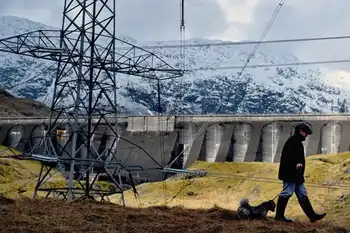
By -- Source, The Salt Lake Tribune


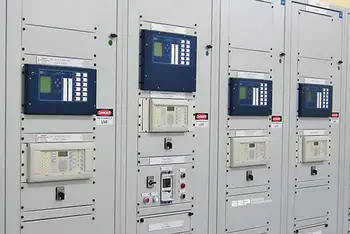
CSA Z463 Electrical Maintenance -

Our customized live online or in‑person group training can be delivered to your staff at your location.
  • Live Online
  • 6 hours Instructor-led
  • Group Training Available
Regular Price:
$249
Coupon Price:
$199
Reserve Your Seat Today
The Utah Public Service Commission on Wednesday gave Utah Power permission to collect an additional $140 million over the next two years from electricity users in the state.

Utah Power's customers, however, will see only a slight 1 percent increase beginning with the next bill they receive because they already are paying the utility at a rate that will allow it to collect most of the $140 million by April 2004.

The PSC in November gave Utah Power permission to keep a $40.5 million refund it owed its customers from its last rate case. At the same time, the PSC allowed the utility to continue to overcharge at the higher rate -- the rate that created the need for a refund in the first place -- until several cases pending before the commission were settled.

The $140 million increase represents a settlement of those three cases hammered out by the company, the Committee of Consumer Services, the Division of Public Utilities and a number of Utah's large industrial electricity users. The PSC heard arguments for and against the deal April 17.

Utah Power representatives could not be reached for comment.

In approving the settlement, the PSC called the agreement a "fair compromise of diverse interests that results in just and reasonable rates for customers."

It also noted the $140 million award was close to the result that could have occurred if the three cases had been fully litigated. PSC Chairman Stephen Mecham pointed out rates will go down in 2004 by 3.5 percent if no other rate cases occur.

PacifiCorp, the parent company of Utah Power, filed the three cases in response to the high-priced wholesale electricity power market that erupted in 2000 and 2001. Although the Committee of Consumer Services, which is charged with representing the interests of consumers in utility rate cases, supported the settlement, another group of consumer advocates opposed the deal.

The Utah Ratepayer Alliance, made up of the Salt Lake Community Action Program, the Crossroads Urban Center and Utah Legislative Watch, argued the settlement would allow the utility to recover a big portion of the cost of buying the extra electricity without ever establishing that it was acting responsibly.

Claire Geddes of Utah Legislative Watch, however, said she was not surprised by the PSC ruling.

"The fate [of Utah's consumers] was pretty much sealed when the Committee of Consumer Services signed on to the agreement," she said. "But in my opinion it is still not a good deal for residential customers."

In arguing for the agreement in mid-April, PacifiCorp's vice president of regulation D. Douglas Larson contended the settlement would ask PacifiCorp's Utah customer to cover 68 percent of the additional power costs, while shareholders of ScottishPower, which owns PacifiCorp, would pick up the rest.

The PSC ruling that gave PacifiCorp the $140 million rate increase came just hours after the Glasgow, Scotland-based ScottishPower reported that its fourth-quarter profit jumped 68 percent.

Related News

Ukraine has electricity reserves, no more outages planned if no new strikes

Ukraine Electricity Outages may pause as the grid stabilizes, with energy infrastructure repairs, generators, and reserves supporting supply; officials cite no rationing absent new Russian strikes, while Odesa networks recover and Ukrenergo completes restoration works.


Key Points

Planned power cuts in Ukraine paused as grid capacity, repairs, and reserves improve, barring new strikes.

✅ No rationing if Russia halts strikes on energy infrastructure

✅ Grid repairs and reserves meet demand for third straight week

✅ Odesa networks restored; Ukrenergo crews redeploy to repairs


Ukraine plans no more outages to ration electricity if there are no new strikes and has been able to amass some power reserves, the energy minister said on Saturday, as it continues to keep the lights on despite months of interruptions caused by Russian bombings.

"Electricity restrictions will not be introduced, provided there are no Russian strikes on infrastructure facilities," Energy Minister Herman Halushchenko said in remarks posted on the ministry's Telegram messaging platform.

"Outages will only be used for repairs."

After multiple battlefield setbacks and scaling down its troop operation to Ukraine's east and south, Russia in October began bombing the country's energy infrastructure, as winter loomed over the battlefront, leaving millions without power and heat for days on end.

The temperature in winter months often stays below freezing across most of Ukraine. Halushchenko said this heating season has been extremely difficult.

"But our power engineers managed to maintain the power system, and for the third week in a row, electricity generation has ensured consumption needs, we have reserves," Halushchenko said.

Ukraine, which does not produce power generators itself, has imported and received thousands of them over the past few years, with the U.S. pledging a further $10 billion on Friday to aid Kyiv's energy needs, despite ended grid restoration support reported earlier.

Separately, the chief executive of state grid operator Ukrenergo, Volodymyr Kudrytskyi, said that repair works on the damaged infrastructure in the city of Odesa suffered earlier this month, has been finished, highlighting how Ukraine has even helped Spain amid blackouts while managing its own network challenges.

"Starting this evening, there is more light in Odesa," Kudrytskyi wrote on his Facebook page. "The crews that worked on restoring networks are moving to other facilities."

A Feb. 4 fire that broke out at an overloaded power station left hundreds of thousands of residents without electricity, prompting many to adopt new energy solutions to cope with outages.


Related News

View more

Coal, Business Interests Support EPA in Legal Challenge to Affordable Clean Energy Rule

Affordable Clean Energy Rule Lawsuit pits EPA and coal industry allies against health groups over Clean Power Plan repeal, greenhouse gas emissions standards, climate change, public health, and state authority before the D.C. Circuit.


Key Points

A legal fight over EPA's ACE rule and CPP repeal, weighing emissions policy, state authority, climate, and public health.

✅ Challenges repeal of Clean Power Plan and adoption of ACE.

✅ EPA backed by coal, utilities; health groups seek stricter limits.

✅ D.C. Circuit to review emissions authority and state roles.


The largest trade association representing coal interests in the country has joined other business and electric utility groups in siding with the EPA in a lawsuit challenging the Trump administration's repeal of the Clean Power Plan.

The suit -- filed by the American Lung Association and the American Public Health Association -- seeks to force the U.S. Environmental Protection Agency to drop a new rule-making process that critics claim would allow higher levels of greenhouse gas emissions, further contributing to the climate crisis and negatively impacting public health.

The new rule, which the Trump administration calls the "Affordable Clean Energy rule" (ACE), "would replace the 2015 Clean Power Plan, which EPA has proposed to repeal because it exceeded EPA's authority. The Clean Power Plan was stayed by the U.S. Supreme Court and has never gone into effect," according to an EPA statement.

EPA has also moved to rewrite wastewater limits for coal power plants, signaling a broader rollback of related environmental requirements.

America's Power -- formerly the American Coalition for Clean Coal Electricity -- the U.S. Chamber of Commerce, the National Mining Association, and the National Rural Electric Cooperative Association have filed motions seeking to join the lawsuit. The U.S. Court of Appeals for the District of Columbia Circuit has not yet responded to the motion.

Separately, energy groups warned that President Trump and Energy Secretary Rick Perry were rushing major changes to electricity pricing that could disrupt markets.

"In this rule, the EPA has accomplished what eluded the prior administration: providing a clear, legal pathway to reduce emissions while preserving states' authority over their own grids," Hal Quinn, president and chief executive officer of the mining association, said when the new rule was released last month. "ACE replaces a proposal that was so extreme that the Supreme Court issued an unprecedented stay of the proposal, having recognized the economic havoc the mere suggestion of such overreach was causing in the nation's power grid."

Around the same time, a coal industry CEO blasted a federal agency's decision on the power grid as harmful to reliability.

The trade and business groups have argued that the Clean Power Plan, set by the Obama administration, was an overreach of federal power. Finalized in 2015, the plan was President Obama's signature policy on climate change, rooted in compliance with the Paris Climate Treaty. It would have set state limits on emissions from existing power plants but gave wide latitude for meeting goals, such as allowing plant operators to switch from coal to other electric generating sources to meet targets.

Former EPA Administrator Scott Pruitt argued that the rule exceeded federal statutory limits by imposing "outside the fence" regulations on coal-fired plants instead of regulating "inside the fence" operations that can improve efficiency.

The Clean Power Plan set a goal of reducing carbon emissions from power generators by 32 percent by the year 2030. An analysis from the Rhodium Group found that had states taken full advantage of the CPP's flexibility, emissions would have been reduced by as much as 72 million metric tons per year on average. Still, even absent federal mandates, the group noted that states are taking it upon themselves to enact emission-reducing plans based on market forces.

In its motion, America's Power argues the EPA "acknowledged that the [Best System of Emission Reduction] for a source category must be 'limited to measures that can be implemented ... by the sources themselves.'" If plants couldn't take action, compliance with the new rule would require the owners or operators to buy emission rate credits that would increase investment in electricity from gas-fired or renewable sources. The increase in operating costs plus federal efforts to shift power generation to other sources of energy, thereby increasing costs, would eventually force the coal-fired plants out of business.

In related proceedings, renewable energy advocates told FERC that a DOE proposal to subsidize coal and nuclear plants was unsupported by the record, highlighting concerns about market distortions.

"While we are confident that EPA will prevail in the courts, we also want to help EPA defend the new rule against others who prefer extreme regulation," said Michelle Bloodworth, president and CEO of America's Power.

"Extreme regulation" to one group is environmental and health protections to another, though.

Howard A. Learner, executive director of the Environmental Law & Policy Center of the Midwest, defended the Clean Power Plan in an opinion piece published in June.

"The Midwest still produces more electricity from coal plants than any other region of the country, and Midwesterners bear the full range of pollution harms to public health, the Great Lakes, and overall environmental quality," Learner wrote. "The new [Affordable Clean Energy] Rule is a misguided policy, moves our nation backward in solving climate change problems, and misses opportunities for economic growth and innovation in the global shift to renewable energy. If not reversed by the courts, as it should be, the next administration will have the challenge of doing the right thing for public health, the climate and our clean energy future."

When it initially filed its lawsuit against the Trump administration's Affordable Clean Energy Rule, the American Lung Association accused the EPA of "abdicat[ing] its legal duties and obligations to protect public health." It also referred to the new rule as "dangerous."


Related News

View more

Energy crisis is a 'wake up call' for Europe to ditch fossil fuels

EU Clean Energy Transition underscores the shift from fossil fuels to renewable energy, decarbonization, and hydrogen, as soaring gas prices and electricity volatility spur resilience, storage, and joint procurement across the single market.


Key Points

EU Clean Energy Transition shifts from fossil fuels to renewables, enhancing resilience and reducing price volatility.

✅ Cuts reliance on Russian gas and fossil imports

✅ Scales renewables, hydrogen, and energy storage

✅ Stabilizes electricity prices via market resilience


Soaring energy prices, described as Europe's energy nightmare, are a stark reminder of how dependent Europe is on fossil fuels and should serve to accelerate the shift towards renewable forms of energy.

"This experience today of the rising energy prices is a clear wake up call... that we should accelerate the transition to clean energy, wean ourselves off the fossil fuel dependency," a senior EU official told reporters as the European Commission unveiled a series of emergency electricity measures aimed at tackling the crisis.

The European Union is facing a sharp spike in energy prices, driven by increased global demand as the world recovers from the pandemic and lower-than-expected natural gas deliveries from Russia. Wholesale electricity prices have increased by 200% compared to the 2019 average, underscoring why rolling back electricity prices is tougher than it appears, according to the European Commission.

"Winter is coming and for many electricity costs are larger than they have been for a decade," Energy Commissioner Kadri Simson told reporters on Wednesday.

80 million European households struggle to stay warm
Wholesale gas prices — which have surged to record highs in France, Spain, Germany and Italy, amid reports of Germany's local utilities crying for help — are expected to remain high through the winter.

Prices are expected to fall in the spring, but remain higher than the average of past years, according to the Commission. Most EU countries rely on gas-fired power stations to meet electricity demand, and about 40% of that gas comes from Russia, with the EU outlining a plan to dump Russian energy to reduce this reliance, according to Eurostat.

Simson said that the Commission's initial assessment indicates that Russia's Gazprom has been fulfilling its long-term contracts "while providing little or no additional supply."
Kremlin spokesman Dmitry Peskov told journalists on Wednesday that Russia has increased gas supplies to Europe to the maximum possible level under existing contracts, but could not exceed those thresholds. "We can say that Russia is flawlessly fulfilling all contractual obligations," he said.

Measures EU states can take to help consumers and businesses cope with soaring electricity costs include emergency income support to households to help them pay their energy bills, alongside potential gas price cap strategies, state aid for companies, and targeted tax reductions. Member states can also temporarily delay bill payments and put in place processes to ensure that no one is disconnected from the grid.

Green energy the solution
The Commission also published a series of longer term measures the bloc should consider to reduce its dependence on fossil fuels and tackle energy price volatility, despite opposition from nine countries to electricity market reforms.

"Our immediate priority is to protect Europe's consumers, especially the most vulnerable," Simson said. "Second, we want to make our energy system better prepared and more resilient, so we don't have to face a similar situation in the future," she added.

Energy crisis could force more UK factories to close
This would require speeding up the green energy transition rather than slowing it down, Simson said. "We are not facing an energy price surge because of our climate policy or because renewable energy is expensive. We are facing it because the fossil fuel prices are spiking," she continued.

"The only long term remedy against demand shocks and price volatility is a transition to a green energy system."

Simson said she will propose to EU leaders a package of measures to decarbonize Europe's gas and hydrogen markets by 2050. Other measures to improve energy market stability could include increasing gas storage capacity and buying gas jointly at an EU level.


Related News

View more

Military Is Ramping Up Preparation For Major U.S. Power Grid Hack

DARPA RADICS Power Grid Security targets DoD resilience to cyber attacks, delivering early warning, detection, isolation, and characterization tools, plus a secure emergency network to protect critical infrastructure and speed grid restoration and communications.


Key Points

A DoD/DARPA initiative to detect, contain, and rapidly recover the U.S. grid from sophisticated cyber attacks.

✅ Early warning separates attacks from routine outages

✅ Pinpoints intrusion points and malware used

✅ Builds secure emergency network for rapid restoration


The U.S. Department of Defense is growing increasingly concerned about hackers taking down our power grid and crippling the nation, reflecting a renewed focus on grid protection across agencies, which is why the Pentagon has created a $77-million security plan that it hopes will be up and running by 2020.

The U.S. power grid is threatened every few days. While these physical and cyber attacks have never led to wide-scale outages, attacks are getting more sophisticated. According to a 494-page report released by the Department of Energy in January and a new grid report card, the nation’s grid “faces imminent danger from cyber attacks.” Such a major, sweeping attack could threaten “U.S. lifeline networks, critical defense infrastructure, and much of the economy; it could also endanger the health and safety of millions of citizens.” If it were to happen today, America could be powered-down and vulnerable for weeks.

#google#

The DoD is working on an automated system to speed up recovery time to a week or less — what it calls the Rapid Attack Detection, Isolation, and Characterization (RADICS) program. DARPA, the Pentagon’s research arm, originally solicited proposals in late 2015, asking for technology that did three things. Primarily, it had to detect early warning signs and distinguish between attacks and normal outages, especially after intrusions at U.S. electric utilities underscored the risk, but it also had to pinpoint the access point of the attack and determine what malicious software was used. Finally, it must include an emergency system that can rapidly connect various power-supply centers, without any human coordination. This would allow emergency and military responders to have an ad hoc communication system in place moments after an attack.

“If a well-coordinated cyberattack on the nation’s power grid were to occur today, the time it would take to restore power would pose daunting national security challenges,” said DARPA program manager John Everett, in a statement, at the time. “Beyond the severe domestic impacts, including economic and human costs, prolonged disruption of the grid would hamper military mobilization and logistics, impairing the government’s ability to project force or pursue solutions to international crises.”

DARPA plans to spend $77 million on RADICS, while DOE funding to improve the grid complements these initiatives. Last November, SRI International announced it had received $7.3 million from the program. In December, Raython was granted $9 million. The latest addition is BAE Systems, which received $8.6 million last month to develop technology that detects and contains power-grid threats, and creates a secure emergency provisional system that restores some power and communication in the wake of an attack — what is being called a secure emergency network.

According to the military news site Defense Systems, BAE’s SEN would rely on radio, satellite, or wireless internet — particularly as ransomware attacks continue to rise — whatever is available that allows the grid to continue working. The SEN would serve as a wireless connection between separate power grid stations.

While the ultimate goal of the RADICS program will be the restoration of civilian power and communications, the SEN will prioritize communication networks that would be used for defense or combat, so the U.S. government can still wage war while the rest of us are in the dark.


Related News

View more

NY Governor Cuomo Announces Green New Deal Included in 2019 Executive Budget

New York Green New Deal accelerates clean energy and climate action, targeting carbon neutrality with renewable energy, offshore wind, solar, energy storage, and green jobs while advancing environmental justice and economy-wide decarbonization.


Key Points

New York's plan for 100% clean power by 2040 and 70% renewables by 2030, with a just transition and green jobs.

✅ 100% carbon-free electricity by 2040; 70% renewables by 2030

✅ 9,000 MW offshore wind and 3,000 MW energy storage targets

✅ Just transition focuses on jobs, equity, and affordability


New York Governor Andrew M. Cuomo announced the Green New Deal, a nation-leading clean energy and jobs agenda that will aggressively put New York State on a path to net-zero electricity and economy-wide carbon neutrality, is included in the 2019 Executive Budget. The landmark plan provides for a just transition to clean energy that spurs growth of the green economy and prioritizes the needs of low- to moderate-income New Yorkers.

"Climate change is a reality, and the consequences of delay are a matter of life and death. We know what we must do. Now we have to have the vision, the courage, and the competence to get it done," Governor Cuomo said. "While the federal government shamefully ignores the reality of climate change and fails to take meaningful action, we are launching the first-in-the-nation Green New Deal to seize the potential of the clean energy economy, set nation's most ambitious goal for carbon-free power, and ultimately eliminate our entire carbon footprint."

During Governor Cuomo's first two terms, New York banned fracking of natural gas, committed to phasing out coal power by 2020, mandated 50 percent renewable power by 2030, and established the U.S. Climate Alliance to uphold the Paris Agreement, reflecting the view that decarbonization is irreversible under a clean energy economy. Under the Reforming the Energy Vision agenda, New York has held the largest renewable energy procurements in U.S. history, solar has increased nearly 1,500 percent, and offshore wind is poised to transform the State's electricity supply to be cleaner and more sustainable. Through Governor Cuomo's Green New Deal, New York will take the bold next steps to secure a clean energy future that protects the environment for generations to come while growing the clean energy economy.


100 Percent Clean Power by 2040 Coupled with New Nation-leading Renewable Energy Mandates

The Green New Deal will statutorily mandate New York's power be 100 percent carbon-free by 2040, the most aggressive goal in the United States and five years ahead of a target recently adopted by California state policymakers. The cornerstone of this new mandate is a significant increase of New York's successful Clean Energy Standard mandate from 50 percent to 70 percent renewable electricity by 2030. This globally unprecedented ramp-up of renewable energy will include:

  • Quadrupling New York's offshore wind target to 9,000 megawatts by 2035, up from 2,400 megawatts by 2030
  • Doubling distributed solar deployment to 6,000 megawatts by 2025, up from 3,000 megawatts by 2023
  • More than doubling new large-scale land-based wind and solar resources through the Clean Energy Standard
  • Maximizing the contributions and potential of New York's existing renewable resources
  • Deploying 3,000 megawatts of energy storage by 2030, up from 1,500 megawatts by 2025
  • Develop an Implementation Plan to Make New York Carbon Neutral

The Green New Deal will create the State's first statutory Climate Action Council, comprised of the heads of relevant State agencies and other workforce, environmental justice, and clean energy experts to develop a comprehensive plan to make New York carbon neutral by significantly and cost-effectively reducing emissions from all major sources, including electricity, transportation, buildings, industry, commercial activity, and agriculture. The Climate Action Council will consider a range of possible options, including the feasibility of working with the U.S. Climate Alliance to create a new multistate emissions reduction program that covers all sectors of the economy, including transportation and industry, and exploring ways to leverage the successful Regional Greenhouse Gas Initiative to drive transformational investment in the clean energy economy and support a just transition.

At the national level, a historic climate deal is reshaping incentives and standards for clean energy deployment across the country.

The Green New Deal will also include an ambitious strategy to move New York's statewide building stock to carbon neutrality. The agenda includes:

Advancing legislative changes to strengthen building energy codes and establish appliance efficiency standards

Directing State agencies to ensure that their facilities uphold the strongest energy efficiency and sustainability standards

Developing a Net Zero Roadmap to chart a course to statewide carbon neutrality in buildings

A Multibillion Dollar Green New Deal Investment in the Clean Tech Economy that will Reduce Greenhouse Gas Emissions

Demonstrating New York's immediate commitment to implementing the nation's most ambitious clean energy agenda and creating high-quality clean energy jobs, Governor Cuomo is announcing $1.5 billion in competitive awards to support 20 large-scale solar, wind and energy storage projects across upstate New York. These investments will add over 1,650 megawatts of capacity and generate over 3,800,000 megawatt-hours of renewable energy annually - enough to power nearly 550,000 homes and create over 2,600 short and long-term jobs. Combined with the renewable energy projects previously announced under the Clean Energy Standard, New York has now awarded more than $2.9 billion to 46 projects statewide, enough to power over one million households.

The Green New Deal also includes new investments to jumpstart New York's offshore wind energy industry and support the State's world-leading target of 9,000 megawatts by 2035. New York will invest up to $200 million in port infrastructure to match private sector investment in regional development of offshore wind. This multi-location investment represents the nation's largest infrastructure commitment to offshore wind and solidifies New York's position as the hub of the burgeoning U.S. offshore wind industry.

These new investments build upon a $250 million commitment to electric vehicle infrastructure by the New York Power Authority's EVolve program, $3.5 billion in private investment in distributed solar driven by NYSERDA's NY-Sun program, and NY Green Bank transactions mobilizing nearly $1.75 billion in private capital for clean energy projects.


A Just Transition to a Clean Energy Economy

Deliver Climate Justice for Underserved Communities: The Green New Deal will help historically underserved communities prepare for a clean energy future and adapt to climate change by:

Giving communities a seat at the table by codifying the Environmental Justice and Just Transition Working Group into law and incorporating it into the planning process for the Green New Deal's implementation.

Directing the State's low-income energy task force to identify reforms to achieve greater impact of the public energy funds expended each year in order to increase the effect of funds and initiatives that target energy affordability to underserved communities.

Directing each of the State's ten Regional Economic Development Councils to develop an environmental justice strategy for their region.

Finance a Property Tax Compensation Fund to Help Communities Transition to the Clean Energy Economy: Governor Cuomo is introducing legislation to finance the State's $70 million Property Tax Compensation Fund to continue helping communities directly affected by the transition away from dirty and obsolete energy industries and toward the new clean energy economy. Specifically, this funding will protect communities impacted by the retirement of conventional power generation facilities.

Protect Labor Rights: To ensure creation of high-quality clean energy jobs, large-scale renewable energy projects supported by the Green New Deal will require prevailing wage, and the State's offshore wind projects will be supported by a requirement for a Project Labor Agreement.

Develop the Clean Tech Workforce: To prepare New York's workforce for the transition, New York State will take new steps to support workforce development, including establishing a New York State Advisory Council on Offshore Wind Economic and Workforce Development, as well as investing in an offshore wind training center that will provide New Yorkers with the skills and safety training required to construct this clean energy technology in New York.   

Richard Kauffman, Chairman of Energy and Finance for New York, said, "Governor Cuomo's Green New Deal will advance New York State further into the clean energy future, and we won't let the Trump Administration push us backwards. Governor Cuomo's new commitments ensure New York is the undisputed national clean energy and climate leader, and we will continue to build upon the foundations of the REV agenda to achieve a sustainable economy and healthy environment for generations of New Yorkers to come."

Alicia Barton, President and CEO, NYSERDA, said, "Climate scientists have made frighteningly clear that averting the worst effects of climate change will require bold action, not incremental steps, and Governor Cuomo's Green New Deal boldly goes where no others have before. His unwavering climate agenda includes the most aggressive clean energy target in U.S. history, the largest commitments to renewable energy and to offshore wind in the nation, a massive mobilization of clean energy jobs and an unprecedented investment in offshore wind port infrastructure. Together these actions make New York the clear national leader in the fight against climate change, and will show the world that New York can and will achieve a clean energy future for the sake of future generations."

DEC Commissioner Basil Seggos said, "The threat of climate change calls for bold action like Governor Cuomo's comprehensive agenda to make New York State carbon neutral. The Green New Deal ensures New York is continuing our nation-leading efforts to capitalize on the economic potential of the clean energy economy, while making sure those most vulnerable to climate change are benefitting from the state's efforts and investments. I look forward to working with my agency and authority partners on the Climate Action Council to develop and implement meaningful solutions to reduce greenhouse gas emissions from all sectors of our economy."  

John B. Rhodes, CEO, Department of Public Service, said, "With this nation-leading Green New Deal, Governor Cuomo puts New York on the path to fully clean electricity and to carbon neutrality with the strongest renewable energy goals in the nation. This will deliver the energy system that New York needs - cost-effective, reliable, and 100% clean.”


Related News

View more

NTPC bags order to supply 300 MW electricity to Bangladesh

NTPC Bangladesh Power Supply Tender sees NVVN win 300 MW, long-term cross-border electricity trade to BPDB, enabled by 500 MW HVDC interconnection; rivals included Adani, PTC, and Sembcorp in the competitive bidding process.


Key Points

It is NTPC's NVVN win to supply 300 MW to Bangladesh's BPDB for 15 years via a 500 MW HVDC link.

✅ NVVN selected as L1 for short and long-term supply

✅ 300 MW to BPDB; delivery via India-Bangladesh HVDC link

✅ Competing bidders: Adani, PTC, Sembcorp


NTPC, India’s biggest electricity producer in a nation that is now the third-largest electricity producer globally, on Tuesday said it has won a tender to supply 300 megawatts (MW) of electricity to Bangladesh for 15 years.

Bangladesh Power Development Board (BPDP), in a market where Bangladesh's nuclear power is expanding with IAEA assistance, had invited tenders for supply of 500 MW power from India for short term (1 June, 2018 to 31 December, 2019) and long term (1 January, 2020 to 31 May, 2033). NTPC Vidyut Vyapar Nigam (NVVN), Adani Group, PTC and Singapore-bases Sembcorp submitted bids by the scheduled date of 11 January.

Financial bid was opened on 11 February, the company said in a statement, amid rising electricity prices domestically. “NVVN, wholly-owned subsidiary of NTPC Limited, emerged as successful bidder (L1), both in short term and long term for 300 MW power,” it said.

Without giving details of the rate at which power will be supplied, NTPC said supply of electricity is likely to commence from June 2018 after commissioning of 500 MW HVDC inter-connection project between India and Bangladesh, and as the government advances nuclear power initiatives to bolster capacity in the sector. India currently exports approximately 600 MW electricity to Bangladesh even as authorities weigh coal rationing measures to meet surging demand domestically.


Related News

View more

Sign Up for Electricity Forum’s Newsletter

Stay informed with our FREE Newsletter — get the latest news, breakthrough technologies, and expert insights, delivered straight to your inbox.

Electricity Today T&D Magazine Subscribe for FREE

Stay informed with the latest T&D policies and technologies.
  • Timely insights from industry experts
  • Practical solutions T&D engineers
  • Free access to every issue

Download the 2025 Electrical Training Catalog

Explore 50+ live, expert-led electrical training courses –

  • Interactive
  • Flexible
  • CEU-cerified