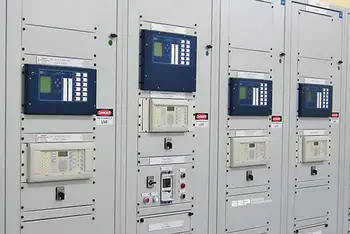
Protective Relay Training - Basic
Our customized live online or in‑person group training can be delivered to your staff at your location.
- Live Online
- 12 hours Instructor-led
- Group Training Available
Regular Price:
$699
Coupon Price:
$599
In its bid for state approval to build new coal-fired units, Duke Energy Corp. has overstated how many customers it would serve by using unrealistic plant efficiency numbers, N.C. regulators said.
Duke Energy last year asked the seven-member N.C. Utilities Commission for permission to build two 800-megawatt coal-fired units at its Cliffside facility, 55 miles west of Charlotte.
Using an industry-standard formula, the Charlotte-based company said the units would provide power for 1.2 million to 1.6 million homes, based on average monthly usage.
But the commission's Public Staff, which is its consumer advocacy arm, says its figure is about 1 million homes. And during times of peak demand, when air conditioners across the region are at full power, only about 500,000 homes could be served by the proposed units' output, said James McLawhorn, director of the public staff's electric division.
Add commercial customers to the mix, and the number decreases even more because businesses generally eat more power than a typical home, he said.
Duke has faced a battle over approval of the units because of escalating costs and criticism from environmental groups, which claim increased energy demand could be offset by conservation. They say the new units would needlessly emit greenhouse gases - linked to global warming and poor health.
The more customers Duke claims are served by a plant, the more palatable it might be for the public, McLawhorn said.
"It probably makes their case sound better," he said.
Electric utilities use a formula for customer estimates assuming the largest plants, like Cliffside, operate every hour of the year, said Dan Riedinger, a spokesman for the Edison Electric Institute, a lobbying and research group that represents the industry.
But a more realistic figure assumes plants operate about 85 percent of the time, which means fewer customers than claimed can be served over a year, McLawhorn said.
Steve Nadel, executive director of the nonprofit American Council for an Energy-Efficient Economy, said using peak demand during hot summer months might be a better way to develop the statistic.
"I would understand why they would do it the way they do it because it makes their case better," he said.
Commission members Sam Ervin IV and Jim Kerr said the panel could not discuss the particulars of the Cliffside case because it was still under review. The members would not say if the number of customers projected to be served by a project factored into their decision.
"I don't think that's something I ought to comment on," Kerr said. "That's a slippery slope to go down. Every case is different, and it has to be decided on its own merits."
The customer statistic is merely meant to put a human face on the dry subject of electric-power generation, said Duke spokesman Tom Williams.
He said Tuesday that the company was not trying to pump up numbers to smooth the way for approval. He stood by the figures, but said the company would "concede" the estimate is based on the best- case scenario for plant operations and demand.
"Let's just say it's a big plant," he said.
Duke faces it biggest hurdle over cost because the original estimate of $2 billion for the units recently mushroomed to $3 billion, bolstering opposition and putting the Charlotte-based company's plans in jeopardy.
The cost of new plants is passed on to customers through rate increases, which are approved by the commission. Duke could decide to change or withdraw its request. It hasn't said what action it might take.
The commission has scheduled a new hearing for Jan. 17 to hear testimony and cross-examination about the cost increase. The commission said it would issue a decision about the project by Feb. 28.
Aside from the debate, the state needs new power generation as demand grows annually - an estimated 386 megawatts a year for Duke's service area in the Carolinas, Williams said.
The Charlotte area is booming with job growth, healthy migration into the area and new construction. A net 50,000 new residents are pouring into the area each year, according to the U.S. Census Bureau.
Few, including the public staff, argue the point that energy demand is on the rise. But various sides of the Cliffside debate disagree over the best method to meet it.
The N.C. Attorney General's Office has come out against Duke's request, advocating a go-slow approach of building the units one at a time until future demand can be better assessed. And several environmental groups are pushing energy conservation over the Cliffside project as a way to quell demand.
"Duke has not made a compelling case for needing this much capacity," said Stephen Smith, the executive director of the Southern Alliance for Clean Energy.
He said the relatively cheap cost of energy in the Carolinas compared to other parts of the country has not prodded the state or utilities to push conservation, such as replacing older-model heat pumps or promoting energy-efficient light bulbs.
"That increased demand is completely gettable by energy efficiency," he said.
Related News

Is this the start of an aviation revolution?
Harbour Air Electric Seaplanes pioneer sustainable aviation with battery-electric propulsion, zero-emission operations, and retrofitted de…
View more
California Halts Energy Rebate Program Amid Trump Freeze
California energy rebate freeze disrupts heat pump incentives, HVAC upgrades, and climate funding, as federal…
View more

GM president: Electric cars won't go mainstream until we fix these problems
Electric Vehicle Adoption Barriers include range anxiety, charging infrastructure, and cost parity; consumer demand, tax…
View more
The Phillipines wants nuclear power to be included in the country's energy mix as the demand for electricity is expected to rise.
Philippines Nuclear Energy Policy aims to add nuclear power to the energy mix via executive…
View more

Hydro One employees support Province of Ontario in the fight against COVID-19
Hydro One COVID-19 Quarantine Support connects Ontario's Ministry of Health with trained customer service teams…
View more

West Coast consumers won't benefit if Trump privatizes the electrical grid
BPA Privatization would sell the Bonneville Power Administration's transmission lines, raising FERC-regulated grid rates for…
View more
Sign Up for Electricity Forum’s Newsletter
Stay informed with our FREE Newsletter — get the latest news, breakthrough technologies, and expert insights, delivered straight to your inbox.
Electricity Today T&D Magazine Subscribe for FREE

Stay informed with the latest T&D policies and technologies.
- Timely insights from industry experts
- Practical solutions T&D engineers
- Free access to every issue

