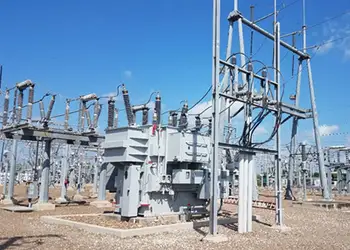
Substation Protection Training - Protect Transformers, Buses and Lines
Our customized live online or in‑person group training can be delivered to your staff at your location.
- Live Online
- 12 hours Instructor-led
- Group Training Available
Regular Price:
$799
Coupon Price:
$699
In a move to diversify electricity generation, the Tanzanian government is negotiating with a local coal company about generating and supplying electricity to the national power grid, local media reported recently.
Both the government and the state-run Tanzania Electric Supply Company Limited are negotiating with the Kiwira Coal and Power Company, a public firm, on the feasibility of feeding 200 megawatts of electricity to the national grid by the end of next year.
The negotiations are expected to finally conclude late this April or early next month, according to sources close to the Ministry for Energy and Minerals.
The coal company is said to have the potential of generating 400 megawatts of electricity.
But the three parties now involved in the negotiation have agreed through an agreement of intent about a scheme of tasking the coal company to generate 100 megawatts by mid next year and adding up another 50 megawatts by the end of next year.
Tanzania has been relying on hydropower for the past four decades, with seven hydropower plants combining to boast of an installed electricity generating capacity of 656 megawatts.
Yet due to the failure of rainfall in the short rain season late last year and early this year, these hydropower plants were only operating at 30 percent of their capacity, thus causing a nationwide power rationing that at one time lasted for as long as 16 hours a day in Dar es Salaam.
Tanzania's demand for electricity is 550 megawatts while its actual power consumption is around 400 megawatts.
The east African country has been resorting to natural gas- fired turbines to compensate for the electricity shortfall.
The steadily decreasing rainfall in recent years have forced the Tanzanian authorities to consider diversifying electricity generation so as to reduce sole reliance on hydropower, though affluent in the country but unreliable.
Natural gas is one source of energy for this power generating diversification program while coal stands the other, according to the ministry sources.
Related News
Wind and Solar Energy Surpass Coal in U.S. Electricity Generation
Wind and Solar Surpass Coal in U.S. power generation, as EIA data cites falling LCOE,…
View more

Philippines Ranks Highest in Coal-Generated Power Dependency
Philippines coal dependency underscores energy transition challenges, climate change risks, and air pollution, as rising…
View more

Canada-U.S. Electricity Trade Adapts to Grid Pressures
Electricity trade between Canada and the United States is evolving as demand growth, climate impacts,…
View more
California scorns fossil fuel but can't keep the lights on without it
California fossil fuel grid reliability plan addresses heat wave demand, rolling blackouts, and grid stability…
View more

Biggest offshore windfarm to start UK supply this week
Hornsea One Offshore Wind Farm delivers first power to the UK grid, scaling renewable energy…
View more
California Regulators Face Calls for Action as Electricity Bills Soar
California Electricity Rate Hikes strain households as CPUC weighs fixed charges, utility profit caps, and…
View more
Sign Up for Electricity Forum’s Newsletter
Stay informed with our FREE Newsletter — get the latest news, breakthrough technologies, and expert insights, delivered straight to your inbox.
Electricity Today T&D Magazine Subscribe for FREE

Stay informed with the latest T&D policies and technologies.
- Timely insights from industry experts
- Practical solutions T&D engineers
- Free access to every issue

