Taxpayer dollars keep EV market moving

By Globe and Mail


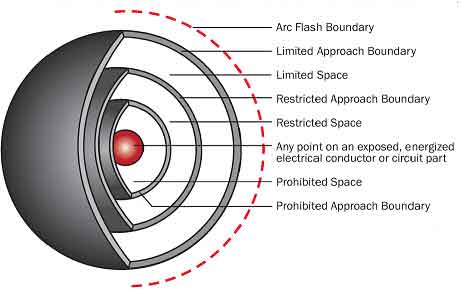
NFPA 70e Training - Arc Flash

Our customized live online or in‑person group training can be delivered to your staff at your location.

  • Live Online
  • 6 hours Instructor-led
  • Group Training Available
Regular Price:
$199
Coupon Price:
$149
Reserve Your Seat Today
It's easy to sell a product that nobody wants. You either discount it, so consumers think they're getting the steal of the century, or you press-gang the taxpayer into subsidizing it.

Guess which method is used to unload electric cars?

Go to any auto show or read the tech-mad motoring press and you will realize that electric cars are all the rage and coming to a dealer near you. They come in three main varieties: battery only like the new Nissan Leaf range-extenders battery topped up by a gasoline-powered generator, as found in the Chevrolet Volt and hybrid a combination of gas and electric motors, a technology made famous by the Toyota Prius.

While the technologies differ, all three versions have one thing in common: government subsidy, and lots of it. That's because electric cars are very expensive, haven't sold well and, if history is any indicator, won't sell well, in spite of all the hype surrounding their alleged green credentials and performance.

Electric cars have been around for more than a century. And for more than a century, each attempt to put them into mass production failed. Their prices were shockingly high compared with regular cars, or their ranges were too short. Then came the Prius, the most talked-about car since James Bond's Aston Martin.

A great success, right? Not quite. Since Japan's hybrid wonder was introduced about a decade ago, two million of the cars have sold worldwide. That sounds like a lot, until you consider the global car fleet is almost a billion strong. In Canada, about 50,000 hybrids mostly the Prius have rolled out of showrooms in the same period. That's less than 1 of total vehicle sales.

The truth is the Prius has been close to a sales dud, in spite of the often generous purchase incentives offered in North America and Europe. Absent the subsidies and other freebies, such as no-charge entry into central London's traffic exclusion zone or deep discounts for cabbies, the Prius might have lasted as long as the Edsel.

The newest electric vehicles, mostly of the plug-in, battery-only variety, are subsidy gourmands on both the incentive-purchase and development side. Around the world, taxpayers are collectively throwing billions at the electric car industry. In the United Kingdom, the government will pay up to 25 of an electric car price, capped at £5,000 per vehicle. In the United States, a buyer will be able to shake down the government for as much as $7,500 for an electric car currency in U.S. dollars except where noted. In Ontario, the figure is as much as $8,500 Canadian.

There's more, much more. In the U.S., about $2.8 billion in federal stimulus grants was given to dozens of companies engaged in electric car technology. Development loans are being air-dropped onto tiny and mainstream manufacturers alike. Nissan got a $1.6-billion loan. Fisker Automotive, whose flagship electric car has a sticker price about $88,000 that ensures it can be bought only by the wealthy, received $529 million. General Motors got a $106-million grant for Chevy Volt battery packs.

All of which raises the question: Are electric cars being developed because consumers want them, or because governments have opened the subsidy spigot? If the latter, what happens when the spigot is turned off? Western governments are rolling back spending with alacrity in an effort to reduce deficits. At some point, subsidies for electric cars are bound to get hit. If so, watch sales plummet. It's hard to imagine that the Volt, for example, will be a hot seller at the full $41,000 sticker price. You can get a BMW or Mercedes for that kind of money.

Governments might also be tempted to cut subsidies once they figure out that spending fortunes to convert national fleets to electric might have a negligible effect on greenhouse gas output. Richard Pike, chief executive of the Royal Society of Chemistry, thinks the green sell is bunk. Writing in the Financial Times, he calculated that replacing the UK's fleet with subsidized electric cars, at £5,000 a pop, would cost the taxpayer £150 billion. That's a telling number, since the budget for the country's one-time electric car subsidy is £43 million.

Cars account for 12 of Britain's total carbon emissions. Since car batteries would have to be recharged using electricity from plants that burn such fuels as coal and natural gas, the exercise would reduce the country's emissions by a mere 2, Pike concluded. But emissions would fall by a third if that same investment were put into replacing Britain's generating capacity with photovoltaic solar cells.

Electric cars have always been a bit of a pipe dream. Subsidies haven't changed that. When the subsidies come down, because governments can no longer afford them or realize battery-powered cars will do next to nothing to reduce carbon footprints, watch this market be revealed for what it is — a niche.

Related News

Covid-19 puts brake on Turkey’s solar sector

Turkey Net Metering Suspension freezes regulator reviews, stalling rooftop solar permits and grid interconnections amid COVID-19, pausing licensing workflows, EPC pipelines, and electricity bill credits that drive commercial and household prosumer adoption.


Key Points

A pause on technical reviews freezing net metering applications and slowing rooftop solar deployment in Turkey.

✅ Monthly technical committee meetings suspended indefinitely

✅ Rooftop solar permits and grid interconnections on hold

✅ EPC firms urge remote evaluations for transparency


The decision by the Turkish Energy Market Regulatory Authority to halt part of the system of processing net metering applications risks bringing the only vibrant segment of the nation’s solar industry to a grinding halt, a risk amplified as global renewables face Covid-19 disruptions across markets.

The regulator has suspended monthly meetings of the committee which makes technical evaluations of net metering applications, citing concerns about the spread of Covid-19, which has already seen U.S. utility-scale solar face delays this year.

The availability of electricity bill credits for net-metering-approved households which inject surplus power into the grid, similar to how British households can sell power back to energy firms, has seen the rooftop projects the scheme is typically associated with remain the only source of new solar generation capacity in Turkey of late.

However the energy regulator’s decision to suspend technical evaluation committee meetings until further notice has seen the largely online licensing process for new solar systems practically cease; by contrast, Berlin is being urged to remove PV barriers to keep projects moving.

The Turkish solar industry has claimed the move is unnecessary, with solar engineering, procurement and construction services businesses pointing out the committee could meet to evaluate projects remotely. It has been argued such a move would streamline the application process and make it more transparent, regardless of the current public health crisis.


Net metering 

Turkey introduced net metering for rooftop installations last May and pv magazine has reported the specifics of the scheme, amid debates like New England's grid upgrade costs over who pays.

National grid operator Teias confirmed recently the country added 109 MW of new solar capacity in the first quarter, most of it net-metered rooftop systems, even as Australian distributors warn excess solar can strain local networks.

Net metering has been particularly attractive to commercial electricity users because the owners of small and medium-sized businesses pay more for power, as solar reshapes electricity prices in Northern Europe, than either households or large scale industrial consumers.

Until the recent technical committee decision by the regulator, the chief obstacle to net metering adoption had been the nation’s economic travails. The Turkish lira has lost 14% of its value since January and around 36% over the last two years. The central bank has been using its foreign reserves to support state lenders and the lira but the national currency slipped near an all-time low on Friday and foreign analysts predict the central bank reserves could run dry in July.

The level of exports shipped last month was down 41% on April last year and imports fell 28% by the same comparison, further depressing the willingness of companies to make capital investments such as rooftop solar.


Related News

View more

France's nuclear power stations to limit energy output due to high river temperatures

France Nuclear Heatwave Output Restrictions signal reduced reactor capacity along the Rhone River, as EDF curbs output to meet cooling-water rules, balance the grid, integrate solar peaks, and limit impacts on power prices.


Key Points

EDF limits reactor output during heat to protect rivers and keep the grid stable under cooling-water rules.

✅ Cuts likely at midday/weekends when solar peaks

✅ Bugey, Saint Alban maintain minimum grid output

✅ France net exporter; price impact expected small


The high temperature warning has come early this year but will affect fewer nuclear power plants, amid a broader France-Germany nuclear dispute over atomic power policy that shapes regional energy flows.

High temperatures could halve nuclear power production at plants along France's Rhone River this week, as European power hits records during extreme heat. 

Output restrictions are expected at two nuclear plants in eastern France due to high temperature forecasts, nuclear operator EDF said, which may limit energy output during heatwaves. It comes several days ahead of a similar warning that was made last year but will affect fewer plants.

The hot weather is likely to halve the available power supply from the 3.6 GW Bugey plant from 13 July and the 2.6 GW Saint Alban plant from 16 July, the operator said.

However, production will be at least 1.8 GW at Bugey and 1.3 GW at Saint Alban to meet grid requirements, and may change according to grid needs, the operator said.

Kpler analyst Emeric de Vigan said the restrictions were likely to have little effect on output in practice. Cuts are likely only at the weekend or midday when solar output was at its peak so the impact on power prices would be slim.

During recent lockdowns, power demand held firm in Europe, offering context for current price dynamics.

He said the situation would need monitoring in the coming weeks, however, noting it was unusually early in the summer for such restrictions to be imposed.

Water temperatures at the Bugey plant already eclipsed the initial threshold for restrictions on 9 July, underscoring France's outage risks under heat-driven constraints. They are currently forecast to peak next week and then drop again, Refinitiv data showed.

"France is currently net exporting large amounts of power – single nuclear units' supply restrictions will not have the same effect as last year," Refinitiv analyst Nathalie Gerl said.

The Garonne River in southern France has the highest potential for critical levels of warming, but its Golfech plant is currently offline for maintenance until mid-August, the data showed, highlighting how Europe is losing nuclear power during critical periods.

"(The restrictions were) to be expected and it will probably occur more often," Greenpeace campaigner Roger Spautz said.

"The authorities must stick to existing regulations for water discharges. Otherwise, the ecosystems will be even more affected," he added.


Related News

View more

Investor: Hydro One has too many unknowns to be a good investment

Hydro One investment risk reflects Ontario government influence, board shakeup, Avista acquisition uncertainty, regulatory hearings, dividend growth prospects, and utility M&A moves in Peterborough, with stock volatility since the 2015 IPO.


Key Points

Hydro One investment risk stems from political control, governance turnover, regulatory outcomes, and uncertain M&A.

✅ Ontario retains near-50% stake, affecting autonomy and policy risk

✅ Board overhaul and CEO exit create governance uncertainty

✅ Avista deal, OEB hearings, local utility M&A drive outcomes


Hydro One may be only half-owned by the province on Ontario but that’s enough to cause uncertainty about the company’s future, thus making for an investment risk, says Douglas Kee of Leon Frazer & Associates.

Since its IPO in November of 2015, Hydro One has seen its share of ups and downs, including a Q2 profit decline earlier this year, mostly downs at this point. Currently trading at $19.87, the stock has lost 11 per cent of its value in 2018 and 12 per cent over the last 12 months, despite a one-time gain boosting Q2 profit that followed a court ruling.

This year has been a turbulent one, to say the least, as newly elected Ontario premier Doug Ford made good this summer on his campaign promise re Hydro One by forcing the resignation of the company’s 14-person board of directors along with the retirement of its chief executive, an event that saw Hydro One shares fall amid the turmoil. An interim CEO has been found and a new 10-person board and chairman put in place, but Kee says it’s unclear what impact the shakeup will ultimately have, other than delaying a promising-looking deal to purchase US utility Avista Corp, with the companies moving to ask the U.S. regulator to reconsider the order.


Douglas Kee’s take on Hydro One stock

“We looked at Hydro One a couple of times two years ago and just decided that with the Ontario government’s still owning a big chunk of the company … there are other public companies where you get the same kind of yield, the same kind of dividend growth, so we just avoided it,” says Kee, managing director and chief investment officer with Leon Frazer & Associates, to BNN Bloomberg.

“The old board versus the new board, I’m not sure that there’s much of an improvement. It was politics more than anything,” he says. “The unfortunate part is that the acquisition they were making in the United States is kind of on hold for now. The regulatory procedures have gone ahead but they are worried, and I guess the new board has to make a decision whether to go ahead with it or not.”

“Their transmissions side is coming up for regulatory hearings next year, which could be difficult in Ontario,” says Kee. “The offset to that is that there are a lot of municipal distributions systems in Ontario that may be sold — they bought one in Peterborough recently, which was a good deal for them. There may be more of that coming too.”

Last month, Hydro One reached an agreement with the City of Peterborough to buy its Peterborough Distribution utility which serves about 37,000 customers for $105 million. Another deal to purchase Orillia Power Distribution Corp for $41 million has been cancelled after an appeal to the Ontario Energy Board was denied in late August. Hydro One’s sought-after Avista Corp acquisition is reported to be worth $7 billion.


Related News

View more

Ermineskin First Nation soon to become major electricity generator

Ermineskin First Nation Solar Project delivers a 1 MW distributed generation array with 3,500 panels, selling power to Alberta's grid, driving renewable energy revenue, jobs, and regional economic development with partner SkyFire Energy.


Key Points

A 1 MW, 3,500-panel distributed generation plant selling power to Alberta's grid to support revenue and jobs.

✅ 1 MW array, 3,500 panels; grid-tied distributed generation

✅ Annual revenue projected at $80k-$150k, scalable

✅ Built with SkyFire Energy; expansion planned next summer


The switch will soon be flipped on a solar energy project that will generate tens of thousands of dollars for Ermineskin First Nation, while energizing economic development across Alberta, where selling renewables is emerging as a promising opportunity.

Built on six acres, the one-megawatt generator and its 3,500 solar panels will produce power to be sold into the province’s electrical grid, providing annual revenues for the band of $80,000 to $150,000, depending on energy demand and pricing.

The project cost $2.7 million, including connection costs and background studies, said Sam Minde, chief executive officer of the band-owned Neyaskweyahk Group of Companies Inc.

It was paid for with grants from the Western Economic Diversification Fund and the province’s Climate Leadership Plan, and, amid Ottawa’s green electricity contracting push, is expected to be connected to the grid by mid-December.

“It’s going to be the biggest distributed generation in Alberta,” he said.

Called the Sundancer generator, it was built and will be operated through a partnership with SkyFire Energy, reflecting how renewable power developers design better projects by combining diverse resources.

Minde said the project’s benefits extend beyond Ermineskin First Nation, one of four First Nations at Maskwacis, 20 km north of Ponoka, in a province where renewable energy surge could power thousands of jobs.

“Our nation is looking to do the best it can in business. It’s competitive, but at the same time, what is good for us is good for the region.

“If we’re creating jobs, we’re going to be building up our economy. And if you look at our region right now, we need to continue to create opportunities and jobs.”

Electricity prices are rock bottom right now, in the six to nine cents per kilowatt hour range, with recent Alberta solar contracts coming in below natural gas on cost. During the oilsands boom, when power demand was skyrocketing, the price was in the 16 to 18 cent range.

That means there is a lot of room for bigger returns for Ermineskin in the future, especially if pipelines such as TransMountain get going or the oilsands pick up again, and as Alberta solar growth accelerates in the years ahead.

The band is so confident that Sundancer will prove a success that there are plans to double it in size, a strategy echoed by community-scale efforts such as the Summerside solar project that demonstrate scalability. By next summer, a $1.5-million to $1.7-million project funded by the band will be built on another six acres nearby.

Minde said the project is an example of the community’s connection with the environment being used to create opportunities and embracing technologies that will likely figure large in the world’s energy future.


Related News

View more

New fuel cell could help fix the renewable energy storage problem

Proton Conducting Fuel Cells enable reversible hydrogen energy storage, coupling electrolyzers and fuel cells with ceramic catalysts and proton-conducting membranes to convert wind and solar electricity into fuel and back to reliable grid power.


Key Points

Proton conducting fuel cells store renewable power as hydrogen and generate electricity using reversible catalysts.

✅ Reversible electrolysis and fuel-cell operation in one device

✅ Ceramic air electrodes hit up to 98% splitting efficiency

✅ Scalable path to low-cost grid energy storage with hydrogen


If we want a shot at transitioning to renewable energy, we’ll need one crucial thing: technologies that can convert electricity from wind, sun, and even electricity from raindrops into a chemical fuel for storage and vice versa. Commercial devices that do this exist, but most are costly and perform only half of the equation. Now, researchers have created lab-scale gadgets that do both jobs. If larger versions work as well, they would help make it possible—or at least more affordable—to run the world on renewables.

The market for such technologies has grown along with renewables: In 2007, solar and wind provided just 0.8% of all power in the United States; in 2017, that number was 8%, according to the U.S. Energy Information Administration. But the demand for electricity often doesn’t match the supply from solar and wind, a key reason why the U.S. grid isn't 100% renewable today. In sunny California, for example, solar panels regularly produce more power than needed in the middle of the day, but none at night, after most workers and students return home.

Some utilities are beginning to install massive banks of cheaper solar batteries in hopes of storing excess energy and evening out the balance sheet. But batteries are costly and store only enough energy to back up the grid for a few hours at most. Another option is to store the energy by converting it into hydrogen fuel. Devices called electrolyzers do this by using electricity—ideally from solar and wind power—to split water into oxygen and hydrogen gas, a carbon-free fuel. A second set of devices called fuel cells can then convert that hydrogen back to electricity to power cars, trucks, and buses, or to feed it to the grid.

But commercial electrolyzers and fuel cells use different catalysts to speed up the two reactions, meaning a single device can’t do both jobs. To get around this, researchers have been experimenting with a newer type of fuel cell, called a proton conducting fuel cell (PCFC), which can make fuel or convert it back into electricity using just one set of catalysts.

PCFCs consist of two electrodes separated by a membrane that allows protons across. At the first electrode, known as the air electrode, steam and electricity are fed into a ceramic catalyst, which splits the steam’s water molecules into positively charged hydrogen ions (protons), electrons, and oxygen molecules. The electrons travel through an external wire to the second electrode—the fuel electrode—where they meet up with the protons that crossed through the membrane. There, a nickel-based catalyst stitches them together to make hydrogen gas (H2). In previous PCFCs, the nickel catalysts performed well, but the ceramic catalysts were inefficient, using less than 70% of the electricity to split the water molecules. Much of the energy was lost as heat.

Now, two research teams have made key strides in improving this efficiency, and a new fuel cell concept brings biological design ideas into the mix. They both focused on making improvements to the air electrode, because the nickel-based fuel electrode did a good enough job. In January, researchers led by chemist Sossina Haile at Northwestern University in Evanston, Illinois, reported in Energy & Environmental Science that they came up with a fuel electrode made from a ceramic alloy containing six elements that harnessed 76% of its electricity to split water molecules. And in today’s issue of Nature Energy, Ryan O’Hayre, a chemist at the Colorado School of Mines in Golden, reports that his team has done one better. Their ceramic alloy electrode, made up of five elements, harnesses as much as 98% of the energy it’s fed to split water.

When both teams run their setups in reverse, the fuel electrode splits H2 molecules into protons and electrons. The electrons travel through an external wire to the air electrode—providing electricity to power devices. When they reach the electrode, they combine with oxygen from the air and protons that crossed back over the membrane to produce water.

The O’Hayre group’s latest work is “impressive,” Haile says. “The electricity you are putting in is making H2 and not heating up your system. They did a really good job with that.” Still, she cautions, both her new device and the one from the O’Hayre lab are small laboratory demonstrations. For the technology to have a societal impact, researchers will need to scale up the button-size devices, a process that typically reduces performance. If engineers can make that happen, the cost of storing renewable energy could drop precipitously, thereby moving us closer to cheap abundant electricity at scale, helping utilities do away with their dependence on fossil fuels.


Related News

View more

For Hydro-Québec, selling to the United States means reinventing itself

Hydro-Quebec hydropower exports deliver low-carbon electricity to New England, sparking debate on greenhouse gas accounting, grid attributes, and REC-style certificates as Quebec modernizes monitoring to verify emissions, integrate renewables, and meet ambitious climate targets.


Key Points

Low-carbon electricity to New England, with improved emissions tracking and verifiable grid attributes.

✅ Deep, narrow reservoirs cut lifecycle GHGs in cold boreal waters

✅ Attribute certificates trace source, type, and carbon intensity

✅ Contracts require facility-level tagging for compliance


For 40 years, through the most vicious interprovincial battles, even as proposals for bridging the Alberta-B.C. gap aimed to improve grid resilience, Canadians could agree on one way Quebec is undeniably superior to the rest of the country.

It’s hydropower, and specifically the mammoth dam system in Northern Quebec that has been paying dividends since it was first built in the 70s. “Quebec continues to boast North America’s lowest electricity prices,” was last year’s business-as-usual update in one trade publication, even as Newfoundland's rate strategy seeks relief for consumers.

With climate crisis looming, that long-ago decision earns even more envy and reflects Canada's electricity progress across the grid today. Not only do they pay less, but Quebeckers also emit the least carbon per capita of any province.

It may surprise most Canadians, then, to hear how most of New England has reacted to the idea of being able to buy permanently into Quebec’s power grid.

​​​​​​Hydro-Québec’s efforts to strike major export deals have been rebuffed in the U.S., by environmentalists more than anyone. They question everything about Quebec hydropower, including asking “is it really low-carbon?”

These doubts may sound nonsensical to regular Quebeckers. But airing them has, in fact, pushed Hydro-Québec to learn more about itself and adopt new technology.

We know far more about hydropower than we knew 40 years ago, including whether it’s really zero-emission (it’s not), how to make it as close to zero-emission as possible, and how to account for it as precisely as new clean energies like solar and wind, underscoring how cleaning up Canada's electricity is vital to meeting climate pledges.

The export deals haven’t gone through yet, but they’ve already helped drag Hydro-Québec—roughly the fourth-biggest hydropower system on the planet—into the climate era.

Fighting to export
One of the first signs of trouble for Quebec hydro was in New Hampshire, almost 10 years ago. People there began pasting protest signs on their barns and buildings. One citizens’ group accused Hydro of planning a “monstrous extension cord” across the state.

Similar accusations have since come from Maine, Massachusetts and New York.

The criticism isn’t coming from state governments, which mostly want a more permanent relationship with Hydro-Québec. They already rely on Quebec power, but in a piecemeal way, topping up their own power grid when needed (with the exception of Vermont, which has a small permanent contract for Quebec hydropower).

Last year, Quebec provided about 15 percent of New England’s total power, plus another substantial amount to New York, which is officially not considered to be part of New England, and has its own energy market separate from the New England grid.

Now, northeastern states need an energy lynch pin, rather than a top-up, with existing power plants nearing the end of their lifespans. In Massachusetts, for example, one major nuclear plant shut down this year and another will be retired in 2021. State authorities want a hydro-based energy plan that would send $10 billion to Hydro-Québec over 20 years.

New England has some of North America’s most ambitious climate goals, with every state in the region pledging to cut emissions by at least 80 percent over the next 30 years.

What’s the downside? Ask the citizens’ groups and nonprofits that have written countless op-eds, organized petitions and staged protests. They argue that hydropower isn’t as clean as cutting-edge clean energy such as solar and wind power, and that Hydro-Québec isn’t trying hard enough to integrate itself into the most innovative carbon-counting energy system. Right as these other energy sources finally become viable, they say, it’s a step backwards to commit to hydro.

As Hydro-Québec will point out, many of these critics are legitimate nonprofits, but others may have questionable connections. The Portland Press Herald in Maine reported in September 2018 that a supposedly grassroot citizens’ group called “Stand Up For Maine” was actually funded by the New England Power Generators Association, which is based in Boston and represents such power plant owners as Calpine Corp., Vistra Energy and NextEra Energy.

But in the end, that may not matter. Arguably the biggest motivator to strike these deals comes not from New England’s needs, but from within Quebec. The province has spent more than $10 billion in the last 15 years to expand its dam and reservoir system, and in order to stay financially healthy, it needs to double its revenue in the next 10 years—a plan that relies largely on exports.

With so much at stake, it has spent the last decade trying to prove it can be an energy of the future.

“Learning as you go”
American critics, justified or not, have been forcing advances at Hydro for a long time.

When the famously huge northern Quebec hydro dams were built at James Bay—construction began in the early 1970s—the logic was purely economic. The term “climate change” didn’t exist. The province didn’t even have an environment department.

The only reason Quebec scientists started trying to measure carbon emissions from hydro reservoirs was “basically because of the U.S.,” said Alain Tremblay, a senior environmental advisor at Hydro Quebec.


Alain Tremblay, senior environmental advisor at Hydro-Québec. Photograph courtesy of Hydro-Québec
In the early 1990s, Hydro began to export power to the U.S., and “because we were a good company in terms of cost and efficiency, some Americans didn't like that,” he said—mainly competitors, though he couldn’t say specifically who. “They said our reservoirs were emitting a lot of greenhouse gases.”

The detractors had no research to back up that claim, but Hydro-Québec had none to refute it, either, said Tremblay. “At that time we didn’t have any information, but from back-of-the envelope calculations, it was impossible to have the emissions the Americans were expecting we have.”

So research began, first to design methods to take the measurements, and then to carry them out. Hydro began a five-year project with a Quebec university.

It took about 10 years to develop a solid methodology, Tremblay said, with “a lot of error and learning-as-you-go.” There have been major strides since then.

“Twenty years ago we were taking a sample of water, bringing it back to the lab and analyzing that with what we call a gas chromatograph,” said Tremblay. “Now, we have an automated system that can measure directly in the water,” reading concentrations of CO2 and methane every three hours and sending its data to a processing centre.

The tools Hydro-Québec uses are built in California. Researchers around the world now follow the same standard methods.

At this point, it’s common knowledge that hydropower does emit greenhouse gases. Experts know these emissions are much higher than previously thought.

Workers on the Eastmain-1 project environmental monitoring program. Photography courtesy of Alain Tremblay.
​But Hydro-Québec now has the evidence, also, to rebut the original accusations from the early 1990s and many similar ones today.

“All our research from Université Laval [found] that it’s about a thousand years before trees decompose in cold Canadian waters,” said Tremblay.

Hydro reservoirs emit greenhouse gases because vegetation and sometimes other biological materials, like soil runoff, decay under the surface.

But that decay depends partly on the warmth of the water. In tropical regions, including the southern U.S., hydro dams can have very high emissions. But in boreal zones like northern Quebec (or Manitoba, Labrador and most other Canadian locations with massive hydro dams), the cold, well-oxygenated water vastly slows the process.

Hydro emissions have “a huge range,” said Laura Scherer, an industrial ecology professor at Leiden University in the Netherlands who led a study of almost 1,500 hydro dams around the world.

“It can be as low as other renewable energy sources, but it can also be as high as fossil fuel energy,” in rare cases, she said.

While her study found that climate was important, the single biggest factor was “sizing and design” of each dam, and specifically its shape, she said. Ideally, hydro dams should be deep and narrow to minimize surface area, perhaps using a natural valley.

Hydro-Québec’s first generation of dams, the ones around James Bay, were built the opposite way—they’re wide and shallow, infamously flooding giant tracts of land.


Alain Tremblay, senior environmental advisor at Hydro-Québec testing emission levels. Photography courtesy of Alain Tremblay
Newly built ones take that new information into account, said Tremblay. Its most recent project is the Romaine River complex, which will eventually include four reservoirs near Quebec’s northeastern border with Labrador. Construction began in 2016.

The site was picked partly for its topography, said Tremblay.

“It’s a valley-type reservoir, so large volume, small surface area, and because of that there’s a pretty limited amount of vegetation that’s going to be flooded,” he said.

There’s a dramatic emissions difference with the project built just before that, commissioned in 2006. Called Eastmain, it’s built near James Bay.

“The preliminary results indicate with the same amount of energy generated [by Romaine] as with Eastmain, you’re going to have about 10 times less emissions,” said Tremblay.

Tracing energy to its source
These signs of progress likely won’t satisfy the critics, who have publicly argued back and forth with Hydro about exactly how emissions should be tallied up.

But Hydro-Québec also faces a different kind of growing gap when it comes to accounting publicly for its product. In the New England energy market, a sophisticated system “tags” all the energy in order to delineate exactly how much comes from which source—nuclear, wind, solar, and others—and allows buyers to single out clean power, or at least the bragging rights to say they bought only clean power.

Really, of course, it’s all the same mix of energy—you can’t pick what you consume. But creating certificates prevents energy producers from, in worst-case scenarios, being able to launder regular power through their clean-power facilities. Wind farms, for example, can’t oversell what their own turbines have produced.

What started out as a fraud prevention tool has “evolved to make it possible to also track carbon emissions,” said Deborah Donovan, Massachusetts director at the Acadia Center, a climate-focused nonprofit.

But Hydro-Québec isn’t doing enough to integrate itself into this system, she says.

It’s “the tool that all of our regulators in New England rely on when we are confirming to ourselves that we’ve met our clean energy and our carbon goals. And…New York has a tool just like that,” said Donovan. “There isn’t a tracking system in Canada that’s comparable, though provinces like Nova Scotia are tapping the Western Climate Initiative for technical support.”

Hydro Quebec Chénier-Vignan transmission line crossing the Outaouais river. Photography courtesy of Hydro-Québec
Developing this system is more a question of Canadian climate policy than technology.

Energy companies have long had the same basic tracking device—a meter, said Tanya Bodell, a consultant and expert in New England’s energy market. But in New England, on top of measuring “every time there’s a physical flow of electricity” from a given source, said Bodell, a meter “generates an attribute or a GIS certificate,” which certifies exactly where it’s from. The certificate can show the owner, the location, type of power and its average emissions.

Since 2006, Hydro-Québec has had the ability to attach the same certificates to its exports, and it sometimes does.

“It could be wind farm generation, even large hydro these days—we can do it,” said Louis Guilbault, who works in regulatory affairs at Hydro-Québec. For Quebec-produced wind energy, for example, “I can trade those to whoever’s willing to buy it,” he said.

But, despite having the ability, he also has the choice not to attach a detailed code—which Hydro doesn’t do for most of its hydropower—and to have it counted instead under the generic term of “system mix.”

Once that hydropower hits the New England market, the administrators there have their own way of packaging it. The market perhaps “tries to determine emissions, GHG content,” Guilbault said. “They have their own rules; they do their own calculations.”

This is the crux of what bothers people like Donovan and Bodell. Hydro-Québec is fully meeting its contractual obligations, since it’s not required to attach a code to every export. But the critics wish it would, whether by future obligation or on its own volition.

Quebec wants it both ways, Donovan argued; it wants the benefits of selling low-emission energy without joining the New England system of checks and balances.

“We could just buy undifferentiated power and be done with it, but we want carbon-free power,” Donovan said. “We’re buying it because of its carbon content—that’s the reason.”

Still, the requirements are slowly increasing. Under Hydro-Québec’s future contract with Massachusetts (which still has several regulatory steps to go through before it’s approved) it’s asked to sell the power’s attributes, not just the power itself. That means that, at least on paper, Massachusetts wants to be able to trace the energy back to a single location in Quebec.

“It’s part of the contract we just signed with them,” said Guilbault. “We’re going to deliver those attributes. I’m going to select a specific hydro facility, put the number in...and transfer that to the buyers.”

Hydro-Québec says it’s voluntarily increasing its accounting in other ways. “Even though this is not strictly required,” said spokeswoman Lynn St. Laurent, Hydro is tracking its entire output with a continent-wide registry, the North American Renewables Registry.

That registry is separate from New England’s, so as far as Bodell is concerned, the measure doesn’t really help. But she and others also expect the entire tracking system to grow and mature, perhaps integrating into one. If it had been created today, in fact, rather than in the 1990s, maybe it would use blockchain technology rather than a varied set of administrators, she said.

Counting emissions through tracking still has a long way to go, as well, said Donovan, and it will increasingly matter in Canada's race to net-zero as standards tighten. For example, natural gas is assigned an emissions number that’s meant to reflect the emissions when it’s consumed. But “we do not take into account what the upstream carbon emissions are through the pipeline leakage, methane releases during fracking, any of that,” she said.

Now that the search for exactitude has begun, Hydro-Québec won’t be exempt, whether or not Quebeckers share that curiosity. “We don’t know what Hydro-Québec is doing on the other side of the border,” said Donovan.


Related News

View more

Sign Up for Electricity Forum’s Newsletter

Stay informed with our FREE Newsletter — get the latest news, breakthrough technologies, and expert insights, delivered straight to your inbox.

Electricity Today T&D Magazine Subscribe for FREE

Stay informed with the latest T&D policies and technologies.
  • Timely insights from industry experts
  • Practical solutions T&D engineers
  • Free access to every issue

Download the 2025 Electrical Training Catalog

Explore 50+ live, expert-led electrical training courses –

  • Interactive
  • Flexible
  • CEU-cerified