Tokyo Electric Completes All Reactor Shutdowns

By


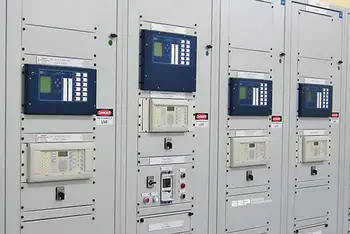
Electrical Testing & Commissioning of Power Systems

Our customized live online or in‑person group training can be delivered to your staff at your location.
  • Live Online
  • 12 hours Instructor-led
  • Group Training Available
Regular Price:
$599
Coupon Price:
$499
Reserve Your Seat Today
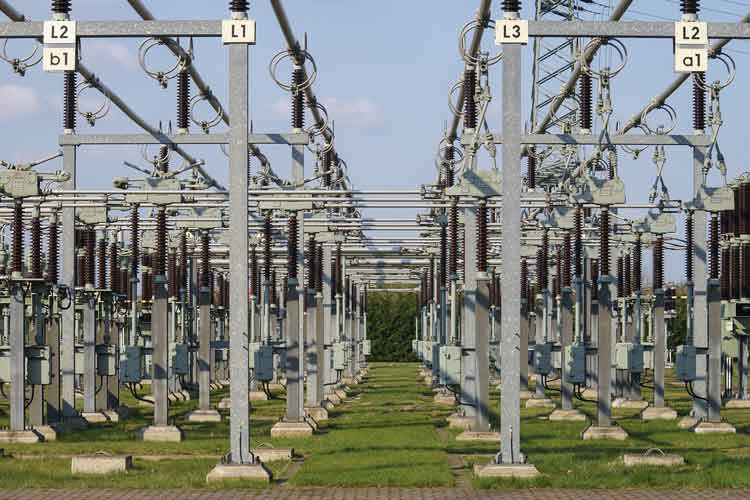
Tokyo Electric Power Co (TEPCO) said it has completed the shutdown of all 17 of its nuclear reactors for emergency inspections.

TEPCO stopped operations at around 12:00 noon at its last running nuclear reactor in Fukushima, 200 kilometres northeast of Tokyo.

The company has been forced to shut down all its nuclear reactors for emergency inspections after admitting to falsifying safety records at nuclear plants since the late 1980s.

With the first halt to all its nuclear reactors since 1976, TEPCO has lost 17.38 megawatts, or about 30 pct of its power generating capacity.

"We are seriously facing the fact that an unprecedented situation occurred due to a series of scandals," TEPCO President Tsunehisa Katsumata said in a statement.

"Our company will pursue inspections and carry out measures to prevent such a scandal from being repeated so that we can regain people's trust," he said.

The scandal has angered residents near the reactors, most of whom are opposed to the immediate re-starting of the nuclear plants. The approval of local communities is a pre-requisite to resuming operations.

"We have not set any specific timetable for the resumption of the nuclear reactors here," said Sekiya Hiroyuki, an official of Kashiwazaki city, TEPCO's largest power plant host, which houses seven reactors.

"It is still uncertain when residents can accept TEPCO's request for the resumption as people living near the reactors are still concerned about a future accident," Hiroyuki said.

"We hope we can restart at least 10 reactors by summer, when electricity demand is to hit a peak, but the prospects for resumption are by no means certain," a TEPCO spokesman said.

The company has started boosting the operations of other types of power generators -- thermal power and hydroelectric power generations -- and plans to buy electricity from other utility companies in a bid to make up for the drop in nuclear output.

Related News

B.C. Hydro adds more vehicle charging stations across southern B.C.

BC Hydro EV Charging Stations expand provincewide with DC fast chargers, 80% in 30 minutes at 35 c/kWh, easing range anxiety across Vancouver, Vancouver Island, Coquihalla Highway, East Kootenay, between Kamloops and Prince George.


Key Points

Public DC fast-charging network across B.C. enabling 80% charge in 30 minutes to cut EV range anxiety.

✅ 28 new stations added; 30 launched in 2016

✅ 35 c/kWh; about $3.50 per tank equivalent

✅ Coverage: Vancouver, Island, Coquihalla, East Kootenay


B.C. Hydro is expanding its network of electric vehicle charging stations.

The Crown utility says 28 new stations complete the second phase of its fast-charging network and are in addition to the 30 stations opened in 2016.

Thirteen of the stations are in Metro Vancouver, seven are on Vancouver Island, including one at the Pacific Rim Visitor Centre near Tofino, another is in Campbell River, and two have opened on the Coquihalla segment of B.C.'s Electric Highway at the Britton Creek rest area.

A further six stations are located throughout the East Kootenay and B.C. Hydro says the next phase of its program will connect drivers travelling between Kamloops and Prince George, while stations in Prince Rupert are also being planned.

BC Hydro has also opened a fast charging site in Lillooet, illustrating expansion into smaller communities.

Hydro spokeswoman Mora Scott says the stations can charge an electric vehicle to 80 per cent in just 30 minutes, at a cost of 35 cents per kilowatt hour.

Mora Scott says that translates to roughly $3.50 for the equivalent of a full tank of gas in the average four-cylinder car.

“The number of electric vehicles on B.C. roads is increasing, there’s currently around 9,000 across the province, and we actually expect that number to rise to 300,000 by 2030,” Scott says in a news release.

In partnership with municipalities, regional districts and several businesses, B.C. Hydro has been installing charging stations throughout the province since 2012 with support from the provincial and federal governments and programs such as EV charger rebates available to residents.

Scott says the utility wants to ensure the stations are placed where drivers need them so charging options are available provincewide.

“One big thing that we know drivers of electric vehicles worry about is the concept called range anxiety, that the stations aren’t going to be where they need them,” she says.

Several models of electric vehicle are now capable of travelling up to 500 kilometres on a single charge, says Scott.

BC Hydro president Chris O’Riley says the new charging sites will encourage electric vehicle drivers to explore B.C. this summer.


Related News

View more

Canadian nuclear projects bring economic benefits

Ontario Nuclear Refurbishment Economic Impact powers growth as Bruce Power's MCR and OPG's Darlington unit 2 refurbishment drive jobs, supply-chain spending, medical isotopes, clean baseload power, and lower GHG emissions across Ontario and Canada.


Key Points

It is the measured gains from Bruce Power's MCR and OPG's Darlington refurbishment in jobs, taxes, and clean energy.

✅ CAD7.6B-10.6B impact in Ontario; CAD8.1B-11.6B nationwide.

✅ Supports 60% nuclear supply, jobs, and medical isotopes.

✅ MCR and Darlington cut GHGs, drive innovation and supply chains.


The 13-year Major Component Replacement (MCR) project being undertaken as part of Bruce Power's life-extension programme, which officially began with a reactor taken offline earlier this year, will inject billions of dollars into Ontario's economy, a new report has found. Meanwhile, the major project to refurbish Darlington unit 2 remains on track for completion in 2020, Ontario Power Generation (OPG) has announced.

The Ontario Chamber of Commerce (OCC) said its report, Major Component Replacement Project Economic Impact Analysis, outlines an impartial assessment of the MCR programme and related manufacturing contracts across the supply chain. The report was commissioned by Bruce Power.

"Our analysis shows that Bruce Power's MCR project is a fundamental contributor to the Ontario economy. More broadly, the life-extension of the Bruce Power facility will provide quality jobs for Ontarians, produce a stable supply of medical isotopes for the world's healthcare system, and deliver economic benefit through direct and indirect spending," OCC President and CEO Rocco Rossi said."As Ontario's energy demand grows, nuclear truly is the best option to meet those demands with reduced GHG [greenhouse gas] emissions. The Bruce Power MCR Project will not only drive economic growth in the region, it will position Ontario as a global leader in nuclear innovation and expertise."

According to the OCC's economic analysis, the MCR's economic impact on Ontario is estimated to be between CAD7.6 billion (USD5.6 billion) and CAD10.6 billion. Nationally, its economic impact is estimated to be between CAD8.1 billion and CAD11.6 billion. It estimates that the federal government will receive CAD144 million in excise tax and CAD1.2 billion in income tax, while the provincial government will receive CAD300 million and CAD437 million. Ontario’s municipal governments are estimated to receive a collective CAD192 million in tax.

The nuclear industry currently provides 60% of Ontario’s daily energy supply needs, with Pickering life extension plans bolstering system reliability, and is made up of over 200 companies and more than 60,000 jobs across a diversity of sectors such as operations, manufacturing, skilled trades, healthcare, and research and innovation, the report notes.

Greg Rickford, Ontario's minister of Energy, Northern Development and Mines, and minister of Indigenous Affairs, said continued use of the Bruce generating station which recently set an operating record would create jobs and advance Ontario’s nuclear industrial sector. "It is great to see projects like the MCR that help make Ontario the best place to invest, do business and find a job," he said.

The MCR is part of Bruce Power's overall life-extension programme, which started in January 2016. Bruce 6 will be the first of the six Candu units to undergo an MCR which will take 46 months to complete and give the unit a further 30-35 years of operational life. The total cost of refurbishing Bruce units 3-8 is estimated at about CAD8 billion, in addition to CAD5 billion on other activities under the life-extension programme, which is scheduled for completion by 2053.


Darlington milestones

OPG's long-term refurbishment programme at Darlington, alongside SMR plans for the site announced by the province, began with unit 2 in 2016 after years of detailed planning and preparation. Reassembly of the reactor, which was disassembled last year, is scheduled for completion this spring, and the unit 2 refurbishment project remains on track for completion in early 2020. At the same time, final preparations are under way for the start of the refurbishment of unit 3.

"We've entered a critical phase on the project," Senior Vice President of Nuclear Refurbishment Mike Allen said. "OPG and our project partners continue to work as an integrated team to meet our commitments on Unit 2 and our other three reactors at Darlington Nuclear Generating Station."

A 350-tonne generator stator manufactured by GE in Poland is currently in transit to Canada, where it will be installed in Darlington 3's turbine hall as the province also breaks ground on its first SMR this year.

The 10-year Darlington refurbishment is due to be completed in 2026, while the province plans to refurbish Pickering B to extend output beyond that date.


Related News

View more

Texas utility companies waiving fees; city has yet to act

Texas Utility COVID-19 Relief suspends disconnections, waives late fees, extends payment plans, and supports broadband access as electric, gas, and internet providers help customers during the statewide emergency with speed upgrades and student WiFi initiatives.


Key Points

Texas utilities pause disconnections, waive fees, expand access, and offer flexible payment plans during COVID-19.

✅ Disconnections and late fees suspended by gas, power, internet.

✅ Payment plans and deferred balances after emergency.

✅ Bandwidth caps lifted; student WiFi access for remote learning.


In response to the COVID-19 pandemic, Texas utility companies have taken unprecedented steps to keep customers' lights on, gas flowing, and online connections stable -- even if they can't pay, amid concerns over pandemic electricity shutoffs nationwide.

Meantime, Palestine City Council members plan to discuss hardship measures Monday, as some states such as New Jersey and New York implement moratoriums on shut-offs, but have no plans yet to ease the burden of paying two other essential services during the statewide emergency -- trash collection and water. Those services are billed through the city.

For many residents, money will be tight after the statewide emergency declaration. Businesses are cutting back or closing. Workers are staying home to avoid the coronavirus.

"We are putting our customers first," Larry Ball, spokesman for Atmos Energy, a Dallas-based natural gas company, told the Herald-Press Friday. "The safety of all of our customers has always been our first priority."

While the declared emergency remains in effect, Atmos has suspended all late fees and customer disconnections, a step similar to PG&E's shutoff moratorium in California.

"Atmos Energy's commitment to safety, paired with our culture, have led us during unique times," Kevin Akers, Atmos President and CEO said. "This will be no different."

Internet Service Providers SuddenLink and Centurylink have similarly suspended all disconnections and late fees. Additionally, Centurylink, a global company serving 36 states, has promised to scrap bandwidth limits, while ensuring the highest speeds possible.

SuddenLink, a division of Altice Business, is also partnering with school districts in their service area to offer its Student WiFi product free for 60 days. That will allow students who have school-issued devices, but no dedicated home Internet access, the ability to use the Optimum WiFi Hot Spot Network to access their school's network and resources.

Electric companies such as TXU and Houston-based Gexa Energy also are working to keep customers safe and connected, and Entergy's relief fund highlights additional support for customers.

During the declared emergency, Gexa is waiving all disconnection and reconnection fees, as well as late fees, a policy focus that later intersected with debates over a proposed electricity market bailout in Texas. Payment plans will be set up for customers, after the crisis ends, Gexa Energy officials said.

"Everyone needs their power on," a Gexa spokesman said. "That is our number one priority."

TXU, based in Irving, is waiving late fees, extending payment due dates with no down-payment required, and deferring customer balances over multiple installments, while some retailers like Griddy underscored the risks of variable-rate plans.

If customers still can't pay, TXU officials said, the company will keep their lights on, a commitment underscored after the Texas winter storm outages exposed vulnerabilities. Customers in need should call 800-242-9113.

"The coronavirus is causing uncertainty and many hardships," Scott Hudson, president of TXU energy, said. "We are committed to serving our communities."


Related News

View more

Germany shuts down its last three nuclear power plants

Germany Nuclear Phase-Out ends power generation from reactors, prioritizing energy security, renewables, and emissions goals amid the Ukraine war, natural gas shortages, decommissioning plans, and climate change debates across Europe and the national power grid.


Key Points

Germany Nuclear Phase-Out ends reactors, shifting to renewables to balance energy security, emissions, climate goals.

✅ Three reactors closed: Emsland, Isar II, Neckarwestheim II

✅ Pivot to renewables, efficiency, and grid resilience

✅ Continued roles in fuel fabrication and decommissioning


Germany is no longer producing any electricity from nuclear power plants, a move widely seen as turning its back on nuclear for good.

Closures of the Emsland, Isar II, and Neckarwestheim II nuclear plants in Germany were expected. The country announced plans to phase out nuclear power in 2011. However, in the fall of 2022, with the Ukraine war constraining access to energy, especially in Europe, Germany decided to extend nuclear power operations for an additional few months to bolster supplies.

“This was a highly anticipated action. The German government extended the lifetimes of these plants for a few months but never planned beyond that,” David Victor, a professor of innovation and public policy at UC San Diego, said.

Responses to the closures ranged from aghast that Germany would shut down a clean source of energy production, especially as Europe is losing nuclear power just when it really needs energy. In contrast, the global response to anthropogenic climate change continues to be insufficient to celebratory that the country will avoid any nuclear accidents like those that have happened in other parts of the world.

A collection of esteemed scientists, including two Nobel laureates and professors from MIT and Columbia, made a last-minute plea in an open letter published on April 14 on the nuclear advocacy group’s website, RePlaneteers, to keep the reactors operating, reviving questions about a resurgence of nuclear energy in Germany today.

“Given the threat that climate change poses to life on our planet and the obvious energy crisis in which Germany and Europe find themselves due to the unavailability of Russian natural gas, we call on you to continue operating the last remaining German nuclear power plants,” the letter states.

The open letter states that the Emsland, Isar II, and Neckarwestheim II facilities provided more than 10 million German households with electricity, even as some officials argued that nuclear would do little to solve the gas issue then. That’s a quarter of the population.

“This is hugely disappointing, when a secure low carbon 24/7 source of energy such as nuclear was available and could have continued operation for another 40 years,” Henry Preston, spokesperson for the World Nuclear Association. “Germany’s nuclear industry has been world-class. All three reactors shut down at the weekend performed extremely well.”

Despite the shutdown, some segments of nuclear industrial processes will continue to operate. “Germany’s nuclear sector will continue to be first class in the wider nuclear supply chain in areas such as fuel fabrication and decommissioning,” Preston said.

While the open letter did not succeed in keeping the nuclear reactors open, it does underscore a crucial reason why nuclear power has been part of global energy conversations recently, with some arguing it is a needed option for climate policy after a generational lull in the construction of nuclear power plants: climate change.

Generating electricity with nuclear reactors does not create any greenhouse gases. And as global climate change response efforts continue to fall short of emission targets, atomic energy is getting renewed consideration, and Germany has even considered a U-turn on its phaseout amid renewed debate.


Related News

View more

B.C. electricity demand hits an all-time high

BC Hydro Peak Electricity Demand reached a record 10,902 megawatts during a cold snap, driven by home heating. Peak hours surged; load shifting and energy conservation can ease strain on the grid and lower bills.


Key Points

Record winter peak of 10,902 MW, set during a cold snap, largely from home heating demand at peak hours.

✅ All-time high load: 10,902 MW between 5 and 6 p.m., Dec. 27.

✅ Cold snap increased home heating demand during peak hours.

✅ Shift laundry and dishwashers off-peak; use programmable thermostats.


BC Hydro says the province set a new record for peak electricity demand on Monday as temperatures hit extreme lows, and Quebec shattered consumption records during similar cold weather.

Between 5 and 6 p.m. on Dec. 27, demand for electricity hit an all-time high of 10,902 megawatts, which is higher than the previous record of 10,577 megawatts set in 2020, and follows a record-breaking year in 2021 for the utility.

“The record represents a single moment in the hour when demand for electricity was the highest yesterday,” says Simi Heer, BC Hydro spokesperson, in a statement. “Most of the increase is likely due to additional home heating required during this cold snap.”

In addition to the peak demand record on Monday, BC Hydro has observed an overall increase in electricity demand since Friday, and has noted that cryptocurrency mining electricity use is an emerging load in the province as well. Monday’s hourly peak demand was 18 per cent higher than Friday’s, while Calgary's electricity use soared during a frigid February, underscoring how cold snaps strain regional grids.

“BC Hydro has enough supply options in place to meet increasing electricity demand,” adds Heer, and pointed to customer supports like a winter payment plan for households managing higher bills. “However, if British Columbians want to help ease some of the demand on the system during peak times, we encourage shifting activities like doing laundry or running dishwashers to earlier in the day or later in the evening.”

BC Hydro is also offering energy conservation tips for people looking to lower their electricity use and their electricity bills, noting that Earth Hour once saw electricity use rise in the province:

Manage your home heating actively by turning the heat down when no one his home or when everyone is sleeping. Consider installing a programmable thermostat to automatically adjust temperatures at different times based on your family's activities, and remember that in warmer months wasteful air conditioning can add $200 to summer energy bills. BC Hydro recommends the following temperatures:

16 degrees Celsius when sleeping or away from home
21 degrees Celsius when relaxing, watching TV
18 degrees Celsius when doing housework or cleaning


Related News

View more

Barakah Unit 1 reaches 100% power as it steps closer to commercial operations, due to begin early 2021

Barakah Unit 1 100 Percent Power signals the APR-1400 reactor delivering 1400MW of clean baseload electricity to the UAE grid, advancing decarbonisation, reliability, and Power Ascension Testing milestones ahead of commercial operations in early 2021.


Key Points

The milestone where Unit 1 reaches full 1400MW output to the UAE grid, providing clean, reliable baseload electricity.

✅ Delivers 1400MW from a single generator to the UAE grid

✅ Enables clean, reliable baseload power with zero operational emissions

✅ Completes key Power Ascension Testing before commercial operations


The Emirates Nuclear Energy Corporation, ENEC, has announced that its operating and maintenance subsidiary, Nawah Energy Company, Nawah, has successfully achieved 100% of the rated reactor power capacity for Unit 1 of the Barakah Nuclear Energy Plant. This major milestone, seen as a crucial step in Abu Dhabi towards completion, brings the Barakah plant one step closer to commencing commercial operations, scheduled in early 2021.

100% power means that Unit 1 is generating 1400MW of electricity from a single generator connected to the UAE grid for distribution. This milestone makes the Unit 1 generator the largest single source of electricity in the UAE.

The Barakah Nuclear Energy Plant is the largest source of clean baseload electricity in the country, capable of providing constant and reliable power in a sustainable manner around the clock. This significant achievement accelerates the decarbonisation of the UAE power sector, while also supporting the diversification of the Nation’s energy portfolio as it transitions to cleaner electricity sources, similar to the steady development in China of nuclear energy programs now underway.

The accomplishment follows shortly after the UAE’s celebration of its 49th National Day, providing a strong example of the country’s progress as it continues to advance towards a sustainable, clean, secure and prosperous future, having made the UAE the first Arab nation to open a nuclear plant as it charts this path. As the Nation looks towards the next 50 years of achievements, the Barakah plant will generate up to 25 percent of the country’s electricity, while also acting as a catalyst of the clean carbon future of the Nation.

Mohamed Ibrahim Al Hammadi, Chief Executive Officer of ENEC said: "We are proud to deliver on our commitment to power the growth of the UAE with safe, clean and abundant electricity. Unit 1 marks a new era for the power sector and the future of the clean carbon economy of the Nation, with the largest source of electricity now being generated without any emissions. I am proud of our talented UAE Nationals, working alongside international experts who are working to deliver this clean electricity to the Nation, in line with the highest standards of safety, security and quality." Nawah is responsible for operating Unit 1 and has been responsible for safely and steadily raising the power levels since it commenced the start-up process in July, and connection to the grid in August.

Achieving 100% power is one of the final steps of the Power Ascension Testing (PAT) phase of the start-up process for Unit 1. Nawah’s highly skilled and certified nuclear operators will carry out a series of tests before the reactor is safely shut down in preparation for the Check Outage. During this period, the Unit 1 systems will be carefully examined, and any planned or corrective maintenance will be performed to maintain its safety, reliability and efficiency prior to the commencement of commercial operations.

Ali Al Hammadi, Chief Executive Officer of Nawah, said: "This is a key achievement for the UAE, as we safely work through the start-up process for Unit 1 of the Barakah plant. Successfully reaching 100% of the rated power capacity in a safe and controlled manner, undertaken by our highly trained and certified nuclear operators, demonstrates our commitment to safe, secure and sustainable operations as we now advance towards our final maintenance activities and prepare for commercial operations in 2021." The Power Ascension Testing of Unit 1 is overseen by the independent national regulator – the Federal Authority for Nuclear Regulation (FANR), which has conducted 287 inspections since the start of Barakah’s development. These independent reviews have been conducted alongside more than 40 assessments and peer reviews by the International Atomic Energy Agency, IAEA, and World Association of Nuclear Operators, WANO, reflecting milestones at nuclear projects worldwide that benchmark safety and performance.

This is an important milestone for the commercial performance of the Barakah plant. Barakah One Company, ENEC’s subsidiary in charge of the financial and commercial activities of the Barakah project signed a Power Purchase Agreement, PPA, with the Emirates Water and Electricity Company, EWEC, in 2016 to purchase all of the electricity generated at the plant for the next 60 years. Electricity produced at Barakah feeds into the national grid in the same manner as other power plants, flowing to homes and business across the country.

This milestone has been safely achieved despite the challenges of COVID-19. Since the beginning of the global pandemic, ENEC, and subsidiaries Nawah and Barakah One Company, along with companies that form Team Korea, including Korea Hydro & Nuclear Power, with KHNP’s work in Bulgaria illustrating its global role, have worked closely together, in line with all national and local health authority guidelines, to ensure the highest standards for health and safety are maintained for those working on the project. ENEC and Nawah’s robust business continuity plans were activated, alongside comprehensive COVID-19 prevention and management measures, including access control, rigorous testing, and waste water sampling, to support health and wellbeing.

The Barakah Nuclear Energy Plant, located in the Al Dhafra region of the Emirate of Abu Dhabi, is one of the largest nuclear energy new build projects in the world, with four APR-1400 units. Construction of the plant began in 2012 and has progressed steadily ever since. Construction of Units 3 and 4 are in the final stages with 93 percent and 87 percent complete respectively, benefitting from the experience and lessons learned during the construction of Units 1 and 2, while the construction of the Barakah Plant as a whole is now more than 95 percent complete.

Once the four reactors are online, Barakah Plant will deliver clean, efficient and reliable electricity to the UAE grid for decades to come, providing around 25 percent of the country’s electricity and, as other nations like Bangladesh expand with IAEA assistance, reinforcing global decarbonisation efforts, preventing the release of up to 21 million tons of carbon emissions annually – the equivalent of removing 3.2 million cars off the roads each year.


Related News

View more

Sign Up for Electricity Forum’s Newsletter

Stay informed with our FREE Newsletter — get the latest news, breakthrough technologies, and expert insights, delivered straight to your inbox.

Electricity Today T&D Magazine Subscribe for FREE

Stay informed with the latest T&D policies and technologies.
  • Timely insights from industry experts
  • Practical solutions T&D engineers
  • Free access to every issue

Download the 2025 Electrical Training Catalog

Explore 50+ live, expert-led electrical training courses –

  • Interactive
  • Flexible
  • CEU-cerified