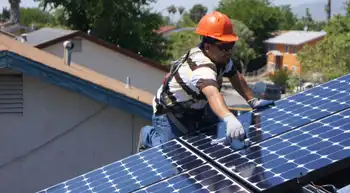
By Canadian Hydro is committed to the concept of low-impact power generation. Through its wind and run-of-river hydro facilities, Canadian Hydro is demonstrating that commitment to the benefit of the environment and its shareholders.


Substation Relay Protection Training

Our customized live online or in‑person group training can be delivered to your staff at your location.

  • Live Online
  • 12 hours Instructor-led
  • Group Training Available
Regular Price:
$699
Coupon Price:
$599
Reserve Your Seat Today
Toronto, Ontario -- Canadian Hydro Developers, Inc. announced that BC Hydro has offered to purchase all of the power generated from the 30 MW Pingston Hydroelectric Plant located in southeastern British Columbia being jointly developed with Brascan Power. BC Hydro has also offered to purchase all of the generation from the proposed 25 MW Upper Mamquam Hydroelectric Project located in the Squamish area of British Columbia, north of Vancouver.

The 20-year contracts fall under BC Hydro's Green Energy Projects program whereby BC Hydro has committed to meeting 10% of new load growth, to 2010, in British Columbia from green energy sources. Under this program, all independent power producers who were awarded contracts were required to demonstrate that they meet BC Hydro's criteria for "green", have adequate financing and are at a high state of readiness to undertake their project. Financial details of the transactions are confidential. The Company expects to sign contracts with BC Hydro in the next 60 days.

Construction on the Pingston Hydroelectric Plant continues to progress well and the plant is expected to be operational by the fourth quarter of 2002. This plant will generate approximately 160,000 MWh per year of emissions-free power. The proposed Upper Mamquam Hydroelectric Project is expected to be operational in 2004 and will also be "run-of-river".

"Canadian Hydro is impressed with BC Hydro implementing a low-impact renewable portfolio standard for new generation in British Columbia," said John Keating, CEO of Canadian Hydro. "These 20-year contracts will provide the Company and investors with predictable, long-term cash flow from these projects, as well as garnering a premium price for the green component of the power."

Canadian Hydro is a developer, owner and operator of thirteen existing electrical generating facilities: nine "run-of-river" hydroelectric plants, three wind plants and one natural gas-fired plant totalling 88.9 MW net to the Company's interest. In addition, the Pingston Hydroelectric Plant (15 MW net) is currently under construction and approximately 223 MW are in various stages of permitting for construction in the next five years. All of the Company's plants and projects are located in British Columbia, Alberta, and Ontario. Canadian Hydro's wind and water plants are certified under the EcoLogo(tm) certification program.

Related News
U.S. Electric Vehicle Market Share Dips in Q1 2024

U.S. EV Market Share Dip Q1 2024 reflects slower BEV adoption, rising PHEV demand, affordability concerns, charging infrastructure gaps, tax credit shifts, range anxiety, and automaker strategy adjustments across the electric vehicle market.


Key Points

Q1 2024 EV and hybrid share slipped as BEV sales lag, PHEVs rise, and affordability and charging concerns temper demand.

✅ BEV share fell to 7.0% as affordable models remain limited

✅ PHEV sales rose 50% YoY, easing range anxiety concerns

✅ Policy shifts and charging gaps weigh on consumer adoption


The U.S. electric vehicle (EV) market, once a beacon of unbridled growth, appears to be experiencing a course correction. Data from the U.S. Energy Information Administration (EIA) reveals that the combined market share of electric vehicles (battery electric vehicles, or BEVs) and hybrids dipped slightly in the first quarter of 2024, marking the first decline since the onset of the COVID-19 pandemic, even as EU EV share rose during lockdowns in 2020.

This news comes as a surprise to many analysts who predicted continued exponential growth for the EV market. While overall sales of electric vehicles surged into 2024 and did increase by 7% compared to Q1 2023, this growth wasn't enough to keep pace with the overall rise in vehicle sales. The result: a decline in market share from 18.8% in Q4 2023 to 18.0% in Q1 2024.

Several factors may be contributing to this shift. One potential culprit is a slowdown in battery electric vehicle sales. BEVs saw their share of the market dip from 8.1% to 7.0% in the same period. This could be attributed to a lack of readily available affordable options, with many popular EV models still commanding premium prices and concerns that EV supply may miss demand in the near term.

Another factor could be the rising interest in plug-in hybrid electric vehicles (PHEVs). PHEV sales witnessed a significant jump of 50% year-over-year, reflecting how gas-electric hybrids are getting a boost from major automakers, potentially indicating a consumer preference for vehicles that offer both electric and gasoline powertrain options, addressing concerns about range anxiety often associated with BEVs.

Industry experts offer mixed interpretations of this data. Some downplay the significance of the dip, attributing it to a temporary blip, even though EVs remain behind gas cars in total sales. They point to the ongoing commitment from major automakers to invest in EV production and the potential for new, more affordable models to hit the market soon.

Others express more concern, citing Europe's recent EV slump and suggesting this might be a sign of maturing consumer preferences. They argue that simply increasing the number of EVs on the market might not be enough. Automakers need to address issues like affordability, charging infrastructure, and range anxiety to maintain momentum.

The role of government incentives also remains a question mark. The federal tax credit for electric vehicles is currently set to phase out gradually, potentially impacting consumer purchasing decisions in the future. Continued government support, through incentives or infrastructure development, could be crucial in maintaining consumer interest.

The coming quarters will be crucial in determining the long-term trajectory of the U.S. EV market, especially after the global electric car market's rapid expansion in recent years. Whether this is a temporary setback or a more lasting trend remains to be seen. Addressing consumer concerns, ensuring a diverse range of affordable EV options, and continued government support will all be essential in ensuring the continued growth of this critical sector.

This development also presents an opportunity for traditional automakers. By capitalizing on the growing PHEV market and addressing consumer concerns about affordability and range anxiety, they can carve out a strong position in the evolving automotive landscape.


Related News

View more

B.C. electricity demand hits an all-time high

BC Hydro Peak Electricity Demand reached a record 10,902 megawatts during a cold snap, driven by home heating. Peak hours surged; load shifting and energy conservation can ease strain on the grid and lower bills.


Key Points

Record winter peak of 10,902 MW, set during a cold snap, largely from home heating demand at peak hours.

✅ All-time high load: 10,902 MW between 5 and 6 p.m., Dec. 27.

✅ Cold snap increased home heating demand during peak hours.

✅ Shift laundry and dishwashers off-peak; use programmable thermostats.


BC Hydro says the province set a new record for peak electricity demand on Monday as temperatures hit extreme lows, and Quebec shattered consumption records during similar cold weather.

Between 5 and 6 p.m. on Dec. 27, demand for electricity hit an all-time high of 10,902 megawatts, which is higher than the previous record of 10,577 megawatts set in 2020, and follows a record-breaking year in 2021 for the utility.

“The record represents a single moment in the hour when demand for electricity was the highest yesterday,” says Simi Heer, BC Hydro spokesperson, in a statement. “Most of the increase is likely due to additional home heating required during this cold snap.”

In addition to the peak demand record on Monday, BC Hydro has observed an overall increase in electricity demand since Friday, and has noted that cryptocurrency mining electricity use is an emerging load in the province as well. Monday’s hourly peak demand was 18 per cent higher than Friday’s, while Calgary's electricity use soared during a frigid February, underscoring how cold snaps strain regional grids.

“BC Hydro has enough supply options in place to meet increasing electricity demand,” adds Heer, and pointed to customer supports like a winter payment plan for households managing higher bills. “However, if British Columbians want to help ease some of the demand on the system during peak times, we encourage shifting activities like doing laundry or running dishwashers to earlier in the day or later in the evening.”

BC Hydro is also offering energy conservation tips for people looking to lower their electricity use and their electricity bills, noting that Earth Hour once saw electricity use rise in the province:

Manage your home heating actively by turning the heat down when no one his home or when everyone is sleeping. Consider installing a programmable thermostat to automatically adjust temperatures at different times based on your family's activities, and remember that in warmer months wasteful air conditioning can add $200 to summer energy bills. BC Hydro recommends the following temperatures:

16 degrees Celsius when sleeping or away from home
21 degrees Celsius when relaxing, watching TV
18 degrees Celsius when doing housework or cleaning


Related News

View more

Relief for power bills in B.C. offered to only part of province

BC Hydro COVID-19 Relief offers electricity bill credits for laid-off workers and small business support, announced by Premier John Horgan, while FortisBC customers face deferrals and billing arrangements across Kelowna, Okanagan, and West Kootenay.


Key Points

BC Hydro COVID-19 Relief gives bill credits to laid-off residents; FortisBC offers deferrals and payment plans.

✅ Credit equals 3x average monthly bill for laid-off BC Hydro users

✅ Small businesses on BC Hydro get three months bill forgiveness

✅ FortisBC waives late fees, no disconnections, offers deferrals


On April 1, B.C. Premier John Horgan announced relief for BC Hydro customers who are facing bills after being laid-off during the economic shutdown due to the COVID-19 epidemic, while the utility also explores time-of-use rates to manage demand.

“Giving people relief on their power bills lets them focus on the essentials, while helping businesses and encouraging critical industry to keep operating,” he said.

BC Hydro residential customers in the province who have been laid off due to the pandemic will see a credit for three times their average monthly bill and, similar to Ontario's pandemic relief fund, small businesses forced to close will have power bills forgiven for three months.

But a large region of the province which gets its power from FortisBC will not have the same bail out.

FortisBC is the electricity provider to the tens of thousands who live and work in the Silmikameen Valley on Highway 3, the city of Kelowna, the Okanagan Valley south from Penticton, the Boundary region along the U.S. border. as well as West Kootenay communities.

“We want to make sure our customers are not worried about their FortisBC bill,” spokesperson Nicole Brown said.

FortisBC customers will still be on the hook for bills despite measures being taken to keep the lights on, even as winter disconnection pressures have been reported elsewhere.

Recent storm response by BC Hydro also highlights how crews have kept electricity service reliable during recent atypical events.

“We’ve adjusted our billing practices so we can do more,” she said. “We’ve discontinued our late fees for the time being and no customer will be disconnected for any financial reason.”

Brown said they will work one-on-one with customers to help find a billing arrangement that best suits their needs, aligning with disconnection moratoriums seen in other jurisdictions.

Those arrangement, she said, could include a “deferral, an equal payment plan or other billing options,” similar to FortisAlberta's precautions announced in Alberta.

Global News inquired with the Premier’s office why FortisBC customers were left out of Wednesday’s announcement and were deferred to the Ministry of Energy, Mines and Petroleum Resources.

The Ministry referred us back to FortisBC on the issue and offered no other comment, even as peak rates for self-isolating customers remained unchanged in parts of Ontario.

“We’re examining all options of how we can further help our customers and look forward to learning more about the program that BC Hydro is offering,” Brown said.

Disappointed FortisBC customers took to social media to vent about the disparity.


Related News

View more

Ontario Ministry of Energy proposes growing hydrogen economy through reduced electricity rates

Ontario Hydrogen Strategy accelerates green hydrogen via electrolysis, reduced electricity rates, and IESO pilots, leveraging ICI, interruptible rates, and surplus power to grow clean tech, low-carbon energy, and export markets across Ontario.


Key Points

A provincial plan to scale green hydrogen with electricity costs, IESO pilots, and surplus power to boost tech.

✅ Amends ICI to admit hydrogen producers from 50 kW demand

✅ Enables co-located electrolysers to use surplus curtailed power

✅ Offers interruptible rates via IESO pilot for flexible loads


The Ontario Ministry of Energy is seeking input on accelerating Ontario’s hydrogen economy. The province has been promoting growth in the clean tech sector, including low-carbon energy production and the Hydrogen Innovation Fund, as an avenue for post-COVID-19 economic recovery. Hydrogen produced through electrolysis (or “green hydrogen”) has been central to these efforts, complimenting both federal and provincial initiatives to create vibrant domestic and export markets for the energy as a principal alternative to conventional fossil fuels.

On April 14, 2022, the Ministry filed a proposal (the Proposal) on the Environmental Registry of Ontario (ERO) to gather input from stakeholders, aligning with the province’s industrial electricity pricing consultation underway. As part of Ontario’s Hydrogen Strategy, the Ministry is considering several options that would provide reduced electricity rates for green hydrogen producers to make production more economically competitive with other energies. To date, the relatively high production cost of green hydrogen has been a challenge facing its adoption, both domestically and internationally.

The Proposal features three options:

  • Amending the rules for the Industrial Conservation Initiative (ICI) applicable to hydrogen producers;
  • Enabling onsite hydrogen production using electricity that would otherwise be curtailed; and
  • Providing an interruptible electricity rate for hydrogen producers.

Option 1: Amending the ICI rules

Option 1 would amend the ICI rules to allow all hydrogen producers with an average monthly peak demand of 50kW to participate. Hydrogen producers’ facilities could qualify for ICI in the first year of operation with a peak demand factor determined based on a deemed consumption profile, using a method yet to be determined by the Ministry. At the end of the first year, their global adjustment (GA) charges would be reconciled based on their actual consumption pattern. As set out in our prior article, GA was introduced by the province in January 2005 to ensure reliable, sustainable and a diverse supply of power at stable and competitive prices, aligning with plans to rely on battery storage to meet rising energy demand. The Ministry’s current proposal would require hydrogen producers to place a security deposit for their facilities’ first year of operation with the Independent Electricity System Operator (IESO) or their Local Distribution Company (LDC) to ensure other consumer would not be adversely affected.

Option 2: Enable onsite hydrogen production using surplus electricity

Option 2 would allow businesses to co-locate hydrogen electrolysers at electricity generation facilities, drawing on recent electrolyzer investment trends, to make use of what would become curtailed generation. Under this option in the Proposal, the developer for the hydrogen production facility would be required to be a separate legal entity from the one that owns or operates the electricity generation facility. Based on this required level of independence, the hydrogen developer would be required to pay the electricity generator for the electricity supply.

At this stage, it is not clear whether, or how the generator would be required to share the revenue with other consumers. The next steps of the Proposal may require regulatory amendments, and/or amendments to electricity generator’s contracts, consistent with efforts enabling storage in Ontario's electricity system to integrate flexible resources.

Option 3: Interruptible electricity rates for hydrogen producers

In 2021, the Ministry posted a proposal on the ERO including an Interruptible Rate Pilot that was to be developed in conjunction with the IESO in order to address stakeholder feedback received during the 2019 Industrial Consultation specific to the challenges of identifying and responding to peak demand events while participating in the ICI. The pilot was targeted towards large electricity consumers, where participants were charged GA at a reduced rate in exchange for agreeing to reduce consumption during system or local reliability events, as identified by IESO.

Option 3 would allow for the introduction for a dedicated stream for hydrogen producers into the interruptible rate pilot, which is currently under development with the IESO. This would take into account the unique circumstances of hydrogen producers, as well as the importance of the hydrogen sector in Ontario’s Low-Carbon Hydrogen Strategy. Under the pilot, participants would be given advance notice by the IESO to reduce demand over a fixed number of hours, several times each year, and emerging vehicle-to-grid models where EV owners can sell electricity back to the grid highlight additional flexibility options. Ultimately, the pilot would support low-carbon hydrogen production by offering large electricity consumers, such as hydrogen producers, reduced electricity rates in exchange for reduces consumption during system or local reliability events.

Following this initial development work, the Ministry intends to consult with stakeholders later this year to determine design details, as well as the timing for the potential roll out of the proposed pilot.

Key takeaways

The design options are not meant to be mutually exclusive, and might be pursued by the Ministry in combination. Ultimately, Ontario is focusing on ways to reduce electricity rates in an attempt to make the province a leader in the adoption of green hydrogen, as made clear in the Ontario Hydrogen Strategy, even as an electricity supply crunch looms, underscoring the urgency. Stakeholders will want to participate in this process given its long-term implications for both the hydrogen and power sectors.


Related News

View more

E.ON to Commission 2500 Digital Transformer Stations

E.ON Digital Transformer Stations modernize distribution grids with smart grid monitoring, voltage control, and remote switching, enabling bidirectional power flow, renewables integration, and rapid fault isolation from centralized grid control centres.


Key Points

Remotely monitored grid nodes enhancing smart grid stability and speedier fault response.

✅ Real-time voltage and current data along feeders and laterals

✅ Remote switching cuts outage duration and truck rolls

✅ Supports renewables and bidirectional power flows


E.ON plans to commission 2500 digital transformer stations in the service areas of its four German distribution grid operators - Avacon, Bayernwerk, E.DIS and Hansewerk - by the end of 2019. Starting this year, E.ON will solely install digital transformer stations in Germany, aligning with 2019 grid edge trends seen across the sector. This way, the digital grid is quite naturally being integrated into E.ON's distribution grids.

With these transformer stations as the centrepiece of the smart grid, it is possible to monitor and control using synchrophasors in the power grid from the grid control centre. This helps to maintain a more balanced utilisation of the grid and, with increasing complexity, ensures continued security of supply.

Until now, the current and voltage parameters required for safe grid operation could usually only be determined at the beginning of a power line, where there is usually a grid substation in place. Controlling current flow and voltage in the downstream system was physically impossible.

In the future, grids will have to function in both directions: they will bring electricity to the customer while at the same time collecting and transmitting more and more green electricity via HVDC technology where appropriate. This requires physical data to be made available along the entire route. To ensure security of supply, voltage fluctuations must be kept within narrowly defined limits and the current flow must not exceed the specified value, while reducing line losses with superconducting cables remains an important consideration. To manage this challenge, it is necessary to install digital technology.

The possibility of remotely controlling grids also reduces downtimes in the event of faults and supports a smarter electricity infrastructure approach. With the new technology, our grid operators can quickly and easily access the stations of the affected line. The grid control centres can thus limit and eliminate faults on individual line sections within a very short space of time.


Related News

View more

The Need for Electricity During the COVID-19 Pandemic

US utilities COVID-19 resilience shows electric utilities maintaining demand stability, reaffirming earnings guidance, and accessing the bond market for low-cost financing, as Dominion, NextEra, and Con Edison manage recession risks.


Key Points

It is the sector's capacity to sustain demand, financing access, and guidance despite pandemic recession pressures.

✅ Bond market access locks in low-cost, long-term debt

✅ Stable residential load offsets industrial weakness

✅ Guidance largely reaffirmed by major utilities


Dominion Energy (D) expects "incremental residential load" gains, consistent with COVID-19 electricity demand patterns, as a result of COVID-19 fallout. Southern Company CEO Tom Fanning says his company is "nowhere near" a need to review earnings guidance because of a potential recession, in a region where efficiency and demand response can help level electricity demand for years.

Sempra Energy (SRE) has reaffirmed earnings per share guidance for 2020 and 2021, as well timing for the sale of assets in Chile and Peru, and peers such as Duke Energy's renewables plan have reaffirmed capital investments to deliver cleaner energy and economic growth. And Xcel Energy (XEL) says it still "hasn’t seen material impact on its business."

Several electric utilities have demonstrated ability to tap the bond market, in line with utility sector trends in recent years, to lock in low-cost financing, as America moves toward broader electrification, despite ongoing turmoil. Their ranks include Dominion Energy, renewable energy leader NextEra Energy (NEE) and Consolidated Edison (ED), which last week sold $1 billion of 30-year bonds at a coupon rate of just 3.95 percent.

It’s still early days for US COVID-19 fallout. And most electric companies have yet to issue guidance. That’s understandable, since so much is still unknown about the virus and the damage it will ultimately do to human health and the global economy. But so far, the US power industry is showing typical resilience in tough times, as it coordinates closely with federal partners to maintain reliability.

Will it last? We won’t know for certain until there’s a lot more data. NextEra is usually first to report its Q1 earnings reports and detailed guidance. But that’s not expected until April 23. And companies may delay financials further, should the virus and efforts to control it impede collection and analysis of data, and as they address electricity shut-off risks affecting customers.


Related News

View more

Sign Up for Electricity Forum’s Newsletter

Stay informed with our FREE Newsletter — get the latest news, breakthrough technologies, and expert insights, delivered straight to your inbox.

Electricity Today T&D Magazine Subscribe for FREE

Stay informed with the latest T&D policies and technologies.
  • Timely insights from industry experts
  • Practical solutions T&D engineers
  • Free access to every issue

Live Online & In-person Group Training

Advantages To Instructor-Led Training – Instructor-Led Course, Customized Training, Multiple Locations, Economical, CEU Credits, Course Discounts.

Request For Quotation

Whether you would prefer Live Online or In-Person instruction, our electrical training courses can be tailored to meet your company's specific requirements and delivered to your employees in one location or at various locations.