TVA Boosts Commitment To Renewable Energy

By Industrial Maintenance and Plant Operation


NFPA 70b Training - Electrical Maintenance

Our customized live online or in‑person group training can be delivered to your staff at your location.

  • Live Online
  • 12 hours Instructor-led
  • Group Training Available
Regular Price:
$699
Coupon Price:
$599
Reserve Your Seat Today
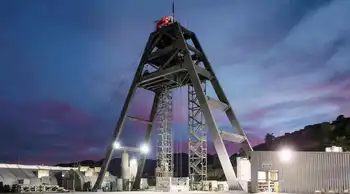
The Tennessee Valley Authority (TVA) has signed a 20-year contract with Invenergy LLC, a Chicago-based energy-development company, to build and operate 18 power-generating windmills atop a mountain in eastern Tennessee.

The new units will increase by 10-fold the amount of power generated by TVA's latest venture into renewable energy sources.

They'll join three windmills that have been operating on Buffalo Mountain, near Knoxville, for three years.

Construction on the new turbines will begin in the spring, and are expected to be in operation by November. According to TVA, the 300-ft.-high turbines will provide enough wind generation to power 4,500 homes. Knoxville, TN-based TVA provides electrical service to customers in seven southern states.

Related News
Ontario to seek new wind, solar power to help ease coming electricity supply crunch

Ontario Clean Grid Plan outlines emissions-free electricity growth, renewable energy procurement, nuclear expansion at Bruce and Darlington, reduced natural gas, grid reliability, and net-zero alignment to meet IESO demand forecasts and EV manufacturing loads.


Key Points

A plan to expand emissions-free power via renewables and nuclear, cut natural gas use, and meet growing demand.

✅ Targets renewables, hydro, and nuclear capacity growth

✅ Aims to reduce reliance on gas for grid reliability

✅ Aligns with IESO demand forecasts and EV manufacturing loads


Ontario is working toward filling all of the province’s quickly growing electricity needs with emissions-free sources, including a plan to secure new renewable generation and clean power options, but isn’t quite ready to commit to a moratorium on natural gas.

Energy Minister Todd Smith announced Monday a plan to address growing energy needs for 2030 to 2050 — the Independent Electricity System Operator projects Ontario’s electricity demand could double by mid-century — and next steps involve looking for new wind, solar and hydroelectric power.

“While we may not need to start building today, government and those in the energy sector need to start planning immediately, so we have new clean, zero-emissions projects ready to go when we need them,” Smith said in Windsor, Ont.

The strategy also includes two nuclear projects announced last week — a new large-scale nuclear plant at Bruce Power on the shore of Lake Huron and three new small modular reactors at the site of the Darlington nuclear plant east of Toronto.

Those projects, enough to power six million homes, will help Ontario end its reliance on natural gas to generate electricity, said Smith, but committing to a natural gas moratorium in 2027 and eliminating natural gas by 2050 is contingent on the federal government helping to speed up the new nuclear facilities.

“Today’s report, the Powering Ontario’s Growth plan, commits us to working towards a 100 per cent clean grid,” Smith said in an interview.

“Hopefully the federal government can get on board with our intentions to build this clean generation as quickly as possible … That will put us in a much better position to use our natural gas facilities less in the future, if we can get those new projects online.”

The IESO has said that natural gas is required to ensure supply and stability in the short to medium term, as Ontario works on balancing demand and emissions across the grid, but that it will also increase greenhouse gas emissions from the electricity sector.

The province is expected to face increased demand for electricity from expanded electric vehicle use and manufacturing in the coming years, even as a $400-billion cost estimate for greening the grid is debated.

Keith Brooks, programs director for Environmental Defence, said the provincial plan could have been much more robust, containing firm timelines and commitments.

“This plan does not commit to getting emissions out of the system,” he said.

“It doesn’t commit to net zero, doesn’t set a timeline for a net zero goal or have any projection around emissions from Ontario’s electricity sector going forward. In fact, it’s not really a plan. It doesn’t set out any real goals and it doesn’t it doesn’t project what Ontario’s supply mix might look like.”

The Canadian Climate Institute applauded the plan’s focus on reducing reliance on gas-fired generation and emphasizing non-emitting generation, but also said there are still some question marks.

“The plan is silent on whether the province intends to construct new gas-fired generation facilities,” even as new gas plant expansions are proposed, senior research director Jason Dion wrote in a statement.

“The province should avoid building new gas plants since cost-effective alternatives are available, and such facilities are likely to end up as stranded assets. The province’s timeline for reaching net zero generation is also unclear. Canada and other G7 countries have set a target for 2035, something Ontario will need to address if it wants to remain competitive.”


Related News

View more

Biggest in Canada: Bruce Power doubles PPE donation

Bruce Power PPE Donation supports Canada COVID-19 response, supplying 1.2 million masks, gloves, and gowns to Ontario hospitals, long-term care, and first responders, plus face shields, hand sanitizer, and funding for testing and food banks.


Key Points

Bruce Power PPE Donation is a broad COVID-19 aid delivering PPE, supplies, and funding across Ontario.

✅ 1.2 million masks, gloves, gowns to Ontario care providers

✅ 3-D printed face shields and 50,000 bottles of sanitizer

✅ Funding testing research and supporting regional food banks


The world’s largest nuclear plant, which recently marked an operating record during sustained operations, just made Canada’s largest donation of personal protective equipment (PPE).

Bruce Power is doubling its initial donation of 600,000 masks, gloves and gowns for front-line health workers, to 1.2 million pieces of PPE.

The company, which operates the Bruce Nuclear station near Kincardine, Ont., where a major reactor refurbishment is underway, plans to have the equipment in the hands of hospitals, long-term care homes and first responders by the end of April.

It’s not the only thing Bruce Power is doing to help out Ontario during the COVID-19 pandemic:

 Bruce Power has donated $300,000 to 37 food banks in Midwestern Ontario, highlighting the broader economic benefits of Canadian nuclear projects for communities.

  •  They’re also working with NPX in Kincardine to make face shields with 3-D printers, leveraging local manufacturing contracts to accelerate production.
  •  They’re teaming up with the Power Worker’s Union to fund testing research in Toronto.
  •  They’re working with Three Sheets Brewing and Junction 56 Distillery to distribute 50,000 bottles of hand sanitizer to those that need it.

And that’s all on top of what they’ve been doing for years, producing Cobalt-60, a medical isotope to sterilize medical equipment, and, after a recent output upgrade at the site, producing about 30 per cent of Ontario’s electricity as the province advances the Pickering B refurbishment to bolster grid reliability.

Bruce Power has over 4,000 employees working out of their nuclear plant, on the shores of Lake Huron, as it explores the proposed Bruce C project for potential future capacity.


Related News

View more

Why subsidies for electric cars are a bad idea for Canada

EV Subsidies in Canada influence greenhouse-gas emissions based on electricity grid mix; in Ontario and Quebec they reduce pollution, while fossil-fuel grids blunt benefits. Compare costs per tonne with carbon tax and renewable energy policies.


Key Points

Government rebates for electric vehicles, whose emissions impact and cost-effectiveness depend on provincial grid mix.

✅ Impact varies by grid emissions; clean hydro-nuclear cuts CO2.

✅ MEI estimates up to $523 per tonne vs $50 carbon price.

✅ Best value: tax carbon; target renewables, efficiency, hybrids.


Bad ideas sometimes look better, and sell better, than good ones – as with the proclaimed electric-car revolution that policymakers tout today. Not always, or else Canada wouldn’t be the mostly well-run place that it is. But sometimes politicians embrace a less-than-best policy – because its attractive appearance may make it more likely to win the popularity contest, right now, even though it will fail in the long run.

The most seasoned political advisers know it. Pollsters too. Voters, in contrast, don’t know what they don’t know, which is why bad policy often triumphs. At first glance, the wrong sometimes looks like it must be right, while better and best give the appearance of being bad and worst.

This week, the Montreal Economic Institute put out a study on the costs and benefits of taxpayer subsidies for electric cars. They considered the logic of the huge amounts of money being offered to purchasers in the country’s two largest provinces. In Quebec, if you buy an electric vehicle, the government will give you up to $8,000; in Ontario, buying an electric car or truck entitles you to a cheque from the taxpayer of between $6,000 and $14,000. The subsidies are rich because the cars aren’t cheap.

Will putting more electric cars on the road lower greenhouse-gas emissions? Yes – in some provinces, where they can be better for the planet when the grid is clean. But it all depends on how a province generates electricity. In places like Alberta, Saskatchewan, Nova Scotia and Nunavut territory, where most electricity comes from burning fossil fuels, an electric car may actually generate more greenhouse gases than one running on traditional gasoline. The tailpipe of an electric vehicle may not have any emissions. But quite a lot of emissions may have been generated to produce the power that went to the socket that charged it.

A few years ago, University of Toronto engineering professor Christopher Kennedy estimated that electric cars are only less polluting than the gasoline vehicles they replace when the local electrical grid produces a good chunk of its power from renewable sources – thereby lowering emissions to less than roughly 600 tonnes of CO2 per gigawatt hour.

Unfortunately, the electricity-generating systems in lots of places – from India to China to many American states – are well above that threshold. In those jurisdictions, an electric car will be powered in whole or in large part by electricity created from the burning of a fossil fuel, such as coal. As a result, that car, though carrying the green monicker of “electric,” is likely to be more polluting than a less costly model with an internal combustion or hybrid engine.

The same goes for the Canadian juridictions mentioned above. Their electricity is dirtier, so operating an electric car there won’t be very green. Alberta, for example, is aiming to generate 30 per cent of its electricity from renewable sources by 2030 – which means that the other 70 per cent of its electricity will still come from fossil fuels. (Today, the figure is even higher.) An Albertan trading in a gasoline car for an electric vehicle is making a statement – just not the one he or she likely has in mind.

In Ontario and Quebec, however, most electricity is generated from non-polluting sources, even though Canada still produced 18% from fossil fuels in 2019 overall. Nearly all of Quebec’s power comes from hydro, and more than 90 per cent of Ontario’s electricity is from zero-emission generation, mainly hydro and nuclear. British Columbia, Manitoba and Newfoundland and Labrador also produce the bulk of their electricity from hydro. Electric cars in those provinces, powered as they are by mostly clean electricity, should reduce emissions, relative to gas-powered cars.

But here’s the rub: Electric cars are currently expensive, and, as a recent survey shows, consequently not all that popular. Ontario and Quebec introduced those big subsidies in an attempt to get people to buy them. Those subsidies will surely put more electric cars on the road and in the driveways of (mostly wealthy) people. It will be a very visible policy – hey, look at all those electrics on the highway and at the mall!

However, that result will be achieved at great cost. According to the MEI, for Ontario to reach its goal of electrics constituting 5 per cent of new vehicles sold, the province will have to dish out up to $8.6-billion in subsidies over the next 13 years.

And the environmental benefits achieved? Again, according to the MEI estimate, that huge sum will lower the province’s greenhouse-gas emissions by just 2.4 per cent. If the MEI’s estimate is right, that’s far too many bucks for far too small an environmental bang.

Here’s another way to look at it: How much does it cost to reduce greenhouse-gas emissions by other means? Well, B.C.’s current carbon tax is $30 a tonne, or a little less than 7 cents on a litre of gasoline. It has caused GHG emissions per unit of GDP to fall in small but meaningful ways, thanks to consumers and businesses making millions of little, unspectacular decisions to reduce their energy costs. The federal government wants all provinces to impose a cost equivalent to $50 a tonne – and every economic model says that extra cost will make a dent in greenhouse-gas emissions, though in ways that will not involve politicians getting to cut any ribbons or hold parades.

What’s the effective cost of Ontario’s subsidy for electric cars? The MEI pegs it at $523 per tonne. Yes, that subsidy will lower emissions. It just does so in what appears to be the most expensive and inefficient way possible, rather than the cheapest way, namely a simple, boring and mildly painful carbon tax.

Electric vehicles are an amazing technology. But they’ve also become a way of expressing something that’s come to be known as “virtue signalling.” A government that wants to look green sees logic in throwing money at such an obvious, on-brand symbol, or touting a 2035 EV mandate as evidence of ambition. But the result is an off-target policy – and a signal that is mostly noise.


Related News

View more

Ireland goes 25 days without using coal to generate electricity

Ireland Coal-Free Electricity Record: EirGrid reports 25 days without coal on the all-island grid, as wind power, renewables, and natural gas dominated generation, cutting CO2 emissions, with Moneypoint sidelined by market competitiveness.


Key Points

It is a 25-day period when the grid used no coal, relying on gas and renewables to reduce CO2 emissions.

✅ 25 days coal-free between April 11 and May 7

✅ Gas 60%, renewables 30% of generation mix

✅ Eurostat: 6.8% drop in Ireland's CO2 emissions


The island of Ireland has gone a record length of time without using coal-fired electricity generation on its power system, Britain's week-long coal-free run providing a recent comparator, Eirgrid has confirmed.

The all-island grid operated without coal between April 11th and May 7th – a total of 25 days, it confirmed. This is the longest period of time the grid has operated without coal since the all-island electricity market was introduced in 2007, echoing Britain's record coal-free stretch seen recently.

Ireland’s largest generating station, Moneypoint in Co Clare, uses coal, with recent price spikes in Ireland fueling concerns about dispatchable capacity, as do some of the larger generation sites in Northern Ireland.

The analysis coincides with the European statistics agency, Eurostat publishing figures showing annual CO2 emissions in Ireland fell by 6.8 per cent last year; partly due to technical problems at Moneypoint.

Over the 25-day period, gas made up 60 per cent of the fuel mix, while renewable energy, mainly wind, accounted for 30 per cent, echoing UK wind surpassing coal in 2016 across the market. Coal-fired generation was available during this period but was not as competitive as other methods.

EirGrid group chief executive Mark Foley said this was “a really positive development” as coal was the most carbon intense of all electricity sources, with its share hitting record lows in the UK in recent years.

“We are acutely aware of the challenges facing the island in terms of meeting our greenhouse gas emission targets, mindful that low-carbon generation stalled in the UK in 2019, through the deployment of more renewable energy on the grid,” he added.

Last year 33 per cent of the island’s electricity came from renewable energy sources, German renewables surpassing coal and nuclear offering a parallel milestone, a new record. Coal accounted for 9 per cent of electricity generation, down from 12.9 per cent in 2017.


Related News

View more

London's Newest Electricity Tunnel Goes Live

London Electricity Tunnel strengthens grid modernization with high-voltage cabling from major substations, increasing redundancy, efficiency, and resilience while enabling renewable integration, optimized power distribution, and a stable, low-loss electricity supply across the capital.


Key Points

A high-voltage tunnel upgrading London's grid, with capacity, redundancy, and renewable integration for reliable power.

✅ High-voltage cabling from key substations boosts capacity

✅ Redundancy improves reliability during grid faults

✅ Enables renewable integration and lower transmission losses


London’s energy infrastructure has recently taken a significant leap forward with the commissioning of its newest electricity tunnel, and related upgrades like the 2GW substation that bolster transmission capacity, a project that promises to enhance the reliability and efficiency of the city's power distribution. This cutting-edge tunnel is a key component in London’s ongoing efforts to modernize its energy infrastructure, support its growing energy demands, and contribute to its long-term sustainability goals.

The newly activated tunnel is part of a broader initiative to upgrade London's aging power grid, which has faced increasing pressure from the city’s expanding population and its evolving energy needs, paralleling Toronto's electricity planning to accommodate growth. The tunnel is designed to carry high-voltage electricity from major substations to various parts of the city, improving the distribution network's capacity and reliability.

The construction of the tunnel was a major engineering feat, involving the excavation of a vast underground passage that stretches several kilometers beneath the city. The tunnel is equipped with advanced technology and materials to ensure its resilience and efficiency, and is informed by advances such as HVDC technology being explored across Europe for stronger grids. It features state-of-the-art cabling and insulation to handle high-voltage electricity safely and efficiently, minimizing energy losses and improving overall grid performance.

One of the key benefits of the new tunnel is its ability to enhance the reliability of London’s power supply. As the city continues to grow and demand for electricity increases, maintaining a stable and uninterrupted power supply is critical. The tunnel helps address this need by providing additional capacity and creating redundancy in the power distribution network, aligning with national efforts to fast-track grid connections that unlock capacity across the UK.

The tunnel also supports London’s sustainability goals by facilitating the integration of renewable energy sources into the grid. With the increasing use of solar, wind, and other clean energy technologies, including the Scotland-to-England subsea link that will carry renewable power, the power grid needs to be able to accommodate and distribute this energy effectively. The new tunnel is designed to handle the variable nature of renewable energy, allowing for a more flexible and adaptive grid that can better manage fluctuations in supply and demand.

In addition to its technical benefits, the tunnel represents a significant investment in London’s future energy infrastructure, echoing calls to invest in smarter electricity infrastructure across North America and beyond. The project has created jobs and stimulated economic activity during its construction phase, and it will continue to provide long-term benefits by supporting a more efficient and resilient power system. The upgrade is part of a broader strategy to modernize the city’s infrastructure and prepare it for future energy challenges.

The completion of the tunnel also reflects a commitment to addressing the challenges of urban infrastructure development. Building such a major piece of infrastructure in a densely populated city like London requires careful planning and coordination to minimize disruption and ensure safety. The project team worked closely with local communities and businesses to manage the construction process and mitigate any potential impacts.

As London moves forward, the new electricity tunnel will play a crucial role in supporting the city’s energy needs. It will help ensure that power is delivered efficiently and reliably to homes, businesses, and essential services. The tunnel also sets a precedent for future infrastructure projects, demonstrating how advanced engineering and technology can address the demands of modern urban environments.

The successful activation of the tunnel marks a significant milestone in London’s efforts to build a more sustainable and resilient energy system. It represents a forward-thinking approach to managing the city’s energy infrastructure and addressing the challenges posed by population growth, increasing energy demands, and the need for cleaner energy sources.

Looking ahead, London will continue to invest in and upgrade its energy infrastructure to support its ambitious climate goals and ensure a reliable power supply for its residents, a trend mirrored by Toronto's preparations for surging demand as that city continues to grow. The new electricity tunnel is just one example of the city’s commitment to innovation and sustainability in its approach to energy management.

In summary, London’s newest electricity tunnel is a major advancement in the city’s power distribution network. By enhancing reliability, supporting the integration of renewable energy, and investing in long-term infrastructure, the tunnel plays a critical role in addressing the city’s energy needs and sustainability goals. As London continues to evolve, such infrastructure projects will be essential in meeting the demands of a growing metropolis and creating a more resilient and efficient energy system for the future.


Related News

View more

U.S. Speeds Up Permitting for Geothermal Energy

Geothermal Emergency Permitting accelerates BLM approvals on public lands via categorical exclusions for exploratory drilling and geophysical surveys, boosting domestic energy security, cutting timelines by up to a year, and streamlining low-impact reviews.


Key Points

A policy fast-tracking geothermal exploration on public lands, using BLM categorical exclusions to cut review delays.

✅ Categorical exclusions speed exploratory drilling approvals

✅ Cuts permitting timelines by up to one year

✅ Focused on public lands to enhance energy security


In a significant policy shift, the U.S. Department of the Interior has introduced emergency permitting procedures aimed at expediting the development of geothermal energy projects. This initiative, announced on May 30, 2025, is part of a broader strategy to enhance domestic energy production, seen in proposals to replace Obama's power plant overhaul and reduce reliance on foreign energy sources.

Background and Rationale

The decision to fast-track geothermal energy projects comes in the wake of President Donald Trump's declaration of a national energy emergency, which faces a legal challenge from Washington's attorney general, on January 20, 2025. This declaration cited high energy costs and an unreliable energy grid as threats to national security and economic prosperity. While the emergency order includes traditional energy resources such as oil, gas, coal, and uranium and nuclear energy resources, it notably excludes renewable sources like solar, wind, and hydrogen from its scope.

Geothermal energy, which harnesses heat from beneath the Earth's surface to generate electricity, is considered a reliable and low-emission energy source. However, its development has been hindered by lengthy permitting processes and environmental reviews, with recent NEPA rule changes influencing timelines. The new emergency permitting procedures aim to address these challenges by streamlining the approval process for geothermal projects.

Key Features of the Emergency Permitting Procedures

Under the new guidelines, the Bureau of Land Management (BLM) has adopted categorical exclusions to expedite the review and approval of geothermal energy exploration on public lands. These exclusions allow for faster permitting of low-impact activities, such as drilling exploratory wells and conducting geophysical surveys, without the need for extensive environmental assessments.

Additionally, the BLM has proposed a new categorical exclusion that would apply to operations related to the search for indirect evidence of geothermal resources. This proposal is currently open for public comment and, if finalized, would further accelerate the discovery of new geothermal resources on public lands.

Expected Impact on Geothermal Energy Development

The implementation of these emergency permitting procedures is expected to significantly reduce the time and cost associated with developing geothermal energy projects. According to the Department of the Interior, the new measures could cut permitting timelines by up to a year for certain types of geothermal exploration activities.

This acceleration in project development is particularly important given the untapped geothermal potential in regions like Nevada, which is home to some of the largest undeveloped geothermal resources in the country.

Industry and Environmental Reactions

The geothermal industry has largely welcomed the new permitting procedures, viewing them as a necessary step to unlock the full potential of geothermal energy. Industry advocates argue that reducing permitting delays will facilitate the deployment of geothermal projects, contributing to a more reliable and sustainable energy grid amid debates over electricity pricing changes that affect market signals.

However, the exclusion of solar and wind energy projects from the emergency permitting procedures has drawn criticism from some environmental groups. Critics argue that a comprehensive approach to energy development should include all renewable sources, not just geothermal, to effectively address climate change, as reflected in new EPA pollution limits for coal and gas power plants, and promote energy sustainability.

The U.S. government's move to implement emergency permitting procedures for geothermal energy development marks a significant step toward enhancing domestic energy production and reducing reliance on foreign energy sources. By streamlining the approval process for geothermal projects, the administration aims to accelerate the deployment of this reliable and low-emission energy source. While the exclusion of other renewable energy sources from the emergency procedures has sparked debate, especially after states like California halted an energy rebate program during a federal freeze, the focus on geothermal energy underscores its potential role in the nation's energy future.


Related News

View more

Sign Up for Electricity Forum’s Newsletter

Stay informed with our FREE Newsletter — get the latest news, breakthrough technologies, and expert insights, delivered straight to your inbox.

Electricity Today T&D Magazine Subscribe for FREE

Stay informed with the latest T&D policies and technologies.
  • Timely insights from industry experts
  • Practical solutions T&D engineers
  • Free access to every issue

Download the 2025 Electrical Training Catalog

Explore 50+ live, expert-led electrical training courses –

  • Interactive
  • Flexible
  • CEU-cerified