By -- Source, the Connecticut Post


Arc Flash Training CSA Z462 - Electrical Safety Essentials

Our customized live online or in‑person group training can be delivered to your staff at your location.
  • Live Online
  • 6 hours Instructor-led
  • Group Training Available
Regular Price:
$249
Coupon Price:
$199
Reserve Your Seat Today
New England's electric energy market has moved closer to marriage with New York's, a move that critics say will raise Connecticut's power prices.

The New York Independent System Operator and ISO New England said Tuesday they will begin standardizing trading rules in the two territories to make it easier to buy wholesale electricity across current boundaries.

They also agreed to study the feasibility of creating a single entity to administer a wholesale electricity market that would serve 33 million people in seven states.

"A common wholesale electricity market here in the Northeast is a logical step for both New York and New England," said Gordon van Welie, president and chief executive officer of the Holyoke, Mass.-based ISO New England.

Not so, argued state Attorney General Richard Blumenthal.

"I'm very deeply troubled that ISO New England has taken this step without even a shred of evidence that it will be to our benefit [in New England]," Blumenthal said.

In fact, a study done by the electric market operator for the Pennsylvania, New Jersey and Maryland region showed that marriage with New York would raise prices in that region and New England, Blumenthal said.

Supporters said consolidating the operations that serve retail electricity providers would lower prices, eliminate transmission bottlenecks and reduce power shortages.

Steve Sullivan, a spokesman for the Guilderland, N.Y.-based New York ISO, said standardizing the markets in the two regions will facilitate trades and make it easier to merge operations in the future.

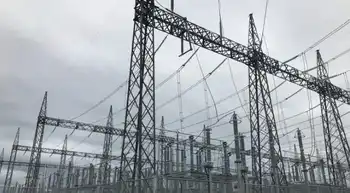
ISO New England manages a grid capable of generating 28,000 megawatts of electricity over 8,000 miles of high-voltage transmission lines.

New York's grid is slightly larger, with a capacity of 35,000 megawatts and 10,700 miles of high-voltage transmission lines.

The Associated Press contributed to this report.

Related News

EDF and France reach deal on electricity prices-source

EDF Nuclear Power Price Deal sets a 70 euros/MWh reference price, adds consumer protection if wholesale electricity prices exceed 110 euros/MWh, and outlines taxation mechanisms to shield bills while funding nuclear investment.


Key Points

A government-EDF deal setting 70 euros/MWh with safeguards above 110 euros/MWh to protect consumers.

✅ Reference price fixed at 70 euros/MWh, near EDF costs.

✅ Consumer shield above 110 euros/MWh; up to 90% extra-revenue tax.

✅ Review clauses maintain 70 euros/MWh through market swings.


State-controlled power group EDF and the French government have reached a tentative deal on future nuclear power prices, echoing a new electricity pricing scheme France has floated, a source close to the government said on Monday, ending months of tense negotiations.

The two sides agreed on 70 euros per megawatt hour (MWH) as a reference level for power prices, aligning with EU plans for more fixed-price contracts for consumers, the source said, cautioning that details of the deal are still being finalised.

The negotiations aimed to find a compromise between EDF, which is eager to maximise revenues to fund investments, and the government, keen to keep electricity bills for French households and businesses as low as possible, amid ongoing EU electricity reform debates across the bloc.

EDF declined to comment.

The preliminary deal sets out mechanisms that would protect consumers if power market prices rise above 110 euros/MWH, similar to potential emergency electricity measures being weighed in Europe, the source said, adding that the deal also includes clauses that would provide a price guarantee for EDF.

The 70 euros/MWH agreed reference price level is close to EDF's nuclear production costs, as Europe moves to revamp its electricity market more broadly. The nuclear power produced by the company provides 70% of France's electricity.

The agreement would allow the government to tax EDF's extra revenues at 90% if prices surpass 110 euros/MWH, in order to offset the impact on consumers. It would also enable a review of conditions in case of market fluctuations to safeguard the 70 euro level for EDF, reflecting how rolling back electricity prices is tougher than it appears, the source said.

French wholesale electricity prices are still above 100 euros/MWH, after climbing to 1,200 euros during last year's energy crisis, even as diesel prices have returned to pre-conflict levels.

A final agreement should be officially announced on Tuesday after a meeting between Finance Minister Bruno Le Maire, Energy Transition Minister Agnes Pannier-Runacher and EDF chief Luc Remont.

That meeting will work out the final details on price thresholds and tax rates between the reference level and the upper limit, the source said.

Negotiations between the two sides were so fraught that at one stage they raised questions about the future of EDF chief Luc Remont, who was appointed by President Emmanuel Macron a year ago to turn around EDF.

The group ended 2022 with a 18 billion-euro loss and almost 65 billion euros of net debt, hurt by a record number of reactor outages that coincided with soaring energy prices in the wake of Russia's invasion of Ukraine.

With its output at a 30-year low, EDF was forced to buy electricity on the market to supply customers. The government, meanwhile, imposed a cap on electricity prices, leaving EDF selling power at a discount.


Related News

View more

B.C. Hydro adds more vehicle charging stations across southern B.C.

BC Hydro EV Charging Stations expand provincewide with DC fast chargers, 80% in 30 minutes at 35 c/kWh, easing range anxiety across Vancouver, Vancouver Island, Coquihalla Highway, East Kootenay, between Kamloops and Prince George.


Key Points

Public DC fast-charging network across B.C. enabling 80% charge in 30 minutes to cut EV range anxiety.

✅ 28 new stations added; 30 launched in 2016

✅ 35 c/kWh; about $3.50 per tank equivalent

✅ Coverage: Vancouver, Island, Coquihalla, East Kootenay


B.C. Hydro is expanding its network of electric vehicle charging stations.

The Crown utility says 28 new stations complete the second phase of its fast-charging network and are in addition to the 30 stations opened in 2016.

Thirteen of the stations are in Metro Vancouver, seven are on Vancouver Island, including one at the Pacific Rim Visitor Centre near Tofino, another is in Campbell River, and two have opened on the Coquihalla segment of B.C.'s Electric Highway at the Britton Creek rest area.

A further six stations are located throughout the East Kootenay and B.C. Hydro says the next phase of its program will connect drivers travelling between Kamloops and Prince George, while stations in Prince Rupert are also being planned.

BC Hydro has also opened a fast charging site in Lillooet, illustrating expansion into smaller communities.

Hydro spokeswoman Mora Scott says the stations can charge an electric vehicle to 80 per cent in just 30 minutes, at a cost of 35 cents per kilowatt hour.

Mora Scott says that translates to roughly $3.50 for the equivalent of a full tank of gas in the average four-cylinder car.

“The number of electric vehicles on B.C. roads is increasing, there’s currently around 9,000 across the province, and we actually expect that number to rise to 300,000 by 2030,” Scott says in a news release.

In partnership with municipalities, regional districts and several businesses, B.C. Hydro has been installing charging stations throughout the province since 2012 with support from the provincial and federal governments and programs such as EV charger rebates available to residents.

Scott says the utility wants to ensure the stations are placed where drivers need them so charging options are available provincewide.

“One big thing that we know drivers of electric vehicles worry about is the concept called range anxiety, that the stations aren’t going to be where they need them,” she says.

Several models of electric vehicle are now capable of travelling up to 500 kilometres on a single charge, says Scott.

BC Hydro president Chris O’Riley says the new charging sites will encourage electric vehicle drivers to explore B.C. this summer.


Related News

View more

Christmas electricity spike equivalent to roasting 1.5 million turkeys: BC Hydro

BC Hydro Holiday Energy Saving Tips highlight electricity usage trends and power conservation during Christmas cooking. Use efficient appliances, lower the thermostat, and track consumption with MyHydro to reduce bills while hosting guests.


Key Points

Guidelines from BC Hydro to cut holiday electricity usage via efficient cooking, smart thermostats, and MyHydro tracking.

✅ Use microwave, toaster oven, or slow cooker to save power.

✅ Batch-bake cookies and pies to minimize oven cycles.

✅ Set thermostat to 18 C and monitor use with MyHydro.


BC Hydro is reminding British Columbians to conserve power over the holidays after a report commissioned by the utility found the arrival of guests for Christmas dinner results in a 15% increase in electricity usage, and it expects holiday usage to rise as gatherings ramp up.

Cooking appears to be the number one culprit for the uptick in peoples’ hydro bills. According to BC Hydro press release, British Columbians use about 8,000 megawatt hours more of electricity by mid-day Christmas — that's about 1.5 million turkeys roasted in electric ovens — while Ontario electricity demand shifted as people stayed home during the pandemic.
 article continues below 

About 95% of British Columbians said they would make meals at home from scratch over the holiday season, mirroring the uptick in residential electricity use observed during the pandemic. The survey found that inviting friends or family over trumped any plans people had to buy pre-made meals or order take-out. Six in 10 respondents said they would also rather bake holiday treats than pick them up pre-made from the store. 

The survey also showed people in B.C. are taking steps to reduce their electricity usage, echoing earlier findings that many British Columbians changed daily electricity habits during the pandemic. When participants were asked whether they were conscious of how much electricity they used when visiting friends or family, 80% said they would be taking steps to limit their usage.


And while cooking meals from scratch over the holidays may contribute to a spike in a person's electricity bill, some studies have found that, when comparing their overall environmental impact against that of ready-made meals, a roasted dinner has a lower negative impact.

Still, there are many ways to improve your energy efficiency and save some money over the holiday season, and conserving can also help the grid during events like the recent atypical storm response noted by BC Hydro. BC Hydro recommends:

• using smaller appliances whenever possible, such as a microwave, crockpot or toaster oven as they use less than half the power of a regular electric oven;

• baking cookies or pies in batches to save energy;

• turning down the household thermostat to 18 C when possible to reduce costs during peak hydro rates where applicable;

• and tracking how much electricity you use through the MyHydro tool alongside potential time-of-use rates for smarter scheduling


Related News

View more

The UK’s energy plan is all very well but it ignores the forecast rise in global sea-levels

UK Marine Energy and Climate Resilience can counter sea level rise and storm surge with tidal power, subsea turbines, heat pumps, and flood barriers, delivering renewable electricity, stability, and coastal protection for the United Kingdom.


Key Points

Integrated use of tidal power, barriers, and heat pumps to curb sea level rise, manage storms, and green the UK grid.

✅ Tidal bridges and subsea turbines enhance baseload renewables

✅ Integrated barriers cut storm surge and river flood risk

✅ Heat pumps and marine heat networks decarbonize coastal cities


IN concentrating on electrically driven cars, the UK’s new ten-point energy plans, and recent UK net zero policies, ignores the elephant in the room.

It fails to address the forecast six-metre sea level rise from global warming rapidly melting the Greenland ice sheet.

Rising sea levels and storm surge, combined with increasingly heavy rainfall swelling our rivers, threaten not only hundreds of coastal communities but also much unprotected strategic infrastructure, including electricity systems that need greater resilience.

New nuclear power stations proposed in this United Kingdom plan would produce radioactive waste requiring thousands of years to safely decay.

This is hardly the solution for the Green Energy future, or the broader global energy transition, that our overlooked marine energy resource could provide.

Sea defences and barrier design, built and integrated with subsea turbines and heat pumps, can deliver marine-driven heat and power to offset the costs, not only of new Thames Barriers, but also future Severn, Forth and other barrages, while reducing reliance on high-GWP gases such as SF6 in switchgear across the grid.

At the Pentland Firth, existing marine turbine power could be enhanced by turbines deployed from new tidal bridges to provide much of UK’s electricity needs, as nations chart an electricity future that replaces fossil fuels, from its estimated 60 gigawatt capability.

Energy from Bluemull Sound could likewise be harvested and exported or used to enhance development around UK’s new space station at Unst.

The 2021 Climate Change Summit gives Glasgow the platform to secure Scotland’s place in a true green, marine energy future and help build an electric planet for the long term.

We must not waste this opportunity.

THERE is no vaccine for climate change.

It is, of course, wonderful news that such progress is being made in the development of Covid-19 vaccines but there is a risk that, no matter how serious the Covid crisis is, it is distracting attention, political will and resources from the climate crisis, a much longer term and more devastating catastrophe.

They are intertwined. As climate and ecological systems change, vectors and pathogens migrate and disease spreads.

What lessons can be learned from one to apply to the other?

Prevention is better than cure. We need to urgently address the climate crisis, charting a path to net zero electricity by the middle of the century, to help prevent future pandemics.

We are only as safe as the most vulnerable. Covid immunisation will protect the most vulnerable; to protect against the effects of climate change we need to look far more deeply. Global challenges require systemic change.

Neither Covid or climate change respect national borders and, for both, we need to value and trust science and the scientific experts and separate them from political posturing.


Related News

View more

Solar changing shape of electricity prices in Northern Europe

EU Solar Impact on Electricity Prices highlights how rising solar PV penetration drives negative pricing, shifts peak hours, pressures wholesale markets, and challenges grid balancing, interconnection, and flexibility amid changing demand and renewables growth.


Key Points

Explains how rising solar PV cuts wholesale prices, shifts negative-price hours, and strains grid flexibility.

✅ Negative pricing events surge with higher solar penetration.

✅ Afternoon price dips replace night-time wind-led lows.

✅ Grid balancing, interconnectors, and flexibility become critical.


The latest EU electricity market report has confirmed the affect deeper penetration of solar is having on wholesale electricity prices more broadly.

The Quarterly Report on European Electricity Markets for the final three months of last year noted the number of periods of negative electricity pricing doubled from 2019, to almost 1,600 such events, as global renewables set new records in deployment across markets.

Having experienced just three negative price events in 2019, the Netherlands recorded almost 100 last year “amid a dramatic increase in solar PV capacity,” in the nation, according to the report.

Whilst stressing the exceptional nature of the Covid-19 pandemic on power consumption patterns, the quarterly update also noted a shift in the hours during which negative electric pricing occurred in renewables poster child Germany. Previously such events were most common at night, during periods of high wind speed and low demand, but 2020 saw a switch to afternoon negative pricing. “Thus,” stated the report, “solar PV became the main driver behind prices falling into negative territory in the German market in 2020, as Germany's solar boost accelerated, and also put afternoon prices under pressure generally.”

The report also highlighted two instances of scarce electricity–in mid September and on December 9–as evidence of the problems associated with accommodating a rising proportion of intermittent clean energy capacity into the grid, and called for more joined-up cross-border power networks, amid pushback from Russian oil and gas across the continent.

Rising solar generation–along with higher gas output, year on year–also helped the Netherlands generate a net surplus of electricity last year, after being a net importer “for many years.” The EU report also noted a beneficial effect of rising solar generation capacity on Hungary‘s national electricity account, and cited a solar “boom” in that country and Poland, mirroring rapid solar PV growth in China in recent years.

With Covid-19 falls in demand helping renewables generate more of Europe's electricity (39%) than fossil fuels (36%) for the first time, as renewables surpassed fossil fuels across Europe, the market report observed the 5% of the bloc's power produced from solar closed in on the 6% accounted for by hard coal. In the final three months of the year, European solar output rose 12%, year on year, to 18 TWh and “the increase was almost single-handedly driven by Spain,” the study added.

With coal and lignite-fired power plunging 22% last year across the bloc, it is estimated the European power sector reduced its carbon footprint 14% as part of Europe's green surge although the quarterly report warned cold weather, lower wind speeds and rising gas prices in the opening months of this year are likely to see carbon emissions rebound.

There was good news on the transport front, though, with the report stating the scale of the European “electrically-charged vehicle” fleet doubled in 2020, to 2 million, with almost half a million of the new registrations arriving in the final months of the year. That meant cars with plug sockets accounted for a remarkable 17% of new purchases in Q4, twice the proportion seen in China and a slice of the pie six times bigger than such products claimed in the U.S.


Related News

View more

Frustration Mounts as Houston's Power Outage Extends

Houston Power Outage Heatwave intensifies a prolonged blackout, straining the grid and infrastructure resilience; emergency response, cooling centers, and power restoration efforts race to protect vulnerable residents amid extreme temperatures and climate risks.


Key Points

A multi-day blackout and heatwave straining Houston's grid, limiting cooling, and prompting emergency response.

✅ Fourth day without power amid dangerous heat

✅ Grid failures expose infrastructure vulnerabilities

✅ Cooling centers, aid groups support vulnerable residents


Houston is enduring significant frustration and hardship as a power outage stretches into its fourth day amid a sweltering heatwave. The extended blackout has exacerbated the challenges faced by residents in one of the nation’s largest and most dynamic cities, underscoring the critical need for reliable infrastructure and effective emergency response systems.

The power outage began early in the week, coinciding with a severe heatwave that has driven temperatures to dangerous levels. With the city experiencing some of the highest temperatures of the year, the lack of electricity has left residents without essential cooling, contributing to widespread discomfort and health risks. The heatwave has placed an added strain on Houston's already overburdened power grid, which has struggled to cope with the soaring demand for air conditioning and cooling.

The prolonged outage has led to escalating frustration among residents. Many households are grappling with sweltering indoor temperatures, leading to uncomfortable living conditions and concerns about the impact on vulnerable populations, including the elderly, young children, and individuals with pre-existing health conditions. The lack of power has also disrupted daily routines, as morning routine disruptions in London demonstrate, including access to refrigeration for food, which has led to spoilage and further complications.

Emergency services and utility companies have been working around the clock to restore power, but progress has been slow, echoing how Texas utilities struggled to restore power during Hurricane Harvey, as crews contended with access constraints. The complexity of the situation, combined with the high demand for repairs and the challenging weather conditions, has made it difficult to address the widespread outages efficiently. As the days pass, the situation has become increasingly dire, with residents growing more impatient and anxious about when they might see a resolution.

Local officials and utility providers have been actively communicating with the public, providing updates on the status of repairs and efforts to restore power. However, the communication has not always been timely or clear, leading to further frustration among those affected. The sense of uncertainty and lack of reliable information has compounded the difficulties faced by residents, who are left to manage the impacts of the outage with limited guidance.

The situation has also raised questions about the resilience of Houston’s power infrastructure. The outage has highlighted vulnerabilities in the city's energy grid, similar to how a recent windstorm caused significant outages elsewhere, which has faced previous challenges but has not experienced an extended failure of this magnitude in recent years. The inability of the grid to withstand the extreme heat and maintain service during a critical time underscores the need for infrastructure improvements and upgrades to better handle similar situations in the future.

In response to the crisis, community organizations and local businesses have stepped up to provide support to those in need, much like Toronto's cleanup after severe flooding mobilized volunteers and services, in order to aid affected residents. Cooling centers have been established to offer relief from the heat, providing a respite for individuals who are struggling to stay cool at home. Additionally, local food banks and charitable organizations are distributing essential supplies to those affected by food spoilage and other challenges caused by the power outage.

The power outage and heatwave have also sparked broader discussions about climate resilience and preparedness. Extreme weather events and prolonged heatwaves are becoming increasingly common due to climate change, as strong winds knocked out power across the Miami Valley recently, raising concerns about how cities and infrastructure systems can adapt to these new realities. The current situation in Houston serves as a stark reminder of the importance of investing in resilient infrastructure and developing comprehensive emergency response plans to mitigate the impacts of such events.

As the outage continues, there is a growing call for improved strategies to manage power grid failures, with examples like the North Seattle outage affecting 13,000 underscoring the need, and better support for residents during crises. Advocates are urging for a reevaluation of emergency response protocols, increased investment in infrastructure upgrades, and enhanced communication systems to ensure that the public receives timely and accurate information during emergencies.

In summary, Houston's power outage, now extending into its fourth day amid extreme heat, has caused significant frustration and hardship for residents. The prolonged disruption has underscored the need for more resilient energy infrastructure, as seen when power outages persisted for hundreds in Toronto, and effective emergency response measures. With temperatures soaring and the situation continuing to unfold, the city faces a critical challenge in restoring power, managing the impacts on its residents, and preparing for future emergencies. The crisis highlights broader issues related to infrastructure resilience and climate adaptation, emphasizing the need for comprehensive strategies to address and mitigate the effects of extreme weather events.


Related News

View more

Sign Up for Electricity Forum’s Newsletter

Stay informed with our FREE Newsletter — get the latest news, breakthrough technologies, and expert insights, delivered straight to your inbox.

Electricity Today T&D Magazine Subscribe for FREE

Stay informed with the latest T&D policies and technologies.
  • Timely insights from industry experts
  • Practical solutions T&D engineers
  • Free access to every issue

Download the 2025 Electrical Training Catalog

Explore 50+ live, expert-led electrical training courses –

  • Interactive
  • Flexible
  • CEU-cerified